
This lesson focuses on the essential priority rules required when performing left and right turns at junctions in Great Britain. Understanding these rules is a critical component of the Category B theory test and helps ensure you navigate intersections safely and confidently.
Lesson content overview
Turning at junctions is a fundamental aspect of driving, and understanding who has priority is critical for safety and maintaining smooth traffic flow. This lesson focuses on the specific rules for right-hand and left-hand turns within Great Britain, ensuring you know when to proceed and when to give way. Mastering these rules is essential for safe driving and a core component of the Great Britain Category B driving theory test.
Junctions are common sites for collisions, often due to misunderstandings or misjudgments of priority. Turn priority rules dictate the order in which road users may proceed through a junction when their paths intersect with other traffic streams. These rules are designed to prevent accidents, reduce congestion, and protect vulnerable road users. They provide a predictable framework, ensuring all drivers can anticipate each other's actions.
The underlying logic for these rules is primarily based on a safety-first principle: priority is typically given to traffic that poses the greatest risk of collision if not observed, such as oncoming traffic travelling straight. Road design, markings, and traffic signs further reinforce these priorities, which drivers must interpret and adhere to. This lesson connects directly with your knowledge of basic traffic priority hierarchy, road markings, and hazard perception, building a robust understanding for complex junction navigation.
Several key principles govern how drivers should approach and execute turns, especially when interacting with other road users. Adhering to these principles is not just about following rules; it's about anticipating hazards and preventing collisions.
A paramount rule at junctions is to give way to traffic approaching from the opposite direction that is travelling straight through the junction. This applies whenever your turning manoeuvre will cross the path of oncoming vehicles, whether you are turning right or, in specific scenarios, turning left. The purpose of this rule is to prevent head-on or side-impact collisions, which can be severe. Drivers turning across traffic must stop and wait for a safe and sufficient gap before proceeding.
When you are waiting to turn right at a junction, particularly on a single carriageway, it is crucial to position your vehicle safely in the centre of your lane. This prevents you from obstructing traffic that intends to continue straight or turn left behind you. Proper positioning also provides a clearer view of oncoming traffic and allows other road users to better understand your intentions, contributing to overall road safety and efficient traffic flow. Incorrect positioning could be considered an obstruction and may lead to legal consequences.
When making a left-hand turn from a main road into a side road, you generally have priority over traffic waiting to emerge from that side road into the main road. This rule assumes that the side road traffic is stationary and can clearly see your vehicle and its indicators. This principle helps to maintain a smoother flow for vehicles turning left, reducing congestion. However, you must still yield to any oncoming traffic travelling straight on the main road before you initiate your turn.
A crucial aspect of turning priority involves vulnerable road users (VRUs), which include pedestrians, cyclists, and motorcyclists. You must always give way to pedestrians who are on a crossing, or about to step onto one, that your turning path will intersect. Similarly, you must yield to cyclists when they are on or about to occupy the path of your turning vehicle, even if you theoretically have priority over motorised traffic. VRUs are more susceptible to severe injury in a collision, necessitating a higher duty of care from drivers.
A right-hand turn, often referred to as a "right turn," is a manoeuvre where you turn your vehicle to a lane heading away from the centre line of the road, typically into a side road or across a junction. This usually means you are crossing the path of oncoming traffic.
Executing a safe right-hand turn requires careful observation, correct positioning, and clear communication of your intent.
Signal Early: Begin signalling your intention to turn right for at least three seconds before you reach the junction. This gives other road users ample warning.
Position Correctly: As you approach the junction, move towards the centre line of the road. If there's a dedicated right-turn lane, use it. On a single carriageway, position your vehicle in the centre of your lane to avoid obstructing vehicles behind you that might wish to go straight or turn left.
Assess Oncoming Traffic: Slow down and assess the speed and distance of all oncoming traffic. You must give way to any vehicle travelling straight through the junction or turning left from the opposite direction.
Wait for a Safe Gap: If there's oncoming traffic, stop before the junction line, keeping your wheels straight (to prevent being pushed into oncoming traffic if rear-ended). Wait for a sufficient gap in the traffic flow that allows you to complete your turn safely without causing other vehicles to brake or swerve.
Check for Vulnerable Road Users: Before and during your turn, look out for pedestrians crossing the road you are entering and cyclists who might be riding alongside you or on the side road.
Execute the Turn: Once the path is clear, steer smoothly into the new road, aiming for the correct lane (usually the left-most lane unless road markings indicate otherwise) and accelerate gently.
A common misunderstanding is assuming that turning from a minor road automatically grants you priority. This is incorrect; you must always give way to traffic on the major road. Another mistake is stopping in the left-hand lane while waiting, which can cause obstruction.
The priority rules for right-hand turns can vary slightly depending on the type of junction:
A left-hand turn, or "left turn," is a manoeuvre where the driver turns the vehicle into a side road or street on their left. This manoeuvre typically does not cross the path of oncoming traffic, but it still requires careful attention to other road users, especially those emerging from the side road and vulnerable road users.
While often simpler than a right-hand turn, a left-hand turn still demands a systematic approach to ensure safety.
Signal Early: Signal left for at least three seconds before you reach the turn, providing clear notice to traffic behind and alongside you.
Position Correctly: As you approach, keep well to the left side of your lane, but avoid clipping the kerb. This helps to deter other vehicles from attempting to overtake you on the left.
Check Mirrors and Blind Spots: Continuously check your mirrors, especially the left mirror, and your left blind spot for cyclists or motorcyclists who may be travelling alongside you or attempting to pass on your left.
Assess Oncoming Traffic (if applicable): While left turns generally don't cross oncoming traffic, if the junction layout is unusual or you are turning across a dedicated oncoming lane, you must still give way.
Assess Emerging Side Road Traffic: You typically have priority over traffic waiting to emerge from the side road you are entering. However, do not assume they will automatically yield; ensure they remain stationary.
Check for Vulnerable Road Users: Crucially, look for pedestrians crossing the side road you intend to enter and cyclists. You must give way to them.
Execute the Turn: Once the path is clear, steer smoothly, keeping close to the kerb as you turn into the new road. Accelerate gently and cancel your signal.
A common misconception is that side-road vehicles will automatically yield to you. While you generally have priority when turning left onto a side road over traffic waiting to emerge from it, you must never assume. Always ensure the path is clear. Ignoring cyclists riding alongside the kerb or pedestrians on a crossing is another frequent and dangerous mistake.
The Highway Code provides specific rules that govern turning manoeuvres, ensuring safety and compliance. These rules are mandatory, and failure to adhere to them can result in penalties and significantly increase collision risk.
Failing to understand or apply turn priority rules is a significant cause of road incidents. Being aware of common mistakes can help you avoid them.
Turning Right without Giving Way to Oncoming Traffic:
Stopping in the Left Lane while Waiting to Turn Right:
Failing to Signal a Left Turn onto a Side Road:
Turning Left Over a Stationary Cyclist or Pedestrian:
Incorrect Gap Assessment in Reduced Visibility (e.g., at Night or in Heavy Rain):
Turning priority rules remain constant, but how you apply them must adapt to various environmental and contextual factors.
| Context | Variation | Reasoning |
|---|---|---|
| Weather – Heavy Rain / Low Visibility | Increase the distance you require for a safe gap. Reduce speed significantly when approaching and waiting. | Reduced perception distance and longer braking distances mean it takes more time and space to react. |
| Nighttime | Be extra cautious when assessing the speed and distance of oncoming traffic. Use dipped headlights to avoid dazzling others. | Human night vision is limited, and glare from headlights can obscure other road users. |
| Road Type – Dual Carriageway | A right-hand turn may involve dedicated slip roads or filter lanes. Pay close attention to road markings and signs for specific instructions. | Dual carriageways have physically separated carriageways, which alters how turns are executed compared to single carriageways. |
| Road Type – Residential / Low-Speed Zone | While smaller gaps might be acceptable due to lower speeds, remain highly vigilant for children, pets, or pedestrians who may not be easily visible. | Lower vehicle speeds reduce impact force, but the presence of vulnerable users is typically higher. |
| Vehicle State – Heavy Load / Trailer | Allow for longer stopping distances and slower acceleration. Consequently, you will need significantly larger gaps when turning. | Increased mass means higher momentum and reduced manoeuvrability and braking efficiency. |
| Intersection Type – Traffic Lights / Green Arrow | Traffic control devices, such as a green arrow, explicitly override standard give-way rules for that specific movement. Always obey the signals. | Traffic signals are designed to regulate complex junctions and supersede general priority rules where present. |
| Presence of Vulnerable Road Users | Always yield to pedestrians using a crossing and cyclists riding in the lane you intend to turn into, regardless of other priority rules. | Legal and ethical duty to protect higher-risk users who have less protection in a collision. |
| Road Markings – Cyclist Lanes | If a dedicated cyclist lane is present, ensure your turn does not endanger cyclists. You may need to merge into or cross the cyclist lane carefully. | Cyclist lanes alter the dynamics of turning by creating dedicated space for bicycles, which drivers must respect. |
Understanding and correctly applying turn priority rules has a profound impact on road safety.
Road safety data consistently shows that a significant percentage of junction-related collisions involve a failure to give way during a turn. This underscores the critical importance of these rules not just for passing your theory test, but for your lifelong safety as a driver.
Let's look at a few practical examples to solidify your understanding of turn priority.
To truly master turning priority rules, consistent practice and continuous learning are key.
Explore all units and lessons included in this driving theory course.
Lesson content overview
Explore all units and lessons included in this driving theory course.
Explore search topics learners often look for when studying Right‑Hand Turn and Left‑Hand Turn Priority. These topics reflect common questions about road rules, driving situations, safety guidance, and lesson level theory preparation for learners in Great Britain.
Browse additional driving theory lessons that cover connected traffic rules, road signs, and common driving situations related to this topic. Improve your understanding of how different rules interact across everyday traffic scenarios.
Explore advanced rules for right and left turns at complex junctions, including multi-lane scenarios, filter lanes, and interacting with traffic signals. Essential driving theory to navigate challenging intersections safely and efficiently.
This lesson explains the critical rules of priority that govern traffic flow at junctions, roundabouts, and crossings throughout Great Britain. You will learn how to determine who has right-of-way at both marked and unmarked intersections, and the specific rules for giving way to traffic on roundabouts. The lesson also reinforces the hierarchy of road users from the Highway Code, ensuring you understand when to yield to pedestrians and other vulnerable users.
This lesson details how to safely navigate junctions controlled by traffic signals. It explains the meaning of filter arrows, which allow you to proceed in a specific direction even if the main light is red. You will also learn about respecting advanced stop lines for cyclists and how to approach a junction when the traffic lights are not working.
This lesson teaches the systematic approach to safely navigating junctions, emphasizing the importance of adjusting your speed and position well in advance. You will learn the 'Mirror-Signal-Manoeuvre' routine, how to perform effective all-round observation checks, and when to give way to other traffic. The content focuses on making safe judgments about gaps in traffic, a crucial skill for vulnerable AM riders when turning or emerging from a junction.
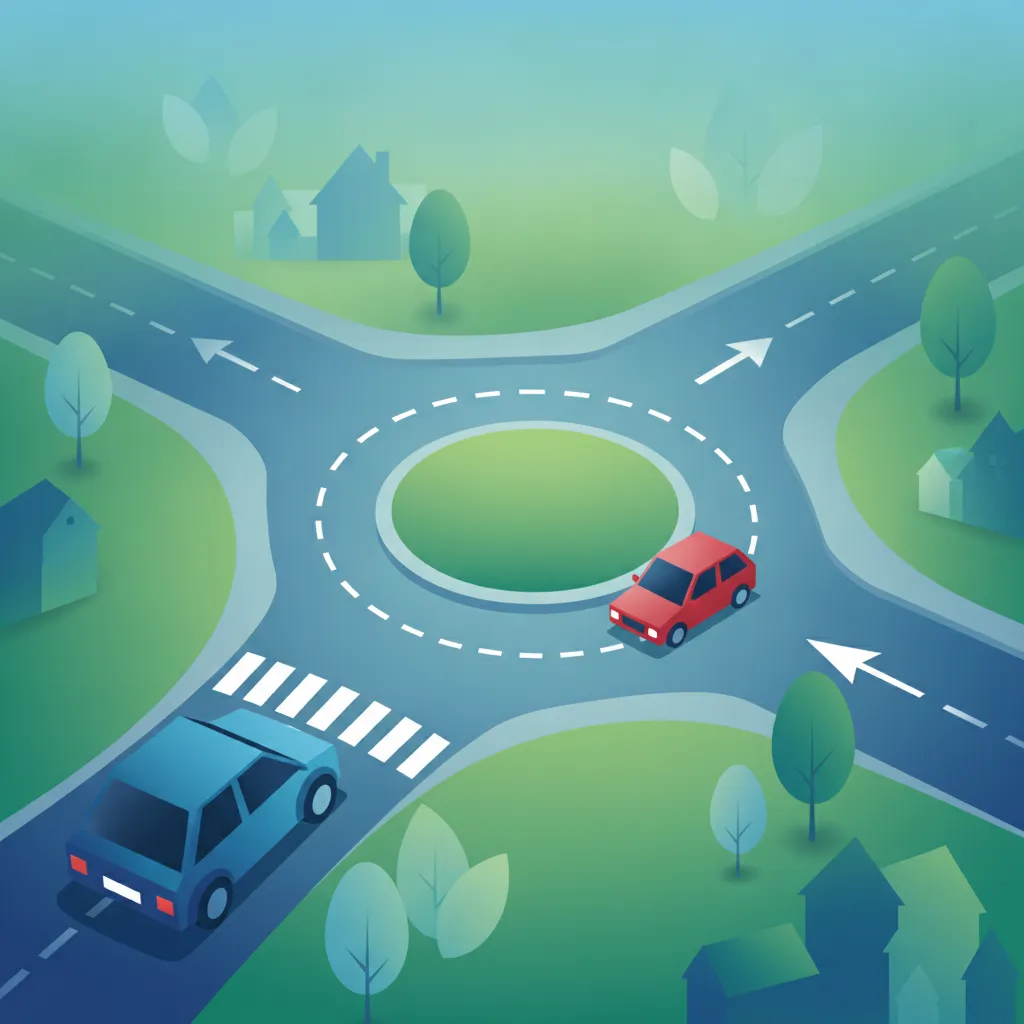
This lesson explains how to handle mini-roundabouts, which are common in urban and residential areas. The primary rule is to approach with caution and give priority to any traffic approaching from your right. You will also learn about correct signalling and the importance of being aware of cyclists and motorcyclists who may be harder to see.
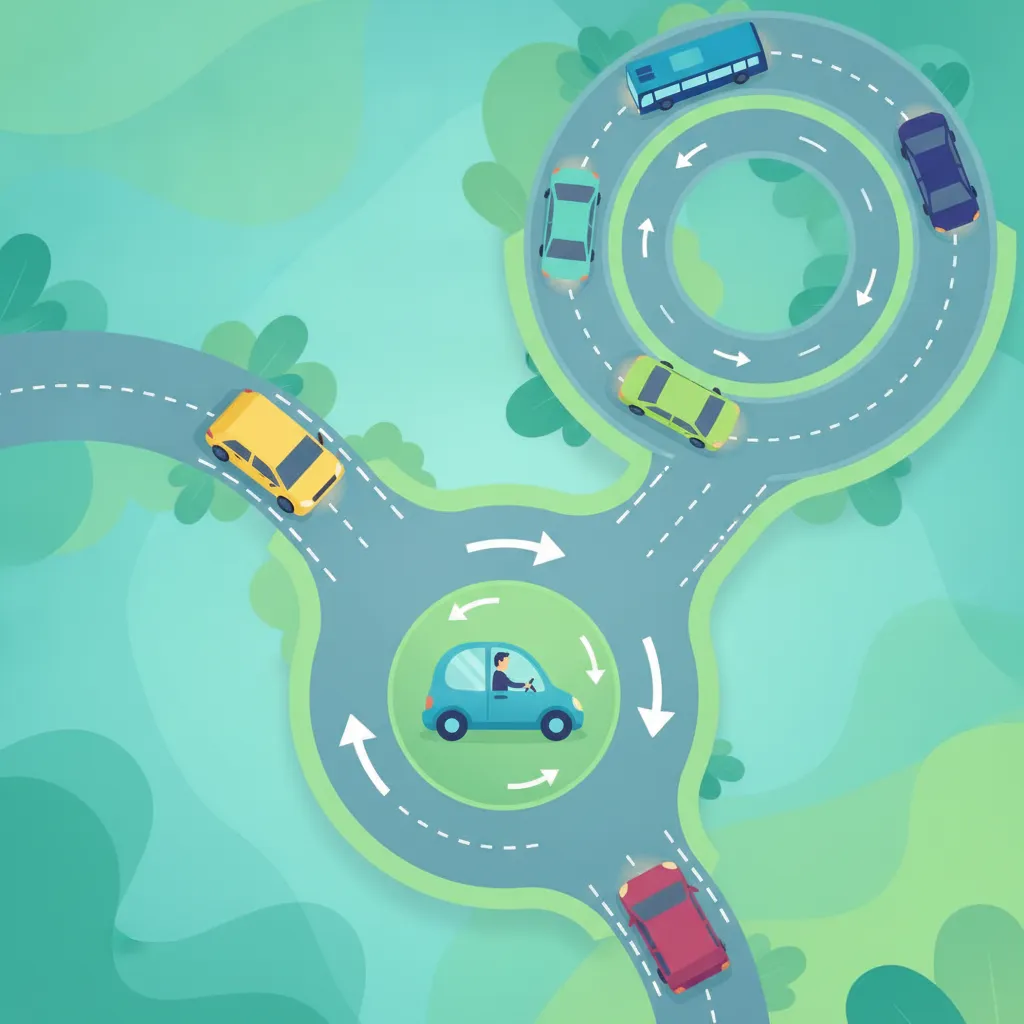
This lesson provides specific techniques for safely navigating the two main types of roundabouts in Great Britain. For multi-lane roundabouts, it covers how to choose the correct lane on approach, maintain your lane while circulating, and signal your exit correctly. It also explains the unique rules for mini-roundabouts, emphasizing the importance of giving way to traffic from the right and navigating them with caution due to their small size.
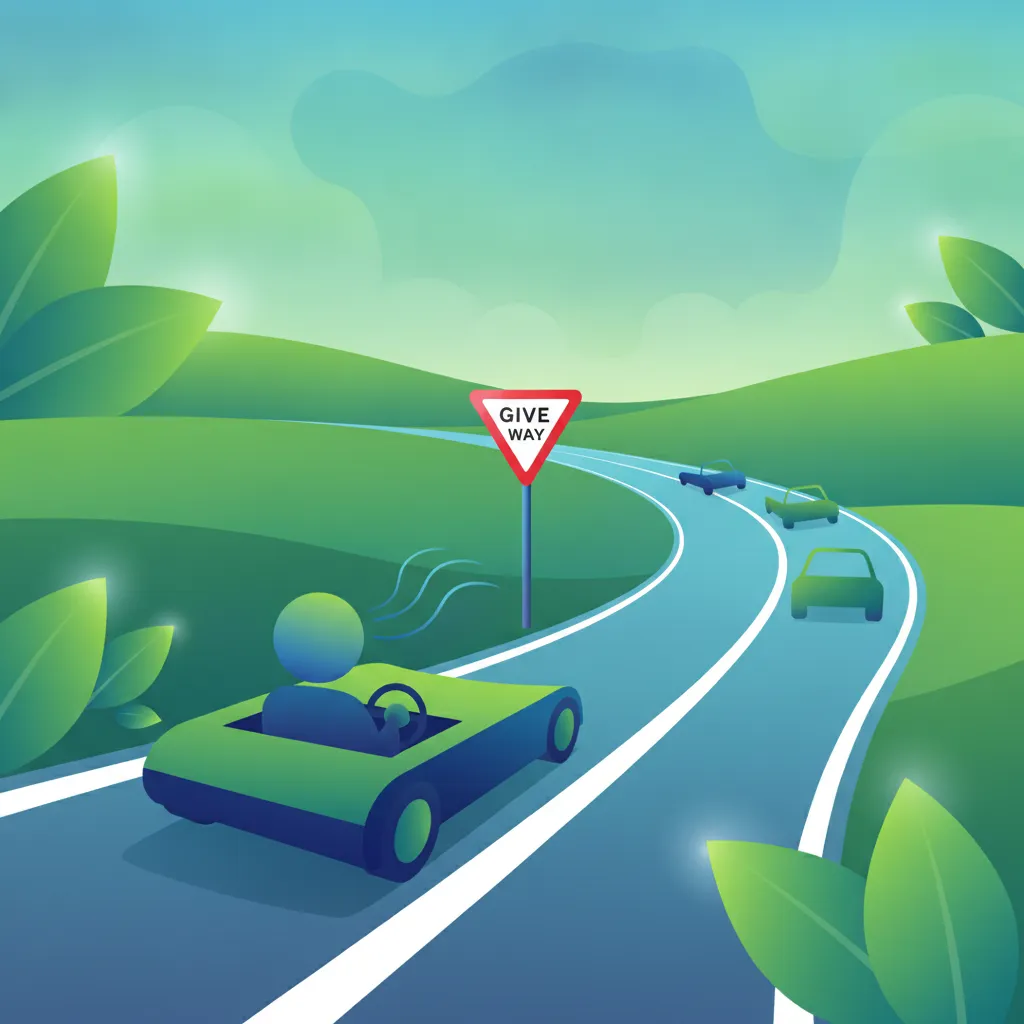
This lesson covers the explicit priority instructions given by signs and markings at junctions. It explains that at a 'Give Way' line, you must yield to traffic on the major road but can proceed if it is safe. At a 'Stop' sign, you must come to a complete halt before the line, assess the traffic, and only proceed when safe.
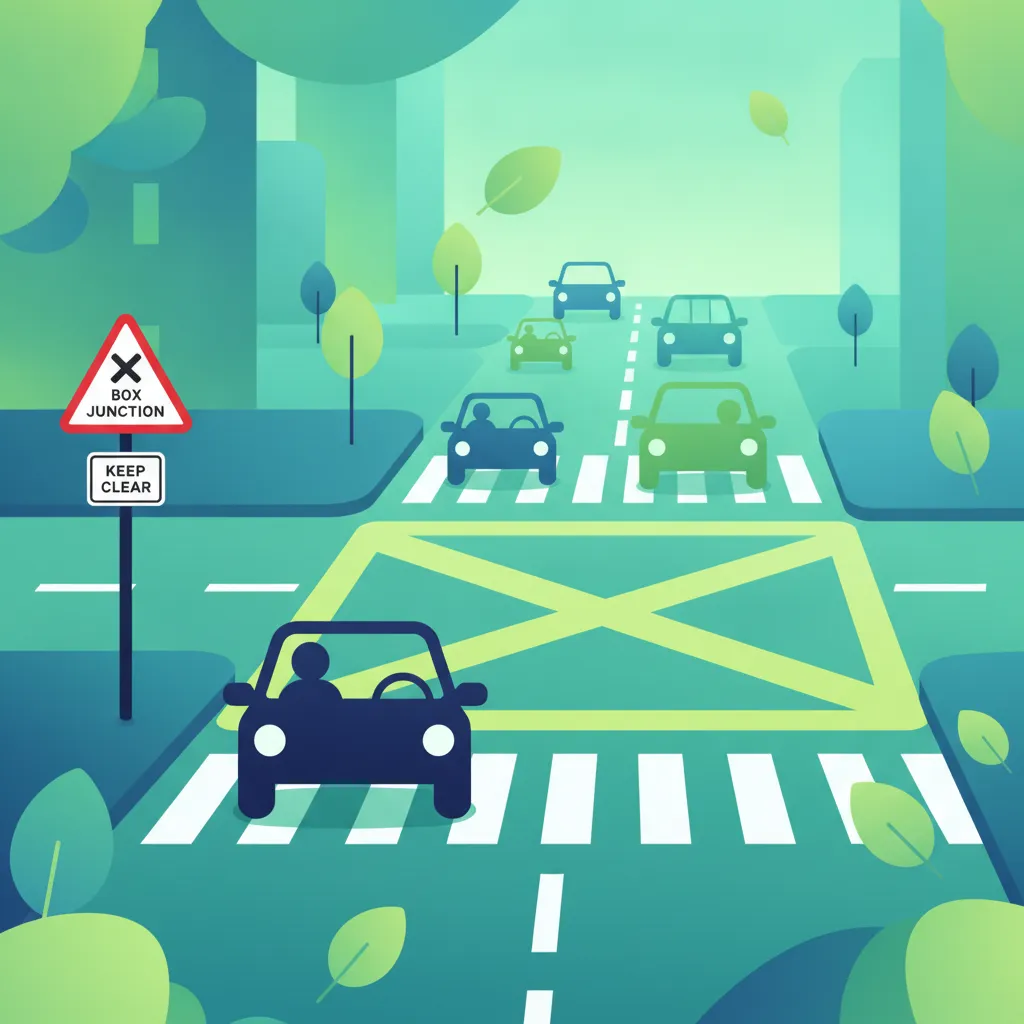
This lesson focuses on the markings that control traffic at intersections. It explains the primary rule of a yellow box junction: do not enter unless your exit is clear. You will also learn the difference between the solid white 'Stop' line and the broken 'Give Way' line, which dictate your priority over other traffic.

This lesson clarifies who has priority at junctions, whether they are marked with signs and lines or are unmarked. It covers the fundamental rule for roundabouts in the UK: give priority to traffic approaching from your right. You will learn the correct procedures for approaching, signalling, and choosing the appropriate lane on roundabouts and at other junctions.
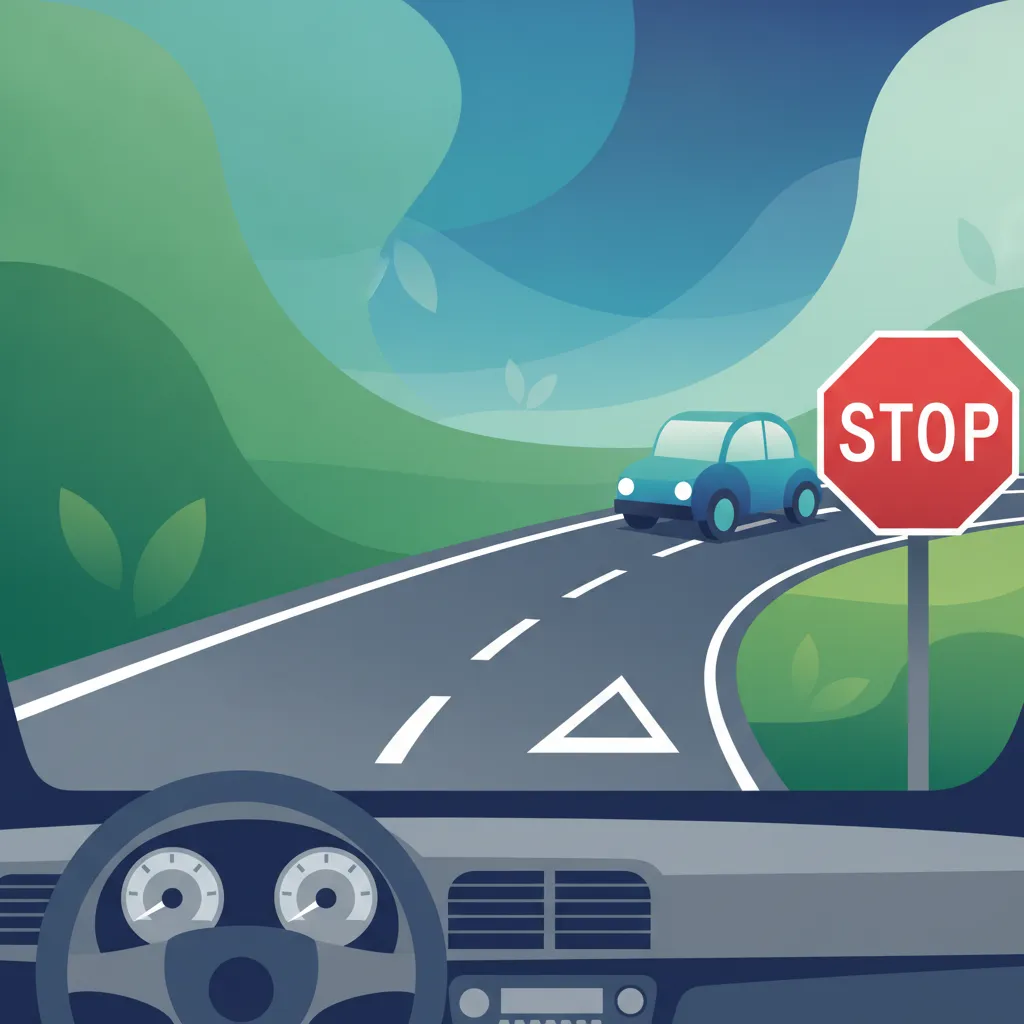
This lesson breaks down the process of navigating basic junctions. It emphasizes the importance of the Mirror-Signal-Manoeuvre (MSM) and Position-Speed-Look (PSL) routines. You will learn how to position your motorcycle correctly for turning, perform effective observation checks for traffic, and judge safe gaps before emerging.
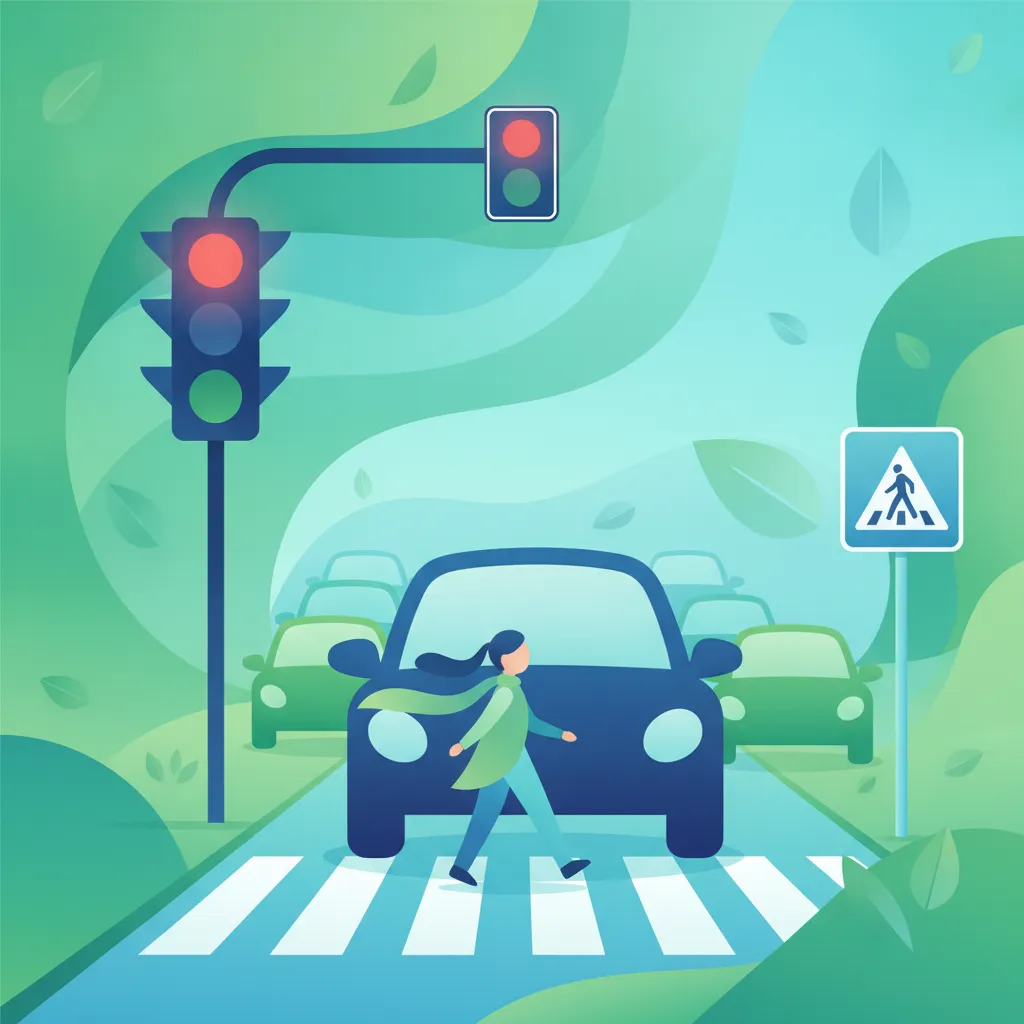
This lesson covers the operation of traffic light signals and the rules for approaching them safely. It also provides a detailed explanation of different pedestrian crossings, such as zebra, pelican, and toucan crossings, clarifying the specific rules and priority for each. You will learn to anticipate the actions of pedestrians and other vulnerable road users at these locations.
Understand typical errors drivers make when turning left or right, with explanations on how to avoid them. Learn from practical scenarios to improve your judgement and safety when navigating junctions in Great Britain.
This lesson explains how to handle mini-roundabouts, which are common in urban and residential areas. The primary rule is to approach with caution and give priority to any traffic approaching from your right. You will also learn about correct signalling and the importance of being aware of cyclists and motorcyclists who may be harder to see.
This lesson teaches the systematic approach to safely navigating junctions, emphasizing the importance of adjusting your speed and position well in advance. You will learn the 'Mirror-Signal-Manoeuvre' routine, how to perform effective all-round observation checks, and when to give way to other traffic. The content focuses on making safe judgments about gaps in traffic, a crucial skill for vulnerable AM riders when turning or emerging from a junction.
This lesson focuses on the markings that control traffic at intersections. It explains the primary rule of a yellow box junction: do not enter unless your exit is clear. You will also learn the difference between the solid white 'Stop' line and the broken 'Give Way' line, which dictate your priority over other traffic.
This lesson details how to safely navigate junctions controlled by traffic signals. It explains the meaning of filter arrows, which allow you to proceed in a specific direction even if the main light is red. You will also learn about respecting advanced stop lines for cyclists and how to approach a junction when the traffic lights are not working.
This lesson provides specific techniques for safely navigating the two main types of roundabouts in Great Britain. For multi-lane roundabouts, it covers how to choose the correct lane on approach, maintain your lane while circulating, and signal your exit correctly. It also explains the unique rules for mini-roundabouts, emphasizing the importance of giving way to traffic from the right and navigating them with caution due to their small size.
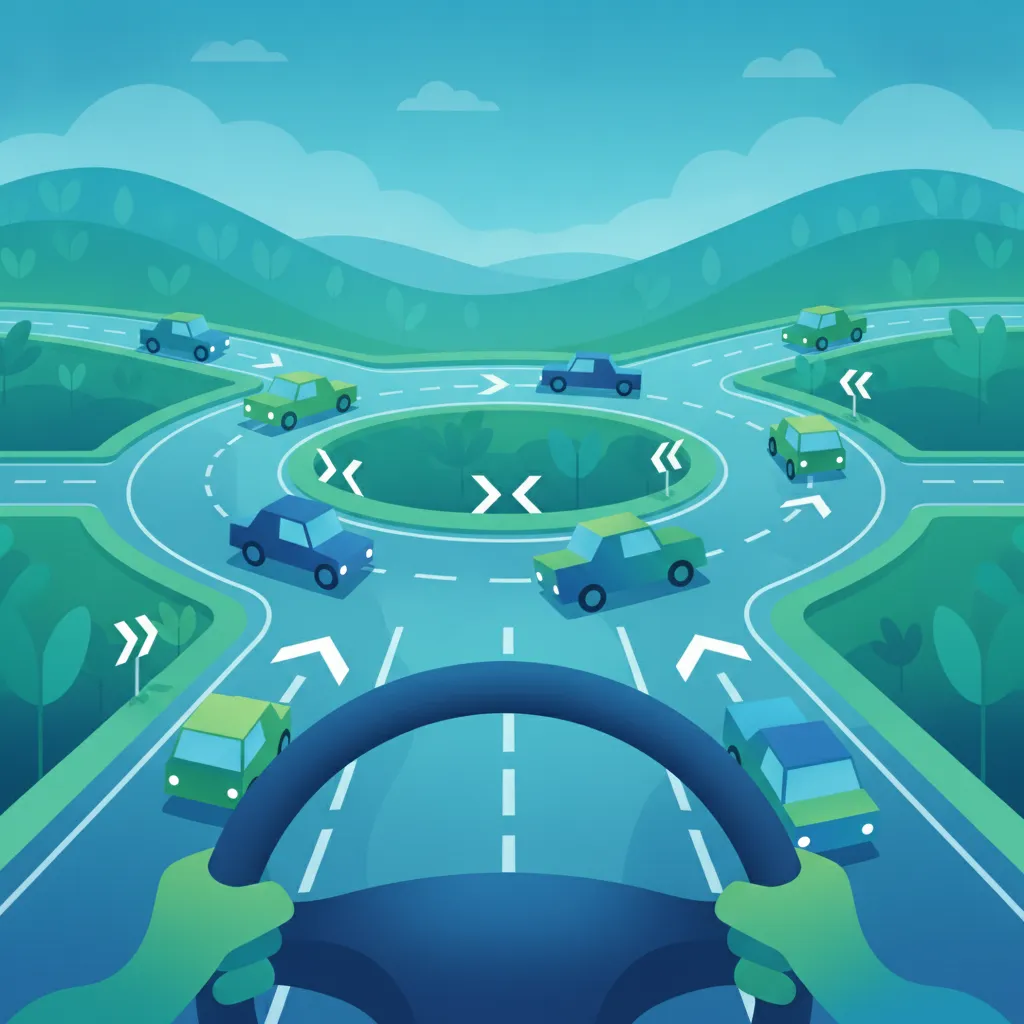
This lesson tackles the complexities of large roundabouts, which often have multiple lanes and exits. It stresses the importance of reading signs on the approach to select the correct lane for your destination. You will learn about maintaining lane discipline while on the roundabout and signalling correctly as you pass exits and prepare to leave.
This lesson covers the explicit priority instructions given by signs and markings at junctions. It explains that at a 'Give Way' line, you must yield to traffic on the major road but can proceed if it is safe. At a 'Stop' sign, you must come to a complete halt before the line, assess the traffic, and only proceed when safe.
This lesson explains the critical rules of priority that govern traffic flow at junctions, roundabouts, and crossings throughout Great Britain. You will learn how to determine who has right-of-way at both marked and unmarked intersections, and the specific rules for giving way to traffic on roundabouts. The lesson also reinforces the hierarchy of road users from the Highway Code, ensuring you understand when to yield to pedestrians and other vulnerable users.
This lesson breaks down the process of navigating basic junctions. It emphasizes the importance of the Mirror-Signal-Manoeuvre (MSM) and Position-Speed-Look (PSL) routines. You will learn how to position your motorcycle correctly for turning, perform effective observation checks for traffic, and judge safe gaps before emerging.
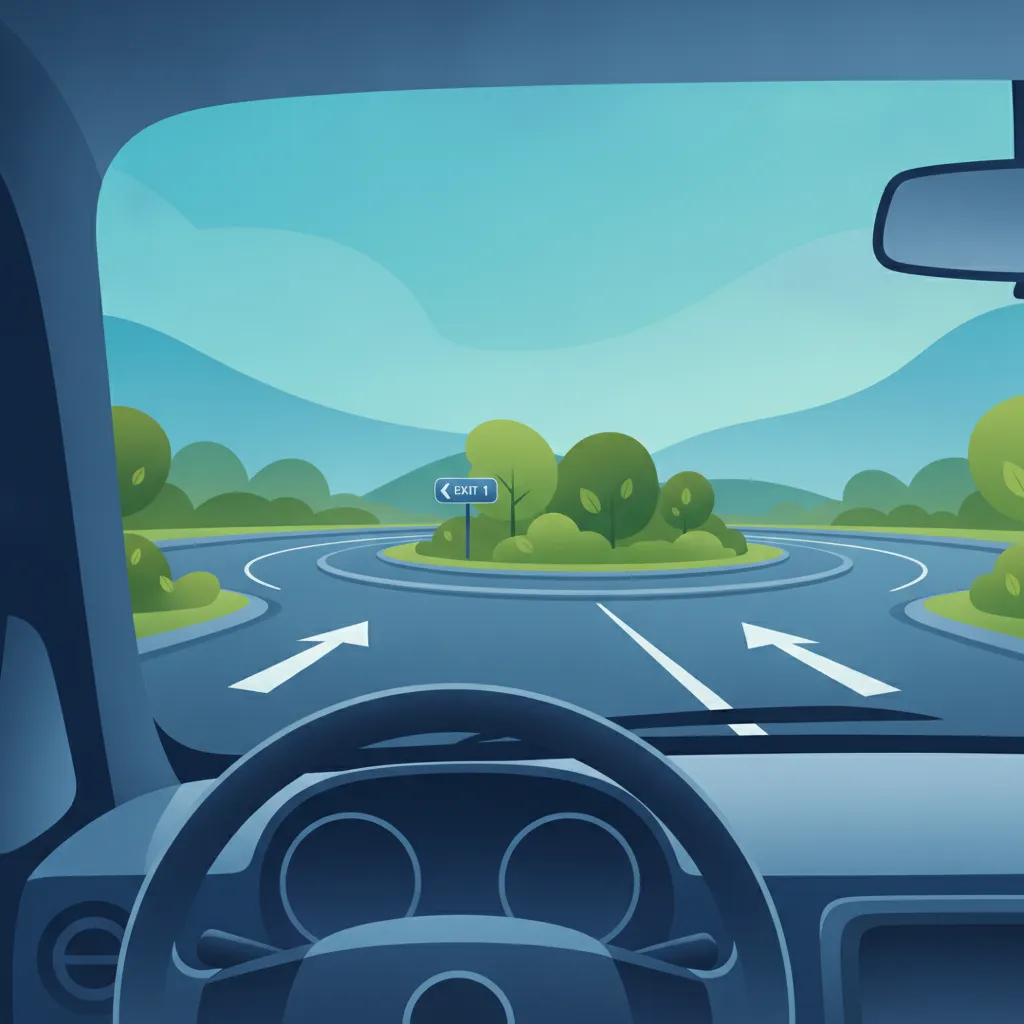
This lesson provides a step-by-step guide to dealing with roundabouts. It covers how to choose the correct lane on approach based on your destination, when and how to signal your intentions, and how to safely enter and exit the roundabout. Emphasis is placed on maintaining good observation and anticipating the actions of other drivers.
Find clear answers to common questions learners have about Right‑Hand Turn and Left‑Hand Turn Priority. Learn how the lesson is structured, which driving theory objectives it supports, and how it fits into the overall learning path of units and curriculum progression in Great Britain. These explanations help you understand key concepts, lesson flow, and exam focused study goals.
Generally, yes, you have priority over traffic waiting to emerge from the side road you are entering. However, you must always watch for pedestrians who may be crossing the side road, as they have priority if they have already started to cross.
Positioning yourself in the centre of the road allows you to see oncoming traffic clearly and wait for a safe gap without blocking the flow of traffic behind you. It also signals your intention clearly to other road users.
If you are both turning right, you can often pass each other 'offside to offside' (keeping the other car to your right). However, always proceed with caution and ensure you have a clear view of any straight-on traffic behind the other turning vehicle.
Yes, many theory test questions feature diagrams of junctions. You are often asked to identify which vehicle has the right of way or which action is the safest to take based on the road markings and traffic flow.
Dive into our comprehensive question bank to find exactly what you need for your Great Britain theory test. Use our advanced filters to pinpoint specific subjects or test your knowledge on challenging areas, ensuring you're fully prepared for success.