This lesson explores the various types of pedestrian crossings you will encounter on Great Britain's roads. Understanding the specific signals, markings, and your responsibilities as a driver is vital for pedestrian safety and for passing your Category B theory test.

Lesson content overview
Understanding pedestrian crossings is a fundamental aspect of safe driving and a critical component of the Great Britain Category B driving theory test. These designated areas are where pedestrians and vehicular traffic intersect, demanding heightened awareness and adherence to specific rules from drivers. This lesson will provide a detailed guide to the various types of pedestrian crossings you will encounter, their unique features, and the legal obligations of drivers to ensure the safety of all road users.
Pedestrian crossings are designed to provide safe passage for people walking, cycling, or otherwise crossing the road. They are crucial for reducing conflicts between vulnerable road users and motor vehicles. For Category B learner drivers, mastering the correct approach to each type of crossing is not just about passing the test; it's about developing the foundational habits for responsible, life-saving driving. Proper use of crossings minimises collision risks, protects pedestrians, and ensures smooth traffic flow.
Pedestrian crossings operate on several core principles that dictate their design, function, and how drivers must interact with them. These principles establish a safety hierarchy that prioritises vulnerable road users.
The most vital principle is pedestrian priority. At designated crossings, pedestrians are legally granted the right to cross, either by a green signal or by stepping onto an uncontrolled crossing. Drivers must acknowledge this priority by stopping and giving way when required. This principle is designed to reduce pedestrian-vehicle conflict by providing clear guidelines on who should proceed and when.
Crossings are categorised as either marked or unmarked. Marked crossings, such as zebra crossings with their distinctive black and white stripes, or pelican crossings with their traffic lights, provide clear visual cues to both drivers and pedestrians. Unmarked crossings, typically where a footpath continues across a minor road, rely on drivers' awareness and the general duty of care. Drivers must constantly scan for these visual indicators and adapt their behaviour accordingly.
Controlled crossings feature traffic lights or signals that explicitly indicate when pedestrians may cross and when vehicles must stop. Pelican, puffin, toucan, and pedex crossings fall into this category. Conversely, uncontrolled crossings, like zebra crossings, rely on road markings and the driver's judgment to give way when pedestrians are on the crossing. At uncontrolled crossings, drivers must be prepared to stop based on pedestrian presence, rather than a signal.
Many crossings are preceded by advance warning signs or road markings. These alerts are placed a sufficient distance before the crossing to give drivers ample time to reduce speed, assess the situation, and prepare to stop if necessary. Ignoring these warnings can lead to dangerous situations and inadequate stopping distances.
Modern crossings, particularly puffin and toucan types, often incorporate sensing technology. These sensors detect pedestrian presence on the waiting area or on the crossing itself, dynamically adjusting the traffic light sequence to ensure pedestrians have sufficient time to cross safely. This technology aims to improve efficiency by not holding vehicle traffic unnecessarily when no pedestrians are present, while also enhancing safety by extending the crossing phase if a pedestrian is taking longer to cross.
Great Britain features several distinct types of pedestrian crossings, each with unique characteristics and rules for drivers.
The zebra crossing is perhaps the most iconic type of uncontrolled pedestrian crossing. It is characterised by prominent black and white parallel stripes (typically 50 cm wide, 150 cm apart) painted on the road surface. At each end of the crossing, Belisha beacons—flashing amber lamps mounted on white poles—provide additional visual warning, especially in low light or poor visibility.
When approaching a zebra crossing, drivers must give way to any pedestrian who has stepped onto the crossing. It is crucial to anticipate that pedestrians may step out, so drivers should reduce speed and be prepared to stop. You do not have to stop for pedestrians merely waiting at the kerb, but you must be ready to stop if they step onto the crossing. Failure to give way to a pedestrian on a zebra crossing is a serious offence.
Zebra Crossing Rule Reminder: Always look for pedestrians intending to cross. If a pedestrian has placed even one foot on the black or white stripes, they have priority, and you must stop.
A Pelican crossing (Pedestrian Light Controlled crossing) is a controlled crossing equipped with standard red, amber, and green traffic lights for vehicles, and separate red and green 'figure' signals for pedestrians. Pedestrians activate these crossings by pressing a button.
Drivers must stop when the traffic light shows red. After the red light, there is a flashing amber phase before the light turns green. During this flashing amber phase, drivers may proceed only if the crossing is clear of pedestrians. If there are still pedestrians on the crossing, drivers must wait until they have cleared the road before moving. This flashing amber phase is unique to Pelican crossings and differentiates them from other light-controlled crossings.
Puffin crossings (Pedestrian User-Friendly Intelligent crossings) are advanced pedestrian-controlled crossings similar to Pelican crossings but with significant differences. They feature sensors that detect pedestrians both on the waiting area and on the crossing itself. These sensors help to ensure that the pedestrian signal remains green only as long as pedestrians are present, and can extend the red light for vehicles if pedestrians are still on the crossing.
A key distinction is that Puffin crossings do not have a flashing amber phase for drivers. Instead, the signal for drivers changes directly from red to steady amber, then to green. The pedestrian signal is often located on the same pole as the vehicle traffic lights, directly in the pedestrian's line of sight, rather than across the road. This intelligent timing improves traffic flow by reducing unnecessary waiting for vehicles when no pedestrians are present, and enhances safety by ensuring pedestrians have ample time to cross.
The Toucan crossing is a shared-use crossing designed for both pedestrians and cyclists. Its name comes from "Two Can" cross together. You can identify a Toucan crossing by its distinctive blue sign depicting both a pedestrian and a cyclist. Like Puffin crossings, Toucan crossings are traffic light controlled and often feature sensors to detect users.
At a Toucan crossing, both pedestrians and cyclists can cross at the same time, and cyclists are permitted to ride across the road, rather than dismounting. Drivers must obey the red traffic light, and only proceed when the light turns green and the crossing is clear. Cyclists and pedestrians must also wait for their green 'figure' signal before crossing.
Pedex crossings are a less common type of pedestrian-only traffic light crossing that operates on a fixed time cycle, without a button for pedestrians to press. The signals for vehicles and pedestrians change at regular, predetermined intervals.
For drivers, the rule is straightforward: you must stop at a red signal, regardless of whether pedestrians are present or not. Unlike sensor-controlled crossings, a Pedex crossing's timing is fixed. This means you may sometimes stop at a red light even if the crossing appears clear, simply because it is the pre-set phase for pedestrians.
A School Crossing Patrol, commonly known as a "Lollipop Person", is a trained adult who assists children in crossing the road, typically near schools. They wear a distinctive uniform, often high-visibility, and carry a large STOP sign on a pole.
When a school crossing patrol steps into the road and holds up their STOP sign, drivers must stop. This command takes precedence over any other traffic signals or markings at that location. Drivers must remain stopped until the patrol signals that it is safe to proceed, and all children and the patrol themselves have cleared the carriageway. Failing to obey a school crossing patrol is a serious offence that endangers children.
Not all pedestrian crossing points are formally marked with stripes or traffic lights. An uncontrolled crossing refers to any point where a pedestrian may reasonably expect to cross, often where a footpath continues directly across a minor road or at the far side of a junction. While these might not have specific markings, they may sometimes be indicated by signage.
Drivers must give way to any pedestrian who has stepped onto the carriageway at such a point, especially where the pavement continues across the road. These situations demand vigilance and a readiness to slow down and stop, as pedestrians might assume priority at such natural crossing points. Always be prepared for pedestrians to step out.
Advance pedestrian warning signs are crucial for driver preparation. These triangular signs, typically with a red border and a black pedestrian symbol, are placed ahead of various types of crossings. Their purpose is to alert drivers to an upcoming crossing point, allowing them to anticipate and reduce their speed in good time.
It's important to understand that an advance warning sign is not a mandatory stop sign. Instead, it's a prompt to increase vigilance, reduce speed, and be ready to stop if required by the conditions at the actual crossing. Misinterpreting these as mandatory stop signs can cause unnecessary braking and potentially lead to rear-end collisions.
Adhering to the specific rules at pedestrian crossings is a legal requirement and essential for safety.
Rule 1: Give Way at Zebra Crossings Drivers must stop and give way to any pedestrian who is already on a zebra crossing. This rule applies at all times, day or night, and regardless of weather conditions. You are not required to stop for pedestrians waiting at the kerb, but you must be prepared to stop if they step onto the crossing.
Rule 2: Observe Belisha Beacons The flashing amber of Belisha beacons indicates the presence of a zebra crossing. Drivers must be aware of these beacons and approach with caution, ready to give way.
Rule 3: Obey Traffic Lights at Pelican Crossings At Pelican crossings, drivers must stop at a red traffic light. During the subsequent flashing amber phase, you may proceed only if the crossing is completely clear of pedestrians. You must wait until the light turns green if pedestrians are still crossing.
Rule 4: Respect Puffin Light Signals Drivers must stop at a red Puffin signal. Unlike Pelican crossings, Puffin crossings usually have a steady amber phase before green, not a flashing one. Always ensure the crossing is clear before proceeding on green. Sensors may hold the red light longer if pedestrians are still detected on the crossing.
Rule 5: Yield at Toucan Crossings At Toucan crossings, drivers must obey the red light. Both pedestrians and cyclists may cross when their dedicated signal shows green. Remember that cyclists are permitted to ride across Toucan crossings.
Rule 6: Stop at Pedex Red Light For Pedex crossings, drivers must stop at a red signal irrespective of whether pedestrians are visible or not. These signals operate on a fixed time cycle.
Rule 7: Yield to School Crossing Patrols Drivers must stop or give way immediately when a school crossing patrol steps into the road and displays their STOP sign. You must wait until they signal it is safe to proceed and the road is clear.
Rule 8: Giving Way at Uncontrolled Crossings At any point where a footpath continues across a carriageway without formal markings, drivers must give way to any pedestrian who has stepped onto the road. This demonstrates a duty of care to vulnerable road users.
Rule 9: Advance Warning and Speed Adjustment Upon seeing an advance warning sign for a pedestrian crossing, drivers must anticipate a crossing ahead and reduce their speed accordingly, preparing to stop if necessary. This helps ensure adequate stopping distance.
Drivers frequently make certain errors at pedestrian crossings, leading to dangerous situations or legal penalties.
Driving safely at pedestrian crossings requires adjusting your behaviour based on various conditions.
The rules and regulations surrounding pedestrian crossings are founded on principles of physics, human psychology, and statistical safety data.
When approaching a crossing, a mental hierarchy of rules can guide your decision-making:
Understanding pedestrian crossings doesn't exist in isolation; it integrates with several other essential components of the Great Britain Category B driving theory curriculum.
This lesson serves as a vital foundation, particularly for future topics involving dynamic road situations and risk assessment.
These scenarios illustrate common situations at pedestrian crossings and highlight the correct driver responses.
Correct Driver Behaviour: The driver should have already reduced speed upon seeing the Belisha beacons and anticipating the crossing. Upon seeing the pedestrian step onto the crossing, despite the poor visibility and wet conditions, the driver must immediately and safely apply the brakes to stop well before the crossing, giving ample space. Signalling to the rear driver with brake lights is also important. Explanation: Reduced visibility and increased stopping distances in the rain make early hazard perception and speed reduction critical. The pedestrian on the crossing always has priority, regardless of conditions.
Correct Driver Behaviour: The driver must remain stopped. The flashing amber light only permits movement if the crossing is completely clear. Since children are still on the crossing, the driver must wait until all pedestrians have cleared the road and the light turns to steady green. Explanation: Misunderstanding the flashing amber phase is a common mistake. It does not automatically grant right of way if pedestrians are still present.
Correct Driver Behaviour: The driver must remain stopped at the red light. The Puffin crossing's sensors detected the pedestrian was still on the crossing and extended the red light for vehicles to ensure their safety. The driver should wait patiently until the signal turns green for vehicles, confirming the crossing is clear. Explanation: Puffin crossings use sensors for safety. The system ensures pedestrians, especially those who are slower, have enough time. Drivers must respect these dynamic signals.
Correct Driver Behaviour: The driver stops at the red light. The cyclist and pedestrian wait for their green signal, then proceed across the road together. The driver waits for the vehicle light to turn green and for the crossing to be clear before moving. Explanation: Toucan crossings specifically allow cyclists to ride across alongside pedestrians. Both must obey their respective signals.
Correct Driver Behaviour: The driver should have approached the turn at a reduced speed, scanning for pedestrians. Upon seeing the pedestrian step onto the carriageway from the continuing footpath, the driver must stop and give way, allowing the pedestrian to cross safely before completing the turn. Explanation: Even without formal markings, drivers have a duty of care and must give way to pedestrians who have committed to crossing at such points where the footpath clearly extends.
Mastering the use of pedestrian crossings is a cornerstone of safe and responsible driving in Great Britain. You have learned about the distinct characteristics and rules for various types of crossings:
Always remember that these rules are in place to protect vulnerable road users and ensure a safe, predictable environment for everyone. Your vigilance, anticipation, and strict adherence to signals and markings are crucial.
Explore all units and lessons included in this driving theory course.
Lesson content overview
Explore all units and lessons included in this driving theory course.
Explore search topics learners often look for when studying Types of Pedestrian Crossings and Their Use. These topics reflect common questions about road rules, driving situations, safety guidance, and lesson level theory preparation for learners in Great Britain.
Browse additional driving theory lessons that cover connected traffic rules, road signs, and common driving situations related to this topic. Improve your understanding of how different rules interact across everyday traffic scenarios.
Explore complex scenarios and advanced rules for all types of pedestrian crossings, including how to interact with school crossing patrols and cyclists on toucan crossings. Understand critical priority situations and common mistakes in Great Britain theory.
This lesson provides detailed guidance on protecting pedestrians in high-risk areas like bus stops and formal crossings. It covers the specific rules and driver obligations at zebra, pelican, toucan, and puffin crossings, as well as when approaching a school crossing patrol. The content emphasizes the importance of vigilance, anticipating pedestrian movements, especially those who may be distracted or emerge from behind the bus, and always being prepared to stop to prevent accidents.

This lesson focuses on the markings and rules at designated pedestrian crossing points. It details the legal requirement to give way to pedestrians on a zebra crossing and explains the light sequences at signal-controlled crossings. You will also learn the meaning of the white zig-zag lines on the approach to all crossings.
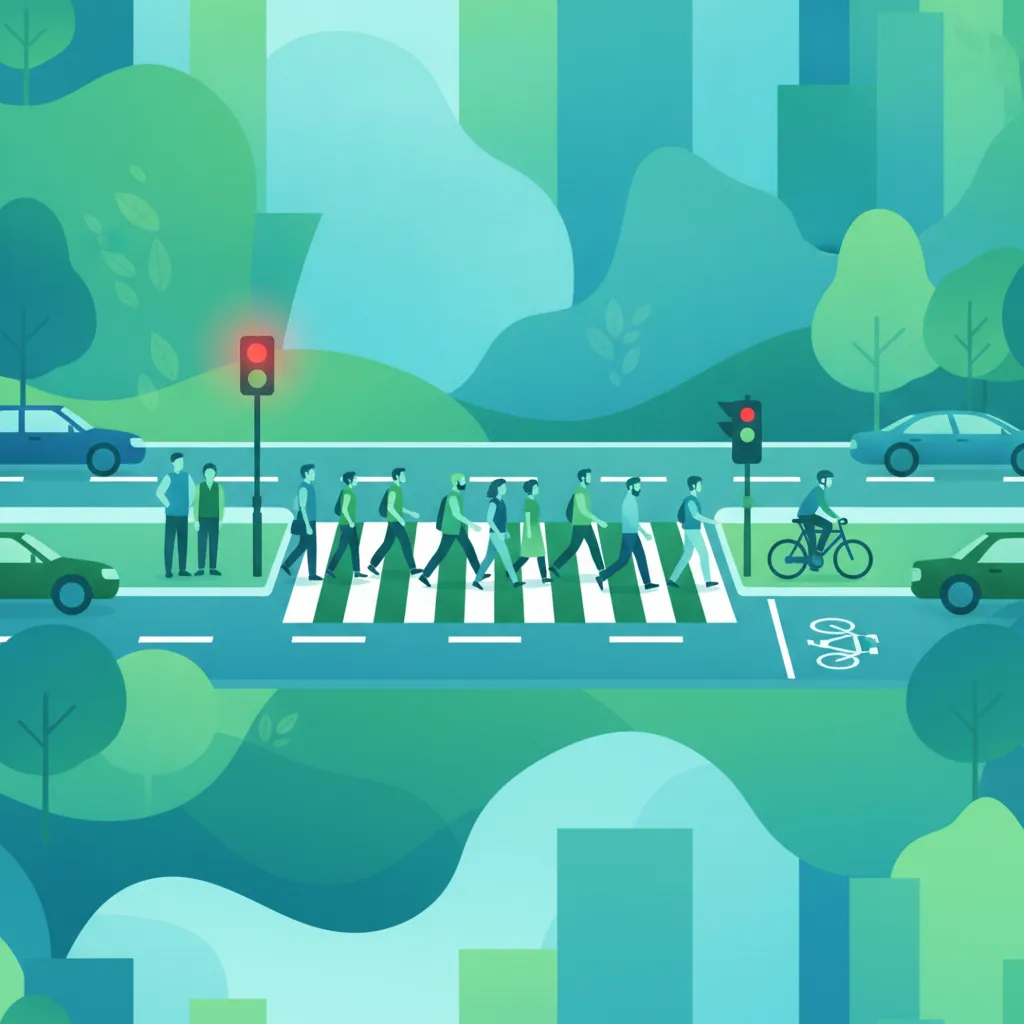
This lesson provides a detailed guide to the various types of pedestrian crossings found on British roads. You will learn the specific rules for each, including the absolute priority of pedestrians at zebra crossings and how to respond to the light signals at pelican, puffin, and toucan crossings. Understanding these rules is essential for protecting vulnerable road users and ensuring you are compliant with the Highway Code.
This lesson teaches drivers how to identify various types of vulnerable road users and anticipate their potential actions to prevent conflicts. It covers the specific risks associated with pedestrians, cyclists, motorcyclists, children, and elderly or disabled individuals. Emphasis is placed on heightened awareness and defensive driving techniques required to share the road safely. Understanding their perspectives and typical behaviours is key to protecting them and maintaining safety for everyone.
This lesson discusses the crucial interaction between passenger vehicles and pedestrians at and around bus stops. Learners will explore pedestrian right-of-way, especially at crosswalks, and positioning strategies to maintain a safe distance from people waiting or crossing. The lesson also covers pedestrian alertness measures and conflict avoidance techniques to protect vulnerable road users. This knowledge is essential for preventing accidents and maintaining a safe environment around the vehicle during stops.
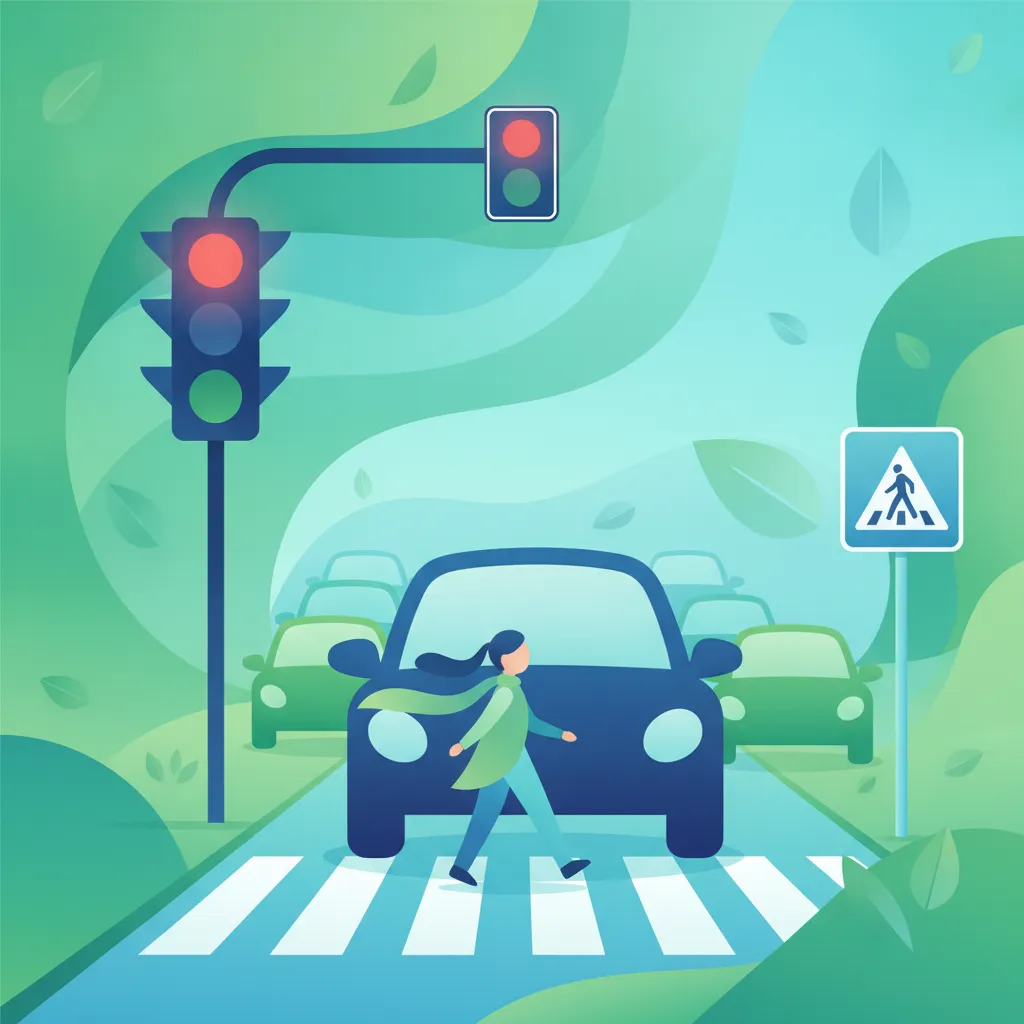
This lesson covers the operation of traffic light signals and the rules for approaching them safely. It also provides a detailed explanation of different pedestrian crossings, such as zebra, pelican, and toucan crossings, clarifying the specific rules and priority for each. You will learn to anticipate the actions of pedestrians and other vulnerable road users at these locations.
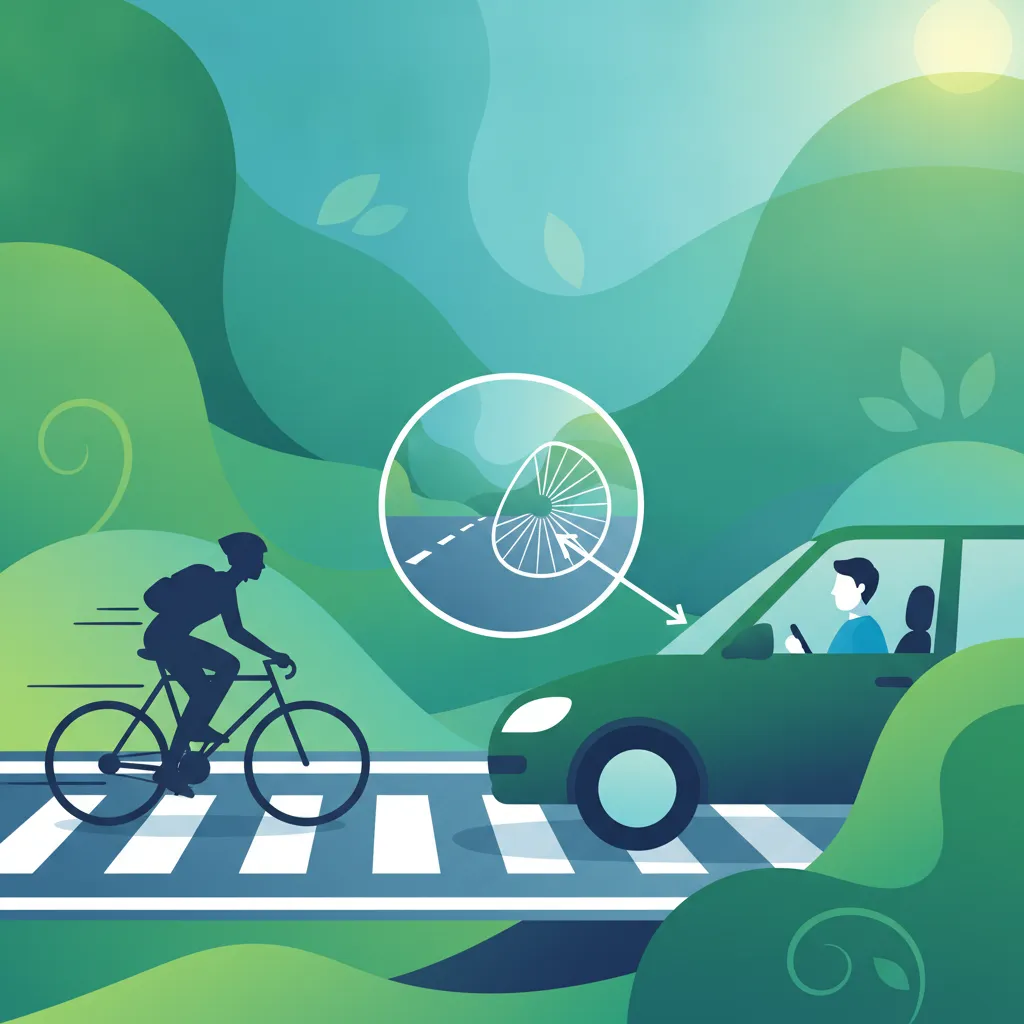
This lesson is dedicated to the safe interaction between large vehicles and the most vulnerable road users: pedestrians and cyclists. It highlights high-risk scenarios, such as left turns at junctions, where cyclists can be hidden in nearside blind spots. The content stresses the importance of anticipation, using signals clearly, and providing generous space at crossings, in cycle lanes, and within pedestrianized zones to prevent tragic accidents.
This lesson explains the critical rules of priority that govern traffic flow at junctions, roundabouts, and crossings throughout Great Britain. You will learn how to determine who has right-of-way at both marked and unmarked intersections, and the specific rules for giving way to traffic on roundabouts. The lesson also reinforces the hierarchy of road users from the Highway Code, ensuring you understand when to yield to pedestrians and other vulnerable users.
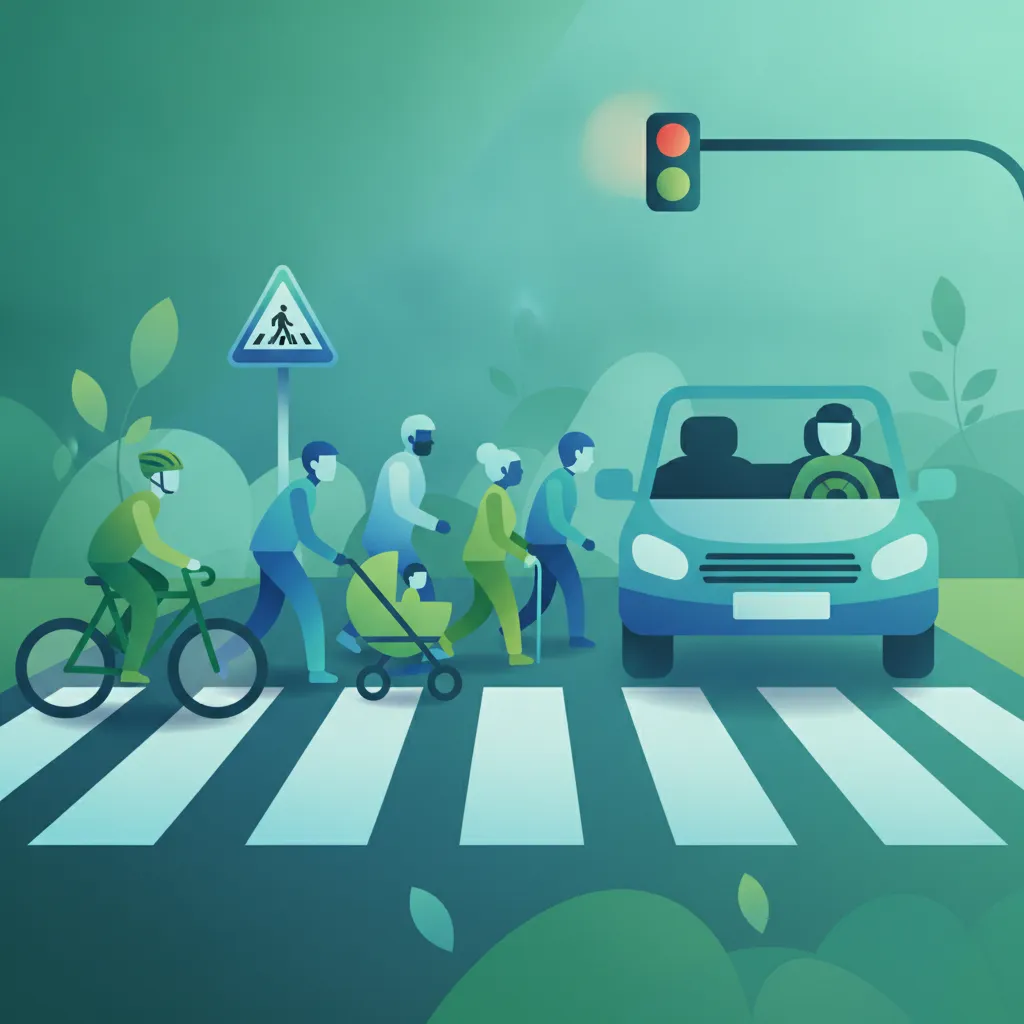
This lesson focuses on a driver's legal and ethical duty of care to all road users. It explains the concept of a road user hierarchy, which prioritizes the safety of vulnerable groups such as pedestrians, cyclists, and motorcyclists. You will learn the principles of defensive driving, anticipating potential hazards, and maintaining a courteous attitude on the road to ensure safety for everyone.
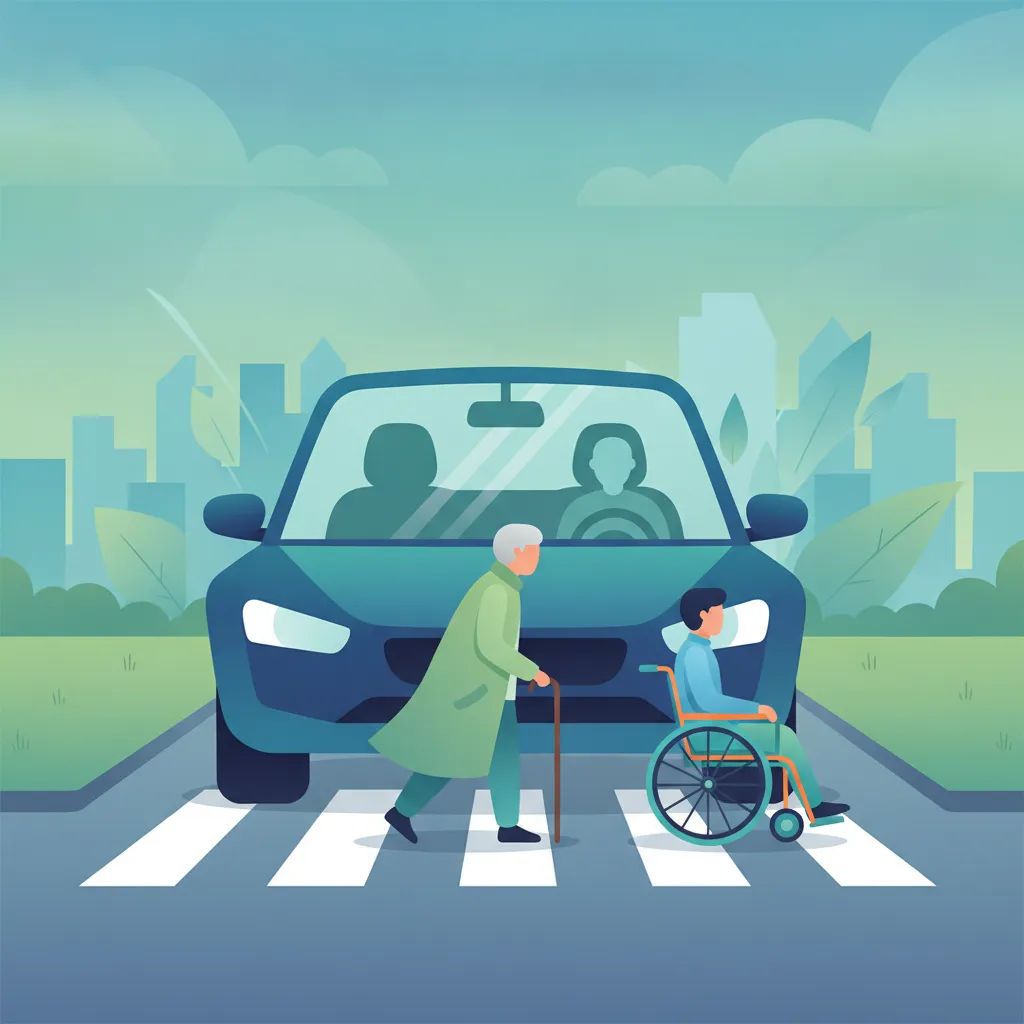
This lesson focuses on developing a proactive and patient approach towards elderly and disabled road users. It explains how to recognize and provide additional time and space for individuals with slower movement, mobility scooters, or sensory impairments. The content emphasizes the importance of driver attitude, patience at crossings, and anticipating the needs of these vulnerable individuals. Understanding these factors is crucial for preventing accidents and demonstrating a high level of professional care and responsibility.
Learn from practical driving scenarios and identify common errors drivers make at zebra, pelican, puffin, and toucan crossings. This lesson helps prepare for real-world challenges and driving theory understanding in Great Britain.
This lesson provides a detailed guide to the various types of pedestrian crossings found on British roads. You will learn the specific rules for each, including the absolute priority of pedestrians at zebra crossings and how to respond to the light signals at pelican, puffin, and toucan crossings. Understanding these rules is essential for protecting vulnerable road users and ensuring you are compliant with the Highway Code.
This lesson focuses on the markings and rules at designated pedestrian crossing points. It details the legal requirement to give way to pedestrians on a zebra crossing and explains the light sequences at signal-controlled crossings. You will also learn the meaning of the white zig-zag lines on the approach to all crossings.
This lesson provides detailed guidance on protecting pedestrians in high-risk areas like bus stops and formal crossings. It covers the specific rules and driver obligations at zebra, pelican, toucan, and puffin crossings, as well as when approaching a school crossing patrol. The content emphasizes the importance of vigilance, anticipating pedestrian movements, especially those who may be distracted or emerge from behind the bus, and always being prepared to stop to prevent accidents.
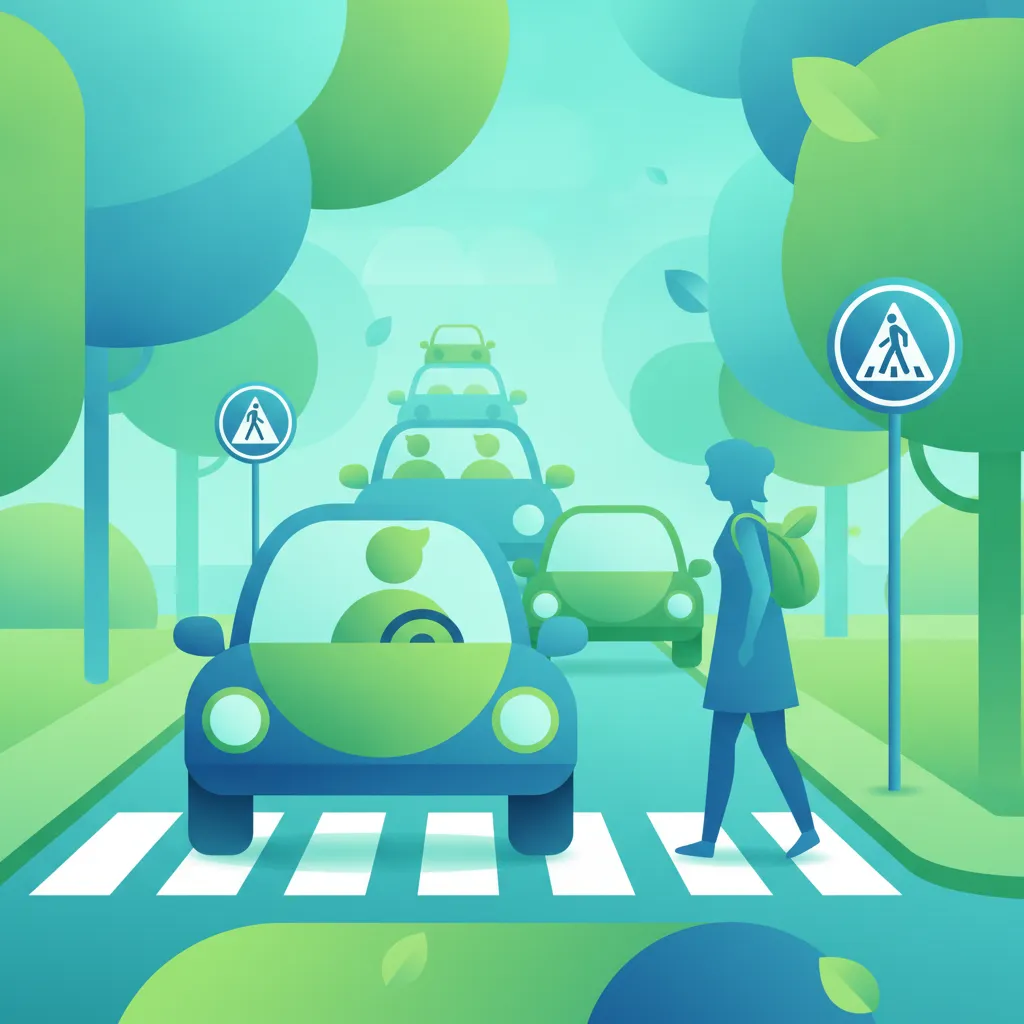
This lesson focuses on the dynamic and often unpredictable nature of urban traffic. It covers how to safely negotiate various pedestrian crossings, anticipate the movement of cyclists and pedestrians, and be aware of hazards like bus stops and car doors opening. You will also learn about the considerations for safe and legal filtering in slow-moving traffic.
This lesson discusses the crucial interaction between passenger vehicles and pedestrians at and around bus stops. Learners will explore pedestrian right-of-way, especially at crosswalks, and positioning strategies to maintain a safe distance from people waiting or crossing. The lesson also covers pedestrian alertness measures and conflict avoidance techniques to protect vulnerable road users. This knowledge is essential for preventing accidents and maintaining a safe environment around the vehicle during stops.
This lesson covers the operation of traffic light signals and the rules for approaching them safely. It also provides a detailed explanation of different pedestrian crossings, such as zebra, pelican, and toucan crossings, clarifying the specific rules and priority for each. You will learn to anticipate the actions of pedestrians and other vulnerable road users at these locations.
This lesson explains the critical rules of priority that govern traffic flow at junctions, roundabouts, and crossings throughout Great Britain. You will learn how to determine who has right-of-way at both marked and unmarked intersections, and the specific rules for giving way to traffic on roundabouts. The lesson also reinforces the hierarchy of road users from the Highway Code, ensuring you understand when to yield to pedestrians and other vulnerable users.
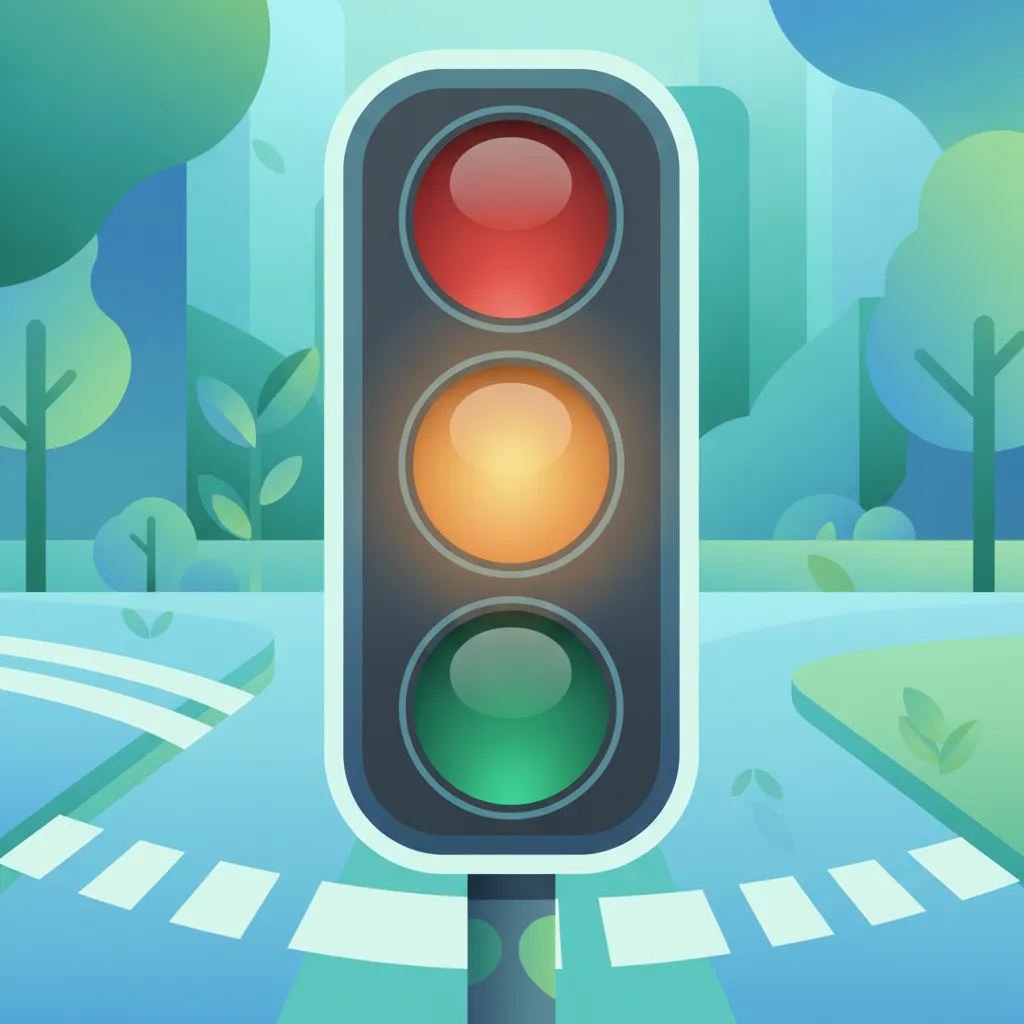
This lesson details the operation of traffic lights in Great Britain, including the red-and-amber phase before green. It clarifies the rules for proceeding at a green light, stopping for red, and preparing to stop for a steady amber light. You will also learn about green filter arrows and the flashing amber lights used at certain pedestrian crossings.
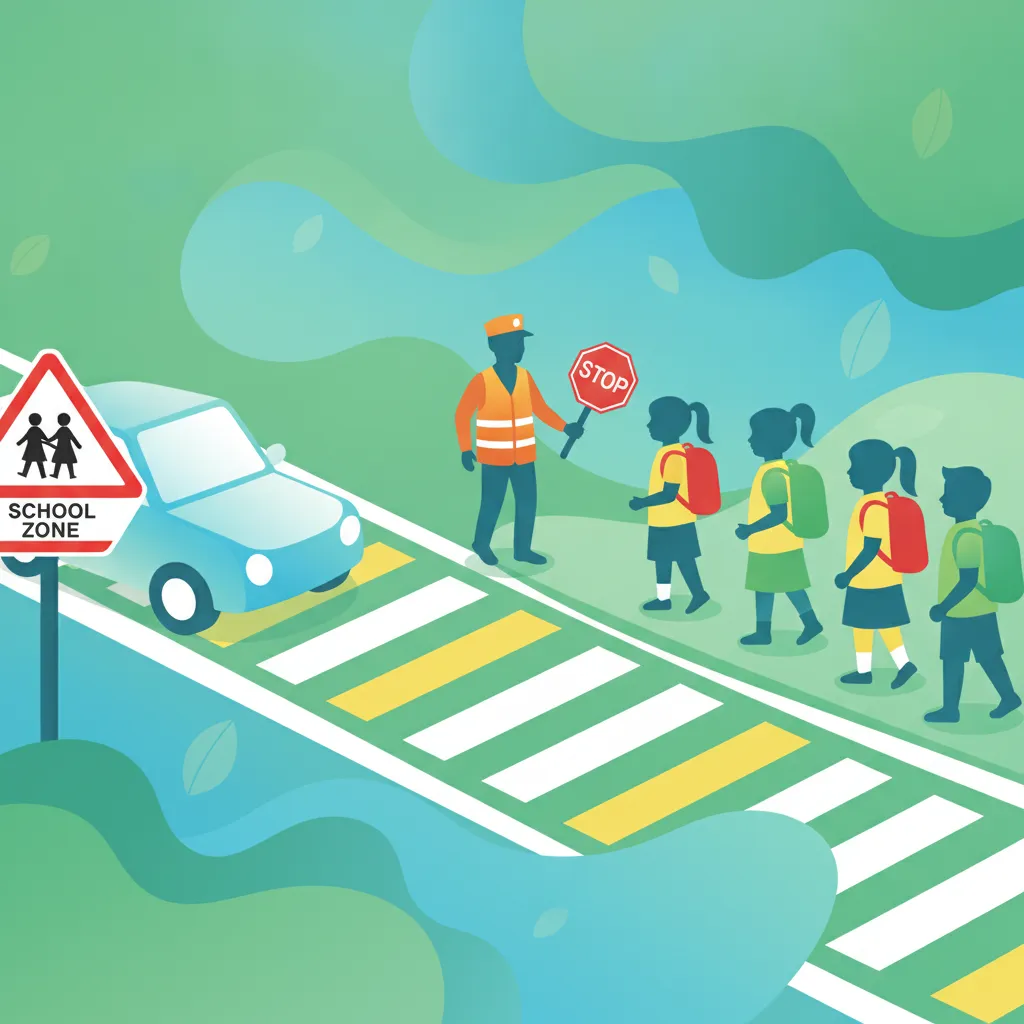
This lesson highlights the need for heightened awareness and reduced speed around schools, parks, and residential areas. Children can be unpredictable, so you must be prepared for them to step into the road without warning. The lesson covers specific signs for school zones and the legal requirement to stop for a school crossing patrol.
This lesson details how to safely navigate junctions controlled by traffic signals. It explains the meaning of filter arrows, which allow you to proceed in a specific direction even if the main light is red. You will also learn about respecting advanced stop lines for cyclists and how to approach a junction when the traffic lights are not working.
Find clear answers to common questions learners have about Types of Pedestrian Crossings and Their Use. Learn how the lesson is structured, which driving theory objectives it supports, and how it fits into the overall learning path of units and curriculum progression in Great Britain. These explanations help you understand key concepts, lesson flow, and exam focused study goals.
A pelican crossing has a flashing amber light for drivers, meaning you must give way to pedestrians still on the crossing. A puffin crossing uses sensors and has a red and green man signal on the near side; it does not have a flashing amber phase, so you simply wait for the red light to turn off.
You must be prepared to stop if it is clear that a pedestrian is waiting to cross. Once a pedestrian has stepped onto the zebra crossing, you are legally required to give them priority.
A toucan crossing is designed to be used by both pedestrians and cyclists simultaneously. The name comes from the idea that two can cross together.
You must wait until the pedestrian has completely cleared the crossing from your side and preferably the full width of the road before you proceed. Do not edge forward or move off while they are still in your path.
Dive into our comprehensive question bank to find exactly what you need for your Great Britain theory test. Use our advanced filters to pinpoint specific subjects or test your knowledge on challenging areas, ensuring you're fully prepared for success.