
This lesson guides you through the essential procedures for changing lanes safely on British roads. By mastering the Mirror, Signal, Manoeuvre (MSM) routine, you will gain the skills necessary to navigate multi-lane traffic confidently and prepare for key questions in your Category B theory exam.

Lesson content overview
Lane changes are a fundamental part of driving in Great Britain, allowing you to navigate different road types, overtake safely, and position your vehicle correctly for junctions and exits. However, they are also a common cause of collisions if not performed correctly. This lesson provides a comprehensive guide to safe and effective lane changing, vital for both your Category B driving theory test and practical driving skills.
Understanding and consistently applying the correct procedure for moving from one lane to another will significantly reduce the risk of accidents, particularly side-impact crashes. It demonstrates competent vehicle control and thoughtful consideration for other road users, which are cornerstones of responsible driving.
Proper lane changing is a critical skill for all drivers. It allows for efficient traffic flow and safe navigation on multi-lane roads. Unfortunately, statistics show that improper lane changes are a frequent contributor to road incidents, primarily due to drivers failing to check their blind spots, not signalling adequately, or misjudging gaps in traffic. By mastering the systematic process outlined in this lesson, you can significantly enhance your safety and the safety of others on the road.
This lesson builds upon foundational knowledge from earlier sections of your Complete Theory for Great Britain Category B Learner Drivers course, including understanding road markings, basic signalling, vehicle positioning, and hazard perception. It will also serve as a prerequisite for more complex manoeuvres such as overtaking and merging onto high-speed roads.
Performing a safe lane change requires a systematic and repeatable mental and physical process. This process ensures that all potential conflict points are identified and clear before your vehicle moves laterally across traffic. Adhering to these core principles is not just good practice; it is a legal and ethical obligation for all drivers.
Before considering any change in direction, your first action must be to check your mirrors. This establishes an awareness of the overall traffic flow behind and to the sides of your vehicle.
The initial step in any manoeuvre, involving checking the interior mirror first, followed by the relevant side (wing) mirror(s), to assess the traffic situation.
This early detection of approaching vehicles allows you to gauge whether a lane change is feasible or if you need to adjust your timing. It prevents surprises and provides crucial information about the speed and position of other road users who might be affected by your intended move.
Once you have assessed the traffic situation using your mirrors, the next critical step is to activate your vehicle's appropriate indicator. This communicates your intention to other road users, giving them ample time to react to your planned manoeuvre.
Activating the vehicle's turn indicator at least three seconds before initiating a lane change, or longer in conditions of reduced visibility, to inform other road users of your intention.
Premature signalling can confuse other drivers, while signalling too late leaves them no time to adapt, potentially leading to abrupt braking or steering and increasing the risk of a collision.
Mirrors, however well-adjusted, cannot show you everything. There are areas on either side of your vehicle that are hidden from mirror view – these are your blind spots.
The area on the side of a vehicle that cannot be seen directly through the interior mirror or the side (wing) mirrors.
To address this limitation, you must perform a quick head-check over the shoulder on the side you intend to move into. This swift glance ensures that no vehicle, motorcyclist, or cyclist is occupying this unseen area. Neglecting this step is a leading cause of side-impact collisions.
Even after your initial blind-spot check, it is crucial to perform a final head-check immediately before steering into the new lane. This provides a last-moment confirmation that the blind spot remains clear.
A brief, focused glance over the shoulder immediately before steering into the new lane, confirming that the blind spot is still clear and no vehicle or vulnerable road user has entered it at the last moment.
Traffic situations can change rapidly. A vehicle that was not there moments ago could have quickly entered your blind spot, especially if it is a fast-moving motorcycle or a smaller car. This final glance acts as an indispensable safety backup.
When executing the lane change, apply a gradual and smooth steering input. Avoid sudden, sharp movements of the steering wheel. Maintaining controlled speed, generally under 50 km/h (approximately 30 mph) on most roads unless merging onto a faster road, helps to maintain vehicle stability and predictability.
Adjusting your speed to match the traffic flow in the target lane is equally important. This ensures you enter the new lane without creating a significant speed differential that could cause other drivers to brake abruptly or force you into a dangerous situation.
Mirrors First (Interior, then Side): Check your interior mirror, then the side mirror on the side you intend to move towards. Assess traffic speed and position.
Signal Early: Activate your indicator for at least three seconds (or longer in poor visibility) to clearly communicate your intentions.
Verify Gap: Confirm there is a safe and sufficient gap in the target lane.
Blind-Spot Head-Check: Perform a quick glance over your shoulder into the blind spot on the side you wish to move.
Final Head-Check: Just before you begin to steer, take another quick glance over your shoulder to ensure the blind spot is still clear.
Smooth Steering and Speed Adjustment: Gently steer into the new lane while adjusting your speed to match the flow of traffic in that lane.
Cancel Indicator: Once fully and safely in the new lane, cancel your indicator.
Successful lane changes depend on understanding several key concepts, from proper vehicle positioning to interpreting the intentions of other drivers.
Lane positioning refers to the placement of your vehicle within its current lane. While generally you should aim to stay centred, slightly adjusting your position can sometimes improve visibility for the signalling driver. However, avoid driving too close to the lane edge, as this can reduce your manoeuvring room and make your blind spots less obvious to you. Always respect solid and broken lane markings.
Your vehicle's mirrors (interior and side) are crucial visual aids. They must be correctly adjusted for your height and shoulder position to maximise your field of view. Before every journey, ensure your mirrors are clean and properly set. Remember, mirrors provide indirect sight and cannot eliminate blind spots entirely.
The indicator (turn signal) is your primary tool for communicating your intentions to other road users. It must be turned on well in advance of your manoeuvre and remain on until the lane change is fully completed. Always use the standard flashing lights; hazard warning lights are not for indicating lane changes.
In poor weather conditions such as heavy rain or fog, increase your signalling lead-time to 4-5 seconds. This provides extra time for other drivers to perceive your signal through reduced visibility.
As discussed, blind spots are areas around your vehicle that mirrors cannot show. These can be static (due to vehicle design) or dynamic (influenced by load, speed, and other vehicles). A heavy load or a trailer, for instance, will significantly increase your vehicle's blind spots. Always assume there might be a vehicle or vulnerable road user in your blind spot, especially before a lane change.
The head-check is your defence against blind-spot hazards. This brief glance over your shoulder is non-negotiable. It is the only way to confirm the adjacent lane is truly clear. Perform it quickly to minimise the time your eyes are off the road ahead.
Gap acceptance is the critical judgment process of determining whether the space in the target lane is sufficient for a safe lane change. This gap must accommodate your vehicle's length, allow for any speed differential between your vehicle and the traffic in the target lane, and provide adequate reaction time for all drivers involved. A good rule of thumb is to aim for a gap of at least two seconds ahead of the vehicle you will be in front of, once you have entered the new lane.
Speed management during a lane change means adjusting your speed to harmonise with the traffic in the target lane. This might involve a slight acceleration if the target lane is moving faster, or a gentle deceleration if it is slower. The goal is to merge seamlessly, avoiding sudden braking or acceleration that could disrupt traffic flow or create a hazard.
Understanding traffic flow and interaction is about recognising how your actions affect other drivers. A cooperative lane change respects and yields to existing traffic in the target lane, leading to smoother flow. An aggressive lane change, where a driver forces their way into a gap without regard for others, significantly increases the risk of collision and is considered dangerous driving. Always prioritise safety and courtesy.
The rules governing lane changes and signalling in Great Britain are clearly outlined in the Highway Code and supported by statutory law. Non-compliance can lead to penalties and dangerous situations.
Specific rules and regulations, as detailed in the UK's Highway Code and relevant statutory law, that govern how drivers must perform lane changes and use their vehicle's indicators.
Highway Code Rule 184 explicitly states: "You should signal to the left or right before moving into a lane, unless a quick change is deemed safe. Ensure the lane is clear before moving. Never cross a solid white line unless legally permitted." This rule applies to all roads where lane changes are possible, including single carriageways, dual carriageways, and motorways.
Rule 166 reinforces the duty to use signals correctly: "You should indicate your right-hand signals for a left lane change and vice-versa. Keep the signal on while changing lanes. Turn off the indicator once completed." This rule ensures that other road users have sufficient time to respond to your intentions.
Failure to comply with signalling and lane change rules can lead to legal consequences:
Certain road markings directly impact when and where you can change lanes:
Understanding common pitfalls can help you avoid them, ensuring safer driving and better preparation for your theory and practical tests.
| Violation | Why it's Wrong | Correct Behaviour | Potential Consequence |
|---|---|---|---|
| Signal Omitted or Too Late | Provides no warning to other road users, increasing collision risk. | Signal at least 3 seconds before, keep it on until move is complete. | Penalty points, fixed-penalty notice, collision. |
| Blind Spot Not Checked | Misses vehicles/cyclists invisible in mirrors, leading to sideswipe. | Perform a thorough head-check over the shoulder after signalling. | Dangerous driving offence, crash, injury. |
| Insufficient Gap | Leads to cutting off other road users or rear-ending them. | Accept a gap of at least 2 seconds ahead of the target lane vehicle. | Collision, points for dangerous driving. |
| Crossing Solid White Line Unlawfully | Violates lane demarcation rules, creates sudden hazards. | Only cross broken lines or where road markings explicitly allow. | Fixed-penalty notice, increased accident risk. |
| Changing Lanes While Accelerating Too Rapidly | Creates abrupt speed differentials, disrupting traffic flow. | Adjust speed smoothly to match target lane speed before the lane change. | Rear-end collision, loss of control, illegal manoeuvre. |
| Incorrect Signalling (e.g., Left for Right) | Misleads other road users, causing confusion and unexpected actions. | Signal the correct direction corresponding to your intended move. | Confusion, accident, penalty. |
| Failing to Turn Off Indicator | Continues to give a false indication, confusing other drivers. | Turn off the indicator immediately after the lane change is complete. | Miscommunication, potential for collisions. |
Safe lane changing is not a one-size-fits-all procedure. It requires adaptation based on prevailing conditions and interaction with other road users.
Vulnerable road users, such as cyclists and motorcyclists, are particularly at risk during lane changes because they have a smaller profile and can easily be overlooked.
Understanding the underlying reasons for safe lane change procedures reinforces their importance.
Human reaction time averages around 1.5 seconds from perceiving a hazard to initiating a response. Timely signalling provides crucial warning time, allowing other drivers to perceive your intention and adapt their speed or position, preventing sudden braking or steering.
Standard vehicle mirrors typically cover a narrow angle, about 10-15 degrees, directly behind the vehicle. The remaining 30-40 degrees on either side represent the blind spots. This physical limitation mandates the head-check as the only way to gain a direct visual confirmation of these areas.
When a vehicle changes lanes, its centre of mass shifts, affecting stability. Smooth, gradual steering inputs minimise lateral forces, maintaining tyre grip and preventing loss of control, especially at higher speeds or on slippery surfaces. Abrupt movements can unsettle the vehicle and increase collision risk.
Consistent signalling and adherence to established lane change procedures foster predictability on the road. When drivers behave predictably, it builds trust among road users, reduces uncertainty, and significantly improves overall traffic safety by allowing everyone to anticipate and react appropriately.
Let's consider a few real-world situations to illustrate proper lane change techniques.
Correct Behaviour: The driver of Car A first checks the interior mirror (noting the car behind), then glances at the left side mirror (confirming the left lane ahead is clear). The driver activates the left indicator for 4 seconds, performs a quick left shoulder check, ensuring no vehicle is in the blind spot. With the lane confirmed clear, the driver smoothly steers into the left lane, maintaining speed, and cancels the indicator once fully in the lane.
Incorrect Behaviour: The driver checks only the interior mirror, signals left for just 1 second, and neglects the shoulder check. As they begin to move left, they nearly collide with a motorcycle that was rapidly approaching in the left lane's blind spot.
Correct Behaviour: The driver of Car A signals right for 5 seconds due to poor visibility. They check interior and right side mirrors, confirm the gap is safe given the wet conditions, and perform a right shoulder check. They gently reduce speed from 30 km/h to 25 km/h to match the slower-moving traffic in the right lane, then smoothly move right, cancelling the indicator once fully in the lane.
Incorrect Behaviour: The driver signals right for a very short duration, does not adjust speed for the wet road, and makes a sudden lane change into a tight gap. This forces the car behind in the target lane to brake sharply, leading to a potential rear-end collision.
Correct Behaviour: As Car A accelerates on the slip road, the driver checks the interior mirror and left side mirror for fast-approaching traffic. A clear, safe gap on the motorway is identified. The left indicator is activated, followed by a crucial left shoulder check to ensure no fast-approaching motorcycle is in the blind spot. The driver matches speed with the motorway traffic, smoothly merges into the left lane, and cancels the indicator.
Incorrect Behaviour: The driver merges without signalling, relying only on the rear-view mirror. They fail to see a fast-approaching motorcycle in their left blind spot, causing a dangerous side-impact.
Mastering proper lane changes is fundamental for safe and efficient driving. It involves a strict procedural sequence and adherence to legal requirements and ethical driving practices.
Key Procedural Sequence:
Mirrors First: Assess overall traffic.
Signal Early: Communicate your intentions for at least 3 seconds.
Verify Gap: Ensure a safe, sufficient space.
Blind-Spot Head-Check: Look over your shoulder to clear unseen areas.
Final Head-Check: A last confirmation before steering.
Smooth Steering: Gentle, controlled lateral movement.
Cancel Indicator: Once safely in the new lane.
Legal Foundations: Always comply with Highway Code Rules 184 (lane change) and 166 (signals), supported by the Road Vehicles Act 1988 and the Road Traffic Act 1995, to avoid penalties and ensure safety.
Safety Rationale: Early communication, comprehensive visual checks, and appropriate speed/gap management are vital for predictable vehicle movement and reduced collision probability.
Conditional Adjustments: Always extend signalling time, increase safety gaps, and reduce speed in adverse weather, low visibility, or when driving vehicles with larger blind spots (e.g., those towing trailers).
Interaction with Other Road Users: Prioritise yielding to traffic already occupying the target lane. Be especially vigilant for vulnerable road users like cyclists and motorcyclists, and pedestrians near lane change zones.
By consistently applying these principles, you will perform lane changes safely, competently, and confidently, preparing you thoroughly for your Category B driving test and a lifetime of safe driving.
Explore all units and lessons included in this driving theory course.
Lesson content overview
Explore all units and lessons included in this driving theory course.
Explore search topics learners often look for when studying Proper Lane Changes and Signalling. These topics reflect common questions about road rules, driving situations, safety guidance, and lesson level theory preparation for learners in Great Britain.
Browse additional driving theory lessons that cover connected traffic rules, road signs, and common driving situations related to this topic. Improve your understanding of how different rules interact across everyday traffic scenarios.
Explore complex lane change scenarios on motorways and dual carriageways. Understand advanced merging techniques and how to adapt to high-speed traffic flow, crucial for safe UK driving.

This lesson teaches the skill of joining a major road like a dual carriageway or motorway. It explains how to use the slip road to build up your speed to match the traffic flow on the main road. The focus is on observation, signalling, and finding a safe gap before merging smoothly and decisively into the traffic stream.

This lesson contrasts the challenges of different road types. It covers how to handle the hidden bends, poor surfaces, and unexpected hazards of rural roads. It then details the specific procedures for using dual carriageways and motorways, including using slip roads, adhering to strict lane discipline, and safely overtaking at high speeds.

This lesson explains the decision-making process for safe overtaking. It covers how to ensure you have enough clear road ahead, how to judge the speed of both your vehicle and the one you are passing, and when overtaking is prohibited, such as on the approach to a junction or where there are solid white lines. Safety is the primary consideration in any overtaking manoeuvre.

This lesson tackles the complexities of large roundabouts, which often have multiple lanes and exits. It stresses the importance of reading signs on the approach to select the correct lane for your destination. You will learn about maintaining lane discipline while on the roundabout and signalling correctly as you pass exits and prepare to leave.

This lesson addresses the unique challenges of driving a large vehicle on rural roads. It provides techniques for positioning the vehicle through sharp bends and on narrow lanes, and for safely navigating unmarked or uncontrolled junctions. Learners will be taught to anticipate hidden hazards common in the countryside, such as slow-moving farm vehicles, animals on the road, and concealed entrances. The correct use of passing places and strategies for meeting oncoming traffic are also covered.
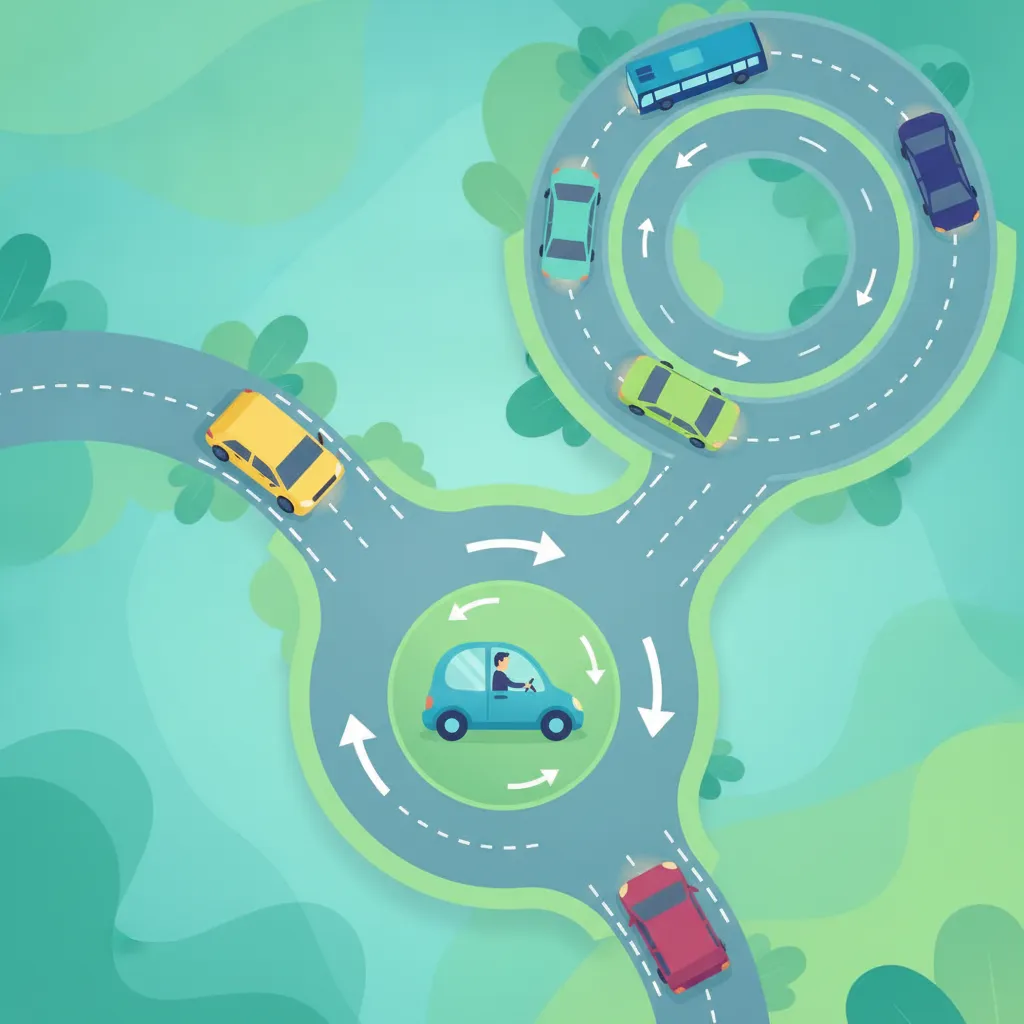
This lesson provides specific techniques for safely navigating the two main types of roundabouts in Great Britain. For multi-lane roundabouts, it covers how to choose the correct lane on approach, maintain your lane while circulating, and signal your exit correctly. It also explains the unique rules for mini-roundabouts, emphasizing the importance of giving way to traffic from the right and navigating them with caution due to their small size.

This lesson prepares you for the challenges of countryside driving. It emphasizes that the national speed limit on these roads is often too fast for the conditions. You will learn how to approach sharp bends, use passing places on single-track roads, and anticipate hazards like slow-moving tractors, horse riders, or mud on the road surface.

This lesson explains how to adapt your driving around different vehicles. You will learn to look out for motorcyclists, who are often hard to see, especially at junctions. It also covers the challenges of sharing the road with large vehicles, such as their extended blind spots, wider turning circles, and the wind turbulence they can create.

This lesson prepares you for the specific challenges of driving in the countryside. It explains the correct procedure for overtaking horse riders: slow down and pass wide, ensuring you do not spook the animal. You will also learn how to anticipate and safely manage encounters with slow-moving tractors and other farm machinery.
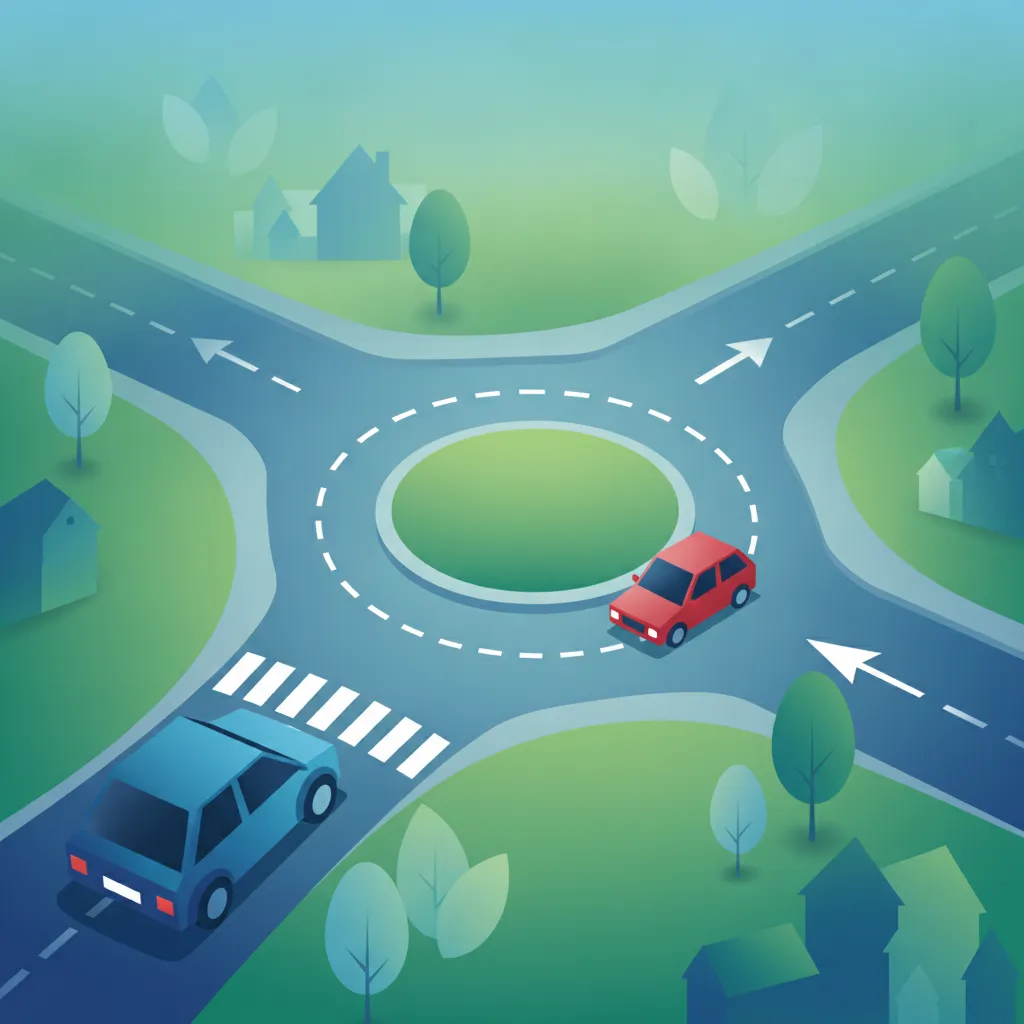
This lesson explains how to handle mini-roundabouts, which are common in urban and residential areas. The primary rule is to approach with caution and give priority to any traffic approaching from your right. You will also learn about correct signalling and the importance of being aware of cyclists and motorcyclists who may be harder to see.
Learn to identify and avoid frequent errors when changing lanes and signalling. This lesson details typical issues with blind spot checks, timing, and gap acceptance to improve driving safety.

This lesson provides a detailed map of the significant blind spots located to the front, sides, and rear of a typical heavy goods vehicle. It explains the purpose of the different classes of mirrors and how to adjust them correctly for maximum visibility. Learners will be taught effective scanning techniques—'mirror-signal-manoeuvre'—to actively check these zones before changing position, ensuring they are aware of any hidden hazards or other road users.

This lesson teaches riders how to be constantly aware of blind spots to prevent collisions. You will learn the importance of the 'lifesaver' shoulder check before changing position, turning, or moving off. The content emphasizes active visual scanning of the road ahead and around you, along with developing the judgment needed to accurately assess traffic speed and create safe gaps for maneuvering in various traffic situations.

This lesson explains how to optimise your field of vision to be aware of your surroundings. It covers how to correctly adjust your interior and exterior mirrors to minimise blind spots. Crucially, it emphasizes that mirrors alone are not enough, and a direct 'head check' or 'shoulder check' is essential before manoeuvres like changing lanes or moving off.

This lesson focuses on the critical skill of managing the large blind spots inherent to buses and coaches. It details the purpose of different mirror classes (e.g., wide-angle and kerb-view) and how to use them effectively. Learners will develop a systematic scanning and mirror-checking routine to maintain constant awareness of their surroundings, particularly looking for cyclists and pedestrians who may be hidden from direct view, thereby minimizing the risk of a collision.

This lesson teaches you to interpret warning signs, which are typically triangular and designed to alert you to potential hazards ahead. You will learn the meanings of common signs indicating sharp curves, slippery surfaces, roadworks, or areas with frequent pedestrian or animal crossings. Understanding these signs is crucial for anticipating dangers and adjusting your speed and position defensively, which is especially important for vulnerable riders of AM vehicles.
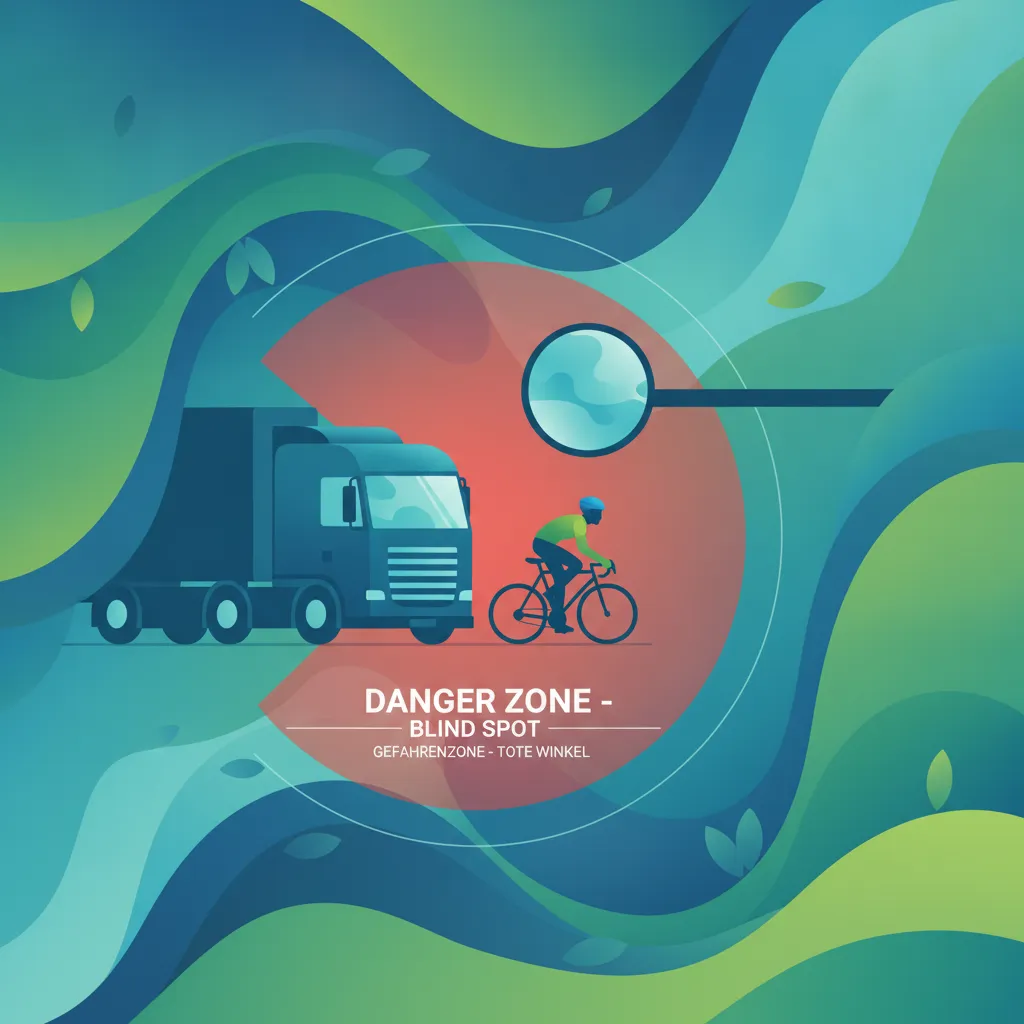
This lesson highlights the significant danger posed by the large blind spots of HGVs and buses. You will learn to identify these hazardous areas around a vehicle where the driver cannot see you. The lesson provides practical strategies for staying out of these zones, especially at junctions and when overtaking, to prevent serious accidents.

This lesson focuses on the critical skill of positioning your AM vehicle safely in relation to larger vehicles and roadside hazards like parked cars. You will learn to identify and stay out of the extensive blind spots of lorries and buses, especially at junctions. The content also provides strategies for maintaining a safe 'space cushion' around your vehicle and navigating narrow gaps or filtering in traffic without compromising your safety.
This lesson explains how to adapt your driving around different vehicles. You will learn to look out for motorcyclists, who are often hard to see, especially at junctions. It also covers the challenges of sharing the road with large vehicles, such as their extended blind spots, wider turning circles, and the wind turbulence they can create.
This lesson prepares you for the challenges of countryside driving. It emphasizes that the national speed limit on these roads is often too fast for the conditions. You will learn how to approach sharp bends, use passing places on single-track roads, and anticipate hazards like slow-moving tractors, horse riders, or mud on the road surface.
This lesson tackles the complexities of large roundabouts, which often have multiple lanes and exits. It stresses the importance of reading signs on the approach to select the correct lane for your destination. You will learn about maintaining lane discipline while on the roundabout and signalling correctly as you pass exits and prepare to leave.
Find clear answers to common questions learners have about Proper Lane Changes and Signalling. Learn how the lesson is structured, which driving theory objectives it supports, and how it fits into the overall learning path of units and curriculum progression in Great Britain. These explanations help you understand key concepts, lesson flow, and exam focused study goals.
Yes, you must always signal your intention to change lanes, even if you believe the road is clear. This alerts other road users to your intended path and is a standard requirement for both safe driving and passing your theory and practical tests.
Mirrors provide a wide view, but they cannot show everything, particularly vehicles positioned diagonally behind you. The final over-the-shoulder blind spot check ensures that no vehicle has moved into your path between your initial mirror checks and the start of your steering movement.
In the context of the theory test, you may face questions about the necessity of this check for safety. In a practical test, failing to perform a blind spot check before changing lanes is a common cause for a serious fault or failure, as it endangers other road users.
Yes, the MSM routine (Mirror, Signal, Manoeuvre) is a universal principle of British driving. Whether you are on a quiet residential street or a high-speed motorway, the core sequence of checking your surroundings and communicating your intent remains the same.
Dive into our comprehensive question bank to find exactly what you need for your Great Britain theory test. Use our advanced filters to pinpoint specific subjects or test your knowledge on challenging areas, ensuring you're fully prepared for success.