
This lesson focuses on the critical skill of situational awareness through effective mirror use and blind spot management. You will learn how to set up your vehicle correctly and why physical head checks are a vital safety requirement for every Category B driver in Great Britain.

Lesson content overview
Effective observation and a comprehensive understanding of your vehicle's surroundings are paramount for safe driving. This lesson focuses on optimising your field of vision through correct mirror adjustment and use, alongside crucial direct observation techniques, to manage blind spots and enhance situational awareness. Mastering these skills is fundamental for all manoeuvres and helps prevent collisions, especially with vulnerable road users.
As a driver, your ability to perceive and react to your environment relies heavily on your field of vision. While direct forward vision is essential, a significant portion of your surroundings can only be seen indirectly, primarily through your vehicle's mirrors. However, mirrors have inherent limitations, creating 'blind spots' that demand supplementary visual checks.
Mirrors serve as static visual aids that extend your visual field beyond what you can see by looking straight ahead or turning your head slightly. They allow you to monitor traffic behind and to the sides of your vehicle, significantly increasing your situational awareness without requiring excessive head turns. This extended view is critical for planning and executing safe manoeuvres.
Modern vehicles are equipped with several mirrors, each designed to provide specific views around the car. Understanding their individual functions is key to using them effectively.
Positioned inside the vehicle, typically mounted on the windscreen or roof, the interior rear-view mirror provides a direct view of the road directly behind your vehicle. It is crucial for monitoring traffic following you, especially when slowing down, stopping, or reversing. Many interior mirrors also feature an anti-glare or dimming lever, which can be adjusted to reduce the blinding effect of headlights from vehicles behind you at night.
Mounted on the doors or fenders, the exterior mirrors (often called side mirrors) provide a view of the lanes alongside your vehicle and further back. Most vehicles have two exterior mirrors: one on the driver's side and one on the passenger's side.
The driver's side exterior mirror helps you observe traffic in the lane adjacent to you and to the rear, especially vital for lane changes or overtaking. The passenger's side exterior mirror offers a similar view on the opposite side of the vehicle. For safety and comfort, particularly at night, the passenger-side exterior mirror is often legally required to incorporate an anti-glare feature, reducing the intensity of reflected headlights.
Correct mirror adjustment is not a one-time task; it must be performed every time you get into a different vehicle or whenever your seating position or the vehicle's load changes. Optimal adjustment minimises blind spots and maximises the visible area around your vehicle.
Before adjusting any mirrors, ensure your driver's seat is correctly positioned. Your seat height, distance from the pedals, and steering wheel position all affect your eye-point and, consequently, your mirror's field of view. Adjust your seat so you can comfortably reach the pedals, have a good view of the road ahead, and can operate the steering wheel with a slight bend in your arms.
Sit comfortably in your correctly adjusted driver's seat.
Adjust the interior mirror so that it centrally frames the rear window of your vehicle. This provides the widest possible view directly behind you.
Ensure you only need to make a minimal tilt of your head to comfortably see the entire reflection.
Lean slightly towards the driver's side window.
Adjust the driver's side exterior mirror outwards until you can just barely see the rear quarter of your own vehicle.
The goal is to show the lane alongside your vehicle and a sliver of the lane further away, minimising overlap with the interior mirror's view. When correctly set, you should be able to see the side of your own vehicle, but only just.
Lean slightly towards the centre of the vehicle (towards the interior mirror).
Adjust the passenger's side exterior mirror outwards until you can just barely see the rear quarter of your own vehicle.
This setting aims to provide maximum coverage of the lane adjacent to the passenger side and reduce the blind spot on that side. Similar to the driver's side, you should only just be able to see the side of your car.
Properly adjusted exterior mirrors should show very little of your own vehicle. The idea is to extend your field of vision, not to look at your car. When adjusted correctly, there should be minimal overlap between the view in your interior mirror and your exterior mirrors.
The optimal angle of your mirrors can shift slightly with changes to your vehicle's load, such as carrying passengers, heavy cargo, or towing a trailer. A heavier load in the rear can cause the vehicle to sag, altering your eye-point relative to the mirrors. It is crucial to re-adjust all mirrors after loading or unloading your vehicle or attaching a trailer to maintain optimal visibility and compensate for any obstructions.
A blind spot that is created or enlarged due to the presence of cargo or a trailer obstructing the driver's line of sight through mirrors or direct vision.
Even with perfectly adjusted mirrors, there will always be areas around your vehicle that remain unseen. These are known as blind spots or dead zones. They pose a significant risk, as another vehicle, cyclist, or pedestrian can be completely hidden from your view within these areas.
An area around a vehicle that cannot be seen by the driver through any of the vehicle's mirrors or direct forward vision. These areas are typically located to the rear-sides of the vehicle.
Blind spots exist because mirrors reflect light at specific angles, and the physical structure of your vehicle (pillars, bodywork) obstructs direct lines of sight. They are typically located at the side-rear of the vehicle, just outside the view provided by your exterior mirrors. The size and location of blind spots can vary significantly depending on the vehicle's width, mirror angles, and even the driver's height and seating position.
Relying solely on your mirrors to check your surroundings is a dangerous mistake. While mirrors offer an extended view, they cannot eliminate blind spots entirely. Many collisions, particularly side-impact accidents during lane changes, occur because a vehicle, motorcycle, or cyclist was hidden in a blind spot.
Several factors can influence the size and severity of blind spots:
To effectively manage blind spots and ensure a complete view of your surroundings, you must complement mirror observations with direct visual checks, known as head checks or shoulder checks. These brief, focused scans are legally required before many manoeuvres and are critical for preventing collisions.
A head check involves turning your head to directly look into the areas not covered by your mirrors. This is a more thorough scan than a simple glance.
Head checks are mandatory before:
A shoulder check is a specific type of head check performed by briefly glancing over your shoulder into your vehicle's side-rear blind spot. This is particularly vital when changing lanes.
A quick, direct visual scan over the driver's shoulder to verify that the vehicle's side-rear blind spot is clear before initiating a manoeuvre such as a lane change or overtaking.
Never rely on quick peripheral vision for a shoulder check. You must consciously turn your head and eyes to fully scan the blind spot area. This takes only a second and is invaluable for safety.
Integrating mirror checks and blind spot management into your driving routine is best achieved by following a systematic sequence. The "Mirror-Signal-Manoeuvre-Look" (MSML) is an adaptation of the well-known "Mirror-Signal-Manoeuvre" (MSM) routine, specifically highlighting the crucial final look (head/shoulder check) before executing the manoeuvre.
This sequence ensures that you gather all necessary information before acting, allowing you to confirm the safety of your intended action and legally comply with driving regulations.
Pre-Manoeuvre Mirror Check: Before deciding to change speed or direction, check your interior rear-view mirror and both exterior side-view mirrors. This gives you an initial understanding of the traffic situation around you.
Signal Intent: Once you have assessed the situation and decided it is safe to proceed, activate your appropriate indicator (signal) to inform other road users of your intentions.
Post-Signal Mirror Re-Check: After signalling, perform another quick check of your mirrors. The traffic situation can change rapidly, especially after you've signalled, as other drivers may react. This re-check confirms that the environment hasn't become unsafe.
Head/Shoulder Check: Crucially, perform a head or shoulder check (depending on the manoeuvre) to directly verify that your blind spots are clear of any vehicles, cyclists, or pedestrians. This is the final verification before committing to the manoeuvre.
Execute Manoeuvre: Only when you are absolutely certain that it is safe to do so, smoothly execute your manoeuvre, whether it's changing lanes, merging, overtaking, reversing, or moving off from a stationary position.
Environmental conditions can significantly impact the effectiveness of your mirrors and overall visibility. Drivers must adapt their mirror usage and take extra precautions when faced with challenging weather or lighting.
Bright reflections from headlights or sunlight that enter the driver's eyes via the mirrors, potentially obscuring the view or causing temporary blindness.
A mirror designed with a darkened or specifically treated surface, often on a portion of the glass, to reduce the intensity of light reflections, particularly from headlights at night.
As a driver in Great Britain, you have specific legal responsibilities regarding the use, adjustment, and maintenance of your vehicle's mirrors, as well as the requirement to perform direct visual checks. These regulations are designed to ensure your safety and the safety of other road users.
The Road Vehicles (Construction and Use) Regulations 1986 – Regulation 48 mandates that mirrors must be fitted, correctly adjusted, and kept clean at all times when a vehicle is on a public road. This ensures that drivers maintain an appropriate field of view. Driving with dirty, damaged, or improperly adjusted mirrors can lead to legal penalties and is a common reason for driving test failures.
Furthermore, Regulation 79 specifies that the passenger-side exterior mirror must incorporate an anti-glare feature. This is crucial for reducing headlight glare from following vehicles, particularly during night driving, enhancing safety for the driver.
The Highway Code provides clear guidance on mirror and blind spot checks, making them mandatory requirements for safe driving.
Failure to adhere to these Highway Code rules can be considered a driving fault during your practical driving test and can lead to legal liability in the event of an accident.
Ignoring mirror checks and blind spot management can have serious consequences:
Even experienced drivers can sometimes make errors regarding mirrors and visibility. For new drivers undergoing the Complete Theory for Great Britain Category B Learner Drivers course, understanding and avoiding these common pitfalls is essential.
Skipping the Shoulder Check: Many drivers over-rely on mirrors, assuming that if nothing is visible there, the area is clear. This is the most dangerous mistake.
Improper Mirror Adjustment: Mirrors that are too far in (showing too much of your own vehicle) or not adjusted after a load change significantly reduce your field of view.
Checking Mirrors Only Once: The traffic situation is dynamic. A single mirror check before signalling is insufficient.
Changing Mirrors While Driving: Adjusting mirrors while the vehicle is in motion diverts your attention from the road ahead, creating a hazard.
Over-reliance on Blind Spot Monitoring Systems: While useful, electronic blind spot detection systems are supplementary aids, not replacements for direct visual checks. They can fail or have limitations.
Neglecting Mirrors in Adverse Conditions: Dirty, foggy, or wet mirrors severely impair visibility.
Explore all units and lessons included in this driving theory course.
Lesson content overview
Explore all units and lessons included in this driving theory course.
Explore search topics learners often look for when studying Mirrors, Visibility, and Blind Spot Management. These topics reflect common questions about road rules, driving situations, safety guidance, and lesson level theory preparation for learners in Great Britain.
Browse additional driving theory lessons that cover connected traffic rules, road signs, and common driving situations related to this topic. Improve your understanding of how different rules interact across everyday traffic scenarios.
Explore beyond basic mirror adjustment. This lesson details advanced techniques for managing vehicle blind spots, including critical head and shoulder checks, and understanding their limitations. Enhance your all-round visibility for safer driving in Great Britain.
This lesson focuses on the critical skill of managing the large blind spots inherent to buses and coaches. It details the purpose of different mirror classes (e.g., wide-angle and kerb-view) and how to use them effectively. Learners will develop a systematic scanning and mirror-checking routine to maintain constant awareness of their surroundings, particularly looking for cyclists and pedestrians who may be hidden from direct view, thereby minimizing the risk of a collision.

This lesson provides a detailed map of the significant blind spots located to the front, sides, and rear of a typical heavy goods vehicle. It explains the purpose of the different classes of mirrors and how to adjust them correctly for maximum visibility. Learners will be taught effective scanning techniques—'mirror-signal-manoeuvre'—to actively check these zones before changing position, ensuring they are aware of any hidden hazards or other road users.
This lesson teaches riders how to be constantly aware of blind spots to prevent collisions. You will learn the importance of the 'lifesaver' shoulder check before changing position, turning, or moving off. The content emphasizes active visual scanning of the road ahead and around you, along with developing the judgment needed to accurately assess traffic speed and create safe gaps for maneuvering in various traffic situations.
This lesson addresses the increased risks associated with driving after dark. It explains when to switch between dipped and main beam headlights to maximise your own vision without dazzling other drivers. Techniques for reducing glare and spotting hazards like cyclists or pedestrians with poor visibility are also covered.

This lesson teaches strategic road positioning techniques to maximize your visibility and safety in traffic. You will learn how to choose the correct lane position to avoid the blind spots of larger vehicles and how to communicate your intentions through predictable riding. Key skills covered include effective use of shoulder checks, making eye contact with drivers, and maintaining a safe following distance, all of which are crucial for defensive riding on British roads.

A key aspect of motorcycle safety is being seen by others. This lesson teaches techniques to increase your conspicuity on the road. Topics include the strategic use of high-visibility and reflective clothing, correct use of headlights and daytime running lights, and adopting lane positions that place you in the direct line of sight of other drivers.
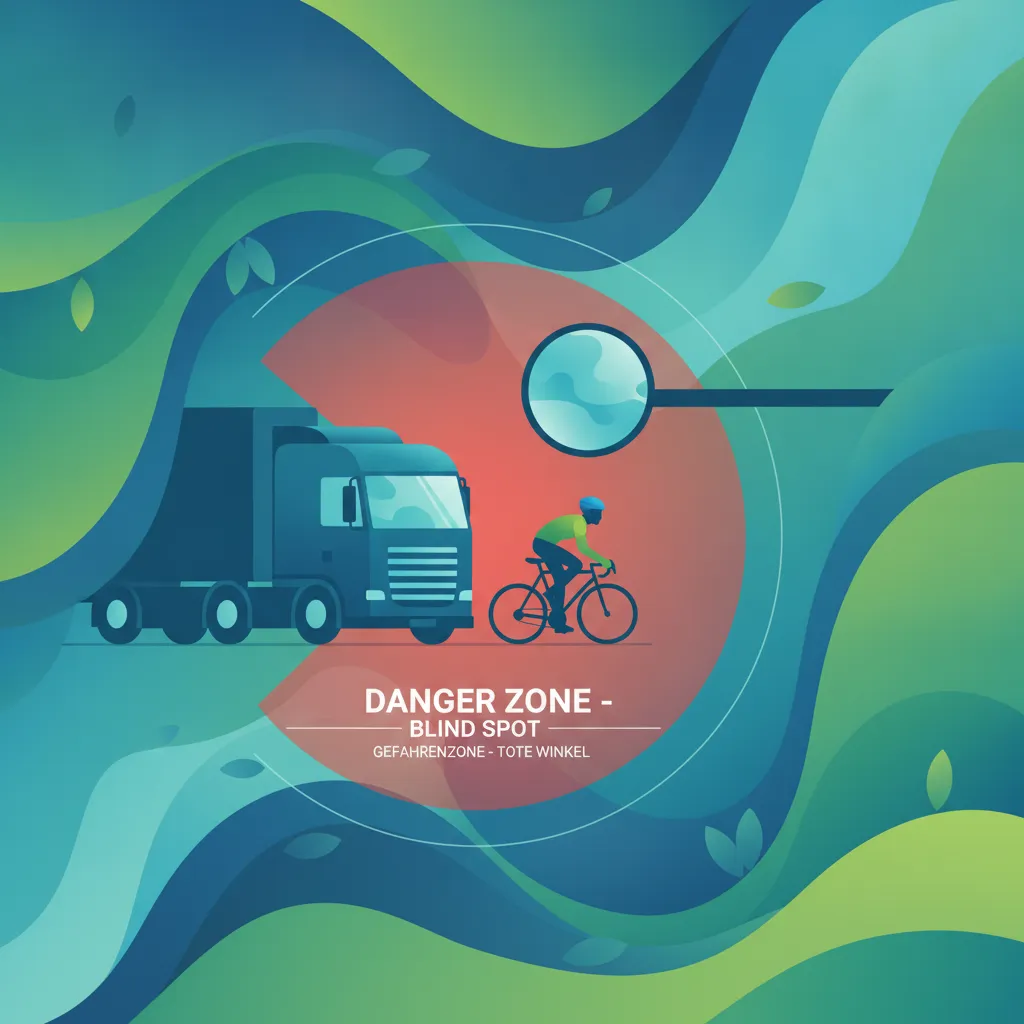
This lesson highlights the significant danger posed by the large blind spots of HGVs and buses. You will learn to identify these hazardous areas around a vehicle where the driver cannot see you. The lesson provides practical strategies for staying out of these zones, especially at junctions and when overtaking, to prevent serious accidents.

This lesson focuses on the critical skill of positioning your AM vehicle safely in relation to larger vehicles and roadside hazards like parked cars. You will learn to identify and stay out of the extensive blind spots of lorries and buses, especially at junctions. The content also provides strategies for maintaining a safe 'space cushion' around your vehicle and navigating narrow gaps or filtering in traffic without compromising your safety.
This lesson focuses on the key principles of safe low-speed manoeuvres, especially reversing. It stresses the need for continuous, all-around observation, looking for pedestrians, obstacles, and other vehicles. You will learn the importance of moving very slowly and being prepared to stop at any moment to maintain full control of the vehicle.

This lesson explains how to adapt your driving around different vehicles. You will learn to look out for motorcyclists, who are often hard to see, especially at junctions. It also covers the challenges of sharing the road with large vehicles, such as their extended blind spots, wider turning circles, and the wind turbulence they can create.
Learn about frequent errors drivers make regarding mirror adjustment, blind spot awareness, and the essential use of head checks. Understand how to avoid these pitfalls to improve safety and meet DVSA theory test standards in Great Britain.
This lesson focuses on the critical skill of managing the large blind spots inherent to buses and coaches. It details the purpose of different mirror classes (e.g., wide-angle and kerb-view) and how to use them effectively. Learners will develop a systematic scanning and mirror-checking routine to maintain constant awareness of their surroundings, particularly looking for cyclists and pedestrians who may be hidden from direct view, thereby minimizing the risk of a collision.
This lesson provides a detailed map of the significant blind spots located to the front, sides, and rear of a typical heavy goods vehicle. It explains the purpose of the different classes of mirrors and how to adjust them correctly for maximum visibility. Learners will be taught effective scanning techniques—'mirror-signal-manoeuvre'—to actively check these zones before changing position, ensuring they are aware of any hidden hazards or other road users.
This lesson teaches riders how to be constantly aware of blind spots to prevent collisions. You will learn the importance of the 'lifesaver' shoulder check before changing position, turning, or moving off. The content emphasizes active visual scanning of the road ahead and around you, along with developing the judgment needed to accurately assess traffic speed and create safe gaps for maneuvering in various traffic situations.
This lesson addresses the increased risks associated with driving after dark. It explains when to switch between dipped and main beam headlights to maximise your own vision without dazzling other drivers. Techniques for reducing glare and spotting hazards like cyclists or pedestrians with poor visibility are also covered.
This lesson highlights the significant danger posed by the large blind spots of HGVs and buses. You will learn to identify these hazardous areas around a vehicle where the driver cannot see you. The lesson provides practical strategies for staying out of these zones, especially at junctions and when overtaking, to prevent serious accidents.
This lesson teaches strategic road positioning techniques to maximize your visibility and safety in traffic. You will learn how to choose the correct lane position to avoid the blind spots of larger vehicles and how to communicate your intentions through predictable riding. Key skills covered include effective use of shoulder checks, making eye contact with drivers, and maintaining a safe following distance, all of which are crucial for defensive riding on British roads.
This lesson explains how to adapt your driving around different vehicles. You will learn to look out for motorcyclists, who are often hard to see, especially at junctions. It also covers the challenges of sharing the road with large vehicles, such as their extended blind spots, wider turning circles, and the wind turbulence they can create.

This lesson focuses on the correct procedure for moving from one lane to another. It highlights the critical safety steps of checking your interior and side mirrors, signalling in good time, and performing a final head check into your blind spot. This ensures the space you intend to move into is clear before you begin the manoeuvre.
A key aspect of motorcycle safety is being seen by others. This lesson teaches techniques to increase your conspicuity on the road. Topics include the strategic use of high-visibility and reflective clothing, correct use of headlights and daytime running lights, and adopting lane positions that place you in the direct line of sight of other drivers.
This lesson focuses on the key principles of safe low-speed manoeuvres, especially reversing. It stresses the need for continuous, all-around observation, looking for pedestrians, obstacles, and other vehicles. You will learn the importance of moving very slowly and being prepared to stop at any moment to maintain full control of the vehicle.
Find clear answers to common questions learners have about Mirrors, Visibility, and Blind Spot Management. Learn how the lesson is structured, which driving theory objectives it supports, and how it fits into the overall learning path of units and curriculum progression in Great Britain. These explanations help you understand key concepts, lesson flow, and exam focused study goals.
Mirrors are designed to provide a wide view of the road behind you, but they have inherent 'blind spots' where a vehicle or cyclist can be positioned without being visible to you. A physical head check is the only way to confirm that the space beside and behind you is clear before changing direction.
You should check your mirrors frequently, especially before any change in speed or direction. This includes before signalling, slowing down, turning, or changing lanes. It should become a habitual part of your driving, not just an occasional check.
Yes, always. When moving off, you must check all mirrors and both blind spots, including a full look over your shoulder, to ensure no pedestrians, cyclists, or other vehicles are approaching your position.
MSM stands for Mirror-Signal-Manoeuvre. It is the fundamental sequence for safe driving in Great Britain. Checking your mirrors is the very first step in the routine, ensuring you are fully aware of the traffic situation before you signal your intention or execute a manoeuvre.
Dive into our comprehensive question bank to find exactly what you need for your Great Britain theory test. Use our advanced filters to pinpoint specific subjects or test your knowledge on challenging areas, ensuring you're fully prepared for success.