
This lesson covers the critical role of vehicle tyres in ensuring safety, performance, and legal compliance on Great Britain's roads. You will learn how to maintain correct tyre pressure for handling and fuel efficiency, identify signs of damage, and understand the legal minimum tread depth requirements.
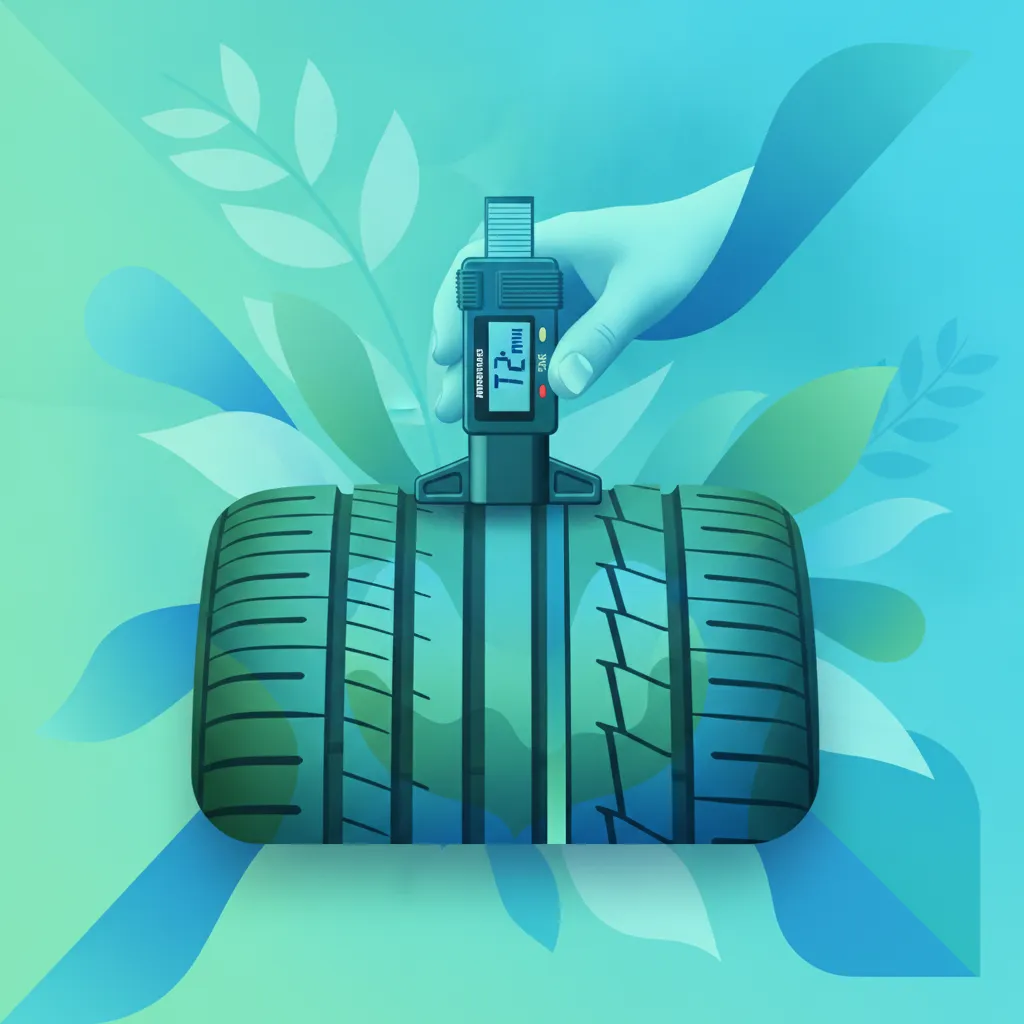
Lesson content overview
The tyres are your vehicle's only point of contact with the road. Their condition, correct inflation pressure, and adequate tread depth are absolutely fundamental to road safety. This lesson will explore these critical aspects, highlighting how they influence your vehicle's handling, braking efficiency, fuel consumption, and overall legal compliance on Great Britain's roads. Understanding and maintaining your tyres is not just a recommendation; it is a legal requirement and a cornerstone of responsible driving.
Tyres are engineered to perform several crucial functions simultaneously: they support the vehicle's weight, absorb road shocks, transmit traction and braking forces, and allow for steering control. Any compromise in their condition directly impairs these functions, significantly increasing the risk of accidents. Improper tyre maintenance is a common contributing factor in road traffic collisions, often leading to a loss of control.
Maintaining correct tyre condition, pressure, and tread depth ensures optimal contact between the tyre and the road surface, known as the "contact patch." This small area, roughly the size of a postcard on each tyre, is where all the forces for accelerating, braking, and turning are generated. When this contact patch is compromised, so is your ability to control the vehicle safely.
Modern vehicle tyres are complex engineering marvels, designed to offer a balance of grip, durability, and flexibility. They are constructed from multiple layers of rubber compounds, steel belts, and fabric cords, each serving a specific purpose. Key components include the tread (the part that contacts the road), the sidewall (the vertical section), the carcass or plies (the main structural body), the bead (which seals the tyre to the wheel rim), and the inner liner (which helps maintain air pressure).
Different tyre designs and materials are optimised for various driving conditions and vehicle types. Understanding these differences helps ensure you fit the most appropriate tyres for your vehicle and typical journeys.
Most modern passenger cars in Great Britain are fitted with radial tyres. In radial tyres, the plies (cords) run radially across the tyre from bead to bead, reinforced by steel belts running circumferentially under the tread. This construction offers better fuel efficiency, improved handling, and longer tread life compared to older bias-ply tyres, where the cords crisscross at an angle. Bias-ply tyres are now rare on passenger vehicles.
While summer tyres are designed for performance in warmer conditions, offering optimal grip and handling above 7°C, other types exist for specific climates:
It is crucial that all tyres on a vehicle comply with UK approval standards, such as ECE R30, and are suited to the vehicle's load and speed ratings.
Tyre inflation pressure is the amount of air inside a tyre, measured in pounds per square inch (psi) or kilopascals (kPa/bar). It is arguably the single most critical factor in tyre maintenance and safety.
Correct tyre pressure ensures the tyre maintains its optimal shape and contact patch with the road. This leads to:
You must check tyre pressures regularly, at least once a month, and always before any long journeys or if you are carrying heavy loads. The most accurate readings are obtained when tyres are "cold," meaning they have been stationary for at least three hours or driven for less than one kilometre.
Locate your vehicle manufacturer's recommended cold inflation pressures. This information is usually found in the vehicle's handbook, on a sticker inside the driver's door jamb, or inside the fuel filler flap. There are often different recommendations for light and full loads.
Remove the dust cap from the tyre valve.
Press a tyre pressure gauge firmly onto the valve stem. Read the pressure displayed.
Compare the reading with the manufacturer's recommendation. If the pressure is too low, add air using a suitable pump (available at most petrol stations). If it's too high, release air by pressing the pin inside the valve stem until the correct pressure is reached.
Replace the dust cap on the valve.
Repeat this process for all four tyres and your spare tyre (if applicable).
The tyre pressure measured when the tyre has been stationary for at least three hours or driven less than 1 kilometre. This is the crucial benchmark for accurate pressure checks.
Tyre pressure is not static; it changes with temperature. As a general rule, tyre pressure increases by approximately 1 psi (0.07 bar) for every 10°F (5.5°C) rise in ambient temperature or due to driving-induced heat. Conversely, pressure decreases in colder conditions. This means:
Invest in a reliable tyre pressure gauge and keep it in your vehicle. Regular checks are quick and can prevent serious safety issues and save you money on fuel and new tyres.
The tread on your tyres is vital for grip, particularly in wet conditions. The grooves in the tread pattern are designed to channel water away from the contact patch, allowing the tyre to maintain grip with the road surface.
Tread depth is the vertical measurement from the deepest part of the tyre's main tread grooves to the surface of the tread. In Great Britain, the law requires a minimum tread depth of 1.6 millimetres across the central three-quarters of the tread width, around the entire circumference of the tyre.
This minimum depth is not arbitrary; it is crucial for:
You can check tread depth using a simple tread depth gauge, which can be purchased cheaply. Alternatively, most tyres have built-in tread wear indicators (TWI). These are small raised bumps within the main tread grooves, typically spaced around the tyre's circumference. When the tread surface wears down to be level with these indicators, the tyre has reached the legal minimum tread depth of 1.6 mm and must be replaced immediately.
Visually inspect your tyres for the tread wear indicators. These are typically small rubber bars found in the main grooves of the tyre.
If you have a tread depth gauge, insert the probe into a main tread groove. Push it down until the base of the gauge is flat against the tyre surface.
Take several measurements across the central three-quarters of the tyre's width and around its circumference to ensure consistent depth.
If any part of the central three-quarters of the tyre measures less than 1.6 mm, the tyre is illegal and unsafe, and must be replaced.
Driving with insufficient tread depth significantly increases the risk of an accident, particularly in wet conditions.
A dangerous phenomenon where a layer of water builds up between the vehicle's tyres and the road surface, causing the tyres to lose contact with the road and the driver to lose control of the steering and braking.
When aquaplaning occurs, your vehicle essentially floats on the water, rendering steering and braking ineffective. The shallower the tread, the lower the speed at which aquaplaning can occur, and the longer your braking distances will be. Legally, driving with tyres below the 1.6 mm limit is a serious offence, potentially leading to points on your licence and a substantial fine for each illegal tyre.
Regular visual inspection of your tyres for abnormal wear patterns and physical damage is just as important as checking pressure and tread depth. These inspections can reveal underlying mechanical issues with your vehicle or indicate that a tyre needs immediate attention.
Different wear patterns can diagnose specific problems:
If you notice any unusual wear patterns, it's advisable to have your vehicle inspected by a qualified mechanic to identify and correct the underlying problem before fitting new tyres.
Physical damage to a tyre can compromise its structural integrity and lead to sudden failure. Always inspect your tyres for:
Never attempt to repair sidewall damage or significant cuts yourself. Professional assessment is crucial.
Beyond size and type, tyres also carry specific ratings for the maximum load they can carry and the maximum speed they can safely sustain. These are crucial specifications that must match or exceed your vehicle's requirements.
The load index is a numerical code stamped on the tyre's sidewall that indicates the maximum weight a single tyre can safely carry at its maximum inflation pressure. For example, a load index of 95 means the tyre can carry 690 kilograms.
A numeric code on the tyre sidewall indicating the maximum load (in kilograms) a single tyre can safely carry.
It is a legal requirement in Great Britain that the tyres fitted to your vehicle must have a load index equal to or exceeding the vehicle manufacturer's specified maximum laden weight. Using tyres with a lower load index can lead to dangerous overloading, excessive heat build-up, premature wear, and potential tyre failure, especially when the vehicle is fully loaded.
The speed rating is an alphanumeric code on the tyre sidewall (e.g., "H" for 210 km/h or 130 mph) that indicates the maximum speed the tyre can safely sustain for a prolonged period under specified conditions.
A letter code on the tyre sidewall indicating the maximum sustained speed a tyre can safely maintain.
Your vehicle's tyres must have a speed rating that at least matches or exceeds the vehicle's maximum design speed. While you may never drive at these maximum speeds, the speed rating indicates the tyre's heat resistance and structural integrity at higher velocities. Using tyres with an insufficient speed rating is illegal and dangerous, as they can overheat and fail at speeds they are not designed for.
For winter tyres, it is permitted to fit tyres with a lower speed rating than specified for your vehicle, provided the difference is not excessive and a visible sticker indicating the lower maximum speed is displayed inside the vehicle.
Tyres, like any rubber product, degrade over time, regardless of how much they are used or how much tread remains. The rubber compounds harden, lose elasticity, and become more susceptible to cracking, reducing grip and increasing the risk of sudden failure.
The age of a tyre is indicated by a four-digit DOT code stamped on its sidewall. This code shows the week and year of manufacture (e.g., "1520" means the tyre was manufactured in the 15th week of 2020).
A four-digit number on the tyre sidewall indicating the week and year of manufacture (e.g., 1520 = week 15 of 2020).
While there's a mandatory legal limit in some jurisdictions for certain vehicle types (e.g., for buses and coaches, tyres over 10 years old must not be used on front axles or twin-wheeled rear axles), for most passenger cars in Great Britain, the recommendation is to replace tyres that are six years old or older, even if they appear to have good tread depth. Tyres should never be used if they are ten years old or more, regardless of their visual condition. Tyre degradation due to age is a key inspection item during the annual MOT test.
As a driver in Great Britain, you have a legal obligation to ensure your vehicle's tyres are roadworthy. Failure to comply can result in severe penalties, including fines, points on your licence, and vehicle unroadworthiness.
For each illegal tyre, you could face a fine of up to £2,500 and three penalty points on your licence. Driving with four illegal tyres could lead to a £10,000 fine and 12 points, potentially resulting in disqualification.
Understanding the rules is one thing; applying them correctly in various driving situations is another. Here are some common mistakes and the correct approaches:
Driving on Under-inflated Tyres: Many drivers neglect regular pressure checks, leading to under-inflated tyres. This not only increases fuel consumption and tyre wear but significantly compromises handling and increases the risk of a blowout due to excessive heat build-up. Always inflate to the manufacturer's cold pressure recommendation.
Ignoring Seasonal Pressure Adjustments: As temperatures drop in winter, tyre pressure naturally decreases. Failing to compensate for this can leave you driving on significantly under-inflated tyres, reducing grip on cold, wet, or icy roads. Regularly check and adjust pressures, especially during seasonal changes.
Repairing Sidewall Punctures: A common misunderstanding is that any puncture can be patched. Sidewalls are not designed to be repaired due to the flexing forces they endure. A puncture or cut in the sidewall always means the tyre must be replaced.
Driving on a Tyre with a Bulge: A bulge indicates catastrophic internal damage to the tyre's structure. It's a ticking time bomb. Continuing to drive, even for a short distance, risks a sudden and dangerous tyre blowout. Immediate replacement is the only safe option.
Using Summer Tyres in Winter Conditions: Summer tyres lose their grip and become dangerously hard in temperatures below 7°C, making them unsuitable for icy or snowy roads. For optimal safety in winter, consider fitting dedicated winter tyres or approved all-season tyres.
Not Adjusting Tyre Pressure for Heavy Loads: When you load your vehicle with passengers and luggage, or attach a trailer, the tyres need more air pressure to support the increased weight safely. Failing to adjust can lead to tyre overheating and failure. Always refer to your vehicle's handbook for full-load pressure recommendations.
Your vehicle's tyres are a crucial safety component that demands your regular attention. Proper tyre maintenance is a simple yet effective way to ensure your safety, that of your passengers, and other road users. It also contributes to better fuel economy and extends the life of your tyres.
Adopt a proactive approach to tyre care:
Monthly Cold Pressure Check: Check all four tyres and your spare tyre (if applicable) at least once a month, when they are cold, and adjust to the manufacturer's recommended pressures.
Before Long Journeys: Always perform a quick cold pressure check before embarking on any significant trip.
After Heavy Loads: Adjust tyre pressures according to your vehicle's handbook when carrying a full load of passengers or cargo, or when towing.
Weekly Visual Inspection: Quickly check your tyres for any visible damage (cuts, bulges, embedded objects) and uneven wear patterns.
Tread Depth Monitoring: Regularly check tread depth using a gauge or by monitoring the tread wear indicators. Replace tyres as soon as they reach the 1.6 mm legal limit, or earlier if worn unevenly.
Tyre Age Awareness: Be aware of your tyres' age (DOT code) and consider replacing them after 6 years, and definitely after 10 years, regardless of tread depth.
By following these guidelines, you'll ensure your vehicle's tyres remain in optimal condition, providing the necessary grip, stability, and control for safe driving on Great Britain's roads.
This lesson covers the essential tyre safety knowledge required for driving in Great Britain, emphasising that tyres are your vehicle's only contact with the road. Key legal requirements include maintaining at least 1.6mm tread depth across the central three-quarters and ensuring tyres are roadworthy regarding pressure, condition, and age. Regular checks should include monthly cold pressure readings adjusted for seasonal temperature changes and heavy loads, visual inspections for damage (bulges, cuts, cracks), and monitoring tread depth using built-in wear indicators. The lesson also covers tyre specifications including load index and speed rating requirements, practical repair limits for punctures, and the importance of tyre age (DOT code) with replacement recommended at 6 years and mandatory by 10 years. These skills directly support both theory test preparation and the practical 'show me, tell me' vehicle safety component.
A short set of high-value points that capture the most important learning from this lesson.
The legal minimum tread depth in Great Britain is 1.6mm, measured across the central three-quarters of the tyre's width around its entire circumference.
Tyre pressure must be checked when tyres are cold (stationary for at least 3 hours or driven less than 1 kilometre) using manufacturer-recommended pressures.
Tyre age is determined by the four-digit DOT code showing week and year of manufacture; tyres should be replaced at 6 years and never used beyond 10 years.
Sidewall damage, including bulges, cuts exceeding 3mm, or any puncture in the sidewall, cannot be repaired and requires immediate tyre replacement.
Tyre pressure decreases by approximately 1 psi for every 10°F (5.5°C) drop in temperature, requiring seasonal adjustments especially before winter.
Explore all units and lessons included in this driving theory course.
1.6mm across central three-quarters is the legal tread limit; tread wear indicators (TWI) signal when this limit is reached.
Under-inflation causes shoulder wear; over-inflation causes centre wear; alignment issues cause one-edge or feathering wear.
Punctures up to 4mm in the central tread may be repairable per BS AU 159; sidewall punctures always require replacement.
Winter tyres offer superior grip below 7°C due to softer compounds and deeper sipes; summer tyres become dangerous in cold conditions.
Each illegal tyre carries a potential fine of up to £2,500 and 3 penalty points; four illegal tyres could mean £10,000 and 12 points.
Checking tyre pressure after driving when tyres are warm, giving falsely high readings that mask under-inflation.
Assuming any puncture can be repaired; sidewall damage is always dangerous and unrepairable.
Ignoring tyre age assuming sufficient tread means safe tyres; aged rubber degrades regardless of tread depth.
Failing to adjust tyre pressure when carrying heavy loads or towing, leading to overheating and premature failure.
Using summer tyres in winter conditions below 7°C where they harden and lose grip significantly.
Lesson content overview
A short set of high-value points that capture the most important learning from this lesson.
The legal minimum tread depth in Great Britain is 1.6mm, measured across the central three-quarters of the tyre's width around its entire circumference.
Tyre pressure must be checked when tyres are cold (stationary for at least 3 hours or driven less than 1 kilometre) using manufacturer-recommended pressures.
Tyre age is determined by the four-digit DOT code showing week and year of manufacture; tyres should be replaced at 6 years and never used beyond 10 years.
Sidewall damage, including bulges, cuts exceeding 3mm, or any puncture in the sidewall, cannot be repaired and requires immediate tyre replacement.
Tyre pressure decreases by approximately 1 psi for every 10°F (5.5°C) drop in temperature, requiring seasonal adjustments especially before winter.
Explore all units and lessons included in this driving theory course.
1.6mm across central three-quarters is the legal tread limit; tread wear indicators (TWI) signal when this limit is reached.
Under-inflation causes shoulder wear; over-inflation causes centre wear; alignment issues cause one-edge or feathering wear.
Punctures up to 4mm in the central tread may be repairable per BS AU 159; sidewall punctures always require replacement.
Winter tyres offer superior grip below 7°C due to softer compounds and deeper sipes; summer tyres become dangerous in cold conditions.
Each illegal tyre carries a potential fine of up to £2,500 and 3 penalty points; four illegal tyres could mean £10,000 and 12 points.
Checking tyre pressure after driving when tyres are warm, giving falsely high readings that mask under-inflation.
Assuming any puncture can be repaired; sidewall damage is always dangerous and unrepairable.
Ignoring tyre age assuming sufficient tread means safe tyres; aged rubber degrades regardless of tread depth.
Failing to adjust tyre pressure when carrying heavy loads or towing, leading to overheating and premature failure.
Using summer tyres in winter conditions below 7°C where they harden and lose grip significantly.
Explore search topics learners often look for when studying Tyre Condition, Pressure, and Tread Depth. These topics reflect common questions about road rules, driving situations, safety guidance, and lesson level theory preparation for learners in Great Britain.
Browse additional driving theory lessons that cover connected traffic rules, road signs, and common driving situations related to this topic. Improve your understanding of how different rules interact across everyday traffic scenarios.
Learn about critical tyre maintenance, including checking inflation pressure, condition, and the legal minimum tread depth of 1.6mm for UK driving theory. Understand how these factors affect road safety.

This lesson teaches a practical method for maintaining a safe distance from the vehicle in front. The 'two-second rule' provides a minimum time gap in dry conditions, which should be doubled to four seconds in the wet. Adhering to this rule gives you sufficient time to react and brake safely if the vehicle ahead stops suddenly.

This lesson details the crucial documentation required for legal driving in the UK. It explains the purpose of the V5C registration document, the MOT test certificate, and proof of insurance and road tax (Vehicle Excise Duty). You will learn where to keep these documents and when you might be required to present them to authorities.

This lesson covers the principles of safe loading to prevent items from shifting or falling and causing a hazard. It explains that any load must be securely fastened and must not obstruct your view. You will also learn how overloading or distributing weight incorrectly can dangerously affect the vehicle's steering, braking, and overall stability.

This lesson provides essential guidance for handling on-road emergencies. It outlines the steps to take if your vehicle breaks down, including making yourself visible and getting to a place of safety. You will also learn the basics of what to do at an accident scene, including assessing the situation, calling for help, and providing simple first aid until professional assistance arrives.

Your safety depends on the small contact patch where your tyres meet the road. This lesson explains how grip (or traction) is affected by the type and condition of the road surface, as well as your tyre's condition and pressure. You will learn to recognise high-risk surfaces and adjust your riding to avoid losing traction.

This lesson reinforces the vital safety rule of maintaining an adequate following distance from the vehicle ahead. It explains why the standard 'two-second rule' must be extended for heavy vehicles, especially in poor weather or when heavily laden, to account for longer stopping distances. You will learn practical methods for judging a safe gap in various traffic situations, creating a crucial safety buffer to react to unforeseen hazards.

This lesson details the essential pre-journey inspection or 'walk-around check' that every professional driver must perform. It provides a systematic checklist covering critical components like tyres, brakes, lights, mirrors, and coupling mechanisms, as well as verifying cargo security. You will learn the correct procedure for identifying and reporting defects to ensure the vehicle is roadworthy and safe before starting any journey, a key legal and professional responsibility.

This lesson teaches you to interpret warning signs, which are typically triangular and designed to alert you to potential hazards ahead. You will learn the meanings of common signs indicating sharp curves, slippery surfaces, roadworks, or areas with frequent pedestrian or animal crossings. Understanding these signs is crucial for anticipating dangers and adjusting your speed and position defensively, which is especially important for vulnerable riders of AM vehicles.

This lesson explains that driving while tired can be as dangerous as drink driving, significantly slowing your reactions and reducing concentration. It teaches you to recognise the signs of fatigue, such as yawning or wandering thoughts. The only real cure for tiredness is sleep, so the lesson stresses the importance of taking proper breaks—at least 15 minutes for every two hours of driving.

This lesson provides essential advice for driving when weather conditions are poor. It explains how rain can cause aquaplaning and why you must double your following distance. You will also learn techniques for driving in icy conditions, including gentle use of controls to avoid skidding, and the correct use of lights in fog.
Explore common tyre wear patterns and types of damage that compromise safety. Learn to identify issues like bulges, cuts, and insufficient tread depth for UK driving theory and roadworthiness.
Your safety depends on the small contact patch where your tyres meet the road. This lesson explains how grip (or traction) is affected by the type and condition of the road surface, as well as your tyre's condition and pressure. You will learn to recognise high-risk surfaces and adjust your riding to avoid losing traction.

This lesson explores the crucial concept of tyre grip and how it is affected by various road surfaces and conditions. You will learn to identify potential hazards that reduce traction, such as wet leaves, manhole covers, oil spills, and loose gravel. The content provides strategies for adjusting your riding style, including speed and lean angle, to safely navigate these surfaces and prevent a loss of control.
This lesson teaches you to interpret warning signs, which are typically triangular and designed to alert you to potential hazards ahead. You will learn the meanings of common signs indicating sharp curves, slippery surfaces, roadworks, or areas with frequent pedestrian or animal crossings. Understanding these signs is crucial for anticipating dangers and adjusting your speed and position defensively, which is especially important for vulnerable riders of AM vehicles.
This lesson teaches a practical method for maintaining a safe distance from the vehicle in front. The 'two-second rule' provides a minimum time gap in dry conditions, which should be doubled to four seconds in the wet. Adhering to this rule gives you sufficient time to react and brake safely if the vehicle ahead stops suddenly.
This lesson covers the principles of safe loading to prevent items from shifting or falling and causing a hazard. It explains that any load must be securely fastened and must not obstruct your view. You will also learn how overloading or distributing weight incorrectly can dangerously affect the vehicle's steering, braking, and overall stability.

This lesson explains markings found at the side of the road that regulate parking and stopping. You will learn the meaning of single and double yellow lines, and the stricter rules associated with red lines on 'Red Routes'. The lesson also covers markings for parking bays, loading zones, and hatched areas that are designed to separate traffic.

This lesson explains the function of warning signs, which are mostly triangular and alert road users to potential dangers ahead. You will learn to identify signs for bends, junctions, slippery surfaces, and other hazards particularly relevant to motorcyclists. Acting on these warnings allows a rider to adjust speed and position proactively, enhancing safety.

While prevention is best, it is important to know how to react if your motorcycle begins to skid. This lesson describes the different causes and feelings of front and rear wheel slides. It provides guidance on the correct recovery actions, which often involve smooth, gentle control inputs and looking in your intended direction of travel.

This lesson explains how lines running parallel to the kerb control traffic movement. You will learn that broken white lines divide lanes, while solid white lines generally prohibit crossing them. The specific rules for double white lines, including when you are permitted to cross, are also covered in detail to ensure safe overtaking.

This lesson teaches you to interpret warning signs, which are typically triangular with a red border. These signs are crucial for anticipating potential dangers, from changes in road layout to the presence of pedestrians or animals. By understanding these warnings, you can adjust your driving to safely navigate upcoming hazards.
Find clear answers to common questions learners have about Tyre Condition, Pressure, and Tread Depth. Learn how the lesson is structured, which driving theory objectives it supports, and how it fits into the overall learning path of units and curriculum progression in Great Britain. These explanations help you understand key concepts, lesson flow, and exam focused study goals.
For a Category B car, the legal minimum tread depth is 1.6mm across the central three-quarters of the breadth of the tyre and around the entire circumference.
You should check your tyre pressure at least once every two weeks or before any long journey. Always check them when the tyres are cold for an accurate reading.
Yes, under-inflated tyres increase rolling resistance, which forces the engine to work harder and significantly increases fuel consumption, as well as negatively impacting steering control.
You should check for cuts, bulges, tears, or embedded objects like nails or stones in the tread. Any sign of structural damage or exposed cords means the tyre must be replaced immediately.
Dive into our comprehensive question bank to find exactly what you need for your Great Britain theory test. Use our advanced filters to pinpoint specific subjects or test your knowledge on challenging areas, ensuring you're fully prepared for success.