
Driving Theory
British Driving Theory Courses

Lesson 4 of the Weather, Night Driving, Motorways, Rural Roads and Roadworks unit

GB Category B Theory: Rural Road Risks, Narrow Lanes, Bends, and Farm Vehicles

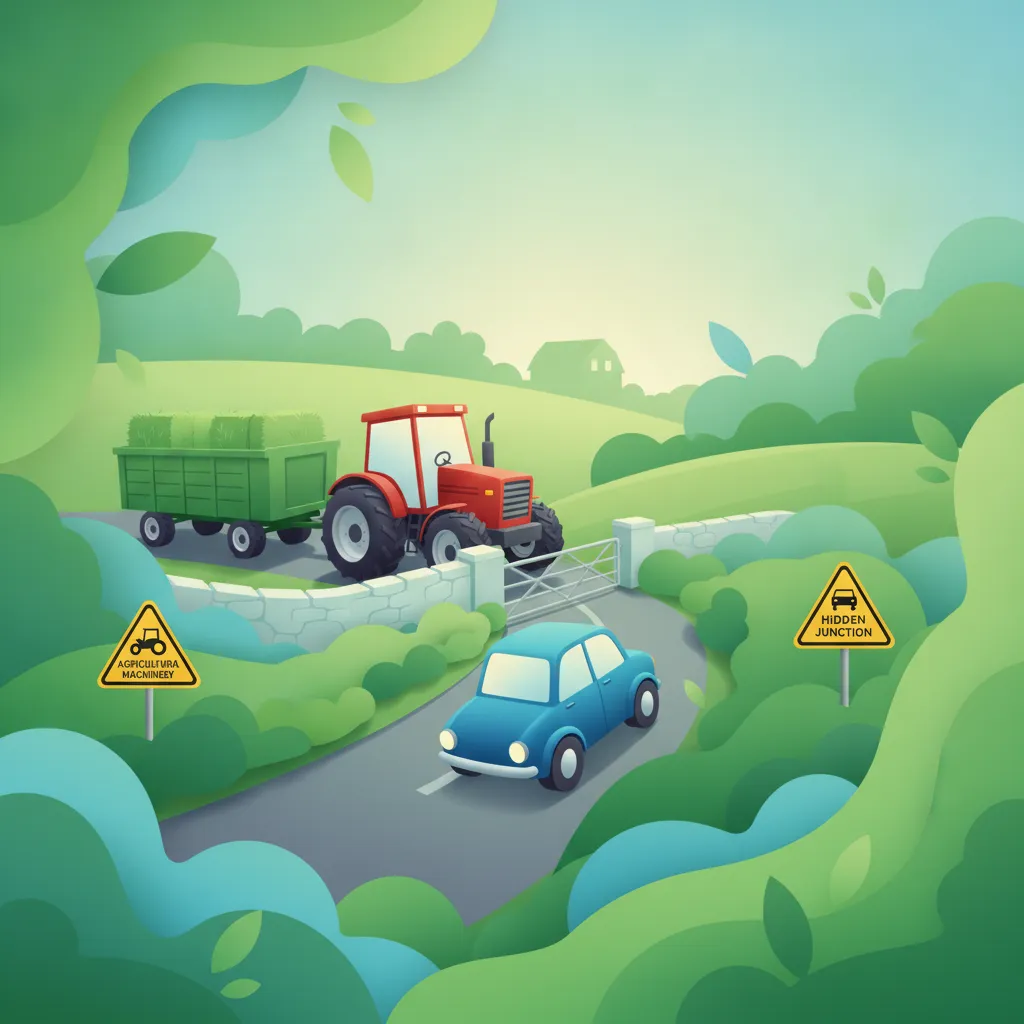
This lesson explores the unique challenges of driving on rural and country roads, a key component of your Category B theory exam. You will learn how to adapt your speed to hazardous conditions, safely navigate narrow lanes, and anticipate the presence of slow-moving agricultural machinery and vulnerable road users.
rural roadscountryside drivingtheory test prephazard awarenessCategory B
GB Category B Theory: Rural Road Risks, Narrow Lanes, Bends, and Farm Vehicles

Lesson content overview

GB Category B Theory

Rural Road Driving Risks: Navigating Narrow Lanes, Bends, and Farm Vehicles

Driving on rural roads presents a unique set of challenges and hazards that differ significantly from urban or motorway driving. While often picturesque, the countryside environment demands heightened awareness, specific skills, and a cautious approach to ensure safety for all road users. This lesson will equip you with the knowledge needed to understand and mitigate the elevated risks associated with rural driving, preparing you for safe navigation and success in your Category B driving theory test.

Why Rural Roads Demand Extra Caution

Rural roads, by their very nature, often feature narrow lanes, sharp or concealed bends, undulating terrain, and variable road surfaces. Unlike urban areas, you'll frequently encounter slow-moving agricultural vehicles, horse riders, cyclists, and pedestrians with limited dedicated pathways. The combination of potentially higher speeds (due to national speed limits) and unexpected hazards creates a higher risk of serious collisions compared to other road types. It is crucial to develop strong hazard perception skills and a proactive driving strategy to manage these conditions effectively.

Understanding Rural Speed Limits and Safe Speed Management

One of the most critical aspects of safe rural driving is understanding and correctly applying speed limits. While national speed limits may apply, these are often too fast for the prevailing conditions on many rural roads.

The National Speed Limit vs. Safe Driving Speed

The national speed limit (NSL) for single carriageway roads in Great Britain, unless otherwise signposted, is 60 mph (approximately 97 km/h) for cars and motorcycles. However, this is a legal maximum, not a target speed that is always safe. The underlying logic for rural road safety mandates a continuous assessment of risk to determine a truly safe speed.

The physics of speed dictate that kinetic energy (energy of motion) increases with the square of speed. This means even a small reduction in speed can significantly decrease stopping distances and collision severity. For example, reducing your speed by just 10 mph (16 km/h) on a rural road can shorten your total stopping distance by approximately 20%, providing crucial extra time and space to react to unforeseen hazards.

Adjusting Your Speed for Rural Road Conditions

Adjusted Rural Speed Limit refers to a driver-determined reduction of the statutory speed limit based on the immediate environment. This dynamic speed reduction is a fundamental principle of safe rural driving. You must continually evaluate whether the posted limit is appropriate given:

  • Road Geometry: Sharp bends, blind summits (where the road crests a hill), or steep descents.
  • Visibility: Fog, heavy rain, dazzling sun, or limited sightlines due to vegetation.
  • Road Surface Conditions: Mud, standing water, ice, snow, loose gravel, or potholes.
  • Traffic Composition: Presence of slow-moving farm vehicles, horse riders, or large lorries.
  • Potential Hazards: Signs indicating animal crossings, concealed entrances, or areas where pedestrians might be present.

Tip

Always drive at a speed that allows you to stop safely within the distance you can see to be clear, especially on winding or unpredictable rural roads.

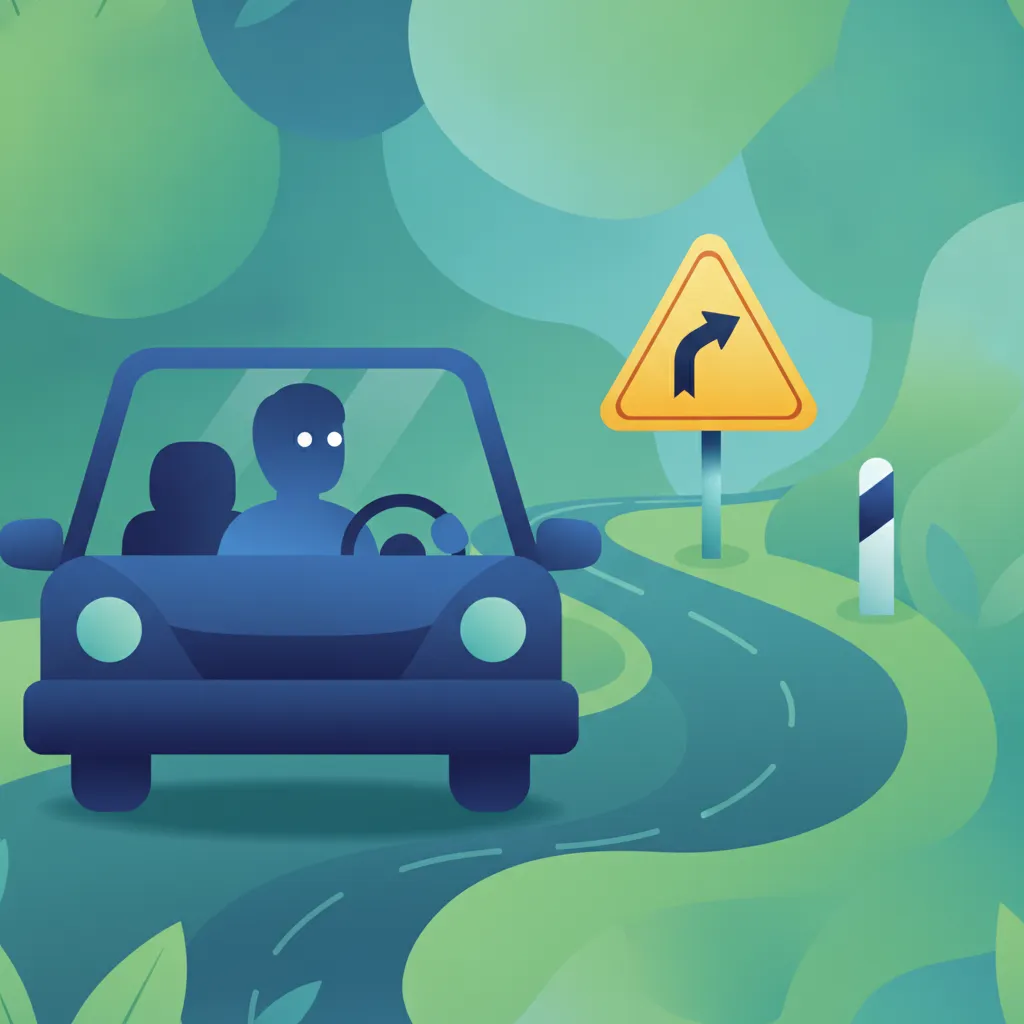
Bends are a defining characteristic of rural roads, and they frequently pose significant challenges due to limited visibility. Managing your sightline – the distance you can see ahead unobstructed – is paramount for safety.

Anticipating Hazards Around Bends

On rural bends, your view of the road ahead is often restricted by hedges, trees, buildings, or the curvature of the road itself. This limited sightline means you may not see an oncoming vehicle, a stationary hazard, a pedestrian, or even a fallen tree until you are very close.

To compensate, you must:

  • Approach bends slowly: Decelerate before you enter the bend, not while you are in it. This allows you to assess the bend's severity and potential hazards.
  • Look for clues: Scan for signs of oncoming traffic (headlights, reflections), road signs, or changes in the road surface that might indicate a hazard.
  • Maintain an appropriate lane position: On right-hand bends, keep further to the left to improve your view around the corner and provide more space from oncoming traffic. On left-hand bends, maintain a central position in your lane to avoid clipping the kerb or verge, but be ready to move left if necessary.

The Importance of Stopping Distance and Visual Sightlines

The principle of stopping within your visible sightline is critical. If you are travelling too fast to stop before an unseen hazard around a bend, you are putting yourself and others at severe risk. Your speed should always be such that if an obstacle appeared just beyond your current visible horizon, you could bring your vehicle to a complete stop before reaching it. This is why sightline management is intrinsically linked to speed management. Never overtake on a bend where your forward vision is obstructed.

Mastering Single-Track Roads and Passing Places

Some of the most rural areas feature single-track roads, which are exactly what they sound like: roads wide enough for only one vehicle at a time. These roads require particular care and understanding of specific etiquette.

What Are Single-Track Roads?

Single-track roads are common in remote rural areas. They are typically narrow, often without central white lines, and bordered by verges or hedges. While traffic is permitted in both directions, there isn't enough width for two vehicles to pass each other comfortably, or at all, without one pulling over.

Passing Place Etiquette and Priority Rules

To manage two-way traffic flow on single-track roads, passing places are provided at regular intervals. These are wider sections of the road, specifically designed for vehicles to pull into to allow others to pass. They are often marked by signs.

When encountering an oncoming vehicle on a single-track road:

  • Plan ahead: Look far down the road to identify oncoming traffic and available passing places.
  • Give way: If the passing place is on your side of the road, pull into it and wait for the oncoming vehicle to pass.
  • Yield priority: If the passing place is on the oncoming vehicle's side, and it's closer to them, they should pull in. However, be prepared to stop and wait if they do not, or if it appears safer for you to move first.
  • Give priority to vehicles already in a passing place: If you see a vehicle already waiting in a passing place, allow them to emerge before you proceed.
  • Avoid unnecessary stops: Do not stop prematurely in a passing place if there is no immediate oncoming traffic, as this can cause confusion and disrupt flow for vehicles behind you. Only pull in when it is clear you need to allow another vehicle to pass.
  • Reverse if necessary: In some situations, you might need to reverse to the nearest passing place. The general rule is that the vehicle closer to a passing place, or the one with an easier reverse, should be the one to back up. Large or less manoeuvrable vehicles, such as lorries or buses, often have priority.

Note

Highway Code Rule 174 advises that if the road ahead is narrow, you must be very careful not to obstruct other traffic. Good judgment and courtesy are key on single-track roads.

Identifying and Responding to Farm Vehicles and Agricultural Machinery

Rural roads are working environments, and you will frequently encounter various types of farm vehicles and agricultural machinery. These vehicles pose specific hazards due to their size, speed, and operational characteristics.

Characteristics of Farm Vehicles on Roads

Farm vehicles, such as tractors, combine harvesters, and trailers, differ significantly from regular road vehicles:

  • Slow Speed: They are designed for field work, not high speed, and will often travel much slower than the posted limit.
  • Large Size and Width: Many are exceptionally wide, potentially taking up more than one lane or extending beyond typical vehicle dimensions. This means they may struggle with narrow roads, sharp bends, and may have limited space to manoeuvre.
  • Limited Visibility: Drivers of large farm vehicles often have significant blind spots due to the machinery itself, trailers, or the height of the cab.
  • Wide Turning Radii: Due to their length and size, farm vehicles require a much larger turning circle. They may need to swing out wide to make a turn, sometimes requiring them to temporarily use the opposite lane or a significant portion of the road.
  • Mud and Debris: Farm vehicles often bring mud, soil, or other debris onto the road surface from fields, creating slippery conditions.
  • Flashing Beacons and Markings: They may display amber flashing beacons, reflective markers, or "long vehicle" signs to indicate their presence, especially when oversized or moving at night.

Safe Overtaking and Giving Way to Farm Equipment

When encountering farm vehicles:

  • Increase following distance: Allow much more space than usual to a farm vehicle. This gives you time to react if they brake suddenly, turn unexpectedly, or if debris falls from them.
  • Be prepared to stop: Anticipate that a farm vehicle might stop or turn suddenly to enter a field or farm entrance.
  • Avoid overtaking in blind spots: Never overtake a farm vehicle if you cannot see far enough ahead, especially on bends or near junctions. Their large size can completely obscure your view.
  • Give ample space for turning: If a farm vehicle signals a turn, particularly a left turn into a field, give them plenty of room. They may need to swing wide to the right before turning left. Never try to squeeze past them on the inside.
  • Overtake only when safe: Only overtake a farm vehicle when you have a clear, long sightline, sufficient road width, and are certain it is safe to do so. Ensure you have enough time and space to complete the manoeuvre without rushing or cutting back in too soon.
  • Watch for mud: Slow down significantly if a farm vehicle has left mud on the road, as it can be extremely slippery.

Dealing with Rural Road Surface Hazards

The surfaces of rural roads are often less maintained than urban roads and are more exposed to the elements and agricultural activity, leading to diverse and potentially hazardous conditions.

Mud, Standing Water, and Other Slippery Surfaces

  • Mud: Farm vehicles frequently drag mud onto the road, especially after rain. Mud significantly reduces tyre grip, making the road very slippery. Treat muddy patches with extreme caution, reduce your speed, and avoid harsh braking or sudden steering.
  • Standing Water: Heavy rain can lead to standing water on rural roads, particularly in dips or where drainage is poor. Driving through standing water at speed can cause aquaplaning (also known as hydroplaning), where a film of water lifts the tyres off the road surface, causing a complete loss of steering and braking control. Reduce speed significantly when approaching standing water.
  • Oil and Diesel: Spills from vehicles can create extremely slippery patches, especially in damp conditions.
  • Loose Gravel/Grit: Newly laid surfaces or areas near quarries might have loose gravel, which can reduce grip and be flicked up by tyres.
  • Potholes and Uneven Surfaces: Rural roads are more prone to potholes and uneven surfaces. These can damage tyres or suspension, or cause you to lose control, especially at speed.

Impact of Weather Conditions on Rural Driving

Weather has a magnified impact on rural road safety:

  • Rain: Reduces visibility and dramatically increases stopping distances (up to 70% longer on wet roads). Aquaplaning risk increases with speed. Use dipped headlights.
  • Fog/Mist: Severely limits visibility. Reduce speed drastically, use dipped headlights (never full beam in fog as it reflects glare back), and consider hazard lights if visibility is below 100 metres (though be mindful not to mislead other drivers).
  • Snow/Ice: Extremely low friction surfaces. Require significantly reduced speeds, gentle acceleration, smooth steering, and progressive braking. Winter tyres or snow chains may be necessary in extreme conditions.
  • Sun Glare: Low sun, particularly at dawn or dusk, can dazzle drivers, making it difficult to see road signs, hazards, or other road users. Slow down and use sun visors.

Vulnerable Road Users on Rural Lanes

Rural roads are shared by a variety of users who lack the protection of a vehicle, making them particularly vulnerable road users.

Horse Riders and Animals

  • Horse Riders: You will often encounter horse riders. Horses can be easily startled by sudden noise or movement. Always pass horses slowly, giving them a very wide berth (at least 3 metres / 10 feet), and be prepared to stop. Avoid revving your engine, honking your horn, or accelerating suddenly. Look for signs warning of horse activity.
  • Wild Animals/Livestock: Animals may unexpectedly cross the road, especially at dawn or dusk. Be prepared to stop for deer, pheasants, or domestic animals like sheep or cattle that might stray from fields.

Pedestrians and Cyclists

  • Pedestrians: Rural roads often lack pavements, meaning pedestrians may be walking on the road itself. They can be obscured by bends, hedges, or parked vehicles. Reduce your speed and give them plenty of space, especially if they are walking with children, pushing prams, or walking multiple dogs.
  • Cyclists: Cyclists are vulnerable and can be harder to spot, particularly on narrow, winding roads or in low light. Give them at least 1.5 metres (5 feet) of space when overtaking and be patient. They may need to move further out from the kerb to avoid potholes or debris.

Rules, Regulations, and Best Practices for Rural Driving Safety

Adhering to specific rules and adopting best practices is essential for safe rural driving:

  • National Speed Limits: Do not exceed the posted national speed limits, but always be prepared to drive below them.
  • Reduced Speed for Poor Conditions: The Road Traffic Act 1988 mandates that you must adapt your speed to suit road, weather, and traffic conditions. This is a legal requirement.
  • Passing Place Priority: On single-track roads, use passing places correctly, giving priority to those already in them or to larger vehicles.
  • Farm Vehicle Yield: Give way to farm vehicles that are turning or reversing, especially when their visibility is limited or they require a wide turning circle.
  • Stopping Distance Awareness: Always maintain a safe stopping distance – enough to stop within the clear visible road ahead.
  • Headlamp Usage: Use dipped headlights in poor visibility during the day and at night. Use full beam only on unlit roads when no other traffic is present (switch to dipped beam if an oncoming vehicle is within 500 metres or if following another vehicle closely).

Common Mistakes and How to Avoid Them on Rural Roads

Understanding common pitfalls can help you avoid dangerous situations:

  • Exceeding the safe speed limit on rural bends: This is a leading cause of accidents. Always decelerate before the bend, not in it.
  • Stopping unnecessarily at a passing place: This can cause confusion and tailbacks. Only stop if an oncoming vehicle is imminent and you have a clear view.
  • Overtaking farm vehicles in their blind spots: Never assume a farm vehicle driver has seen you. Wait until you have a clear view ahead and ample space.
  • Neglecting road surface conditions: Ignoring mud, water, or ice can lead to loss of control. Always reduce speed and adjust your driving style.
  • Driving with high beams when other traffic is present: Dazzling oncoming drivers is dangerous and illegal. Dim your lights well in advance.
  • Tailgating slow-moving vehicles: This provides inadequate stopping distance and increases accident risk. Maintain a minimum 2-second gap, more in adverse conditions.
  • Failing to anticipate turning farm vehicles: Watch for farm entrances and be prepared for slow, wide turns.
  • Assuming the posted speed limit guarantees safety: This overconfidence is dangerous. The limit is a maximum, not a target.

Summary of Key Rural Driving Safety Principles

Safe driving on rural roads requires a proactive, adaptive, and patient approach. Remember these core principles:

  • Adjust Your Speed: The national speed limit is often too fast for rural conditions. Always reduce your speed to match sightlines, road geometry, and surface conditions.
  • Manage Sightlines: Drive at a speed that allows you to stop within the distance you can see to be clear, especially on bends.
  • Practice Passing Place Etiquette: Use passing places correctly on single-track roads, giving way appropriately to ensure smooth traffic flow.
  • Anticipate Farm Vehicle Hazards: Be aware of their slow speeds, wide turns, blind spots, and the potential for mud on the road. Give them plenty of space and patience.
  • Assess Road Surface Conditions: Recognise and react to mud, standing water, ice, and other slippery surfaces by reducing speed and driving smoothly.
  • Protect Vulnerable Users: Give ample space to horse riders, cyclists, and pedestrians.

By mastering these concepts, you will be well-prepared to navigate the unique challenges of rural roads safely and confidently, contributing to your success in the Great Britain Category B driving theory test and your future as a responsible driver.

Learn more with these articles

Check out these practice sets


Search topics related to Rural Road Risks, Narrow Lanes, Bends, and Farm Vehicles

Explore search topics learners often look for when studying Rural Road Risks, Narrow Lanes, Bends, and Farm Vehicles. These topics reflect common questions about road rules, driving situations, safety guidance, and lesson level theory preparation for learners in Great Britain.

rural road driving rules UK theory testhow to handle blind bends in driving theorypassing places single track road rulesdriving theory test questions about farm vehiclestips for rural driving GB theory testmanaging speed on country roads theory exam

Related driving theory lessons for Rural Road Risks, Narrow Lanes, Bends, and Farm Vehicles

Browse additional driving theory lessons that cover connected traffic rules, road signs, and common driving situations related to this topic. Improve your understanding of how different rules interact across everyday traffic scenarios.

Advanced Rural Road Driving Hazards and Strategies for Great Britain

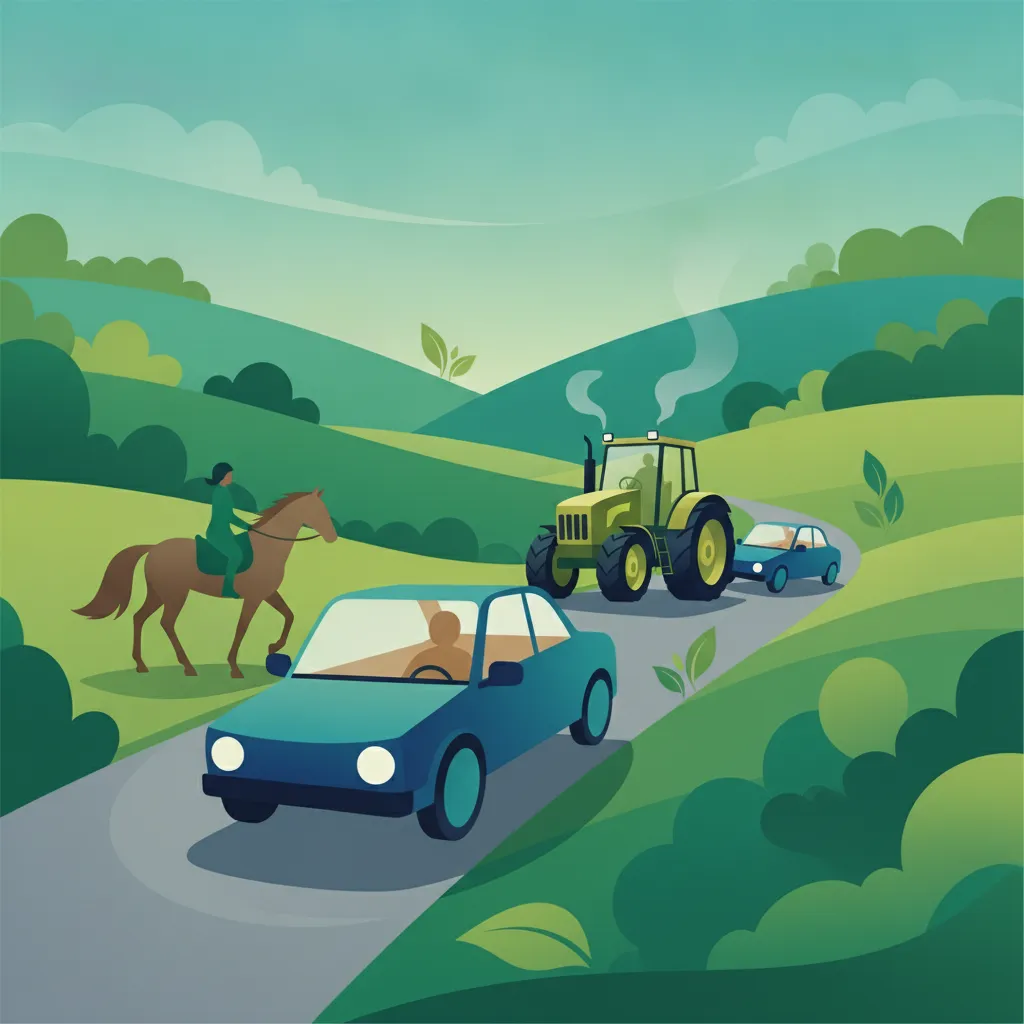
Delve deeper into the specific hazards of rural roads in Great Britain. Learn advanced techniques for navigating blind bends, single-track roads, and managing encounters with farm vehicles and other slow-moving agricultural machinery. Essential for safe countryside driving.
rural roadsadvanced drivinghazard perceptionfarm vehiclessingle track roadsUK driving theory
Horses, Agricultural Vehicles and Rural Vulnerables lesson image

Horses, Agricultural Vehicles and Rural Vulnerables

This lesson prepares you for the specific challenges of driving in the countryside. It explains the correct procedure for overtaking horse riders: slow down and pass wide, ensuring you do not spook the animal. You will also learn how to anticipate and safely manage encounters with slow-moving tractors and other farm machinery.
GB Category B TheoryPedestrians, Crossings, Cyclists and Vulnerable Road Users
View lesson
Rural Roads, Curves, and Uncontrolled Intersections lesson image

Rural Roads, Curves, and Uncontrolled Intersections

This lesson addresses the unique challenges of driving a large vehicle on rural roads. It provides techniques for positioning the vehicle through sharp bends and on narrow lanes, and for safely navigating unmarked or uncontrolled junctions. Learners will be taught to anticipate hidden hazards common in the countryside, such as slow-moving farm vehicles, animals on the road, and concealed entrances. The correct use of passing places and strategies for meeting oncoming traffic are also covered.
GB Passenger Vehicle TheoryWeather, Motorways, Rural Routes, Terminals and Long-Distance Service
View lesson
Rural Road Challenges and Speed Limits lesson image

Rural Road Challenges and Speed Limits

This lesson addresses the unique set of challenges that rural roads present to HGV drivers. It covers how to safely navigate narrow and winding lanes, the importance of anticipating hazards like slow-moving agricultural machinery, mud on the road, and wildlife. You will learn how the national speed limit applies to your vehicle on these roads and why it is often necessary to travel at a much lower speed to ensure safety.

GB Goods Vehicle TheoryWeather, Motorways, Rural Roads, Roadworks and Emergency Situations
View lesson
Rural Roads, Dual Carriageways and Motorways lesson image

Rural Roads, Dual Carriageways and Motorways

This lesson contrasts the challenges of different road types. It covers how to handle the hidden bends, poor surfaces, and unexpected hazards of rural roads. It then details the specific procedures for using dual carriageways and motorways, including using slip roads, adhering to strict lane discipline, and safely overtaking at high speeds.
Motorcycle Theory GBWeather, Road Surfaces, Night Riding and Faster Roads
View lesson
Warning Signs and Hazard Indicators lesson image

Warning Signs and Hazard Indicators

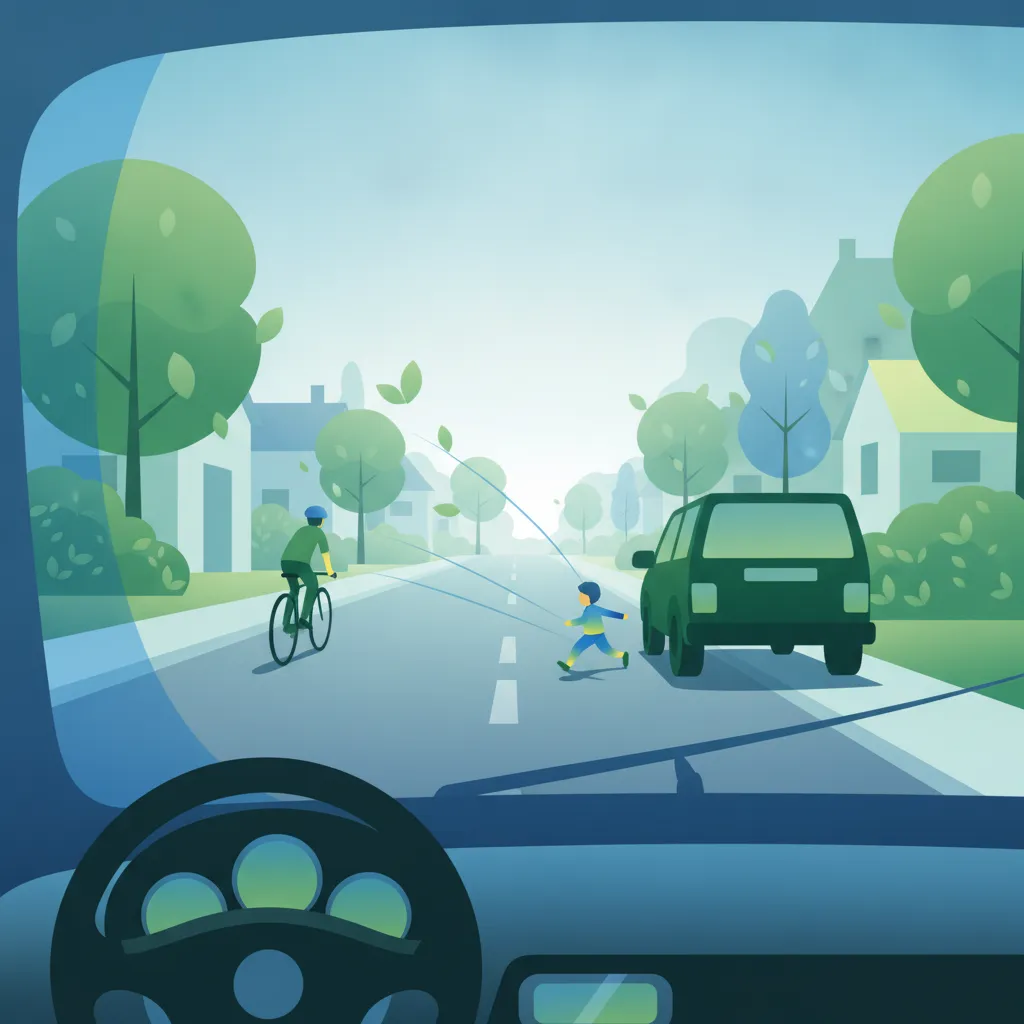
This lesson teaches you to interpret warning signs, which are typically triangular and designed to alert you to potential hazards ahead. You will learn the meanings of common signs indicating sharp curves, slippery surfaces, roadworks, or areas with frequent pedestrian or animal crossings. Understanding these signs is crucial for anticipating dangers and adjusting your speed and position defensively, which is especially important for vulnerable riders of AM vehicles.
GB AM Moped TheoryGB Road Signs, Markings, Signals and Priority Basics
View lesson
Hazard Perception Principles and Anticipation lesson image

Hazard Perception Principles and Anticipation

This lesson introduces the skill of hazard perception, a critical component of the official theory test and safe driving. It teaches you to actively scan your environment for potential dangers, such as a pedestrian about to cross or a car waiting to emerge from a junction. By identifying these situations early, you can take action to avoid them turning into actual dangers.

GB Category B TheorySpeed, Following Distance, Stopping Distance and Hazard Perception
View lesson
Warning Signs Overview lesson image

Warning Signs Overview

This lesson teaches you to interpret warning signs, which are typically triangular with a red border. These signs are crucial for anticipating potential dangers, from changes in road layout to the presence of pedestrians or animals. By understanding these warnings, you can adjust your driving to safely navigate upcoming hazards.
GB Category B TheoryGB Road Signs and Traffic Signals
View lesson
Identifying Vulnerable Road Users lesson image

Identifying Vulnerable Road Users

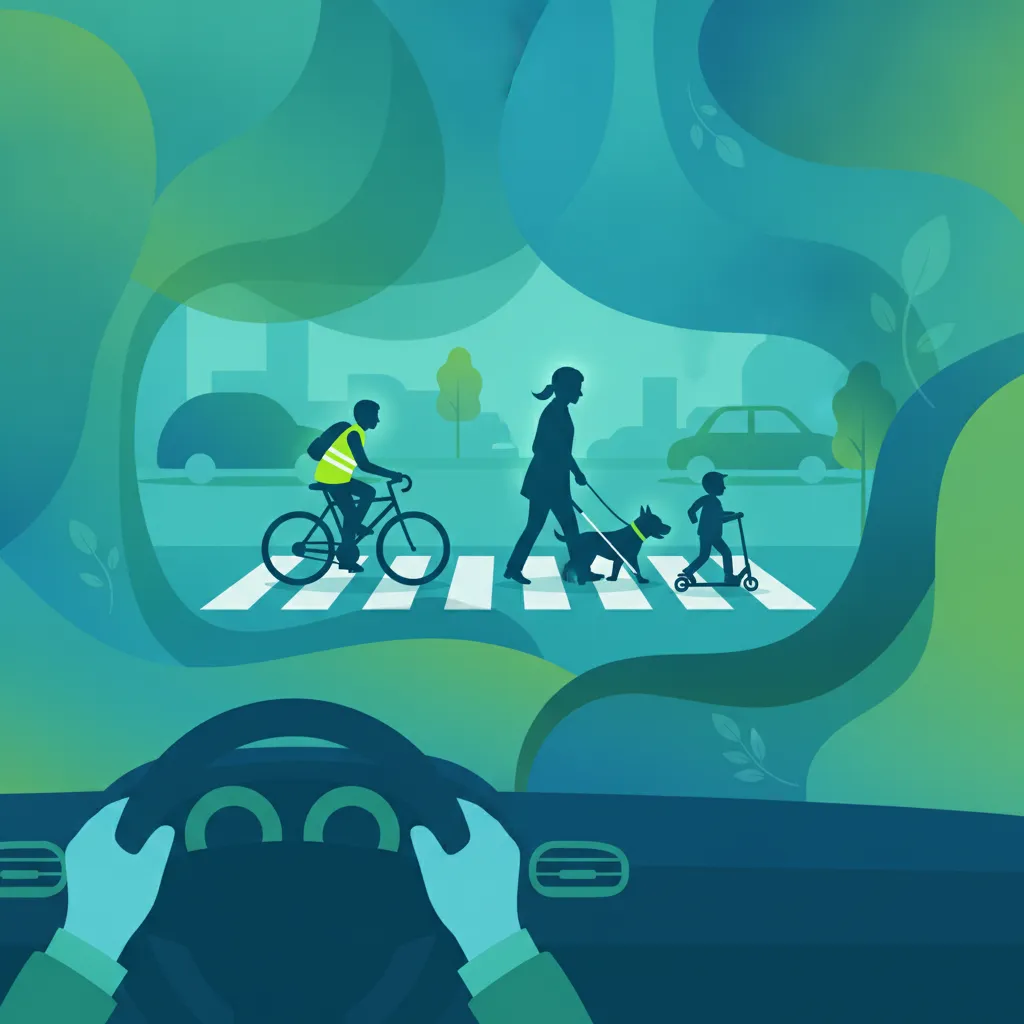
This lesson teaches drivers how to identify various types of vulnerable road users and anticipate their potential actions to prevent conflicts. It covers the specific risks associated with pedestrians, cyclists, motorcyclists, children, and elderly or disabled individuals. Emphasis is placed on heightened awareness and defensive driving techniques required to share the road safely. Understanding their perspectives and typical behaviours is key to protecting them and maintaining safety for everyone.
GB Passenger Vehicle TheoryVulnerable Road Users, Pedestrians, Cyclists and School Areas
View lesson
Roadworks, Temporary Signs, and Diversions lesson image

Roadworks, Temporary Signs, and Diversions

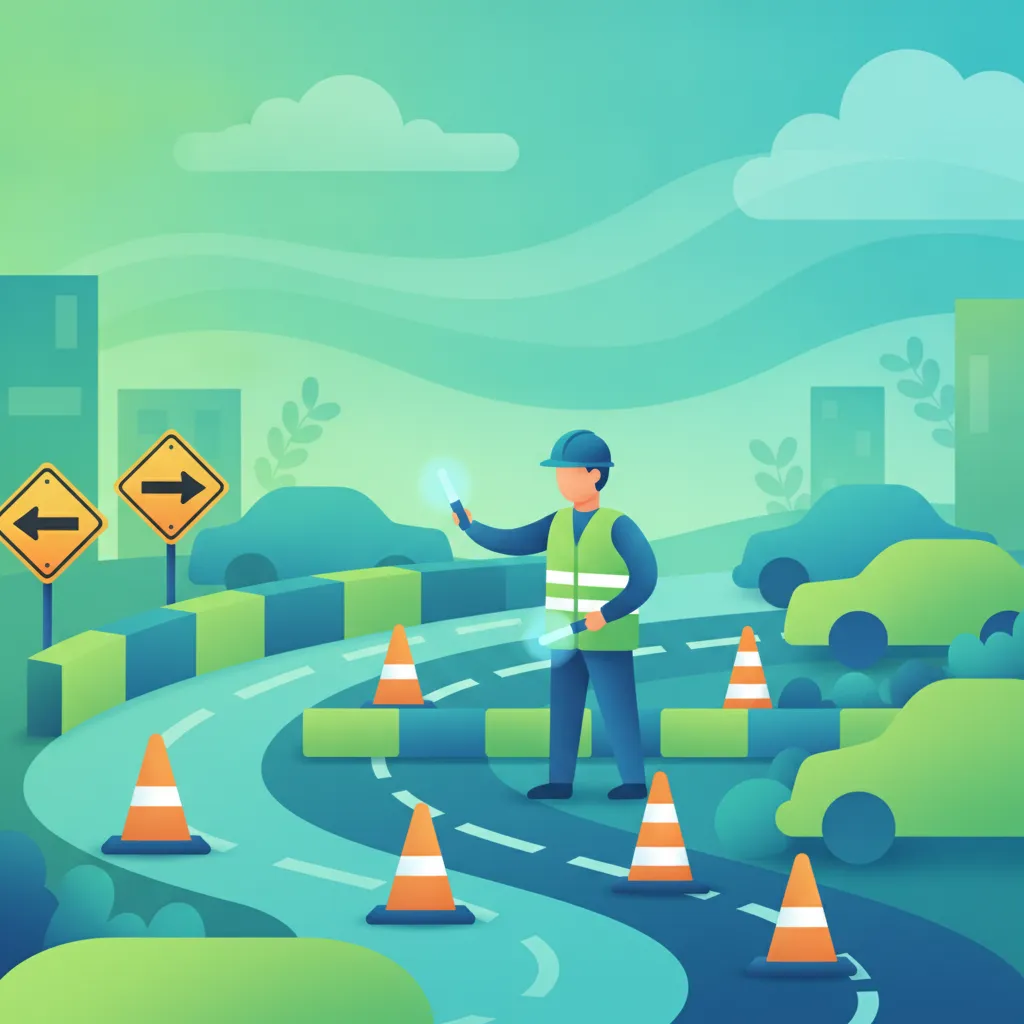
This lesson explains how to drive safely through areas where roadworks are taking place. It stresses the importance of obeying all temporary signs, especially mandatory speed limits, which are in place for your safety and the safety of road workers. You will learn about navigating narrow lanes, contraflow systems, and how to follow official diversion signs.
GB Category B TheoryWeather, Night Driving, Motorways, Rural Roads and Roadworks
View lesson
Risk Mitigation for Elderly and Disabled Road Users lesson image

Risk Mitigation for Elderly and Disabled Road Users

This lesson focuses on developing a proactive and patient approach towards elderly and disabled road users. It explains how to recognize and provide additional time and space for individuals with slower movement, mobility scooters, or sensory impairments. The content emphasizes the importance of driver attitude, patience at crossings, and anticipating the needs of these vulnerable individuals. Understanding these factors is crucial for preventing accidents and demonstrating a high level of professional care and responsibility.

GB Passenger Vehicle TheoryVulnerable Road Users, Pedestrians, Cyclists and School Areas
View lesson

Rural Road Surface Conditions and Weather Driving Theory Explained

Understand the critical impact of road surface conditions and weather on rural driving in Great Britain. This lesson covers how to safely handle mud, standing water, ice, and low visibility due to fog or heavy rain, along with specific tips for vulnerable road users.

rural roadsroad surfaceweather drivingaquaplaningvisibilityvulnerable road users
Rural Roads, Curves, and Uncontrolled Intersections lesson image

Rural Roads, Curves, and Uncontrolled Intersections

This lesson addresses the unique challenges of driving a large vehicle on rural roads. It provides techniques for positioning the vehicle through sharp bends and on narrow lanes, and for safely navigating unmarked or uncontrolled junctions. Learners will be taught to anticipate hidden hazards common in the countryside, such as slow-moving farm vehicles, animals on the road, and concealed entrances. The correct use of passing places and strategies for meeting oncoming traffic are also covered.

GB Passenger Vehicle TheoryWeather, Motorways, Rural Routes, Terminals and Long-Distance Service
View lesson
Horses, Agricultural Vehicles and Rural Vulnerables lesson image

Horses, Agricultural Vehicles and Rural Vulnerables

This lesson prepares you for the specific challenges of driving in the countryside. It explains the correct procedure for overtaking horse riders: slow down and pass wide, ensuring you do not spook the animal. You will also learn how to anticipate and safely manage encounters with slow-moving tractors and other farm machinery.

GB Category B TheoryPedestrians, Crossings, Cyclists and Vulnerable Road Users
View lesson
Driving in Rain, Fog, Snow, Ice and Low‑Visibility Conditions lesson image

Driving in Rain, Fog, Snow, Ice and Low‑Visibility Conditions

This lesson provides essential advice for driving when weather conditions are poor. It explains how rain can cause aquaplaning and why you must double your following distance. You will also learn techniques for driving in icy conditions, including gentle use of controls to avoid skidding, and the correct use of lights in fog.

GB Category B TheoryWeather, Night Driving, Motorways, Rural Roads and Roadworks
View lesson
Rural Road Challenges and Speed Limits lesson image

Rural Road Challenges and Speed Limits

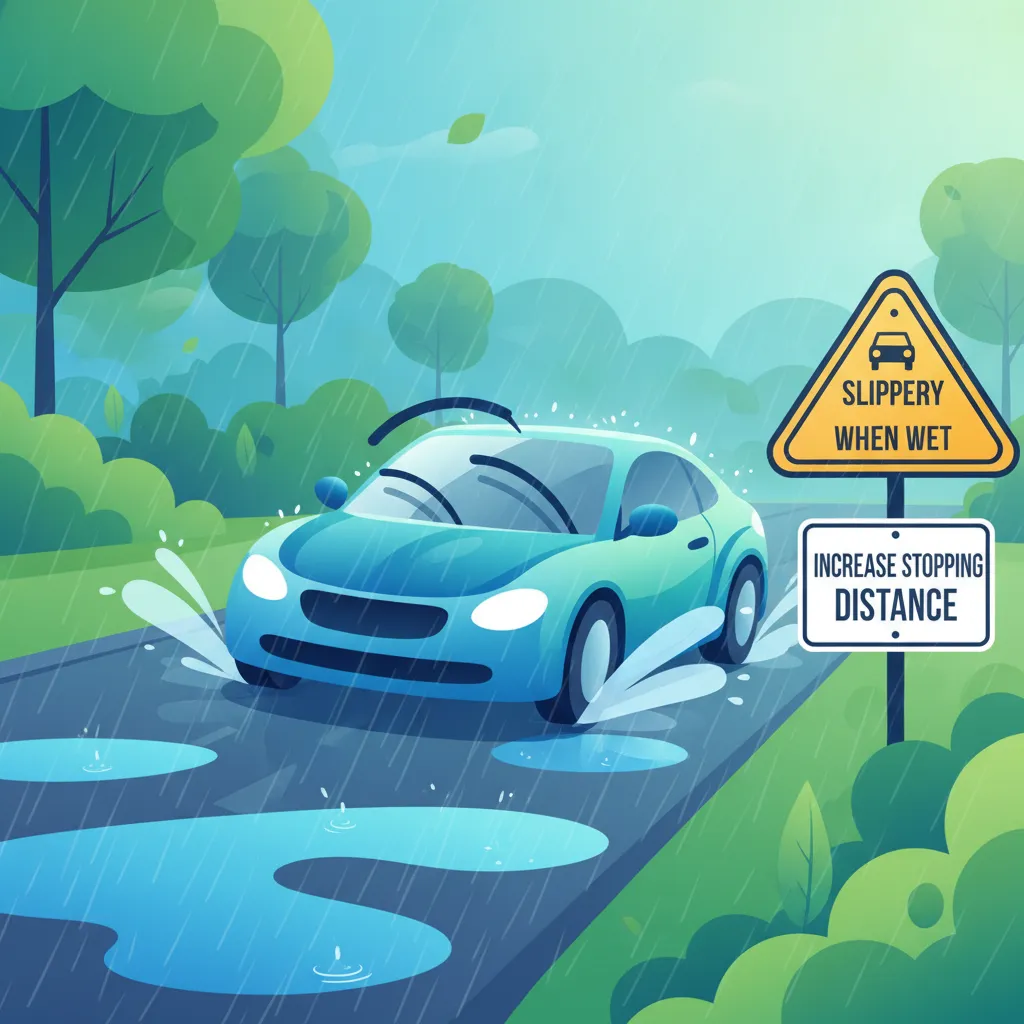
This lesson addresses the unique set of challenges that rural roads present to HGV drivers. It covers how to safely navigate narrow and winding lanes, the importance of anticipating hazards like slow-moving agricultural machinery, mud on the road, and wildlife. You will learn how the national speed limit applies to your vehicle on these roads and why it is often necessary to travel at a much lower speed to ensure safety.
GB Goods Vehicle TheoryWeather, Motorways, Rural Roads, Roadworks and Emergency Situations
View lesson
Weather Impact on Vehicle Handling lesson image

Weather Impact on Vehicle Handling

This lesson explains how different weather conditions impact the handling and stability of a large passenger vehicle. It covers the risks of aquaplaning in heavy rain, the effect of high winds on vehicle stability, and the severe reduction in visibility caused by fog. Learners will understand how ice and snow dramatically increase stopping distances and require extremely gentle control inputs to prevent skidding. Strategies for adapting speed and increasing following distances are emphasized.

GB Passenger Vehicle TheoryWeather, Motorways, Rural Routes, Terminals and Long-Distance Service
View lesson
Rural Roads, Dual Carriageways and Motorways lesson image

Rural Roads, Dual Carriageways and Motorways

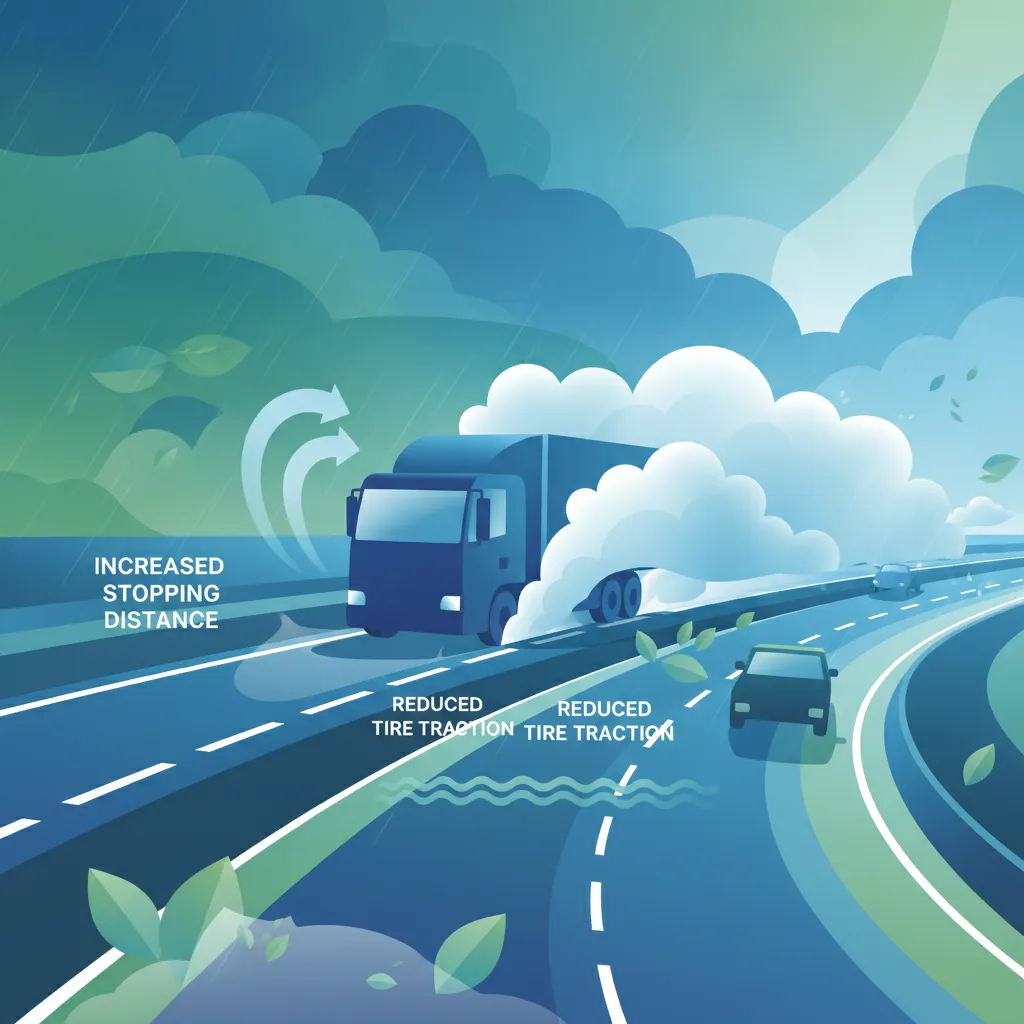
This lesson contrasts the challenges of different road types. It covers how to handle the hidden bends, poor surfaces, and unexpected hazards of rural roads. It then details the specific procedures for using dual carriageways and motorways, including using slip roads, adhering to strict lane discipline, and safely overtaking at high speeds.
Motorcycle Theory GBWeather, Road Surfaces, Night Riding and Faster Roads
View lesson
Weather Impact on Heavy Vehicle Handling lesson image

Weather Impact on Heavy Vehicle Handling

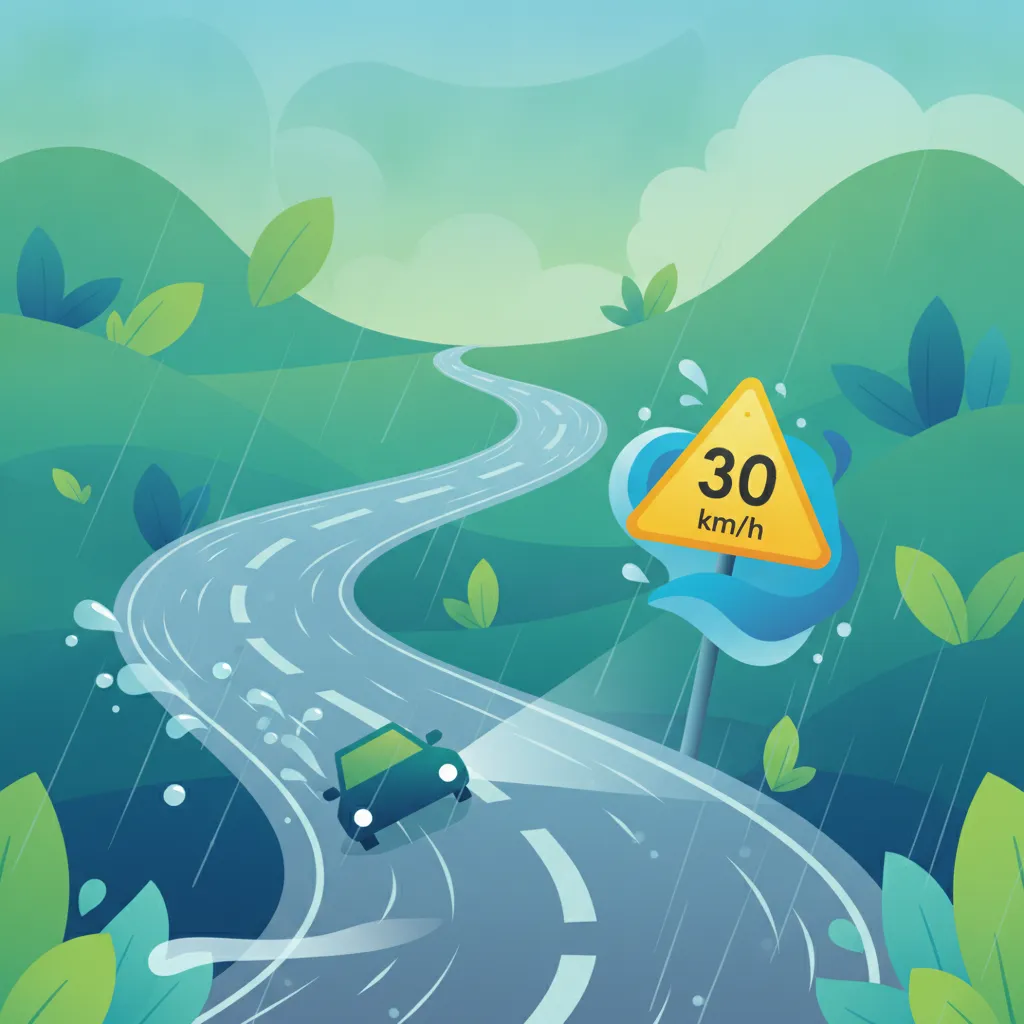
This lesson details how different adverse weather conditions uniquely affect the handling and stability of a heavy goods vehicle. It covers the increased stopping distances in rain, reduced visibility in fog, severe traction loss on ice, and the dangerous effect of strong crosswinds on high-sided vehicles. You will learn specific techniques for adjusting speed, increasing following distances, and using vehicle controls smoothly to maintain safety in challenging weather.
GB Goods Vehicle TheoryWeather, Motorways, Rural Roads, Roadworks and Emergency Situations
View lesson
Factors Influencing Safe Speed and Adjustments lesson image

Factors Influencing Safe Speed and Adjustments

This lesson explains that safe driving often requires travelling at a speed lower than the legal limit. It covers how to adjust your speed for adverse conditions such as rain, which can double your stopping distance, or fog, which severely reduces visibility. The goal is to always be able to stop safely in the distance you can see to be clear.
GB Category B TheorySpeed, Following Distance, Stopping Distance and Hazard Perception
View lesson
Riding in Wet, Slippery and Icy Conditions lesson image

Riding in Wet, Slippery and Icy Conditions

This lesson provides essential advice for riding safely in adverse weather conditions that reduce tyre grip. You will learn how rain, ice, and wet leaves dramatically increase braking distances and affect handling. Key strategies covered include reducing speed, increasing following distances, making smooth control inputs, and anticipating slippery areas to maintain control and avoid skidding on compromised road surfaces.

GB AM Moped TheoryWeather, Risk Behaviour, Emergencies and Penalties
View lesson
Grip, Friction, and Road Surface Interaction lesson image

Grip, Friction, and Road Surface Interaction

Your safety depends on the small contact patch where your tyres meet the road. This lesson explains how grip (or traction) is affected by the type and condition of the road surface, as well as your tyre's condition and pressure. You will learn to recognise high-risk surfaces and adjust your riding to avoid losing traction.

Motorcycle Theory GBBraking, Cornering, Grip and Motorcycle Control
View lesson

Frequently asked questions about Rural Road Risks, Narrow Lanes, Bends, and Farm Vehicles

Find clear answers to common questions learners have about Rural Road Risks, Narrow Lanes, Bends, and Farm Vehicles. Learn how the lesson is structured, which driving theory objectives it supports, and how it fits into the overall learning path of units and curriculum progression in Great Britain. These explanations help you understand key concepts, lesson flow, and exam focused study goals.

What is the national speed limit on rural roads in Great Britain?

The national speed limit is 60 mph on single carriageways and 70 mph on dual carriageways. However, you must always drive at a speed that is safe for the conditions, meaning you should often drive much slower than the limit on narrow or winding country lanes.

How should I approach a sharp bend on a country road?

Always assume there is a hazard around the corner. Slow down well before the bend, select the correct gear, and position your vehicle to maximize your view. Be prepared to stop if you encounter a parked vehicle, an animal, or a tractor.

What should I do if I see a tractor on a rural road?

Be patient and do not attempt to overtake unless you have a clear, long view of the road ahead. Tractors are often wider than they appear and may turn suddenly into field entrances without warning.

How do passing places work on single-track roads?

If you are travelling on a single-track road, use the passing places on the left to let oncoming traffic pass. If the passing place is on your right, wait opposite it while the other driver uses it. Never block a passing place by parking in it.

Start Your Targeted Practice Question Search Now

Dive into our comprehensive question bank to find exactly what you need for your Great Britain theory test. Use our advanced filters to pinpoint specific subjects or test your knowledge on challenging areas, ensuring you're fully prepared for success.

Search Practice Questions

Continue your British driving theory learning journey

British road signsBritish article topicsGB AM Moped Theory courseSearch British road signsMotorcycle Theory GB courseGB Category B Theory courseBritish driving theory homeBritish road sign categoriesBritish driving theory topicsGB Goods Vehicle Theory courseSearch British theory articlesBritish driving theory coursesBritish driving theory articlesBritish driving theory practiceBritish practice set categoriesGB Passenger Vehicle Theory courseBritish driving licence proceduresSearch British driving theory practiceBritish driving theory terminology A–ZBritish driving theory terms and glossaryGB Road Signs and Traffic Signals unit in GB Category B TheoryHelmet, Visibility and Protective Behaviour unit in GB AM Moped TheoryAM Licence Basics and Small Vehicle Responsibility unit in GB AM Moped TheoryMotorcycle Licence Basics and Rider Responsibility unit in Motorcycle Theory GBVehicle Size, Weight, Dimensions and Road Space unit in GB Goods Vehicle TheoryCategory B Licence Basics and Driver Responsibility unit in GB Category B TheoryProtective Equipment, Visibility and Rider Condition unit in Motorcycle Theory GBGoods Vehicle Licence Scope and Professional Responsibility unit in GB Goods Vehicle TheoryPassenger Safety, Comfort, Accessibility and Driver Conduct unit in GB Passenger Vehicle TheoryPassenger Vehicle Licence Scope and Professional Responsibility unit in GB Passenger Vehicle TheoryRoadworks, Temporary Signs, and Diversions lesson in Weather, Night Driving, Motorways, Rural Roads and RoadworksNight Driving Techniques and Glare Reduction lesson in Weather, Night Driving, Motorways, Rural Roads and RoadworksMotorway Rules, Smart Motorways, and Service Areas lesson in Weather, Night Driving, Motorways, Rural Roads and RoadworksRural Road Risks, Narrow Lanes, Bends, and Farm Vehicles lesson in Weather, Night Driving, Motorways, Rural Roads and RoadworksDriving in Rain, Fog, Snow, Ice and Low‑Visibility Conditions lesson in Weather, Night Driving, Motorways, Rural Roads and Roadworks