
This lesson explores how the physical dimensions and weight of a passenger vehicle affect its handling, cornering, and stability. By understanding these dynamics, you will prepare for essential theory test questions regarding vehicle control and safely navigating tight urban environments.

Lesson content overview
Operating a passenger vehicle, such as a bus, coach, or minibus, requires a thorough understanding of how its physical dimensions and weight fundamentally influence its dynamic stability, handling, and manoeuvring capabilities. For drivers seeking a Category D, D1, D1E, or DE licence in Great Britain, mastering these concepts is not merely about passing a theory test; it is about ensuring the safety of passengers and other road users in every journey. This lesson explores the critical interplay between a vehicle's static properties and its dynamic behaviour on the road.
A passenger vehicle's physical size dictates its spatial requirements on the road, affecting everything from lane choice to junction navigation. Understanding these dimensions is the first step towards anticipating potential hazards and executing safe manoeuvres.
The overall length of a vehicle refers to the distance from its foremost front point to its rearmost rear point, including any bumpers or permanent extensions. For large passenger vehicles, this dimension is particularly critical when planning routes, entering tight junctions, or positioning at bus stops. Longer vehicles naturally require more clearance to turn and can create larger blind spots. Drivers must be acutely aware of their vehicle's entire length to avoid encroaching on other lanes, striking obstacles, or causing difficulties for following traffic. Incorrect judgment of length can lead to costly damage or dangerous situations in confined urban environments.
Overall width is the maximum lateral dimension of the vehicle, measured from its outermost points. This measurement typically includes mirrors, which can add significantly to the overall span. Knowing the exact width of your vehicle is vital for maintaining safe lateral clearances when driving in narrow lanes, passing other vehicles, or navigating through roadworks. Even minor miscalculations can result in side-swiping other vehicles, roadside furniture, or pedestrians. Professional drivers must develop an instinctive feel for their vehicle's width to ensure it remains within its allocated road space.
The wheelbase is the longitudinal distance between the centre of the front axle and the centre of the rear axle (or the midpoint of multiple rear axles). This dimension plays a significant role in a vehicle's turning radius and overall stability. A longer wheelbase generally provides a smoother ride and better directional stability at higher speeds, but it also results in a wider turning circle. Conversely, a shorter wheelbase can make a vehicle more nimble in tight spaces but potentially less stable at speed or more susceptible to pitch and roll. Understanding your vehicle's wheelbase helps predict its handling characteristics and how it will respond to steering inputs.
The turning radius (or turning circle) is the minimum diameter of the circular path that the vehicle's outermost front wheel follows when the steering is at full lock. This crucial measurement determines whether a vehicle can successfully execute specific manoeuvres, such as navigating tight roundabouts, performing U-turns, or entering parking bays. For large passenger vehicles, the turning circle can be substantial, often necessitating a wider approach to turns or requiring multiple steering adjustments. Drivers must always compare their vehicle's turning capabilities with the geometry of the road infrastructure to prevent encroachment onto pavements, opposing lanes, or collision with obstacles.
The total weight of a passenger vehicle and how that weight is distributed are fundamental factors affecting its performance, stability, and safety. These elements directly influence braking capability, acceleration, and the vehicle's propensity to roll over.
Gross Vehicle Weight (GVW) refers to the total weight of the vehicle, including its chassis, powertrain, fuel, passengers, cargo, and any accessories, as it is ready for service. Every vehicle has a maximum GVW specified by the manufacturer, which must never be exceeded. The vehicle's mass significantly influences its inertia – its resistance to changes in motion. A heavier vehicle will require greater force to accelerate and, more critically, greater force and distance to decelerate. Drivers must continuously be aware of their vehicle's GVW, especially as passenger numbers and luggage loads fluctuate, to ensure compliance with legal limits and safe operational performance.
The centre of gravity (CG) is the imaginary point where the vehicle's entire mass is considered to act vertically downwards. Its position, particularly its height from the ground, is a critical determinant of dynamic stability. A high CG, common in double-deck buses, increases the rollover risk, especially when cornering at speed or subjected to sudden lateral forces. Conversely, a lower CG improves stability. The distribution of passengers and luggage directly impacts the CG; loading heavy items on a roof rack or having most passengers on an upper deck will raise the CG, making the vehicle more susceptible to overturning. Professional drivers must understand how their actions and passenger loading influence the CG to mitigate this risk.
Load distribution refers to how the total weight of the vehicle is shared across its axles (front and rear) and between its left and right sides. Proper load distribution is crucial for several reasons:
Drivers or loading personnel must ensure passengers are distributed evenly and luggage is stored appropriately, typically low and centrally, to maintain optimal load distribution.
Inertia is the fundamental property of mass that resists changes in motion. For a passenger vehicle, this means:
Understanding inertia is vital for anticipating how your vehicle will react to acceleration, braking, and steering, particularly when loaded. It underpins the need for smooth control inputs and greater foresight in traffic.
The dynamic performance of a large passenger vehicle is a complex interplay of its dimensions, weight, and various physical forces. Maintaining stability and ensuring effective braking are paramount for safety.
Braking distance is the distance a vehicle travels from the moment the brakes are fully applied until it comes to a complete stop. This is distinct from thinking distance, which is the distance covered during the driver's reaction time before applying the brakes. For heavy passenger vehicles, both thinking distance and braking distance are significantly extended compared to lighter cars due to greater mass and inertia.
Several factors influence braking distance:
Cornering subjects a vehicle to lateral forces. When a vehicle turns, inertia tries to keep it moving in a straight line, creating an outward force. If this force is too great, especially combined with a high CG, it can lead to rollover. Other cornering phenomena include:
To prevent these, drivers must:
The tyre contact patch is the small area of the tyre that is actually in contact with the road surface at any given moment. This is where all the forces for acceleration, braking, and steering are transmitted. The size and shape of the contact patch, and therefore the grip it provides, are heavily influenced by tyre pressure and load.
Drivers must regularly check and adjust tyre pressures, especially when significant changes in passenger or cargo load are anticipated, to ensure maximum safety and operational efficiency.
Operating passenger vehicles in the UK requires strict adherence to specific legal regulations concerning dimensions and weight. These rules are in place to ensure road safety, prevent damage to infrastructure, and maintain vehicle performance standards.
In Great Britain, strict rules govern the maximum permissible length of passenger vehicles:
These limits ensure that vehicles can safely navigate road geometry, junctions, and designated bus stops without causing obstruction or danger. Drivers must be aware of their vehicle's length when route planning.
The overall width of passenger vehicles is also legally restricted:
These regulations are crucial for ensuring adequate clearance in traffic lanes, during overtaking, and when passing through narrow sections of road or urban infrastructure. Drivers must be particularly mindful of mirror extensions when judging available space.
To protect road surfaces and ensure vehicle stability, there are limits on the weight that can be borne by individual axles:
These limits apply to the vehicle in its loaded condition. Drivers and loading personnel are responsible for ensuring that the distribution of passengers and cargo keeps all axle loads within these legal maximums. Overloading an axle can lead to reduced braking efficiency, tyre damage, and structural strain.
Every passenger vehicle has a manufacturer-specified maximum Gross Vehicle Weight (GVW), which is displayed on the vehicle's plate. This is the absolute maximum weight the vehicle can be when fully loaded.
Violating GVW limits can result in legal penalties and compromise the vehicle's structural integrity, braking, and handling. Drivers must account for the weight of passengers, luggage, and fuel, which collectively contribute to the GVW.
The Highway Code provides guidance on maintaining a safe following distance, which is particularly critical for large, heavy vehicles.
This rule is mandatory and enforceable, particularly if an insufficient gap contributes to a collision. The increased inertia and braking distance of buses and coaches necessitate a greater safety margin than for lighter vehicles.
Proper management of all loads within the vehicle is a legal requirement.
This regulation prevents sudden shifts in the vehicle's centre of gravity, which could lead to loss of control, especially during braking, acceleration, or cornering. Heavy items should always be stored as low and as centrally as possible.
While there isn't a specific statutory turning circle limit, the Highway Code and general driving regulations imply adherence to safe manoeuvring.
This principle is essential for preventing collisions and traffic obstructions in urban environments. Drivers must assess the turning capabilities of their vehicle against the characteristics of the road infrastructure before attempting a manoeuvre.
Misjudging vehicle dimensions and weight dynamics can lead to frequent errors and serious safety violations. Professional drivers must be vigilant to avoid these common pitfalls.
The dynamic behaviour of a passenger vehicle is not constant; it changes significantly based on environmental and operational factors. Professional drivers must adapt their techniques accordingly.
Drivers must understand these differences and adjust their driving style, speed, and braking techniques accordingly.
The sheer size of a passenger vehicle means its interactions with vulnerable road users (pedestrians, cyclists, motorcyclists) carry higher risks.
Understanding the physics behind vehicle dimensions and weight is not academic; it is foundational to safe, efficient, and professional driving.
Setting: You are driving a 12-meter single-deck bus through a busy city centre. Ahead is a right turn onto a narrow side street with a known tight junction, requiring a turning circle of about 10 meters. Your bus typically has a turning circle of 12.5 meters.
Correct Behaviour: Recognising that your vehicle's turning circle exceeds the junction's geometry, you should assess an alternative route or proceed straight to find a safer, wider junction. If no alternative is feasible, you would wait for a clear gap in oncoming traffic and use a wide approach (if safe and legal) to attempt the turn, being extremely cautious not to encroach on pavements or the opposing lane. However, the safest option is to avoid the turn if the vehicle cannot physically complete it within its lane.
Incorrect Behaviour: Attempting to force the turn without adequate space or prior route planning. This would likely lead to the bus's rear or side encroaching onto the pavement, colliding with street furniture or pedestrians, or causing a side-swipe with an oncoming vehicle.
Setting: You are driving a coach carrying 55 passengers at 70 mph on a motorway. It begins to rain heavily, and the road surface becomes wet.
Correct Behaviour: Immediately reduce your speed significantly below the posted limit, as wet conditions drastically extend braking distances. Increase your following distance to at least a 3-second gap, or more if visibility is poor. Apply brakes gently and progressively well in advance of any required stop or lane change, allowing ample time for the vehicle's high inertia to dissipate.
Incorrect Behaviour: Maintaining 70 mph or only slightly reducing speed, and following other vehicles too closely. This increases the risk of aquaplaning, skidding, and rear-end collisions, as your vehicle's extended braking distance will be severely compromised.
Setting: You are about to depart from a terminus in a double-deck bus. Most boarding passengers quickly occupy seats on the upper deck, leaving the lower deck relatively empty.
Correct Behaviour: Before departure, you should instruct passengers to distribute themselves more evenly across both decks. This action helps to lower the vehicle's overall centre of gravity and balance the load across the axles, reducing rollover risk and ensuring compliance with axle load limits, especially for the rear axle.
Incorrect Behaviour: Departing with a majority of passengers on the upper deck. This raises the vehicle's centre of gravity, significantly increasing the rollover risk, particularly during cornering or emergency manoeuvres. It also places undue stress on the rear axle, potentially exceeding its legal load limit.
The safe and professional operation of a large passenger vehicle hinges on a deep understanding of its physical characteristics:
Mastering these concepts prepares Category D, D1, D1E, or DE licence holders to make informed decisions, mitigate risks, and ensure a smooth, safe, and legally compliant service for all passengers in Great Britain.
Explore all units and lessons included in this driving theory course.
Lesson content overview
Explore all units and lessons included in this driving theory course.
Explore search topics learners often look for when studying Dimensions, Weight, and Vehicle Dynamics. These topics reflect common questions about road rules, driving situations, safety guidance, and lesson level theory preparation for learners in Great Britain.
Browse additional driving theory lessons that cover connected traffic rules, road signs, and common driving situations related to this topic. Improve your understanding of how different rules interact across everyday traffic scenarios.
Understand the legal limits for vehicle length, width, and axle loads in Great Britain. Learn how Gross Vehicle Weight (GVW) affects safety and compliance for Category D theory.
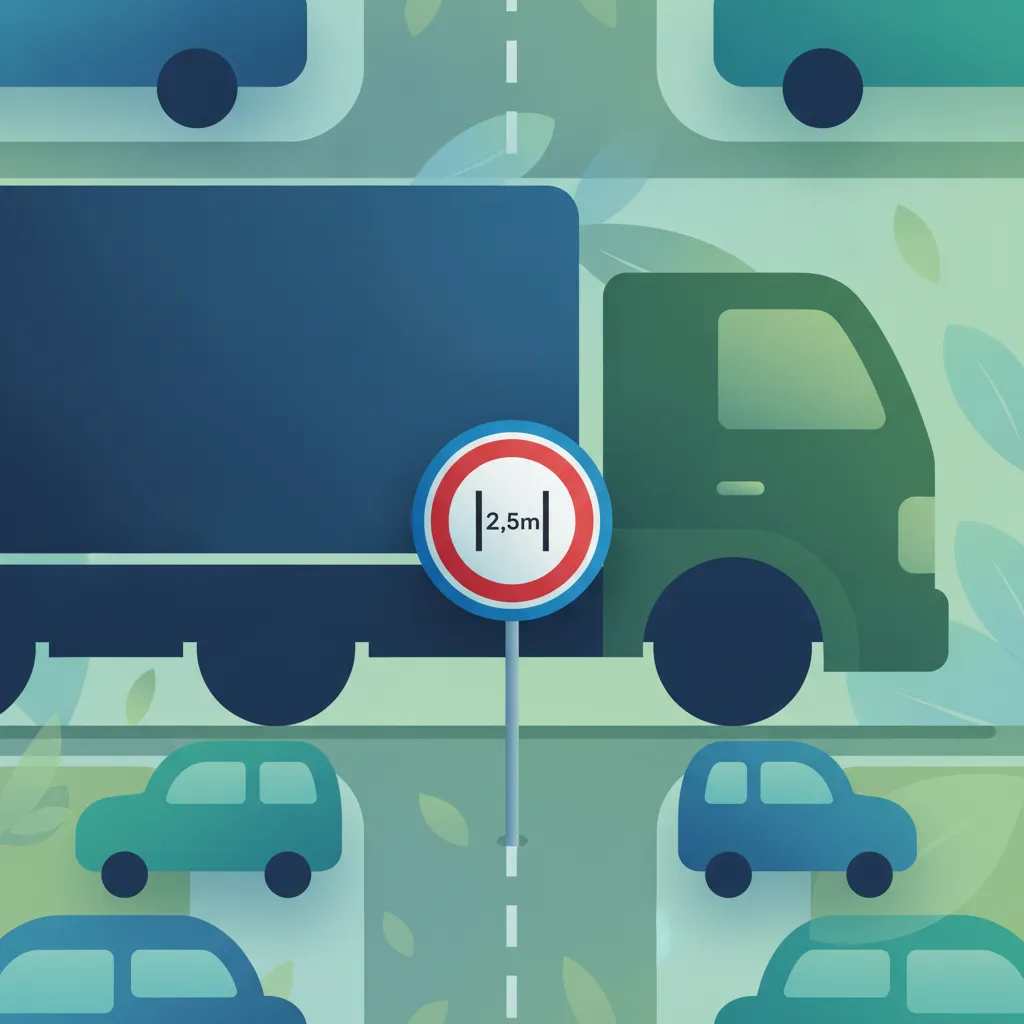
This lesson offers a deep dive into the specific regulations concerning weight, width, and axle load restrictions for goods vehicles. It covers how to read and comply with the associated road signs to avoid overloading weak bridges and entering restricted areas. Learners will understand the importance of correct load assessment and the serious penalties for non-compliance, which are enforced through DVSA roadside inspections and weighbridges.
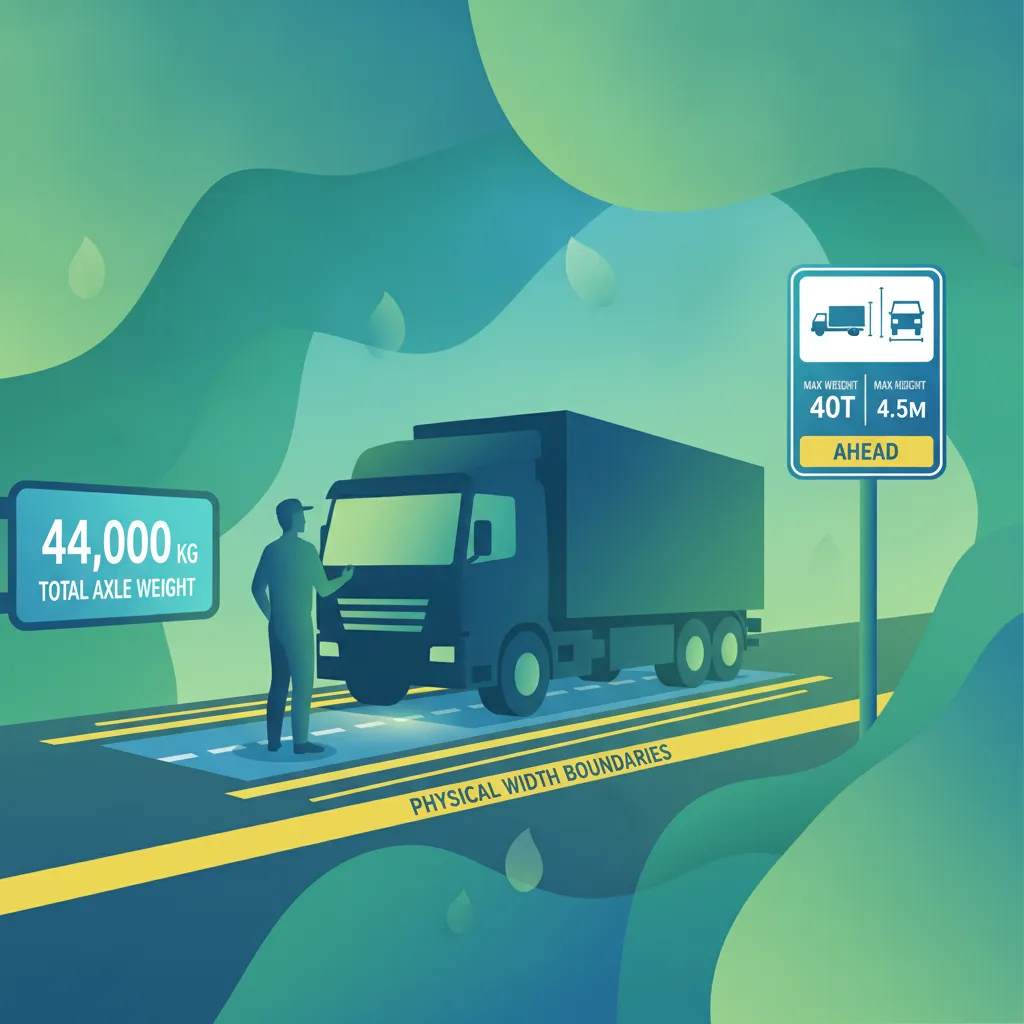
This lesson introduces the statutory limits governing the dimensions and mass of goods vehicles in Great Britain, including gross vehicle weight and individual axle loads. It explains how to calculate a vehicle's loaded weight to ensure it remains within legal parameters, preventing penalties and safety risks. Understanding these regulations is crucial for preventing damage to road infrastructure and ensuring the vehicle's stability and safe operation on every journey.
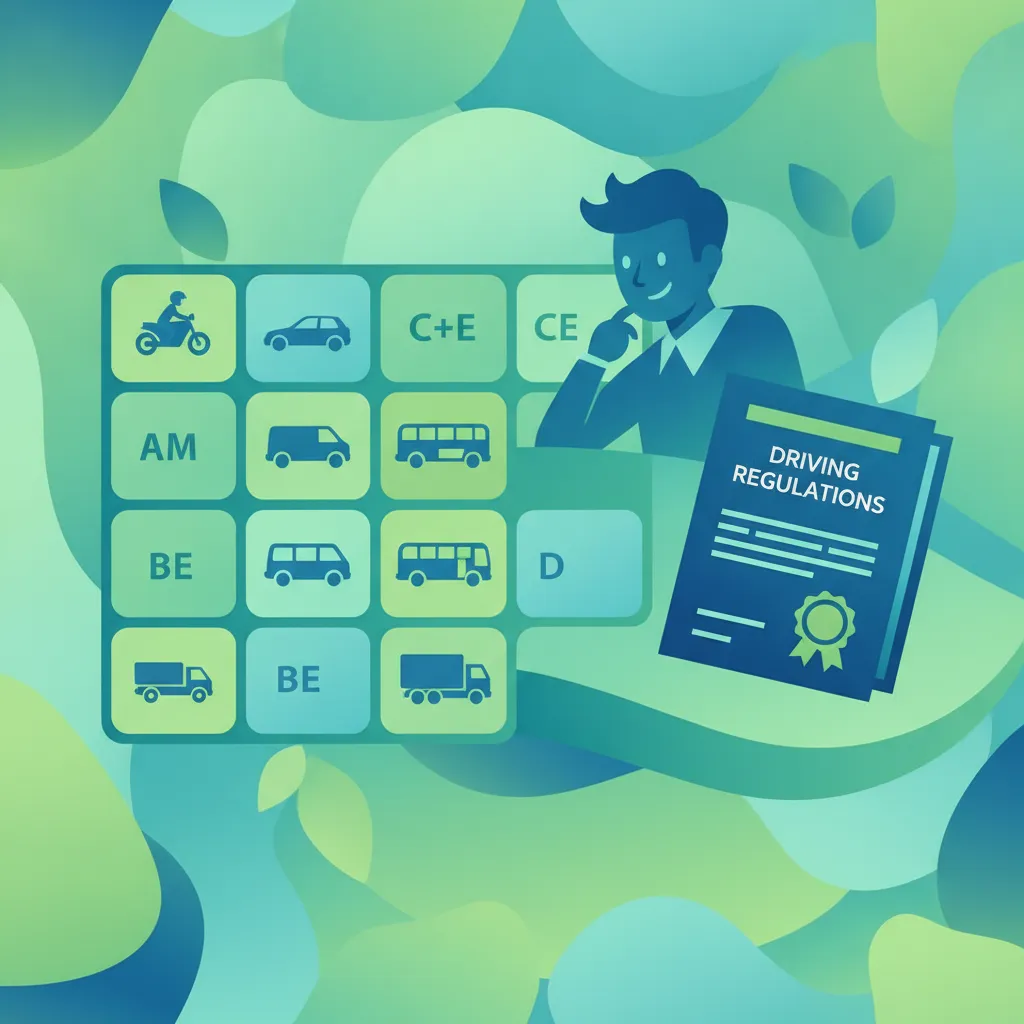
This lesson provides a comprehensive overview of the four passenger vehicle licence categories: D1, D, D1E, and DE. It details the specific legal criteria, vehicle types, and eligibility requirements for each. Learners will understand how DVSA theory test mandates intersect with DVLA licensing procedures, clarifying the privileges and limitations of each category. The content also explains the key statutory provisions from the Highway Code that govern passenger vehicle operation in Great Britain.

This lesson examines the unique rules and restrictions governing buses and coaches, focusing on bus lane priority, time-based restrictions, and loading zone limitations. Learners will explore the criteria for using bus-only routes and understand the legal consequences of non-compliance. The content also reviews signage indicating bus gate operation and areas where passenger vehicles are prohibited from stopping or loading outside of designated zones, ensuring lawful and efficient urban navigation.

This lesson provides a clear overview of the primary goods vehicle licence categories: C1, C, C1E, and CE. It explains the specific vehicle types, weight thresholds, and axle configurations permitted for each classification. You will learn about the DVSA's regulatory framework, including the essential age and medical fitness criteria for eligibility, as well as the steps for obtaining a full licence. Understanding these legal definitions is fundamental for ensuring compliance and safety.

This lesson covers the principles of safe loading to prevent items from shifting or falling and causing a hazard. It explains that any load must be securely fastened and must not obstruct your view. You will also learn how overloading or distributing weight incorrectly can dangerously affect the vehicle's steering, braking, and overall stability.

This lesson focuses on the legal and practical requirements for providing accessible transport for passengers with reduced mobility. It covers wheelchair access, ramp usage, and securement devices, as well as procedures for safely assisting passengers with mobility aids. The discussion highlights relevant disability legislation and the importance of proper loading and unloading protocols to protect both passengers and the driver from injury, ensuring compliance with accessibility standards in Great Britain.

In this lesson, learners will study the specific signage and markings related to bus stops and designated passenger loading zones. Topics include correct stop approach, positioning the bus for safe boarding and alighting, and the proper use of these areas. Learners will also examine the legal expectations for passenger loading zones, including restrictions on stopping outside these zones and best practices for managing passenger flow safely and efficiently during busy periods.

This lesson addresses the serious danger of driver fatigue, a major cause of incidents involving commercial vehicles. It details the complex EU and GB domestic rules on drivers' hours, including driving limits and required rest periods. Learners will be taught to recognize the physical and mental signs of fatigue and understand the importance of taking quality rest to maintain alertness and ensure their own safety and that of others.

This lesson explores how to maintain safe following distances specific to large passenger vehicles, accounting for their higher inertia and longer braking distances. It covers time-gap calculations, such as the four-second rule, and dynamic following distance adjustments based on speed and road conditions. Emphasis is placed on avoiding tailgating, ensuring a sufficient safety buffer is always present, and developing an awareness of convoy driving scenarios where multiple large vehicles are present.
Explore how vehicle dimensions, weight distribution, and centre of gravity impact handling during complex manoeuvres. Learn about turning radius, inertia, and dynamic stability for safe driving in GB.

This lesson addresses the unique challenges of operating a large goods vehicle in congested urban and city environments. It focuses on techniques for navigating narrow streets, making tight turns, and safely accessing delivery points while being highly aware of vulnerable road users like pedestrians and cyclists. The importance of exceptional observation, low-speed control, and clear communication with other road users is heavily emphasized to minimize risk in these complex settings.

This lesson addresses the unique challenges of driving a large vehicle on rural roads. It provides techniques for positioning the vehicle through sharp bends and on narrow lanes, and for safely navigating unmarked or uncontrolled junctions. Learners will be taught to anticipate hidden hazards common in the countryside, such as slow-moving farm vehicles, animals on the road, and concealed entrances. The correct use of passing places and strategies for meeting oncoming traffic are also covered.

This lesson provides detailed instruction on turning techniques tailored for long vehicles. It explains the concepts of off-tracking (where rear wheels follow a tighter path than front wheels) and rear swing, and how to compensate for them. Learners will understand how to position the vehicle correctly when approaching and navigating left and right turns at junctions, roundabouts, and tight corners, using mirrors and signals effectively to ensure clearance and safety.

This lesson explains the dynamics of turning a long vehicle, focusing on the concepts of off-tracking, where the rear wheels follow a tighter path than the front wheels, and tail swing. You will learn the correct road positioning on approach to junctions and roundabouts to safely clear obstacles and avoid mounting kerbs or striking street furniture. Managing speed and using mirrors effectively throughout the turn are emphasized as crucial safety techniques.

This lesson builds on basic skills to address complex manoeuvres in challenging, confined environments such as bus stations, depots, and service areas. It covers techniques for positioning the vehicle for bay parking and navigating tight, complex routes. Key focus areas include developing precise spatial awareness, using reference points, maintaining extremely slow and controlled movements, and performing continuous observation to navigate safely without causing damage or injury.

This lesson explains how to adapt your driving around different vehicles. You will learn to look out for motorcyclists, who are often hard to see, especially at junctions. It also covers the challenges of sharing the road with large vehicles, such as their extended blind spots, wider turning circles, and the wind turbulence they can create.

This lesson prepares you for the specific challenges of driving in the countryside. It explains the correct procedure for overtaking horse riders: slow down and pass wide, ensuring you do not spook the animal. You will also learn how to anticipate and safely manage encounters with slow-moving tractors and other farm machinery.

This lesson analyzes the significant impact that large goods vehicles have on overall traffic flow, particularly in congested urban areas and on narrow roads. It discusses how their size can contribute to lane blockages, reduced overtaking opportunities, and bottlenecks at junctions. Learners will study strategies to minimize these effects, such as careful lane selection, maintaining steady speeds, and allowing adequate space, to promote safer and more efficient traffic movement for everyone.

This lesson explains the critical concept of the centre of gravity (CG) and its direct impact on a vehicle's stability and rollover risk. It details how high or unstable loads raise the CG, making the vehicle more susceptible to tipping during cornering or sudden maneuvers. Learners will study techniques to assess and manage this risk, including adjusting speed and driving style, which is especially important for vehicles carrying liquid or hanging loads.
This lesson covers the principles of safe loading to prevent items from shifting or falling and causing a hazard. It explains that any load must be securely fastened and must not obstruct your view. You will also learn how overloading or distributing weight incorrectly can dangerously affect the vehicle's steering, braking, and overall stability.
Find clear answers to common questions learners have about Dimensions, Weight, and Vehicle Dynamics. Learn how the lesson is structured, which driving theory objectives it supports, and how it fits into the overall learning path of units and curriculum progression in Great Britain. These explanations help you understand key concepts, lesson flow, and exam focused study goals.
Off-tracking occurs when the rear wheels follow a shorter path than the front wheels during a turn. Understanding this is essential to ensure you do not hit curbs, signs, or pedestrians when navigating tight urban junctions.
In your theory test, you must recognize that increased vehicle weight significantly increases kinetic energy. This means that a fully loaded bus or coach will have a much longer stopping distance than an empty one, requiring more forward planning.
Yes, a higher centre of gravity makes a vehicle more prone to instability, especially when cornering sharply or changing lanes at speed. You must adjust your speed and steering inputs to maintain passenger comfort and vehicle balance.
Always know your vehicle's height, width, and length. In the exam, you will encounter scenarios where you must assess whether a vehicle can fit under a bridge, through a narrow street, or safely navigate a specific junction.
Dive into our comprehensive question bank to find exactly what you need for your Great Britain theory test. Use our advanced filters to pinpoint specific subjects or test your knowledge on challenging areas, ensuring you're fully prepared for success.