
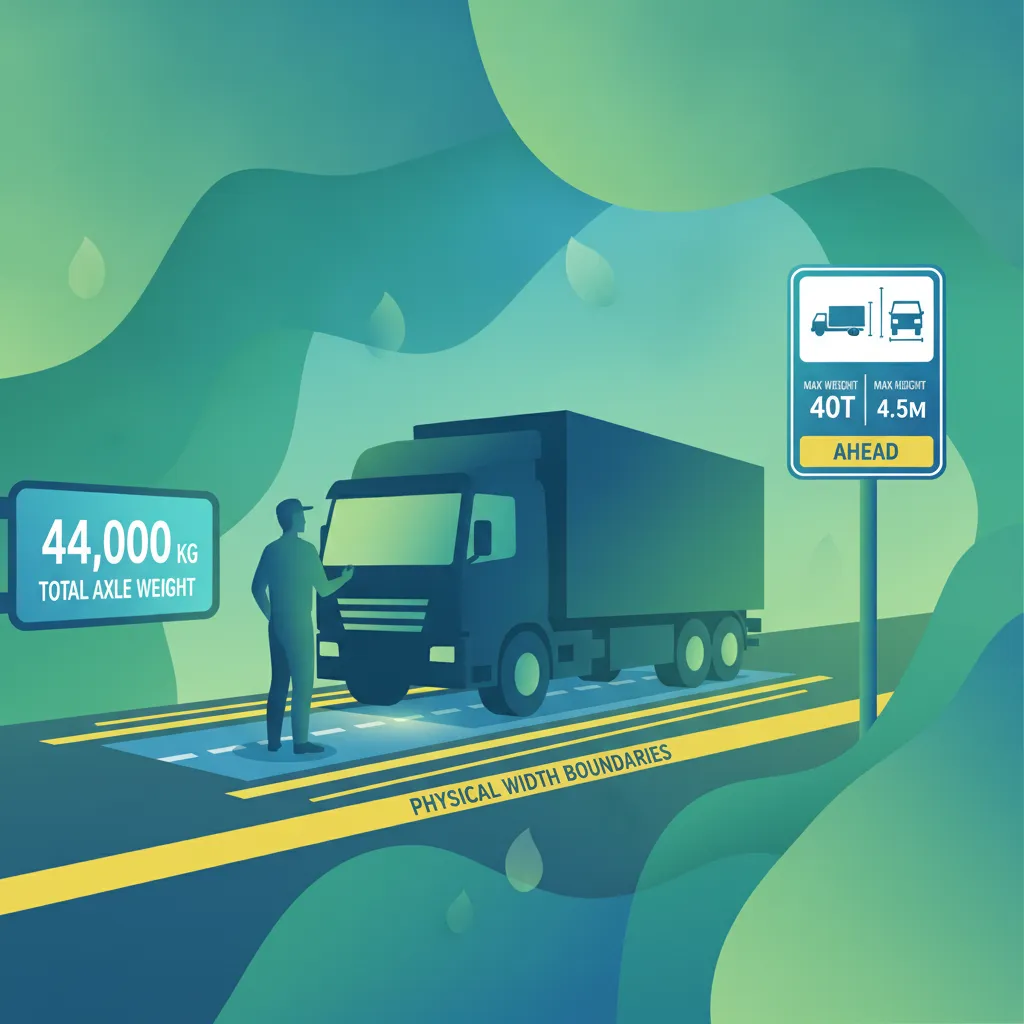
This lesson explores the critical statutory limits for goods vehicle dimensions, gross vehicle weight, and axle loads required for the Category C theory test. Understanding these parameters is essential for effective route planning and ensuring your vehicle remains legal and stable on Great Britain's road network. Mastery of these rules helps you avoid penalties and maintain high safety standards in your professional driving career.
Lesson content overview
Operating a goods vehicle in Great Britain requires a comprehensive understanding of statutory limits concerning its dimensions and mass. These regulations are not merely bureaucratic hurdles; they are fundamental to road safety, infrastructure protection, and legal compliance. For professional goods vehicle drivers holding a Category C licence, mastering these limits is crucial for preventing accidents, avoiding significant penalties, and ensuring the safe and efficient operation of large vehicles on every journey.
This lesson will introduce you to the detailed rules governing gross vehicle weight (GVW), individual axle loads, vehicle length, width, height, and wheelbase restrictions. We will explore how to calculate a vehicle's loaded weight to ensure it remains within legal parameters, preventing damage to road infrastructure, and ensuring the vehicle's stability and safe operation.
The operation of goods vehicles on public roads is strictly regulated to protect everyone. Exceeding legal limits can lead to severe consequences, from structural damage to the vehicle and infrastructure to serious accidents and legal prosecution. Adhering to these limits is a cornerstone of professional driving responsibility.
Understanding and complying with dimension and mass limits is paramount for several reasons:
Several core principles underpin the regulations governing goods vehicles:
The Gross Vehicle Weight (GVW) is a fundamental concept for Category C licence holders. It represents the absolute maximum permissible weight of a vehicle when it is fully laden.
The total weight of a vehicle when fully loaded, including the vehicle's curb weight, all cargo, passengers, fuel, and any accessories.
GVW is distinct from the vehicle's empty weight. To determine the actual weight of a vehicle for any given journey, a driver must account for all components:
The GVW influences many aspects of vehicle operation, including braking distances, handling characteristics, and overall stability. Exceeding the manufacturer's certified GVW or the legal limit is a serious offence that compromises safety and can lead to severe penalties.
It is crucial not to confuse GVW with other weight specifications.
A common mistake is confusing GVW with Gross Combination Weight (GCW), which applies to a combination of vehicles (e.g., a tractor unit and a trailer). GVW refers only to a single vehicle.
Drivers must ensure that the total weight of the vehicle, including all its contents, never exceeds the GVW specified on the vehicle’s type approval certificate. Regular checks, often using weighbridges, are essential to verify compliance.
Beyond the overall GVW, the distribution of weight across individual axles is equally critical. Maximum axle loads define the highest weight legally allowed to rest on a single axle or a group of closely spaced axles.
The maximum weight legally allowed to be supported by a single axle or a group of axles on a vehicle.
Regulations specify limits for different axle configurations:
These limits are set to protect the structural integrity of the axles, the vehicle's chassis, and to distribute the wear on road surfaces more evenly. Exceeding these limits can lead to severe structural damage, tyre failure, compromised braking, and loss of control.
It is a common misconception to assume that if the total GVW is within limits, axle loads will automatically be correct. This is often not the case. Improper loading can result in one or more axles being overloaded while others are underloaded, leading to:
Drivers must pay careful attention to how cargo is positioned within the vehicle to ensure that weight is distributed evenly across all axles, keeping each within its legal limit.
Beyond weight, the physical dimensions of goods vehicles are strictly controlled to ensure they can safely navigate the road network without causing obstruction or damage.
The overall length of a goods vehicle is a critical factor influencing its manoeuvrability, turning radius, and ability to fit into road infrastructure.
Exceeding these limits without a special permit can lead to difficulties in negotiating turns, occupying multiple lanes, and navigating junctions, posing a risk to other road users.
The width of a goods vehicle dictates its ability to safely occupy a lane, pass other vehicles, and navigate narrow roads or urban environments.
This width includes any fixed equipment protruding from the side, such as side guards, mirrors (though mirrors can project beyond if they fold), and side marker lamps. Drivers must be vigilant, especially when adding accessories or loading wide cargo, to ensure the overall width remains within legal parameters. Exceeding width limits can lead to encroachment onto adjacent lanes, increased risk of side-swipe collisions, and danger to pedestrians and cyclists on footways.
Vehicle height is perhaps the most visually apparent dimension restriction, primarily due to the risk of striking overhead structures.
Drivers must always be aware of their vehicle's total height, including any cargo, and meticulously check height clearance signs before attempting to pass under bridges, through tunnels, or beneath overpasses. A collision with an overhead structure can cause catastrophic damage, injury, and severe legal repercussions.
Always know your vehicle's exact height and plan your route to avoid low bridges. Do not rely solely on memory; double-check route information and road signs.
Beyond the overall dimensions, specific measurements like wheelbase and overhang play a crucial role in a goods vehicle's stability and manoeuvring characteristics.
The portion of a vehicle's structure or load that extends beyond the frontmost or rearmost axle.
These limits are designed to ensure safe vehicle performance and prevent hazards during cornering or reversing.
The distance between the centre of the front axle and the centre of the rearmost axle (or group of axles) on a single vehicle.
The wheelbase significantly influences a vehicle's turning circle and its longitudinal stability. A longer wheelbase generally provides greater stability at speed but results in a larger turning circle, making tight manoeuvres more challenging. Conversely, a shorter wheelbase allows for greater agility and a tighter turning circle but can reduce stability, especially when carrying a high centre of gravity load.
Drivers must understand how their vehicle's wheelbase and overhangs affect its physical footprint on the road, particularly when planning turns, reversing, or navigating confined spaces like loading bays.
There are occasions when a goods vehicle or its load must exceed standard legal limits. In such cases, special permits are required to ensure safe passage and manage the risks associated with abnormal dimensions or mass.
Special permits, often referred to as "abnormal load permits," are necessary when a vehicle's dimensions or mass exceed the standard limits set out in the Road Vehicles (Construction and Use) Regulations 1986. This typically includes:
Common examples of loads requiring permits include large construction components, wind turbine blades, prefabricated structures, and heavy plant machinery.
Operators must apply for these permits well in advance from the appropriate authorities, primarily the Department for Transport (DfT) or the DVSA. The application process usually involves:
Transporting an oversized or overweight load without a valid special permit is a serious offence, leading to immediate fines, vehicle detention, and potential criminal charges if damage occurs. Strict adherence to all permit conditions is mandatory.
For professional goods vehicle drivers operating articulated lorries (tractor units pulling semi-trailers), the Gross Combination Weight (GCW) is another critical mass limit to consider.
The total permissible weight of a combination of vehicles, including the tractor unit, any attached trailer(s), their respective loads, fuel, passengers, and equipment.
GCW represents the maximum authorised weight for the entire vehicle combination. For Category C+E vehicles in Great Britain, the typical maximum GCW is 44,000 kg (44 tonnes), though this can vary depending on the number of axles, vehicle configuration, and specific route authorisations.
The GCW limit is vital for:
It is paramount to differentiate GCW from the individual GVW of the tractor unit or the trailer.
A driver might be within the GVW limits for both their tractor and their trailer individually, but still exceed the overall GCW limit for the combination. This is a common oversight that leads to severe penalties. Always calculate the total weight of the entire combination before setting off.
The way a load is distributed within a goods vehicle profoundly impacts its stability, handling characteristics, and ultimately, safety.
The theoretical point where the entire weight of the vehicle and its load is considered to be concentrated.
The position of the Centre of Gravity (CoG) is a critical factor for vehicle stability:
Proper load distribution is essential to maintain a stable CoG. Key considerations include:
When carrying partial loads, distribute the weight as if it were a full load – low, centred, and evenly across axles. Avoid concentrating all weight at one end or side.
The primary legislation governing the dimensions and mass of goods vehicles in Great Britain is The Road Vehicles (Construction and Use) Regulations 1986 (often abbreviated as RVUCR or C&U Regulations). These regulations are comprehensive and cover virtually every aspect of a vehicle's design, condition, and operation.
These regulations are legally binding, and breaches carry significant penalties. Enforcement is primarily carried out by the DVSA through roadside checks, weighbridges, and inspections.
While the RVUCR 1986 provides the detailed legal framework, the Highway Code acts as a guide for all road users, reflecting these underlying laws.
Adhering to the Highway Code is not just about polite driving; it's about following rules that are often backed by specific legislation, with non-compliance carrying legal ramifications.
Violations of goods vehicle dimension and mass limits are unfortunately common and carry serious consequences for both the driver and the operating company.
Overloading Beyond GVW:
Axle Overload (Tandem/Tridem):
Exceeding Width Limits Without Permit:
Transporting High Load Under Low Bridge:
Improper Load Distribution (e.g., causing rear overload):
Failing to Obtain a Special Permit for Oversized Dimensions:
The enforcement authorities, primarily the DVSA, use roadside checks and static weighbridges to identify non-compliant vehicles. Penalties are designed to deter violations and ensure road safety.
The safe operation of a goods vehicle within its legal limits is not a static calculation; it is influenced by various dynamic factors. Drivers must adapt their awareness and driving behaviour to these changing conditions.
Understanding the rules in theory is one thing; applying them in real-world driving scenarios is another. Here are some practical examples:
Mastering the regulations regarding goods vehicle dimensions and mass is non-negotiable for Category C licence holders in Great Britain. This lesson has covered the essential aspects, highlighting their importance for safety, infrastructure protection, and legal compliance.
Key Takeaways:
By diligently applying these principles, professional goods vehicle drivers contribute to road safety, preserve national infrastructure, and uphold the high standards expected of their profession.
This lesson covers the statutory limits governing Category C goods vehicle dimensions and mass in Great Britain. Key topics include GVW and GCW calculations, individual axle load limits for single, tandem, and tridem configurations, and specific dimension limits for length (12m rigid, 16.5m articulated), width (2.55m standard), and height. The content emphasises that proper load distribution affects both legal compliance and vehicle stability, and explains when special permits are required for oversized loads. Understanding these regulations, derived from the Road Vehicles (Construction and Use) Regulations 1986, is essential for passing the DVSA theory test and operating professionally on GB roads.
A short set of high-value points that capture the most important learning from this lesson.
Gross Vehicle Weight (GVW) is the maximum total weight of vehicle, fuel, driver, passengers, cargo, and accessories; always verify you remain within this certified limit.
Axle load limits apply independently of GVW—distributing weight evenly across single, tandem, and tridem axles is essential even when total weight is compliant.
Maximum dimensions for Category C vehicles include 12m length (rigid) or 16.5m (articulated), 2.55m width (2.60m refrigerated), and require careful route planning for height.
Special permits are mandatory for any load exceeding standard limits, with strict adherence required to prescribed routes, timings, and escort conditions.
Proper load distribution keeps heavy items low and centred to maintain vehicle stability, reduce rollover risk, and prevent axle overloads.
Explore all units and lessons included in this driving theory course.
GVW minus curb weight equals maximum payload capacity; calculate total weight before every journey.
Single axle limit is typically 10 tonnes; tandem axle limit is approximately 18 tonnes; tridem axle limit is approximately 26 tonnes, subject to spacing and suspension.
GCW (Gross Combination Weight) applies to vehicle combinations, separate from individual vehicle GVW—both must be respected.
Always check bridge and tunnel clearances before driving; a collision with overhead infrastructure causes severe damage and legal liability.
The Road Vehicles (Construction and Use) Regulations 1986 is the primary legislation governing HGV dimensions and mass in Great Britain.
Assuming total GVW compliance means axle loads are automatically within limits—improper load positioning can overload individual axles despite meeting overall weight.
Confusing GVW with GCW—GVW applies to a single vehicle while GCW applies to a tractor-trailer combination; both must be checked separately.
Proceeding without verifying height clearances, relying on memory rather than checking route signs and planning tools before each journey.
Operating an oversized or overweight load without obtaining the required special permit, leading to fines, vehicle detention, and potential criminal charges.
Loading cargo with all weight at one end or side, shifting the centre of gravity and compromising vehicle stability and handling.
Lesson content overview
A short set of high-value points that capture the most important learning from this lesson.
Gross Vehicle Weight (GVW) is the maximum total weight of vehicle, fuel, driver, passengers, cargo, and accessories; always verify you remain within this certified limit.
Axle load limits apply independently of GVW—distributing weight evenly across single, tandem, and tridem axles is essential even when total weight is compliant.
Maximum dimensions for Category C vehicles include 12m length (rigid) or 16.5m (articulated), 2.55m width (2.60m refrigerated), and require careful route planning for height.
Special permits are mandatory for any load exceeding standard limits, with strict adherence required to prescribed routes, timings, and escort conditions.
Proper load distribution keeps heavy items low and centred to maintain vehicle stability, reduce rollover risk, and prevent axle overloads.
Explore all units and lessons included in this driving theory course.
GVW minus curb weight equals maximum payload capacity; calculate total weight before every journey.
Single axle limit is typically 10 tonnes; tandem axle limit is approximately 18 tonnes; tridem axle limit is approximately 26 tonnes, subject to spacing and suspension.
GCW (Gross Combination Weight) applies to vehicle combinations, separate from individual vehicle GVW—both must be respected.
Always check bridge and tunnel clearances before driving; a collision with overhead infrastructure causes severe damage and legal liability.
The Road Vehicles (Construction and Use) Regulations 1986 is the primary legislation governing HGV dimensions and mass in Great Britain.
Assuming total GVW compliance means axle loads are automatically within limits—improper load positioning can overload individual axles despite meeting overall weight.
Confusing GVW with GCW—GVW applies to a single vehicle while GCW applies to a tractor-trailer combination; both must be checked separately.
Proceeding without verifying height clearances, relying on memory rather than checking route signs and planning tools before each journey.
Operating an oversized or overweight load without obtaining the required special permit, leading to fines, vehicle detention, and potential criminal charges.
Loading cargo with all weight at one end or side, shifting the centre of gravity and compromising vehicle stability and handling.
Explore search topics learners often look for when studying Dimensions, Mass and Legal Limits. These topics reflect common questions about road rules, driving situations, safety guidance, and lesson level theory preparation for learners in Great Britain.
Browse additional driving theory lessons that cover connected traffic rules, road signs, and common driving situations related to this topic. Improve your understanding of how different rules interact across everyday traffic scenarios.
Explore the serious penalties, road safety risks, and infrastructure damage caused by operating goods vehicles over legal weight and dimension limits in Great Britain. Understand the critical importance of compliance for professional drivers.
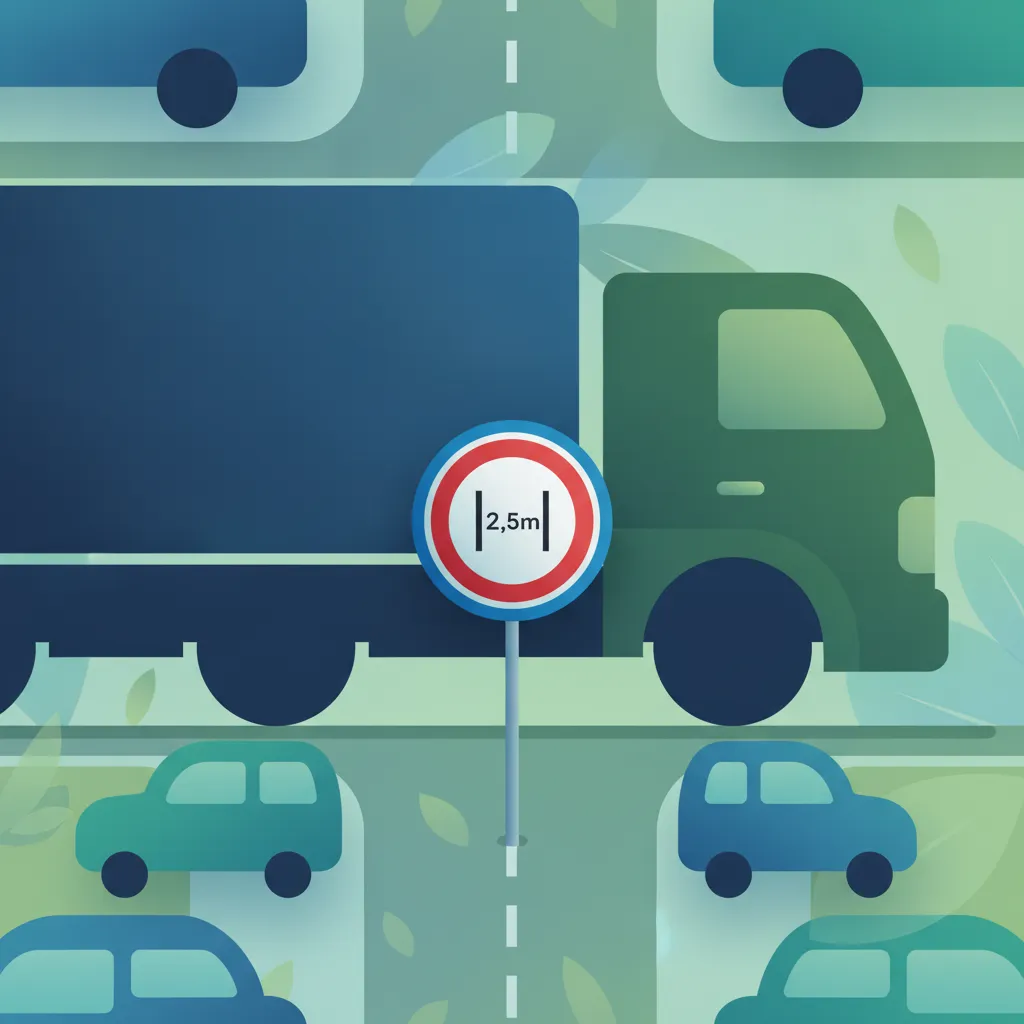
This lesson offers a deep dive into the specific regulations concerning weight, width, and axle load restrictions for goods vehicles. It covers how to read and comply with the associated road signs to avoid overloading weak bridges and entering restricted areas. Learners will understand the importance of correct load assessment and the serious penalties for non-compliance, which are enforced through DVSA roadside inspections and weighbridges.

Gain a comprehensive understanding of the legal repercussions for violating goods vehicle regulations, which can range from civil penalties to criminal prosecution. This lesson details the fines, penalty points, and potential vehicle seizure enforced by authorities like the DVSA and the police. It clarifies how serious offences are handled in court and how repeated infractions can lead to escalating sanctions, impacting both your licence and professional career.

This lesson addresses the serious danger of driver fatigue, a major cause of incidents involving commercial vehicles. It details the complex EU and GB domestic rules on drivers' hours, including driving limits and required rest periods. Learners will be taught to recognize the physical and mental signs of fatigue and understand the importance of taking quality rest to maintain alertness and ensure their own safety and that of others.

This lesson outlines the serious consequences of failing to comply with road transport law. It details the graduated system of fines and penalties that can be issued by the DVSA and police for offences ranging from drivers' hours violations to vehicle defects. The lesson also explains more severe sanctions, such as vehicle prohibition, licence suspension, and referral to the Traffic Commissioner, which can impact both the driver and their employer.
This lesson focuses on the principles of effective speed management for heavy goods vehicles, which extends beyond simply obeying the statutory speed limits. It covers how to adapt speed based on vehicle weight, load stability, road gradients, and prevailing traffic and weather conditions. You will also learn about the function of mandatory speed limiters and how intelligent use of speed and cruise control can significantly improve fuel efficiency and safety.

This lesson provides a clear overview of the primary goods vehicle licence categories: C1, C, C1E, and CE. It explains the specific vehicle types, weight thresholds, and axle configurations permitted for each classification. You will learn about the DVSA's regulatory framework, including the essential age and medical fitness criteria for eligibility, as well as the steps for obtaining a full licence. Understanding these legal definitions is fundamental for ensuring compliance and safety.
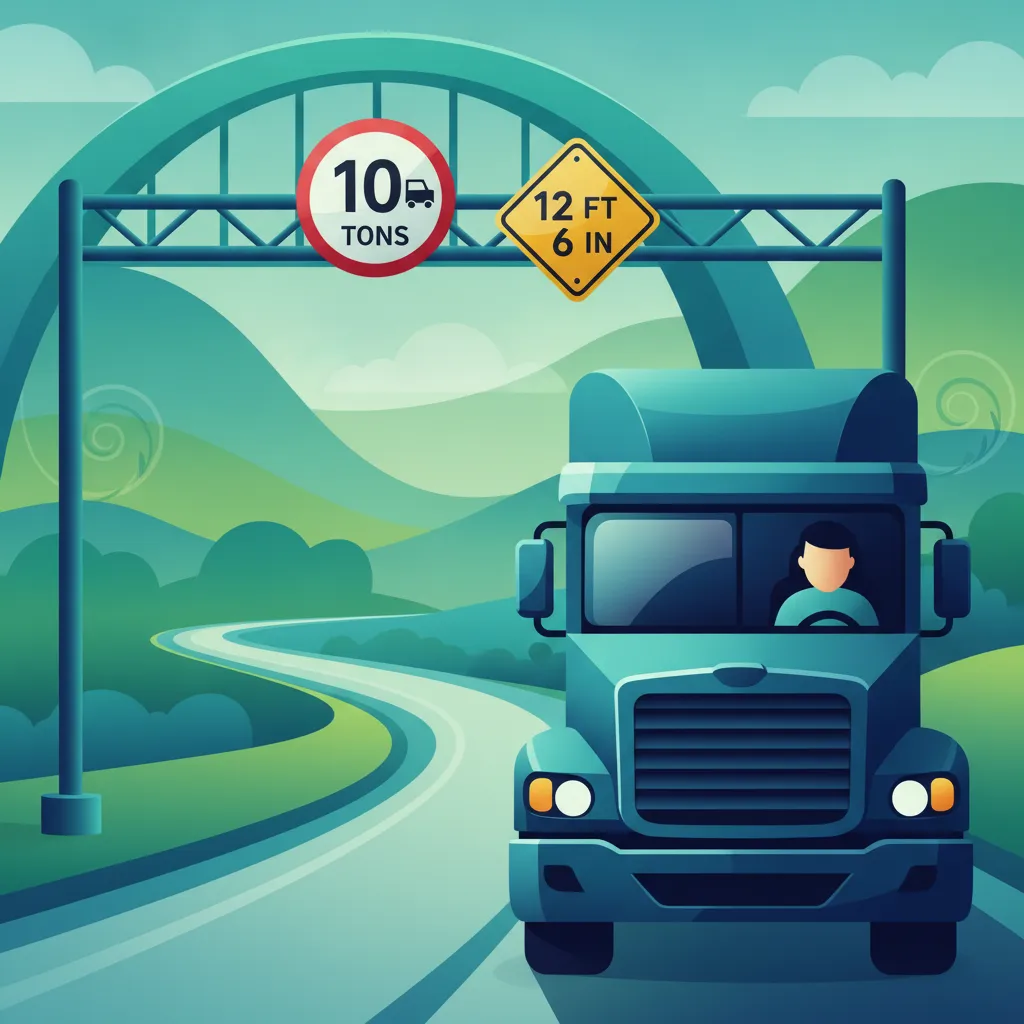
This lesson provides a detailed focus on the specific road signs that directly affect drivers of large goods vehicles. You will learn to accurately interpret mandatory signs for weight, height, and width restrictions, as well as signs indicating lane usage and prohibited routes. Understanding these signs is not optional; it is a legal requirement for avoiding fines, preventing accidents, and ensuring the safe passage of your vehicle through the road network.

This lesson addresses the growing number of environmental access restrictions in urban areas, such as Low Emission Zones (LEZ), Ultra Low Emission Zones (ULEZ), and congestion charging. Learners will understand the vehicle emission standards (Euro standards) required for entry and how to check their vehicle's compliance. It covers the practicalities of planning routes that account for these zones to avoid significant financial penalties and support cleaner air initiatives.

This lesson covers the principles of safe loading to prevent items from shifting or falling and causing a hazard. It explains that any load must be securely fastened and must not obstruct your view. You will also learn how overloading or distributing weight incorrectly can dangerously affect the vehicle's steering, braking, and overall stability.

This lesson analyzes the significant impact that large goods vehicles have on overall traffic flow, particularly in congested urban areas and on narrow roads. It discusses how their size can contribute to lane blockages, reduced overtaking opportunities, and bottlenecks at junctions. Learners will study strategies to minimize these effects, such as careful lane selection, maintaining steady speeds, and allowing adequate space, to promote safer and more efficient traffic movement for everyone.
Detailed explanation of statutory limits for goods vehicle dimensions (length, width, height) and axle loads in Great Britain. Learn how to calculate loaded weight and manage load distribution for safe and legal operation.
This lesson offers a deep dive into the specific regulations concerning weight, width, and axle load restrictions for goods vehicles. It covers how to read and comply with the associated road signs to avoid overloading weak bridges and entering restricted areas. Learners will understand the importance of correct load assessment and the serious penalties for non-compliance, which are enforced through DVSA roadside inspections and weighbridges.
This lesson provides a clear overview of the primary goods vehicle licence categories: C1, C, C1E, and CE. It explains the specific vehicle types, weight thresholds, and axle configurations permitted for each classification. You will learn about the DVSA's regulatory framework, including the essential age and medical fitness criteria for eligibility, as well as the steps for obtaining a full licence. Understanding these legal definitions is fundamental for ensuring compliance and safety.

This lesson delves into the core principles of correct weight distribution within a goods vehicle to ensure safety and stability. It explains how to balance a load evenly across the axles to prevent overloading and maintain optimal braking and steering performance. Learners will understand how incorrect load placement can dangerously affect vehicle dynamics, reinforcing the importance of careful planning before every journey to ensure stability on the road.
This lesson addresses the serious danger of driver fatigue, a major cause of incidents involving commercial vehicles. It details the complex EU and GB domestic rules on drivers' hours, including driving limits and required rest periods. Learners will be taught to recognize the physical and mental signs of fatigue and understand the importance of taking quality rest to maintain alertness and ensure their own safety and that of others.
This lesson focuses on the principles of effective speed management for heavy goods vehicles, which extends beyond simply obeying the statutory speed limits. It covers how to adapt speed based on vehicle weight, load stability, road gradients, and prevailing traffic and weather conditions. You will also learn about the function of mandatory speed limiters and how intelligent use of speed and cruise control can significantly improve fuel efficiency and safety.
This lesson provides a detailed focus on the specific road signs that directly affect drivers of large goods vehicles. You will learn to accurately interpret mandatory signs for weight, height, and width restrictions, as well as signs indicating lane usage and prohibited routes. Understanding these signs is not optional; it is a legal requirement for avoiding fines, preventing accidents, and ensuring the safe passage of your vehicle through the road network.

This lesson focuses on the specific rules and best practices for driving HGVs on motorways in Great Britain. It covers mandatory speed limits for goods vehicles, lane discipline including restrictions on using the outside lane, and procedures for safely joining and leaving the motorway. The lesson also includes up-to-date information on driving on smart motorways, including understanding the signs and using emergency refuge areas correctly.

This lesson covers the critical legal requirement for accurate record-keeping in the transport industry. It provides detailed instruction on the correct use of both analogue and digital tachographs to record driving time, breaks, and other work. You will also learn about other essential documents that must be carried, such as load manifests and delivery notes, and the importance of keeping these records accurate and available for inspection by enforcement authorities.

This lesson focuses on the importance of excellent lane discipline for drivers of large vehicles. It details the rules and best practices for lane selection on motorways and dual carriageways, emphasizing the need to stay in the appropriate lane and signal intentions early. Correct positioning within a lane to maximize safety margins and visibility, especially around vulnerable road users, is a key focus for maintaining professional driving standards.
Find clear answers to common questions learners have about Dimensions, Mass and Legal Limits. Learn how the lesson is structured, which driving theory objectives it supports, and how it fits into the overall learning path of units and curriculum progression in Great Britain. These explanations help you understand key concepts, lesson flow, and exam focused study goals.
Axle weights are critical because exceeding them can damage road surfaces and bridges, leading to severe penalties. Furthermore, incorrect weight distribution across axles can negatively affect steering, braking, and overall vehicle stability.
Large goods vehicles are subject to height restrictions on many bridges and tunnels. Failing to know your vehicle's height and ignoring warning signs can lead to bridge strikes, which are dangerous and carry significant legal and career consequences.
While you may not need to perform complex engineering calculations, you will be tested on your ability to understand maximum authorized mass (MAM) and how to ensure your vehicle load remains within the legal limits specified on your vehicle's plate.
Being overweight can result in heavy fines, points on your licence, or even a driving ban. Furthermore, it can invalidate your insurance and lead to a prohibition notice, preventing the vehicle from being driven until the excess load is removed.
Dive into our comprehensive question bank to find exactly what you need for your Great Britain theory test. Use our advanced filters to pinpoint specific subjects or test your knowledge on challenging areas, ensuring you're fully prepared for success.