
This lesson focuses on the critical skill of maintaining safe following distances while operating large passenger vehicles like buses, coaches, and minibuses. As part of our professional driving curriculum, you will learn how to adapt your driving to account for the unique physics, weight, and inertia of heavy vehicles. Mastering these techniques is essential for both passing your theory test and ensuring the safety of your passengers in real-world conditions.

Lesson content overview
Operating a large passenger vehicle, such as a bus, coach, or minibus, requires a heightened level of awareness and adherence to safety protocols, particularly concerning following distances. Unlike standard cars, these vehicles possess significantly greater mass and inertia, which directly impacts their braking capabilities and overall maneuverability. Maintaining an adequate and dynamically adjusted following distance is paramount for preventing collisions, safeguarding passengers, and ensuring compliance with the Highway Code and professional driving standards in Great Britain.
The sheer size and weight of a fully loaded bus or coach mean it cannot stop as quickly as a smaller vehicle. This fundamental physical reality necessitates greater space between your vehicle and the one ahead. Insufficient following distance is a leading cause of rear-end collisions, which can have severe consequences, including passenger injuries, vehicle damage, and significant disruption to service. Professional drivers of Category D, D1, D1E, or DE vehicles must therefore master the art of maintaining a substantial safety buffer at all times.
Inertia refers to an object's resistance to changes in its state of motion. A large passenger vehicle, due to its substantial mass, possesses considerable inertia. This means it requires more force and a longer distance to accelerate, decelerate, or change direction compared to a lighter vehicle. When braking, this increased inertia translates directly into a significantly longer braking distance—the distance covered from the moment the brakes are applied until the vehicle comes to a complete stop.
The kinetic energy of a moving object is proportional to its mass and the square of its speed. Consequently, a heavy vehicle travelling at the same speed as a light car will have much more kinetic energy, which must be dissipated through braking. This dissipation requires a greater distance. For example, a bus travelling at 80 km/h (approximately 50 mph) might require nearly twice the distance to stop compared to a typical car at the same speed. Recognising this physical reality is the foundation of safe following distance practices for large vehicles.
The four-second rule is a widely recognised method for calculating a safe following distance under normal driving conditions. It provides a simple, observable metric to help drivers maintain an adequate temporal gap, irrespective of their speed.
To apply this rule, choose a fixed point on the road, such as a road sign, lamppost, or bridge. When the rear of the vehicle in front of you passes that point, begin counting seconds: "one-thousand-and-one, one-thousand-and-two, one-thousand-and-three, one-thousand-and-four." If the front of your vehicle reaches the same fixed point before you finish counting, you are following too closely. You should then reduce your speed and increase your distance until a four-second gap is consistently maintained.
While effective for standard passenger cars, the four-second rule is generally insufficient for large passenger vehicles. It serves as a baseline, but the increased mass and inertia of buses, coaches, and minibuses mean that their braking distances are inherently longer. Relying solely on a four-second gap when driving a heavy vehicle significantly increases the risk of a rear-end collision, especially if the vehicle ahead brakes sharply or if road conditions deteriorate. Therefore, professional drivers must employ an adjusted time-gap.
For professional drivers of large passenger vehicles, an extended adjusted time-gap is mandatory to ensure safety. This adjustment accounts for the unique dynamic characteristics of buses, coaches, and minibuses, providing a more appropriate safety buffer.
Under normal, dry road conditions, professional drivers of large passenger vehicles should maintain a minimum six-second rule. This extended temporal gap directly compensates for the increased stopping distances of heavy vehicles. Using the same counting method as the four-second rule, drivers must ensure their vehicle passes the chosen fixed marker no sooner than six seconds after the vehicle in front.
When counting your following distance, ensure you use the "one-thousand-and-one" method. This technique helps approximate a single second more accurately than a simple "one, two, three" count.
Safe driving is a dynamic process, and following distances must constantly adapt to changing circumstances. When conditions are less than ideal, the six-second rule becomes the bare minimum and must be further extended. This practice is known as dynamic following distance.
Factors that necessitate an enhanced gap, often increasing to an eight-second rule or even more, include:
By proactively adjusting the time-gap, drivers create a safer environment for everyone on the road.
Understanding the individual components that make up total stopping distance is crucial for professional drivers. This knowledge underpins the need for extended following distances.
As discussed, inertia is the resistance to change in motion. For large passenger vehicles, high inertia means that once moving, they tend to stay moving, and once slowing down, they resist further deceleration. This resistance means that the vehicle's braking system must work harder and over a longer period to bring it to a stop. This is particularly evident when braking suddenly, where the vehicle's weight dramatically prolongs the necessary distance.
The total stopping distance comprises two main parts:
Total Stopping Distance = Reaction Distance + Braking Distance. For large passenger vehicles, both components tend to be longer than for cars, but the braking distance is disproportionately increased due to mass.
The practical implication for professional drivers is that even a slight delay in reaction or a minor reduction in road traction can have a magnified effect on the total stopping distance for a heavy vehicle. This means that merely seeing a hazard is not enough; drivers must anticipate hazards and maintain sufficient space to react and stop safely. Relying on visual distance estimates alone can be misleading; time-gaps provide a more accurate and consistent measure across varying speeds.
Effective safe driving requires continuous assessment and adjustment. The concept of dynamic following distance means that the six-second or eight-second rule is not a static command but a minimum guideline that must be proactively modified based on real-time variables.
While the time-gap method inherently accounts for speed (a four-second gap covers a longer physical distance at higher speeds), drivers must still be mindful that higher speeds amplify the effects of inertia and increase the total stopping distance. On motorways, for instance, even with a six-second gap, the physical distance covered is substantial, demanding unwavering attention. Should conditions worsen, the gap must be extended further still.
Weather conditions drastically alter the road surface's coefficient of friction, directly impacting braking performance.
The weight of passengers and their luggage significantly increases the gross vehicle weight, directly influencing inertia and, consequently, braking distance. A fully loaded coach, especially when descending a hill, will require a much longer stopping distance than an empty one. Drivers must add extra seconds to their following distance calculations when operating at or near maximum capacity.
Poor visibility due to fog, heavy rain, or driving at night reduces the distance at which drivers can perceive hazards. This reduced perception time means that a larger following distance is necessary to compensate for the delayed identification of potential risks. As a general rule, add at least two seconds to your minimum following distance during periods of reduced visibility or night driving.
When multiple large passenger vehicles travel together, such as a fleet of buses or coaches, unique challenges arise. This scenario, often referred to as convoy driving, demands heightened awareness of cumulative stopping distances and the potential for chain-reaction collisions.
Each vehicle within a convoy must maintain its own safe following distance relative to the vehicle directly ahead. It is a common misconception that convoys can operate with shorter gaps because they are travelling together. In fact, the opposite is true. If the lead vehicle in a convoy brakes suddenly, a ripple effect can occur, where each subsequent vehicle has less time and space to react, leading to an accordion-style collision.
Therefore, drivers in a convoy must adhere to the same adjusted time-gap rules (six, eight, or more seconds) as if they were driving independently. In adverse conditions, an even greater buffer between convoy vehicles is advisable.
The primary goal of convoy awareness regarding following distances is to prevent chain-reaction collisions. By ensuring adequate spacing, each driver has sufficient time and distance to react safely, even if the lead vehicle executes an emergency stop. This collective safety strategy is crucial for the efficient and safe operation of public service vehicle (PSV) fleets.
Professional drivers must be fully aware of the legal and recommended guidelines concerning following distances, which are enshrined in the Highway Code and further detailed by the Driver and Vehicle Standards Agency (DVSA).
Rule 112 of The Highway Code states: "You should leave enough space between you and the vehicle in front so that you can stop safely and avoid a collision. The distance you should leave depends on your speed and the road and weather conditions. You should at least leave a gap of two seconds between you and the vehicle in front, and this gap should be doubled in wet weather."
While this rule provides a general principle, for large passenger vehicles, the "two-second rule" in dry conditions is insufficient. Professional guidance extends this significantly.
The DVSA's guidance specifically for drivers holding Category D, D1, D1E, or DE licences (for buses, coaches, and minibuses) expands on Rule 112. It mandates a minimum following distance of six seconds under normal, dry conditions. This minimum must be increased to at least eight seconds when road conditions are wet, icy, or when the vehicle is fully loaded. This guidance is not merely advisory; failure to adhere to safe following distances can lead to charges of dangerous or careless driving under the Road Traffic Act 1988.
The Public Service Vehicles (Operator Licensing) Regulations 2003 place responsibility on operators to ensure the safe conduct of their vehicles, including appropriate inter-vehicle distances for convoys. This regulation reinforces the importance of safe spacing, particularly in adverse weather, to prevent multi-vehicle incidents. Operators can face enforcement action if their drivers consistently fail to maintain safe following distances.
Even experienced drivers can sometimes make errors regarding following distances, especially under pressure or in complex situations. Awareness of these common pitfalls can help prevent incidents.
Tailgating Large Vehicles in Urban Traffic:
Failure to Adjust Gap on Wet Roads:
Insufficient Gap When Descending a Steep Hill:
Convoy Mismanagement:
Over-reliance on Visual Distance Instead of Time-Gap:
Ignoring Vehicle Load Effects:
Consider the following scenarios to solidify your understanding of applying adjusted time-gaps:
Never use following distance as a substitute for appropriate speed. Always drive at a speed that is safe and legal for the conditions, and then apply the appropriate following distance for that speed.
Maintaining safe following distances is not just a regulatory requirement; it is a fundamental aspect of professional driving and a testament to a driver's commitment to safety. For drivers of large passenger vehicles in Great Britain, this means consistently applying an adjusted time-gap of at least six seconds under normal conditions, extending to eight seconds or more when faced with adverse weather, heavy loads, steep descents, low visibility, or when driving in a convoy.
By understanding the physics of inertia, accounting for reaction and braking distances, and continuously adapting to dynamic conditions, professional drivers significantly reduce the risk of rear-end collisions. This proactive approach ensures the safety and comfort of passengers, protects other road users, and upholds the highest standards of professional conduct, contributing to safer roads for everyone.
Explore all units and lessons included in this driving theory course.
Lesson content overview
Explore all units and lessons included in this driving theory course.
Explore search topics learners often look for when studying Safe Following Distances for Large Vehicles. These topics reflect common questions about road rules, driving situations, safety guidance, and lesson level theory preparation for learners in Great Britain.
Browse additional driving theory lessons that cover connected traffic rules, road signs, and common driving situations related to this topic. Improve your understanding of how different rules interact across everyday traffic scenarios.
Explore how adverse weather, road surfaces, and vehicle load affect stopping distances for large passenger vehicles. Learn to dynamically adjust your following distance for safety.
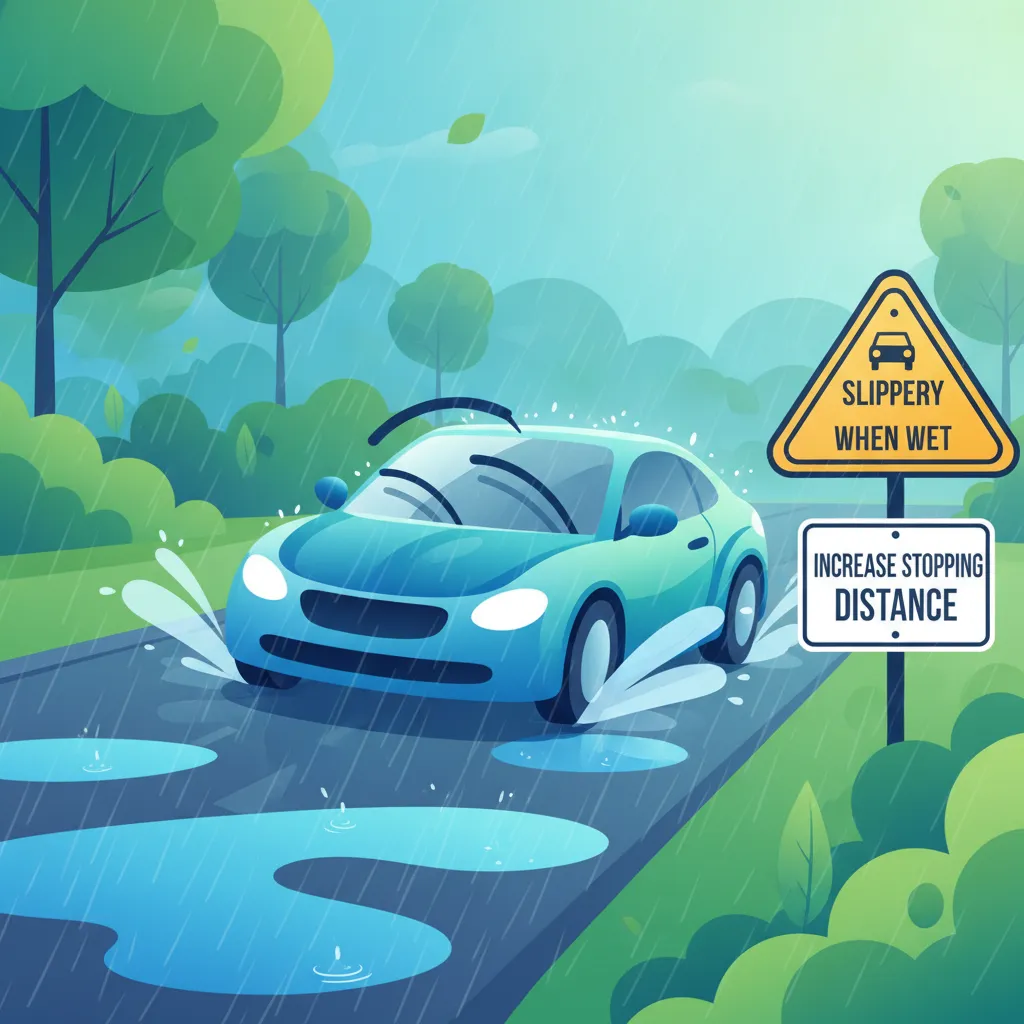
This lesson explains how different weather conditions impact the handling and stability of a large passenger vehicle. It covers the risks of aquaplaning in heavy rain, the effect of high winds on vehicle stability, and the severe reduction in visibility caused by fog. Learners will understand how ice and snow dramatically increase stopping distances and require extremely gentle control inputs to prevent skidding. Strategies for adapting speed and increasing following distances are emphasized.
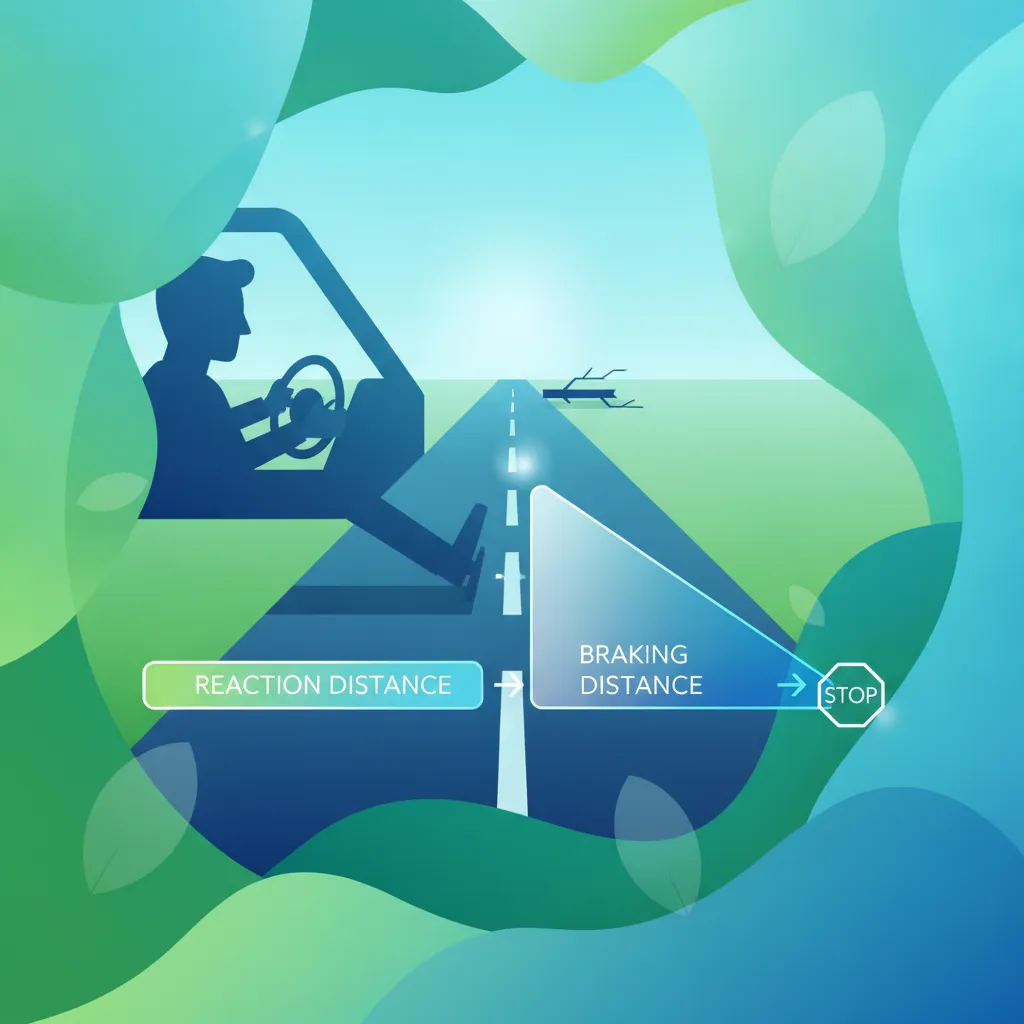
This lesson breaks down the concept of stopping distance into its two key parts. Thinking distance is the distance travelled while you react to a hazard, while braking distance is the distance the car travels after you apply the brakes. You will learn how speed, weather, and vehicle condition influence these distances.
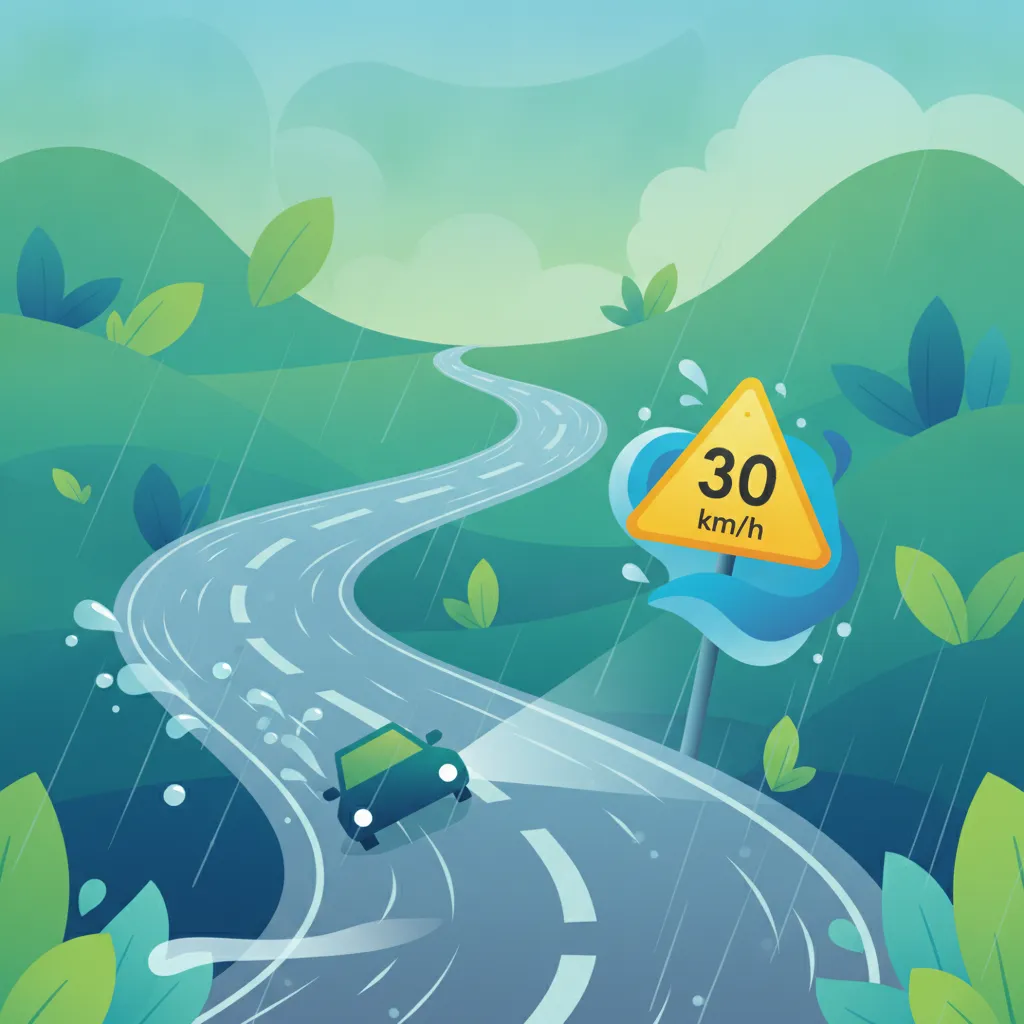
This lesson explains that safe driving often requires travelling at a speed lower than the legal limit. It covers how to adjust your speed for adverse conditions such as rain, which can double your stopping distance, or fog, which severely reduces visibility. The goal is to always be able to stop safely in the distance you can see to be clear.
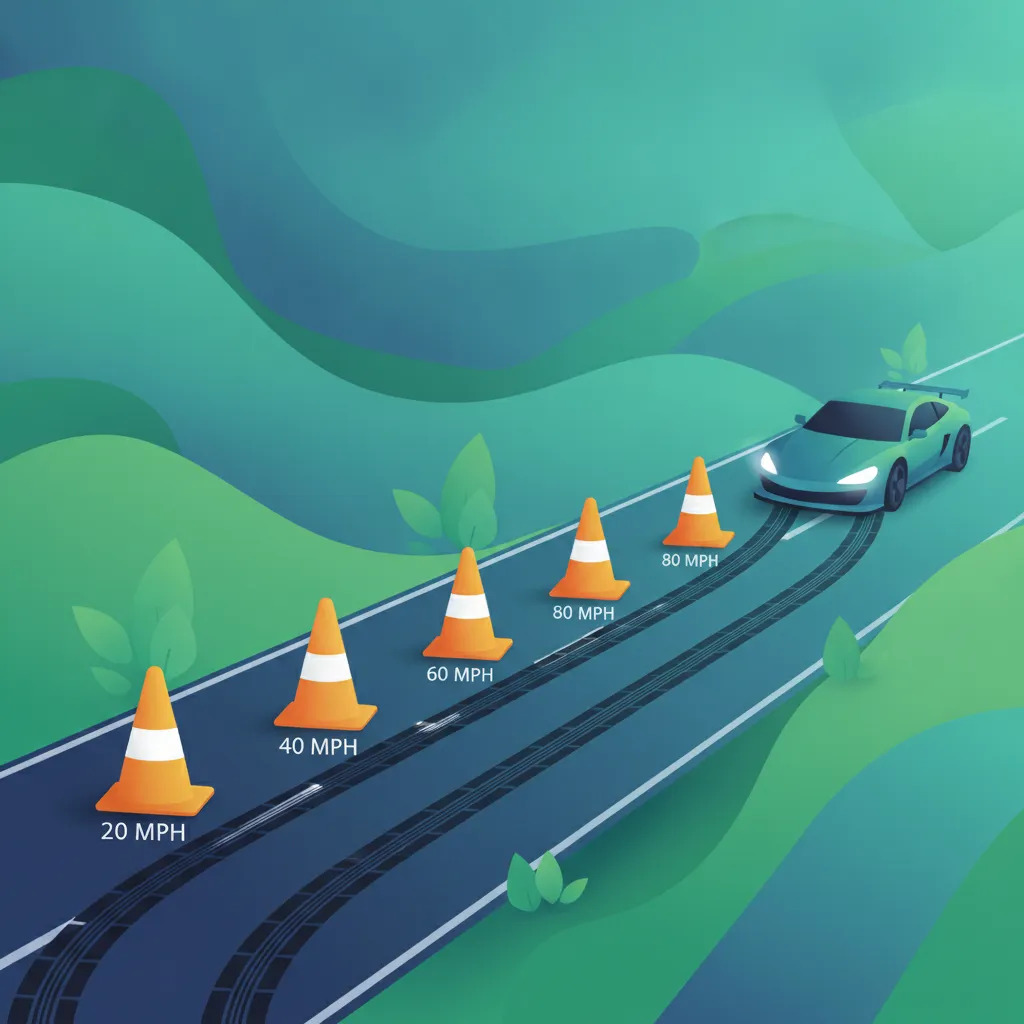
This lesson focuses on effective braking strategies, including brake modulation, ABS usage, and emergency braking procedures for large vehicles. Learners will understand how to calculate total stopping distances, taking into account perception-reaction time, vehicle mass, speed, and road conditions. The discussion also reviews brake wear, proper maintenance, and the effect of passenger load on braking performance. Mastering these concepts is crucial for reducing stopping distances and increasing safety margins.
This lesson explains the components of total stopping distance: the distance travelled while you react (thinking distance) and the distance travelled while you brake. You will learn how speed dramatically increases this distance and how adverse weather or poor road surfaces can extend it further. Understanding these factors is crucial for anticipating hazards and avoiding collisions.
This lesson teaches a practical method for maintaining a safe distance from the vehicle in front. The 'two-second rule' provides a minimum time gap in dry conditions, which should be doubled to four seconds in the wet. Adhering to this rule gives you sufficient time to react and brake safely if the vehicle ahead stops suddenly.
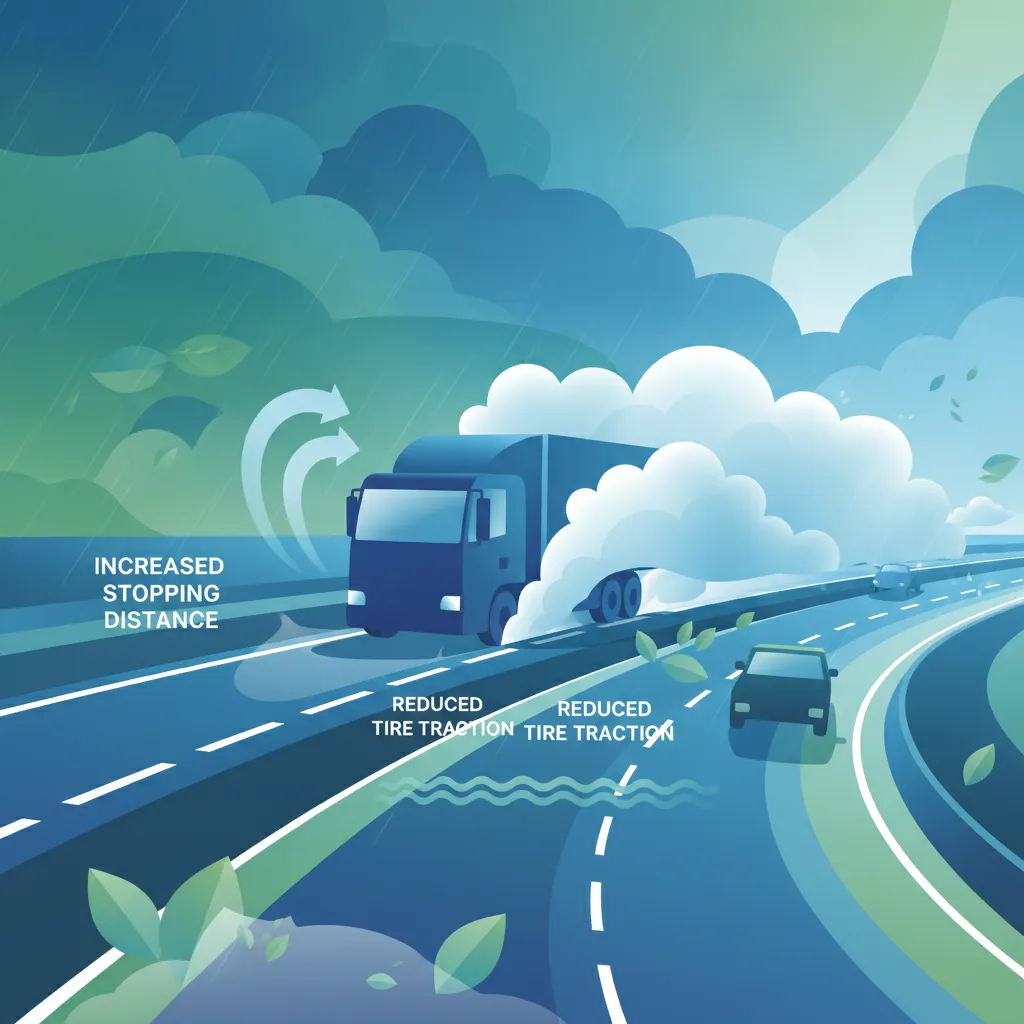
This lesson details how different adverse weather conditions uniquely affect the handling and stability of a heavy goods vehicle. It covers the increased stopping distances in rain, reduced visibility in fog, severe traction loss on ice, and the dangerous effect of strong crosswinds on high-sided vehicles. You will learn specific techniques for adjusting speed, increasing following distances, and using vehicle controls smoothly to maintain safety in challenging weather.

This lesson provides essential advice for driving when weather conditions are poor. It explains how rain can cause aquaplaning and why you must double your following distance. You will also learn techniques for driving in icy conditions, including gentle use of controls to avoid skidding, and the correct use of lights in fog.
This lesson details speed management techniques applicable to urban, rural, and motorway environments, focusing on compliance with legal speed limits and developing appropriate speed perception. It covers strategies for monitoring speed and adjusting for road conditions, traffic density, and overall passenger safety. The lesson also reviews enforcement mechanisms and emphasizes the importance of speed compliance for accident avoidance and regulatory adherence, a critical skill for all professional drivers.

This lesson reinforces the vital safety rule of maintaining an adequate following distance from the vehicle ahead. It explains why the standard 'two-second rule' must be extended for heavy vehicles, especially in poor weather or when heavily laden, to account for longer stopping distances. You will learn practical methods for judging a safe gap in various traffic situations, creating a crucial safety buffer to react to unforeseen hazards.
Understand essential safe following distance rules for Category D, D1, and DE licences in Great Britain. Learn about the four-second and six-second rules and how to adjust for conditions.
This lesson reinforces the vital safety rule of maintaining an adequate following distance from the vehicle ahead. It explains why the standard 'two-second rule' must be extended for heavy vehicles, especially in poor weather or when heavily laden, to account for longer stopping distances. You will learn practical methods for judging a safe gap in various traffic situations, creating a crucial safety buffer to react to unforeseen hazards.
This lesson teaches a practical method for maintaining a safe distance from the vehicle in front. The 'two-second rule' provides a minimum time gap in dry conditions, which should be doubled to four seconds in the wet. Adhering to this rule gives you sufficient time to react and brake safely if the vehicle ahead stops suddenly.

This lesson addresses the critical importance of child safety in school transport zones and around school buses. It covers the specific regulations, such as 20 mph speed limits and stopping restrictions indicated by zigzag lines. Learners will focus on the unpredictable nature of children and the need for heightened vigilance and readiness to stop unexpectedly. The content also includes procedures for the safe transport of pupils, ensuring their security both inside and outside the vehicle.

This lesson provides detailed instruction on turning techniques tailored for long vehicles. It explains the concepts of off-tracking (where rear wheels follow a tighter path than front wheels) and rear swing, and how to compensate for them. Learners will understand how to position the vehicle correctly when approaching and navigating left and right turns at junctions, roundabouts, and tight corners, using mirrors and signals effectively to ensure clearance and safety.
This lesson details speed management techniques applicable to urban, rural, and motorway environments, focusing on compliance with legal speed limits and developing appropriate speed perception. It covers strategies for monitoring speed and adjusting for road conditions, traffic density, and overall passenger safety. The lesson also reviews enforcement mechanisms and emphasizes the importance of speed compliance for accident avoidance and regulatory adherence, a critical skill for all professional drivers.

Reversing a large passenger vehicle is a high-risk manoeuvre, and this lesson provides essential safety protocols. It covers the importance of using a trained banksman or reversing assistant and understanding standard hand signals. The lesson also discusses the use of technical aids like reversing cameras and audible warnings. Learners will master the procedure for conducting a full 360-degree safety check before beginning and maintaining slow, controlled movement throughout the manoeuvre.

This lesson addresses the unique challenges of driving a large vehicle on rural roads. It provides techniques for positioning the vehicle through sharp bends and on narrow lanes, and for safely navigating unmarked or uncontrolled junctions. Learners will be taught to anticipate hidden hazards common in the countryside, such as slow-moving farm vehicles, animals on the road, and concealed entrances. The correct use of passing places and strategies for meeting oncoming traffic are also covered.

This lesson explores how a passenger vehicle’s physical dimensions and weight influence its dynamic stability, handling, and manoeuvring capabilities. It covers the impact of length, width, wheelbase, and turning radius on cornering and route choice. The content also examines centre of gravity, load distribution, and the effects of inertia that influence braking and acceleration, which are essential concepts for safe operation in confined urban environments and at tight junctions.

This lesson focuses on the critical skill of positioning your AM vehicle safely in relation to larger vehicles and roadside hazards like parked cars. You will learn to identify and stay out of the extensive blind spots of lorries and buses, especially at junctions. The content also provides strategies for maintaining a safe 'space cushion' around your vehicle and navigating narrow gaps or filtering in traffic without compromising your safety.

This lesson focuses on the regulations and best practices for driving a bus or coach on motorways. It details the specific speed limits applicable to PCVs and reinforces strict lane discipline. The content covers the correct procedures for safely joining from a slip road, overtaking other vehicles, and exiting the motorway. It also explains the features of smart motorways and the correct safety procedures to follow in the event of a breakdown, including the use of the hard shoulder.
Find clear answers to common questions learners have about Safe Following Distances for Large Vehicles. Learn how the lesson is structured, which driving theory objectives it supports, and how it fits into the overall learning path of units and curriculum progression in Great Britain. These explanations help you understand key concepts, lesson flow, and exam focused study goals.
Large passenger vehicles have significantly greater mass, which results in longer stopping distances due to kinetic energy and inertia. The four-second rule provides the necessary buffer to compensate for this reduced braking efficiency compared to smaller cars.
Yes. The four-second rule is the minimum in ideal conditions. In wet or icy conditions, you should at least double or even triple your following distance to account for reduced tyre grip and the difficulty of stopping a heavy vehicle on slippery surfaces.
The heavier your vehicle—especially when fully loaded with passengers—the longer it takes to decelerate. Always assume a heavier, fully laden vehicle requires more space than an empty one, as your braking performance will be impacted.
Never react aggressively. Instead, gently ease off the accelerator to gradually recreate your required safety buffer. Maintaining a professional, calm demeanour is a key component of the professional driver responsibilities tested in the theory exam.
Dive into our comprehensive question bank to find exactly what you need for your Great Britain theory test. Use our advanced filters to pinpoint specific subjects or test your knowledge on challenging areas, ensuring you're fully prepared for success.