
This lesson focuses on the complexities of operating large passenger vehicles in dense urban environments. You will learn how to navigate congestion, interpret priority signalling, and manage stop-start routines to maintain service reliability while following DVSA safety standards.

Lesson content overview
Navigating city centres efficiently is a cornerstone of professional passenger vehicle operation, particularly for bus, coach, and minibus drivers. Urban congestion not only impacts service punctuality and passenger experience but also significantly affects road safety and environmental quality. This lesson provides a comprehensive guide to understanding and applying effective strategies for managing congestion, focusing on specific regulations and best practices crucial for maintaining smooth operations in dense urban environments.
Effective congestion management is vital for several reasons. It improves the reliability of public transport services, reducing passenger waiting times and fostering trust in the system. Furthermore, it enhances road safety by reducing stop-and-go traffic and the likelihood of collisions, while also contributing to better air quality by minimising vehicle idling and emissions. For professional drivers preparing for their Category D, D1, D1E, or DE licence, mastering these strategies is essential for both the theory test and daily operational excellence.
City centres are dynamic environments where various modes of transport, pedestrians, and commercial activities converge. This inherent complexity often leads to traffic congestion, which can severely impact passenger vehicle operations. For drivers of buses, coaches, and minibuses, a deep understanding of the factors contributing to congestion and the strategies to mitigate it is paramount.
Congestion poses several significant challenges. Safety risks increase with denser traffic, as rear-end collisions become more probable and emergency vehicle response can be impeded. Operationally, congestion undermines predictable traffic flow, making it difficult to adhere to schedules and manage passenger loading efficiently. Legal frameworks, such as Traffic Management Orders (TMOs) and specific bus lane restrictions, are in place to manage this, protecting public transport priority and ensuring specific behaviours are enforced. From an environmental perspective, reduced idling time directly translates to lower emissions and improved air quality, a crucial consideration for urban public transport. This lesson links directly to earlier modules on bus lane rules, urban bus stop management, interacting with vulnerable road users, and general lane-use strategies.
To effectively manage congestion, professional drivers must integrate several core principles into their daily operations. These principles are designed to prioritise public transport, maintain schedules, and ensure safety.
Bus lanes are designated sections of the road reserved primarily for buses, taxis, cycles, and other authorised vehicles during specified times. Their fundamental purpose is to enhance the speed and reliability of public transport, allowing buses to bypass general traffic queues and reduce dwell times.
Drivers must correctly enter, travel within, and exit bus lanes, adhering strictly to the signage and road markings. Misuse of bus lanes, such as driving in them during prohibited times or entering from unauthorised points, can result in significant penalties, including fines and points on your licence. Proper bus lane usage is a cornerstone of efficient urban public transport.
Priority signalling refers to traffic light systems that provide buses with preferential treatment, such as bus-only green phases or specific transit-only amber lights. This intelligent signalling allows buses to maintain their schedules more effectively by reducing unnecessary stops and preventing stop-and-go traffic, which is common in congested areas.
Understanding these signals is crucial. A bus-only green phase means only buses are permitted to proceed, while all other traffic faces a red light. A transit-only amber allows buses to move before general traffic receives its green signal. Drivers must be vigilant, recognise these specific signal phases, and respond appropriately, ensuring they only proceed when permitted for buses.
Route optimisation involves the strategic planning and execution of routes to minimise travel time, avoid known bottlenecks, and align with passenger demand. This dynamic approach ensures punctuality, reduces fuel consumption, and contributes to overall congestion relief.
While routes are generally pre-planned, professional drivers may sometimes receive instructions to deviate from a scheduled path to avoid unexpected congestion or incidents, such as roadworks or accidents. Adherence to these authorised dynamic re-routings and service patterns is essential. Drivers must also be aware of any local restrictions that might apply to larger vehicles on alternative routes.
Bus stop timing is the efficient management of the time a bus spends at a stop, known as dwell time. This management is based on factors such as passenger volume, vehicle load, and prevailing traffic conditions. The goal is to limit the blockage of traffic caused by stopped buses and maintain overall traffic flow efficiency.
Drivers must quickly assess passenger numbers, operate door control systems efficiently, and position the vehicle precisely at the stop. Adjusting boarding and alighting speeds, and communicating significant delays to the control centre, are all part of effective bus stop timing. Excessive dwell time can cause traffic queues and disrupt schedules for following vehicles.
City centres operate under a specific set of statutory and locally defined urban traffic regulations. These include local bylaws, Traffic Management Orders (TMOs), and specific Highway Code rules tailored to dense urban environments. These regulations provide the legal framework for congestion control measures, ensuring order and safety.
Drivers must be familiar with local signposting, time-based restrictions (e.g., bus lane operating hours), and any specific exemptions that apply to passenger vehicles. Non-compliance with these regulations can lead to fines, licence points, or other service-related penalties, directly impacting a driver's professional standing and the operational efficiency of the service.
Delving deeper into each principle reveals specific rules and practical considerations for drivers.
Bus lanes are a key tool for ensuring the fluidity of public transport. They are typically operational during peak periods, such as 07:00–19:00 on weekdays, though times can vary significantly by local authority. Drivers must always check accompanying signage.
Buses should always utilise available bus lanes to bypass congestion where permitted. It is crucial not to enter a bus lane from a side road unless a specific designated junction arrow or marking permits it, as stated in Rule 151 of The Highway Code. Stopping or parking in a bus lane is generally prohibited unless the vehicle is exempt (e.g., a bus at a designated bus stop) and signage explicitly permits it. A common misunderstanding is believing a lane with a solid white line is always a bus lane, or that a bus lane can be used for overtaking other buses within the lane when not designated for such.
Traffic signals are often modified in urban areas to give preferential treatment to buses, significantly aiding in schedule adherence.
Drivers must rigorously obey the signal shown specifically to their bus. Moving on a transit-only amber when not permitted, or assuming a universal green applies, are common errors that can lead to breaches of traffic law and disrupt the intended traffic flow. Always confirm the signal is applicable to your vehicle.
Route optimisation for passenger vehicles in city centres involves both pre-planned and real-time adjustments.
Adhering to authorised detour routes is crucial. Drivers must never deviate onto streets that are prohibited for buses, such as those with weight or height restrictions, or those designated as bus-only zones in the opposite direction. Misunderstandings can arise from assuming any deviation is permissible if it appears to ease congestion, or from ignoring local restrictions specific to the size of your passenger vehicle. Always follow official guidance for diversions.
Efficient management of bus stops is critical for overall traffic flow. Dwell time, the period a bus spends at a stop, needs careful management.
Drivers must assess passenger numbers rapidly, use door control systems effectively to minimise the time doors are open, and position the vehicle precisely. Rule 197 of The Highway Code mandates that drivers must position their vehicle safely at a bus stop, ensuring it does not block the roadway or pedestrian crossings. Pulling forward to allow following traffic to pass while passengers are still boarding or alighting can significantly reduce congestion impact. Ignoring the effect of excessive dwell time on following traffic is a common mistake that can lead to long queues.
Beyond general traffic laws, city centres have specific regulations designed to manage their unique challenges.
Drivers must diligently comply with local signposting and time-based restrictions. A common misunderstanding is assuming national speed limits apply uniformly or failing to note time-based exemptions on signage. Non-compliance can result in fines and legal penalties.
Adhering to specific rules and regulations is not just about avoiding penalties; it's about contributing to safer, more reliable public transport.
| Regulation / Rule | Statement | Applicability | Legal Status | Rationale | Correct Example | Incorrect Example |
|---|---|---|---|---|---|---|
| Highway Code Rule 151 | "Do not stay in a bus lane unless you are driving a bus, a taxi, a cycle or an authorised vehicle." | All road users in designated bus lanes; time-restricted as per signage. | Mandatory | Ensures public transport priority and reduces congestion. | A bus travels in the bus lane during operating hours. | A car drives in the bus lane during operating hours. |
| Highway Code Rule 197 | "When stopping at a bus stop, have your vehicle positioned safely and not block the roadway." | All bus stops marked with the appropriate sign (e.g., "Bus Stop – No Stopping" for non-bus vehicles). | Mandatory | Prevents obstruction of traffic flow and pedestrian movement. | Bus stops at the designated line, doors open, traffic continues to flow. | Bus stops partially across the carriageway, blocking traffic. |
| TSRGD 2016 – Sign 155 (Bus Lane) | "Bus lane markings indicate a lane reserved for buses & authorised vehicles." | During times indicated on accompanying signs. | Mandatory | Provides visual guidance for lane compliance. | Bus enters bus lane at a permitted junction. | Bus illegally merges into a bus lane from a side road with no permissive marking. |
| Traffic Management Order (TMO) – Congestion Charge Zone | "Vehicles must not enter the restricted zone during charging periods unless exempt." | Applies to all vehicles, including buses, when the zone is active. | Mandatory (subject to exemptions for buses). | Reduces overall traffic volumes, encouraging public transport. | Bus enters zone with exemption permit. | Unlicensed vehicle enters and is fined. |
| Bus Stop Access Route Directive | "Buses must use the access route indicated for loading/unloading passengers." | At bus stops with marked access routes. | Mandatory | Minimises impact on traffic. | Bus pulls forward to the marked stopping point, releases space for traffic. | Bus stops early, causing a queue behind it. |
| Priority Signalling – Transit-Only Amber | "Buses may proceed on amber if signalled by a transit-only amber, other traffic must stop." | At junctions equipped with transit-only amber signals. | Mandatory for other traffic; allowed for buses where indicated. | Provides buses with a dedicated phase to keep on schedule. | Bus proceeds on amber; cars remain stopped. | Car proceeds on amber while bus is still in junction – violation. |
Always cross-reference specific TMO details, such as precise timing of bus lane restrictions or congestion charge exemptions for buses, with the latest information from the local authority's Transport or Congestion Management Plan.
Even experienced drivers can make mistakes in the dynamic environment of city centres. Awareness of common pitfalls and adherence to best practices are key.
Entering a Bus Lane from a Side Road Without Permission:
Stopping in a Bus Lane for Passenger Boarding:
Misreading a Transit-Only Amber Signal:
Over-Staying at a Bus Stop During Peak Hours:
Detouring onto a Restricted Street:
Failing to Observe Time-Restricted Bus Lane Operability:
Blocking Pedestrian Crossings While Stopped at a Bus Stop:
Driving Too Fast Within a Congested Bus Lane:
Effective congestion management requires drivers to adapt their strategies based on various environmental and operational factors.
Beyond mere compliance, understanding the rationale behind congestion management strategies helps drivers make safer, more informed decisions.
Effective management of congestion in city centres is a complex but essential skill for professional passenger vehicle drivers. It requires a thorough understanding and consistent application of several key principles:
This lesson builds upon foundational knowledge from earlier modules, including traffic sign interpretation, vehicle handling, passenger flow management, and lane-use tactics. It prepares you for more advanced topics, such as applying congestion management strategies in varied environments and handling emergency situations within congested urban areas.
Explore all units and lessons included in this driving theory course.
Lesson content overview
Explore all units and lessons included in this driving theory course.
Explore search topics learners often look for when studying Managing Congestion in City Centres. These topics reflect common questions about road rules, driving situations, safety guidance, and lesson level theory preparation for learners in Great Britain.
Browse additional driving theory lessons that cover connected traffic rules, road signs, and common driving situations related to this topic. Improve your understanding of how different rules interact across everyday traffic scenarios.
Understand how bus priority traffic signals work in UK city centres. Learn about bus-only green phases and transit-only amber signals to maintain your schedule and navigate urban congestion effectively as part of your Category D theory.
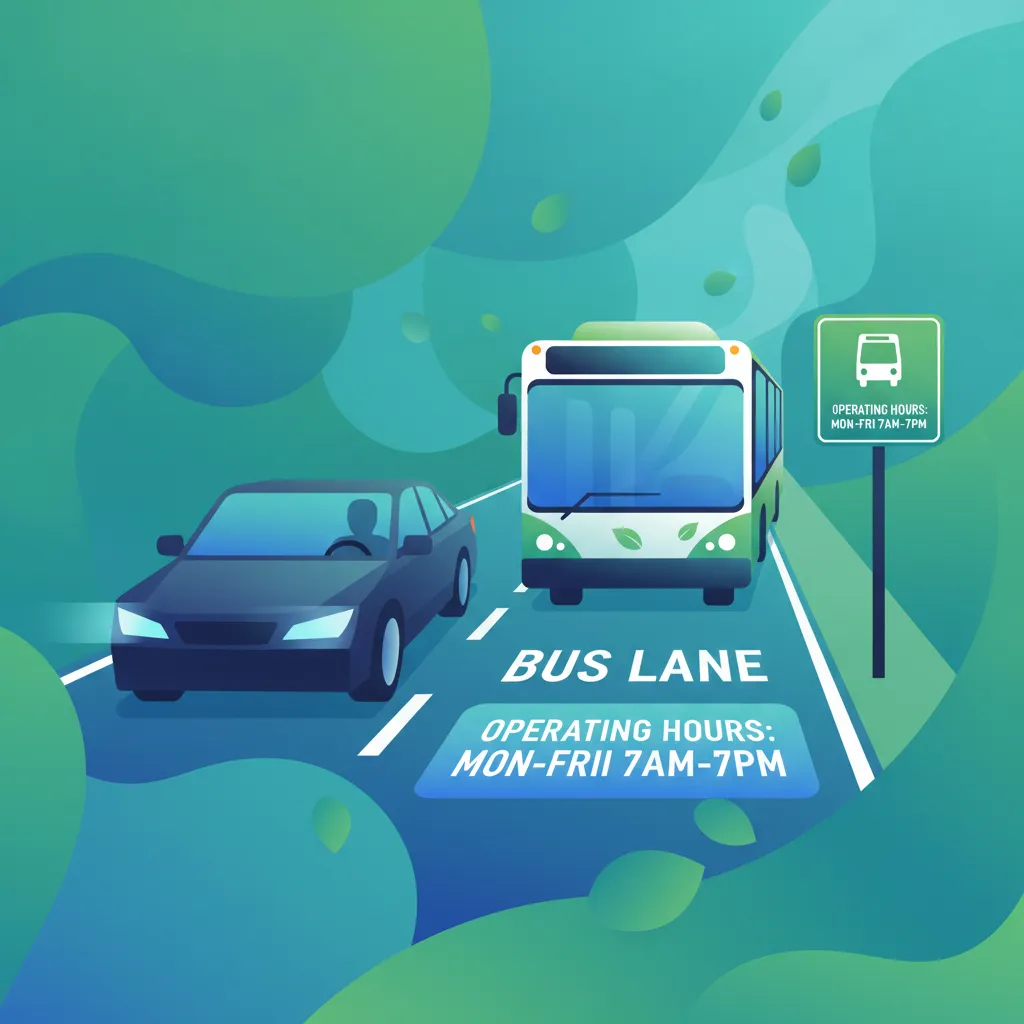
This lesson explores the specifics of bus lane markings, operating times, and priority situations where buses have precedence over other traffic. It emphasizes correct lane discipline, lawful entry and merging practices, and the exemptions granted to designated passenger vehicles. Learners will also understand how bus lane enforcement works and what penalties may be incurred for non-compliance, ensuring safe and efficient movement through urban traffic systems.
This lesson examines the unique rules and restrictions governing buses and coaches, focusing on bus lane priority, time-based restrictions, and loading zone limitations. Learners will explore the criteria for using bus-only routes and understand the legal consequences of non-compliance. The content also reviews signage indicating bus gate operation and areas where passenger vehicles are prohibited from stopping or loading outside of designated zones, ensuring lawful and efficient urban navigation.
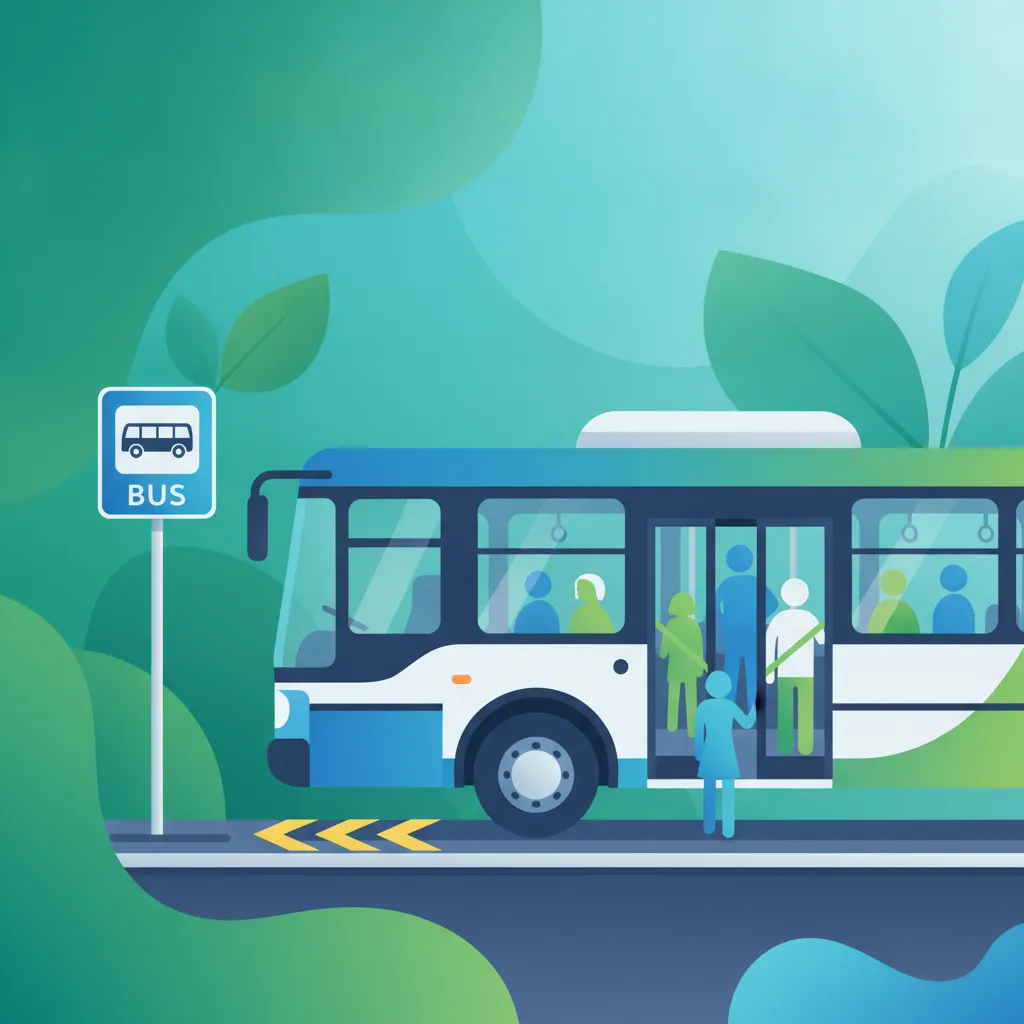
In this lesson, learners will study the specific signage and markings related to bus stops and designated passenger loading zones. Topics include correct stop approach, positioning the bus for safe boarding and alighting, and the proper use of these areas. Learners will also examine the legal expectations for passenger loading zones, including restrictions on stopping outside these zones and best practices for managing passenger flow safely and efficiently during busy periods.

This lesson examines the design and operation of urban bus stops and how passenger flow can be managed efficiently. It covers strategies for crowd control, dwell time minimization, effective queuing systems, and proper loading zone utilization. It also explores how bus stop signage and clear passenger information can aid in smooth boarding and alighting. Mastering these skills enhances overall safety, improves service quality, and maintains schedule reliability in challenging urban environments.
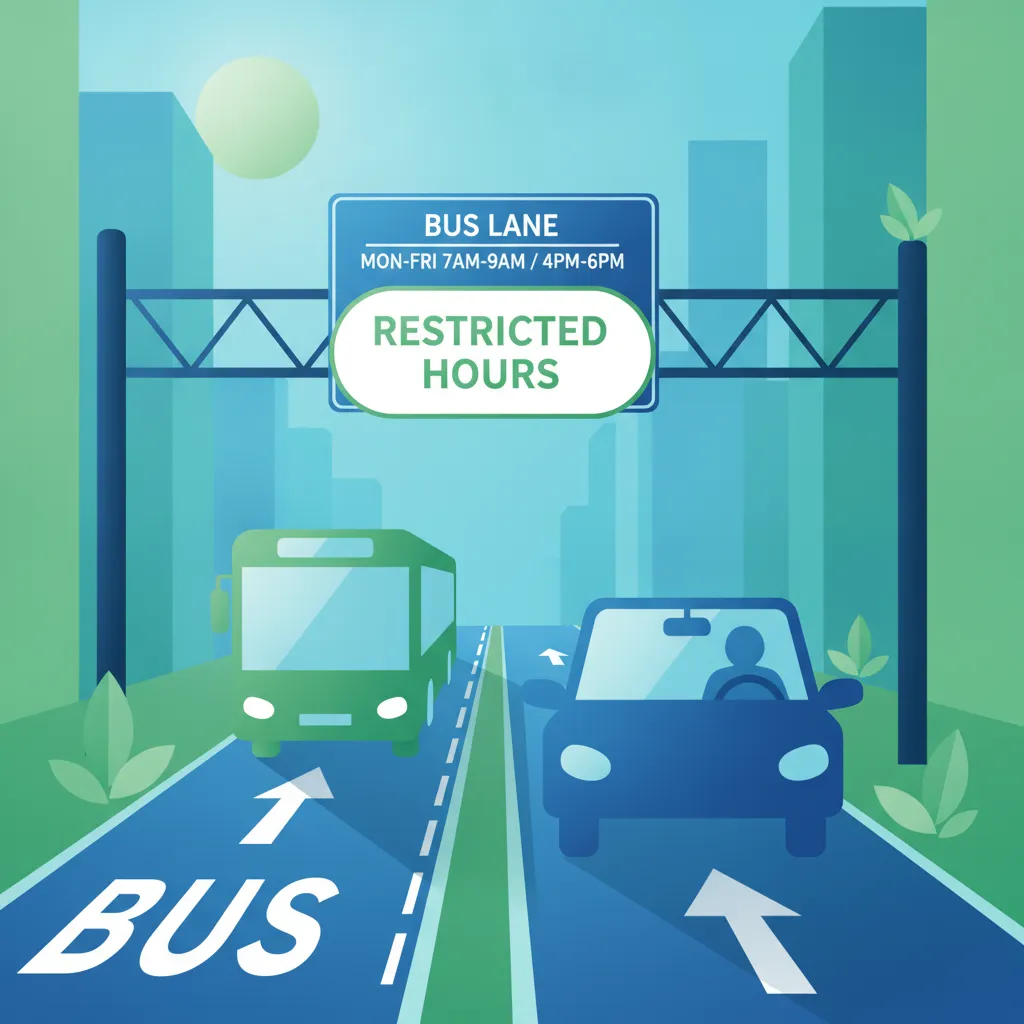
This lesson covers the importance of maintaining correct lane discipline when driving a large passenger vehicle. It details how to position your vehicle safely within a lane on various road types, including multi-lane carriageways and motorways. You will learn the specific rules governing bus lanes, including how to interpret markings, adhere to operating times, and understand the exemptions and penalties associated with their use to ensure legal and efficient driving.

This lesson details how to safely navigate junctions controlled by traffic signals. It explains the meaning of filter arrows, which allow you to proceed in a specific direction even if the main light is red. You will also learn about respecting advanced stop lines for cyclists and how to approach a junction when the traffic lights are not working.

This lesson details speed management techniques applicable to urban, rural, and motorway environments, focusing on compliance with legal speed limits and developing appropriate speed perception. It covers strategies for monitoring speed and adjusting for road conditions, traffic density, and overall passenger safety. The lesson also reviews enforcement mechanisms and emphasizes the importance of speed compliance for accident avoidance and regulatory adherence, a critical skill for all professional drivers.
This lesson covers the full range of road signs encountered by passenger vehicle drivers, focusing on regulatory, warning, and informational signs. It explains the visual characteristics of sign shapes, colors, and symbols, particularly those associated with bus lane usage and priority rules. By mastering sign hierarchy and meaning, drivers can quickly interpret the sign's intent and adjust their driving behaviour accordingly, ensuring full compliance with the Highway Code and enhancing road safety.

This lesson addresses the unique challenges of driving a large vehicle on rural roads. It provides techniques for positioning the vehicle through sharp bends and on narrow lanes, and for safely navigating unmarked or uncontrolled junctions. Learners will be taught to anticipate hidden hazards common in the countryside, such as slow-moving farm vehicles, animals on the road, and concealed entrances. The correct use of passing places and strategies for meeting oncoming traffic are also covered.

This lesson addresses the critical importance of child safety in school transport zones and around school buses. It covers the specific regulations, such as 20 mph speed limits and stopping restrictions indicated by zigzag lines. Learners will focus on the unpredictable nature of children and the need for heightened vigilance and readiness to stop unexpectedly. The content also includes procedures for the safe transport of pupils, ensuring their security both inside and outside the vehicle.
Master the rules for using bus lanes in Great Britain's city centres. This lesson covers time restrictions, legal requirements, and effective strategies for navigating urban congestion to improve service reliability and adhere to the Highway Code.
This lesson examines the unique rules and restrictions governing buses and coaches, focusing on bus lane priority, time-based restrictions, and loading zone limitations. Learners will explore the criteria for using bus-only routes and understand the legal consequences of non-compliance. The content also reviews signage indicating bus gate operation and areas where passenger vehicles are prohibited from stopping or loading outside of designated zones, ensuring lawful and efficient urban navigation.
This lesson explores the specifics of bus lane markings, operating times, and priority situations where buses have precedence over other traffic. It emphasizes correct lane discipline, lawful entry and merging practices, and the exemptions granted to designated passenger vehicles. Learners will also understand how bus lane enforcement works and what penalties may be incurred for non-compliance, ensuring safe and efficient movement through urban traffic systems.
This lesson covers the importance of maintaining correct lane discipline when driving a large passenger vehicle. It details how to position your vehicle safely within a lane on various road types, including multi-lane carriageways and motorways. You will learn the specific rules governing bus lanes, including how to interpret markings, adhere to operating times, and understand the exemptions and penalties associated with their use to ensure legal and efficient driving.
This lesson covers lanes designated for specific types of traffic to improve flow and safety. You will learn to identify mandatory and advisory cycle lanes, and understand the signs indicating the operational hours of bus lanes. The rules governing these lanes are critical for avoiding penalties and ensuring the safety of all road users.
This lesson focuses on the regulations and best practices for driving a bus or coach on motorways. It details the specific speed limits applicable to PCVs and reinforces strict lane discipline. The content covers the correct procedures for safely joining from a slip road, overtaking other vehicles, and exiting the motorway. It also explains the features of smart motorways and the correct safety procedures to follow in the event of a breakdown, including the use of the hard shoulder.
This lesson examines the design and operation of urban bus stops and how passenger flow can be managed efficiently. It covers strategies for crowd control, dwell time minimization, effective queuing systems, and proper loading zone utilization. It also explores how bus stop signage and clear passenger information can aid in smooth boarding and alighting. Mastering these skills enhances overall safety, improves service quality, and maintains schedule reliability in challenging urban environments.
This lesson explains the regulations for special road zones common in urban areas. You will learn about speed restrictions near schools, how to read signs indicating if and when motorcycles can use bus lanes, and how to safely interact with cyclist infrastructure such as advanced stop lines. Compliance with these specific rules is crucial for legal and safe urban riding.
In this lesson, learners will study the specific signage and markings related to bus stops and designated passenger loading zones. Topics include correct stop approach, positioning the bus for safe boarding and alighting, and the proper use of these areas. Learners will also examine the legal expectations for passenger loading zones, including restrictions on stopping outside these zones and best practices for managing passenger flow safely and efficiently during busy periods.
This lesson details speed management techniques applicable to urban, rural, and motorway environments, focusing on compliance with legal speed limits and developing appropriate speed perception. It covers strategies for monitoring speed and adjusting for road conditions, traffic density, and overall passenger safety. The lesson also reviews enforcement mechanisms and emphasizes the importance of speed compliance for accident avoidance and regulatory adherence, a critical skill for all professional drivers.

This lesson provides detailed guidance on protecting pedestrians in high-risk areas like bus stops and formal crossings. It covers the specific rules and driver obligations at zebra, pelican, toucan, and puffin crossings, as well as when approaching a school crossing patrol. The content emphasizes the importance of vigilance, anticipating pedestrian movements, especially those who may be distracted or emerge from behind the bus, and always being prepared to stop to prevent accidents.
Find clear answers to common questions learners have about Managing Congestion in City Centres. Learn how the lesson is structured, which driving theory objectives it supports, and how it fits into the overall learning path of units and curriculum progression in Great Britain. These explanations help you understand key concepts, lesson flow, and exam focused study goals.
Yes, bus lanes often have operational hours marked on signs. You must always check the sign before entering, as some lanes are restricted to specific vehicle types or times of day. Misuse can lead to fines and is a common topic in theory test questions.
Congestion increases the risk of 'nudge' collisions and abrupt braking. Professional drivers must maintain a calm environment, use progressive acceleration, and anticipate traffic flow to avoid sudden stops that could cause passenger falls.
No, buses only have priority where specifically indicated by road markings, bus-only signals, or traffic light technology. Always follow standard traffic light sequences unless explicit bus-priority infrastructure is in place.
Many drivers fail to account for the tail swing of long vehicles when turning in narrow city streets or pulling away from bus stops. Over-relying on speed rather than planning ahead often leads to lane-discipline errors and dangerous manoeuvres.
Dive into our comprehensive question bank to find exactly what you need for your Great Britain theory test. Use our advanced filters to pinpoint specific subjects or test your knowledge on challenging areas, ensuring you're fully prepared for success.