
This lesson focuses on the vital skill of identifying vulnerable road users when operating large passenger vehicles. You will learn to anticipate the movements of pedestrians, cyclists, and motorcyclists to ensure passenger safety and professional driving standards in Great Britain. This training is essential for mastering the defensive driving techniques required for your Category D or D1 theory test.
Lesson content overview
Operating a bus, coach, or minibus on the roads of Great Britain comes with significant responsibility, especially concerning the safety of those most at risk: vulnerable road users (VRUs). This lesson, part of your Great Britain Passenger Vehicle Theory preparation, provides comprehensive guidance on how to identify these individuals, anticipate their behaviour, and apply defensive driving techniques to prevent conflicts and ensure safety for everyone. Understanding the unique challenges and risks associated with pedestrians, cyclists, motorcyclists, children, and elderly or disabled individuals is paramount for professional passenger vehicle drivers.
Vulnerable road users are defined as any road participant who, due to their physical size, lack of protection, mobility limitations, or visual/perceptual constraints, is at a significantly higher risk of injury or fatality in a collision with a motor vehicle. Unlike occupants within a bus or car who are protected by the vehicle's structure, VRUs have minimal or no physical barriers against impact forces. This inherent vulnerability demands heightened awareness and specific defensive strategies from drivers of larger vehicles.
The vulnerability of certain road users stems from several key factors. Their smaller physical size makes them less visible, especially against complex urban backgrounds or in adverse weather. They also lack the protective shell of a vehicle, meaning any impact can have severe consequences. Furthermore, their movements can be less predictable, particularly in the case of children or individuals with certain disabilities, requiring drivers to constantly anticipate unexpected actions.
Another critical factor is the vast difference in kinetic energy. A heavy passenger vehicle moving at even a low speed possesses immense kinetic energy compared to a pedestrian or cyclist. In a collision, this energy is disproportionately transferred to the vulnerable user, leading to severe injuries. Therefore, the onus is heavily on drivers of large vehicles to mitigate this risk.
For professional drivers of Category D, D1, D1E, or DE vehicles, prioritising VRU safety is not merely good practice; it is a legal and ethical imperative. The Highway Code mandates increased vigilance and specific duties towards VRUs, reflecting their increased risk. Compliance prevents serious injuries or fatalities, avoids legal penalties, and maintains a high professional standard.
Your understanding of vehicle dimensions, stopping distances, and blind spots, as covered in earlier modules, is crucial here. Large vehicles have greater blind spots and require longer stopping distances, magnifying the risk to VRUs. Proactive yielding, maintaining safe distances, and constant scanning are fundamental to protecting VRUs and ensuring a safe operating environment for your passengers and other road users. This proactive approach forms the foundation for later detailed discussions on specific interactions, such as pedestrian protection near bus stops and cyclist interaction.
Passenger vehicle drivers encounter a diverse range of vulnerable road users daily. Recognising the specific characteristics and common behaviours of each group allows for more targeted and effective defensive driving.
Pedestrians are individuals travelling on foot, whether on footways, crossing the carriageway, or in areas like parking lots. This category also includes individuals using mobility aids, such as wheelchairs or walking frames. Their primary vulnerability lies in their complete lack of protection and their potential to appear suddenly from obscured areas.
Always assume a pedestrian might step into the road without looking. Slow down and cover your brake pedal when passing areas with potential pedestrian activity, such as bus stops, shops, or residential streets.
Cyclists include individuals on bicycles, powered cycles, tricycles, and similar pedal-driven conveyances. Their smaller profile and ability to manoeuvre quickly make them challenging to detect and predict. They share the same road space as motor vehicles but are entirely unprotected.
Motorcyclists, riding motorcycles or scooter-type vehicles, are larger and often faster than pedal cyclists but remain significantly more vulnerable than occupants of cars or passenger vehicles. They share the road space with other traffic but lack the structural protection of a closed vehicle.
Children, generally considered pedestrians under 16 years of age, represent a particularly vulnerable group due to their unpredictable behaviour, smaller stature, and often limited understanding of road hazards. They may act impulsively, without fully assessing risks.
This category includes individuals with physical impairments, reduced mobility, or sensory deficits (such as visual or auditory impairments) that affect their ability to safely navigate roads. They may require more time to react or cross the road.
Equipment used by disabled persons, such as a white cane or guide dog, to aid mobility and detect hazards. These devices signal to drivers that the individual may have reduced mobility or sensory impairment, requiring extra caution.
Adherence to the Highway Code is fundamental for protecting vulnerable road users. These rules establish clear responsibilities for passenger vehicle drivers, ensuring a safer road environment for everyone.
The rules governing crossings are explicit about pedestrian priority. Drivers of large vehicles, with their greater stopping distances, must be particularly diligent.
Zebra Crossings (Highway Code Rule 151): Pedestrians have priority. This means you must stop if anyone is waiting to cross. Even if pedestrians are approaching but not yet at the kerb, it is best practice to slow down and prepare to stop.
When approaching, look well ahead for people on the pavement who may be intending to cross. Stop far enough back to allow other vehicles to see the crossing and any waiting pedestrians.
Uncontrolled Crossings (Highway Code Rule 115): At crossings without signals, pedestrians generally have priority. You must give way to pedestrians already crossing or clearly waiting to cross, unless proceeding would create an immediate danger for them. This requires careful judgement; if there's any doubt, yield.
Traffic Signals (Highway Code Rule 237): Even at signalised crossings, you must give way to pedestrians who are still crossing when your signal changes to green. This rule prevents pedestrians from being stranded mid-crossing due to early vehicle movement. This also applies at bus stops, where pedestrians may cross while the bus is stationary.
Overtaking vulnerable road users requires specific care and adherence to minimum clearance distances to prevent potentially fatal side-swipe collisions.
Cyclists (Highway Code Rule 221): When overtaking a cyclist on a road, you must allow at least 1.5 metres of clearance. This applies unless there is a dedicated, physically segregated cycle lane between you and the cyclist. The 1.5-metre distance provides a safety buffer against unexpected movements by the cyclist, gusts of wind from your vehicle, or uneven road surfaces. Reduce your speed significantly before attempting to overtake, and only do so when it is entirely safe and clear.
Motorcyclists (Highway Code Rule 223): You must not overtake a motorcyclist on their left. This rule is in place because motorcyclists may need to make slight adjustments to their lane position, and overtaking on the left can place them in a dangerous blind spot or trap them against the kerb. Always overtake from the right, ensuring ample clearance distance, similar to how you would overtake a car, but with extra vigilance due to their vulnerability.
Areas around schools are high-risk zones due to the presence of large numbers of children, whose behaviour can be unpredictable.
School Zone Speed Limit (Highway Code Rule 81): In designated school zones, indicated by specific signage, the speed limit often reduces to 20 mph. You must adhere to this reduced speed limit and be prepared to stop instantly for children who may step into the road. Look out for "School Patrol" signs and lollipop persons, who signal when children are crossing.
Pupil Carrying (Highway Code Rule 190): As a passenger vehicle driver, you must not pick up or drop off pupils unless you have specific permission and the vehicle is stopped safely at a designated point. This rule is crucial for preventing children from entering or exiting the vehicle in dangerous locations, such as busy roads or junctions. Always use official bus stops or designated school pick-up/drop-off areas.
Never assume children will wait or look before crossing. Their attention spans are short, and they may be distracted by friends or games. Always reduce speed and be ready to brake.
Defensive driving is the cornerstone of protecting vulnerable road users. It involves anticipating potential hazards, adjusting your driving, and maintaining a high level of situational awareness at all times.
Understanding the typical actions and limitations of different VRUs allows you to predict risks and react proactively.
Road and weather conditions, as well as the state of your vehicle, significantly impact your ability to detect and react to VRUs.
Large passenger vehicles inherently have larger and more numerous blind spots than smaller cars. Addressing these requires conscious effort.
Applying these principles in real-world scenarios is key. Here are common situations you might encounter and the correct approach.
Setting: You are driving your bus through an urban street during the day, approaching a zebra crossing where a group of pedestrians is waiting to cross.
Rule/Decision: Highway Code Rule 151 dictates that pedestrians have priority at zebra crossings.
Correct Behaviour: You observe the waiting pedestrians from a distance, reduce your speed smoothly, and bring the bus to a complete stop before the zebra crossing line. You signal to the pedestrians with a slight wave or nod, allowing them to cross safely. Only when the crossing is clear of all pedestrians and there is no immediate risk do you proceed.
Incorrect Behaviour: You continue driving, assuming the pedestrians will wait, or stop too close to the crossing, potentially causing alarm or forcing them to wait longer.
Explanation: Stopping fully behind the line respects the pedestrian's legal right-of-way, prevents potential collisions, and ensures a clear line of sight for other vehicles and pedestrians.
Setting: Your bus is stopped at a bus stop in a dedicated bus lane. A cyclist is approaching from behind, travelling straight ahead in the same bus lane, as you prepare to pull away.
Rule/Decision: Highway Code Rule 221 (1.5m clearance) and the general principle of giving way when turning across a cycle lane apply. When pulling away from a bus stop, you must look out for cyclists who may be continuing straight.
Correct Behaviour: Before indicating and pulling away from the bus stop, you check your right-hand mirror and perform a thorough head check (looking over your right shoulder) to confirm the cyclist's position. You wait until the cyclist has passed and cleared your intended path before indicating, checking again, and then slowly pulling out, ensuring you do not cut them off or give less than 1.5m clearance if you end up alongside them briefly.
Incorrect Behaviour: You pull away immediately after checking only your mirror, failing to spot the cyclist in your blind spot, causing them to brake sharply or swerve.
Explanation: Thorough checks and yielding to the cyclist prevent side-impact collisions and ensure the cyclist can continue safely.
Setting: It's 3 PM, school dismissal time, and you are driving through a designated school zone with a 20 mph speed limit. A child suddenly chases a ball across the road from behind a parked car.
Rule/Decision: Adhere to the reduced speed limit (20 mph) in school zones and be prepared for unpredictable child behaviour.
Correct Behaviour: You have maintained 20 mph or less through the zone, scanning the pavements and parked cars for any signs of children. Upon seeing the child dart out, you immediately apply the brakes firmly but smoothly, bringing the bus to a controlled stop well before reaching the child. You wait until the child is safely on the other side before proceeding cautiously.
Incorrect Behaviour: You drive at 30 mph, fail to see the child in time, and have to emergency brake, causing a near-miss or even a collision.
Explanation: Lower speed dramatically increases reaction time and reduces stopping distance, giving you the critical seconds needed to avoid an accident involving unpredictable children.
Setting: You are approaching a busy urban intersection, intending to turn right. A motorcyclist is approaching from your right side, riding slightly behind and to the right, placing them directly within your bus's blind spot.
Rule/Decision: Ensure blind spots are clear before any manoeuvre, particularly turns. Motorcyclists are highly vulnerable and often unseen.
Correct Behaviour: As you approach the junction, you meticulously check your right mirror, then perform a distinct head check to actively look for any vehicles (especially motorcycles) in your blind spot. You maintain your signal and, if you confirm the motorcyclist is still in your blind spot or alongside, you delay your turn until they have passed or their position is clear. If uncertain, you give way and wait.
Incorrect Behaviour: You rely solely on your mirrors, assume the blind spot is clear, and begin your right turn, cutting off or colliding with the motorcyclist.
Explanation: Vigilant blind-spot checks are crucial for detecting motorcycles, preventing serious side-impact collisions, which can be fatal for riders.
Setting: It's dusk on a rural road, and you see an elderly person with a white cane waiting to cross at an uncontrolled crossing point.
Rule/Decision: Give way to pedestrians at uncontrolled crossings, especially those with assistive devices, indicating potential sensory or mobility impairment.
Correct Behaviour: You spot the pedestrian early, slow your bus considerably, and come to a gentle stop well before the crossing point. You wait patiently, allowing the elderly pedestrian ample time to cross the road safely, understanding they may move slower and need more time to perceive traffic. Once they are safely on the opposite pavement, you carefully proceed.
Incorrect Behaviour: You maintain speed, causing the pedestrian to hesitate, step back, or feel rushed, increasing their risk and stress.
Explanation: Respecting the reduced mobility and potential sensory limitations of elderly or disabled pedestrians demonstrates responsible driving and prevents a dangerous situation. The white cane acts as a clear signal of increased vulnerability.
Mastering the identification and safe interaction with vulnerable road users is an indispensable skill for every professional passenger vehicle driver. This lesson has covered the essential categories of VRUs, the specific Highway Code rules designed to protect them, and practical defensive driving strategies.
To summarise, your responsibilities include:
By consistently applying these principles, you contribute significantly to road safety for all, fostering a responsible and professional driving culture in Great Britain.
Explore all units and lessons included in this driving theory course.
Lesson content overview
Explore all units and lessons included in this driving theory course.
Explore search topics learners often look for when studying Identifying Vulnerable Road Users. These topics reflect common questions about road rules, driving situations, safety guidance, and lesson level theory preparation for learners in Great Britain.
Browse additional driving theory lessons that cover connected traffic rules, road signs, and common driving situations related to this topic. Improve your understanding of how different rules interact across everyday traffic scenarios.
Explore complex scenarios involving vulnerable road users like cyclists and children. This lesson details advanced Highway Code rules and defensive driving strategies for passenger vehicle drivers in Great Britain, focusing on preventing conflicts.
This lesson focuses on a driver's legal and ethical duty of care to all road users. It explains the concept of a road user hierarchy, which prioritizes the safety of vulnerable groups such as pedestrians, cyclists, and motorcyclists. You will learn the principles of defensive driving, anticipating potential hazards, and maintaining a courteous attitude on the road to ensure safety for everyone.
This lesson focuses on developing a proactive and patient approach towards elderly and disabled road users. It explains how to recognize and provide additional time and space for individuals with slower movement, mobility scooters, or sensory impairments. The content emphasizes the importance of driver attitude, patience at crossings, and anticipating the needs of these vulnerable individuals. Understanding these factors is crucial for preventing accidents and demonstrating a high level of professional care and responsibility.
This lesson highlights why motorcyclists are considered vulnerable road users. It covers the increased risk of serious injury in a collision due to lack of physical protection compared to car occupants. You will learn about common visibility challenges and how to adopt proactive, defensive strategies to mitigate risks and anticipate potential hazards on the road.
This lesson explains how to adapt your driving around different vehicles. You will learn to look out for motorcyclists, who are often hard to see, especially at junctions. It also covers the challenges of sharing the road with large vehicles, such as their extended blind spots, wider turning circles, and the wind turbulence they can create.

This lesson outlines the fundamental responsibilities of an AM driver on British roads, focusing on adherence to the Highway Code and cultivating a safety-first mindset. You will learn the principles of defensive riding, the importance of being visible to others, and the need to protect vulnerable road users like pedestrians and cyclists. The content also covers legal duties such as vehicle maintenance and conducting risk assessments before every journey to promote responsible road behaviour.
This lesson focuses on the safe interaction between cars and bicycles. It covers the importance of giving cyclists ample room when overtaking—at least 1.5 metres—and looking for them before turning or changing lanes. You will also learn about cyclist-specific infrastructure like cycle lanes and how to use the 'Dutch Reach' method to open your car door safely.
This lesson is dedicated to the safe interaction between large vehicles and the most vulnerable road users: pedestrians and cyclists. It highlights high-risk scenarios, such as left turns at junctions, where cyclists can be hidden in nearside blind spots. The content stresses the importance of anticipation, using signals clearly, and providing generous space at crossings, in cycle lanes, and within pedestrianized zones to prevent tragic accidents.
This lesson focuses on safe interaction with cyclists, a key aspect of urban driving for PCV operators. It details the rules for cycle lanes and advanced stop lines, and the correct procedure for overtaking cyclists, emphasizing the need to provide ample space. The content stresses the importance of frequent mirror checks to manage blind spots where cyclists can be hidden, especially when turning at junctions, to ensure their safety and comply with the Highway Code's road user hierarchy.
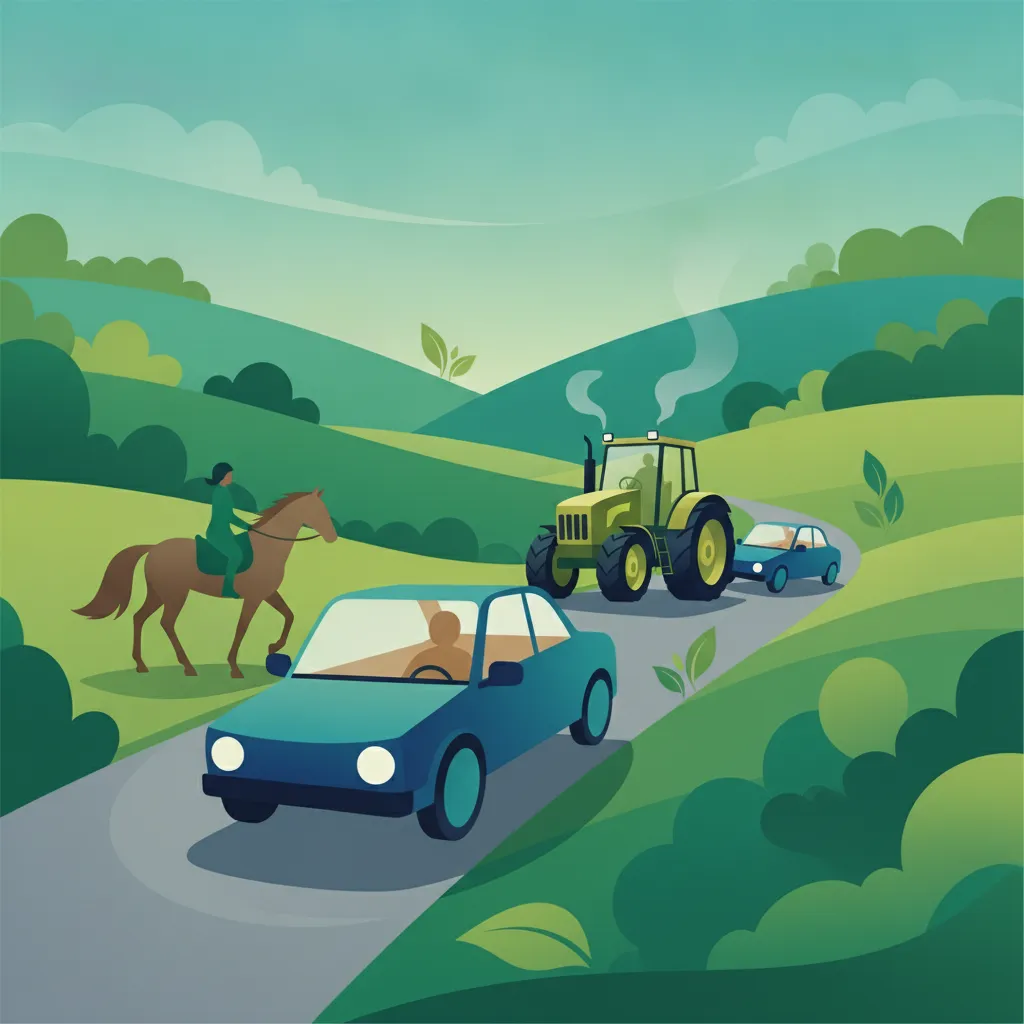
This lesson prepares you for the specific challenges of driving in the countryside. It explains the correct procedure for overtaking horse riders: slow down and pass wide, ensuring you do not spook the animal. You will also learn how to anticipate and safely manage encounters with slow-moving tractors and other farm machinery.
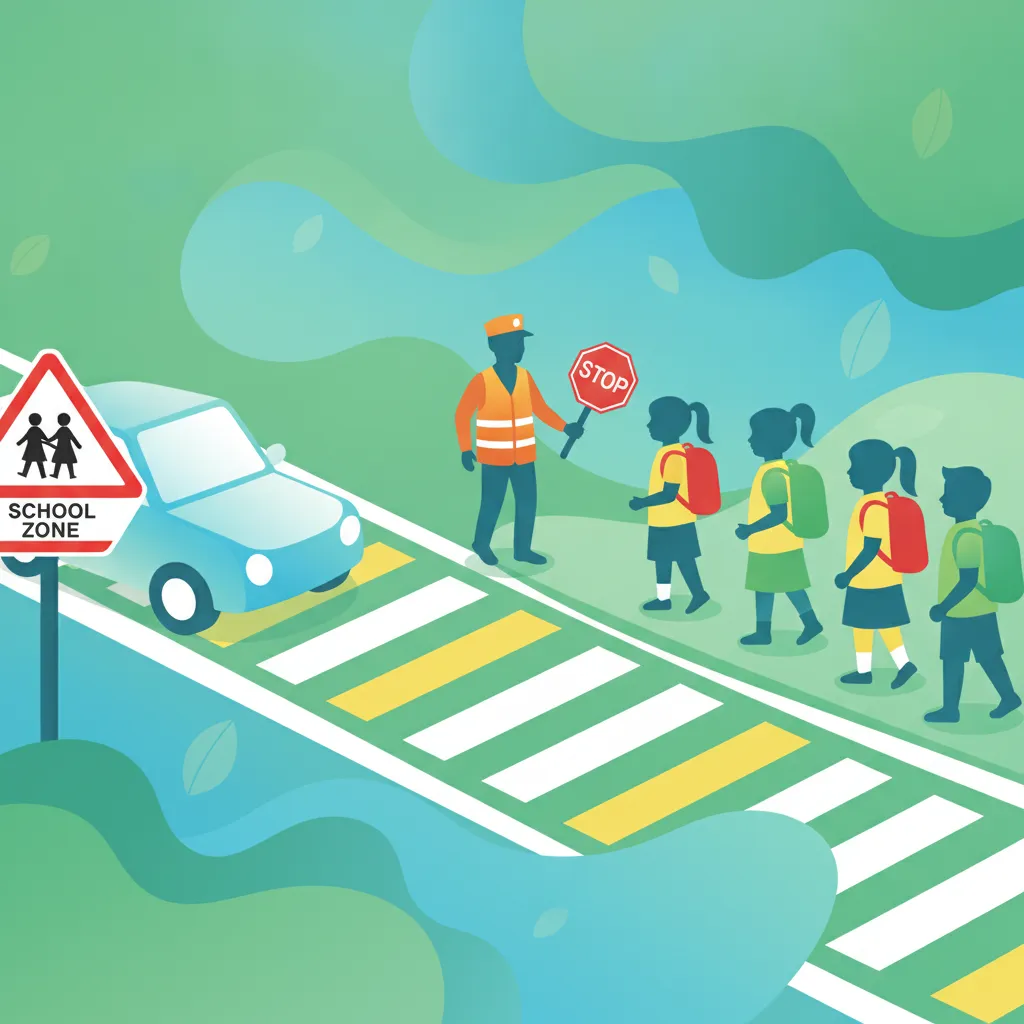
This lesson highlights the need for heightened awareness and reduced speed around schools, parks, and residential areas. Children can be unpredictable, so you must be prepared for them to step into the road without warning. The lesson covers specific signs for school zones and the legal requirement to stop for a school crossing patrol.
Understand how weather, visibility, and road conditions impact interactions with vulnerable road users. This lesson offers practical advice and UK driving theory for safely navigating diverse environments like urban streets and rural roads.

This lesson provides essential advice for driving when weather conditions are poor. It explains how rain can cause aquaplaning and why you must double your following distance. You will also learn techniques for driving in icy conditions, including gentle use of controls to avoid skidding, and the correct use of lights in fog.
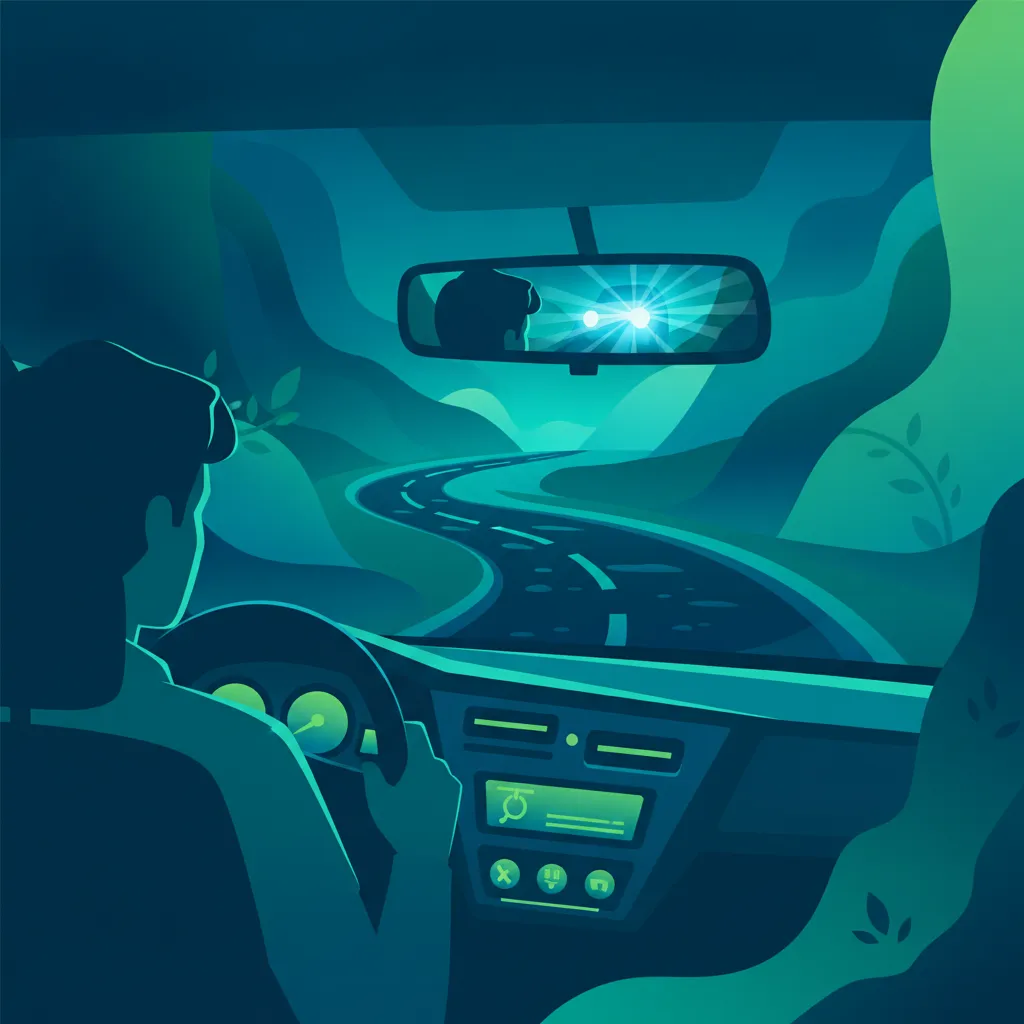
This lesson addresses the increased risks associated with driving after dark. It explains when to switch between dipped and main beam headlights to maximise your own vision without dazzling other drivers. Techniques for reducing glare and spotting hazards like cyclists or pedestrians with poor visibility are also covered.
This lesson prepares you for the specific challenges of driving in the countryside. It explains the correct procedure for overtaking horse riders: slow down and pass wide, ensuring you do not spook the animal. You will also learn how to anticipate and safely manage encounters with slow-moving tractors and other farm machinery.
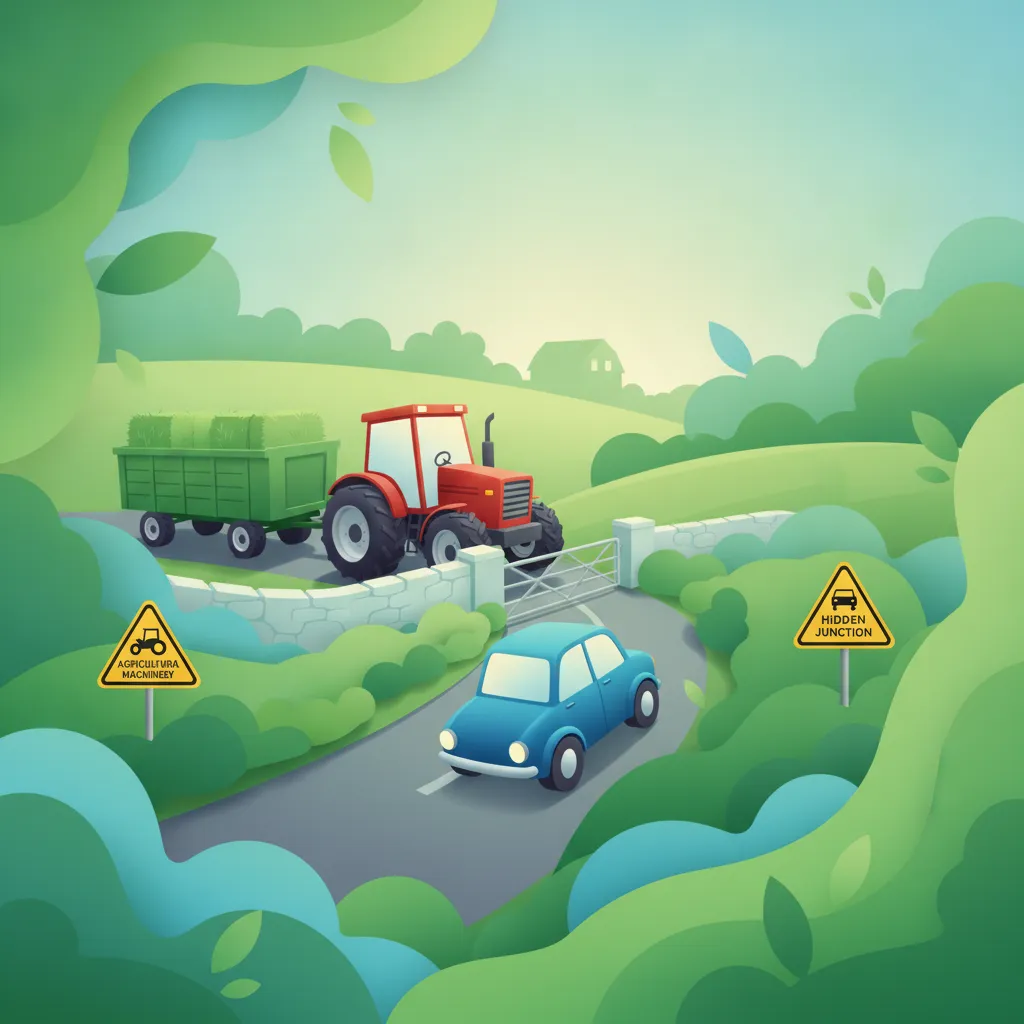
This lesson prepares you for the challenges of countryside driving. It emphasizes that the national speed limit on these roads is often too fast for the conditions. You will learn how to approach sharp bends, use passing places on single-track roads, and anticipate hazards like slow-moving tractors, horse riders, or mud on the road surface.
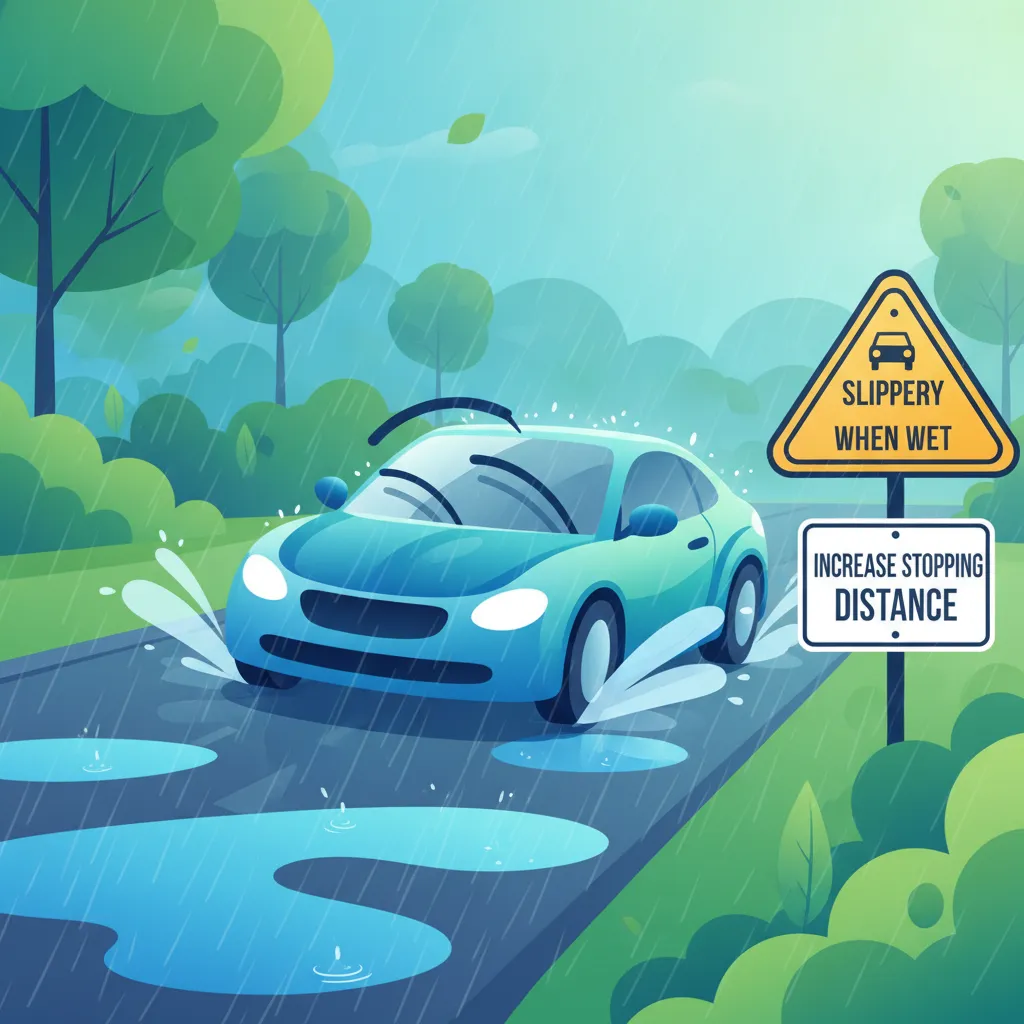
This lesson explains how different weather conditions impact the handling and stability of a large passenger vehicle. It covers the risks of aquaplaning in heavy rain, the effect of high winds on vehicle stability, and the severe reduction in visibility caused by fog. Learners will understand how ice and snow dramatically increase stopping distances and require extremely gentle control inputs to prevent skidding. Strategies for adapting speed and increasing following distances are emphasized.
This lesson explains the functions and legal requirements for all exterior vehicle lights. You will learn when it is appropriate to use dipped and main beam headlights, the specific conditions for using fog lights, and the correct application of hazard warning lights. Proper use of lighting is vital for seeing and being seen by other road users.
This lesson focuses on the challenges of riding when you can't see or be seen clearly. It covers the correct use of lights in fog, rain, and at night to maximize both your vision and your visibility to others. You will learn why reducing speed is critical, how to use reflective clothing effectively, and strategies for dealing with the glare from other vehicles' headlights to ensure you can navigate safely in all lighting conditions.
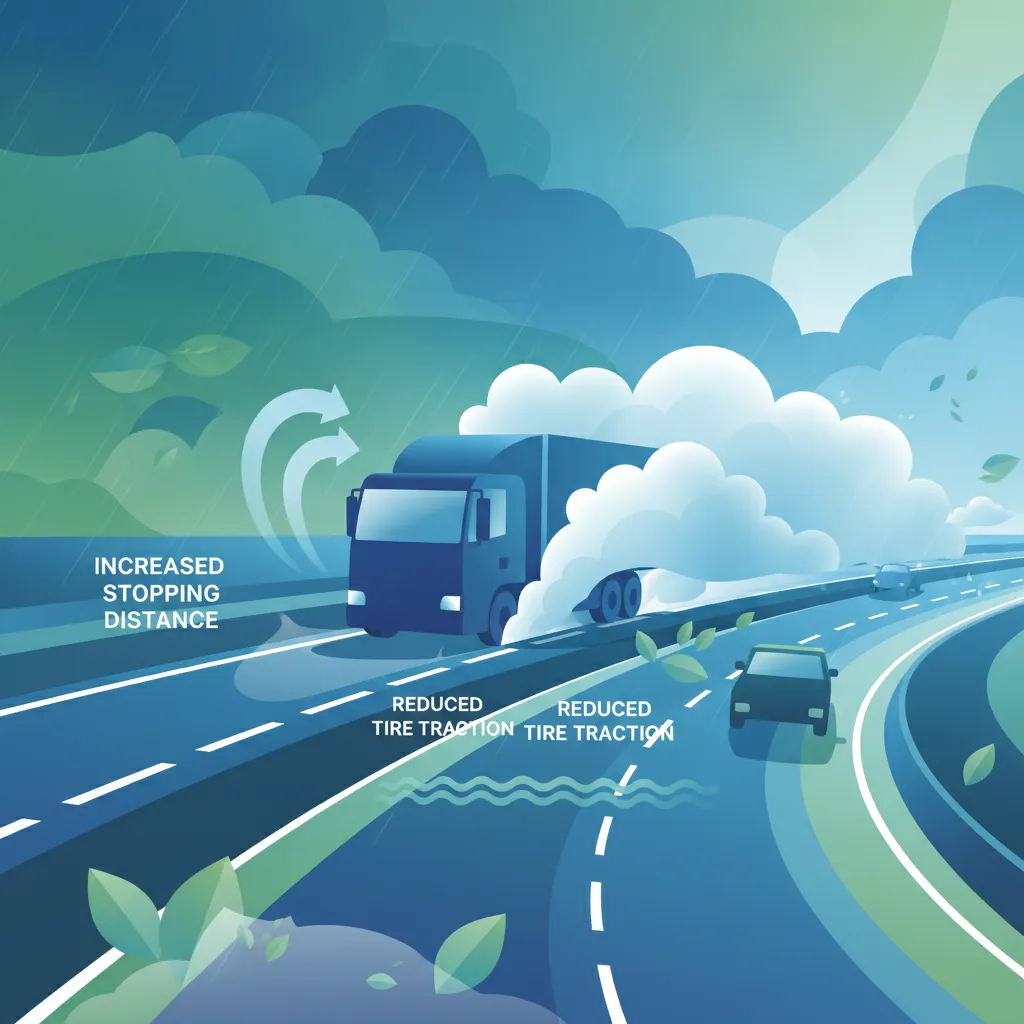
This lesson details how different adverse weather conditions uniquely affect the handling and stability of a heavy goods vehicle. It covers the increased stopping distances in rain, reduced visibility in fog, severe traction loss on ice, and the dangerous effect of strong crosswinds on high-sided vehicles. You will learn specific techniques for adjusting speed, increasing following distances, and using vehicle controls smoothly to maintain safety in challenging weather.

This lesson addresses the unique challenges of driving a large vehicle on rural roads. It provides techniques for positioning the vehicle through sharp bends and on narrow lanes, and for safely navigating unmarked or uncontrolled junctions. Learners will be taught to anticipate hidden hazards common in the countryside, such as slow-moving farm vehicles, animals on the road, and concealed entrances. The correct use of passing places and strategies for meeting oncoming traffic are also covered.

Fog dramatically reduces how far you can see and be seen. This lesson explains why you must reduce your speed and increase your following distance in foggy conditions. It also covers the legal requirements and best practices for using your headlights and fog lights to maximize your visibility to others without dazzling them.
Find clear answers to common questions learners have about Identifying Vulnerable Road Users. Learn how the lesson is structured, which driving theory objectives it supports, and how it fits into the overall learning path of units and curriculum progression in Great Britain. These explanations help you understand key concepts, lesson flow, and exam focused study goals.
Because large passenger vehicles have extensive blind spots and significant stopping distances, spotting vulnerable users early is the only way to avoid life-changing accidents. It is a core requirement for professional safety standards in the UK.
Always allow plenty of room when overtaking. Never cut across a cyclist's path when turning, as this is a common cause of accidents. Use your mirrors frequently to monitor their position in your blind spots.
Yes, you must be hyper-aware of children potentially darting out. The Highway Code stresses that you should slow down and be prepared to stop if you see children near bus stops or school crossings, regardless of your right of way.
Drivers often misjudge how quickly an elderly person can cross the road. Always wait until they have fully reached the pavement and be patient with those who may be walking slowly or using mobility aids.
Dive into our comprehensive question bank to find exactly what you need for your Great Britain theory test. Use our advanced filters to pinpoint specific subjects or test your knowledge on challenging areas, ensuring you're fully prepared for success.