This lesson teaches professional drivers how to identify and protect vulnerable road users, including the elderly and those with mobility impairments. By understanding how to provide adequate time and space, you will improve road safety and passenger welfare while preparing for your Category D theory test.
Lesson content overview
Driving a passenger vehicle, such as a bus, coach, or minibus, in Great Britain demands a high level of professional responsibility and care, particularly towards the most vulnerable road users. This includes elderly and disabled individuals who may face unique challenges in navigating roads safely. Understanding their specific needs and adopting a proactive, patient driving approach is fundamental to preventing accidents, ensuring passenger safety, and upholding the professional standards expected of Category D, D1, D1E, or DE licence holders.
This comprehensive lesson will delve into the critical aspects of risk mitigation for elderly and disabled road users, covering essential driver principles, relevant legal frameworks, and practical strategies for safe interaction. By enhancing your awareness and refining your driving techniques, you will contribute significantly to a safer and more inclusive road environment for everyone.
Elderly and disabled individuals are statistically more vulnerable to road traffic collisions due to a variety of factors. These include reduced mobility, slower reaction times, limited sensory perception (vision and hearing), and reliance on assistive devices like mobility scooters, wheelchairs, or white canes. As a professional driver, acknowledging these vulnerabilities is the first step towards implementing effective risk mitigation strategies.
The legal framework in the UK, including the Road Traffic Act 1988, the Disability Discrimination Act 1995, and the Equality Act 2010, places a heightened duty of care on drivers to protect vulnerable road users. This legal obligation, combined with professional responsibilities, mandates a courteous, patient, and anticipatory driving style that instils public confidence and ensures safety.
Effective risk mitigation for elderly and disabled road users hinges on several core driving principles. Implementing these consistently will significantly reduce accident risk and improve road safety.
Continuous and deliberate scanning of your surroundings is crucial, especially when operating in areas frequently used by elderly and disabled people, such as near bus stops, pedestrian crossings, residential zones, and healthcare facilities. These individuals may have reduced visibility or awareness, making early detection by the driver essential. Enhanced observation requires you to identify potential hazards sooner, allowing for increased reaction time and a longer pre-braking assessment period.
Always account for the possibility of needing to stop for a vulnerable user by maintaining an extended stopping distance. Elderly and disabled individuals may move more slowly or unpredictably, requiring more time to cross a road or navigate a space. Compensating for their slower movement and your own potential delayed response in complex situations means adjusting your speed earlier, especially in built-up areas where vulnerable users are more prevalent.
When passing mobility devices, wheelchair users, or visually impaired individuals, always allow additional lateral clearance. This extra space provides a vital safety buffer against unexpected movements, such as a wheelchair tilting, a mobility scooter veering slightly, or a white cane extending into your path. This principle directly influences your lane positioning, decisions regarding overtaking, and the speed at which you execute manoeuvres.
Demonstrating a calm and unhurried attitude is paramount. Be prepared to yield the right-of-way where appropriate, even if the law does not strictly require it. This courteous approach encourages confidence in vulnerable users, reducing any pressure they might feel to rush their movements, which could lead to accidents. Expect to come to a full stop at crossings or approach intersections at a significantly reduced speed when elderly or disabled individuals are present.
Recognise and respect that certain areas, such as drop-off zones and bus stops, are specifically designated for easy access by elderly and disabled users. This aligns with your obligations under the Equality Act 2010. You must position your vehicle within the designated access area and allocate sufficient dwell time for safe boarding and alighting, ensuring these critical zones remain unobstructed.
Use clear and early hand signals or vehicle indicators to convey your intentions to vulnerable road users. This reduces ambiguity, offers reassurance, and promotes safer interactions. Early signalling is especially important when you intend to overtake, turn, or change lanes, particularly in busy urban environments where miscommunication can lead to dangerous situations.
Elderly road users, generally defined as individuals aged 65 or over, may experience age-related declines in vision, hearing, reaction time, mobility, and balance. These factors can significantly impact their ability to navigate roads safely.
Elderly road users are not a monolithic group. Some may be independent walkers, albeit moving at a slower pace, while others may rely on assistive devices such as walking sticks, frames, or wheelchairs. They might pause mid-crossing, require extra time to board or alight a bus, or be less visible, particularly in low-light conditions or adverse weather.
The Highway Code mandates that drivers must not "hurry" elderly pedestrians and must give them priority at pedestrian crossings. When approaching a crossing where an elderly person is waiting or crossing, slow down well in advance. Consider an 80-year-old man with a walking stick waiting at a signalised crossing; a professional bus driver will slow earlier than strictly required, allowing him ample time and space to cross safely without feeling rushed. A common mistake is assuming all elderly users will move at a typical pedestrian speed, leading to inadequate stopping distances or hurried interactions at crossings.
Disabled road users encompass individuals with physical, sensory, intellectual, or mental impairments that can affect their ability to navigate roads safely. This broad category includes wheelchair users, mobility scooter operators, individuals with visual impairments (using white canes or guide dogs), those with auditory limitations, and individuals with cognitive impairments who may have slower decision-making processes.
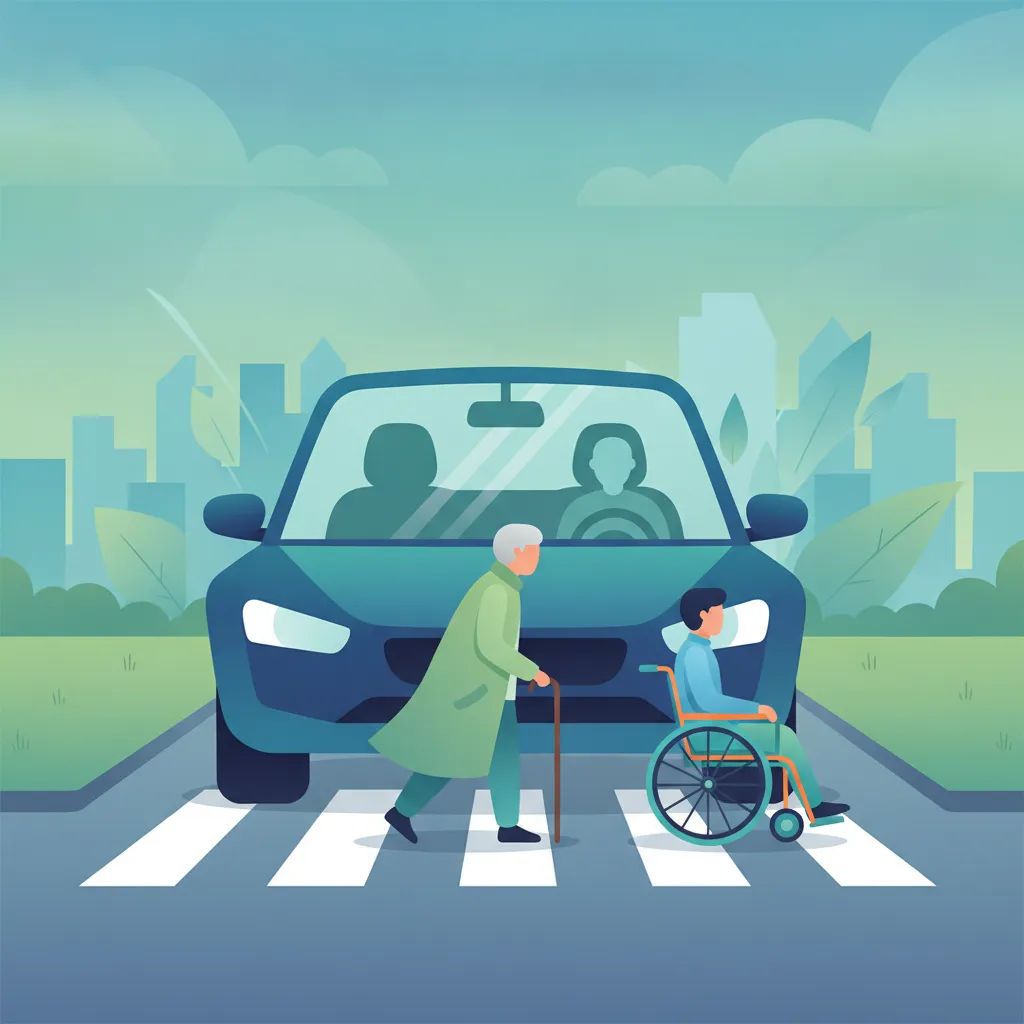
Disabled individuals may travel at very low speeds, move unpredictably, or require significant manoeuvring space to cross a road or access a vehicle. The Highway Code specifically instructs drivers to give priority to disabled users at crossings and to avoid cutting off their path. For instance, if a mobility scooter user is approaching a bus stop, the driver should halt early, allowing the scooter user to manoeuvre safely alongside the bus for boarding.
Mobility scooters and powered wheelchairs are invaluable aids for individuals with limited mobility. These devices can travel at speeds up to 12-15 mph for urban models and may have limited visibility due to their size and design.
While some mobility scooters are permitted on pavements, drivers must anticipate their presence on roads, particularly on shared pathways or roads adjacent to pavements where they might be transitioning. It is a common mistake to assume that scooters have the same road rights or speeds as cyclists, or to fail to leave sufficient clearance when overtaking them.
When encountering a mobility scooter, always give a wide berth – ideally, a minimum of 1.5 metres clearance when overtaking. Signal your intent to overtake early and pass slowly, ensuring the scooter user has ample space and time. Imagine a scooter user peeking out from a bus stop, indicating their intention to cross; the driver should provide a wide berth and clearly signal their intent to overtake slowly, giving reassurance to the scooter user.
Visually impaired individuals use white canes or guide dogs as mobility aids and clear signals to other road users. A white cane indicates a need for assistance and often signals the user's intention to cross the street, though they may also be standing still. A guide dog accompanying a person signifies that the individual is visually impaired and often indicates an immediate need for traffic to stop if the user is moving or about to move into the road.
Drivers must give absolute priority to a user with a white cane or a guide dog when they are crossing or about to cross the road. It is critical not to cut off their path or put pressure on them. A common mistake is not noticing the white cane at intersections or failing to stop immediately when a guide dog is present at the roadside, potentially leading to a dangerous situation.
Consider a driver who sees a white cane at a bus stop; the correct behaviour is to stop and wait for the user to cross safely before proceeding. This demonstrates patience and adherence to the legal duty of care.
Crossing areas, including pedestrian crossings (zebra, pelican, puffin), tram stops, and bus stops, are designated zones where pedestrians and disabled users move across vehicular traffic. These areas are often equipped with tactile paving, signalling lights, or marked waiting lines to aid navigation.
Elderly and disabled users frequently utilise these areas. As a passenger vehicle driver, you must treat these as priority zones, especially when signals are activated.
Highway Code Rule 180: You must give priority to pedestrians at a pelican crossing when they have started to cross. This applies to all pedestrians, especially elderly and disabled individuals, and is mandatory.
Highway Code Rule 179: You must not overtake at a pelican crossing when the lights are flashing amber or when a pedestrian is crossing. This ensures safety for crossing road users.
Drivers must stop at red signals, give priority to crossing pedestrians, and avoid stopping beyond the stop line unless necessary for passenger exchange at a bus stop. A common error is stopping on the roadway beyond the stop line, which can block curbside access for wheelchair users or obscure visibility for other road users. Ensure your bus stops precisely within the designated loading area, leaving the sidewalk clear for all pedestrians.
Operational timing, specifically dwell time, is the period a vehicle spends stationary at a stop to allow passengers to board or alight safely. For elderly and disabled users, this time must be sufficient to accommodate their needs, which may include using steps, ramps, or requiring assistance.
As a professional driver, you must never rush passengers. Allow extended loading and unloading times when necessary, and ensure that no other vehicle blocks the space required for wheelchair users to access the bus safely. Pressuring passengers to board quickly can lead to unsafe rushes and potential injuries. An exemplary bus driver will wait an extra 5-10 seconds for a passenger with limited mobility to board safely using a deployed ramp, ensuring a secure and comfortable experience.
Modern passenger vehicles are equipped with various accessibility features, such as low-floor entry, ramps, kneeling capability, wheelchair bays, and priority seating. These features are designed to enable the efficient and safe boarding and alighting of elderly and disabled passengers.
Drivers must operate these accessibility features correctly and ensure doors remain open for the entire required dwell time. Common mistakes include failing to activate kneeling mode to lower the bus entrance to curb height, not positioning the vehicle correctly to align with wheelchair bays, or closing doors prematurely. Always activate kneeling for curb height, extend the ramp fully, and check that the wheelchair bay is clear before departure.
Adhering to specific UK laws and regulations is paramount for all professional drivers. These legal mandates reinforce the duty of care towards vulnerable road users.
Under the Equality Act 2010, reasonable adjustments are changes that service providers (including transport operators and drivers) must make to ensure disabled people are not put at a substantial disadvantage compared to non-disabled people. For drivers, this includes providing extra time, space, and assistance.
For instance, a driver providing extra time for a wheelchair user to board is fulfilling their duty under the Equality Act 2010. Conversely, rushing a passenger to board quickly, causing an unsafe situation, is a direct breach of this legal duty. Similarly, a bus stopping in a designated loading area and leaving the sidewalk clear adheres to Highway Code Regulation 86, whereas stopping partially on the pavement and blocking wheelchair access is a violation.
Even experienced drivers can make mistakes when interacting with elderly and disabled road users. Awareness of these common pitfalls is crucial for prevention.
Environmental and operational factors can significantly impact the safety of elderly and disabled road users. As a professional driver, you must adjust your driving approach accordingly.
In rain, fog, or icy conditions, the reaction times of elderly and disabled users can increase further due to reduced grip, obscured vision, or difficulty hearing. Drivers must compensate by reducing speed by a minimum of 5 mph in built-up areas and allowing even larger following distances and braking gaps. Poor weather also impacts visibility for the driver, making early detection of vulnerable users even more challenging.
At night or in low-light conditions, visually impaired users rely heavily on tactile cues and the sound of traffic. Drivers must switch to dipped beams earlier to avoid dazzling pedestrians, use headlights fully where appropriate, and avoid harsh glare. Ensure your vehicle's lights are clean and correctly aligned to maximise your own visibility and help others see you.
A heavily loaded bus or coach reduces braking capability and alters handling. Drivers must compensate for this by increasing following distances, reducing speed earlier when approaching stops or crossings, and generally driving more conservatively. The added weight means it will take longer to stop safely.
When a disabled pedestrian is present alongside cyclists, the driver must prioritise the pedestrian while also remaining vigilant for cyclists who may be in blind spots or making unexpected movements. Managing multiple vulnerable road users requires heightened awareness and careful decision-making to ensure the safety of all.
During peak hours, there might be increased pressure to maintain schedule. However, professional drivers must resist the urge to rush. Maintaining patience and adhering to safety protocols for elderly and disabled users, despite schedule pressures, is non-negotiable.
Mastering risk mitigation for elderly and disabled road users is a cornerstone of professional passenger vehicle driving in Great Britain. By consistently applying enhanced observation, extended stopping distances, and extra space provision, combined with unwavering patience and yielding, you ensure safety and uphold the highest standards of care.
Understanding and correctly operating your vehicle's accessibility features, respecting dwell times, and diligently adhering to the Highway Code and the Equality Act 2010 are not just best practices; they are legal and ethical obligations. By anticipating the unique needs of these vulnerable individuals and adjusting your driving for various conditions, you play a vital role in creating a safer, more accessible, and more respectful road environment for everyone. Your commitment to these principles prevents accidents, builds public trust, and reinforces your reputation as a responsible and compassionate professional driver.
Explore all units and lessons included in this driving theory course.
Lesson content overview
Explore all units and lessons included in this driving theory course.
Explore search topics learners often look for when studying Risk Mitigation for Elderly and Disabled Road Users. These topics reflect common questions about road rules, driving situations, safety guidance, and lesson level theory preparation for learners in Great Britain.
Browse additional driving theory lessons that cover connected traffic rules, road signs, and common driving situations related to this topic. Improve your understanding of how different rules interact across everyday traffic scenarios.
Explore the unique challenges faced by elderly and disabled road users in Great Britain. This lesson details how to recognise their specific needs, including mobility aids and sensory impairments, to ensure safer interactions and compliance with driving theory.
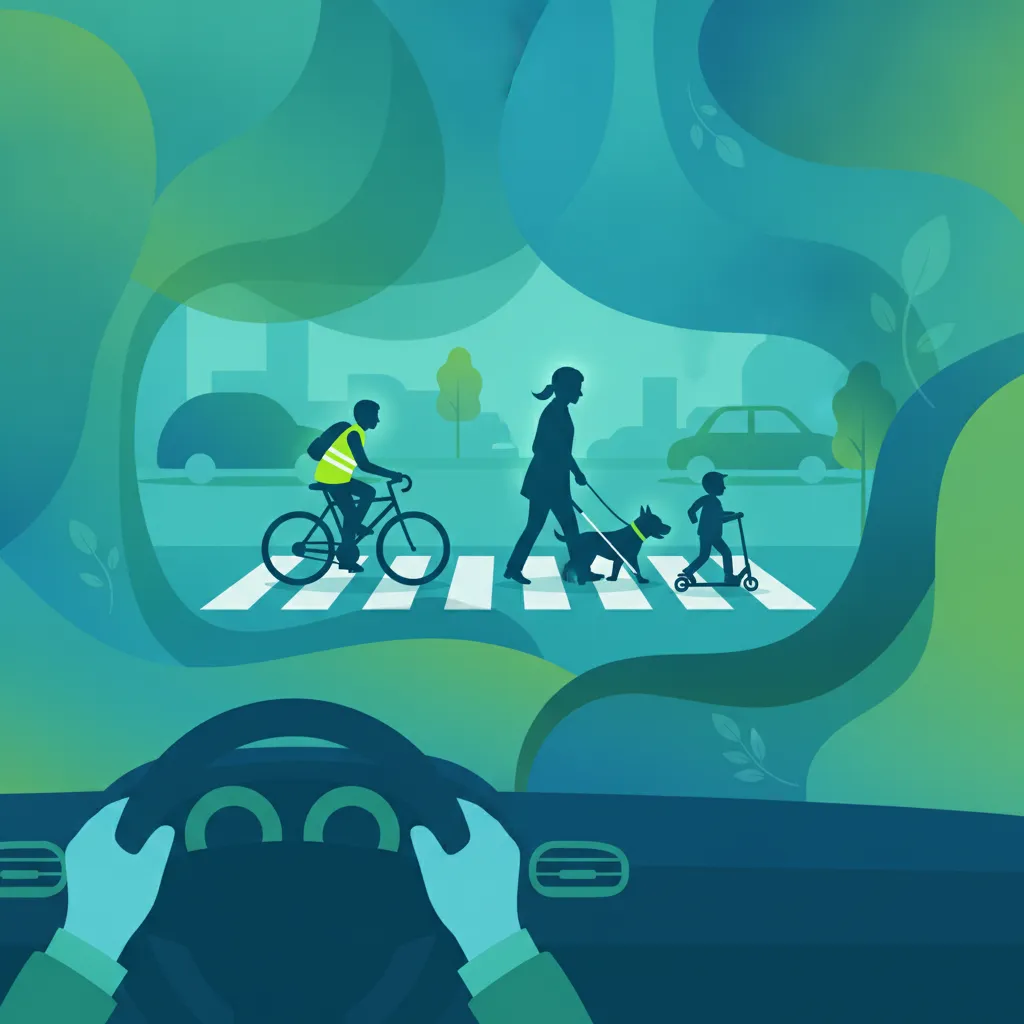
This lesson teaches drivers how to identify various types of vulnerable road users and anticipate their potential actions to prevent conflicts. It covers the specific risks associated with pedestrians, cyclists, motorcyclists, children, and elderly or disabled individuals. Emphasis is placed on heightened awareness and defensive driving techniques required to share the road safely. Understanding their perspectives and typical behaviours is key to protecting them and maintaining safety for everyone.
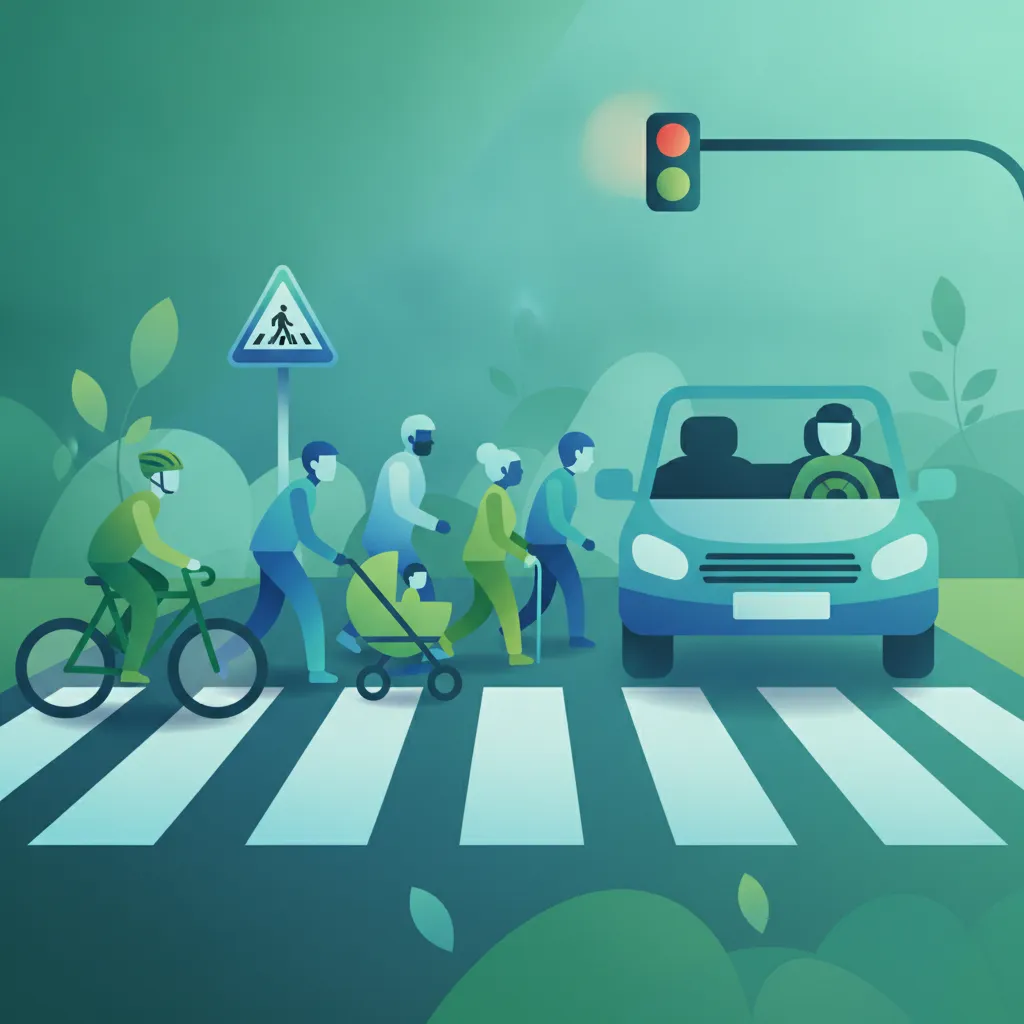
This lesson focuses on a driver's legal and ethical duty of care to all road users. It explains the concept of a road user hierarchy, which prioritizes the safety of vulnerable groups such as pedestrians, cyclists, and motorcyclists. You will learn the principles of defensive driving, anticipating potential hazards, and maintaining a courteous attitude on the road to ensure safety for everyone.
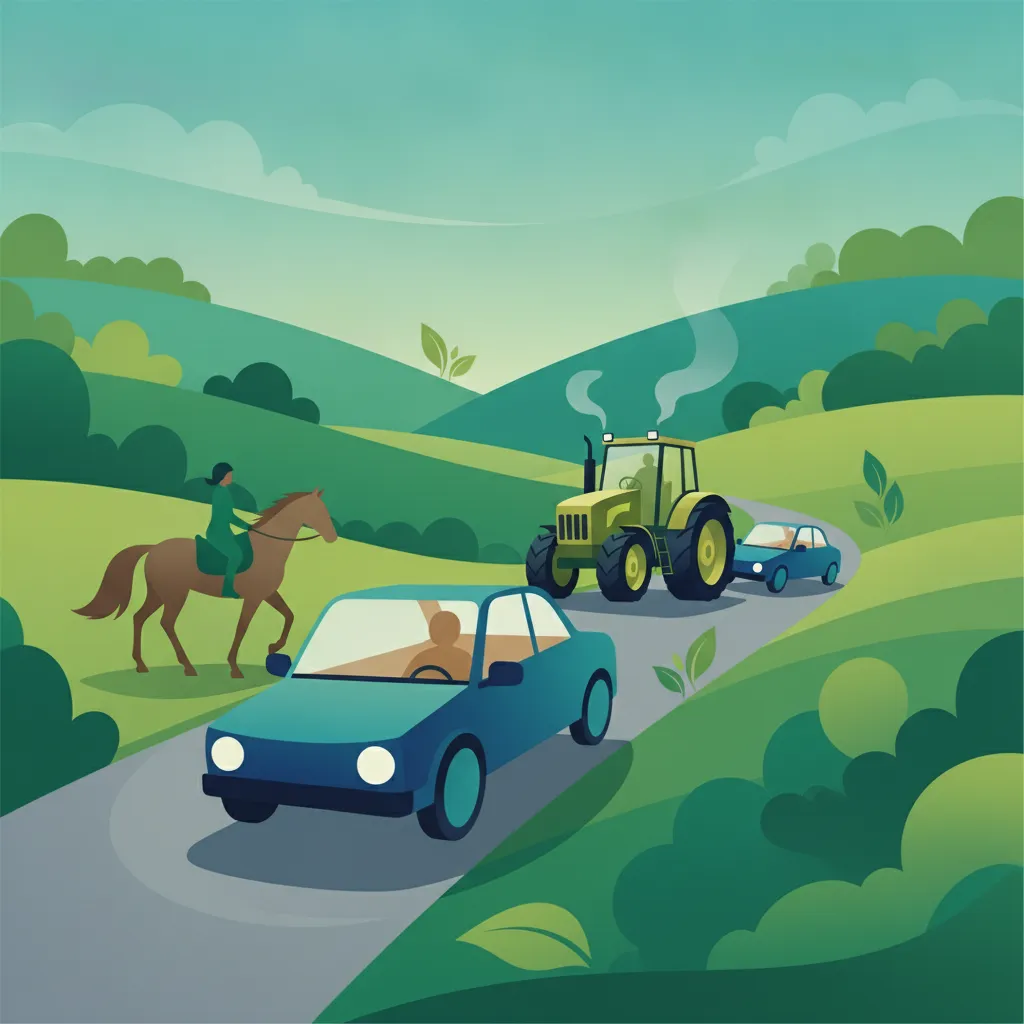
This lesson prepares you for the specific challenges of driving in the countryside. It explains the correct procedure for overtaking horse riders: slow down and pass wide, ensuring you do not spook the animal. You will also learn how to anticipate and safely manage encounters with slow-moving tractors and other farm machinery.

This lesson focuses on the legal and practical requirements for providing accessible transport for passengers with reduced mobility. It covers wheelchair access, ramp usage, and securement devices, as well as procedures for safely assisting passengers with mobility aids. The discussion highlights relevant disability legislation and the importance of proper loading and unloading protocols to protect both passengers and the driver from injury, ensuring compliance with accessibility standards in Great Britain.

This lesson addresses the unique challenges of driving a large vehicle on rural roads. It provides techniques for positioning the vehicle through sharp bends and on narrow lanes, and for safely navigating unmarked or uncontrolled junctions. Learners will be taught to anticipate hidden hazards common in the countryside, such as slow-moving farm vehicles, animals on the road, and concealed entrances. The correct use of passing places and strategies for meeting oncoming traffic are also covered.
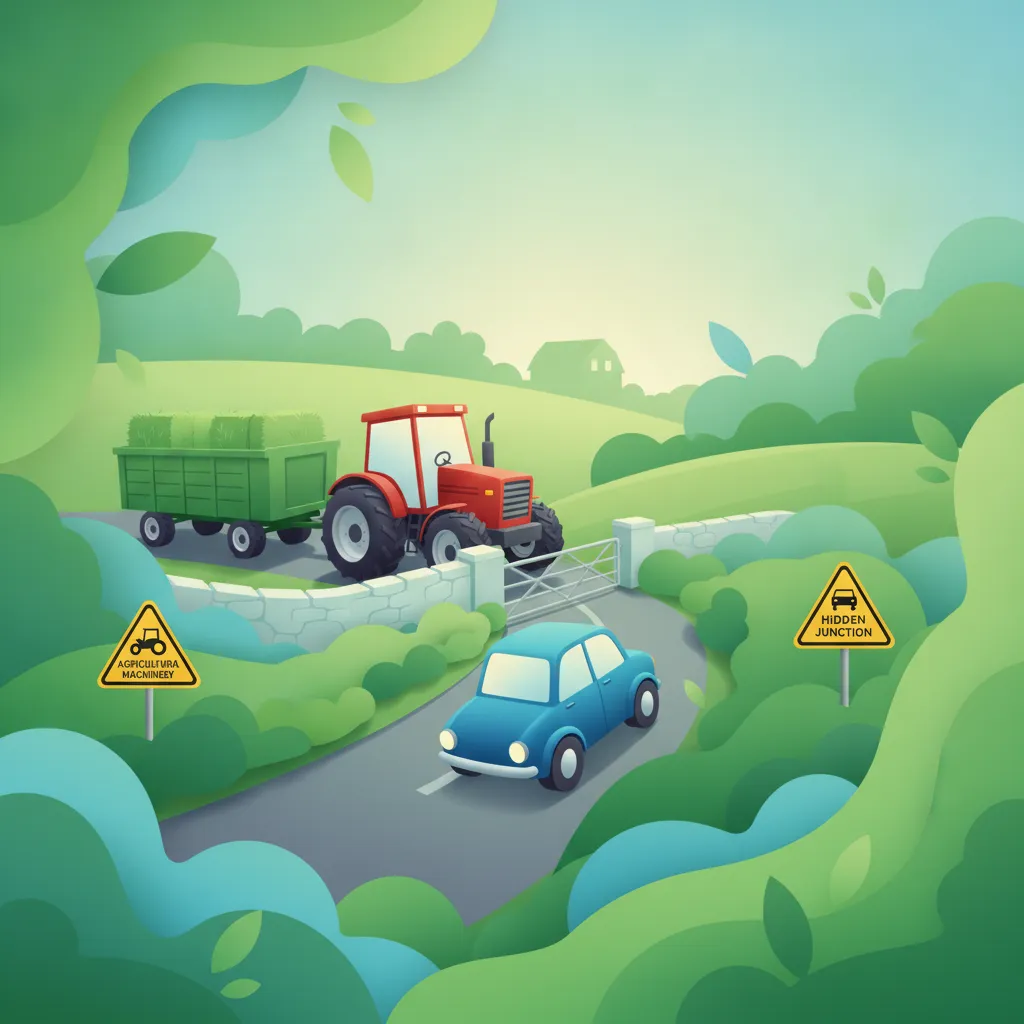
This lesson prepares you for the challenges of countryside driving. It emphasizes that the national speed limit on these roads is often too fast for the conditions. You will learn how to approach sharp bends, use passing places on single-track roads, and anticipate hazards like slow-moving tractors, horse riders, or mud on the road surface.

This lesson explains how to adapt your driving around different vehicles. You will learn to look out for motorcyclists, who are often hard to see, especially at junctions. It also covers the challenges of sharing the road with large vehicles, such as their extended blind spots, wider turning circles, and the wind turbulence they can create.

This lesson provides essential advice for driving when weather conditions are poor. It explains how rain can cause aquaplaning and why you must double your following distance. You will also learn techniques for driving in icy conditions, including gentle use of controls to avoid skidding, and the correct use of lights in fog.
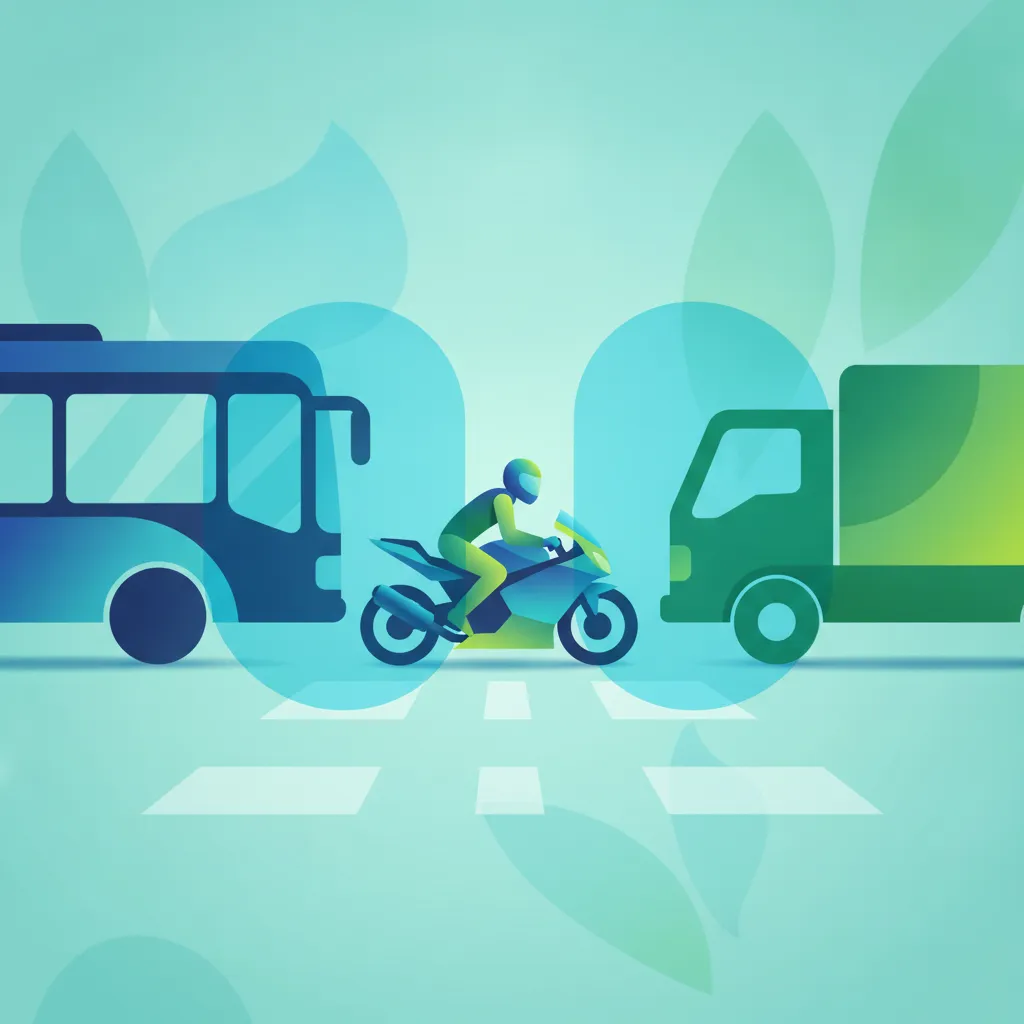
This lesson highlights why motorcyclists are considered vulnerable road users. It covers the increased risk of serious injury in a collision due to lack of physical protection compared to car occupants. You will learn about common visibility challenges and how to adopt proactive, defensive strategies to mitigate risks and anticipate potential hazards on the road.
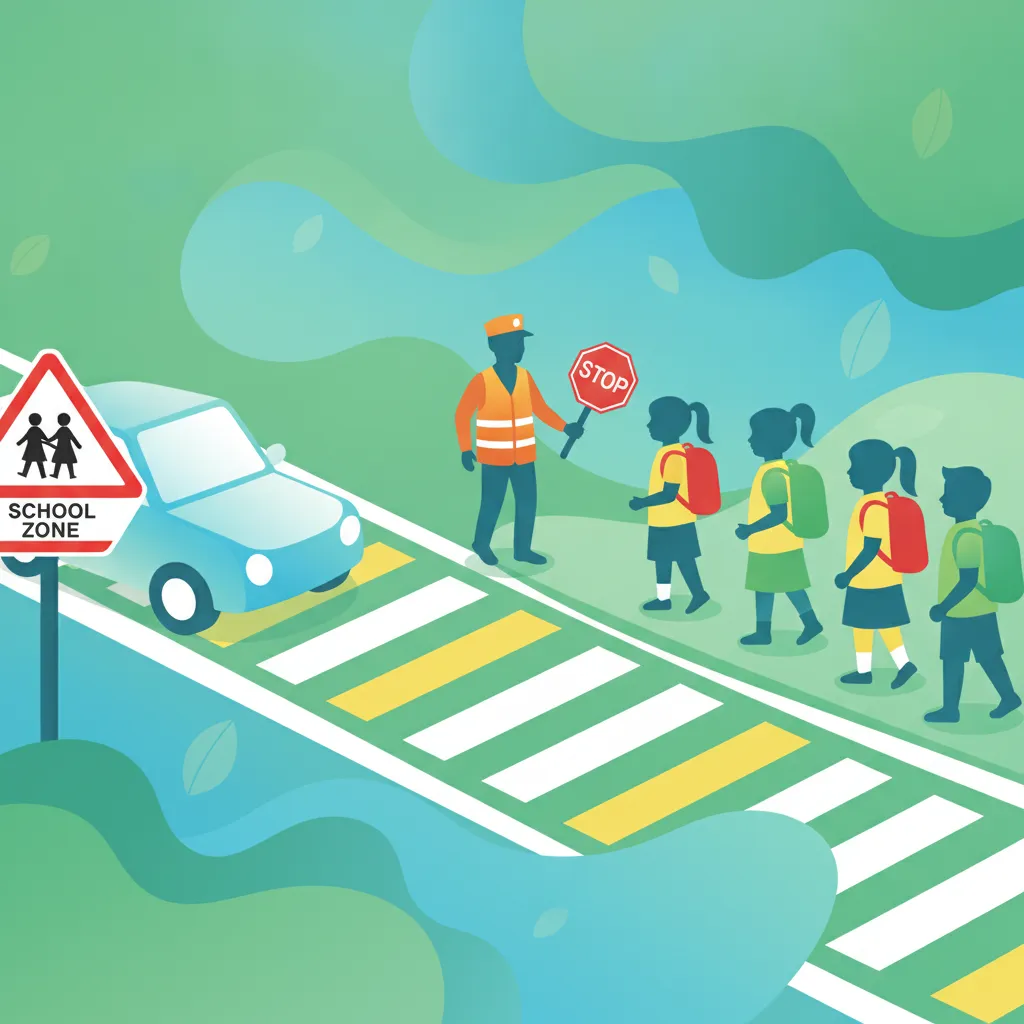
This lesson highlights the need for heightened awareness and reduced speed around schools, parks, and residential areas. Children can be unpredictable, so you must be prepared for them to step into the road without warning. The lesson covers specific signs for school zones and the legal requirement to stop for a school crossing patrol.
Learn about frequent errors made by drivers when encountering elderly and disabled road users. This lesson highlights pitfalls such as insufficient dwell time, overtaking too closely, and blocking pavement access, offering guidance for professional drivers in Great Britain.
This lesson teaches drivers how to identify various types of vulnerable road users and anticipate their potential actions to prevent conflicts. It covers the specific risks associated with pedestrians, cyclists, motorcyclists, children, and elderly or disabled individuals. Emphasis is placed on heightened awareness and defensive driving techniques required to share the road safely. Understanding their perspectives and typical behaviours is key to protecting them and maintaining safety for everyone.
This lesson is dedicated to the safe interaction between large vehicles and the most vulnerable road users: pedestrians and cyclists. It highlights high-risk scenarios, such as left turns at junctions, where cyclists can be hidden in nearside blind spots. The content stresses the importance of anticipation, using signals clearly, and providing generous space at crossings, in cycle lanes, and within pedestrianized zones to prevent tragic accidents.
This lesson focuses on a driver's legal and ethical duty of care to all road users. It explains the concept of a road user hierarchy, which prioritizes the safety of vulnerable groups such as pedestrians, cyclists, and motorcyclists. You will learn the principles of defensive driving, anticipating potential hazards, and maintaining a courteous attitude on the road to ensure safety for everyone.
This lesson discusses the crucial interaction between passenger vehicles and pedestrians at and around bus stops. Learners will explore pedestrian right-of-way, especially at crosswalks, and positioning strategies to maintain a safe distance from people waiting or crossing. The lesson also covers pedestrian alertness measures and conflict avoidance techniques to protect vulnerable road users. This knowledge is essential for preventing accidents and maintaining a safe environment around the vehicle during stops.
This lesson prepares you for the specific challenges of driving in the countryside. It explains the correct procedure for overtaking horse riders: slow down and pass wide, ensuring you do not spook the animal. You will also learn how to anticipate and safely manage encounters with slow-moving tractors and other farm machinery.
This lesson provides detailed guidance on protecting pedestrians in high-risk areas like bus stops and formal crossings. It covers the specific rules and driver obligations at zebra, pelican, toucan, and puffin crossings, as well as when approaching a school crossing patrol. The content emphasizes the importance of vigilance, anticipating pedestrian movements, especially those who may be distracted or emerge from behind the bus, and always being prepared to stop to prevent accidents.
This lesson addresses the unique challenges of driving a large vehicle on rural roads. It provides techniques for positioning the vehicle through sharp bends and on narrow lanes, and for safely navigating unmarked or uncontrolled junctions. Learners will be taught to anticipate hidden hazards common in the countryside, such as slow-moving farm vehicles, animals on the road, and concealed entrances. The correct use of passing places and strategies for meeting oncoming traffic are also covered.
This lesson highlights why motorcyclists are considered vulnerable road users. It covers the increased risk of serious injury in a collision due to lack of physical protection compared to car occupants. You will learn about common visibility challenges and how to adopt proactive, defensive strategies to mitigate risks and anticipate potential hazards on the road.
This lesson explains how to adapt your driving around different vehicles. You will learn to look out for motorcyclists, who are often hard to see, especially at junctions. It also covers the challenges of sharing the road with large vehicles, such as their extended blind spots, wider turning circles, and the wind turbulence they can create.
This lesson focuses on safe interaction with cyclists, a key aspect of urban driving for PCV operators. It details the rules for cycle lanes and advanced stop lines, and the correct procedure for overtaking cyclists, emphasizing the need to provide ample space. The content stresses the importance of frequent mirror checks to manage blind spots where cyclists can be hidden, especially when turning at junctions, to ensure their safety and comply with the Highway Code's road user hierarchy.
Find clear answers to common questions learners have about Risk Mitigation for Elderly and Disabled Road Users. Learn how the lesson is structured, which driving theory objectives it supports, and how it fits into the overall learning path of units and curriculum progression in Great Britain. These explanations help you understand key concepts, lesson flow, and exam focused study goals.
Mobility scooters are often less visible, have lower speeds, and may have limited turning circles. Providing extra space ensures you do not crowd them, allows for any sudden changes in direction, and keeps the road environment safe for all.
Always be patient and wait for them to finish crossing completely before moving your vehicle. Do not nudge forward or show impatience, as this can cause alarm and potentially lead to accidents.
While the Highway Code rules for interacting with vulnerable users apply to everyone, professional bus and coach drivers are held to a higher standard of responsibility, as their actions reflect on their company and public trust.
Look for distinctive aids like a white stick or a guide dog. Be prepared to stop smoothly and clearly, and ensure your vehicle is positioned correctly at the bus stop to allow for safe, predictable boarding.
Dive into our comprehensive question bank to find exactly what you need for your Great Britain theory test. Use our advanced filters to pinpoint specific subjects or test your knowledge on challenging areas, ensuring you're fully prepared for success.