
This lesson provides essential training on the complex manoeuvring required when driving large passenger vehicles such as buses and coaches. You will learn to calculate the physical space needed for turns, ensuring you manage your vehicle's length and weight safely to protect other road users.

Lesson content overview
Operating a large passenger vehicle, such as a bus, coach, or minibus, demands a refined set of driving skills, particularly when navigating turns. Unlike smaller vehicles, the sheer size and weight of these vehicles introduce unique challenges, primarily due to their geometry. This lesson delves into the specific techniques required to execute safe and efficient turns, focusing on anticipating vehicle behaviour, maintaining proper positioning, and ensuring optimal clearance to protect both occupants and other road users. A thorough understanding of these principles is crucial for every professional driver seeking a Category D licence in Great Britain.
The fundamental difference when turning a large vehicle compared to a car lies in how its front and rear axles behave. This divergence creates two critical phenomena: off-tracking and rear swing. Mastering these concepts is the cornerstone of safe turning.
Off-tracking refers to the natural tendency of a vehicle's rear wheels to follow a path that is tighter, or closer to the inside of a turn, than the path taken by the front wheels. Imagine tracing a line with your front tyres and another with your rear tyres during a turn; the rear line will always be inside the front line. This phenomenon is more pronounced in vehicles with a long wheelbase – the distance between the front and rear axles.
Off-tracking can be categorised into:
In practical terms, for a left turn, the rear wheels of a bus will cut closer to the kerb than its front wheels. Failing to compensate for this can lead to the rear wheels mounting or striking the kerb, potentially damaging the vehicle or even causing it to become stuck. Similarly, in a right turn, the rear wheels will follow a tighter arc towards the centre line or a central island, requiring careful management to avoid obstruction.
Always remember that the rear of your large vehicle will always take a 'shorter' path than the front when turning. Plan your front wheel trajectory to accommodate this.
Rear swing describes the outward movement of the very rear of a large vehicle as the front wheels initiate a turn. This occurs because the pivot point of the vehicle during a turn is typically located ahead of the rear axle, causing the tail end to momentarily move in the opposite direction of the initial steer before aligning with the turn.
Rear swing is particularly dangerous as it can cause the rear corners of the vehicle to encroach upon adjacent lanes, pavements, or roadside objects.
Even at slow speeds, where off-tracking is minimal, rear swing can still be a significant factor. Ignoring it can result in collisions with street furniture, parked vehicles, or, critically, pedestrians on the pavement. Highway Code Rule 163 mandates that you must not turn unless you can do so safely and without danger to other road users, directly addressing the implications of rear swing.
The phenomena of off-tracking and rear swing are rooted in basic vehicle physics. A long wheelbase means that when the front wheels turn, the vehicle effectively pivots around a point that is not its geometric centre. This pivot point's location, combined with the length of the vehicle's overhangs (the parts of the vehicle extending beyond the axles), dictates the extent of both off-tracking and rear swing. Factors like vehicle speed and load distribution can also subtly influence these dynamics by shifting the vehicle's centre of gravity and altering the tyre-road friction characteristics. Understanding this physical behaviour allows drivers to anticipate and proactively counteract these movements, ensuring a safe and controlled manoeuvre.
Correct approach positioning is perhaps the most critical skill in safely turning a large vehicle. It involves placing the vehicle within the lane well before the turn, setting up the optimal trajectory to manage off-tracking and rear swing effectively.
When preparing for a left turn in a large passenger vehicle, your primary concern is to provide enough space for the rear wheels to negotiate the inside of the turn without striking the kerb or any roadside obstacles.
Signal Early: Give a clear left signal well in advance (at least 2-3 seconds for large vehicles, as per Highway Code Rule 110) to inform other road users of your intentions.
Position Out: Instead of hugging the left kerb as a car might, you must position your vehicle slightly towards the right of your lane, closer to the centre line (Highway Code Rule 162). This creates a wider arc for your front wheels, which in turn provides more room for your rear wheels to off-track inwards without hitting the kerb.
Check Mirrors: Conduct comprehensive mirror checks (off-side, near-side, interior) to ensure no vehicles, cyclists, or pedestrians are in your blind spots or the path of your rear swing (Highway Code Rule 124). Pay particular attention to your near-side mirrors to monitor the proximity to the kerb and any pedestrians.
Initiate Turn: Begin the turn at a slow, controlled speed, allowing the front wheels to sweep wider. Continuously monitor your mirrors, especially the near-side, to watch the rear wheels clear the kerb.
Monitor Rear Swing: Be mindful that as you turn left, the rear-right corner of your vehicle may momentarily swing outwards. Ensure sufficient clearance from any oncoming traffic or adjacent lanes.
For a right turn, the challenge shifts to managing the inward off-tracking of the rear wheels towards the central reservation or oncoming lane, and ensuring the rear-left corner (on-inside swing) does not hit the kerb or a pedestrian.
Signal Early: As with left turns, signal right in good time, allowing other drivers and pedestrians to anticipate your manoeuvre.
Position In: Generally, you should position your vehicle closer to the centre line of your lane, preparing to take a wider right turn (Highway Code Rule 162). This provides the necessary room for your front wheels to make a wide sweep and for the rear to track safely. Avoid cutting the corner sharply.
Check Mirrors: Thoroughly check all mirrors, especially the near-side, to ensure the rear-left of your vehicle does not come into contact with the kerb or any pedestrians who might be attempting to cross. Look for cyclists who might try to pass on your left.
Initiate Turn: Begin the turn slowly and deliberately. As you steer right, be aware of the rear-left corner of your vehicle. It will initially swing slightly inwards (on-inside swing). Keep a constant watch on your near-side mirror to confirm adequate clearance.
Give Way: At junctions, remember Highway Code Rule 206: give way to traffic coming from the opposite direction and to pedestrians on the near side who are crossing or waiting to cross the road you are turning into.
Several factors influence the ideal approach position for any turn:
Effective mirror usage and timely signalling are not merely good practice; they are mandatory safety requirements for large vehicle drivers, particularly during turns. They provide the critical information needed to manage the vehicle's large footprint and communicate intentions to other road users.
Highway Code Rule 110 specifically states that drivers must use direction indicators to signal their intention when turning, and for large vehicles, this signal should be given early – at least 2 seconds before the turn. Many professional drivers opt for 3 seconds or more, especially in busy urban environments.
Late signalling is a common cause of collisions involving large vehicles. Other road users need more time to react to the slower acceleration and larger turning circle of a bus or coach.
Early signalling allows:
Mirror checks are a continuous process, not a one-off action. Highway Code Rule 124 outlines the critical sequence: "Check mirrors, signal, and ensure additional safety before turning." For large vehicles, this process is even more vital due to extensive blind spots.
Pre-turn Mirror Check (Systematic Sweep): Before you begin braking or positioning, check your off-side (right) mirror, then your near-side (left) mirror, and finally your interior mirror (if applicable). This confirms the traffic situation all around your vehicle.
Blind Spot Check: Swiftly check your blind spots over your shoulder where possible, especially for cyclists or motorcyclists who may be attempting to filter past you.
Signal: Once you are confident the path is clear, activate your indicator.
Re-check Mirrors (Confirmation): After signalling, re-check your mirrors, particularly the mirror corresponding to the direction of your turn, to ensure no new hazards have appeared and that your intended path remains clear.
During-turn Mirror Monitoring: As you initiate and execute the turn, continuously monitor your near-side mirror for left turns, and your off-side mirror for right turns. This allows you to track the path of your rear wheels and ensure sufficient clearance from kerbs, street furniture, parked cars, or other road users.
Large vehicles inherently have larger blind spots than cars. The design of buses and coaches, with their extensive bodywork, means that areas directly to the side and rear, particularly along the lower half of the vehicle, are not visible directly or through standard mirrors.
During a turn, these blind spots become dynamic. What was clear a moment ago may be occupied by a cyclist or pedestrian. This necessitates:
Clearance management is the proactive calculation and maintenance of safe distances between your vehicle and all surrounding objects. For large vehicles, this requires a greater safety buffer than for smaller vehicles.
While precise figures can vary with vehicle type and specific conditions, general guidelines for large vehicles suggest:
It's always better to err on the side of caution. If in doubt about clearance, slow down, stop if necessary, and re-evaluate your manoeuvre.
Clearance is not static; it must be dynamically managed based on several factors:
The Highway Code provides the legal framework and best practice guidelines for all road users in Great Britain. For large passenger vehicle drivers, specific rules apply with even greater emphasis due to the unique challenges of vehicle size.
Beyond specific turning rules, the general principles of giving way apply. For large vehicle drivers, understanding how your vehicle's size affects your ability to stop or manoeuvre quickly is paramount. Always prioritise safety and yield where there is any doubt about right-of-way, particularly when turning across the path of other vehicles or pedestrians.
Adherence to these Highway Code rules is not optional. Violations can lead to severe penalties, license endorsements, and, most importantly, serious collisions.
Applying the principles of off-tracking, rear swing, and clearance management becomes especially critical in various real-world scenarios.
City centres and urban streets often present a maze of parked cars, narrow lanes, and impatient drivers. When making a left or right turn with parked vehicles on the side of your intended turn, the need for precise approach positioning and constant mirror monitoring is amplified.
For a left turn, you must position further to the right to ensure your rear wheels clear the kerb and any parked vehicles. For a right turn, you'll need to position appropriately, often closer to the centre line, to prevent the rear of the vehicle from striking parked cars on the right-hand side, while also being vigilant for pedestrians or cyclists using the pavement. Always anticipate car doors opening or pedestrians stepping out unexpectedly.
Roundabouts require careful planning for large vehicles.
Lane Choice: Choose the correct lane well in advance, as per road markings and signs. For larger vehicles, this often means selecting a lane that provides the widest turning circle, even if it appears to be an outer lane.
Early Signalling: Signal your intention to enter and exit the roundabout significantly earlier than a car driver (HC 209, HC 110).
Approach Speed: Approach slowly and smoothly. This allows you more time to observe other traffic and adjust your path.
Positioning on Roundabout: As you navigate the roundabout, anticipate off-tracking and rear swing. You may need to use more of the lane width or even slightly straddle lanes (if safe and necessary) to ensure your rear wheels clear the central island or other traffic. Constantly check your near-side mirror to monitor clearance from the central island or vehicles in an inner lane.
Exit Signalling: Signal your exit direction early, typically as you pass the exit immediately before yours. This communicates your intentions clearly to traffic waiting to enter and those following.
Rural roads, while often wider, can present their own challenges, such as unexpected turns, limited visibility, and varying road surfaces. When combined with a fully loaded vehicle, these factors increase the complexity of turning. A fully loaded bus or coach will have a different centre of gravity and inertia, which can increase the extent of off-tracking.
On rural roads:
Driving conditions are rarely ideal. A professional driver must be able to adapt their turning techniques to maintain safety regardless of environmental or vehicle state changes.
Pedestrians, cyclists, and motorcyclists are particularly vulnerable around large vehicles during turns due to blind spots and the vehicle's large footprint.
Understanding common mistakes helps drivers proactively prevent them.
Mastering turning techniques for large passenger vehicles is a cornerstone of professional driving in Great Britain. It demands a precise understanding of vehicle dynamics, meticulous planning, and constant vigilance.
By diligently applying these principles, you will enhance your safety, protect your passengers, and contribute to safer roads for everyone, preparing you thoroughly for your Category D licence and professional career.
Explore all units and lessons included in this driving theory course.
Lesson content overview
Explore all units and lessons included in this driving theory course.
Explore search topics learners often look for when studying Turning Techniques for Large Vehicles. These topics reflect common questions about road rules, driving situations, safety guidance, and lesson level theory preparation for learners in Great Britain.
Browse additional driving theory lessons that cover connected traffic rules, road signs, and common driving situations related to this topic. Improve your understanding of how different rules interact across everyday traffic scenarios.
Explore detailed scenarios for executing turns in challenging urban and rural environments. Learn to manage off-tracking and rear swing with parked vehicles, tight junctions, and varied road conditions, crucial for Category D theory in the UK.

This lesson explains the dynamics of turning a long vehicle, focusing on the concepts of off-tracking, where the rear wheels follow a tighter path than the front wheels, and tail swing. You will learn the correct road positioning on approach to junctions and roundabouts to safely clear obstacles and avoid mounting kerbs or striking street furniture. Managing speed and using mirrors effectively throughout the turn are emphasized as crucial safety techniques.

This lesson addresses the unique challenges of driving a large vehicle on rural roads. It provides techniques for positioning the vehicle through sharp bends and on narrow lanes, and for safely navigating unmarked or uncontrolled junctions. Learners will be taught to anticipate hidden hazards common in the countryside, such as slow-moving farm vehicles, animals on the road, and concealed entrances. The correct use of passing places and strategies for meeting oncoming traffic are also covered.
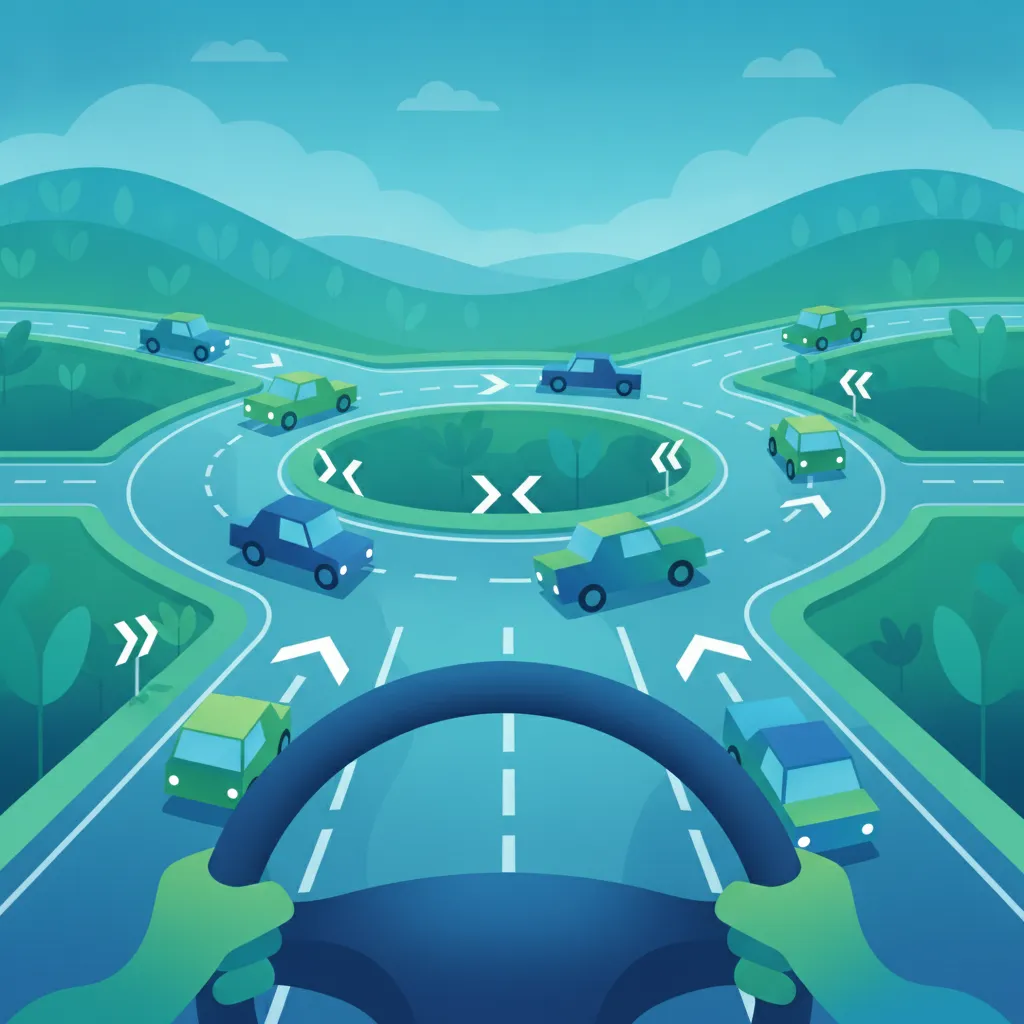
This lesson tackles the complexities of large roundabouts, which often have multiple lanes and exits. It stresses the importance of reading signs on the approach to select the correct lane for your destination. You will learn about maintaining lane discipline while on the roundabout and signalling correctly as you pass exits and prepare to leave.

This lesson addresses the unique challenges of operating a large goods vehicle in congested urban and city environments. It focuses on techniques for navigating narrow streets, making tight turns, and safely accessing delivery points while being highly aware of vulnerable road users like pedestrians and cyclists. The importance of exceptional observation, low-speed control, and clear communication with other road users is heavily emphasized to minimize risk in these complex settings.
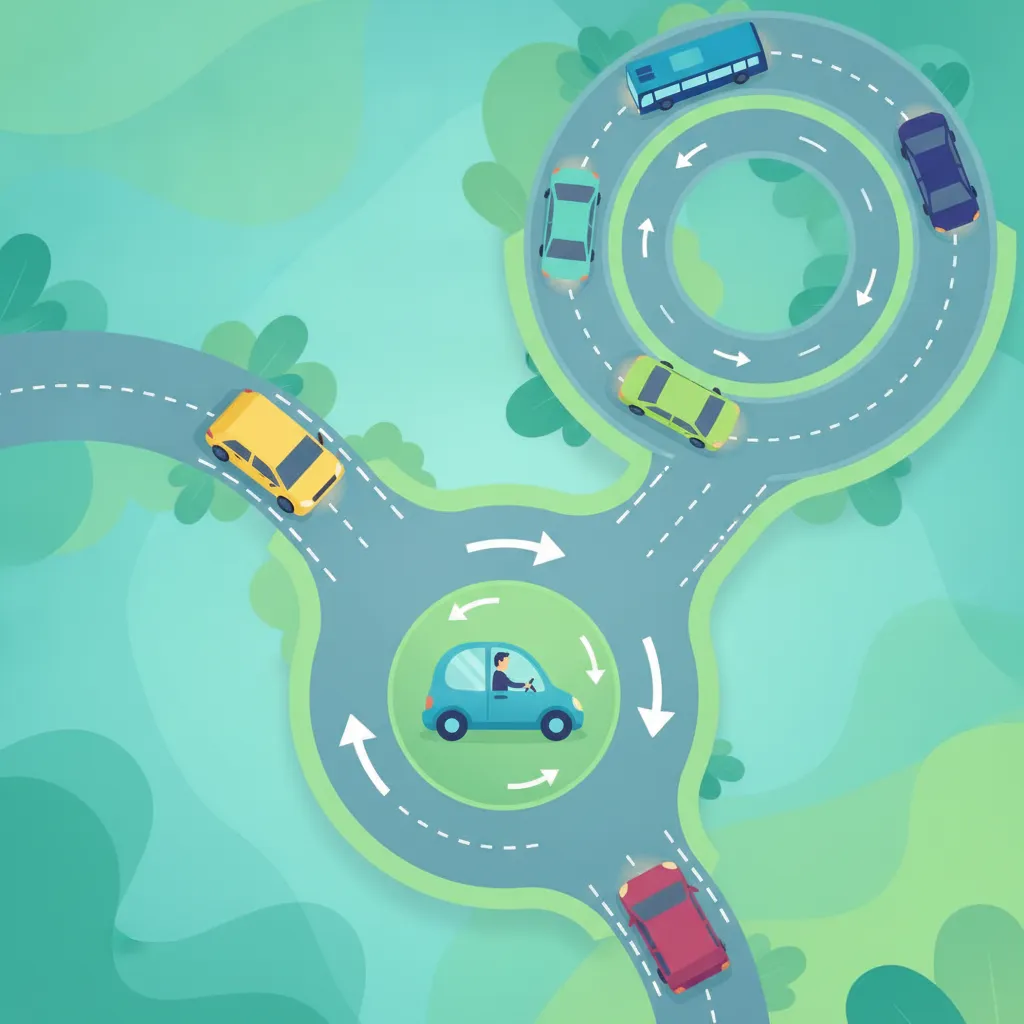
This lesson provides specific techniques for safely navigating the two main types of roundabouts in Great Britain. For multi-lane roundabouts, it covers how to choose the correct lane on approach, maintain your lane while circulating, and signal your exit correctly. It also explains the unique rules for mini-roundabouts, emphasizing the importance of giving way to traffic from the right and navigating them with caution due to their small size.

This lesson examines the physical space a goods vehicle occupies on the road and its impact on maneuvering at junctions, roundabouts, and in tight spaces. Learners will understand the concepts of tail swing and off-tracking, and how to calculate the necessary clearance for safe turns. The content emphasizes maintaining safe distances from other road users and infrastructure, which is a key component of professional spatial awareness and accident prevention.

This lesson focuses on the specific rules and best practices for driving HGVs on motorways in Great Britain. It covers mandatory speed limits for goods vehicles, lane discipline including restrictions on using the outside lane, and procedures for safely joining and leaving the motorway. The lesson also includes up-to-date information on driving on smart motorways, including understanding the signs and using emergency refuge areas correctly.
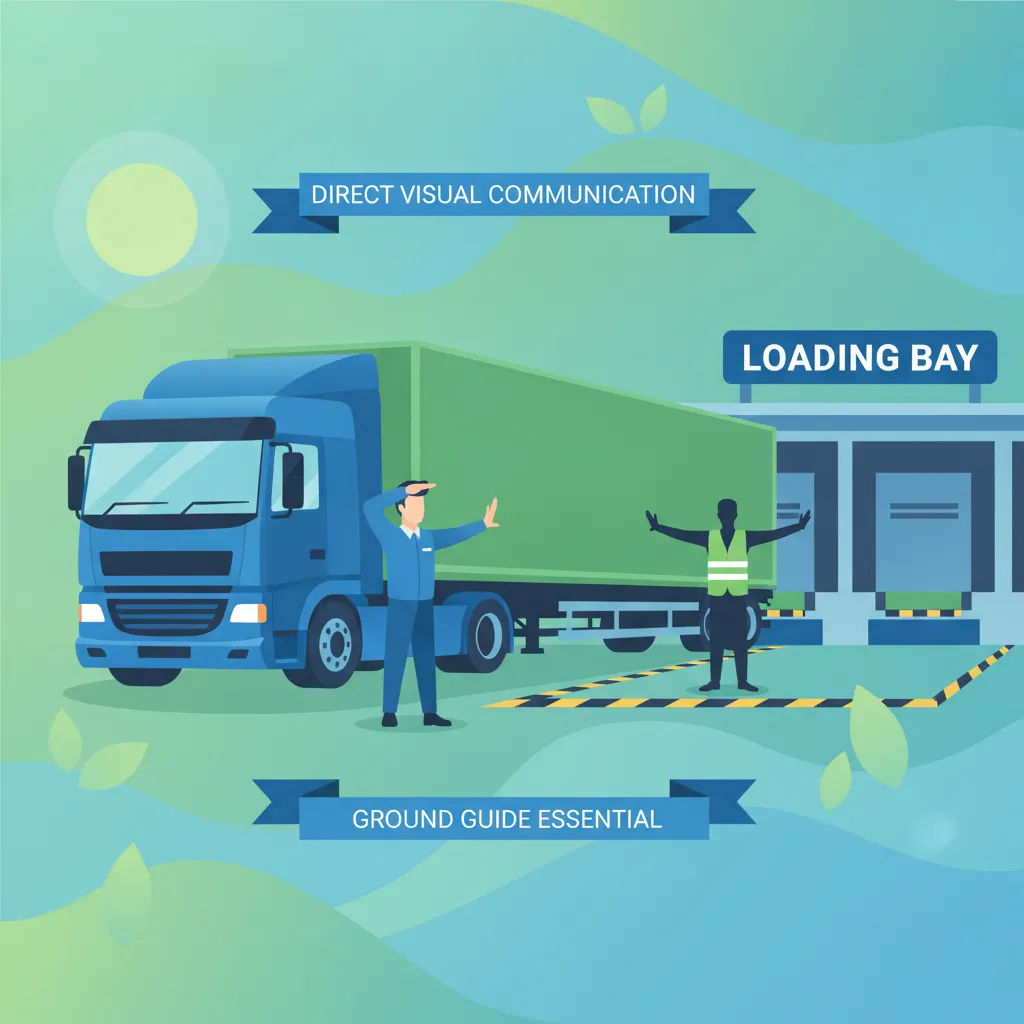
Reversing is one ofthe highest-risk maneuvers for an HGV driver. This lesson provides a structured guide to reversing safely, covering the 'get out and look' principle, effective use of all mirrors, and the use of reversing cameras and alarms. It stresses the importance of using a trained banksman (signaller) whenever possible, using agreed signals, and maintaining a slow, controlled speed throughout the maneuver to prevent accidents.

This lesson builds on basic skills to address complex manoeuvres in challenging, confined environments such as bus stations, depots, and service areas. It covers techniques for positioning the vehicle for bay parking and navigating tight, complex routes. Key focus areas include developing precise spatial awareness, using reference points, maintaining extremely slow and controlled movements, and performing continuous observation to navigate safely without causing damage or injury.

This lesson focuses on the importance of excellent lane discipline for drivers of large vehicles. It details the rules and best practices for lane selection on motorways and dual carriageways, emphasizing the need to stay in the appropriate lane and signal intentions early. Correct positioning within a lane to maximize safety margins and visibility, especially around vulnerable road users, is a key focus for maintaining professional driving standards.
Understand typical mistakes drivers make when turning large passenger vehicles, focusing on off-tracking and rear swing issues. Learn practical strategies to prevent collisions and ensure safe manoeuvring based on UK driving theory.
This lesson explains the dynamics of turning a long vehicle, focusing on the concepts of off-tracking, where the rear wheels follow a tighter path than the front wheels, and tail swing. You will learn the correct road positioning on approach to junctions and roundabouts to safely clear obstacles and avoid mounting kerbs or striking street furniture. Managing speed and using mirrors effectively throughout the turn are emphasized as crucial safety techniques.

Reversing a large passenger vehicle is a high-risk manoeuvre, and this lesson provides essential safety protocols. It covers the importance of using a trained banksman or reversing assistant and understanding standard hand signals. The lesson also discusses the use of technical aids like reversing cameras and audible warnings. Learners will master the procedure for conducting a full 360-degree safety check before beginning and maintaining slow, controlled movement throughout the manoeuvre.

This lesson explores how to maintain safe following distances specific to large passenger vehicles, accounting for their higher inertia and longer braking distances. It covers time-gap calculations, such as the four-second rule, and dynamic following distance adjustments based on speed and road conditions. Emphasis is placed on avoiding tailgating, ensuring a sufficient safety buffer is always present, and developing an awareness of convoy driving scenarios where multiple large vehicles are present.
This lesson addresses the unique challenges of driving a large vehicle on rural roads. It provides techniques for positioning the vehicle through sharp bends and on narrow lanes, and for safely navigating unmarked or uncontrolled junctions. Learners will be taught to anticipate hidden hazards common in the countryside, such as slow-moving farm vehicles, animals on the road, and concealed entrances. The correct use of passing places and strategies for meeting oncoming traffic are also covered.

This lesson explores how a passenger vehicle’s physical dimensions and weight influence its dynamic stability, handling, and manoeuvring capabilities. It covers the impact of length, width, wheelbase, and turning radius on cornering and route choice. The content also examines centre of gravity, load distribution, and the effects of inertia that influence braking and acceleration, which are essential concepts for safe operation in confined urban environments and at tight junctions.
This lesson addresses the unique challenges of operating a large goods vehicle in congested urban and city environments. It focuses on techniques for navigating narrow streets, making tight turns, and safely accessing delivery points while being highly aware of vulnerable road users like pedestrians and cyclists. The importance of exceptional observation, low-speed control, and clear communication with other road users is heavily emphasized to minimize risk in these complex settings.
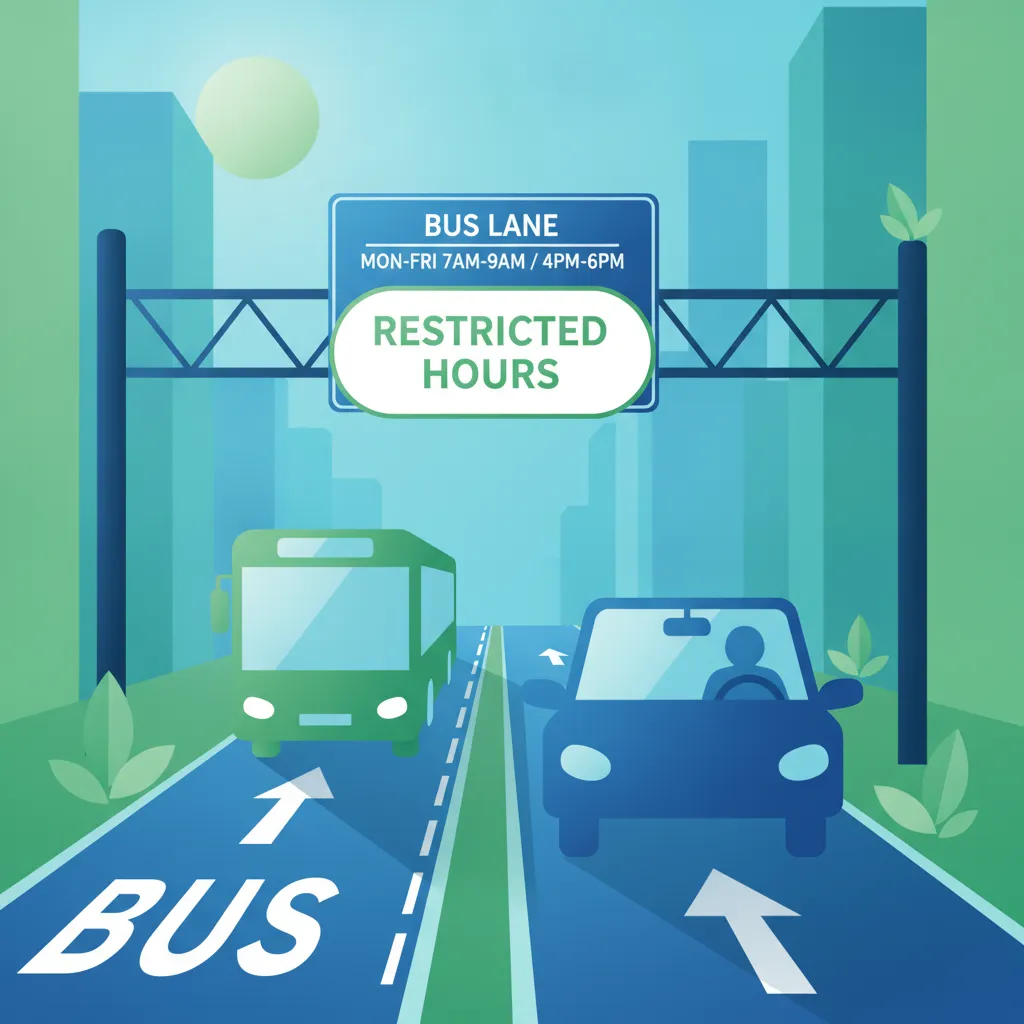
This lesson covers the importance of maintaining correct lane discipline when driving a large passenger vehicle. It details how to position your vehicle safely within a lane on various road types, including multi-lane carriageways and motorways. You will learn the specific rules governing bus lanes, including how to interpret markings, adhere to operating times, and understand the exemptions and penalties associated with their use to ensure legal and efficient driving.

This lesson explains how to adapt your driving around different vehicles. You will learn to look out for motorcyclists, who are often hard to see, especially at junctions. It also covers the challenges of sharing the road with large vehicles, such as their extended blind spots, wider turning circles, and the wind turbulence they can create.
This lesson focuses on the critical skill of managing the large blind spots inherent to buses and coaches. It details the purpose of different mirror classes (e.g., wide-angle and kerb-view) and how to use them effectively. Learners will develop a systematic scanning and mirror-checking routine to maintain constant awareness of their surroundings, particularly looking for cyclists and pedestrians who may be hidden from direct view, thereby minimizing the risk of a collision.

This lesson focuses on the critical skill of positioning your AM vehicle safely in relation to larger vehicles and roadside hazards like parked cars. You will learn to identify and stay out of the extensive blind spots of lorries and buses, especially at junctions. The content also provides strategies for maintaining a safe 'space cushion' around your vehicle and navigating narrow gaps or filtering in traffic without compromising your safety.
Find clear answers to common questions learners have about Turning Techniques for Large Vehicles. Learn how the lesson is structured, which driving theory objectives it supports, and how it fits into the overall learning path of units and curriculum progression in Great Britain. These explanations help you understand key concepts, lesson flow, and exam focused study goals.
Off-tracking occurs when the rear wheels of a long vehicle take a shorter, tighter path than the front wheels during a turn. As a bus driver, you must account for this to avoid mounting the kerb or hitting signs on the inside of the turn.
Rear swing happens when the back of the vehicle swings outward from the path of the front wheels when you turn. This is particularly dangerous for nearby pedestrians or traffic in adjacent lanes, as they may not expect the vehicle to move that way.
You should generally maintain a wide approach to ensure your rear wheels clear the corner without mounting the kerb. Constantly check your mirrors for cyclists and pedestrians, as they are most vulnerable to your vehicle's turning arc.
The theory test includes scenario-based questions about large vehicle handling. By understanding these dynamics, you will be able to visualize the traffic situations described in the exam and choose the safest, most correct course of action for a PCV driver.
Dive into our comprehensive question bank to find exactly what you need for your Great Britain theory test. Use our advanced filters to pinpoint specific subjects or test your knowledge on challenging areas, ensuring you're fully prepared for success.