
Ensuring your vehicle is roadworthy is a fundamental part of safe driving and a key topic for the Austrian driving theory exam. This unit covers essential pre-drive checks, the legal requirements for tyres and lighting, the function of critical safety systems like ABS and ESP, and the correct methods for securing cargo, roof loads, and trailers. Master these concepts to drive safely and confidently in Austria.
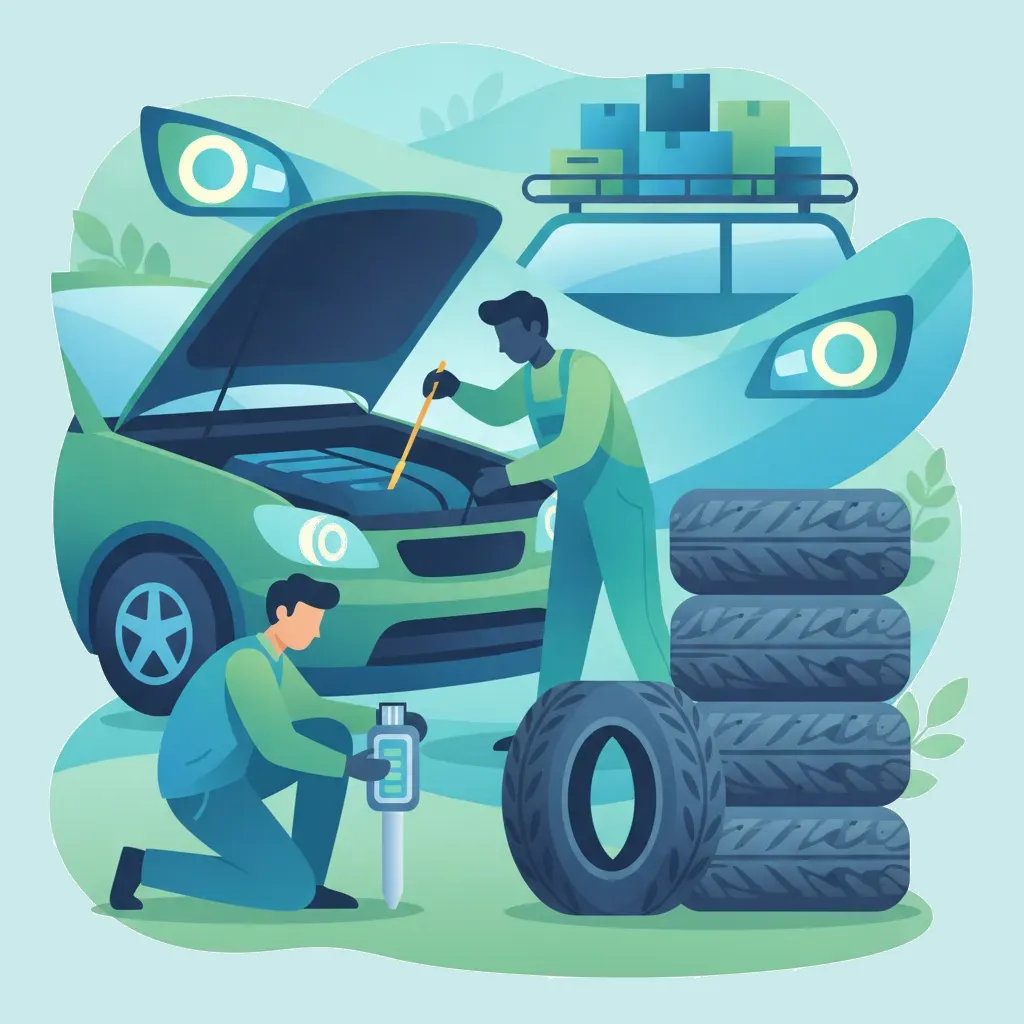
Browse all lessons that make up Vehicle Condition, Safety Systems, Tyres, Lights and Loads. Each lesson focuses on specific topics, learning objectives, and core concepts, helping you build essential knowledge and follow a clear, structured progression toward your study goals in Austria.
This lesson introduces the fundamentals of regular vehicle inspection and preventive maintenance. Learners will understand how to perform essential pre-drive checks, including verifying fluid levels (oil, coolant, washer fluid), testing brakes, and checking the responsiveness of the steering. Adhering to a basic maintenance schedule is presented as a critical habit for ensuring long-term vehicle safety and roadworthiness, helping to prevent mechanical failures.
This lesson details the critical role tyres play in vehicle safety, focusing on Austrian regulations for seasonal use. Learners will understand the mandatory period for winter tyres, the legal minimum for tread depth, and the importance of maintaining correct tyre pressure for optimal grip and fuel efficiency. The content explains how tyre condition directly affects braking distance and the risk of aquaplaning, making it a key safety component.
This lesson covers the proper and legal use of a vehicle's entire lighting system to see and be seen. It explains the regulations for using headlights, including daytime running lights, and the specific conditions under which fog lights and high beams are permitted. Correct use of turn signals and brake lights is also emphasized as essential for communicating intentions to other drivers and ensuring safety in all visibility conditions.
This lesson provides an overview of the modern active and passive safety systems found in vehicles. It explains the function of technologies like the Anti-lock Braking System (ABS), Electronic Stability Program (ESP), and airbags, clarifying how they assist the driver in emergency situations. Learners will also gain an awareness of other driver assistance systems, such as collision warnings and lane departure alerts, and understand their role in preventing accidents.
This lesson explains the critical importance of properly securing any load, whether inside the vehicle, on a roof rack, or in a trailer. It covers the principles of correct weight distribution to maintain the vehicle's center of gravity and stability. Learners will understand the legal requirements and best practices for using tie-downs and other securing methods to prevent items from shifting or falling, which could create a serious hazard on the road.
Explore high-intent keywords and long-tail search topics learners use when researching Vehicle Condition, Safety Systems, Tyres, Lights and Loads. These terms reflect how people search for reliable study materials, structured explanations, and unit-level theory preparation support in Austria.
Find clear answers to the most common questions learners ask about Vehicle Condition, Safety Systems, Tyres, Lights and Loads. Understand how the unit is organized, what learning goals it supports, and how it contributes to your study progression with structured explanations and practical guidance tailored for learners in Austria.
In Austria, for Category B vehicles, tyres must have a minimum tread depth of 1.6 mm. However, it is strongly recommended to have at least 4 mm for summer tyres and 5 mm for winter tyres for optimal safety and performance. Seasonal tyre requirements (winter tyres) are mandatory during specific periods or under certain weather conditions.
Anti-lock Braking System (ABS) prevents the wheels from locking up during heavy braking, allowing the driver to maintain steering control. Electronic Stability Program (ESP) helps prevent skidding and loss of control by automatically applying brakes to individual wheels and reducing engine power when it detects a loss of traction. Both systems are crucial for safe driving, especially in challenging conditions, and understanding their function is tested in the Austrian theory exam.
Loads extending beyond the vehicle's contour must be marked to be visible. For loads projecting to the front or rear, they should not extend more than 1 meter beyond the vehicle's lights or the end of the vehicle, respectively. If the load significantly obstructs rear lights or indicators, additional lighting may be required on the load itself.
Ensuring all lights are functional is critical for visibility and communication with other road users. This includes headlights (low and high beam), taillights, brake lights, turn signals, and hazard lights. Malfunctioning lights can lead to dangerous misunderstandings, reduced visibility in adverse conditions, and penalties during traffic checks or the theory exam.
Yes, loads on roof racks must be securely fastened to prevent them from shifting or falling off. The total weight (including the roof rack) must not exceed the vehicle's specified roof load capacity. Ensure the load does not significantly increase the vehicle's height or width beyond legal limits and does not obstruct the driver's view.
Before driving, you should visually inspect your tyres for any signs of damage, such as cuts, bulges, or uneven wear. Check the tyre pressure to ensure it matches the manufacturer's recommendation (found in the vehicle's manual or on a sticker inside the door jamb) and verify that the tread depth meets the legal minimum of 1.6 mm.
All included lessons
Lessons in Vehicle Condition, Safety Systems, Tyres, Lights and Loads
See who benefits most from studying Vehicle Condition, Safety Systems, Tyres, Lights and Loads. This overview explains how the unit supports different learning needs, what level of knowledge is helpful before starting, and how it fits into the overall study path in Austria.
This unit is essential for all aspiring Category B drivers in Austria preparing for their theory exam. It is particularly beneficial for learners who may not have extensive experience with vehicle maintenance or who need a clear understanding of the legal specifications for tyres, lights, and load security as per Austrian regulations.

Ready to systematically master Austrian driving theory? Explore our diverse range of structured courses and find the perfect learning path for your license category. Start building your knowledge foundation and preparing confidently for your official driving theory exam in Austria.
Browse Theory CurriculumExplore all units and lessons included in this driving theory course.
Ready to systematically master Austrian driving theory? Explore our diverse range of structured courses and find the perfect learning path for your license category. Start building your knowledge foundation and preparing confidently for your official driving theory exam in Austria.
Browse Theory Curriculum