
This lesson explores the essential active and passive safety systems that make modern driving safer. You will learn how systems like ABS and ESP function to maintain control during emergencies and how driver assistance alerts help prevent common accidents on Austrian roads.

Lesson content overview
Modern vehicles are equipped with an array of sophisticated safety systems designed to protect occupants and assist drivers in avoiding accidents. These technologies are broadly categorized into active safety systems, which help prevent collisions, and passive safety systems, which minimize injury severity once a collision occurs. Understanding how these systems work, their capabilities, and their limitations is crucial for every driver seeking an Austrian Category B driving license.
This lesson explores key safety technologies such as the Anti-lock Braking System (ABS), Electronic Stability Program (ESP), and various airbag systems, along with advanced driver assistance alerts. We will clarify their functions, practical implications for driving, and the legal obligations associated with their maintenance and use under Austrian traffic law (StVO).
Vehicle safety systems are constantly evolving, providing drivers with enhanced protection and assistance. It is essential to distinguish between the two main types: active and passive safety. This distinction helps drivers appreciate the multifaceted approach to vehicle safety and how various systems work together.
Active safety systems are technologies designed to help the driver prevent accidents from happening in the first place. They monitor driving conditions and vehicle dynamics, intervening automatically when a loss of control is imminent or when a potential hazard is detected. Their primary goal is to reduce the risk of a collision by helping the driver maintain control of the vehicle. Examples include the Anti-lock Braking System (ABS) and the Electronic Stability Program (ESP).
Passive safety systems are features built into the vehicle to protect occupants during and immediately after a collision. Unlike active systems that try to avoid the crash, passive systems aim to minimize the severity of injuries once an impact has occurred. These systems deploy or activate almost instantaneously upon detecting a collision to absorb impact energy and cushion occupants. The most prominent examples are airbags and seatbelt pretensioners.
System redundancy is a core principle in modern vehicle safety. This means multiple layers of protection are present, providing backup if one system fails or if a situation overwhelms a single system. This layered approach ensures comprehensive safety.
The Anti-lock Braking System (ABS) is a cornerstone of active safety, significantly improving vehicle control during emergency braking maneuvers. It is an electronic system that monitors wheel speed and prevents individual wheels from locking up, especially on slippery surfaces.
When a driver applies the brakes suddenly or with excessive force, especially on low-friction surfaces like wet or icy roads, the wheels can lock up. A locked wheel stops rotating but the vehicle continues to slide, resulting in a loss of steering control and an increased stopping distance. ABS counters this by rapidly modulating the brake pressure to each wheel.
An electronic system that prevents wheels from locking up during emergency braking by rapidly releasing and reapplying brake pressure, allowing the driver to maintain steering control.
Sensors at each wheel continuously measure rotational speed. If a sensor detects that a wheel is about to lock up (its rotation speed drops sharply compared to other wheels or the vehicle's speed), the ABS control unit momentarily reduces the hydraulic pressure to that wheel's brake caliper. As soon as the wheel regains traction and starts rotating again, full brake pressure is reapplied. This process happens many times per second, effectively 'pumping' the brakes much faster than a human driver ever could.
When ABS activates during hard braking, drivers will typically feel a pulsation or vibration in the brake pedal. This is a normal function of the system rapidly engaging and disengaging the brakes and should not alarm the driver. It is crucial to maintain steady, firm pressure on the brake pedal throughout the emergency braking maneuver, resisting the urge to release the pedal because of the pulsation.
During ABS activation, the pulsating brake pedal allows you to retain steering control. You can (and should) steer around an obstacle while braking hard, which is impossible with locked wheels.
While ABS significantly enhances safety by preserving steering control, it does not always reduce the stopping distance. On loose surfaces like gravel or fresh snow, locked wheels might 'plow' into the material and actually stop faster than wheels with ABS. However, on most road surfaces, ABS either maintains or slightly reduces stopping distances while crucially ensuring the vehicle remains steerable.
For vehicles equipped with ABS, the system must be fully functional. A warning light on the dashboard, typically labeled "ABS," will illuminate if there is a malfunction. Driving with a faulty ABS system can increase accident risk and may lead to issues during mandatory vehicle inspections in Austria (e.g., TÜV/AU). Tampering with ABS sensors or disabling the system is illegal and compromises vehicle safety.
The Electronic Stability Program (ESP), also often referred to as Electronic Stability Control (ESC) in other regions, is an advanced active safety system that works in conjunction with ABS to prevent skidding and maintain vehicle stability. It is particularly effective in correcting oversteer and understeer conditions.
ESP continuously monitors the vehicle's trajectory and compares it with the driver's intended path, which is inferred from the steering wheel angle, accelerator position, and brake pedal input. It uses sensors to detect if the vehicle is losing traction and starting to skid. Key sensors include:
If ESP detects a discrepancy between the driver's input and the vehicle's actual movement (e.g., the car is turning less than intended, indicating understeer, or turning more sharply, indicating oversteer), it intervenes. It does this by selectively applying the brakes to individual wheels and/or reducing engine torque. This creates a counter-force that helps to steer the vehicle back onto its intended path.
An active safety system that enhances vehicle stability by detecting and reducing skidding (understeer or oversteer) through selective braking and engine torque reduction.
Most vehicles with ESP include a button or menu option to temporarily deactivate the system. This might be useful in very specific situations, such as driving with snow chains, driving off-road in deep sand or mud, or attempting to get unstuck from snow, where some wheel spin is necessary. However, under normal driving conditions, ESP should always remain active. Driving with ESP deactivated significantly increases the risk of losing control, especially in emergency maneuvers or on slippery roads. It is generally prohibited to deactivate ESP for everyday driving in Austria if the vehicle is factory-equipped with it. If an ESP warning light appears on your dashboard, it indicates a malfunction that needs prompt attention from a mechanic.
Airbags are vital passive safety devices that work in conjunction with seatbelts to protect occupants during a collision. They are designed to inflate rapidly upon impact, creating a cushion between the occupant and the vehicle's interior surfaces, thereby absorbing kinetic energy and reducing the risk of severe injury.
Modern vehicles can be equipped with numerous airbags, strategically placed throughout the cabin to offer comprehensive protection:
A passive safety device that inflates rapidly during a collision to cushion vehicle occupants and minimize injury severity.
It is critical to understand that airbags are supplemental restraint systems and are designed to work only when seatbelts are worn correctly. An airbag deploys with considerable force and speed. If an occupant is not wearing a seatbelt, or is wearing it incorrectly, they may be too close to the deploying airbag, leading to severe injury or even fatality, rather than protection. The seatbelt's role is to restrain the occupant and position them correctly for the airbag to be effective.
Never rely solely on airbags for protection. Always wear your seatbelt correctly. Airbags are designed to work in conjunction with seatbelts, not as a replacement.
Closely related to airbags are seatbelt pretensioners. These devices instantly tighten the seatbelt webbing in the event of a collision, removing any slack and firmly pulling the occupant back into the seat. This action helps to maximize the effectiveness of both the seatbelt and the deploying airbags by ensuring the occupant is in the optimal position to receive their protection.
Like ABS and ESP, airbag systems also have dashboard warning lights. An illuminated airbag warning light indicates a malfunction that must be addressed immediately. A faulty airbag system means that the airbags might not deploy in an accident, or they might deploy improperly, significantly compromising occupant safety. Tampering with airbag systems or sensors is strictly prohibited and highly dangerous. Child seats should never be placed in front of an active passenger frontal airbag; if necessary, the passenger airbag must be deactivated.
Beyond the core active and passive safety systems, modern vehicles increasingly incorporate driver assistance alerts. These sensor-based warning systems are designed to enhance a driver's situational awareness and provide timely warnings of potential hazards, giving the driver more time to react and take corrective action.
Forward Collision Warning (FCW) systems use radar, cameras, or lidar sensors to monitor the road ahead. If the system detects a rapidly approaching vehicle or an obstacle in the path that could lead to a frontal collision, it issues an alert to the driver. These alerts can be visual (flashing lights on the dashboard or windshield), auditory (beeps or chimes), or haptic (vibrations in the steering wheel or seat). Some advanced systems may even pre-charge the brakes or apply light braking to help reduce impact speed if the driver does not react.
Lane Departure Warning (LDW) systems use cameras to monitor the vehicle's position within its lane markings. If the system detects that the vehicle is drifting out of its lane unintentionally (i.e., without the turn signal being activated), it provides a warning to the driver. This warning is typically visual and/or auditory, and some systems may also include haptic feedback like steering wheel vibrations. This system is especially helpful on motorways or rural roads where driver fatigue can lead to unintentional lane departures.
It is crucial for drivers to understand that driver assistance alerts are assistance systems, not autonomous driving features. They are designed to aid the driver, not replace their observation, judgment, or responsibility. These systems can have limitations:
Drivers must remain vigilant, always checking mirrors and surroundings manually, and being prepared to take full control. Over-reliance on these systems can lead to reduced vigilance and increase accident risk.
In Austria, the functionality of vehicle safety systems is not merely a matter of personal preference but a legal requirement under the Road Traffic Act (StVO) and associated regulations. Ensuring these systems are operational is part of a driver's and vehicle owner's responsibility.
Many active and passive safety systems, such as ABS and frontal airbags, are mandatory equipment for new passenger cars sold in the EU, including Austria. Once installed, these systems must remain fully functional.
Disabling or tampering with mandatory safety systems like ABS or ESP is illegal and can lead to severe penalties, including fines and potential impoundment of the vehicle, as it renders the vehicle unsafe for public roads.
During regular technical inspections (e.g., the "Pickerl" inspection according to § 57a KFG 1967 in Austria), the functionality of these safety systems is thoroughly checked. This includes verifying that there are no active warning lights for ABS, ESP, or airbags, and inspecting associated components like sensors and wiring.
Modern vehicles use dashboard warning lights to indicate system status. Familiarize yourself with these symbols:
If any of these critical safety system warning lights illuminate while driving, it signifies a malfunction. You should have your vehicle inspected by a qualified mechanic as soon as possible. Continuing to drive with a known safety system fault significantly compromises your safety and could lead to the vehicle being deemed unroadworthy.
The effectiveness and intervention thresholds of vehicle safety systems are highly dependent on external conditions and the vehicle's state. Drivers must understand these variations to anticipate system behavior and adjust their driving accordingly.
The weight and distribution of a vehicle's load significantly impact its dynamics, affecting how safety systems perform.
Even with sophisticated safety systems, fundamental safe driving practices remain paramount. Adjusting speed for conditions, maintaining safe following distances, and smooth steering inputs are always the best defense against accidents.
Despite the advancements in vehicle safety technology, a number of misunderstandings persist, leading to potentially dangerous driving behaviors. It is crucial to dispel these myths and emphasize driver responsibility.
Understanding modern vehicle safety systems is a fundamental part of obtaining your Austrian Category B driving license and becoming a responsible driver. These systems are designed to work together, providing multiple layers of protection.
Modern vehicles combine active safety systems like ABS and ESP, which prevent accidents by maintaining control during emergency braking and correcting skids, with passive systems like airbags and seatbelt pretensioners that protect occupants during collisions. Understanding how these systems function is essential for the Austrian Category B theory exam and for driving safely. While driver assistance alerts enhance situational awareness through collision warnings and lane departure alerts, they are assistance tools only and do not replace attentive driving. Austrian law requires all mandatory safety systems to remain functional, and their effectiveness varies with road conditions and vehicle load. The fundamental principle remains: these systems are aids that enhance safety but do not substitute for careful, responsible driving.
A short set of high-value points that capture the most important learning from this lesson.
Active safety systems (ABS, ESP) help prevent accidents by maintaining vehicle control, while passive systems (airbags, seatbelt pretensioners) minimize injury during a collision.
When ABS activates during emergency braking, maintain firm steady pressure on the brake pedal—the pulsation is normal and allows you to retain steering control.
ESP prevents both understeer and oversteer by selectively braking individual wheels and reducing engine torque to keep the vehicle on its intended path.
Airbags are supplemental restraints that only work effectively when seatbelts are worn correctly—an unbelted occupant can be seriously injured by a deploying airbag.
Driver assistance alerts (FCW, LDW, BSD) provide warnings but do not replace driver observation, judgment, or responsibility for safe vehicle operation.
Explore all units and lessons included in this driving theory course.
ABS prevents wheel lock-up to maintain steering; ESP corrects skidding by selectively braking wheels when it detects understeer or oversteer.
Airbags are supplemental to seatbelts—never a replacement. Always wear your seatbelt correctly regardless of airbag presence.
ESP should generally remain active; only deactivate it for specific situations like driving with snow chains.
In Austria, mandatory safety systems like ABS must be fully functional—tampering or disabling them is illegal under StVO.
System effectiveness varies with conditions: wet, icy, or snowy roads and heavy vehicle loads affect ABS, ESP, and driver assistance alerts.
Believing ABS means you can brake later and follow closer—ABS maintains steering control but does not significantly reduce stopping distances on all surfaces.
Thinking ESP makes the car invincible—ESP cannot overcome the laws of physics and has limits based on available tire grip.
Relying on airbags instead of seatbelts—airbags can cause severe injury to unbelted occupants who are too close when they deploy.
Assuming driver assistance alerts handle everything—these systems have limitations in poor weather, may not detect all objects, and require driver intervention.
Disabling ESP for sporty driving on public roads—deactivation removes critical stability control and greatly increases accident risk.
Lesson content overview
A short set of high-value points that capture the most important learning from this lesson.
Active safety systems (ABS, ESP) help prevent accidents by maintaining vehicle control, while passive systems (airbags, seatbelt pretensioners) minimize injury during a collision.
When ABS activates during emergency braking, maintain firm steady pressure on the brake pedal—the pulsation is normal and allows you to retain steering control.
ESP prevents both understeer and oversteer by selectively braking individual wheels and reducing engine torque to keep the vehicle on its intended path.
Airbags are supplemental restraints that only work effectively when seatbelts are worn correctly—an unbelted occupant can be seriously injured by a deploying airbag.
Driver assistance alerts (FCW, LDW, BSD) provide warnings but do not replace driver observation, judgment, or responsibility for safe vehicle operation.
Explore all units and lessons included in this driving theory course.
ABS prevents wheel lock-up to maintain steering; ESP corrects skidding by selectively braking wheels when it detects understeer or oversteer.
Airbags are supplemental to seatbelts—never a replacement. Always wear your seatbelt correctly regardless of airbag presence.
ESP should generally remain active; only deactivate it for specific situations like driving with snow chains.
In Austria, mandatory safety systems like ABS must be fully functional—tampering or disabling them is illegal under StVO.
System effectiveness varies with conditions: wet, icy, or snowy roads and heavy vehicle loads affect ABS, ESP, and driver assistance alerts.
Believing ABS means you can brake later and follow closer—ABS maintains steering control but does not significantly reduce stopping distances on all surfaces.
Thinking ESP makes the car invincible—ESP cannot overcome the laws of physics and has limits based on available tire grip.
Relying on airbags instead of seatbelts—airbags can cause severe injury to unbelted occupants who are too close when they deploy.
Assuming driver assistance alerts handle everything—these systems have limitations in poor weather, may not detect all objects, and require driver intervention.
Disabling ESP for sporty driving on public roads—deactivation removes critical stability control and greatly increases accident risk.
Explore search topics learners often look for when studying Safety Systems: ABS, ESP, Airbags, and Alerts. These topics reflect common questions about road rules, driving situations, safety guidance, and lesson level theory preparation for learners in Austria.
Browse additional driving theory lessons that cover connected traffic rules, road signs, and common driving situations related to this topic. Improve your understanding of how different rules interact across everyday traffic scenarios.
Understand the crucial difference between active safety systems like ABS and ESP, which prevent accidents, and passive safety systems like airbags, which protect occupants during a collision. Essential knowledge for Austrian driving theory.
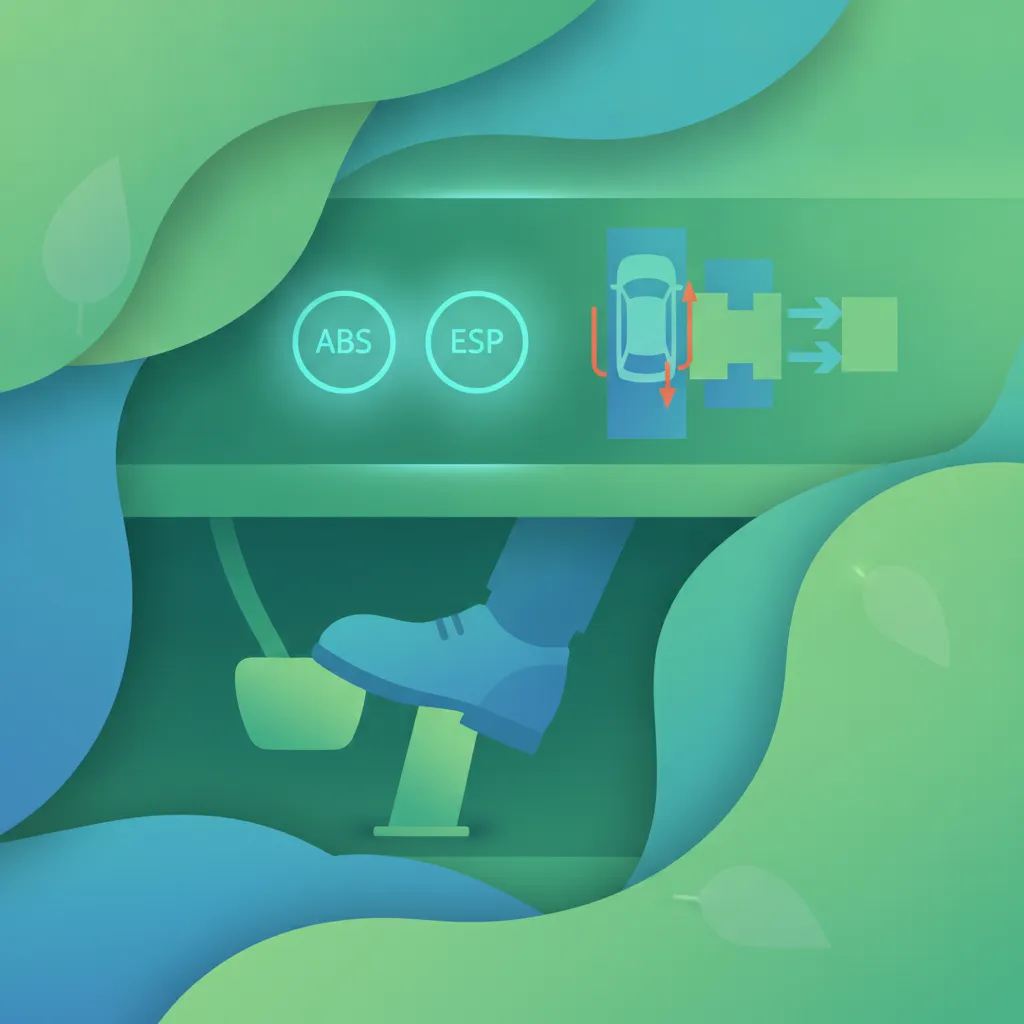
Modern passenger vehicles are equipped with advanced technology to improve safety. This lesson explains the function of systems like the Anti-lock Braking System (ABS) and Electronic Stability Program (ESP), detailing how they help prevent skidding and loss of control. It also provides an overview of other driver aids, such as retarders and engine brakes, which assist in managing speed on long descents.

This lesson focuses on the driver's legal and ethical responsibility for the safety of all passengers. It details the mandatory use of seatbelts for all occupants and provides a thorough explanation of Austrian regulations concerning child restraints. Learners will understand how to choose and correctly install the appropriate child seat based on a child's age, weight, and height, ensuring maximum protection in the event of a collision.

This lesson introduces the proactive mindset of defensive driving, which focuses on anticipating potential hazards rather than just reacting to them. It teaches techniques for systematic risk assessment, including scanning the road ahead, checking mirrors frequently, and being aware of the potential actions of other road users. By adopting these safe habits, drivers can create a buffer of safety around their vehicle and significantly reduce the likelihood of being involved in an accident.
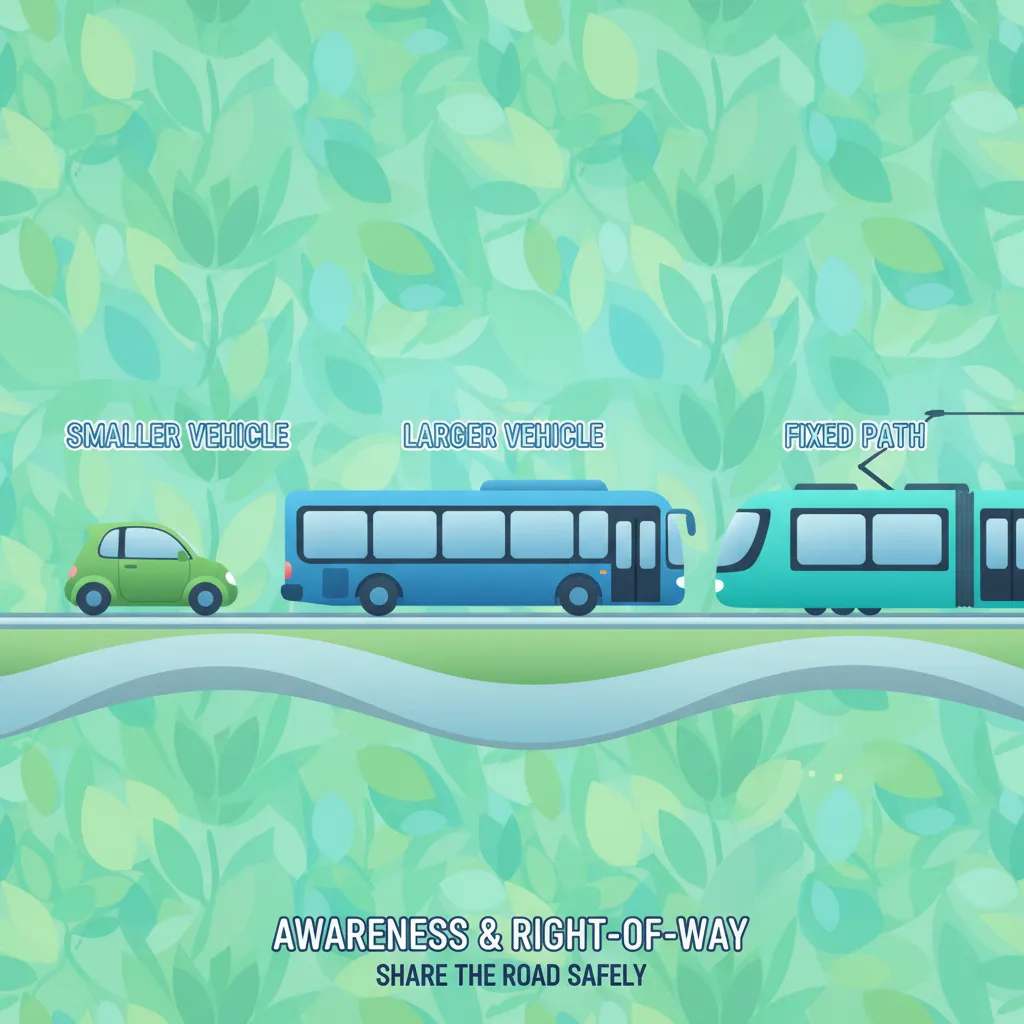
This lesson provides specific guidance for sharing the road with different types of vehicles in Austria. It covers the dangers of large vehicle blind spots, the rules for navigating near buses and dedicated tram tracks, and common conflict points at intersections. Understanding the behavior and limitations of other vehicles is key to safely navigating complex urban environments.

Transporting children carries the highest level of responsibility. This lesson covers the specific Austrian rules for school buses, including the use of warning signs and lights. It focuses on developing a mindset of extreme caution, anticipating that children may run into the road unexpectedly, and managing the chaotic traffic environment often found around schools during drop-off and pick-up times.
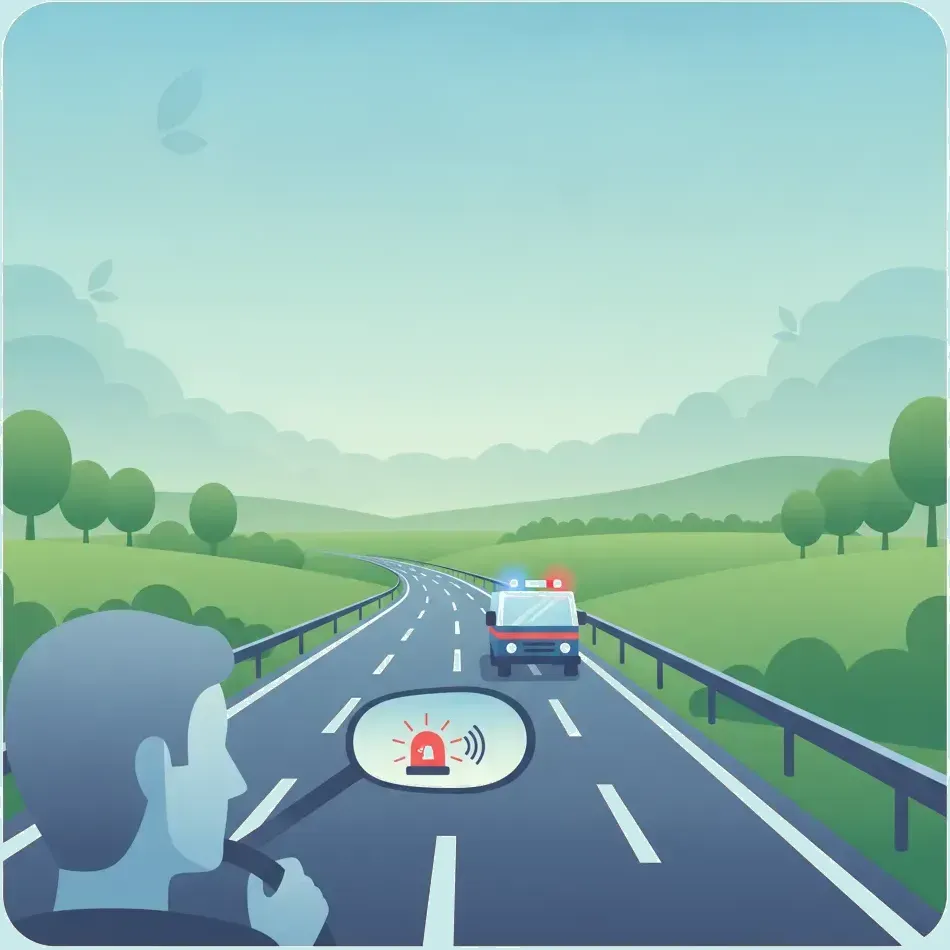
This lesson explains the correct protocol when encountering emergency vehicles with active sirens and lights. It details the legal requirement to yield the right-of-way and provides practical guidance on how to pull over safely and efficiently. Understanding these procedures helps ensure emergency services can reach their destination without delay.

This lesson introduces the fundamentals of regular vehicle inspection and preventive maintenance. Learners will understand how to perform essential pre-drive checks, including verifying fluid levels (oil, coolant, washer fluid), testing brakes, and checking the responsiveness of the steering. Adhering to a basic maintenance schedule is presented as a critical habit for ensuring long-term vehicle safety and roadworthiness, helping to prevent mechanical failures.

This lesson focuses on the critical skill of sharing the road safely with vulnerable users, such as pedestrians, cyclists, and e-scooter riders. It details the legally required distance buffers for overtaking and emphasizes heightened awareness in sensitive areas like school zones and designated pedestrian crossings. The content provides guidelines for interacting with bicycle lanes and shared spaces to foster a protective and respectful driving attitude towards those most at risk.

This lesson provides a step-by-step guide for safely managing a vehicle breakdown on the road. It covers the correct procedure for pulling over to a safe location, activating hazard lights, and wearing a high-visibility vest. Learners will understand the legal requirement and correct placement of the warning triangle to alert oncoming traffic, as well as the necessary information to provide when contacting roadside assistance services.

This lesson provides advanced strategies for proactively managing interactions with vulnerable road users to prevent conflicts before they arise. It teaches drivers to predict the likely behavior of pedestrians, cyclists, and e-scooter riders, especially at intersections and in congested areas. Key techniques include maintaining larger safety distances, covering the brake, and making eye contact to ensure mutual awareness and avoid accidents.
Learn about driver assistance systems like Forward Collision Warning (FCW) and Lane Departure Warning (LDW). Understand their function, limitations, and how they interact with Austrian traffic conditions and driver responsibility.

This lesson focuses on warning signs, which are designed to alert drivers to potential hazards ahead. Learners will explore the meanings of signs indicating sharp curves, changes in road surface, potential animal crossings, and upcoming construction zones. The content explains how the characteristic triangular shape and symbols convey specific dangers, enabling drivers to anticipate conditions and adjust their speed and attention accordingly.
This lesson introduces the proactive mindset of defensive driving, which focuses on anticipating potential hazards rather than just reacting to them. It teaches techniques for systematic risk assessment, including scanning the road ahead, checking mirrors frequently, and being aware of the potential actions of other road users. By adopting these safe habits, drivers can create a buffer of safety around their vehicle and significantly reduce the likelihood of being involved in an accident.
Modern passenger vehicles are equipped with advanced technology to improve safety. This lesson explains the function of systems like the Anti-lock Braking System (ABS) and Electronic Stability Program (ESP), detailing how they help prevent skidding and loss of control. It also provides an overview of other driver aids, such as retarders and engine brakes, which assist in managing speed on long descents.

This lesson focuses on the critical role of mirrors, cameras, and other electronic aids in minimizing blind spots around a large vehicle. It provides guidance on how to properly adjust mirrors to maximize visibility. Effective use of these systems is vital for detecting smaller vehicles, cyclists, and pedestrians, especially during manoeuvres.

This lesson explores the specific characteristics and hazards of rural roads (Landstraßen). It emphasizes the need for careful speed adjustment due to factors like narrow lanes, poor road surfaces, and hidden entrances. Learners will understand how to safely navigate blind curves, use passing places, and anticipate the presence of slow-moving agricultural vehicles or livestock on the road.

This lesson focuses on developing comprehensive observation skills, which are the foundation of safe driving. It teaches systematic scanning techniques, including the correct sequence for mirror checks and the critical importance of the shoulder check (Schulterblick) to cover blind spots. Learners will understand how to look far ahead down the road while also maintaining awareness of their immediate surroundings to detect potential hazards as early as possible.
This lesson provides advanced strategies for proactively managing interactions with vulnerable road users to prevent conflicts before they arise. It teaches drivers to predict the likely behavior of pedestrians, cyclists, and e-scooter riders, especially at intersections and in congested areas. Key techniques include maintaining larger safety distances, covering the brake, and making eye contact to ensure mutual awareness and avoid accidents.

This lesson reinforces the critical importance of protecting vulnerable road users in dense urban settings. It teaches drivers to be hyper-aware of pedestrians and cyclists, especially near intersections and crosswalks. Key techniques include reducing speed, making eye contact to confirm intentions, and giving ample space.

Rural Austrian roads present unique challenges, including lack of markings, tight spaces, and slow-moving agricultural vehicles. This lesson teaches how to read the road ahead, anticipate hazards around blind bends, and use passing places effectively when meeting other large vehicles. It emphasizes adjusting speed to suit the limited visibility and variable road conditions.
Find clear answers to common questions learners have about Safety Systems: ABS, ESP, Airbags, and Alerts. Learn how the lesson is structured, which driving theory objectives it supports, and how it fits into the overall learning path of units and curriculum progression in Austria. These explanations help you understand key concepts, lesson flow, and exam focused study goals.
Not necessarily. ABS prevents wheels from locking during hard braking, which allows you to steer while braking. On loose surfaces like deep snow or gravel, a locked wheel can sometimes dig in and stop shorter, but ABS is safer because it maintains steering control.
The Electronic Stability Program (ESP) monitors the vehicle's direction and steering angle. If it detects a loss of control, such as a skid, it automatically applies the brakes to individual wheels to help steer the car back on the intended path.
No. Airbags are classified as passive safety systems designed to work specifically in conjunction with seatbelts. Without a seatbelt, an airbag can cause serious injuries because the passenger is not properly positioned during deployment.
If a warning light for a system like ABS or ESP stays illuminated while driving, it indicates a fault. You should drive with extra caution and have the vehicle inspected by a qualified professional as soon as possible, as these systems may not function in an emergency.
Refine your study plan by searching for specific Austrian driving theory practice sets. Pinpoint questions related to particular road rules, signs, or challenge levels, and begin practicing immediately to reinforce your knowledge and excel in your official exam with confidence. Get started with focused revision today.