
This lesson guides you through the triangular warning signs in the French Code de la route, which are vital for identifying hazards ahead. You will learn to interpret these signs specifically for motorcycle safety, ensuring you can adjust your speed, braking, and lane position effectively. This knowledge is a fundamental part of mastering the road environment as you prepare for your A1, A2, or Category A theory exam.

Lesson content overview
Navigating the road on two wheels requires an exceptional level of situational awareness. While a car driver might perceive a warning sign as a minor advisory, a motorcyclist must treat it as an urgent instruction to alter their physical riding state. Because motorcycles rely on a tiny contact patch—no larger than the size of a credit card per tire—and require active balance, any sudden change in road surface, geometry, or environment can instantly compromise stability.
For candidates preparing for the French Motorcycle Theory Examination (Épreuve Théorique Moto or ETM) for Category A, A1, and A2 licenses, mastering the warnings of the Code de la route is not just about passing a test. It is about translating visual cues into proactive physical adjustments—such as modifying your entry speed, adapting your lean angle, and selecting the optimal road trajectory before the hazard is reached.
In France, warning signs are designed to capture your attention and allow you to anticipate hazards well in advance. Under the Code de la route, these signs have distinct visual characteristics and strict placement rules that you must memorize.
Unlike regulatory signs (which apply immediately at the point of the sign), warning signs are placed well ahead of the hazard to give drivers and riders time to react.
Standard Placement Distances in France:
If a supplementary rectangular plate (panonceau) is mounted directly beneath the triangle, it modifies these standard rules:
To understand why these signs require specific motorcycle strategies, you must understand the physics of a motorcycle in motion. The relationship between your tires and the road is governed by the traction circle (or friction circle). Your tires have a limited amount of total grip available. This grip must be shared between:
If you use 90% of your available traction to lean through a sharp corner, you only have 10% left for braking. If you hit a patch of loose gravel or wet pavement while leaning, the total available traction drops instantly, causing the tire to exceed its grip limit, resulting in a low-side or high-side crash.
[Visual Identification of Warning Sign]
               │
               ▼
   [Proactive Hazard Anticipation]
               │
               ▼
┌──────────────────────┴──────────────────────┐
▼                                             ▼
[Grip & Speed Management]        [Space & Trajectory Positioning]
- Decelerate before entry        - Select "Safety Trajectory"
- Progressive, upright braking   - Avoid low-grip zones (lines, debris)
- Smooth throttle modulation     - Maximize visibility margins
Certain warning signs represent extreme hazards for two-wheeled vehicles. Let's analyze these signs, their physical implications, and the precise riding techniques required to navigate them safely.
A sharp curve sign indicates a bend with a small radius (typically under 150 metres) that cannot be safely negotiated at standard cruising speeds.
Excessive speed entering a curve forces you to lean the motorcycle further. If the lean angle becomes too steep, physical components (like footpegs or stands) may scrape the ground, lifting the tires and causing a crash. Furthermore, entering too fast often causes riders to panic, freeze, look at the guardrail (target fixation), and run wide into oncoming traffic.
To safely negotiate a curve, French licensing standards mandate the use of the safety trajectory:
This sign warns of a section of road where the pavement composition, environmental factors, or frequent moisture accumulation drastically reduces tire-to-road friction.
On wet or slippery surfaces, your available grip can drop by 50% or more. Common road features like white painted lines, pedestrian crossings, expansion joints on bridges, and manhole covers turn into frictionless hazards.
Often found near construction zones, rural roads, or areas with deteriorated pavement, this sign warns of loose stones and surface debris.
Loose gravel acts like miniature ball bearings under a motorcycle's tires, completely destroying traction. Additionally, gravel can be kicked up by leading vehicles, presenting a severe risk to your visor, face, and motorcycle bodywork.
Temporary warning signs feature a yellow background. They often warn of active construction zones, temporary lane reconfigurations, or physical steel plates covering road excavations.
Roadworks mean unpredictable environments: unexpected dirt/mud tracked onto the road by heavy machinery, temporary metal plates (which are extremely slick when wet), and tight, redirected lanes outlined by temporary plastic cones or yellow painted lines.
Whether narrowing from both sides, the right side, or the left side, these signs warn of a reduction in the physical width of the roadway ahead.
Narrowing roads compress the space available for lateral safety margins. If you approach a narrow bridge or bottleneck at normal speed, you run the risk of being squeezed by oncoming trucks or wide vehicles that may cross over the center line.
These signs depict wild animals (like deer) or domestic farm animals (like cows) and are placed in rural, forested, or agricultural regions where animals frequently cross the roadway.
A collision with a large animal is catastrophic for a motorcyclist. Unlike cars, which protect occupants with a crumple zone, a motorcycle collision with a deer almost always results in a high-speed fall and severe impact.
To excel on the French ETM theory test and ride safely on public roads, you must connect the visual symbol of the warning sign to its physical safety justification:
| Warning Sign | Primary Hazard to Motorcycles | Core Technical Action Required |
|---|---|---|
| Sharp Curve (A1a/b) | Loss of lateral grip, running wide into oncoming traffic. | Apply Trajectoire de sécurité; complete all braking before entering the turn. |
| Slippery Surface (A3) | Instant loss of tire traction, wheel lock-up under braking. | Reduce speed; ride with a minimized lean angle; use highly progressive, smooth inputs. |
| Loose Gravel (A21) | Ball-bearing effect under tires, high risk of sliding. | Increase following distance; follow clean tire tracks; avoid abrupt throttle changes. |
| Roadworks (AK5) | Slippery metal plates, debris, lane changes. | Take a central lane position; cross metal plates upright at a 90-degree angle. |
| Narrowing Road (A2a/b) | Reduced lateral safety margin, oncoming vehicles crossing lines. | Reduce speed; assume a highly visible, dominant lane position; prepare to yield. |
| Animal Crossing (A15) | High-speed impact, unpredictable obstacles. | Scan shoulders and ditches; cover brakes at dusk/dawn; avoid panic swerves at speed. |
Follow this step-by-step mental and physical protocol every time you spot a triangular warning sign on French roads:
Identify and Classify: Spot the triangular sign. Determine if it is permanent (white background) or temporary (yellow background). Read any supplementary plates underneath to understand the distance or length of the hazard.
Assess the Distance: Remember your location. If you are in a town, you have approximately 50 metres before the hazard. On open rural roads or motorways, you have 150 metres. Start your mental preparation immediately.
Analyze the Motorcycle Hazard: Ask yourself: How will this affect my grip, my balance, my visibility, and my lane space? (e.g., A "Slippery Surface" sign means my grip will be heavily compromised if it starts raining).
Adjust Speed in a Straight Line: Roll off the throttle and apply your brakes progressively while the bike is completely vertical. Downshift to the appropriate gear so you have active engine braking and immediate throttle response when needed.
Select Your Trajectory: Shift your lane position to maximize your line of sight and avoid the worst of the physical hazards (such as oil slicks in the center of the lane, gravel on the edges, or construction barriers).
Maintain Smooth Control: Execute the maneuver with relaxed arms, smooth throttle control, and steady eyes looking far ahead toward your exit point.
To further solidify your preparation for the French Category A, A1, and A2 driving theory exams, explore our targeted guides on road markings, priority rules, and advanced motorcycle dynamics.
This lesson teaches French motorcycle theory candidates how to interpret triangular warning signs (Panneaux de danger) and translate them into specific riding actions that account for a motorcycle's physics and vulnerability. The key insight is that a motorcycle's limited contact patch and need for active balance mean warning signs demand urgent physical adjustments—particularly speed reduction and trajectory planning—rather than passive acknowledgment. Learners must master the Trajectoire de Sécurité method for curves, understand the 50m/150m placement distances, and recognize how conditions like wet surfaces, gravel, and roadworks require distinct tactical responses. This knowledge bridges visual sign recognition and real-world hazard management for the ETM exam and daily riding.
A short set of high-value points that capture the most important learning from this lesson.
French warning signs are equilateral triangles with red borders: white for permanent hazards and yellow for temporary roadworks.
Warning signs are placed 50 metres before hazards in built-up areas and 150 metres outside built-up areas to account for higher speeds.
The traction circle means your tires have limited grip shared between braking/acceleration and cornering forces—using more for one leaves less for the other.
The Trajectoire de Sécurité requires you to position outside the curve, complete braking upright before turning in, and exit by rolling on throttle gradually.
Motorcycles require proactive responses to warning signs because their tiny contact patch and active balance make them far more vulnerable to sudden road condition changes than cars.
Explore all units and lessons included in this driving theory course.
Yellow background signs indicate temporary hazards like roadworks—these pose elevated risks because the environment is unpredictable and surfaces may include slippery metal plates.
When approaching slippery surfaces (Chaussée glissante), minimize lean angle by hanging off the bike slightly and rely more on rear brake with highly progressive applications.
For loose gravel, ride in existing tire tracks where cars have swept debris away and increase following distance to avoid being hit by flying stones.
In narrowed lanes during roadworks, take a dominant central position—do not squeeze aside to let cars pass, as this invites dangerous side-by-side lane sharing.
A panonceau (supplementary plate) with arrows showing distance (e.g., ↑ 2 km ↑) indicates the length of the hazard zone, not the distance to it.
Assuming warning signs apply immediately like regulatory signs, when in fact they are placed well ahead of hazards specifically to allow preparation time.
Continuing to brake or steer while already leaning into a curve, which overloads the tire's limited traction and risks a low-side crash.
Target fixation—staring at a guardrail or obstacle in a curve—which causes riders to inadvertently steer directly into it.
Attempting to swerve around an animal at speed without first slowing down, as animals are unpredictable and may jump into your new path.
Crossing temporary metal road plates at an angle or with steering/braking inputs, which can cause the front wheel to slip sideways.
Lesson content overview
A short set of high-value points that capture the most important learning from this lesson.
French warning signs are equilateral triangles with red borders: white for permanent hazards and yellow for temporary roadworks.
Warning signs are placed 50 metres before hazards in built-up areas and 150 metres outside built-up areas to account for higher speeds.
The traction circle means your tires have limited grip shared between braking/acceleration and cornering forces—using more for one leaves less for the other.
The Trajectoire de Sécurité requires you to position outside the curve, complete braking upright before turning in, and exit by rolling on throttle gradually.
Motorcycles require proactive responses to warning signs because their tiny contact patch and active balance make them far more vulnerable to sudden road condition changes than cars.
Explore all units and lessons included in this driving theory course.
Yellow background signs indicate temporary hazards like roadworks—these pose elevated risks because the environment is unpredictable and surfaces may include slippery metal plates.
When approaching slippery surfaces (Chaussée glissante), minimize lean angle by hanging off the bike slightly and rely more on rear brake with highly progressive applications.
For loose gravel, ride in existing tire tracks where cars have swept debris away and increase following distance to avoid being hit by flying stones.
In narrowed lanes during roadworks, take a dominant central position—do not squeeze aside to let cars pass, as this invites dangerous side-by-side lane sharing.
A panonceau (supplementary plate) with arrows showing distance (e.g., ↑ 2 km ↑) indicates the length of the hazard zone, not the distance to it.
Assuming warning signs apply immediately like regulatory signs, when in fact they are placed well ahead of hazards specifically to allow preparation time.
Continuing to brake or steer while already leaning into a curve, which overloads the tire's limited traction and risks a low-side crash.
Target fixation—staring at a guardrail or obstacle in a curve—which causes riders to inadvertently steer directly into it.
Attempting to swerve around an animal at speed without first slowing down, as animals are unpredictable and may jump into your new path.
Crossing temporary metal road plates at an angle or with steering/braking inputs, which can cause the front wheel to slip sideways.
Explore search topics learners often look for when studying Warning Signs and Their Motorcycle Implications. These topics reflect common questions about road rules, driving situations, safety guidance, and lesson level theory preparation for learners in France.
Browse additional driving theory lessons that cover connected traffic rules, road signs, and common driving situations related to this topic. Improve your understanding of how different rules interact across everyday traffic scenarios.
Learn how white road lines, edge markings, and lane delineations function to organize traffic and inform riders. This guide explains how to interpret these markings to maintain safe positioning on French roads, ensuring you understand the legal implications of solid versus broken lines while navigating urban and rural traffic.

This lesson details the legal and physical implications of horizontal markings, including solid white lines, broken warning lines, and cycle lane dividers. You will learn about the strict prohibition against crossing solid lines and how directional arrows dictate correct lane choices at complex junctions. Importantly, the lesson teaches you to recognize the physical hazard of wet road paint, which drastically reduces tire grip during braking.
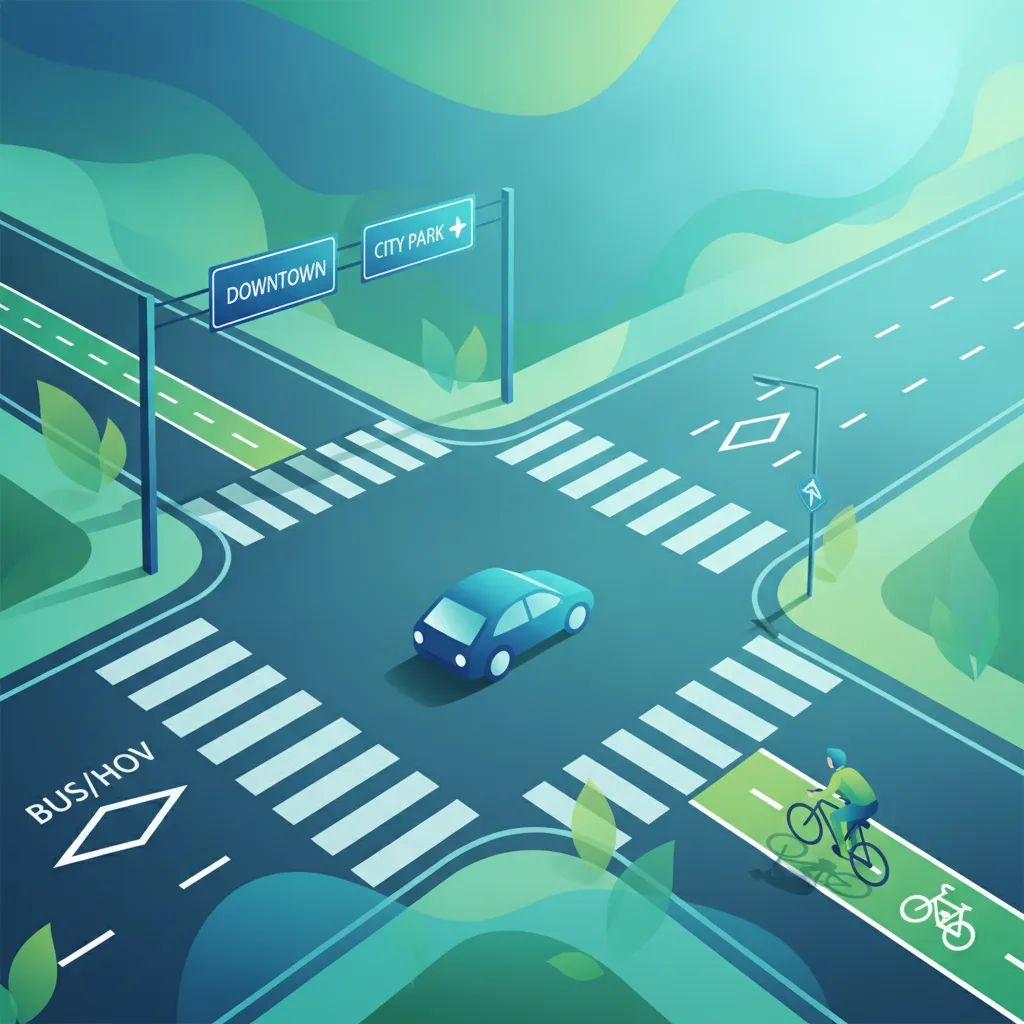
Learners will explore the variety of road surface markings that indicate lane boundaries, reserved spaces for different users, and pedestrian crossings in France. The lesson emphasizes how AM riders should interpret solid and broken lines, bike lane markings, and zebra crossings, ensuring appropriate lane usage and adherence to traffic flow. Understanding these markings is essential for maintaining order and safety on shared roadways.
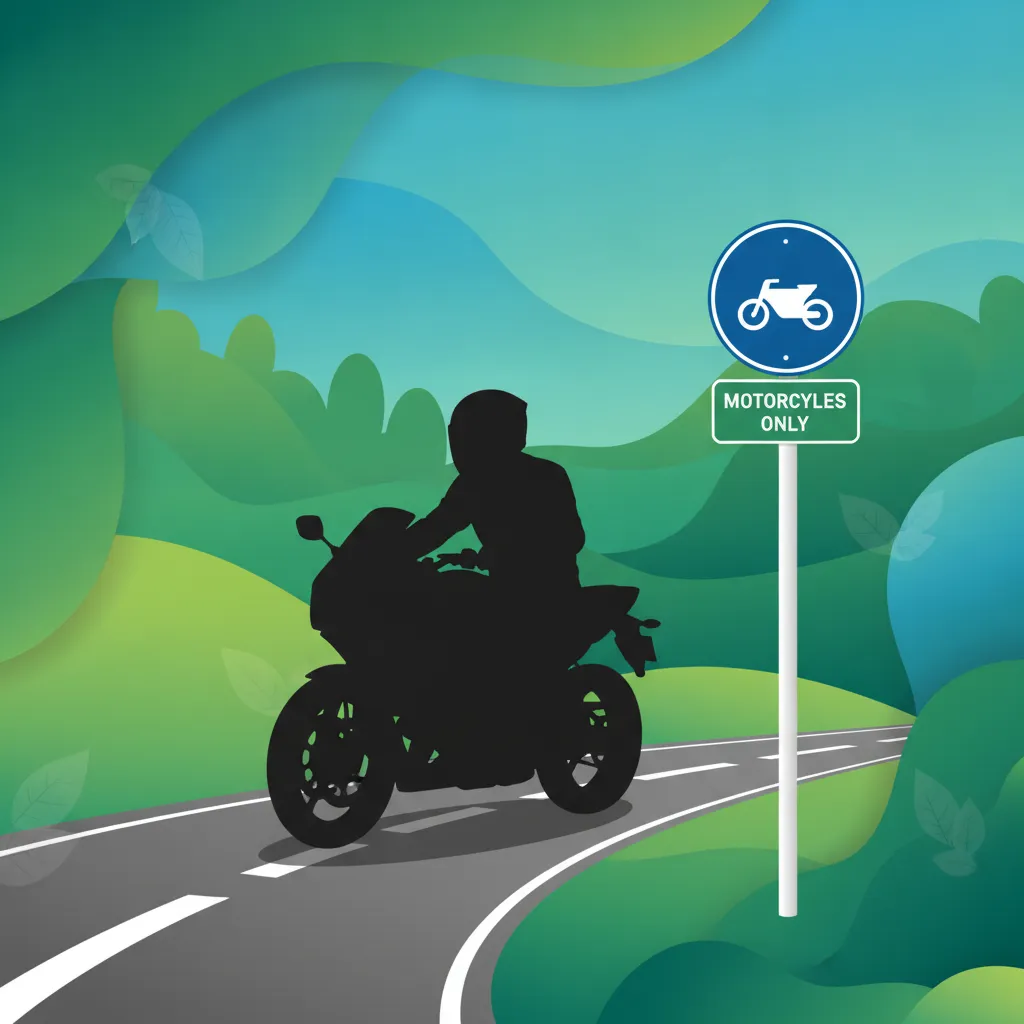
This lesson focuses on identifying regulatory signs, which are circular signs with red borders for prohibitions or blue backgrounds for obligations. You will learn about specific restrictions that impact motorcycle paths, including narrow lane access bans, motorcycle-specific speed limits, and overtaking prohibitions. Mastering these symbols is vital to ensuring compliance with French road law and avoiding immediate traffic penalty points.
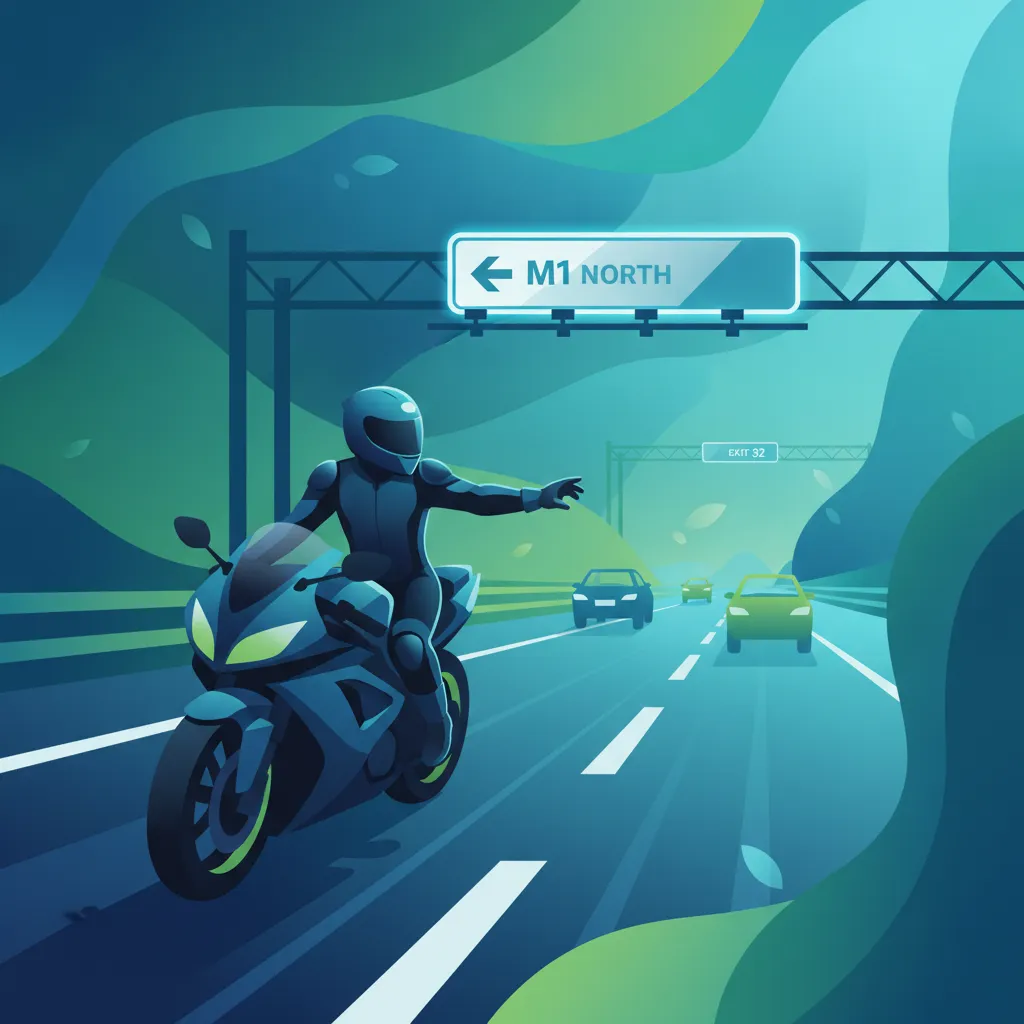
This lesson details how to safely enter, cruise on, and exit French motorways, known as autoroutes, which feature high-speed traffic flows. You will master the process of matching highway speeds in the acceleration lane and performing blind spot checks before merging. The lesson also explains correct lane positioning to avoid aerodynamic turbulences from large semi-trucks, and how to safely prepare for decelerating at exit ramps.

Longitudinal road markings are painted along the length of the road to divide lanes and regulate overtaking maneuvers. This lesson teaches the strict legal prohibition of crossing solid white lines and the specific spacing of broken lines that permit lane changes. You will also learn how to interpret dual lines, warning arrows, and how to maintain proper lane discipline in heavy traffic.

This lesson explores how dividing your travel lane into three distinct vertical zones allows you to adjust your positioning for optimal safety. You will learn to shift your line to avoid oil slicks in the lane center, road debris at the edges, and wind blasts from passing trucks. Crucially, the lesson covers how to adapt your lane position on blind bends to widen your field of vision and stay clear of oncoming traffic.

This lesson covers the operational logic of traffic light signals in France, emphasizing the legal implications of the red, amber, and green cycles. You will study how to safely manage the amber phase to avoid rear-end collisions from vehicles behind while maintaining control. Additionally, you will discover the unique challenge of electromagnetic induction loops, which sometimes fail to detect lightweight motorcycles at quiet intersections.

This lesson outlines the rules and practical safety limits of lane filtering, known as 'inter-files' riding, under French road guidelines. You will study the specific speed limits allowed during filtering, the conditions of high congestion where it is permitted, and where it remains completely banned. The lesson also highlights the critical need to anticipate sudden lane changes from frustrated car drivers stuck in stationary traffic queues.

This lesson clarifies the legal boundaries of urban infrastructure, highlighting the strict ban on riding motorcycles within bus lanes or cycle paths. You will study French regulations concerning traffic flow, including where and when experimental lane filtering is permitted between lines of stationary cars. Understanding these boundaries ensures you can keep moving through congested areas without risking heavy fines or dangerous collisions.

This lesson covers the strict legal conditions under which you may overtake other vehicles on French roads, including necessary visibility criteria. You will master the step-by-step process of checking rearview mirrors, performing head checks, signaling, and maintaining a safe speed differential during the pass. It also details when overtaking is strictly forbidden, such as before intersections, near pedestrian crossings, or across solid lines.
Explore the official French method of the trajectoire de sécurité to safely negotiate bends and curves. Understand the relationship between visual scanning, proper braking in a straight line, and selecting the optimal road position to maximize visibility and maintain tire grip when dealing with sharp turns or reduced traction conditions.

This lesson covers the physical mechanics of cornering, highlighting the technique of countersteering to initiate and control lean angles. You will learn to divide bends into distinct entry, apex, and exit phases, choosing the safest path that maximizes your visibility and grip reserves. Finally, the lesson explains the concept of the traction circle, helping you manage the division of tire grip between lateral cornering forces and acceleration.
Find clear answers to common questions learners have about Warning Signs and Their Motorcycle Implications. Learn how the lesson is structured, which driving theory objectives it supports, and how it fits into the overall learning path of units and curriculum progression in France. These explanations help you understand key concepts, lesson flow, and exam focused study goals.
Motorcycles have less stability and grip than four-wheeled vehicles. A sign warning of loose gravel or uneven surfaces requires a motorcyclist to be much more cautious with braking and leaning than a car driver, as these hazards can lead to a loss of traction and potential falls.
When you see a sign warning of a dangerous bend, you should reduce your speed well before the turn, choose a lane position that gives you the best visibility of the exit, and prepare to maintain a stable lean angle, avoiding sudden acceleration or hard braking mid-curve.
While the signs themselves are the same, temporary roadworks in France often involve loose debris, narrow lanes, and uneven ground. Motorcyclists should be extra vigilant for these risks and may need to ride even slower than the posted limit to ensure safety.
Yes, the French theory exam often uses images of signs indicating slippery or loose surfaces to test your hazard perception. You must show that you understand these signs mandate a reduction in speed and an increase in following distance.
Ready to focus your study? Use the practice search to find exactly the French driving theory questions you need for the Code de la route and permis de conduire ETG. Refine your knowledge on specific topics or challenging rules to boost your confidence and exam readiness.