This lesson explores the essential horizontal road markings you will encounter while riding your motorcycle across France. By understanding these visual signals, you will learn to navigate lanes and intersections safely while preparing for the practical application questions in your A1, A2, or A category theory exam.

Lesson content overview
Horizontal road markings (la signalisation horizontale) play a critical role in structuring traffic flow and ensuring safety on public roads. Under the French Code de la route, painted lines carry the same legal weight as vertical traffic signs. For motorcyclists, interpreting these markings accurately is not just a matter of passing the theoretical exam; it is a fundamental survival skill.
Due to their narrow profile and reliance on two contact patches no larger than credit cards, motorcycle riders are exceptionally vulnerable to the physical properties of road paint and the sudden maneuvers of other drivers. This lesson provides a comprehensive examination of lane delineation, edge markings, directional arrows, and the physical hazards associated with road paint.
Road markings serve two primary functions: regulatory guidance and hazard prevention. They establish clear lateral boundaries for traffic lanes, direct vehicles through complex intersections, and warn of upcoming road configurations.
For a motorcyclist, understanding road markings helps with lane positioning and defensive riding:
The single or double solid white line (ligne continue) serves as a strict regulatory barrier. Under the Code de la route, crossing or straddling a solid line is a serious traffic violation designed to prevent high-risk head-on collisions and side-swipes.
Franchissement vs. Chevauchement: Under French law, there is a legal distinction between crossing a solid line (franchissement) with the entire vehicle and straddling it (chevauchement) with part of the vehicle. For motorcyclists, even riding directly on top of a solid line constitutes a violation.
The default legal status of a solid line is an absolute prohibition.
Over the years, the French government has introduced highly specific exceptions to prevent traffic paralysis while maintaining safety:
In France, broken white lines (lignes discontinues) are classified into distinct categories based on their technical dimensions. Each type communicates a different level of hazard and permissible behavior.
This line delineates lanes of traffic traveling in the same or opposite directions. It is characterized by long gaps and shorter paint dashes.
A warning line indicates that a solid white line is approaching, or that visibility is restricted due to a curve, hill, or intersection.
A mixed line consists of a solid line painted directly alongside a broken line.
Edge lines define the lateral limits of the drivable road surface. They separate the active traffic lanes from the roadside verges, shoulders, or sidewalks.
Directional arrows painted on the road surface (flèches de sélection) dictate which lane you must occupy based on your intended destination at an upcoming junction or roundabout.
Anticipate Early: Look far ahead to read the directional arrows painted on the tarmac well before the intersection.
Select the Correct Lane: Position your motorcycle in the lane corresponding to your target direction (e.g., left-turn arrow, straight-ahead arrow, or right-turn arrow).
Commit to the Choice: Once you enter a lane bounded by solid lines or arrows, you are legally committed to that direction. Attempting a sudden, last-minute lane change across lane markings at a junction is a frequent cause of urban collisions.
If you accidentally enter a lane marked with a left-turn arrow, you must execute the left turn and safely reroute afterward, rather than attempting to cut back into the straight-ahead lane.
The French Code de la route places a heavy emphasis on protecting vulnerable road users, particularly cyclists. Motorcyclists must understand the difference between the markings that define dedicated cycle infrastructure.
When overtaking a cyclist on a road without a solid line, French law requires you to maintain a safe lateral clearance distance:
While road markings are vital for legal and spatial orientation, they present a significant physical hazard to two-wheeled vehicles.
+---------------------------------------------------------+
|                  COEFFICIENT OF FRICTION                |
|  Dry Asphalt:   [=================================] High|
|  Dry Road Paint:[========================] Moderate     |
|  Wet Asphalt:   [====================] Reduced          |
|  Wet Road Paint:[======] Extremely Low (Slippery!)       |
+---------------------------------------------------------+
The thermoplastic or cold-plastic paint mixtures used for horizontal road markings have a much smoother surface texture than raw asphalt. This lack of micro-roughness drastically reduces the coefficient of friction, especially under certain conditions:
To maintain traction and stability, motorcyclists should adopt the following defensive riding strategies:
| Marking Type | Legal Status | Can You Cross? | Common Motorcycle Hazard |
|---|---|---|---|
| Solid White Line (Ligne continue) | Mandatory Prohibition | No (except to bypass static obstacles or slow cyclists under strict conditions) | Loss of points/fines; head-on collisions if ignored. |
| Broken Guidance Line (Ligne de guidage) | Permissive | Yes (when safe and signaled) | Slippery when wet; unexpected lane changes by other motorists. |
| Warning Line (Ligne d'avertissement) | Restrictive | No (unless overtaking is already nearly complete) | Misjudging the remaining distance before the solid line begins. |
| Edge Line (Ligne de rive) | Boundary Indicator | Only in emergencies or to bypass stationary hazards | Debris accumulation, sand, or gravel often gather near the edge line. |
| Directional Arrows (Flèches de sélection) | Mandatory Direction | No (once committed to the lane) | Sudden lane changes by confused drivers at busy intersections. |
| Pedestrian Crossing (Passage piéton) | Priority Zone | N/A (must yield to pedestrians) | Severe loss of front-tire traction during wet-weather braking. |
This lesson covers the legal framework and practical implications of horizontal road markings under the French Code de la route, with specific emphasis on motorcycle safety. Solid white lines create absolute prohibitions with limited exceptions (immovable obstacles, cyclists on 50km/h roads), while broken lines are categorized as permissive guidance (T1), restrictive warning (T3), or conditional mixed lines. Edge lines on motorways (T4, 39m dashes) serve as lane discipline references, and directional arrows legally commit riders to their chosen direction. Critically, wet road paint dramatically reduces tire grip due to its smoother texture and water retention, requiring riders to keep the motorcycle vertical when crossing lines and to brake smoothly before reaching painted surfaces.
A short set of high-value points that capture the most important learning from this lesson.
Solid white lines (ligne continue) create an absolute prohibition against crossing or straddling, with only narrow legal exceptions for immovable obstacles or overtaking cyclists under strict conditions.
Broken white lines vary by type: standard guidance lines (T1, 3m dashes/10m gaps) allow crossing, while warning lines (T3, 3m dashes/1.33m gaps) prohibit new overtaking maneuvers once you see them.
On mixed lines, you must obey only the line closest to your vehicle, meaning you may be permitted to overtake even when oncoming traffic cannot.
Wet road paint creates an extremely low friction surface because water accumulates on top rather than draining, causing hydroplaning at relatively low speeds.
Cycle lanes (bandes cyclables) separated by broken lines with bike symbols are off-limits to motorcycles, and you must maintain at least 1m clearance in urban areas and 1.5m on rural roads when overtaking cyclists.
Explore all units and lessons included in this driving theory course.
Franchissement (full crossing) carries 3 penalty points and a €135 fine; chevauchement (straddling) carries only 1 point but is still a violation.
Slow-moving vehicles like tractors and garbage trucks are NOT immovable obstacles—you cannot legally cross a solid line to pass them.
Return arrows (flèches de rabattement) appearing on warning lines mean you must immediately merge back to your lane before the solid line begins.
Directional arrows (flèches de sélection) create a legal commitment once entered—changing lanes at the last moment to follow a different arrow is illegal and dangerous.
Road paint is most dangerous during wet conditions because thermoplastic surfaces retain a microfilm of water that causes immediate traction loss.
Assuming that all broken lines permit overtaking, when in fact T3 warning lines restrict new overtaking maneuvers if you have not already begun the pass.
Confusing franchissement with chevauchement, believing any contact with a solid line carries the same 3-point penalty.
Treating slow-moving vehicles as immovable obstacles and attempting to cross solid lines to overtake tractors or delivery trucks.
Believing the hard shoulder on motorways can be used to bypass traffic, when edge lines may only be crossed in genuine emergencies.
Attempting sudden braking on painted surfaces like pedestrian crossings or directional arrows instead of applying progressive braking before reaching them.
Lesson content overview
A short set of high-value points that capture the most important learning from this lesson.
Solid white lines (ligne continue) create an absolute prohibition against crossing or straddling, with only narrow legal exceptions for immovable obstacles or overtaking cyclists under strict conditions.
Broken white lines vary by type: standard guidance lines (T1, 3m dashes/10m gaps) allow crossing, while warning lines (T3, 3m dashes/1.33m gaps) prohibit new overtaking maneuvers once you see them.
On mixed lines, you must obey only the line closest to your vehicle, meaning you may be permitted to overtake even when oncoming traffic cannot.
Wet road paint creates an extremely low friction surface because water accumulates on top rather than draining, causing hydroplaning at relatively low speeds.
Cycle lanes (bandes cyclables) separated by broken lines with bike symbols are off-limits to motorcycles, and you must maintain at least 1m clearance in urban areas and 1.5m on rural roads when overtaking cyclists.
Explore all units and lessons included in this driving theory course.
Franchissement (full crossing) carries 3 penalty points and a €135 fine; chevauchement (straddling) carries only 1 point but is still a violation.
Slow-moving vehicles like tractors and garbage trucks are NOT immovable obstacles—you cannot legally cross a solid line to pass them.
Return arrows (flèches de rabattement) appearing on warning lines mean you must immediately merge back to your lane before the solid line begins.
Directional arrows (flèches de sélection) create a legal commitment once entered—changing lanes at the last moment to follow a different arrow is illegal and dangerous.
Road paint is most dangerous during wet conditions because thermoplastic surfaces retain a microfilm of water that causes immediate traction loss.
Assuming that all broken lines permit overtaking, when in fact T3 warning lines restrict new overtaking maneuvers if you have not already begun the pass.
Confusing franchissement with chevauchement, believing any contact with a solid line carries the same 3-point penalty.
Treating slow-moving vehicles as immovable obstacles and attempting to cross solid lines to overtake tractors or delivery trucks.
Believing the hard shoulder on motorways can be used to bypass traffic, when edge lines may only be crossed in genuine emergencies.
Attempting sudden braking on painted surfaces like pedestrian crossings or directional arrows instead of applying progressive braking before reaching them.
Explore search topics learners often look for when studying Road Markings: Lane Delineation and Edge Lines. These topics reflect common questions about road rules, driving situations, safety guidance, and lesson level theory preparation for learners in France.
Browse additional driving theory lessons that cover connected traffic rules, road signs, and common driving situations related to this topic. Improve your understanding of how different rules interact across everyday traffic scenarios.
Learn the official rules for lane selection at complex road junctions and roundabouts in France. This guide explains how directional arrows and road markings dictate your path and how to anticipate required maneuvers early to maintain safe traffic flow and avoid sudden lane changes in busy urban environments.
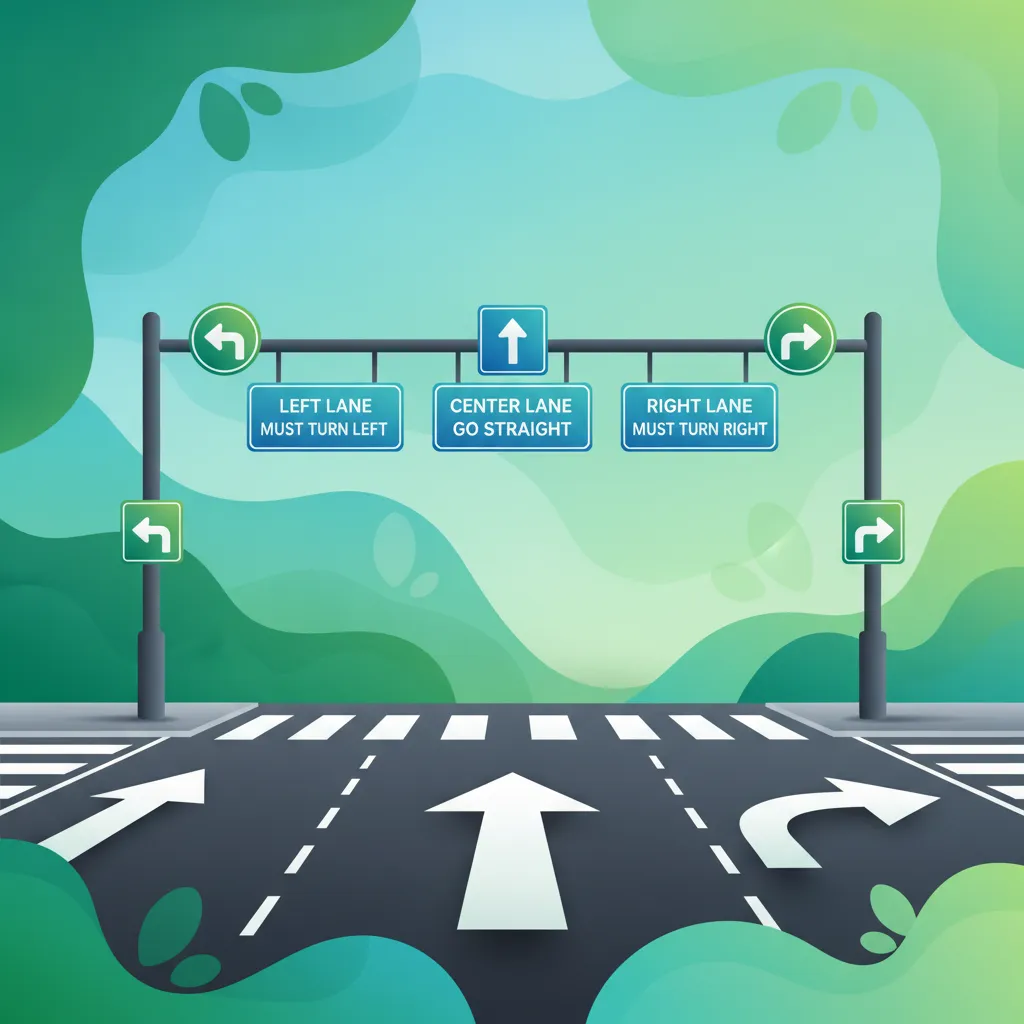
Preselection and direction arrows painted on the road surface instruct drivers on lane-specific movements at upcoming intersections or merges. This lesson teaches you how to interpret these arrows so you can position your vehicle correctly well in advance of a turn. You will learn the rules for lane merging, following curved guidance lines, and avoiding sudden, dangerous lane adjustments.
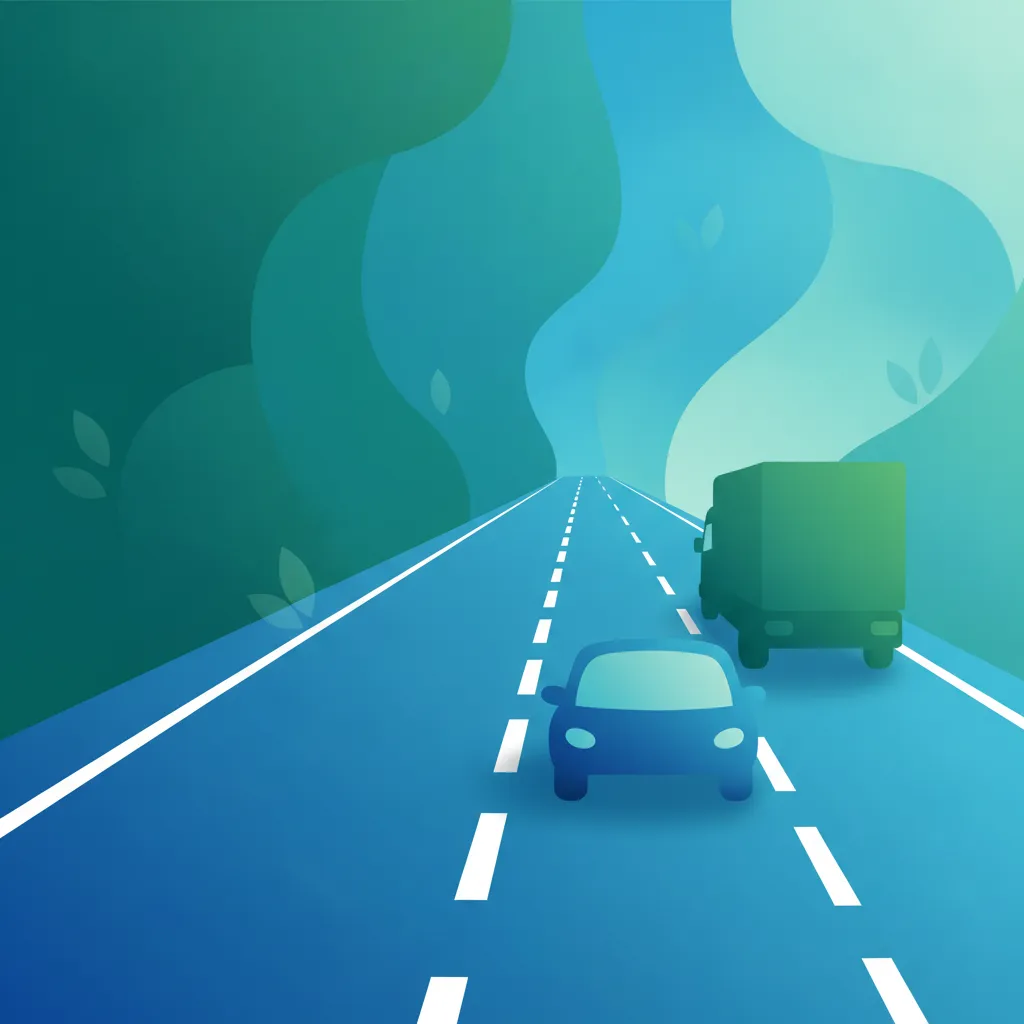
Longitudinal road markings are painted along the length of the road to divide lanes and regulate overtaking maneuvers. This lesson teaches the strict legal prohibition of crossing solid white lines and the specific spacing of broken lines that permit lane changes. You will also learn how to interpret dual lines, warning arrows, and how to maintain proper lane discipline in heavy traffic.

France features a vast network of roundabouts (carrefours a sens giratoire) governed by specific entry and lane-use regulations. This lesson explains that vehicles entering a roundabout must yield to traffic already circulating inside. You will learn how to select the correct lane depending on your exit, use direction indicators properly, and yield to pedestrians and cyclists near roundabout exits.
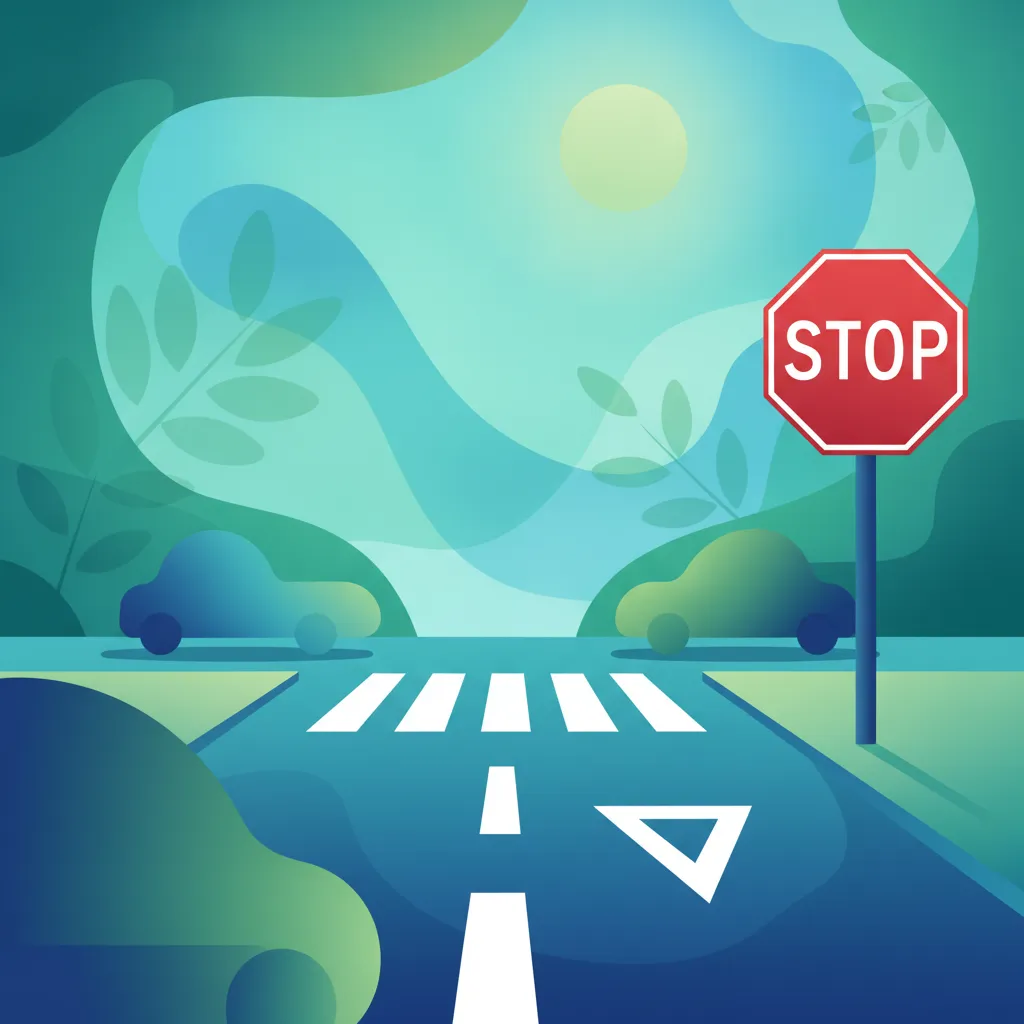
Some crossroads feature complex layouts or specific signs that modify standard priority rules, such as schematic diagrams (panonceaux schematiques). This lesson teaches you how to read these auxiliary signs, which depict the thick line of the priority road and thin lines of secondary roads. You will learn how to maintain priority when the main road curves and how to navigate non-standard intersection layouts.
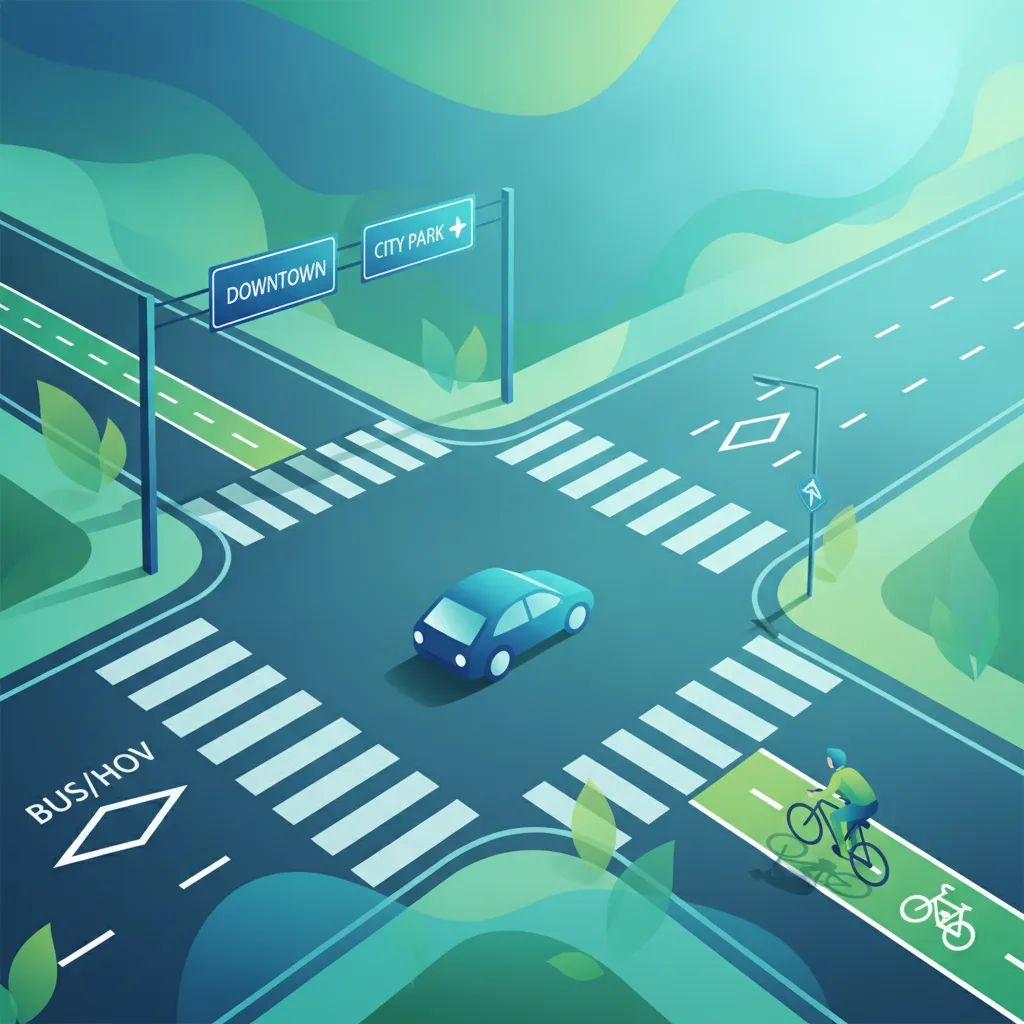
Learners will explore the variety of road surface markings that indicate lane boundaries, reserved spaces for different users, and pedestrian crossings in France. The lesson emphasizes how AM riders should interpret solid and broken lines, bike lane markings, and zebra crossings, ensuring appropriate lane usage and adherence to traffic flow. Understanding these markings is essential for maintaining order and safety on shared roadways.

Negotiating crossroads that lack active traffic light signals requires a clear reading of signs and painted stop or yield lines. This lesson details the obligations of stopping completely at stop signs and slowing down to yield at 'cedez le passage' markings. You will learn to assess cross-traffic speeds, determine priorities when multiple vehicles arrive, and execute turns safely.
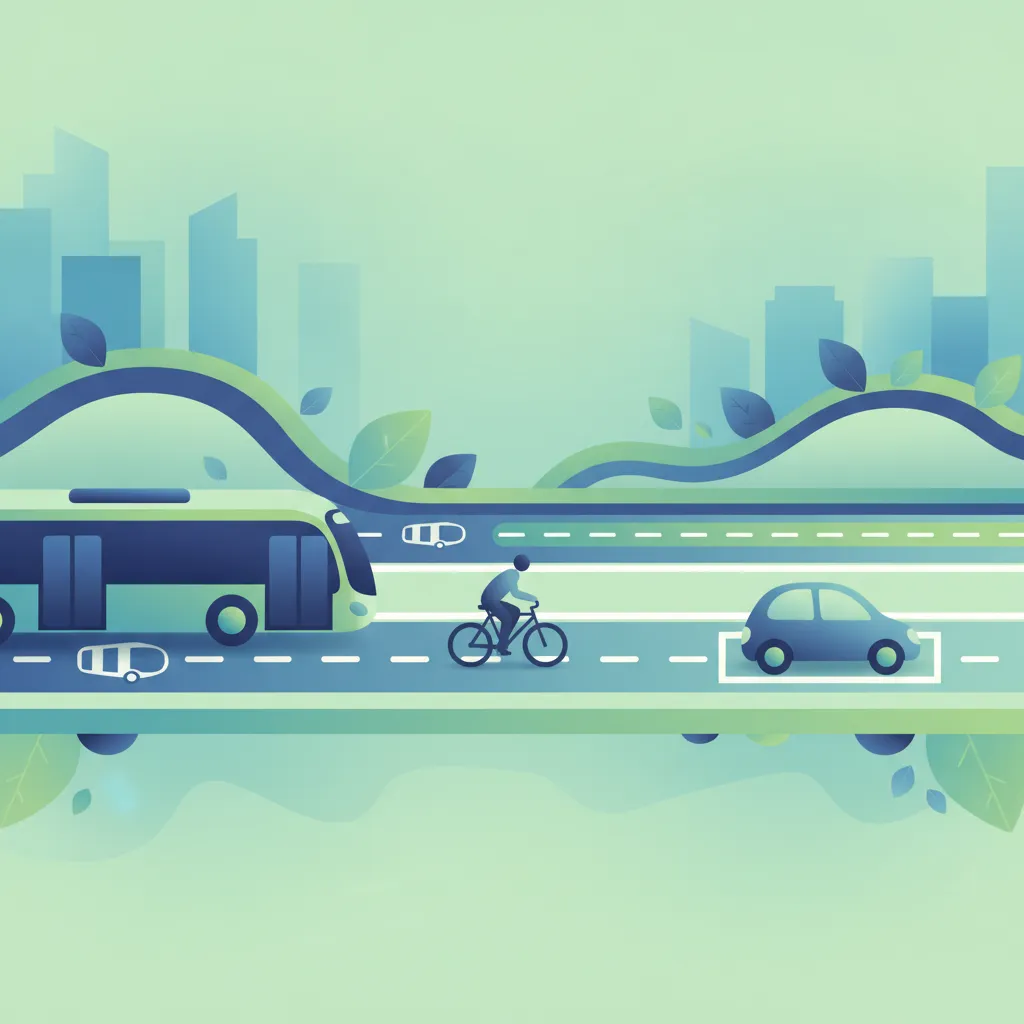
Urban roads in France feature specialized lanes reserved for public transit, micro-mobility, and distinct parking options. This lesson covers how to recognize bus lanes, cycling lanes, and the specific rules that prohibit general traffic from blocking them. You will also learn to interpret parking bay outlines, loading zones, and spots reserved for electric charging or drivers with disabilities.

Lateral road markings run across or along the sides of roadways, signaling limits such as stop lines, yield lines, and pedestrian zones. This lesson explains how painted curbs restrict parking, including continuous or broken yellow lines which signal stopping or parking prohibitions. You will learn how to identify pedestrian zone boundaries and ensure you never obstruct pedestrian or cyclist paths.
Changing lanes or executing turns requires a structured visual and physical procedure to prevent interrupting surrounding traffic. This lesson explains the key steps: checking the center mirror, exterior mirrors, turning on direction indicators, and performing blind-spot checks. You will learn correct vehicle positioning for both left and right turns, and how to execute safe turning circles without cutting corners.

This lesson analyzes the technical path a long wheelbase vehicle must take when turning at intersections and navigating roundabouts. Drivers will learn to calculate tail swing and rear-wheel tracking, intentionally swinging wide to clear roadside curbs and poles safely. The lesson emphasizes yielding protocols for pedestrians and cyclists who may be crossing the target street during the turn.
Understand the legal requirements for lateral clearance and priority when encountering cyclists and pedestrians on French roads. This theory overview covers how to interpret cycle lane markings and manage your proximity to vulnerable road users to comply with the Code de la route and maintain safety.
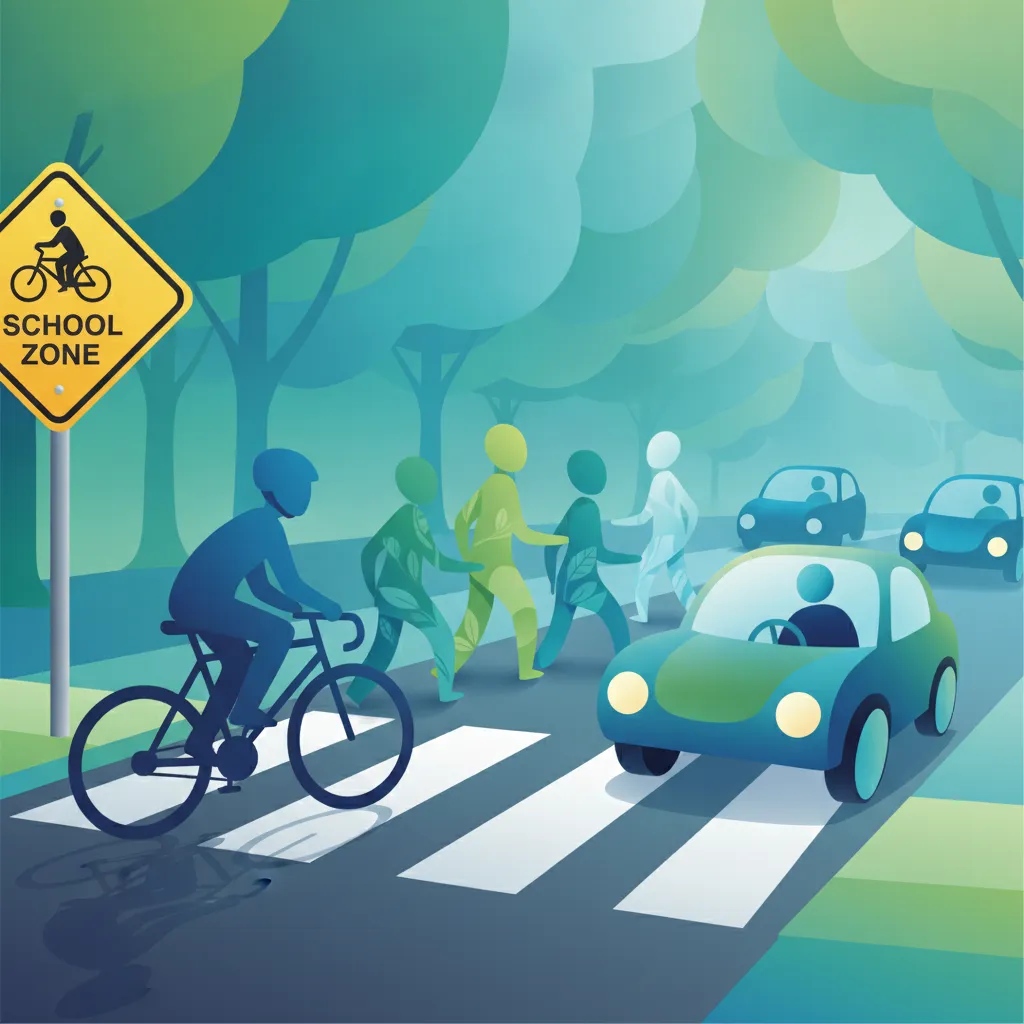
This lesson focuses on the legal requirement to yield to pedestrians on or about to step onto zebra crossings, a major focus of French road safety. You will learn how to approach school zones and pedestrian islands with heightened vigilance and reduced speed. Additionally, the lesson explores shared urban spaces, explaining how to maintain safe lateral distances when overtaking cyclists or personal electric scooters.
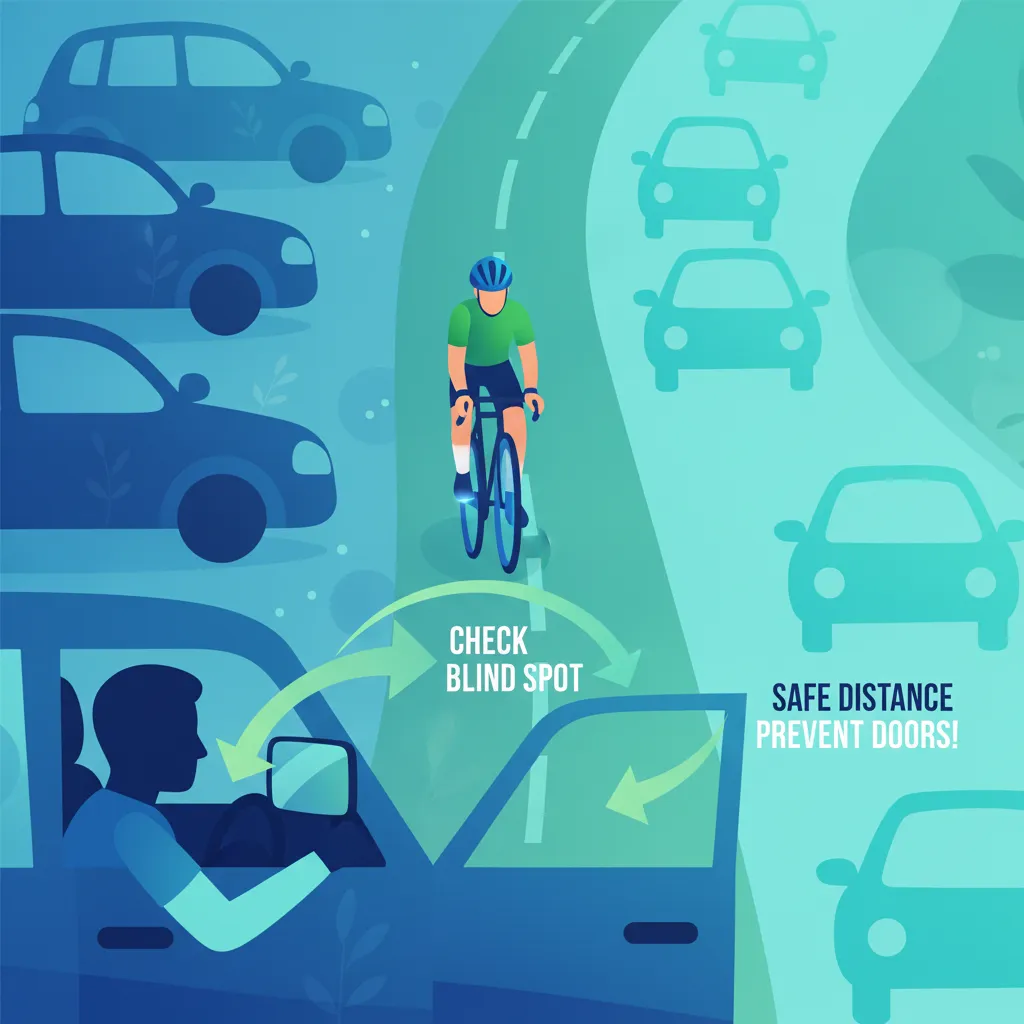
This lesson explains how to share the road safely with cyclists in both urban and rural environments. Drivers will study the legal minimum passing distances when overtaking cyclists, which is one meter in cities and one and a half meters outside urban areas. It also covers recognizing specialized cycling infrastructure, bike boxes at intersections, and preventing blind-spot collisions during right turns.
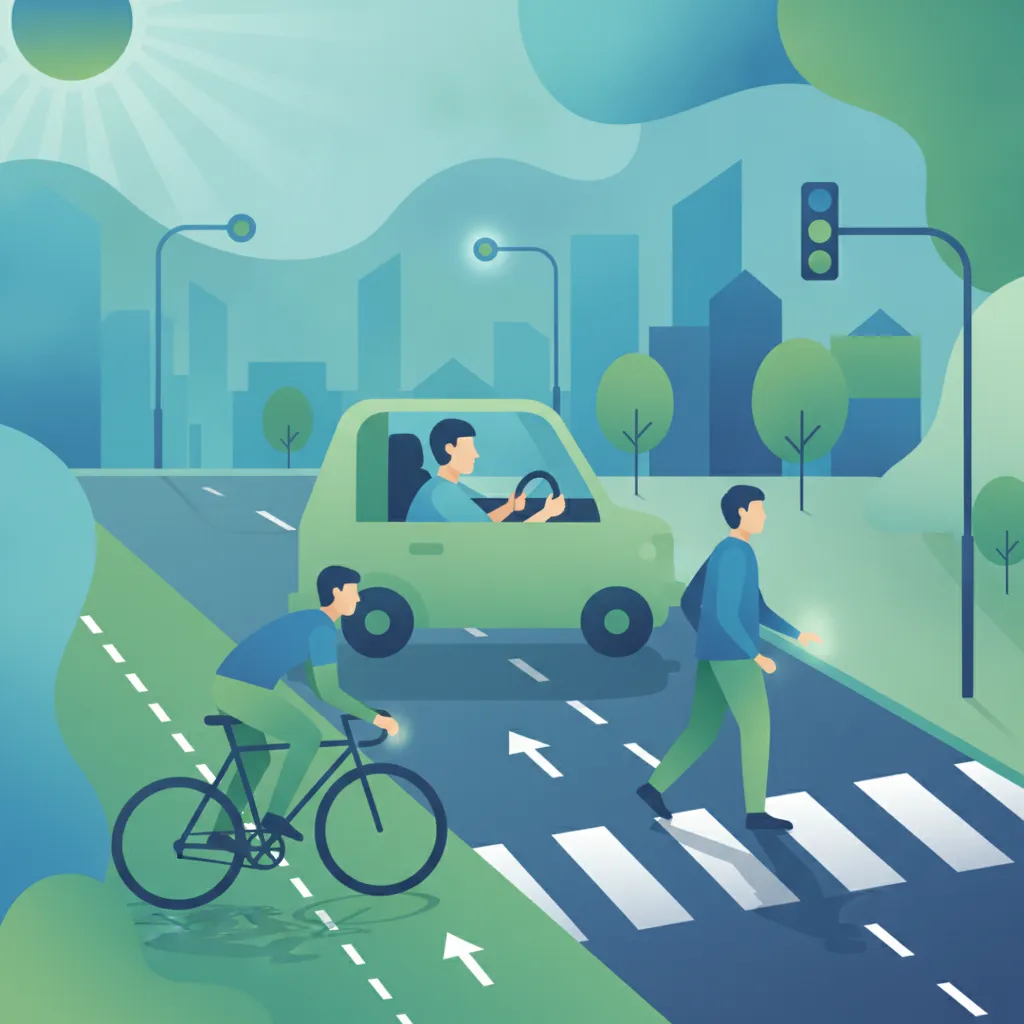
This lesson examines the specific challenges and responsibilities goods vehicle drivers face when interacting with pedestrians and cyclists in urban environments. Learners will understand right-of-way rules, the importance of yielding at pedestrian crossings, and safe turning practices that protect cyclists. The content emphasizes heightened driver vigilance, especially when navigating bike lanes and crowded sidewalks.
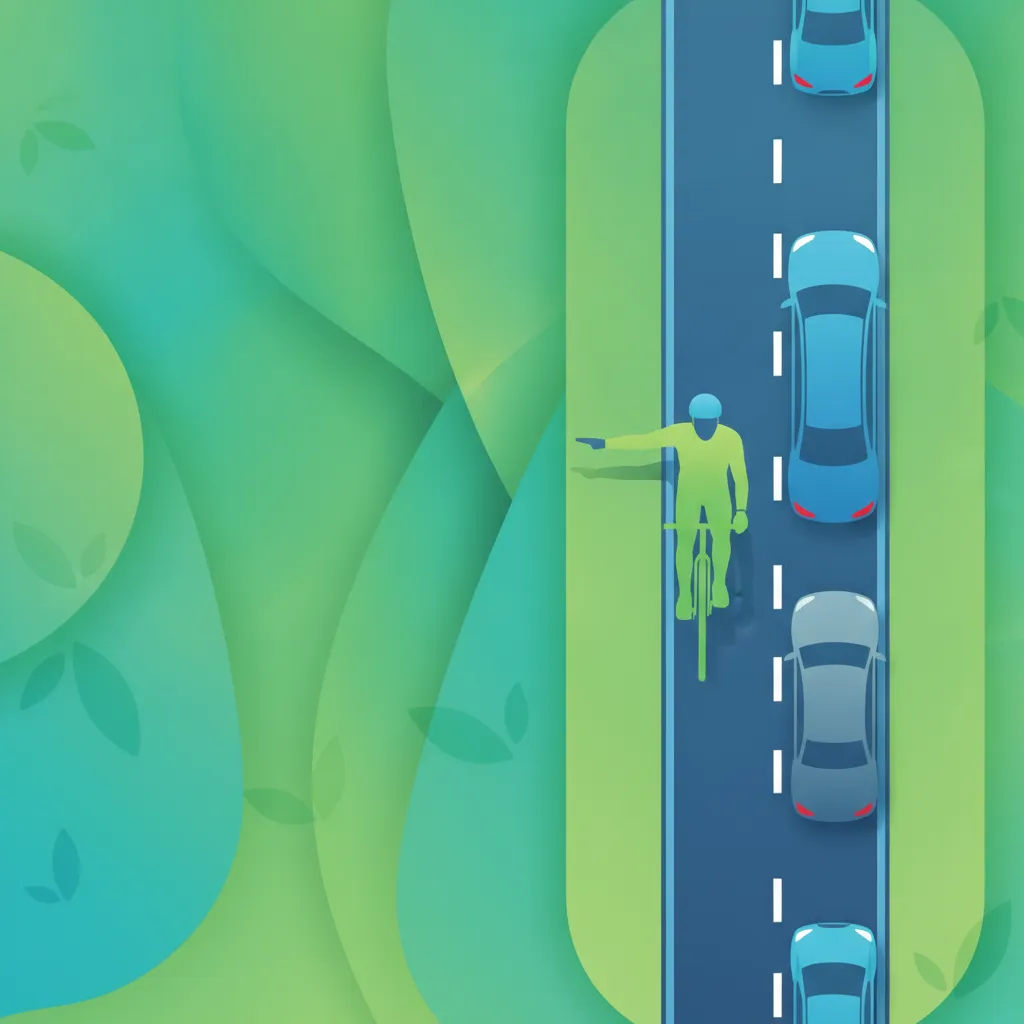
Bicycles represent an eco-friendly transport method with specific rights on French public roadways. This lesson teaches you how to identify dedicated cycle paths, respect bike lanes, and understand cyclist turning privileges at intersections. You will learn the legal minimum safety distance required when overtaking a cyclist: 1 meter in urban areas and 1.5 meters outside city limits.

Learners will explore the rules related to pedestrian crossings, focusing on the obligation to yield to pedestrians at zebra crossings and flashing pedestrian signals. The lesson highlights the importance of stopping before the stop line, reducing speed, and maintaining vigilance for pedestrian movement. Mastery of these practices ensures the safety of both pedestrians and AM riders at crossing points.
Learners will focus on the best practices for interacting safely with cyclists and pedestrians in mixed traffic environments. The lesson covers proper lane usage, overtaking protocols, maintaining adequate safety gaps, and non-verbal communication techniques in the French urban landscape. By applying these principles, AM riders can coexist harmoniously with vulnerable road users, reducing the likelihood of accidents.

In France, pedestrians have clear legal priority when stepping onto or indicating an intent to use a crossing (passage pieton). This lesson details standard zebra crossings, refuge islands, and pedestrian crossings managed by synchronized traffic light systems. You will learn to scan crossings ahead, anticipate pedestrian movements, and safely come to a stop whenever a pedestrian attempts to cross.
This lesson examines French Code de la route laws regarding pedestrian right-of-way, emphasizing the driver's legal duty to yield to any pedestrian engaged in crossing. It outlines proper approach speeds when approaching zebra crossings with obstructed views. Candidates will learn to maintain a safe physical buffer zone and verify that crosswalks are entirely clear of pedestrians before accelerating.
Certain groups of road users require heightened defensive attention from drivers due to physical limitations or unpredictable behaviors. This lesson covers how to recognize signs of visual impairment (white canes), mobility challenges, and the unpredictability of young children. You will learn to reduce your speed, extend yielding patience, and proactively secure extra space to protect these vulnerable users.
This lesson details how to manage high-risk interactions with pedestrians who may step off curbs or cross the road near bus stops. Learners will study French Code de la route laws regarding pedestrian priority at crosswalks and near stopping transit vehicles. Developing heightened spatial awareness around blind zones near the front of the bus is emphasized to prevent tragic pedestrian collisions.
Find clear answers to common questions learners have about Road Markings: Lane Delineation and Edge Lines. Learn how the lesson is structured, which driving theory objectives it supports, and how it fits into the overall learning path of units and curriculum progression in France. These explanations help you understand key concepts, lesson flow, and exam focused study goals.
No, you must never cross or straddle a continuous solid white line, even to overtake a cyclist. You must wait until the line becomes broken or ends before performing an overtaking manoeuvre, provided it is safe to do so.
Road paint often has a lower friction coefficient than asphalt. When wet, this surface can become extremely slippery, leading to a loss of traction or a slide if you brake, accelerate, or lean sharply while on the marking.
Look for the painted directional arrows on the road surface well in advance of the junction. These arrows dictate the mandatory direction for each lane. If you are in a lane marked with a straight arrow, you cannot turn, even if the traffic is light.
A warning line has shorter segments and a smaller gap between them. It serves as a visual signal that you are approaching a hazard, such as a sharp curve or a dangerous intersection, and indicates that you should prepare to return to your lane soon.
Ready to focus your study? Use the practice search to find exactly the French driving theory questions you need for the Code de la route and permis de conduire ETG. Refine your knowledge on specific topics or challenging rules to boost your confidence and exam readiness.