This lesson guides you through the essential road markings that define lane discipline and crossing permissions on French roads. By mastering these horizontal signs, you will be prepared to handle complex traffic scenarios and safely navigate multi-lane highways and urban environments.

Lesson content overview
Longitudinal road markings (marquages routiers longitudinaux) are painted parallel to the direction of traffic along the length of French roads. They serve as visual guides, allocating lanes, organizing traffic flow, and establishing clear rules for overtaking and lane changes.
In the French driving theory exam (Examen de l'Éthique Générale or Épreuve Théorique Générale - ETG), mastering road markings is vital. Longitudinal markings act as legal boundaries. Understanding when you are permitted to cross a line, when you must stay in your lane, and how to maintain proper lane discipline is essential for passing your Category B driving theory exam and driving safely on French roads.
In France, the Code de la route defines a lane (voie) as a portion of the roadway wide enough to accommodate a single line of four-wheeled vehicles. Longitudinal markings clarify these lanes, dividing the road into organized channels.
Proper lane discipline (discipline de voie) is a fundamental duty of care under Article R412-6 of the French Code de la route. Drivers must remain within their designated lane unless they are executing a legal maneuver, such as overtaking, turning, or avoiding a temporary hazard. Maintaining your lane prevents head-on and side-impact collisions, keeps traffic moving predictably, and minimizes sudden, erratic movements that can trigger multi-vehicle accidents.
The solid white line (ligne continue) represents a strict legal boundary. Under Article R412-4 of the Code de la route, crossing or straddling a solid white line is strictly prohibited. It is designed to act as a physical wall, installed in areas where overtaking or changing lanes carries a severe risk of collision, such as blind curves, hillcrests, narrow roads, and dangerous intersections.
For many years, crossing a solid white line was forbidden without exception, unless directed by authorities. However, to accommodate modern road safety challenges and vulnerable road users, specific legal exceptions now exist:
Straddling vs. Crossing: The law distinguishes between "straddling" (chevauchement - where one or more wheels run over the line) and "crossing" (franchissement - where the entire vehicle crosses the line). Both are illegal under normal circumstances, but crossing carries harsher administrative penalties.
Broken white lines (lignes discontinues) consist of painted dashes separated by gaps. They indicate that you may cross or straddle the line to change lanes, turn, or overtake, provided that visibility is excellent, the road ahead is clear, and the maneuver can be completed safely.
In France, broken lines are categorized by their specific line-to-gap ratios. Recognizing these patterns helps you anticipate changes in road conditions:
This line is used on two-way roads to separate traffic moving in opposite directions or to divide multiple lanes traveling in the same direction.
The warning line alerts drivers that a solid white line is approaching. It signals that any overtaking maneuver must be completed quickly, or postponed entirely.
The deterrent line is painted in high-risk zones, such as steep, winding mountain roads, narrow pathways, or approaches to hazardous points.
Assess Visibility: Ensure you have a clear, unobstructed view of the road ahead. Do not initiate an overtake near curves, crests, or intersections.
Check Mirrors and Blind Spots: Verify that no vehicle behind you or in your blind spot has already started an overtaking maneuver.
Signal Your Intention: Activate your left indicator (clignotant) to warn other road users of your planned lane change.
Accelerate and Pass: Move smoothly into the adjacent lane, maintaining a safe lateral distance from the vehicle you are passing (at least 1 meter in urban areas, and 1.5 meters on rural roads).
Return Safely: Once you can see the overtaken vehicle's headlights in your central rearview mirror, signal right and return to your lane.
To accommodate asymmetrical road conditions, French roads often feature composite lines (lignes mixtes), where a solid line and a broken line are painted side-by-side.
When approaching a double line, you must only obey the line that is closest to your side of the road:
A double solid white line consists of two parallel, continuous lines. It acts as an absolute barrier in both directions, typically used on wide roadways, multi-lane expressways, or highly hazardous sections of national roads. Neither side may cross or straddle these lines under any normal circumstances.
Road markings in France also feature arrow indicators painted directly onto the asphalt. These arrows provide critical navigation instructions and safety warnings.
Warning arrows are curved arrows painted in the middle of a broken line. They point back toward the right side of the road, indicating that the broken line is ending and transitioning into a solid white line.
Directional arrows are painted in the center of lanes approaching intersections, roundabouts, or highway junctions. They guide drivers into the correct lane for their intended destination (Article AR 451-2).
When traffic becomes congested, specific rules govern how you use the lanes. Under French law, heavy traffic conditions change the way lane discipline is maintained:
Violating longitudinal marking regulations is one of the most common reasons candidates fail their practical driving test, and it carries heavy penalties under the French Code de la route.
The legal and financial consequences for failing to respect longitudinal markings are severe:
| Offense | French Legal Term | Fine Category | License Points Deducted | Additional Penalties |
|---|---|---|---|---|
| Crossing a Solid Line | Franchissement de ligne continue | Class 4 (Contravention de 4ème classe) | 3 Points | Potential driver's license suspension (up to 3 years) |
| Straddling a Solid Line | Chevauchement de ligne continue | Class 4 (Contravention de 4ème classe) | 1 Point | Monetary fine |
| Dangerous Overtaking | Dépassement dangereux | Class 4 (Contravention de 4ème classe) | 3 Points | Potential license suspension |
Your interpretation of road markings must adapt to external hazards:
Understanding road markings is a critical step toward passing your ETG exam and navigating the French road network with confidence. To reinforce your knowledge, explore these related topics and practice with authentic mock exam scenarios.
French longitudinal road markings establish legal boundaries that govern lane discipline and overtaking maneuvers. Solid white lines (ligne continue) are absolute barriers under Article R412-4, while broken lines (ligne discontinue) permit lane changes when safe. The three types of broken lines—standard T1 (3m/10m), warning T2 (3m/1.33m), and deterrent T3—are distinguished by their context and spacing. On composite lines, only the line closest to your vehicle determines whether crossing is permitted. Violations range from 1-point straddling fines to 3-point crossing penalties, and temporary yellow markings in roadworks always override permanent white lines.
A short set of high-value points that capture the most important learning from this lesson.
Solid white lines (ligne continue) create absolute legal boundaries that may only be crossed under specific exceptions like overtaking cyclists or police directives
Broken white lines permit lane changes and overtaking only when visibility is clear and safety conditions are met
On composite lines (lignes mixtes), you must obey only the line closest to your vehicle—solid or broken determines whether crossing is permitted
The three warning arrows signal that a lane is ending; you must abort overtaking at the first arrow and return to your lane before the second arrow
Yellow temporary road markings in construction zones always override permanent white markings under the Code de la route
Explore all units and lessons included in this driving theory course.
The distinction between chevauchement (straddling, 1 point) and franchissement (crossing, 3 points) carries different penalties for solid line violations
Warning lines (T2) and deterrent lines (T3) share the same pattern (3m dashes, 1.33m gaps) but appear in different road contexts—context determines the rule
When a broken line is on your side, you may cross both lines including the opposite solid line; when solid is on your side, you may not cross at all
Standard broken lines (T1) use 3m dashes with 10m gaps, signaling normal conditions for lane changes and overtaking
Overtaking cyclists across a solid line is only permitted outside urban areas or in 50 km/h zones, and only if the maneuver can be completed with absolute safety
Assuming any broken line anywhere always permits overtaking, without checking for warning lines (T2) that signal an approaching solid line
Confusing the T2 warning line with the T3 deterrent line—both have 1.33m gaps but different meanings based on road context
Attempting to overtake slow vehicles like street sweepers or tractors across a solid line without them being completely stopped or pulled over
Crossing a solid line to reach an exit lane or bypass queueing traffic in a jam, which is illegal and highly dangerous
Cutting across a solid line when making a left turn at intersections rather than following the proper turning geometry
Lesson content overview
A short set of high-value points that capture the most important learning from this lesson.
Solid white lines (ligne continue) create absolute legal boundaries that may only be crossed under specific exceptions like overtaking cyclists or police directives
Broken white lines permit lane changes and overtaking only when visibility is clear and safety conditions are met
On composite lines (lignes mixtes), you must obey only the line closest to your vehicle—solid or broken determines whether crossing is permitted
The three warning arrows signal that a lane is ending; you must abort overtaking at the first arrow and return to your lane before the second arrow
Yellow temporary road markings in construction zones always override permanent white markings under the Code de la route
Explore all units and lessons included in this driving theory course.
The distinction between chevauchement (straddling, 1 point) and franchissement (crossing, 3 points) carries different penalties for solid line violations
Warning lines (T2) and deterrent lines (T3) share the same pattern (3m dashes, 1.33m gaps) but appear in different road contexts—context determines the rule
When a broken line is on your side, you may cross both lines including the opposite solid line; when solid is on your side, you may not cross at all
Standard broken lines (T1) use 3m dashes with 10m gaps, signaling normal conditions for lane changes and overtaking
Overtaking cyclists across a solid line is only permitted outside urban areas or in 50 km/h zones, and only if the maneuver can be completed with absolute safety
Assuming any broken line anywhere always permits overtaking, without checking for warning lines (T2) that signal an approaching solid line
Confusing the T2 warning line with the T3 deterrent line—both have 1.33m gaps but different meanings based on road context
Attempting to overtake slow vehicles like street sweepers or tractors across a solid line without them being completely stopped or pulled over
Crossing a solid line to reach an exit lane or bypass queueing traffic in a jam, which is illegal and highly dangerous
Cutting across a solid line when making a left turn at intersections rather than following the proper turning geometry
Explore search topics learners often look for when studying Longitudinal Markings and Lane Discipline. These topics reflect common questions about road rules, driving situations, safety guidance, and lesson level theory preparation for learners in France.
Browse additional driving theory lessons that cover connected traffic rules, road signs, and common driving situations related to this topic. Improve your understanding of how different rules interact across everyday traffic scenarios.
Learn how to maintain proper lane positioning in heavy traffic, during motorway merges, and when approaching complex road intersections. This lesson covers the legal responsibilities of drivers under the Code de la route regarding lane selection and flow management to ensure safe and predictable driving in congested urban areas.
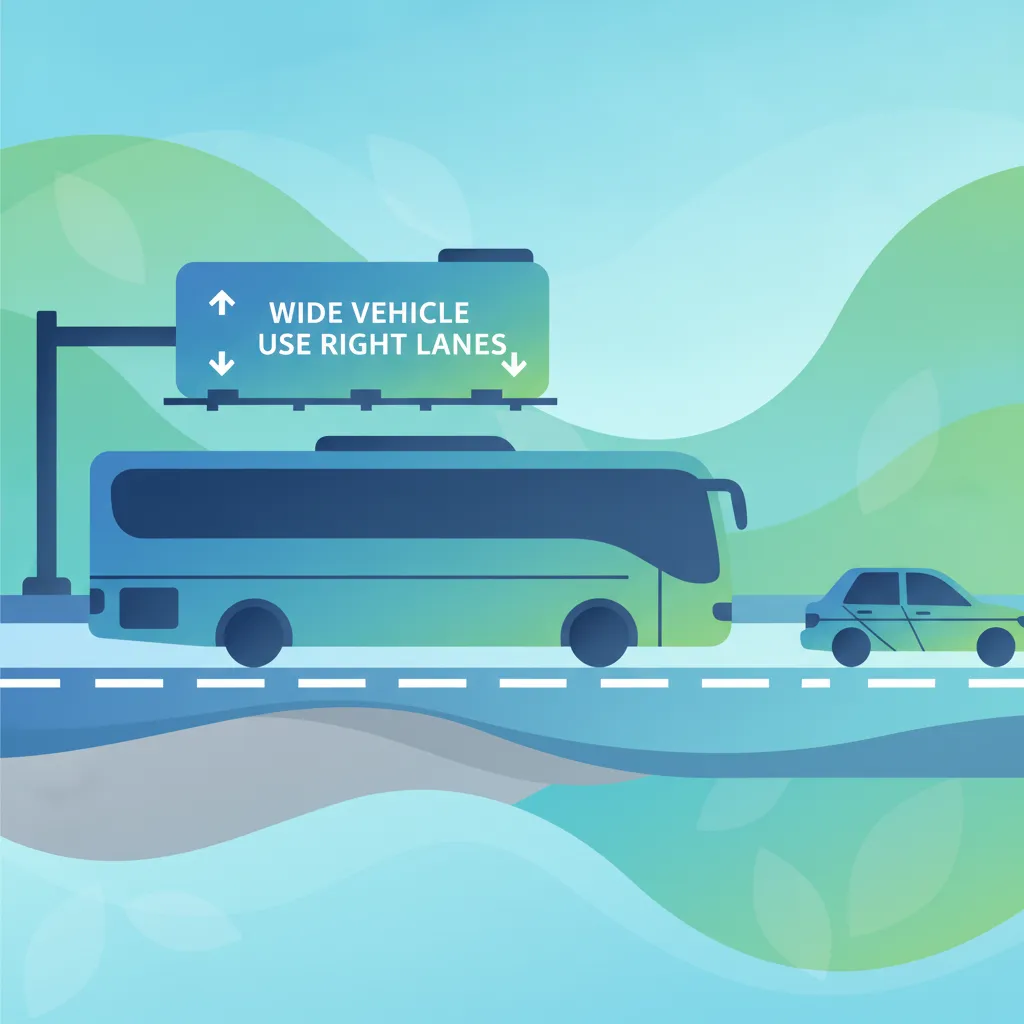
This lesson details the rules of lane discipline for operating wider and longer passenger transport vehicles on highway and city networks. Learners will explore proper lane positioning to prevent encroachment on adjacent lanes or sidewalks. It also covers the step-by-step visual and signaling sequence required to perform safe lane changes, avoiding sudden movements that could startle other drivers.

French motorways (autoroutes) are fast, controlled-access roads with unique laws regulating lane discipline and emergencies. This lesson teaches standard lane-use: cruising in the right lane and reserving the middle or left lanes exclusively for passing. You will study emergency procedures, the use of orange emergency call boxes, safety barrier rules, and navigating toll booths (peages) safely.
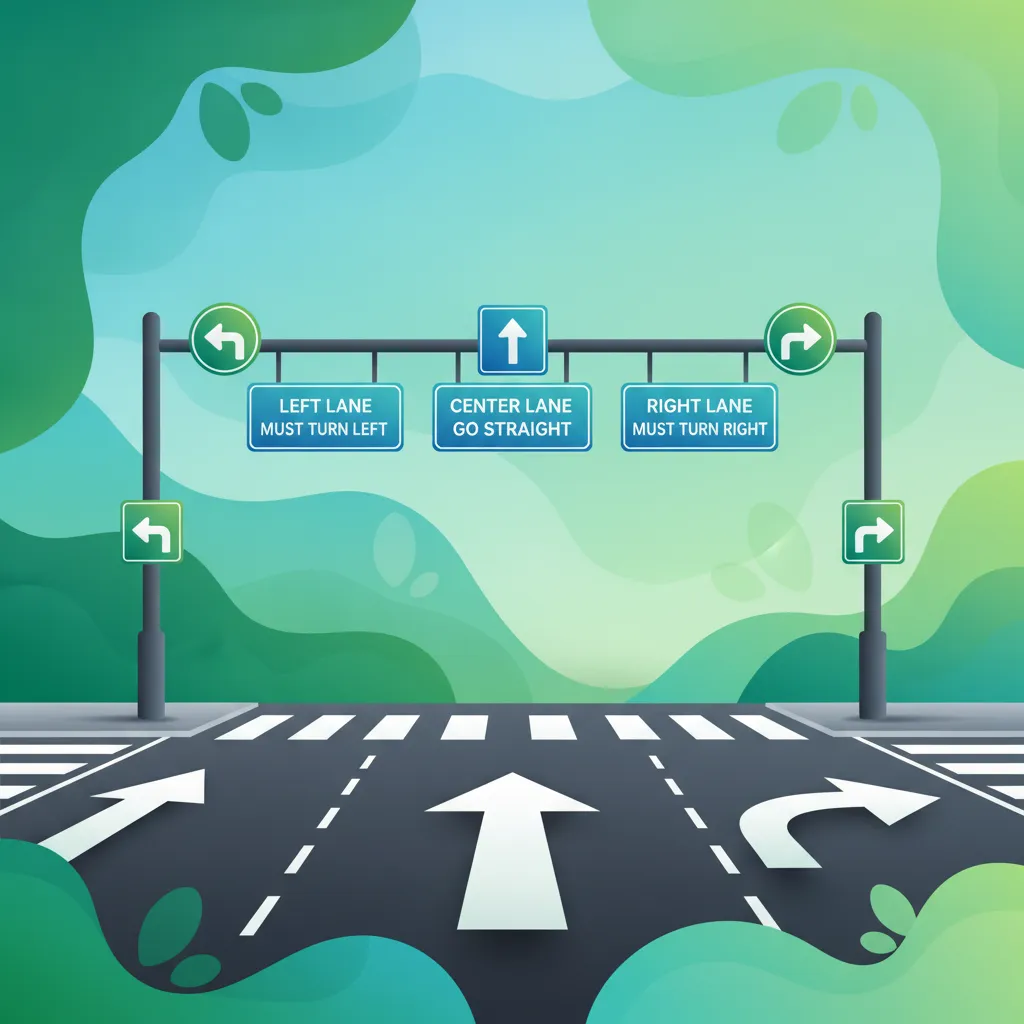
Preselection and direction arrows painted on the road surface instruct drivers on lane-specific movements at upcoming intersections or merges. This lesson teaches you how to interpret these arrows so you can position your vehicle correctly well in advance of a turn. You will learn the rules for lane merging, following curved guidance lines, and avoiding sudden, dangerous lane adjustments.

This lesson covers the specific lane usage rules and best practices for articulated goods vehicles, emphasizing the correct positioning within lane markings and the impact of vehicle length on lane width. Learners will understand how to navigate lane changes safely, the importance of maintaining appropriate gaps with other road users, and the challenges posed by narrow lanes in urban environments. The content also addresses the French road markings standard.

France features a vast network of roundabouts (carrefours a sens giratoire) governed by specific entry and lane-use regulations. This lesson explains that vehicles entering a roundabout must yield to traffic already circulating inside. You will learn how to select the correct lane depending on your exit, use direction indicators properly, and yield to pedestrians and cyclists near roundabout exits.

This lesson outlines the rules and practical safety limits of lane filtering, known as 'inter-files' riding, under French road guidelines. You will study the specific speed limits allowed during filtering, the conditions of high congestion where it is permitted, and where it remains completely banned. The lesson also highlights the critical need to anticipate sudden lane changes from frustrated car drivers stuck in stationary traffic queues.
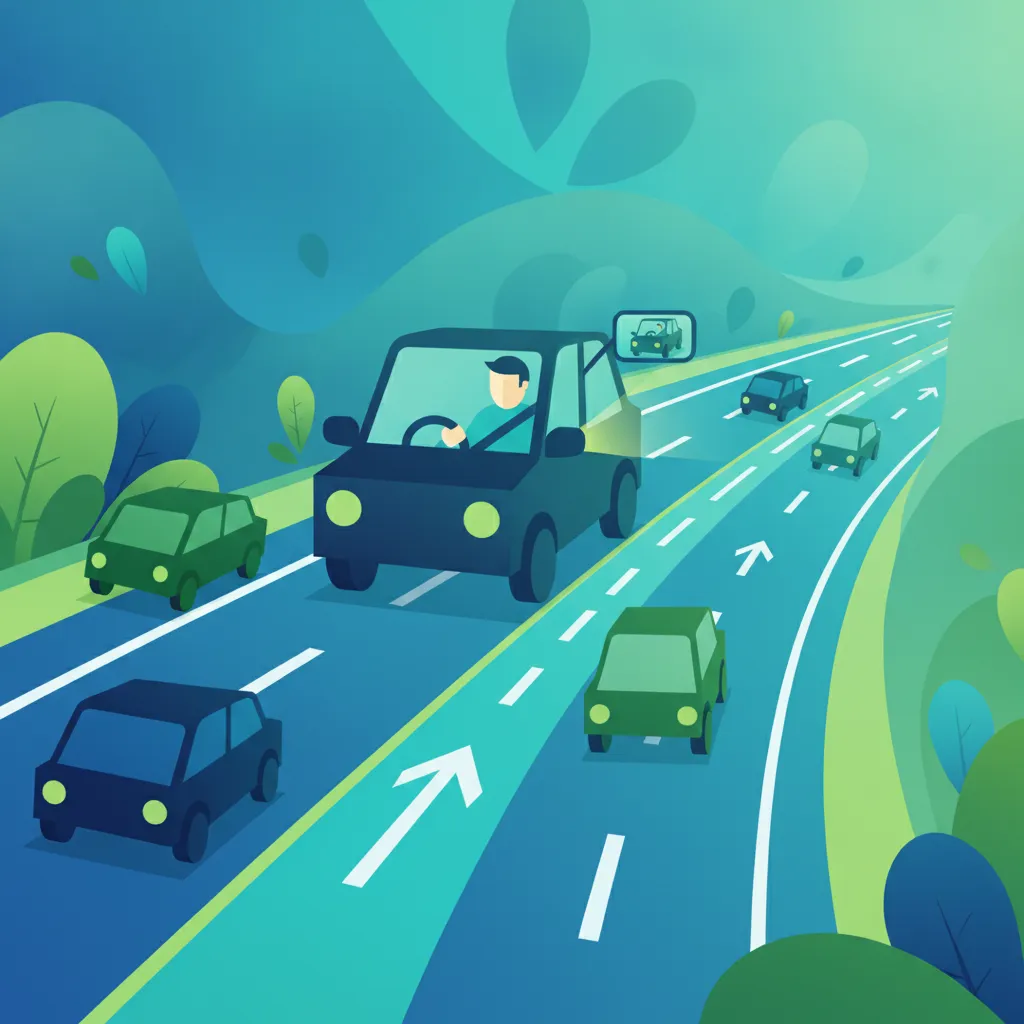
Changing lanes or executing turns requires a structured visual and physical procedure to prevent interrupting surrounding traffic. This lesson explains the key steps: checking the center mirror, exterior mirrors, turning on direction indicators, and performing blind-spot checks. You will learn correct vehicle positioning for both left and right turns, and how to execute safe turning circles without cutting corners.
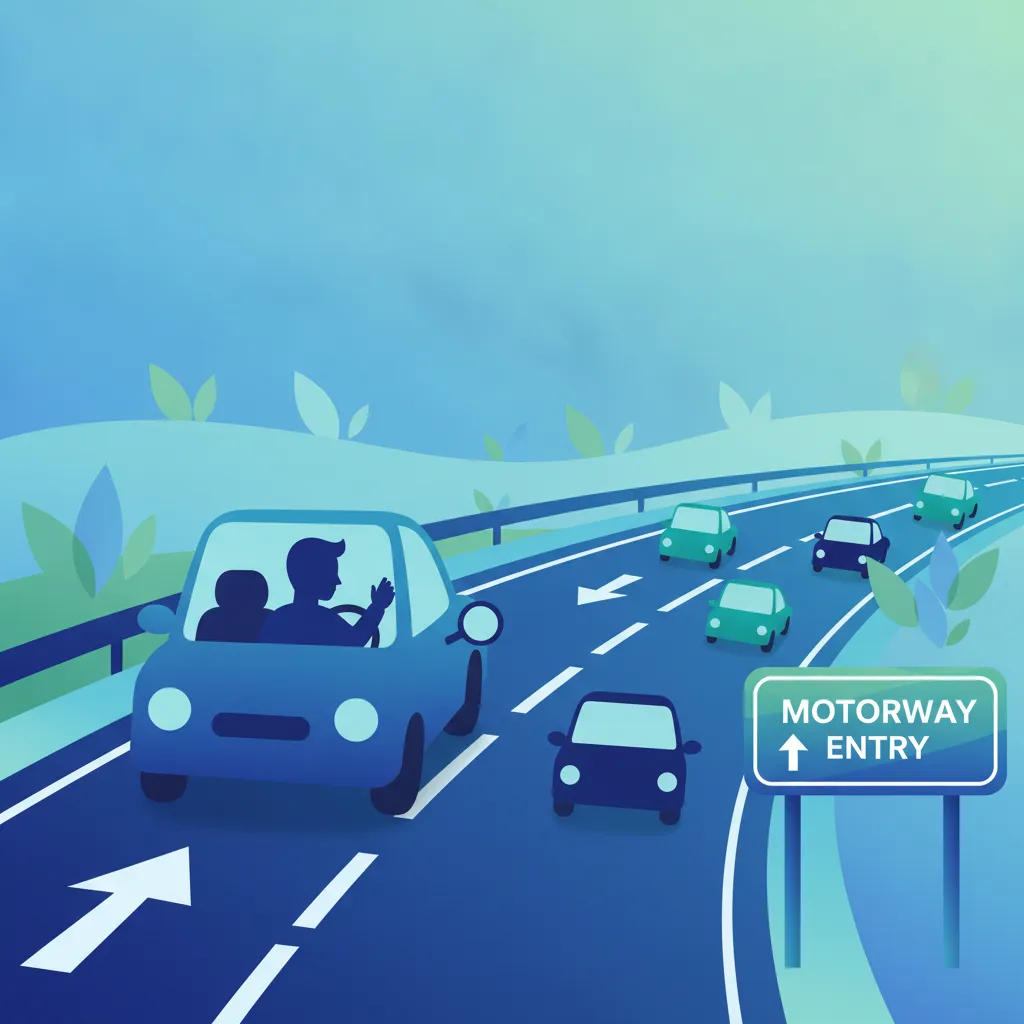
Merging onto a motorway or dual carriageway requires precise coordination of speed, lane observation, and indicator signalling. This lesson explains how to utilize the acceleration lane (voie d'insertion) to match the speed of highway traffic before merging. You will learn how to assess traffic gaps in your side mirrors, signal your intentions, and execute the merge without disrupting the traffic flow.

Traffic signals control flow and priority at busy intersections using precise color sequences. This lesson explains standard red, amber, and green cycles, as well as complex signals like flashing amber lights that indicate caution or a priority-to-the-right situation. You will learn the legal rules for turning on arrow signals and how to coordinate with dedicated pedestrian and cyclist light displays.
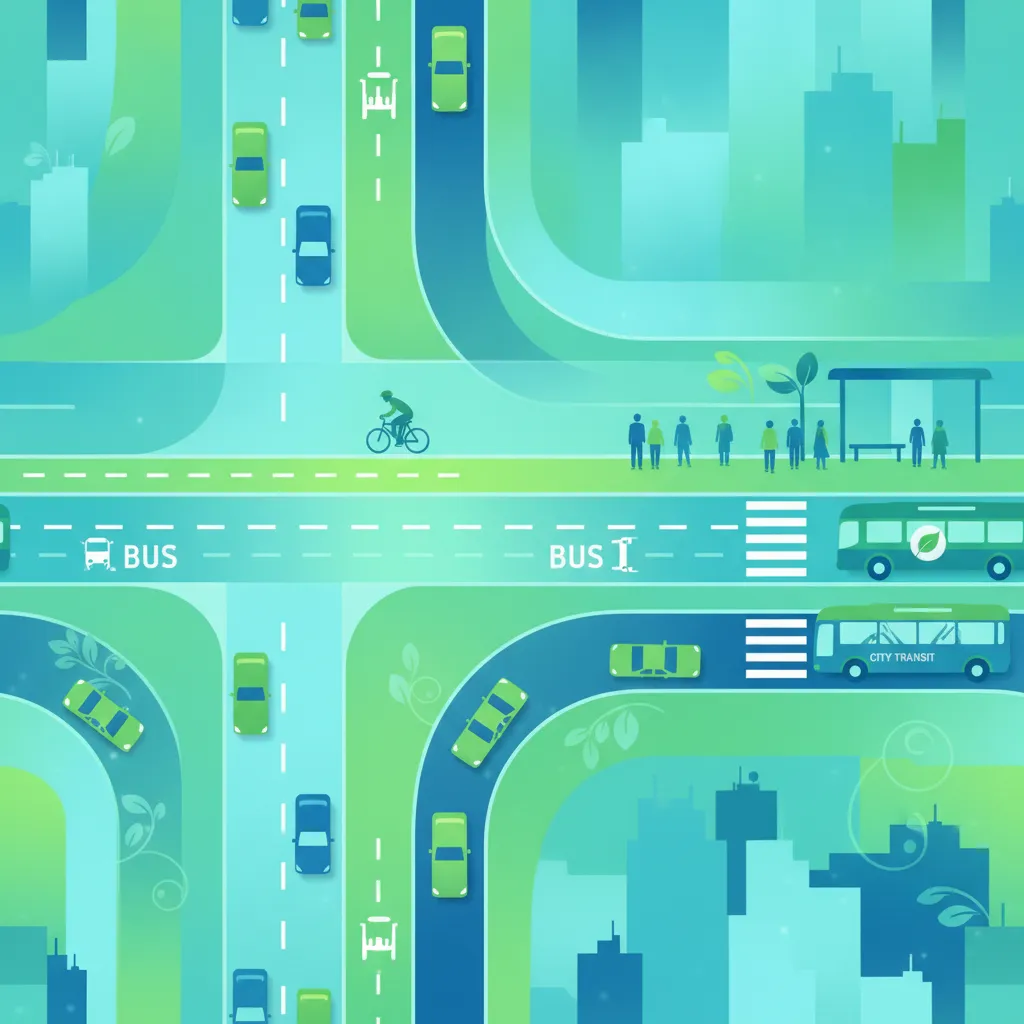
This lesson clarifies the legal boundaries of urban infrastructure, highlighting the strict ban on riding motorcycles within bus lanes or cycle paths. You will study French regulations concerning traffic flow, including where and when experimental lane filtering is permitted between lines of stationary cars. Understanding these boundaries ensures you can keep moving through congested areas without risking heavy fines or dangerous collisions.
Understand the full spectrum of road surface markings including directional arrows, pedestrian crossing indicators, and special zones. This guide provides a clear visual overview of how different markings regulate traffic behavior, define road space, and communicate vital safety information to drivers preparing for the French theory exam.
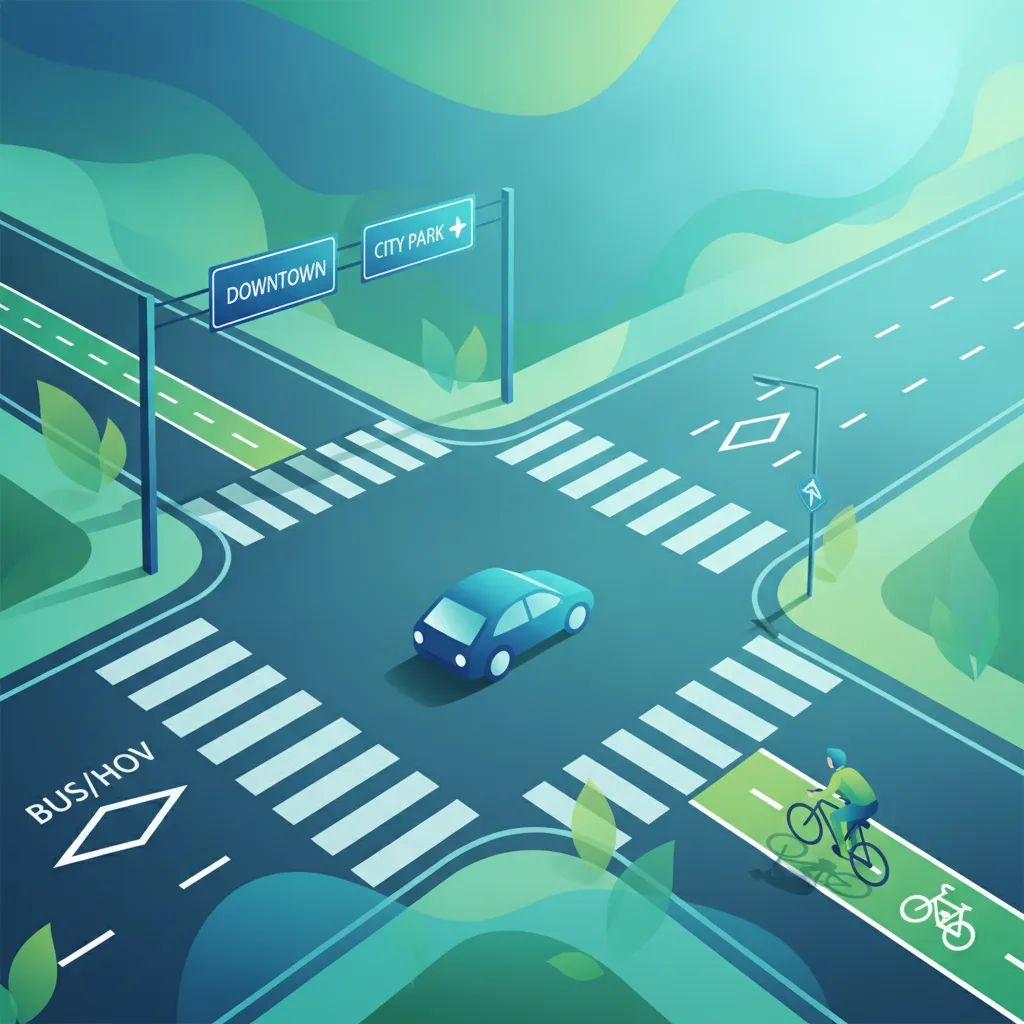
Learners will explore the variety of road surface markings that indicate lane boundaries, reserved spaces for different users, and pedestrian crossings in France. The lesson emphasizes how AM riders should interpret solid and broken lines, bike lane markings, and zebra crossings, ensuring appropriate lane usage and adherence to traffic flow. Understanding these markings is essential for maintaining order and safety on shared roadways.

This lesson details the legal and physical implications of horizontal markings, including solid white lines, broken warning lines, and cycle lane dividers. You will learn about the strict prohibition against crossing solid lines and how directional arrows dictate correct lane choices at complex junctions. Importantly, the lesson teaches you to recognize the physical hazard of wet road paint, which drastically reduces tire grip during braking.

Lateral road markings run across or along the sides of roadways, signaling limits such as stop lines, yield lines, and pedestrian zones. This lesson explains how painted curbs restrict parking, including continuous or broken yellow lines which signal stopping or parking prohibitions. You will learn how to identify pedestrian zone boundaries and ensure you never obstruct pedestrian or cyclist paths.
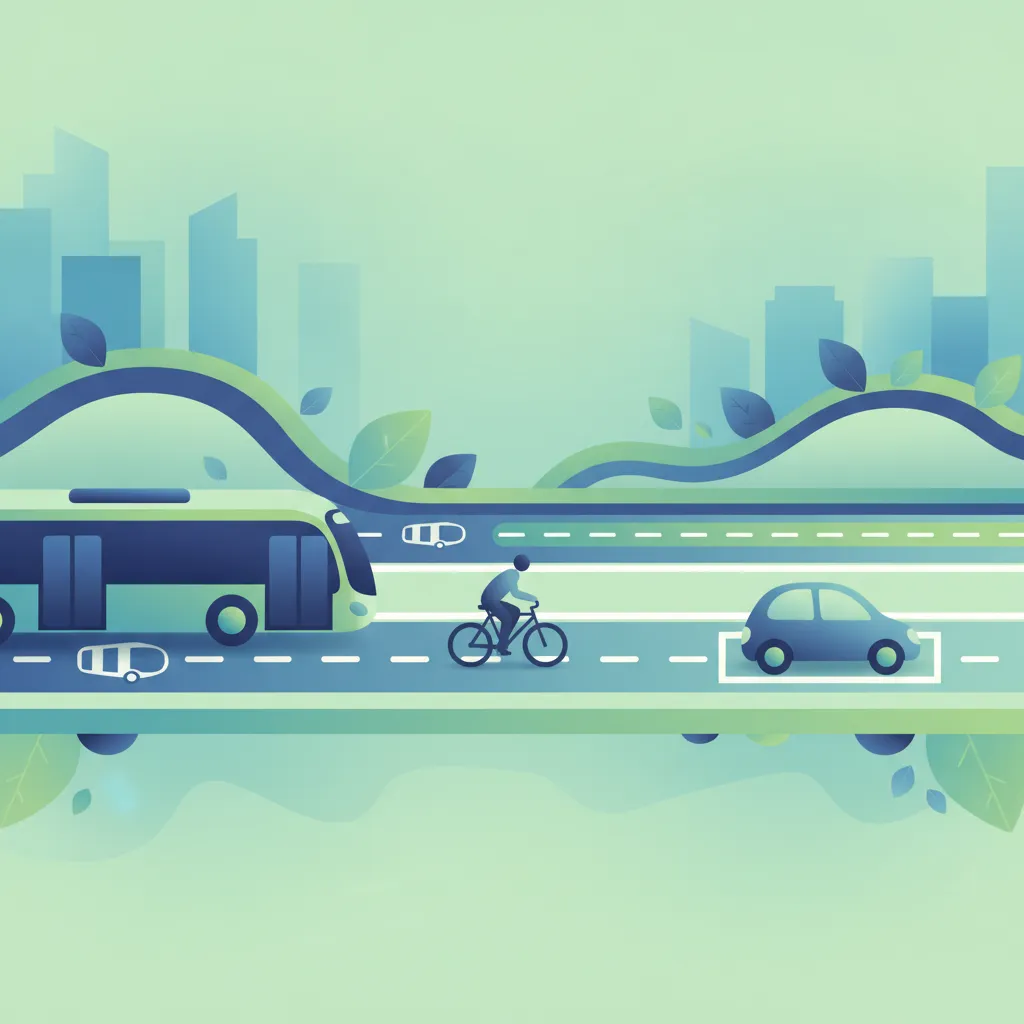
Urban roads in France feature specialized lanes reserved for public transit, micro-mobility, and distinct parking options. This lesson covers how to recognize bus lanes, cycling lanes, and the specific rules that prohibit general traffic from blocking them. You will also learn to interpret parking bay outlines, loading zones, and spots reserved for electric charging or drivers with disabilities.

Some crossroads feature complex layouts or specific signs that modify standard priority rules, such as schematic diagrams (panonceaux schematiques). This lesson teaches you how to read these auxiliary signs, which depict the thick line of the priority road and thin lines of secondary roads. You will learn how to maintain priority when the main road curves and how to navigate non-standard intersection layouts.
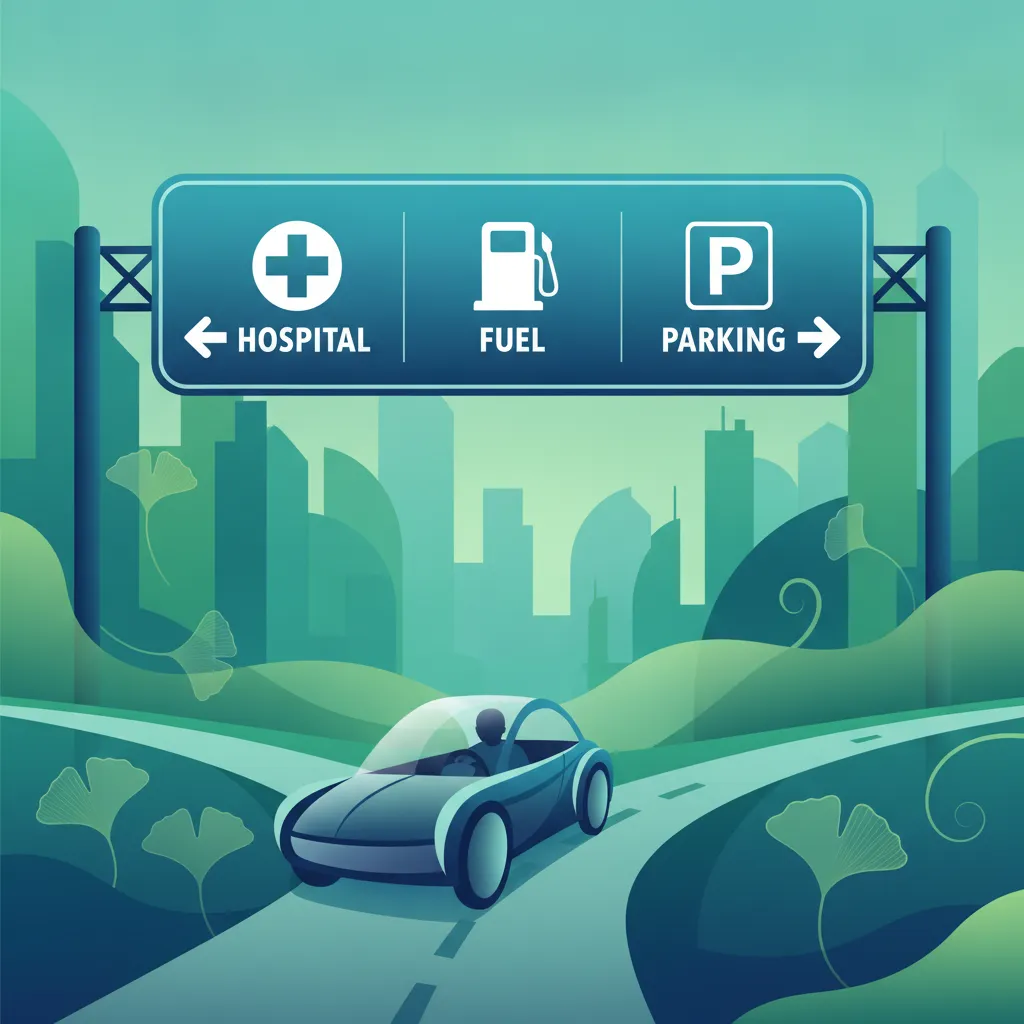
Information signs are typically square or rectangular and provide navigation support, route identification, and safety service details. This lesson covers how to read distance markers, locate highway rest stops, and identify services like hospitals or charging stations. You will also learn to read European route numbers, toll-road indicators, and directional signs that facilitate easy travel across France.

This lesson focuses on French warning signs that alert drivers to potential hazards ahead, such as curves, animal crossings, or slippery surfaces, with particular attention to signs relevant to AM riders. Learners will examine how to interpret these signs, understand the associated risks, and adapt riding behavior accordingly. By mastering warning sign recognition, riders can proactively manage safety risks in diverse road conditions.
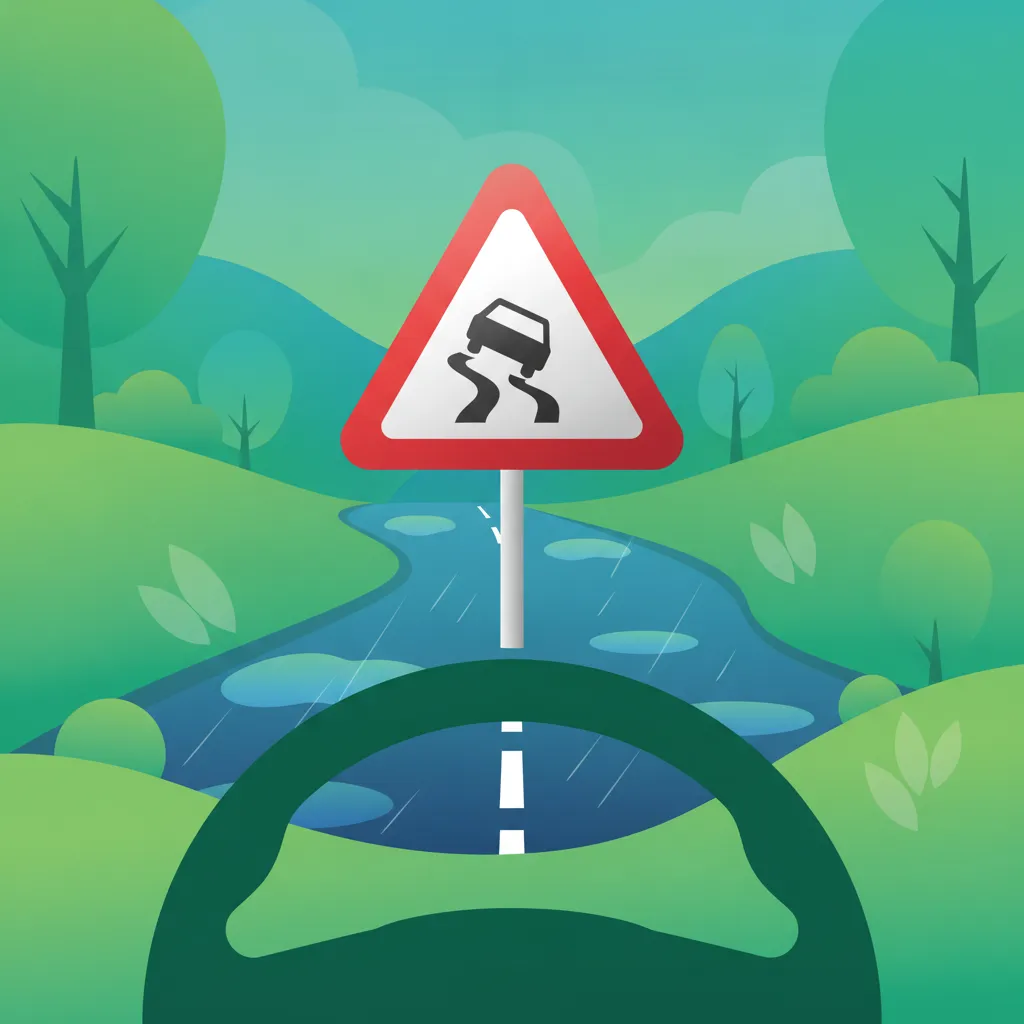
Warning signs on French roads are triangular with a red border, designed to alert drivers to upcoming dangers. This lesson teaches you how to interpret warnings for sharp curves, slippery surfaces, narrowing lanes, and wildlife or animal crossing hazards. You will understand the safety adjustments needed when approaching school zones, active roadworks, or crossings where vulnerable pedestrians are present.
Preselection and direction arrows painted on the road surface instruct drivers on lane-specific movements at upcoming intersections or merges. This lesson teaches you how to interpret these arrows so you can position your vehicle correctly well in advance of a turn. You will learn the rules for lane merging, following curved guidance lines, and avoiding sudden, dangerous lane adjustments.
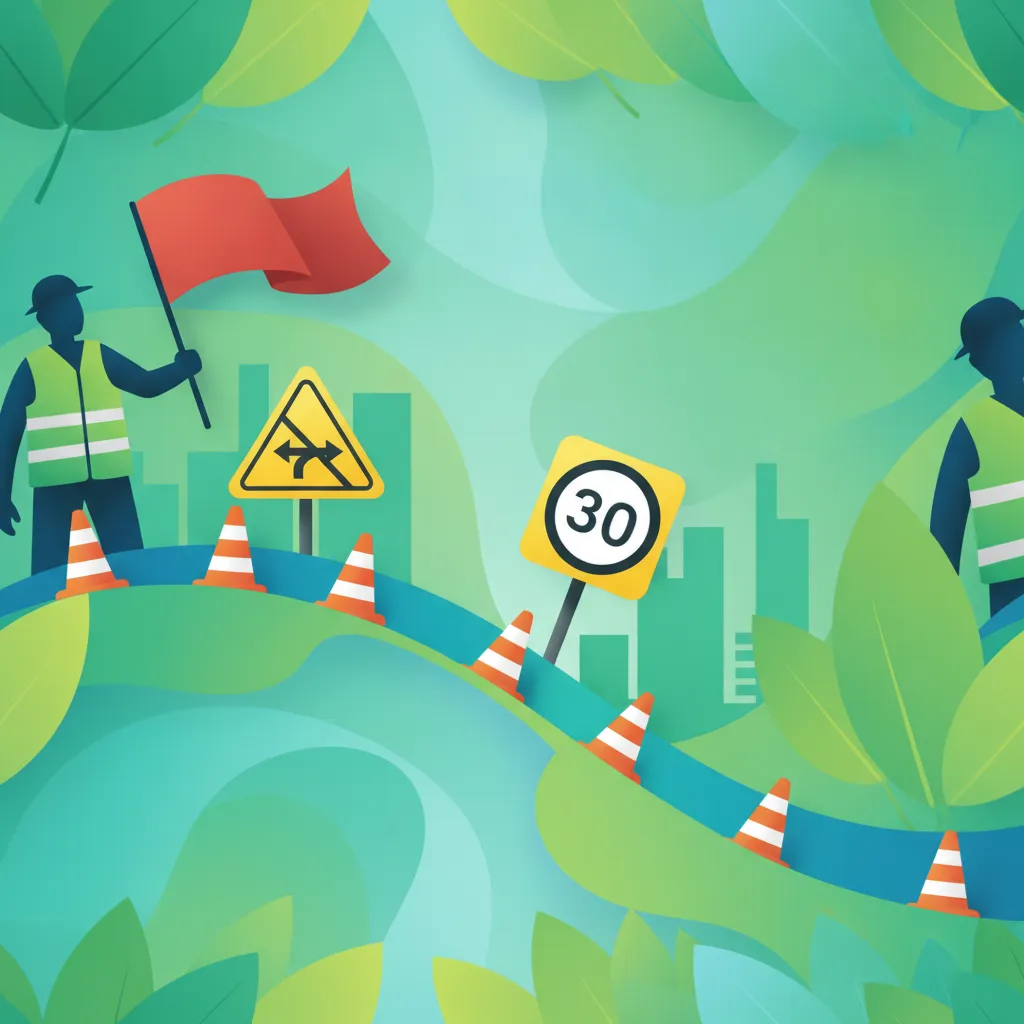
Temporary traffic configurations and construction sites are signaled using yellow-background signs to indicate their short-term nature. This lesson teaches you how to comply with temporary speed reductions, interpret lane shifts, and follow designated detour signs (deviation). Drivers will learn how to maintain high vigilance and safely navigate worksites while protecting road workers and oncoming traffic.
Find clear answers to common questions learners have about Longitudinal Markings and Lane Discipline. Learn how the lesson is structured, which driving theory objectives it supports, and how it fits into the overall learning path of units and curriculum progression in France. These explanations help you understand key concepts, lesson flow, and exam focused study goals.
Generally, no. Crossing or straddling a continuous solid white line is prohibited by the Code de la route. Exceptions only occur if you need to bypass an obstacle like a fallen tree or a broken-down vehicle, provided it is safe to do so.
A broken line has widely spaced segments and indicates you may cross or overtake if safe. A warning line has segments that are much closer together, indicating that a solid line is approaching and you should complete your maneuver quickly.
A dual line consists of a solid line paired with a broken line. You must obey the line closest to your lane; if you are on the side with the broken line, you may cross it, but if you are on the side with the solid line, you cannot.
Yes, on motorways, you must stay in the right-hand lane unless you are overtaking or following a direction sign. Longitudinal markings help define these lanes, and failing to maintain proper lane discipline is a common error in both the exam and real life.
Ready to focus your study? Use the practice search to find exactly the French driving theory questions you need for the Code de la route and permis de conduire ETG. Refine your knowledge on specific topics or challenging rules to boost your confidence and exam readiness.