
This lesson guides you through the complex legal and practical requirements for overtaking other vehicles as a motorcycle rider in France. By understanding these rules, you will be able to navigate traffic safely and correctly answer tricky questions on your Category A, A1, or A2 theory test.

Lesson content overview
Safe overtaking (le dépassement) is one of the most critical maneuvers you will perform as a motorcyclist. While a motorcycle's high power-to-weight ratio allows for rapid acceleration, this advantage can lead to a false sense of security. Under the French Code de la route, overtaking is strictly regulated to prevent catastrophic head-on collisions and side-impact accidents.
This lesson covers the strict legal conditions under which you may overtake other vehicles on French roads, the necessary visibility criteria, the physical mechanics of the maneuver, and the legal penalties for non-compliance. Mastering these concepts is essential for passing your French Motorcycle Theory Exam (Épreuve Théorique Moto - ÉTM) and for staying safe on the road.
Overtaking is not merely a matter of accelerating past a slower vehicle; it is a complex tactical decision that temporarily places your motorcycle in a high-risk zone—often in the path of oncoming traffic or within another driver's blind spot.
The rules governing overtaking are designed around human reaction times, vehicle physics, and sight lines.
In France, overtaking must always be executed on the left side of the vehicle being passed. Overtaking on the right is strictly prohibited, with very specific legal exceptions.
You must always pass on the left. The only legal exceptions under Article R414-6 of the Code de la route are:
When passing any road user, you must maintain a safe lateral cushion. The law prescribes minimum lateral distances based on where you are riding:
This distance is vital when passing vulnerable road users such as cyclists, pedestrians, or horseback riders, who may swerve or be destabilized by the wind blast of your motorcycle.
Before initiating any overtake, you must ensure that road markings, road signs, and physical visibility permit the maneuver.
You must have a clear view of the road ahead to ensure that no oncoming traffic can compromise your safety.
The lines painted on the asphalt dictate whether you are legally permitted to cross into the adjacent lane:
To safely execute an overtake on a motorcycle, you must follow a highly structured sequence of observations and actions. Any deviation can result in a collision or a traffic violation.
Step 1: Preparation and Distance Assessment Maintain a safe following distance from the vehicle ahead (the "two-second rule"). Riding too close to the rear of a large vehicle severely restricts your forward visibility and prevents you from seeing oncoming traffic.
Step 2: Rearview Mirror Checks (Rétroviseurs) Look in your mirrors to verify the traffic situation behind you. Ensure that no other vehicle (especially another motorcycle or a fast-moving car) has already committed to overtaking you.
Step 3: Direct Head Check (Angle Mort) Turn your head quickly to perform a blind spot check (contrôle direct) over your left shoulder. Mirrors do not show vehicles riding directly alongside your rear wheel.
Step 4: Signal Intention (Clignotant) Activate your left turn signal. This warns drivers behind and ahead of your imminent lateral movement.
Step 5: Lateral Shift and Acceleration Move smoothly into the left lane. Accelerate decisively to minimize the time spent alongside the other vehicle. Your speed differential should be at least 20 km/h faster than the vehicle you are passing, without exceeding the posted speed limit.
Step 6: Confirm and Return (Rabattement) Before returning to the right lane, look in your right mirror (and perform a quick right shoulder head check). You must see the entire front of the overtaken vehicle in your mirror before merging back. Activate your right turn signal and return smoothly to the standard lane position.
The Blind Spot Hazard: Never skip the direct head check! Motorcycles are easily hidden in the blind spots of larger vehicles, and other motorcyclists can easily hide in yours. A simple glance over your shoulder can save your life.
Even on roads with broken lines, overtaking is legally prohibited under certain conditions due to the elevated risk of conflict.
Overtaking is forbidden at all intersections where you do not have absolute right of way.
You are strictly forbidden from overtaking any vehicle that is approaching or driving over a pedestrian crossing (passage piétons) unless you can clearly see that no pedestrian is engaged or about to engage on the crossing. If a vehicle ahead slows down near a crossing, they are likely yielding to a pedestrian hidden from your view.
Anywhere your forward visibility is compromised by geography or weather, overtaking is illegal. If you cannot see oncoming traffic due to a bend (virage) or a hill crest (sommet de côte), you must wait.
Failing to adhere to overtaking rules carries heavy penalties under the French Code de la route. These rules are strictly enforced by police and automated speed/lane cameras.
| Violation | Legal Penalty | Points Deducted | Impact on License |
|---|---|---|---|
| Crossing a solid line (Franchissement de ligne continue) | Class 4 Fine (€135) | 3 Points | Possible suspension up to 3 years |
| Straddling a solid line (Chevauchement de ligne continue) | Class 4 Fine (€135) | 1 Point | Possible suspension up to 3 years |
| Dangerous Overtaking (Dépassement dangereux) | Class 4 Fine (€135) | 3 Points | Suspension of driving license up to 3 years |
| Overtaking on the Right (Dépassement par la droite) | Class 4 Fine (€135) | 3 Points | Suspension of driving license up to 3 years |
A common point of confusion is whether you can cross a solid white line to pass extremely slow vehicles, such as agricultural tractors or cyclists:
The dynamics of overtaking change significantly depending on the environment, weather conditions, and the type of vehicle you are passing.
When overtaking heavy goods vehicles (poids lourds), be prepared for aerodynamic turbulence:
Understanding the direct consequences of your decisions helps build safe riding habits:
[Correct Decision]
Safe distance -> Clear mirrors -> Head check -> Swift pass -> Safe lateral buffer
  │
  └─► Result: Smooth traffic flow, zero near-misses, preservation of license points.

[Incorrect Decision]
Tailgating -> Abrupt swerve out -> Skipping blind spot check -> Slow acceleration
  │
  └─► Result: High risk of clipping oncoming vehicles, side-swiping passing cars, or losing control.
To fully understand this lesson, you should be familiar with the following concepts from other parts of your training:
Before taking your theoretical exam, ensure you have memorized this checklist:
This lesson covers the strict legal and practical requirements for executing safe overtaking maneuvers on French roads as a motorcycle rider. The core rule is that all overtaking must occur on the left, with specific exceptions for left-turning vehicles, trams, and heavy traffic. Learners must memorize the minimum lateral distances (1.0m in towns, 1.5m on rural roads), visibility requirements (250-500m ahead, 100m behind), and the six-step procedure: maintain distance, check mirrors, perform head check, signal, accelerate with safe speed differential, then confirm and return. Prohibited zones include intersections, pedestrian crossings, and any location with limited sight lines. Penalties for violations include fines of €135 and up to 3 points deducted, with possible license suspension.
A short set of high-value points that capture the most important learning from this lesson.
In France, you must always overtake on the left; the only legal exceptions are vehicles turning left, trams, and congested slow-moving traffic.
Maintain a lateral cushion of at least 1.0 metre inside urban areas and 1.5 metres outside built-up zones when passing any road user.
You must have clear forward visibility of 250-500 metres and ensure no vehicle behind is overtaking you before initiating a pass.
Crossing or straddling a solid white line (ligne continue) to overtake is strictly illegal under French road law.
Never begin or continue an overtake if you see rollback arrows (flèches de rabattement) - you must complete the maneuver and return to your lane before the third arrow.
Explore all units and lessons included in this driving theory course.
Speed differential during overtaking should be at least 20 km/h faster than the vehicle being passed without exceeding the speed limit.
A direct head check over your shoulder is mandatory because mirrors cannot show vehicles in your blind spot (angle mort) riding alongside your rear wheel.
Overtaking is prohibited before and within intersections unless you are on a designated priority road or have a green light at a regulated junction.
In fog, on curves, or at hill crests where visibility is compromised, overtaking is illegal even on roads with broken lane markings.
When overtaking heavy goods vehicles, expect aerodynamic turbulence - a vacuum effect when approaching the rear and a wind blast when clearing the front.
Assuming it is safe to overtake based solely on mirror checks, skipping the critical blind spot head check.
Attempting to pass slow-moving vehicles like tractors by crossing a solid line, which is illegal unless specifically authorized by authorities.
Starting an overtake without checking for rollback arrows, then being forced to either brake or commit illegally.
Following too closely behind a large vehicle, which restricts forward visibility and prevents seeing oncoming traffic in time.
Returning to the right lane before seeing the entire front of the overtaken vehicle in your mirror.
Lesson content overview
A short set of high-value points that capture the most important learning from this lesson.
In France, you must always overtake on the left; the only legal exceptions are vehicles turning left, trams, and congested slow-moving traffic.
Maintain a lateral cushion of at least 1.0 metre inside urban areas and 1.5 metres outside built-up zones when passing any road user.
You must have clear forward visibility of 250-500 metres and ensure no vehicle behind is overtaking you before initiating a pass.
Crossing or straddling a solid white line (ligne continue) to overtake is strictly illegal under French road law.
Never begin or continue an overtake if you see rollback arrows (flèches de rabattement) - you must complete the maneuver and return to your lane before the third arrow.
Explore all units and lessons included in this driving theory course.
Speed differential during overtaking should be at least 20 km/h faster than the vehicle being passed without exceeding the speed limit.
A direct head check over your shoulder is mandatory because mirrors cannot show vehicles in your blind spot (angle mort) riding alongside your rear wheel.
Overtaking is prohibited before and within intersections unless you are on a designated priority road or have a green light at a regulated junction.
In fog, on curves, or at hill crests where visibility is compromised, overtaking is illegal even on roads with broken lane markings.
When overtaking heavy goods vehicles, expect aerodynamic turbulence - a vacuum effect when approaching the rear and a wind blast when clearing the front.
Assuming it is safe to overtake based solely on mirror checks, skipping the critical blind spot head check.
Attempting to pass slow-moving vehicles like tractors by crossing a solid line, which is illegal unless specifically authorized by authorities.
Starting an overtake without checking for rollback arrows, then being forced to either brake or commit illegally.
Following too closely behind a large vehicle, which restricts forward visibility and prevents seeing oncoming traffic in time.
Returning to the right lane before seeing the entire front of the overtaken vehicle in your mirror.
Explore search topics learners often look for when studying Overtaking Procedures and Legal Requirements. These topics reflect common questions about road rules, driving situations, safety guidance, and lesson level theory preparation for learners in France.
Browse additional driving theory lessons that cover connected traffic rules, road signs, and common driving situations related to this topic. Improve your understanding of how different rules interact across everyday traffic scenarios.
Learn the specific legal requirements for overtaking on different types of French roadways. This explanation covers the mandatory lateral safety distances for urban environments versus open rural roads, ensuring you understand how to maintain compliance and safety while maneuvering around various types of road users.

Rural roads account for a high percentage of severe accidents due to narrow widths, winding geometries, and sudden hazards. This lesson teaches strategies for negotiating sharp bends, handling agricultural machinery, and reacting to wildlife warning signs. You will learn to manage your vehicle's lane placement on roads with soft shoulders and understand speed limits on rural networks.
Maintaining a safe distance behind the lead vehicle is essential to prevent rear-end collisions during sudden braking maneuvers. This lesson teaches you the two-second safety rule and how to calculate this gap at different highway speeds. You will also study unique safety margin requirements, such as maintaining minimum distance intervals in road tunnels or doubling your following distance on wet roads.

In this lesson, drivers will explore the specific challenges presented by rural road environments, including narrower lanes, shared space with agricultural vehicles, and frequent wildlife crossings. The content emphasizes adapting speed to road curvature, surface conditions, and visibility while navigating hills and bends. Learners will also learn to interpret rural road signage and understand the importance of maintaining vigilance.
This lesson focuses on the legal requirement to yield to pedestrians on or about to step onto zebra crossings, a major focus of French road safety. You will learn how to approach school zones and pedestrian islands with heightened vigilance and reduced speed. Additionally, the lesson explores shared urban spaces, explaining how to maintain safe lateral distances when overtaking cyclists or personal electric scooters.
This lesson analyzes the complex driving conditions found on French secondary and rural road networks (routes départementales). Drivers will learn steering and braking techniques to descend steep gradients safely using engine retarding systems without overheating the service brakes. Anticipating agricultural machinery, domestic livestock, unlit intersections, and narrow bridges is also taught in depth.
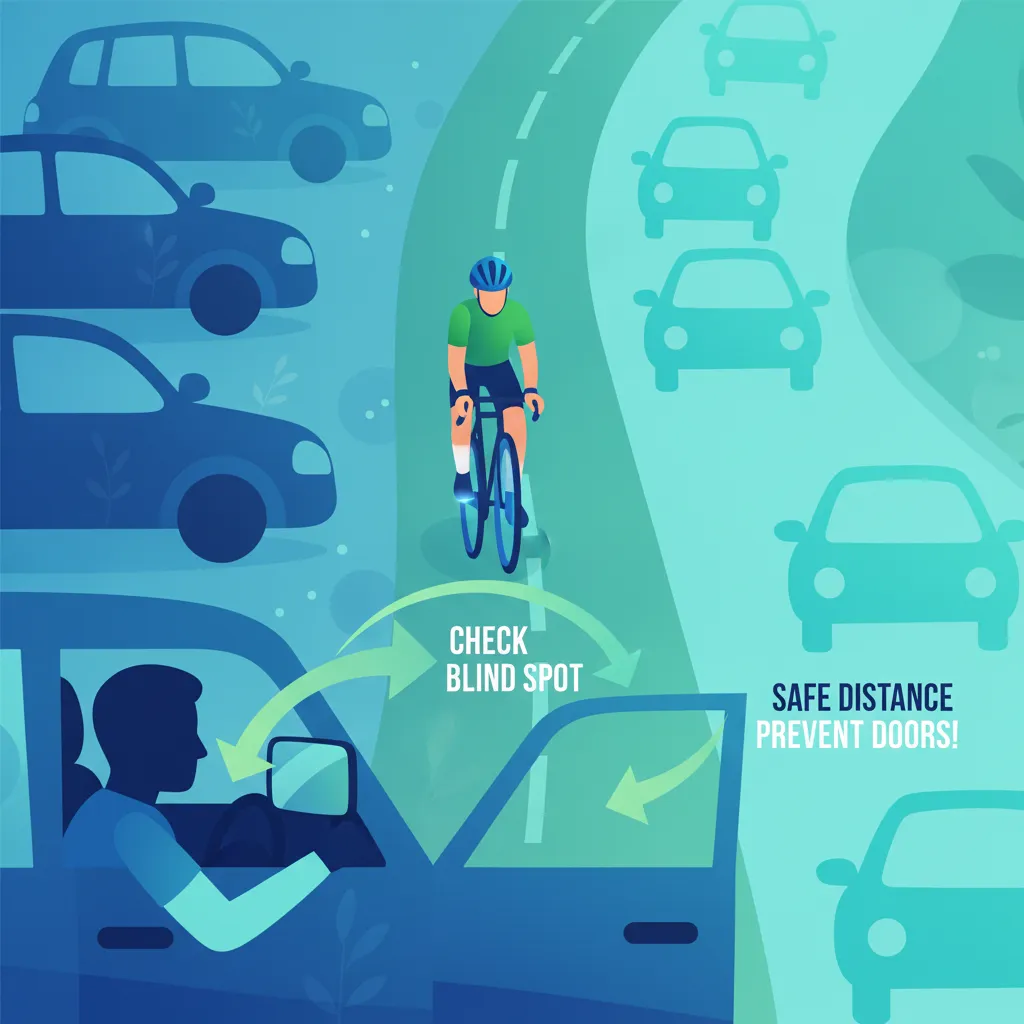
This lesson explains how to share the road safely with cyclists in both urban and rural environments. Drivers will study the legal minimum passing distances when overtaking cyclists, which is one meter in cities and one and a half meters outside urban areas. It also covers recognizing specialized cycling infrastructure, bike boxes at intersections, and preventing blind-spot collisions during right turns.

Overtaking must always be executed quickly and safely, without forcing other drivers to alter their speed or direction. This lesson teaches the strict rule of passing on the left and the rare exceptions where passing on the right is permitted. You will learn to read road signs and markings that prohibit overtaking and how to calculate a safe speed margin to complete your pass.
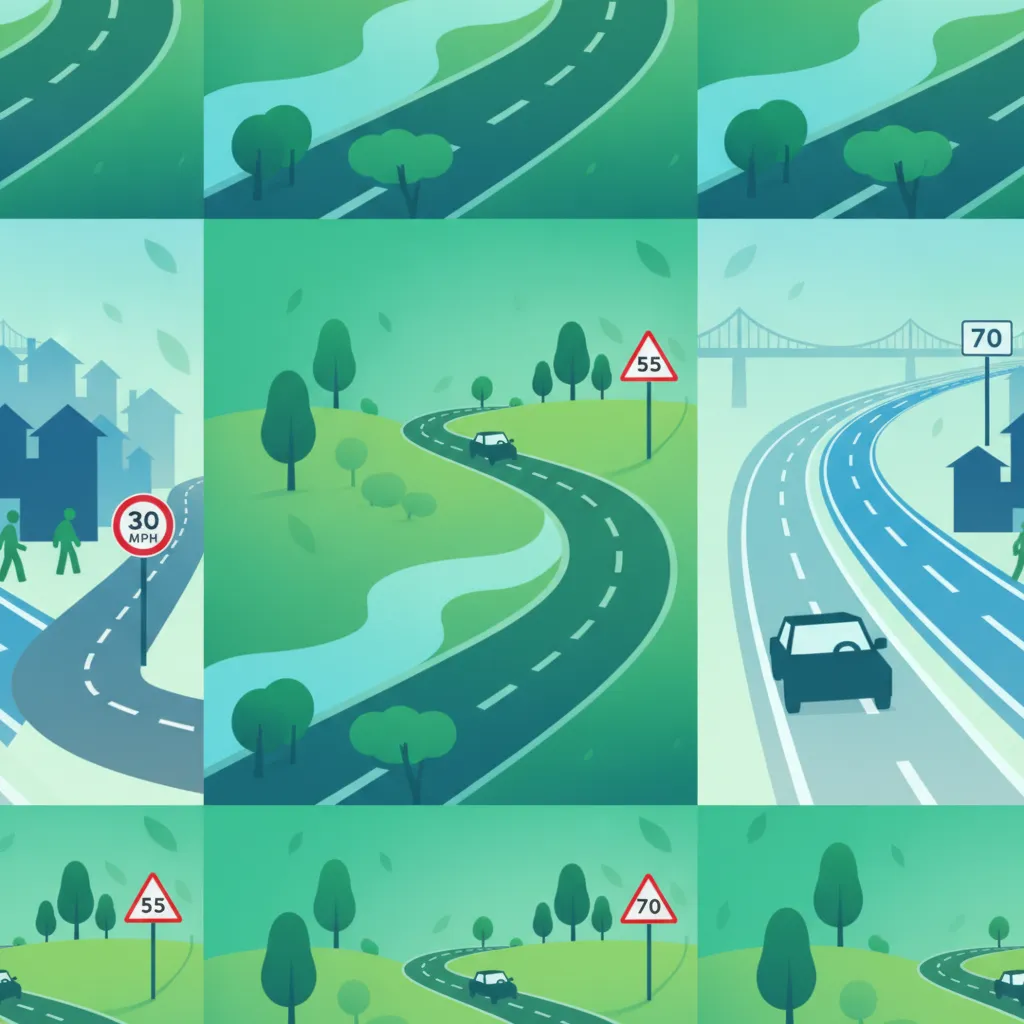
Speed limits in France are strictly regulated based on road category, weather conditions, and the driver's licensing status. This lesson covers standard speeds: 50 km/h in urban areas, 80 km/h on two-lane rural roads, 110 km/h on dual carriageways, and 130 km/h on motorways. You will also learn how these limits drop during rain or fog, and the reduced speed limits applicable to probationary drivers.
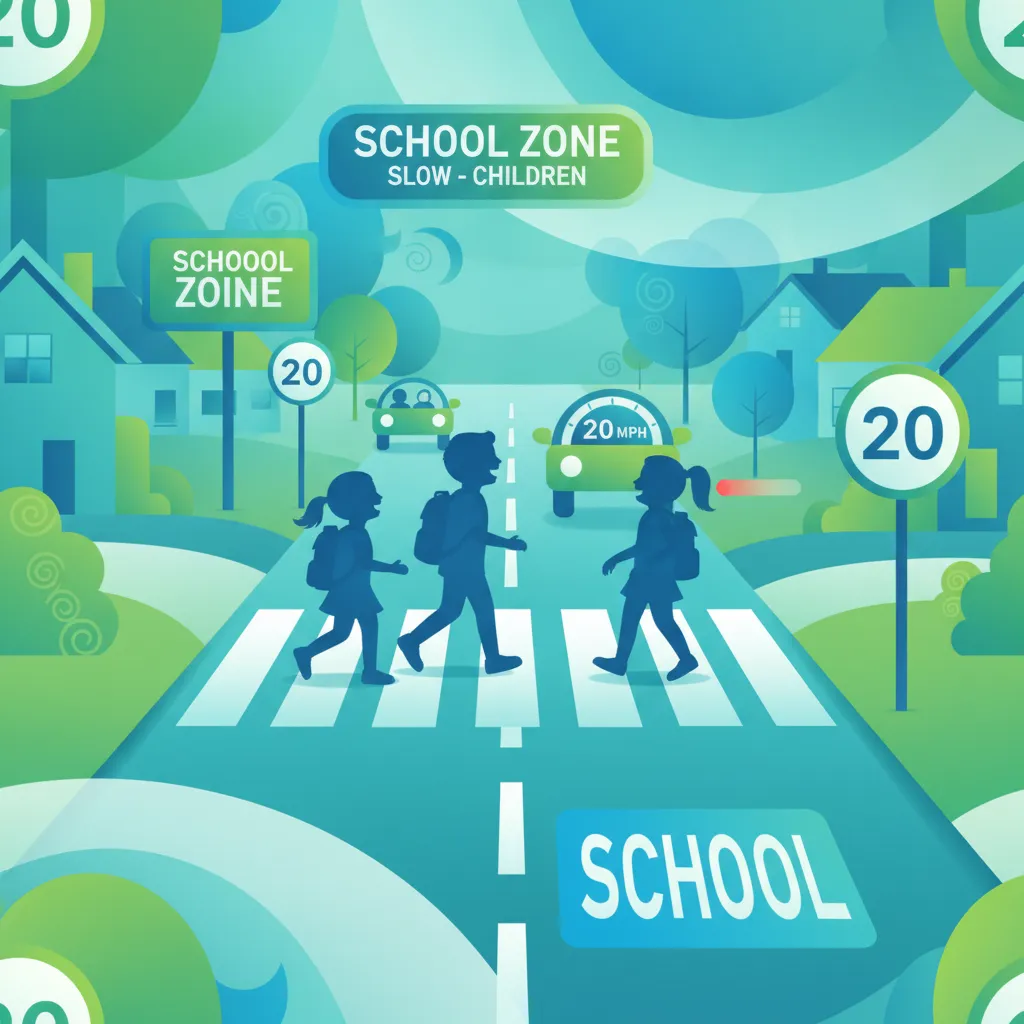
French municipalities utilize distinct low-speed configurations to foster pedestrian safety in residential and educational neighborhoods. This lesson details speed restrictions in 'zone 30', pedestrian-only districts, and shared 'zones de rencontre' where speed is capped at 20 km/h. You will learn how priority hierarchies shift in these zones, giving pedestrians legal priority to use the entire roadway.
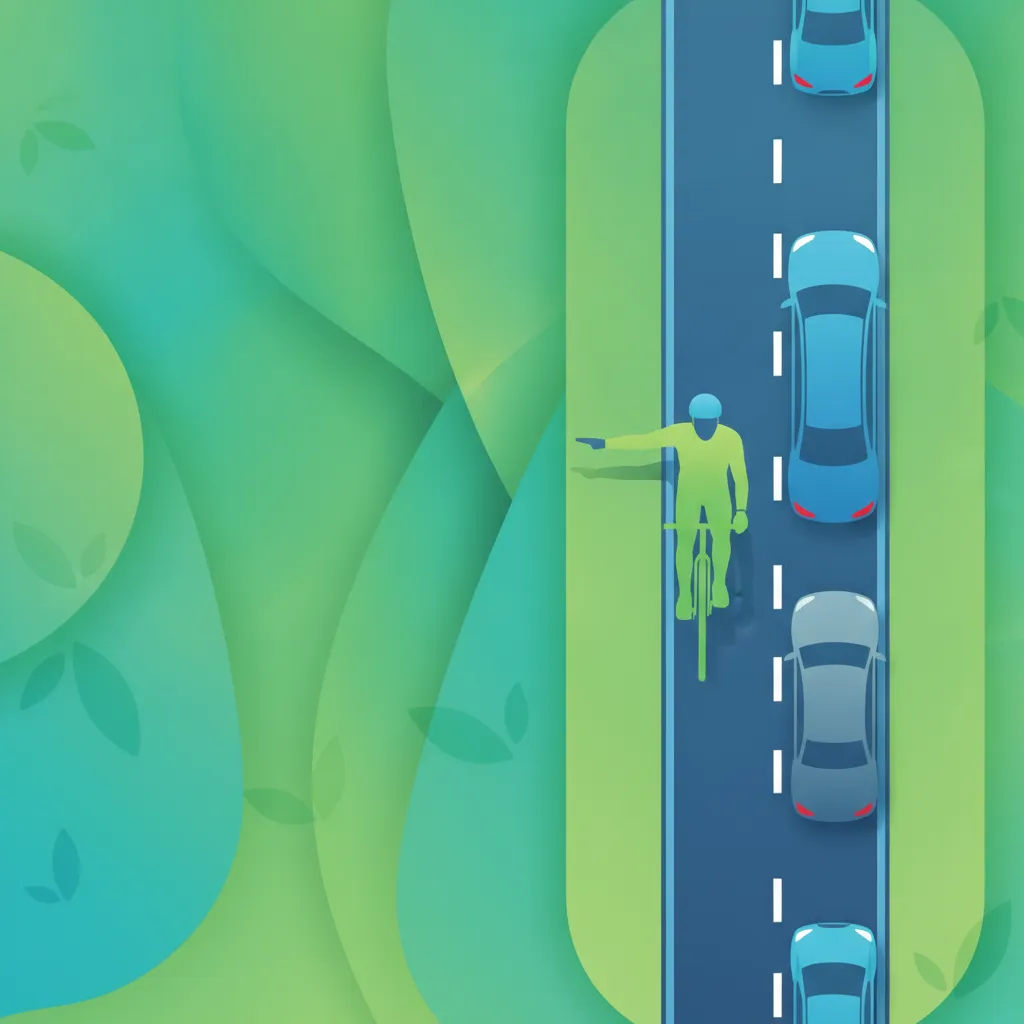
Bicycles represent an eco-friendly transport method with specific rights on French public roadways. This lesson teaches you how to identify dedicated cycle paths, respect bike lanes, and understand cyclist turning privileges at intersections. You will learn the legal minimum safety distance required when overtaking a cyclist: 1 meter in urban areas and 1.5 meters outside city limits.
Explore how to optimize your motorcycle lane positioning to maximize visibility and create a protective space in traffic. This theory guide covers the essential techniques for monitoring blind spots and ensuring clear lines of sight, which are critical for executing safe maneuvers and avoiding hazards on the road.

This lesson explores how dividing your travel lane into three distinct vertical zones allows you to adjust your positioning for optimal safety. You will learn to shift your line to avoid oil slicks in the lane center, road debris at the edges, and wind blasts from passing trucks. Crucially, the lesson covers how to adapt your lane position on blind bends to widen your field of vision and stay clear of oncoming traffic.
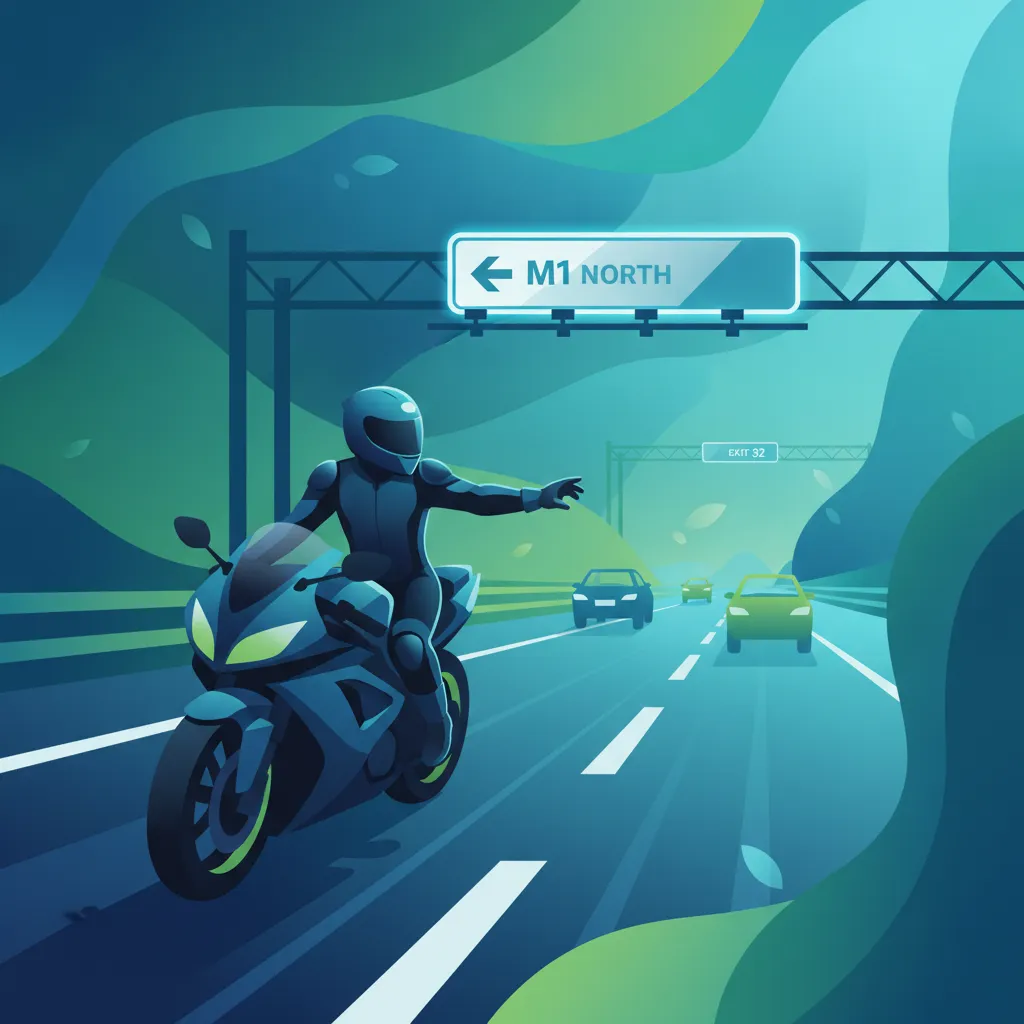
This lesson details how to safely enter, cruise on, and exit French motorways, known as autoroutes, which feature high-speed traffic flows. You will master the process of matching highway speeds in the acceleration lane and performing blind spot checks before merging. The lesson also explains correct lane positioning to avoid aerodynamic turbulences from large semi-trucks, and how to safely prepare for decelerating at exit ramps.

This lesson explains the correct procedures for entering, circulating, and exiting roundabouts, which are highly prevalent throughout France. You will learn the exact lane choice strategies based on your intended exit, and how to use your turn indicators at each stage of the maneuver. The content also addresses the critical task of performing over-the-shoulder blind spot checks to avoid conflicts with overtaking vehicles when exiting.
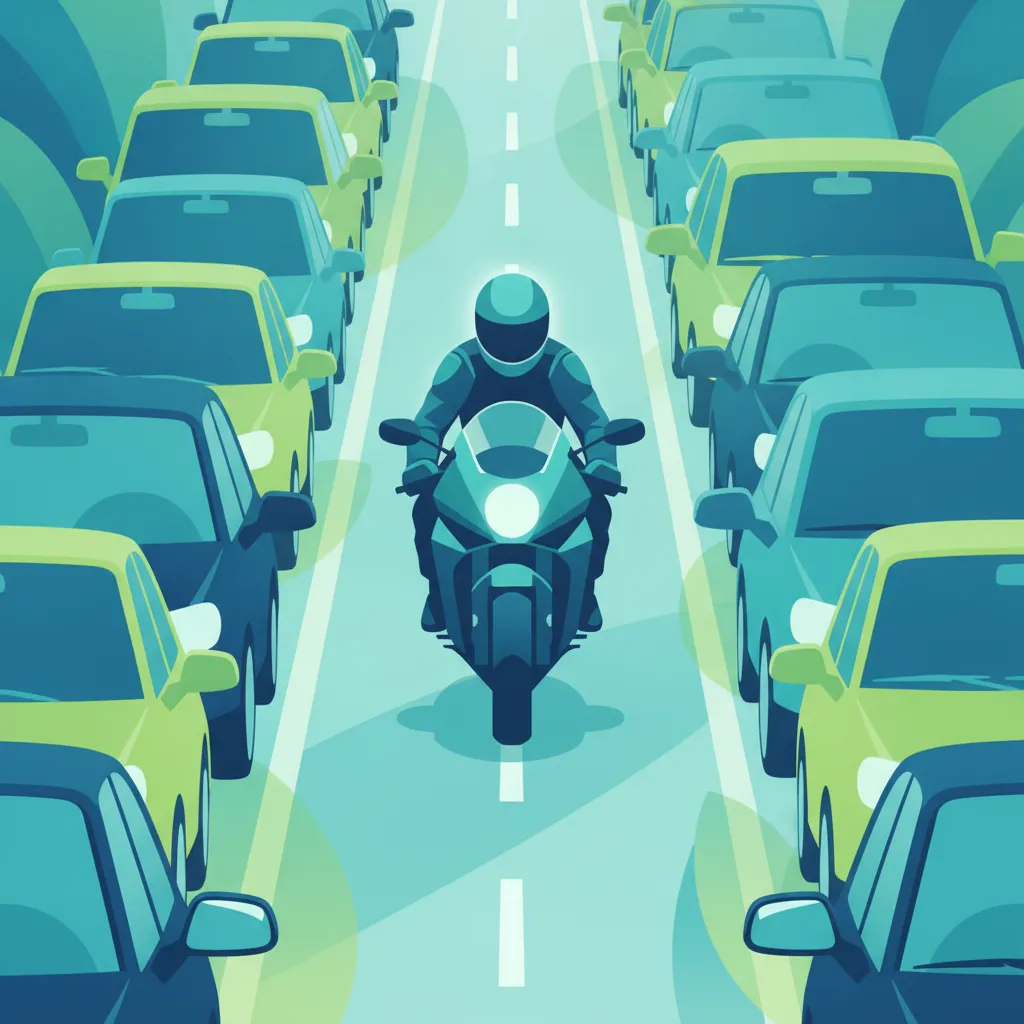
This lesson outlines the rules and practical safety limits of lane filtering, known as 'inter-files' riding, under French road guidelines. You will study the specific speed limits allowed during filtering, the conditions of high congestion where it is permitted, and where it remains completely banned. The lesson also highlights the critical need to anticipate sudden lane changes from frustrated car drivers stuck in stationary traffic queues.

This lesson explores practical methods to make yourself visible to other road users, preventing the classic 'sorry mate, I didn't see you' hazard. You will analyze the use of high-visibility yellow or orange retro-reflective waistcoats, which are legally required to be carried on board in France. Additionally, you will study optimal headlight utilization and correct placement of auxiliary indicators to capture driver attention.

This lesson teaches you how to establish and preserve a dynamic cushion of safety on all sides of your motorcycle. You will study how to apply the 'two-second rule' to keep a safe following distance, extending it to three or more seconds in adverse weather. Additionally, you will discover how to manage tailgating motorists safely without resorting to dangerous speed increases, ensuring you always maintain a clear escape route.

This lesson covers the operational logic of traffic light signals in France, emphasizing the legal implications of the red, amber, and green cycles. You will study how to safely manage the amber phase to avoid rear-end collisions from vehicles behind while maintaining control. Additionally, you will discover the unique challenge of electromagnetic induction loops, which sometimes fail to detect lightweight motorcycles at quiet intersections.
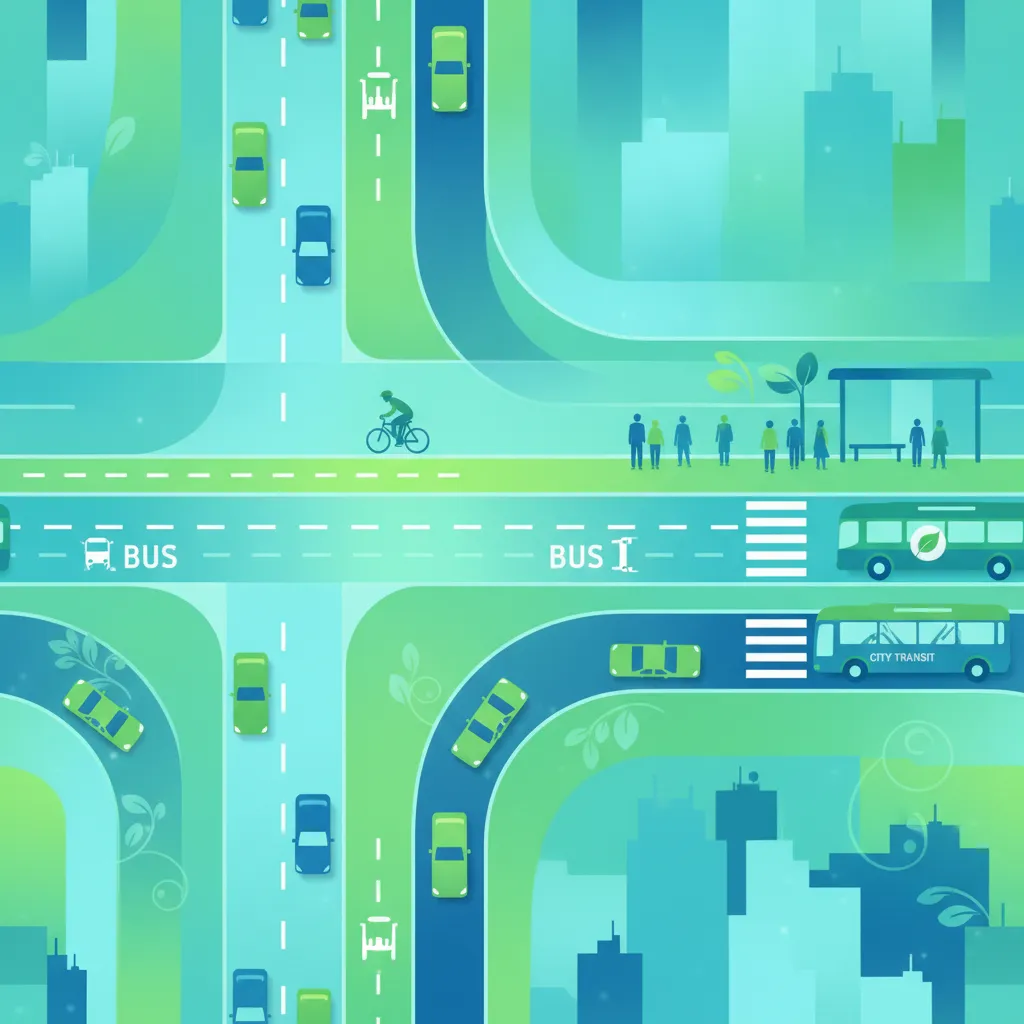
This lesson clarifies the legal boundaries of urban infrastructure, highlighting the strict ban on riding motorcycles within bus lanes or cycle paths. You will study French regulations concerning traffic flow, including where and when experimental lane filtering is permitted between lines of stationary cars. Understanding these boundaries ensures you can keep moving through congested areas without risking heavy fines or dangerous collisions.

This lesson provides guidance on safe riding practices during nighttime, emphasizing proper headlamp usage, reflective clothing, and strategies to manage glare from oncoming traffic. Learners will learn to compensate for reduced peripheral vision and increased fatigue, as well as to identify common night road hazards in France. By applying these techniques, riders can enhance their visibility and safety after dark.

This lesson details the legal and physical implications of horizontal markings, including solid white lines, broken warning lines, and cycle lane dividers. You will learn about the strict prohibition against crossing solid lines and how directional arrows dictate correct lane choices at complex junctions. Importantly, the lesson teaches you to recognize the physical hazard of wet road paint, which drastically reduces tire grip during braking.
Find clear answers to common questions learners have about Overtaking Procedures and Legal Requirements. Learn how the lesson is structured, which driving theory objectives it supports, and how it fits into the overall learning path of units and curriculum progression in France. These explanations help you understand key concepts, lesson flow, and exam focused study goals.
Generally, you must overtake on the left. Overtaking on the right is only permitted in specific situations, such as when the vehicle ahead is turning left or when traveling in heavy, multi-lane traffic flow where lines of vehicles are moving at different speeds.
No, it is strictly forbidden to cross or straddle a continuous solid white line to overtake, regardless of the vehicle type. Doing so is a significant traffic violation and will likely result in a penalty on your license points.
If you notice the vehicle ahead accelerating, you must abandon the maneuver immediately, slow down, and return to your lane behind them. It is illegal to continue an overtake if the other driver has increased their speed, as this creates a dangerous situation.
Before overtaking on a rural road, you must ensure you have a clear, long-distance view of the road ahead, that there are no oncoming vehicles, and that there are no signs or markings forbidding the pass. Always check your mirrors and perform a head check before changing lanes.
Ready to focus your study? Use the practice search to find exactly the French driving theory questions you need for the Code de la route and permis de conduire ETG. Refine your knowledge on specific topics or challenging rules to boost your confidence and exam readiness.