
A priority road is designated to give traffic on it precedence over vehicles entering from intersecting roads. In France, these roads are crucial for maintaining efficient traffic flow on major routes and are identified by specific signage. This page explains how to recognise a priority road, what rules apply when you are on one, and how to behave when approaching one from a side road, as required by the Code de la route.
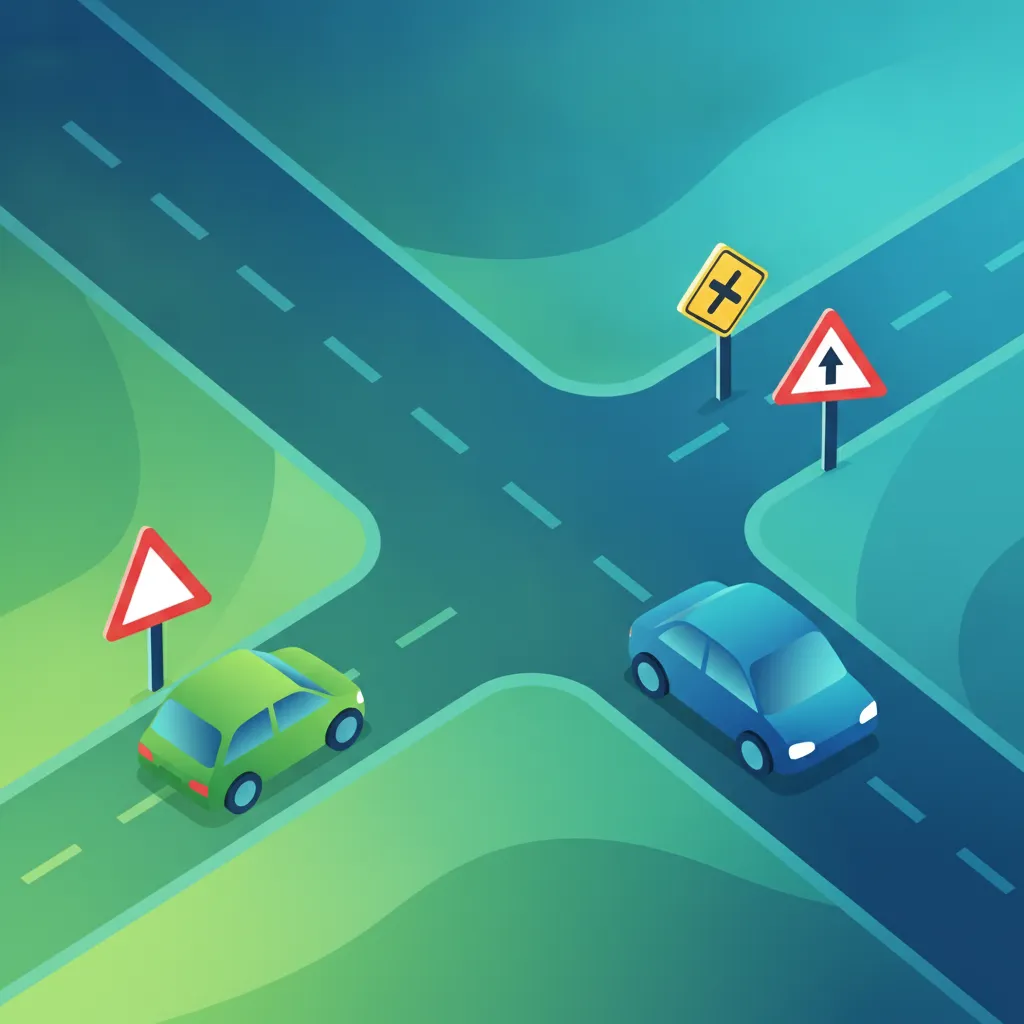
Theory topic content overview
Read the full theory topic guide for Priority Road Rules with structured, easy-to-scan content built for learners in France. This detailed section explains the exact rule, meaning, traffic context, comparison points, and exam logic behind this French driving theory topic so you can study faster, understand the concept more clearly, and avoid common interpretation mistakes on the theory test.
In French driving theory, a priority road, known as a route prioritaire or route à caractère prioritaire, is a designated road where traffic generally has precedence over vehicles entering or crossing from intersecting roads. The fundamental purpose of priority roads in France is to facilitate smoother traffic flow on major routes by reducing the need for drivers on these roads to stop or yield at every junction.
Understanding priority road rules is essential for navigating the French road network safely and successfully passing the Code de la route theory exam (ETG). When you are on a priority road, other drivers are legally obliged to give way to you. Conversely, when approaching a priority road from an intersecting street, you must yield to traffic already on it.
The Code de la route uses specific signage to clearly indicate a priority road, ensuring drivers know their right-of-way status.
The most important sign for a priority road in France is the yellow diamond sign (officially D1). This distinctive sign is:
When you see the yellow diamond sign, it means you are currently on a priority road. This priority generally continues until you encounter a sign indicating otherwise.
While the yellow diamond sign grants general precedence, other traffic control measures can override it:
The concept of a priority road fundamentally alters how you approach and navigate junctions compared to roads where standard priorité à droite rules apply.
When travelling on a route prioritaire (indicated by the yellow diamond sign D1):
If you are approaching a priority road from a side street:
This is a critical distinction for French driving theory.
Crucially, the priorité à droite rule does NOT apply at intersections where a priority road is present and clearly signed. The presence of priority road signage overrides the default priorité à droite. This concept is a frequent source of confusion for learners in France.
Even with the advantage of being on a priority road, your responsibility as a driver is to remain vigilant and drive safely. Priority is not an absolute right to proceed without caution.
Understanding priority roads can be tricky. Here are typical errors French learners make:
Let's look at how priority road rules play out in common French driving situations:
For your permis de conduire theory test in France, remember these crucial points about priority roads:
Mastering priority road rules is fundamental for safe and confident driving on French roads, ensuring you contribute to efficient traffic flow and prevent accidents.
Priority roads (routes prioritaires) in France are designated routes where traffic has precedence over vehicles from intersecting side roads, identified by the distinctive yellow diamond sign (D1). This priority overrides the default priorité à droite rule at unmarked intersections, meaning side roads must display Stop (AB4) or Give Way (AB3) signs. The end of priority road is marked by a yellow diamond with a black stripe (B1), immediately restoring standard rules including priorité à droite at the next unsigned junction. Even with priority, drivers must remain vigilant, yielding to pedestrians, cyclists, emergency vehicles, and being prepared to react to hazards or other drivers' errors.
A short set of high-value points that capture the most important ideas from this theory explanation.
A priority road (route prioritaire) gives traffic on it precedence over vehicles entering from intersecting roads, reducing the need to stop or yield at junctions
The yellow diamond sign (D1) indicates you are on a priority road; the yellow diamond with a black diagonal stripe (B1) marks the end of priority status
Priority road signage overrides the default priorité à droite rule at unmarked intersections where no signs are present
Even with priority, you must always yield to pedestrians crossing, cyclists, and emergency vehicles with flashing lights and sirens
The end of priority road sign (B1) means priorité à droite applies immediately at the next unmarked intersection
D1 = yellow diamond = you have priority; B1 = yellow diamond with black stripe = priority ending
Priorité à droite only applies at unmarked intersections with no signs; priority road signs always take precedence over this default rule
Side roads approaching a priority road will always have Stop (AB4) or Give Way (AB3) signs requiring them to yield to you
Emergency vehicles, police signals, and red traffic lights override all priority road status regardless of signage
The moment you pass the B1 sign, standard règles apply and you must yield to traffic from your right at the next unsigned intersection
Assuming that being on a priority road means you never need to slow down or check for other traffic at intersections
Incorrectly applying priorité à droite at an intersection that clearly has priority road signage or Stop/Give Way signs
Failing to recognise the B1 end-of-priority sign and not anticipating that priorité à droite now applies at the next intersection
Not being prepared to react when a driver from a side road fails to yield, even though you technically have priority
Relying solely on signs without assessing the actual traffic situation, especially at complex or poorly visible intersections
Start with a short, direct summary of Priority Road Rules before reading the full explanation below.
A priority road is a major road where traffic has the right of way over vehicles joining from side roads. Drivers on a priority road can generally proceed without stopping or yielding, unless otherwise indicated by traffic lights or police. In France, these roads are clearly marked with distinctive signs, ensuring smoother and safer traffic flow by reducing conflicts at intersections. Always be attentive, even when on a priority road.
Review the most important terms, rule signals, and traffic concepts linked to Priority Road Rules.
Explore related theory topic pages connected to Priority Road Rules and continue with the next useful rule explanation.
See the common search queries learners use when trying to understand Priority Road Rules in France.

Continue your journey by exploring specific French driving theory topics, from road signs and priority rules to vehicle safety and administrative procedures. Deepen your understanding of the Code de la route and prepare effectively for your permis de conduire ETG exam to ensure success and safe driving practices.
French Driving Theory Topics & RulesTheory topic content overview
A short set of high-value points that capture the most important ideas from this theory explanation.
A priority road (route prioritaire) gives traffic on it precedence over vehicles entering from intersecting roads, reducing the need to stop or yield at junctions
The yellow diamond sign (D1) indicates you are on a priority road; the yellow diamond with a black diagonal stripe (B1) marks the end of priority status
Priority road signage overrides the default priorité à droite rule at unmarked intersections where no signs are present
Even with priority, you must always yield to pedestrians crossing, cyclists, and emergency vehicles with flashing lights and sirens
The end of priority road sign (B1) means priorité à droite applies immediately at the next unmarked intersection
D1 = yellow diamond = you have priority; B1 = yellow diamond with black stripe = priority ending
Priorité à droite only applies at unmarked intersections with no signs; priority road signs always take precedence over this default rule
Side roads approaching a priority road will always have Stop (AB4) or Give Way (AB3) signs requiring them to yield to you
Emergency vehicles, police signals, and red traffic lights override all priority road status regardless of signage
The moment you pass the B1 sign, standard règles apply and you must yield to traffic from your right at the next unsigned intersection
Assuming that being on a priority road means you never need to slow down or check for other traffic at intersections
Incorrectly applying priorité à droite at an intersection that clearly has priority road signage or Stop/Give Way signs
Failing to recognise the B1 end-of-priority sign and not anticipating that priorité à droite now applies at the next intersection
Not being prepared to react when a driver from a side road fails to yield, even though you technically have priority
Relying solely on signs without assessing the actual traffic situation, especially at complex or poorly visible intersections
Start with a short, direct summary of Priority Road Rules before reading the full explanation below.
A priority road is a major road where traffic has the right of way over vehicles joining from side roads. Drivers on a priority road can generally proceed without stopping or yielding, unless otherwise indicated by traffic lights or police. In France, these roads are clearly marked with distinctive signs, ensuring smoother and safer traffic flow by reducing conflicts at intersections. Always be attentive, even when on a priority road.
Review the most important terms, rule signals, and traffic concepts linked to Priority Road Rules.
Explore related theory topic pages connected to Priority Road Rules and continue with the next useful rule explanation.
See the common search queries learners use when trying to understand Priority Road Rules in France.
Continue your journey by exploring specific French driving theory topics, from road signs and priority rules to vehicle safety and administrative procedures. Deepen your understanding of the Code de la route and prepare effectively for your permis de conduire ETG exam to ensure success and safe driving practices.
French Driving Theory Topics & RulesUse this exam-focused revision tip to understand how Priority Road Rules is likely to appear in theory questions for learners in France. This section helps you identify the most testable part of the rule, avoid common traps, and remember the concept more effectively during French driving theory exam preparation.
In the French driving theory exam (ETG), priority road questions often involve scenarios at unmarked intersections or where signs might be partially obscured. Always look for the yellow diamond sign, and remember that even on a priority road, you must react safely to hazards. Pay special attention to intersections immediately after the 'end of priority road' sign, as rules change swiftly.
Read direct answers to the most common learner questions about Priority Road Rules in France. This FAQ focuses on rule confusion, practical meaning, comparison with similar concepts, and the exact uncertainties that appear most often in French driving theory revision and exam preparation.
The yellow diamond sign with a white border indicates you are currently on a priority road, meaning you have the right of way at upcoming intersections unless specific signs or traffic lights state otherwise.
Generally yes, but always remain vigilant. Traffic lights, police signals, or specific 'stop' or 'yield' signs for your lane can override priority road status. You must also yield to emergency vehicles.
The end of a priority road is indicated by the same yellow diamond sign, but with a black diagonal line through it. After this sign, standard right-of-way rules (e.g., priority to the right) usually apply, or new signs will dictate priority as per the Code de la route.
You must slow down, check for traffic on the priority road, and yield to any vehicles approaching from either direction before entering or crossing. You might encounter a 'give way' or 'stop' sign before the intersection.
No, roundabouts have their own specific priority rules in France. Typically, traffic already in the roundabout has priority over vehicles entering it, which is the opposite of a priority road principle. This is a common point of confusion for learners.
Priority road rules primarily apply to public roads. When exiting a private road, car park, or property, you must always yield to all traffic on the public road, regardless of its priority status, as dictated by French road law.
Ready to focus your study? Use the practice search to find exactly the French driving theory questions you need for the Code de la route and permis de conduire ETG. Refine your knowledge on specific topics or challenging rules to boost your confidence and exam readiness.