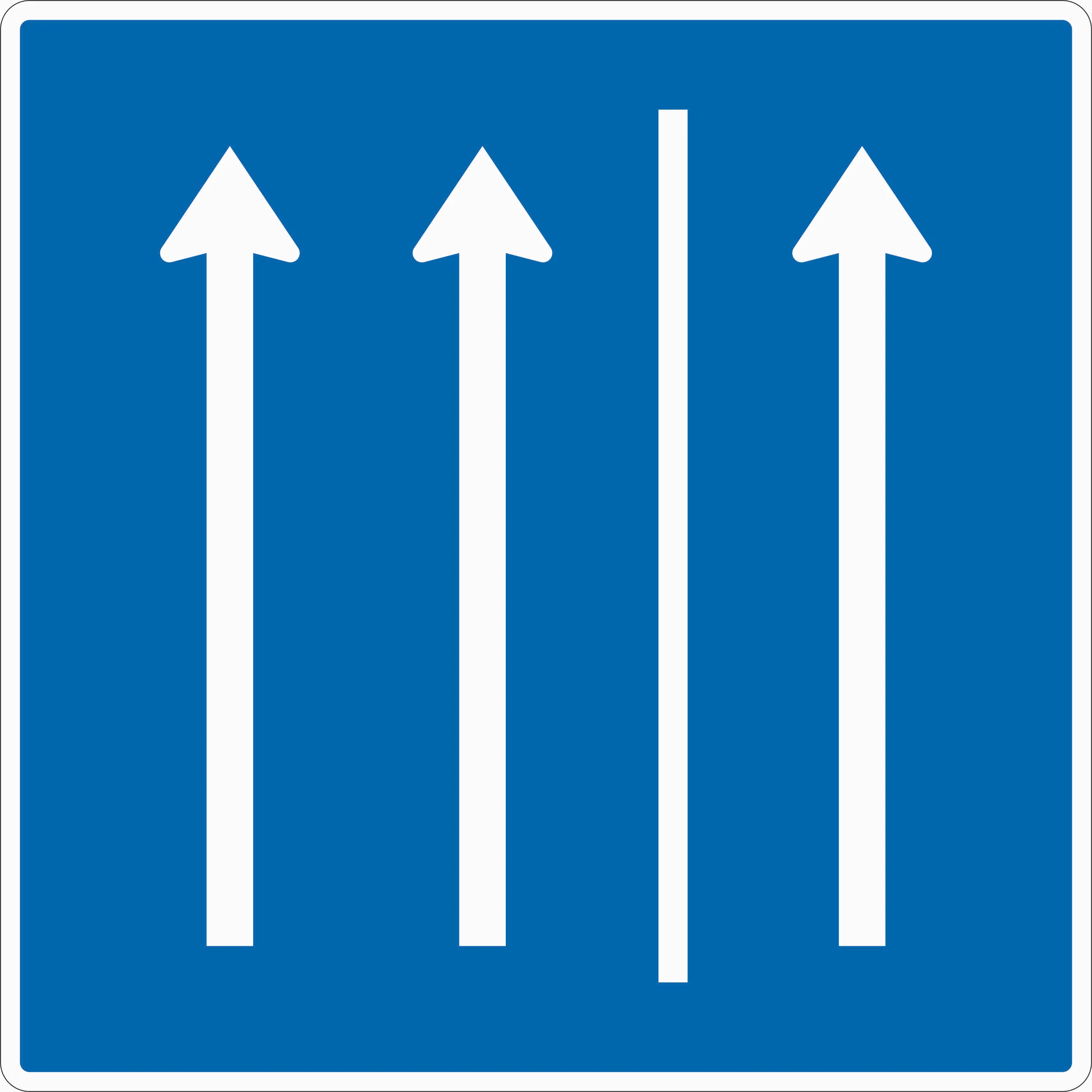
German road sign 223.1-50 indicates that the hard shoulder is to be used as a regular traffic lane, typically in addition to two existing lanes. This regulatory sign, part of the German StVO, mandates that drivers must adapt their driving behaviour before reaching the marked area, often in conjunction with specific road markings or supplementary plates. It's crucial to understand that this sign changes the normal function of the hard shoulder, requiring drivers to integrate it into their lane choice and speed adjustments to ensure smooth and safe traffic flow.
This sign indicates a binding rule to use the hard shoulder as an additional lane, requiring drivers to adapt their position and speed accordingly. Proper recognition and interpretation are crucial for safe driving and passing your theory test revision.
German road sign 223.1-50, officially designated "Seitenstreifen befahren - 2 Fahrstreifen + Seitenstreifen", belongs to the regulatory signs group. It gives a binding rule under the German StVO and must be followed rather than treated as advisory information. You may see it in junctions, restricted streets, cycle and pedestrian facilities, parking areas, low-emission zones, and roads with binding lane or speed rules, depending on how the road authority has arranged the location. The practical meaning is not just the symbol itself, but the driving decision it triggers: adjust speed, position, priority, route choice, stopping behaviour, or attention before the situation becomes urgent. For learners, the key skill is knowing whether the sign commands, forbids, limits, or cancels a rule. Always combine the sign with road markings, traffic lights, police instructions, and any supplementary plates at the same location.
German road sign 223.1-50 means "Use the hard shoulder as a lane - 2 lane + hard shoulder" and is officially listed as "Seitenstreifen befahren - 2 Fahrstreifen + Seitenstreifen". In practice, it tells drivers to recognise the situation early, adapt before reaching the controlled area, and check whether markings or supplementary plates change how the rule applies.
Get clear, practical answers to the most common questions about the 223.1-50 - Use the hard shoulder as a lane - 2 lane + hard shoulder road sign. Learn how the sign works, what rules it represents, and how it affects real driving situations. This FAQ strengthens your understanding and supports accurate decision making for the German driving theory exam in Germany.
Sign 223.1-50, officially 'Seitenstreifen befahren - 2 Fahrstreifen + Seitenstreifen', means you should use the hard shoulder as an additional traffic lane. This is a regulatory sign that instructs drivers to adjust their speed and lane positioning accordingly, treating the hard shoulder as a normal part of the carriageway.
You might encounter sign 223.1-50 in situations where traffic congestion is expected or managed, such as approaching busy junctions, tunnels, or stretches of road where extra capacity is temporarily needed. Always pay attention to accompanying road markings and supplementary plates for specific instructions.
A common trap is assuming the hard shoulder is always off-limits. With sign 223.1-50, the rule is reversed: you MUST use it as a lane when indicated. Another trap is ignoring supplementary plates, which might restrict this rule to certain vehicle types or times, so always read them carefully.
Yes, you should generally prepare to adjust your speed. While the sign itself doesn't specify a speed limit, using the hard shoulder as a lane often implies increased traffic density or specific traffic management. It's essential to check for any speed limit signs and adapt your speed safely to integrate with the traffic flow.
No, sign 223.1-50 explicitly permits using the hard shoulder as a traffic lane. This means stopping or parking on it is prohibited unless it is an emergency or a specific sign allows it. The purpose is to increase traffic capacity, not to provide a parking space.
A clear reference image of the 223.1-50 - Use the hard shoulder as a lane - 2 lane + hard shoulder road sign used in Germany.
The 223.1-50 - Use the hard shoulder as a lane - 2 lane + hard shoulder road sign may also be known by these alternative names or terms.
The 223.1-50 - Use the hard shoulder as a lane - 2 lane + hard shoulder road sign is part of the German Regulatory Signs category, which groups together signs with similar rules and functions.
Reviewing related road signs helps solidify your knowledge by highlighting subtle differences and commonalities. This targeted approach to traffic sign comparison enhances your ability to recognise signs quickly during your theory test revision and actual driving.
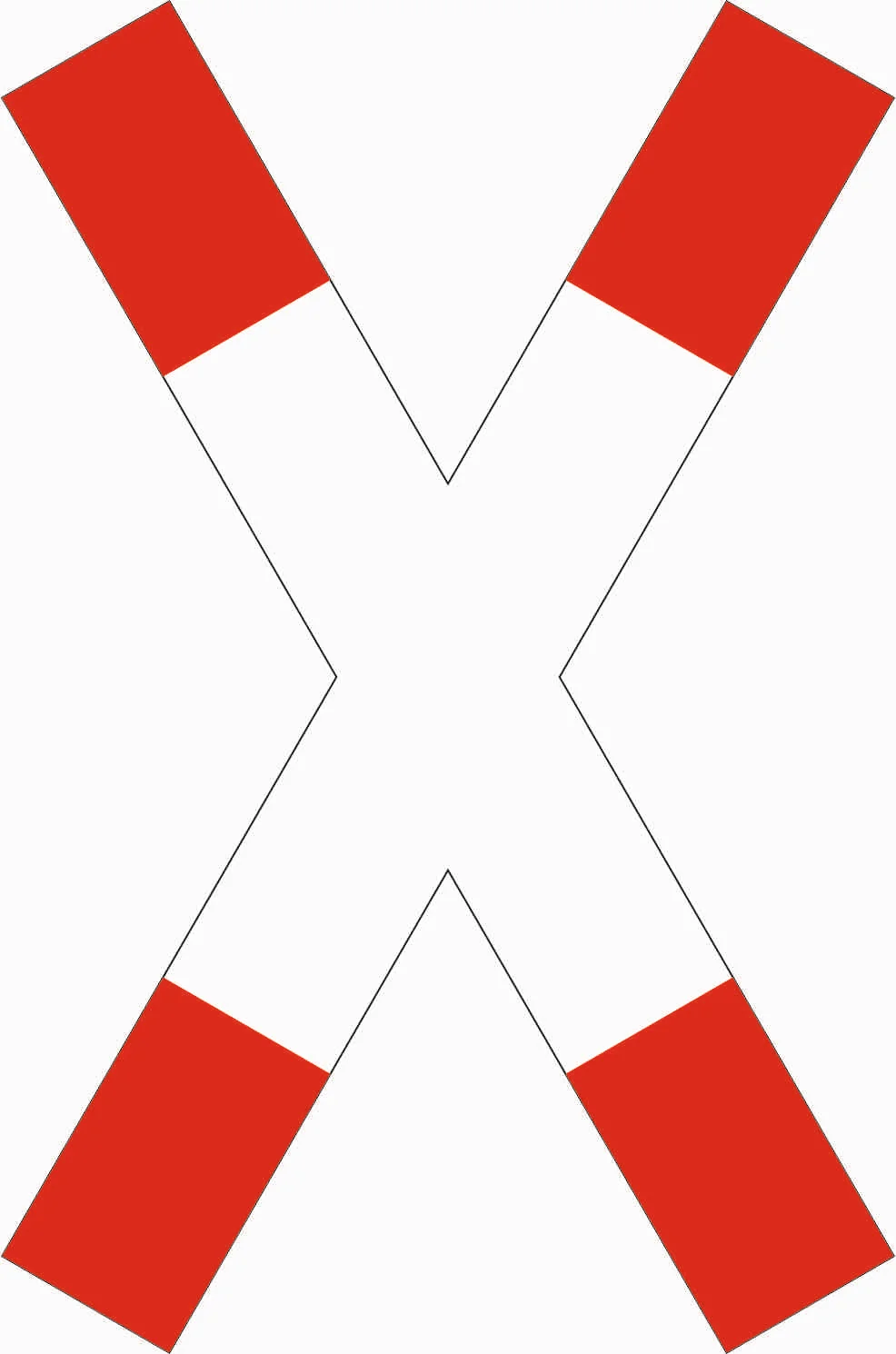
Master the Standing Railway Crossbuck (Andreaskreuz - stehend) Sign
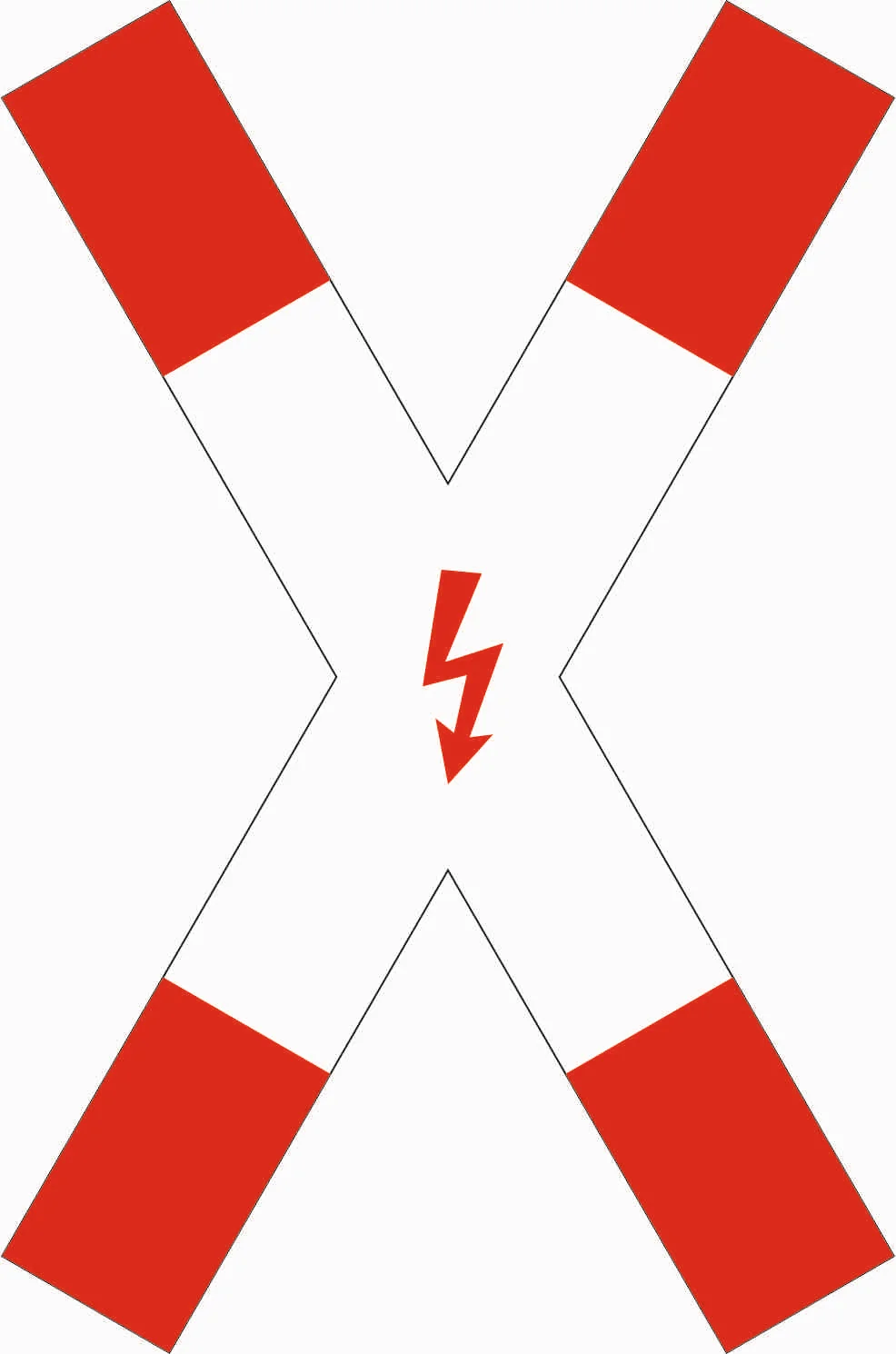
Understand the Railway Crossbuck with Blitzpfeil (Sign 201-51) in Germany
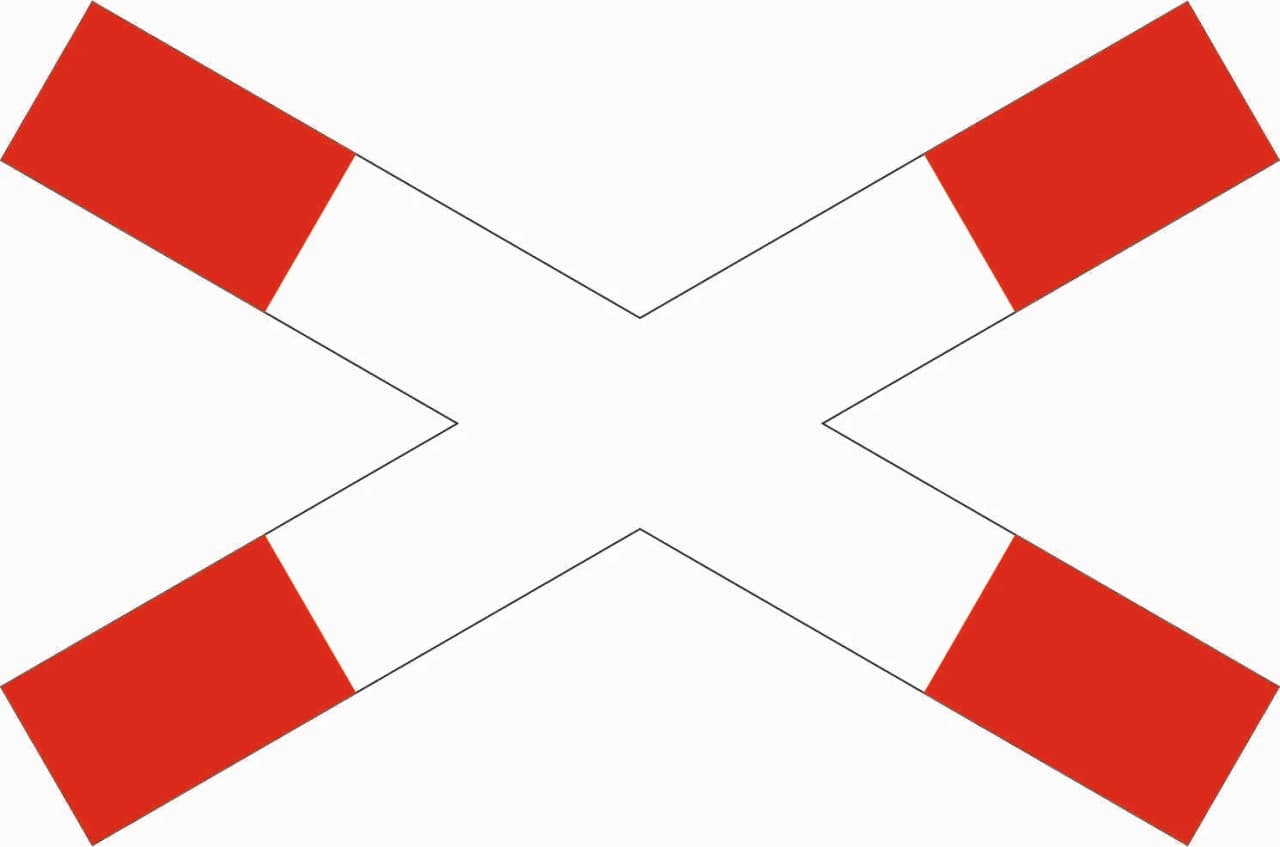
German road sign 201-52: The Railway Crossbuck 'Andreaskreuz - liegend'
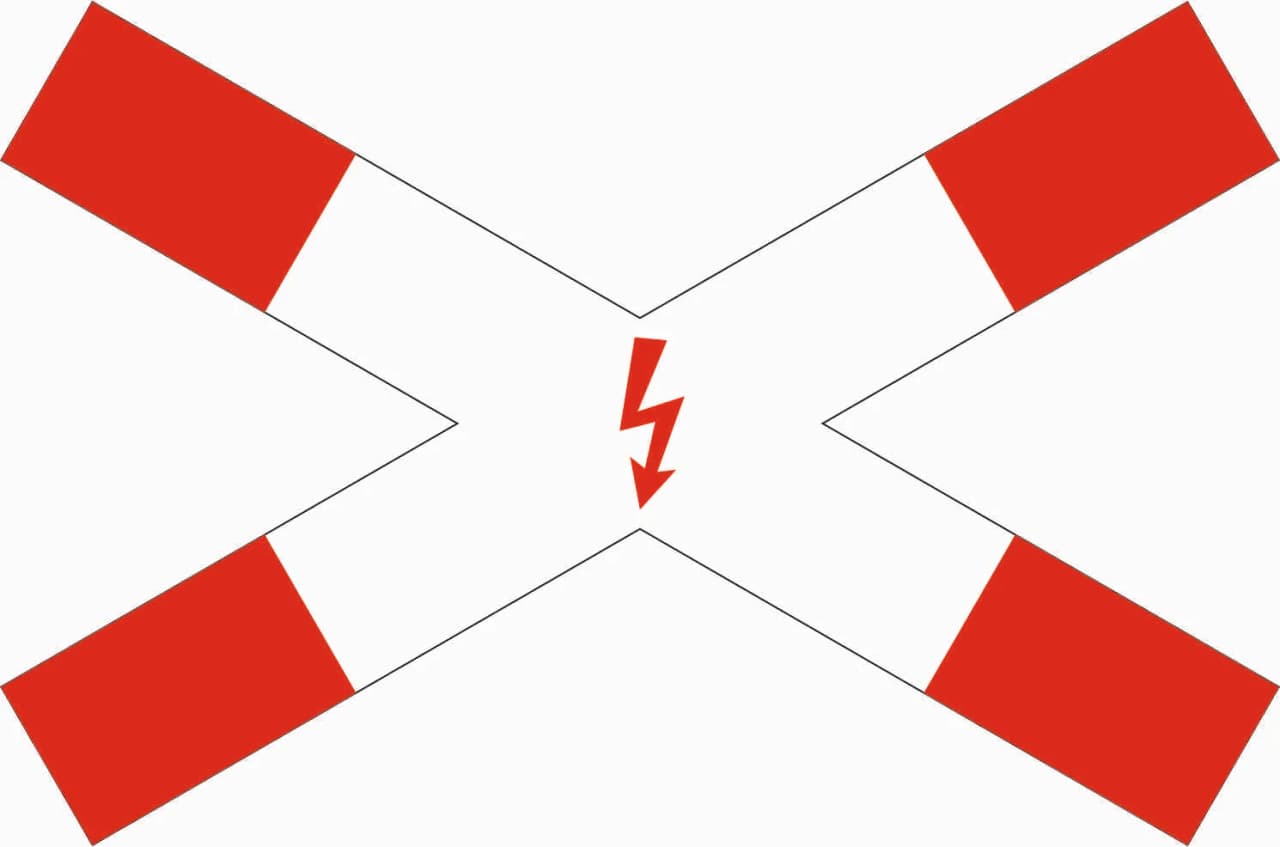
Germany's Railway Crossbuck Sign 201-53 with Blitzpfeil: What You Need to Know
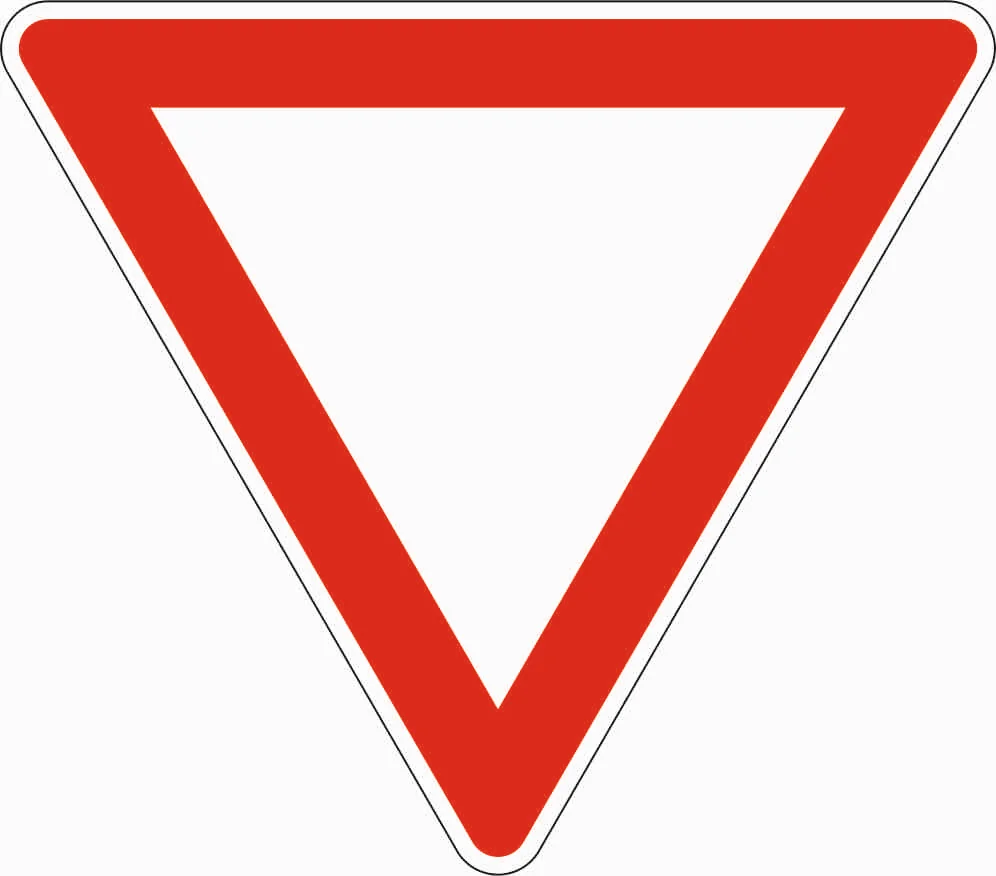
Understand the German "Yield" Sign (Sign 205 - Vorfahrt gewähren)
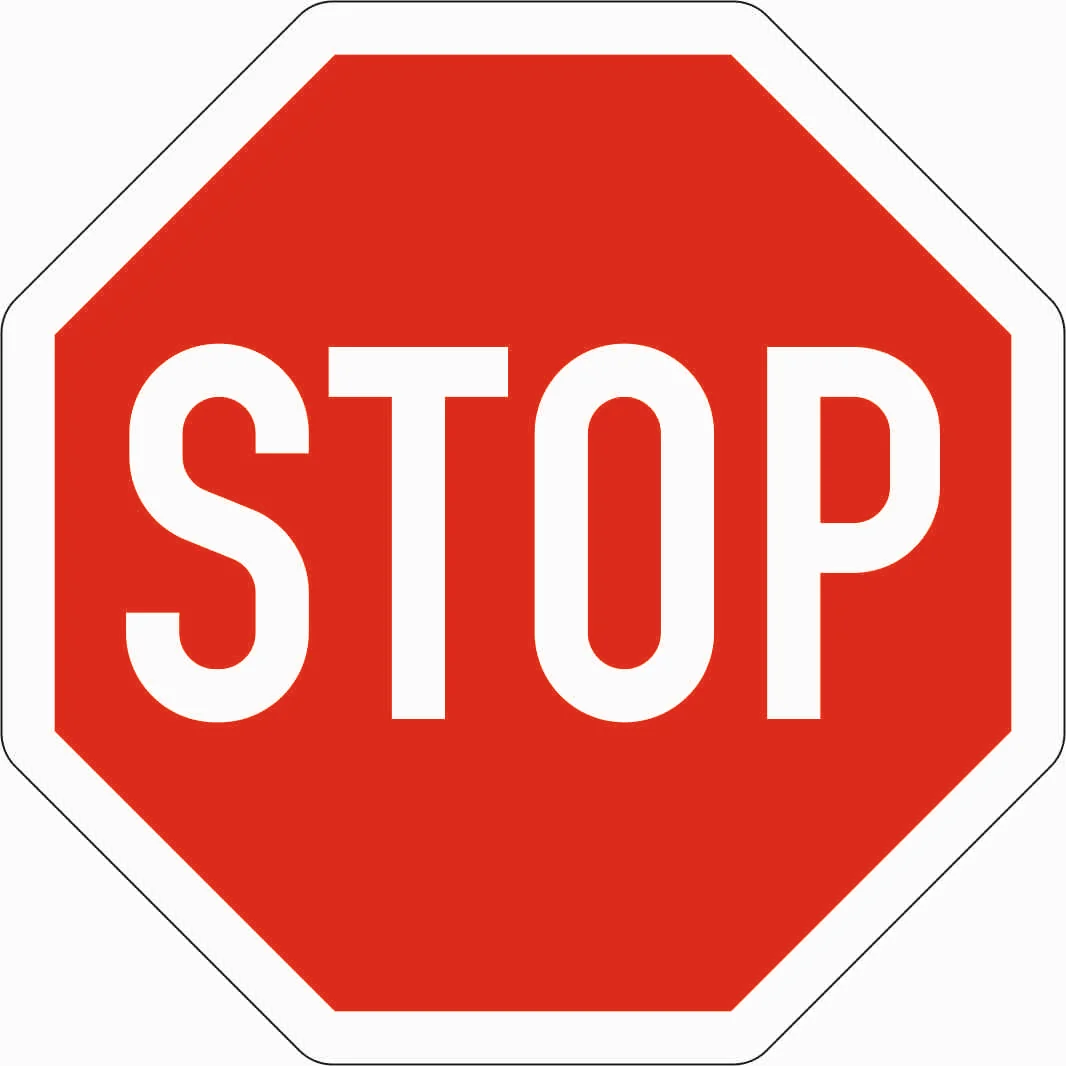
Sign 206: Stop and Yield – You must stop and give way
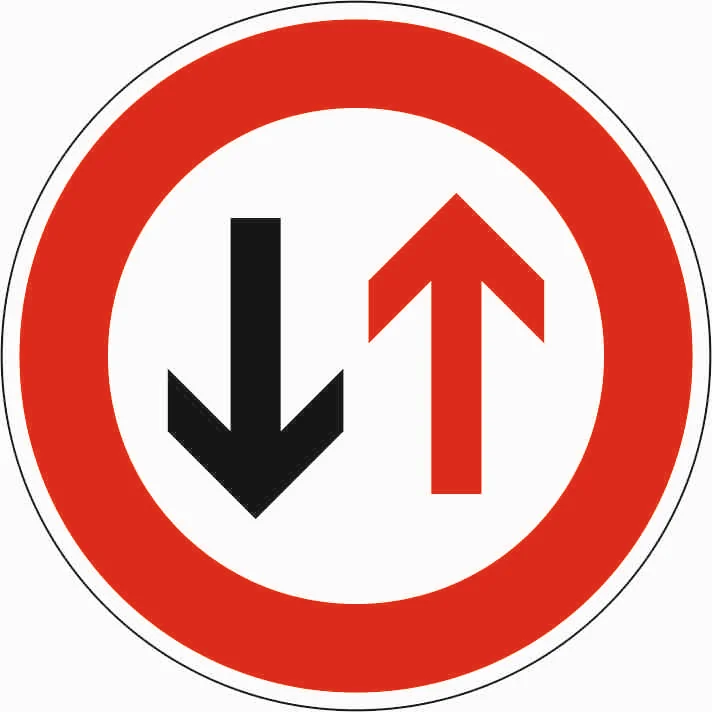
Sign 208: You Must Yield to Oncoming Traffic on This Road
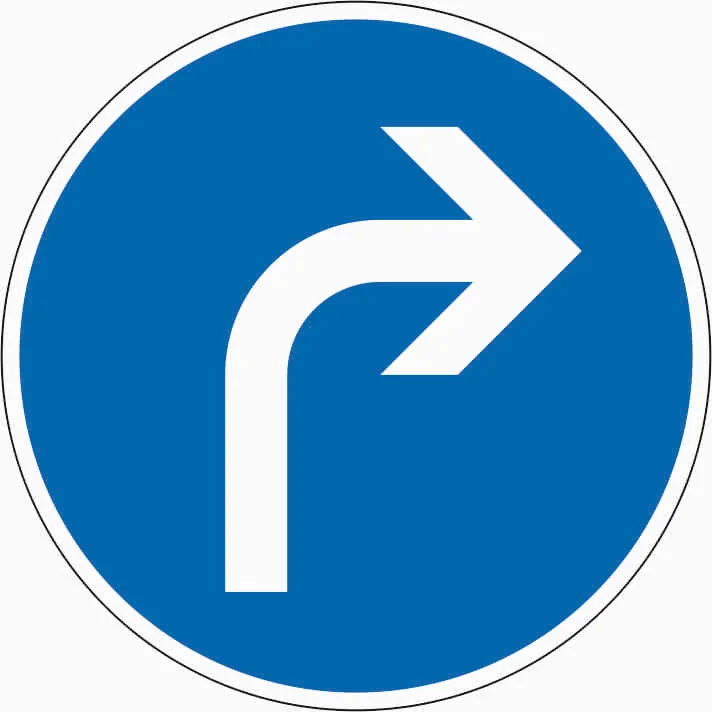
Mandatory Direction - Right: Sign 209 Explained
Deepen your understanding of specific road sign categories or test your knowledge with practice questions. Explore our themed sign groups for targeted study or jump into quizzes to reinforce your recognition skills for the official German theory exam.
All German Road Signs List