
This theory hub provides comprehensive explanations of all German driving theory topics, road signs, and traffic rules. Understand essential concepts like right-of-way, speed limits, and Autobahn regulations, crucial for the official German theoretical driving test. Develop a strong grasp of the Straßenverkehrs-Ordnung (StVO) to drive confidently and safely.
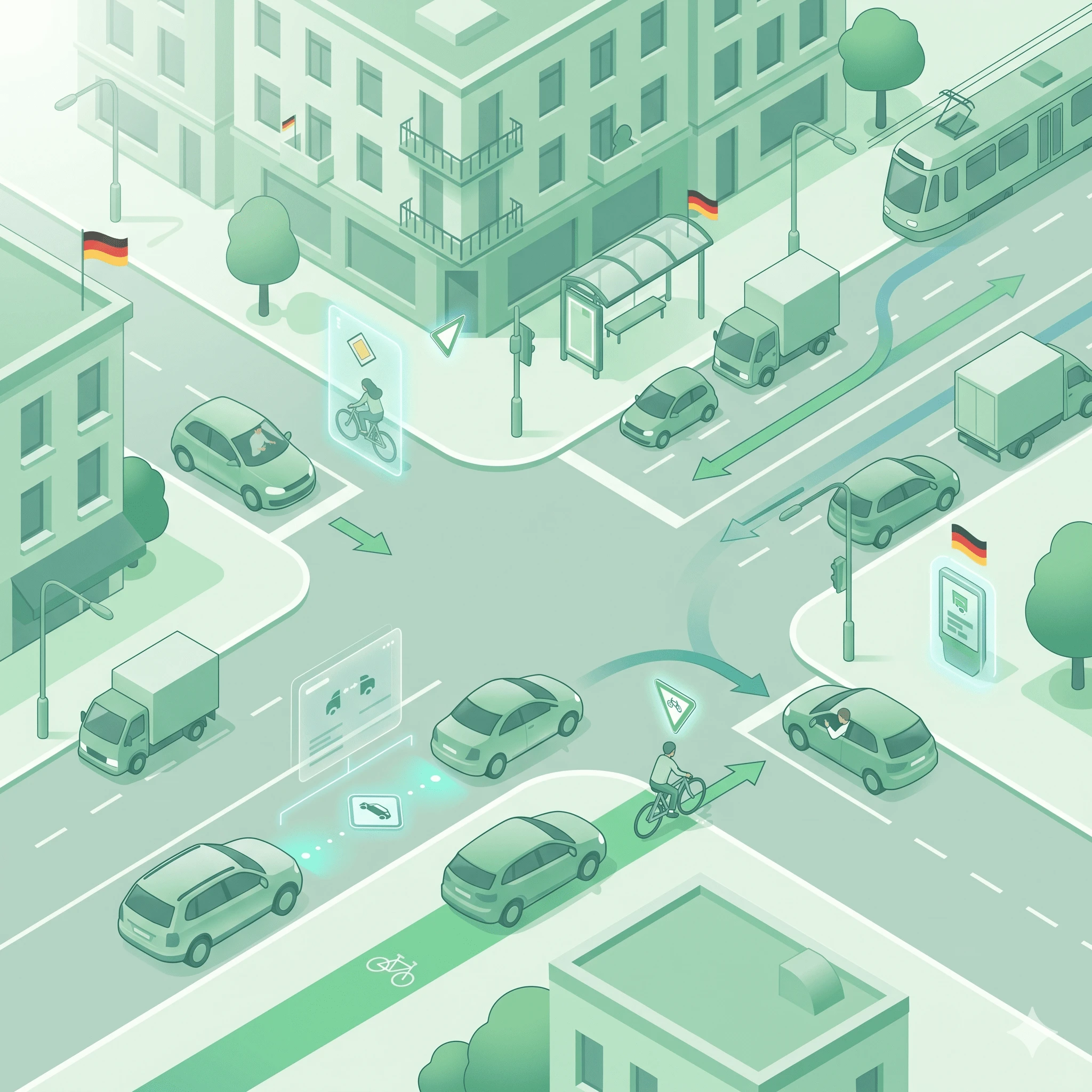
Our curriculum organizes German driving theory into targeted subject areas, helping you master complex traffic rules, road signs, and right-of-way priority situations. Focus your exam preparation by diving deep into specific technical categories and safety protocols.
12 topics
6 topics
5 topics
4 topics
3 topics
2 topics
2 topics
2 topics
1 topic
1 topic
1 topic
1 topic
Dive into detailed driving theory subjects to prepare for your German theory test. Search for specific traffic rules or browse all available topics to deepen your understanding of driving knowledge.
Filter by category
5 theory topics found

Slippery roads occur when the friction between your vehicle's tires and the road surface is significantly reduced, making it difficult to maintain control. This loss of traction affects your ability to accelerate, steer, and brake effectively. Understanding these conditions and knowing how to adjust your driving is crucial for preventing accidents and navigating German roads safely.

Maintaining a safe following distance, known as 'Sicherheitsabstand' in Germany, is one of the most vital aspects of road safety. This page explains why tailgating (driving too closely) is so dangerous, detailing how factors like speed, reaction time, and braking distance all combine to determine the space you need. You'll learn the key German rules and practical methods to ensure you always have enough room to react, protecting yourself and others on the road, especially on high-speed Autobahns.

Safe following distance, known in Germany as 'Sicherheitsabstand', is the essential space you maintain behind the vehicle in front of you. This distance provides the critical reaction time needed to respond to unexpected events, such as sudden braking, and directly impacts your ability to stop safely without collision. Mastering the rules for adequate spacing is fundamental for safe driving on German roads and a key focus in the theoretical driving test, especially under varying speeds and challenging weather conditions.

Defensive driving is a crucial approach to road safety that goes beyond simply following traffic rules. It involves actively anticipating potential dangers, understanding the behavior of other road users, and adapting your driving style to minimize risks. This page will explain the fundamental principles to help you drive safely and prepare for your German driving theory test.

Hazard perception, known as Gefahrenerkennung in German, is the skill of continuously observing the road environment and identifying potential dangers before they become critical. This proactive approach allows you to react calmly and safely, preventing accidents and navigating German traffic confidently. It involves more than just seeing; it's about understanding what could happen next.
Continue your learning journey with our comprehensive articles. Delve into specific topics, review complex German road rules, and gain expert insights. Fully prepare for your theoretical driving test by exploring more content to deepen your understanding of traffic law.
Explore Driving Theory Articles