
Prepare for your Icelandic road trip by understanding the specific rules and conditions for F-roads, often requiring 4WD vehicles and careful river crossing. Learn how to manage tunnel tolls, particularly the system for the major tunnels, and become familiar with Iceland's general traffic laws to ensure a safe and compliant journey. This guide provides the essential information for a stress-free driving experience across Iceland's varied landscapes.
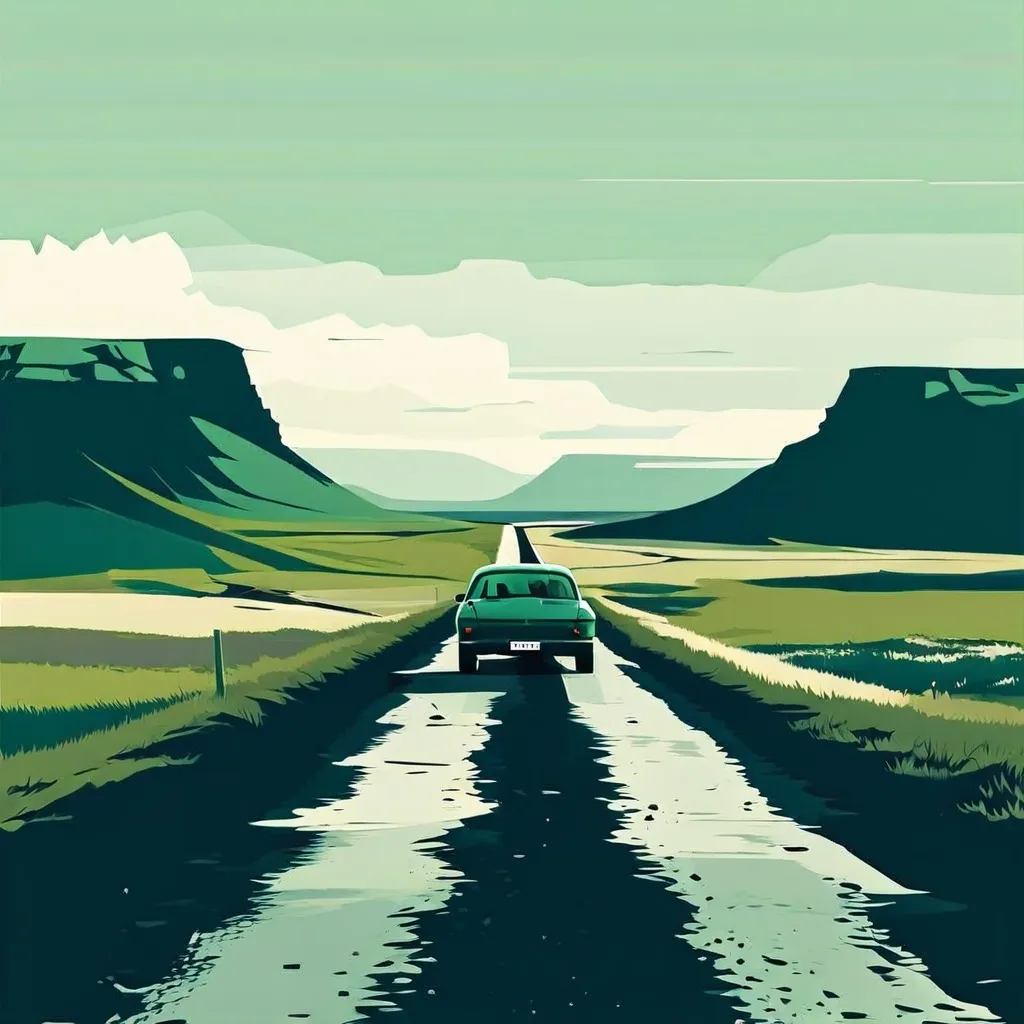
Article content overview
Iceland's dramatic landscapes offer unparalleled beauty, but they also present unique driving challenges, especially for tourists. Understanding the specific regulations and conditions for F-roads, tunnels, and general road rules is crucial for a safe and enjoyable journey. This guide aims to demystify these aspects, ensuring you can confidently navigate Iceland's varied terrain, from paved highways to rugged highland tracks, and avoid unexpected penalties.
Iceland's road system is more diverse than many visitors anticipate. While the main Ring Road (Route 1) is generally well-maintained and accessible, the country's interior and mountainous regions are crisscrossed by F-roads, which require specific vehicle types and driving techniques. Beyond the general traffic laws, which are strictly enforced, several specific considerations apply to driving in Iceland, particularly for those unfamiliar with the environment.
F-roads, often referred to as highland roads, are designated mountain tracks primarily found in Iceland's interior. These roads are not suitable for standard passenger vehicles and are generally only accessible with a 4x4 vehicle. They are characterized by rough terrain, including gravel, mud, and, most significantly, unbridged rivers that you will need to cross. The Icelandic Transport Authority (Samgöngustofa) strongly advises against attempting F-roads without appropriate preparation and a suitable vehicle.
Driving on F-roads with a regular car is strictly forbidden and can lead to severe damage to the vehicle, potential accidents, and significant fines. Furthermore, no insurance typically covers damage incurred while crossing rivers.
The suitability of a 4x4 vehicle for F-roads varies; some are manageable with a standard SUV, while others require heavily modified vehicles, often referred to as "superjeeps." Always check road conditions and F-road accessibility before setting out, as they are often closed during winter months and can become impassable due to weather or river conditions even in summer. The official website umferdin.is provides up-to-date information on road closures and conditions.
Iceland has several significant tunnels that streamline travel, particularly along the Ring Road. Notably, the sub-sea tunnels and some newer mountain tunnels operate on a toll system. The most prominent is the Vaðlaheiði Tunnel in North Iceland, which is subject to a toll. Payment for this tunnel, and others like it, is managed through the online platform Veggjald.is.
Veggjald.is is the official online portal for paying tunnel tolls in Iceland. Tolls must typically be paid within 24 hours of passing through the toll point.
It is essential for drivers to be aware of the toll system and to settle payments promptly. Failure to do so can result in penalties. Rental car companies often have arrangements for handling these tolls, but it is the driver's responsibility to ensure payment. Understanding the signage and instructions at tunnel entrances is key to compliant toll payment.
Beyond the specifics of F-roads and tunnels, Iceland enforces a comprehensive set of driving laws designed to ensure safety for all road users. Adherence to these rules is not only a legal requirement but also vital for navigating the country's often unpredictable conditions.
One of the most critical rules in Iceland is that vehicle headlights must be switched on at all times, both day and night, throughout the entire year. This law is in place to enhance visibility, especially given Iceland's variable weather and prolonged periods of twilight or darkness during winter. Even during the summer months, when daylight can extend for nearly 24 hours, continuous headlight use is mandatory.
Do not rely solely on automatic headlight settings. Always double-check that your headlights are on before setting off and during your journey.
As in most countries, seatbelt use is mandatory for all occupants in a vehicle, regardless of their seating position. This includes passengers in the rear seats. For children, specific safety regulations apply: children under 135 cm in height must use an appropriate car seat or booster seat that is fitted to their age, height, and weight. Proper use of restraints significantly increases safety in the event of a collision.
The use of mobile phones while driving is strictly regulated in Iceland. Holding and operating a mobile phone for any purpose, including making calls, sending texts, or using navigation apps, is forbidden while the vehicle is in motion. The only permissible way to use a mobile device while driving is through a hands-free system.
Using a mobile phone without a hands-free device is a serious offense with significant penalties. Prioritize safety and focus on the road by utilizing hands-free technology or pulling over to use your phone.
Speed limits in Iceland are clearly posted and must be adhered to. The general limits are:
These are default limits, and specific signs may indicate lower or higher speeds for particular sections of road. Drivers should be especially cautious on gravel roads, which are common outside of major towns, as they require adjusted speed and handling due to reduced traction and increased risk of skidding.
Iceland has a very strict policy regarding driving under the influence of alcohol. The legal Blood Alcohol Content (BAC) limit is 0.2‰. This means that even a small amount of alcohol can push a driver over the legal limit. Penalties for driving under the influence are severe, and the law is strictly enforced to maintain road safety.
It is against the law to operate a vehicle in Iceland after consuming alcohol or other intoxicants. The penalties for violations are severe.
Iceland's unique environment presents specific challenges and considerations for visitors. Awareness of these can prevent accidents and ensure a smoother travel experience.
Driving off designated roads, including F-roads, is strictly prohibited in Iceland. The Icelandic landscape is incredibly fragile, and off-road driving causes significant and long-lasting damage to vegetation and the environment. This prohibition extends to driving on beaches, lava fields, or any area not officially designated as a road. F-roads and gravel roads are official routes; driving off these routes constitutes illegal off-road driving.
Iceland experiences extreme variations between summer and winter. During summer, the midnight sun can lead to driver fatigue due to extended daylight hours. It is crucial for drivers to be well-rested and take regular breaks to avoid falling asleep at the wheel. Winter brings snow, ice, strong winds, and reduced visibility, making driving conditions significantly more challenging. Always check weather forecasts and road conditions daily before embarking on any journey, especially outside of urban areas.
When renting a car in Iceland, it is vital to understand the insurance coverage provided. Standard insurance policies may not cover damage caused by unique Icelandic weather phenomena such as strong winds (which can blow car doors open with considerable force) or sand and ash storms, particularly in the south. Consider additional insurance options like Sand and Ash Protection (SAAP) for comprehensive coverage.
Successfully navigating Iceland requires more than just knowing the basic rules of the road. It involves understanding the context of driving in a unique environment and being prepared for the unexpected. Familiarize yourself with the road signs, understand the priority rules, and always drive defensively.
By preparing thoroughly and respecting Iceland's driving regulations, you can ensure a safe, legal, and memorable road trip across this incredible island.
Iceland's driving environment demands preparation beyond standard road rules. F-roads are highland tracks requiring 4x4 vehicles and involve unbridged river crossings that can void rental insurance. The country enforces unique requirements including mandatory headlights at all times and a very low BAC limit of 0.2‰. Tunnel tolls must be settled online via Veggjald.is within 24 hours, and off-road driving is strictly prohibited to protect the fragile landscape. Seasonal hazards vary dramatically between midnight-sun summers and harsh winters, making daily weather and road condition checks essential for safe travel.
A short set of high-value points that capture the most important ideas from this article.
F-roads require 4x4 vehicles and are forbidden for standard passenger cars, with unbridged rivers demanding careful crossing decisions
Headlights must be on at all times, 24 hours a day, 365 days a year in Iceland regardless of season or lighting conditions
Tunnel tolls (e.g., Vaðlaheiði Tunnel) are paid online via Veggjald.is within 24 hours of passage; rental car arrangements vary
The legal BAC limit is 0.2‰, significantly lower than many other countries, reflecting Iceland's zero-tolerance approach
Off-road driving is strictly prohibited across all terrain types including beaches and lava fields to protect Iceland's fragile landscape
Speed limits: 50 km/h urban, 80 km/h rural gravel, 90 km/h rural paved; signs take precedence
Children under 135 cm must use appropriate car seats; all occupants must wear seatbelts regardless of seating position
Mobile phones may only be used hands-free; holding the device while driving is prohibited
Check umferdin.is for real-time F-road closures and conditions before and during any highland journey
Standard rental insurance may not cover wind damage or sand/ash storms; consider additional SAAP coverage
Assuming headlights are only needed at night or in poor weather; Icelandic law requires them continuously
Assuming standard SUV is sufficient for all F-roads; some require superjeep capability
Forgetting to pay tunnel tolls within 24 hours and receiving penalties as a result
Assuming off-road driving is permitted on beaches or lava fields during scenic stops
Underestimating the midnight sun's effect on driver fatigue during summer months
Article content overview
A short set of high-value points that capture the most important ideas from this article.
F-roads require 4x4 vehicles and are forbidden for standard passenger cars, with unbridged rivers demanding careful crossing decisions
Headlights must be on at all times, 24 hours a day, 365 days a year in Iceland regardless of season or lighting conditions
Tunnel tolls (e.g., Vaðlaheiði Tunnel) are paid online via Veggjald.is within 24 hours of passage; rental car arrangements vary
The legal BAC limit is 0.2‰, significantly lower than many other countries, reflecting Iceland's zero-tolerance approach
Off-road driving is strictly prohibited across all terrain types including beaches and lava fields to protect Iceland's fragile landscape
Speed limits: 50 km/h urban, 80 km/h rural gravel, 90 km/h rural paved; signs take precedence
Children under 135 cm must use appropriate car seats; all occupants must wear seatbelts regardless of seating position
Mobile phones may only be used hands-free; holding the device while driving is prohibited
Check umferdin.is for real-time F-road closures and conditions before and during any highland journey
Standard rental insurance may not cover wind damage or sand/ash storms; consider additional SAAP coverage
Assuming headlights are only needed at night or in poor weather; Icelandic law requires them continuously
Assuming standard SUV is sufficient for all F-roads; some require superjeep capability
Forgetting to pay tunnel tolls within 24 hours and receiving penalties as a result
Assuming off-road driving is permitted on beaches or lava fields during scenic stops
Underestimating the midnight sun's effect on driver fatigue during summer months
Explore related topics, search based questions, and concepts that learners often look up when studying Driving in Iceland: F-roads & Tolls. These themes reflect real search intent and help you understand how this topic connects to wider driving theory knowledge in Iceland.
Find clear and practical answers to common questions learners often have about Driving in Iceland: F-roads & Tolls. This section helps explain difficult points, remove confusion, and reinforce the key driving theory concepts that matter for learners in Iceland.
F-roads are mountain roads in Iceland that are typically unpaved, rough, and may require crossing unbridged rivers. Driving on F-roads is usually restricted to 4WD vehicles, and sometimes only specialized off-road vehicles (like superjeeps) are suitable. Always check road conditions and vehicle suitability before attempting to drive on an F-road.
The primary tunnel with a toll for tourists is often near Akureyri. Payment is managed through Veggjald.is, and tolls must typically be paid within 24 hours of passing through the tunnel to avoid additional fees. Rental car companies may have arrangements for handling these payments.
Tourists must adhere to Icelandic driving laws, including keeping headlights on at all times, wearing seatbelts, obeying speed limits (50 km/h in urban areas, 80 km/h on rural gravel, 90 km/h on rural paved roads unless signed otherwise), and maintaining a BAC limit of 0.2‰. Using mobile phones while driving is prohibited unless using hands-free. Off-road driving is strictly forbidden.
Standard travel insurance may not cover damage caused by unique Icelandic conditions like sand, ash, or strong winds (e.g., doors blowing open). Damage incurred while crossing rivers on F-roads is also typically not covered by any insurance, and the risk is solely on the driver.
F-roads are usually closed during the winter months due to snow and ice, typically from mid-September until June or July. Their opening depends on snowmelt and road conditions, so it's essential to check the official Icelandic road authority website (e.g., umferdin.is) for current status before planning a trip on these routes.
Refine your driving theory knowledge by exploring more focused articles. Use our comprehensive search to find additional detailed explanations on any Icelandic road rule, traffic situation, or driving procedure to ensure complete readiness for your exam.