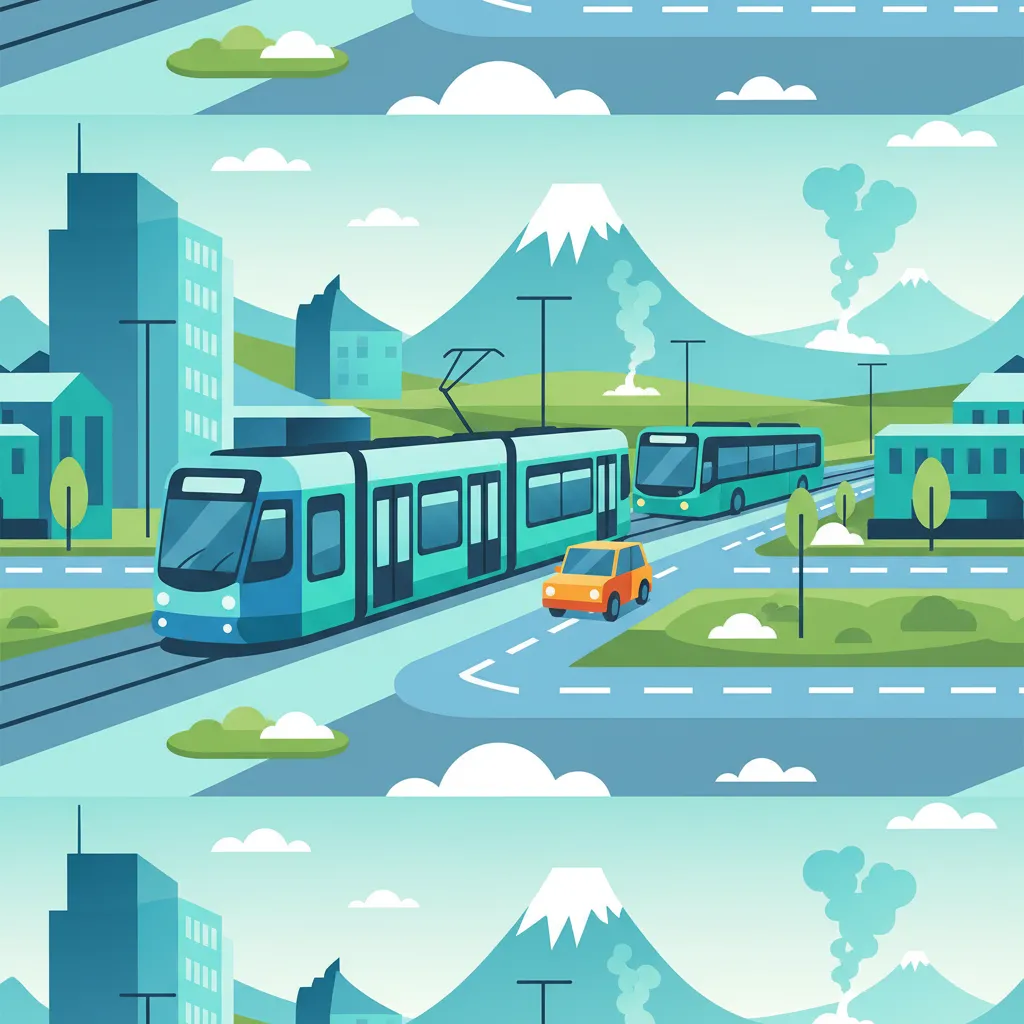
Trams and other public transport vehicles operate differently from cars due to their size, weight, and fixed routes. These characteristics often grant them special priority in traffic. This page explains the fundamental rules for interacting with these vehicles, particularly in Icelandic urban areas, to ensure safe and efficient traffic flow and prepare you for common exam questions.
Theory topic content overview
Read the full theory topic guide for Tram & Public Transport Priority with structured, easy-to-scan content built for learners in Iceland. This detailed section explains the exact rule, meaning, traffic context, comparison points, and exam logic behind this Icelandic driving theory topic so you can study faster, understand the concept more clearly, and avoid common interpretation mistakes on the theory test.
Traffic priority is a fundamental concept in driving theory, dictating which vehicle has the right to proceed in conflicting situations. For trams and certain public transport vehicles, these rules often grant them special priority. This is not arbitrary; it stems directly from their unique operational characteristics and physical limitations.
A tram runs on fixed rails, meaning it cannot swerve or change its path to avoid obstacles. It is also a large, heavy vehicle, requiring significantly longer distances to accelerate, slow down, and stop compared to a standard car. Similarly, some public transport vehicles, such as buses operating in dedicated lanes or those equipped with priority signals, are given preference to ensure efficient scheduling and passenger flow.
In essence, tram and public transport priority means that other road users must typically yield to these vehicles. This fundamental understanding is critical for safe driving and forms a key part of driving theory, even in areas where trams are not currently present.
Understanding priority rules for trams and public transport is essential for several reasons:
Samgöngustofa) test a learner's ability to understand overarching traffic principles, critical for comprehensive road safety knowledge and for driving internationally.The application of public transport priority depends on the specific vehicle and traffic situation.
In Icelandic urban environments, while trams aren't present, the concept of public transport priority extends to certain bus operations:
Several factors determine when public transport vehicles have priority:
Samgöngustofa outlines various priority signs (e.g., within the "200 Priority marks" category) and traffic light signals that explicitly grant priority. Always look for these.It's crucial not to confuse public transport priority with other rules:
Learners frequently make mistakes related to public transport priority:
While Iceland currently lacks trams, the principles of public transport priority remain highly relevant for Icelandic drivers. Samgöngustofa's comprehensive approach to traffic regulations means that understanding universal road rules, including those for special vehicle types, is part of becoming a competent driver.
For practical driving in Iceland, this topic most directly applies to how you interact with buses, particularly those using dedicated lanes (strætóbrautir) or receiving priority at intersections through traffic management systems. Mastering these interactions ensures efficient public transport flow and, most importantly, enhances safety for everyone on the road.
The core takeaway for tram and public transport priority is to always remember that these vehicles operate under specific constraints that limit their flexibility. As a driver, your responsibility is to anticipate their movements, be aware of their priority status, and be prepared to yield. Always prioritize safety and efficient traffic flow by giving way to trams and designated public transport vehicles, whether explicitly signaled or implied by their operational nature. This vigilance is key to success in your Icelandic driving theory exam and for safe driving on Icelandic roads and beyond.
Tram and public transport priority exists because these vehicles operate under physical constraints that limit their flexibility—they cannot swerve, stop quickly, or change lanes easily. While Iceland has no tram system, the principles directly apply to buses in dedicated lanes and those with priority signals in urban areas like Reykjavik. Drivers must yield to these vehicles at intersections, when buses depart stops, and when crossing priority lanes. The rules are clarified by traffic signs, signals, and road markings, with emergency vehicles holding absolute priority over all public transport. Understanding these principles is tested in the Icelandic driving theory exam and prepares drivers for international driving and future transport developments.
A short set of high-value points that capture the most important ideas from this theory explanation.
Trams have priority because they run on fixed rails and cannot swerve to avoid hazards, making it the driver's responsibility to yield.
Public transport priority applies to buses in dedicated lanes and those with priority signals, which must be respected in Icelandic urban areas.
Due to their size and weight, trams and buses require significantly longer distances to stop than standard vehicles.
Emergency vehicles with active lights and sirens override all other priority rules, including public transport priority.
In Iceland, understanding these principles is essential even though no tram system exists, as buses frequently operate with priority status.
Trams always follow fixed paths on rails and cannot deviate, so they always have implied priority unless signs explicitly state otherwise.
Dedicated bus lanes and their associated priority rules must be observed when turning across them in Icelandic cities.
Traffic signals may include specific priority indicators (such as a white bar) for public transport that differ from standard green lights.
At unmarked intersections, the standard right-hand rule does not override tram or public transport priority.
Trains operate on dedicated railway lines and require stopping at level crossings, which is distinct from tram operations within urban traffic.
Applying standard right-of-way rules without considering that trams and buses in priority situations override normal priority.
Underestimating stopping distances and cutting in front of trams or buses, assuming they can stop as quickly as a car.
Failing to recognize dedicated bus lanes and inadvertently obstructing them when turning.
Overlooking specific public transport priority signals when focused only on general traffic lights.
Confusing public transport priority with emergency vehicle priority, which has absolute right of way over all other traffic.
Start with a short, direct summary of Tram & Public Transport Priority before reading the full explanation below.
Trams and certain public transport vehicles, like buses with dedicated lanes or priority signals, often have priority over other road users. This is primarily due to their limited maneuverability and longer stopping distances. Drivers must anticipate their movements, be prepared to yield, and exercise extra caution, especially at intersections and tram stops, to prevent accidents and maintain traffic flow in Iceland.
Review the most important terms, rule signals, and traffic concepts linked to Tram & Public Transport Priority.
Explore related theory topic pages connected to Tram & Public Transport Priority and continue with the next useful rule explanation.
See the common search queries learners use when trying to understand Tram & Public Transport Priority in Iceland.

Ready to master Icelandic driving theory? Explore our comprehensive sections. Review road rules, traffic signs, and critical concepts. Build essential knowledge for confident and safe driving in Iceland. Start studying today.
Explore Icelandic Driving TheoryTheory topic content overview
A short set of high-value points that capture the most important ideas from this theory explanation.
Trams have priority because they run on fixed rails and cannot swerve to avoid hazards, making it the driver's responsibility to yield.
Public transport priority applies to buses in dedicated lanes and those with priority signals, which must be respected in Icelandic urban areas.
Due to their size and weight, trams and buses require significantly longer distances to stop than standard vehicles.
Emergency vehicles with active lights and sirens override all other priority rules, including public transport priority.
In Iceland, understanding these principles is essential even though no tram system exists, as buses frequently operate with priority status.
Trams always follow fixed paths on rails and cannot deviate, so they always have implied priority unless signs explicitly state otherwise.
Dedicated bus lanes and their associated priority rules must be observed when turning across them in Icelandic cities.
Traffic signals may include specific priority indicators (such as a white bar) for public transport that differ from standard green lights.
At unmarked intersections, the standard right-hand rule does not override tram or public transport priority.
Trains operate on dedicated railway lines and require stopping at level crossings, which is distinct from tram operations within urban traffic.
Applying standard right-of-way rules without considering that trams and buses in priority situations override normal priority.
Underestimating stopping distances and cutting in front of trams or buses, assuming they can stop as quickly as a car.
Failing to recognize dedicated bus lanes and inadvertently obstructing them when turning.
Overlooking specific public transport priority signals when focused only on general traffic lights.
Confusing public transport priority with emergency vehicle priority, which has absolute right of way over all other traffic.
Start with a short, direct summary of Tram & Public Transport Priority before reading the full explanation below.
Trams and certain public transport vehicles, like buses with dedicated lanes or priority signals, often have priority over other road users. This is primarily due to their limited maneuverability and longer stopping distances. Drivers must anticipate their movements, be prepared to yield, and exercise extra caution, especially at intersections and tram stops, to prevent accidents and maintain traffic flow in Iceland.
Review the most important terms, rule signals, and traffic concepts linked to Tram & Public Transport Priority.
Explore related theory topic pages connected to Tram & Public Transport Priority and continue with the next useful rule explanation.
See the common search queries learners use when trying to understand Tram & Public Transport Priority in Iceland.
Ready to master Icelandic driving theory? Explore our comprehensive sections. Review road rules, traffic signs, and critical concepts. Build essential knowledge for confident and safe driving in Iceland. Start studying today.
Explore Icelandic Driving TheoryUse this exam-focused revision tip to understand how Tram & Public Transport Priority is likely to appear in theory questions for learners in Iceland. This section helps you identify the most testable part of the rule, avoid common traps, and remember the concept more effectively during Icelandic driving theory exam preparation.
In Icelandic theory exams, questions about tram and public transport priority often test your understanding of their operational limitations. Remember that a tram's fixed route means it cannot swerve to avoid you. Always assume you need to yield unless a specific traffic sign or signal clearly states otherwise, especially at intersections and junctions.
Read direct answers to the most common learner questions about Tram & Public Transport Priority in Iceland. This FAQ focuses on rule confusion, practical meaning, comparison with similar concepts, and the exact uncertainties that appear most often in Icelandic driving theory revision and exam preparation.
Trams operate on fixed tracks and are large, heavy vehicles with limited maneuverability and long stopping distances. Granting them priority ensures safety and keeps public transport running efficiently, especially in busy urban areas.
While trams often have priority, it's not always absolute. You must always pay attention to specific road signs, traffic lights, and signals that may override general priority rules. However, in most situations, assume you must yield unless otherwise indicated.
Drive carefully, avoid blocking the tracks, and be aware of trams approaching from either direction. Be extra vigilant at tram stops for pedestrians boarding or alighting, and give trams sufficient space.
Some buses may have priority through dedicated bus lanes, specific traffic signals, or designated intersections where they are given precedence, often signaled by specific road markings or lights. Always observe local signage and signals.
Yes, Icelandic road signs and traffic signals can indicate specific priority rules for trams and public transport. Always be attentive to these signs, as they override general right-of-way rules. Look for priority signs and specific traffic light signals for public transport.
A common mistake is assuming general right-of-way rules always apply, neglecting that trams' fixed routes and size often grant them special status. Another is not anticipating trams' braking distances or overlooking signs that give them priority at junctions.
Utilize our advanced practice set search to pinpoint the exact Icelandic driving theory topics you need to review. Filter by subject, difficulty, or question type to create a highly effective study plan and ensure you are fully prepared for your official driving licence test in Iceland.