
This unit covers crucial aspects of speed management, maintaining safe distances, effective stopping, and legal parking in Iceland. Understanding these rules is vital for passing your Category B theory exam and ensuring safety on Icelandic roads, from urban areas to rural routes.
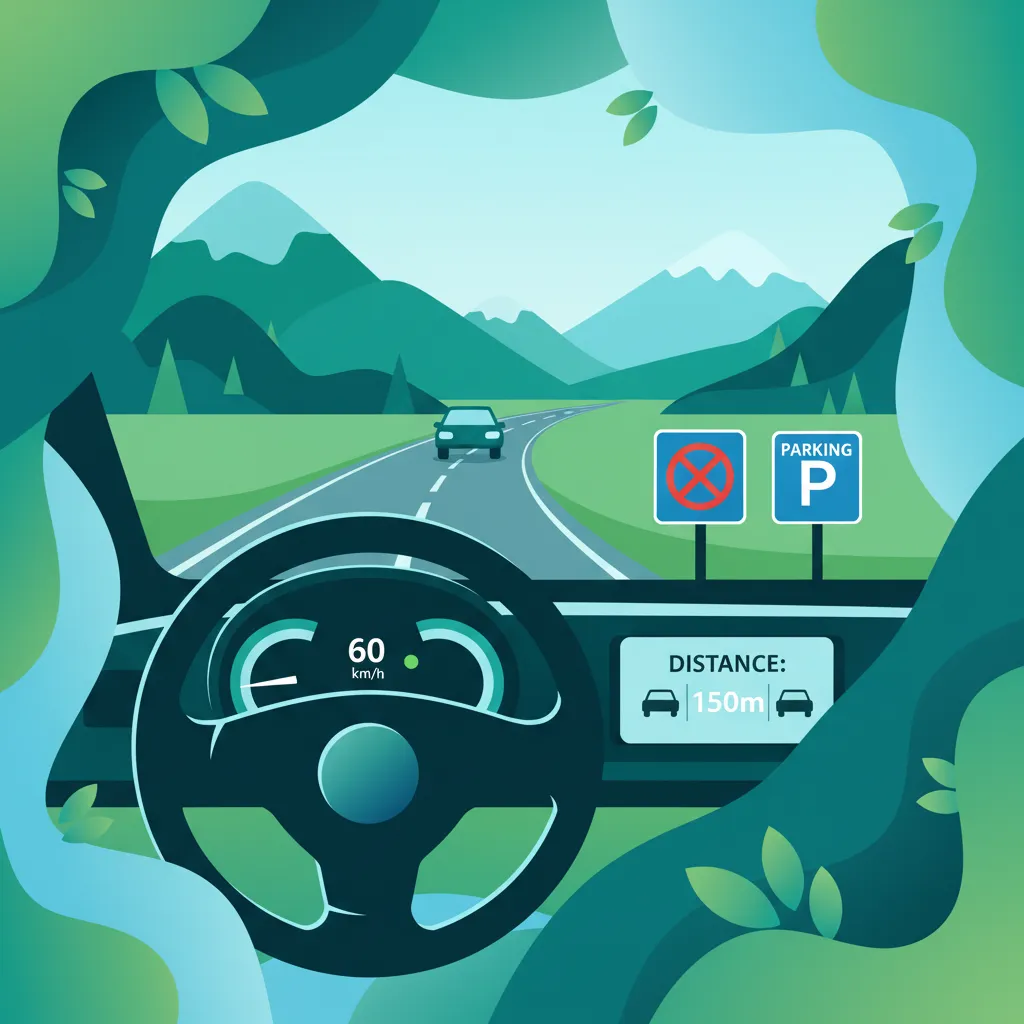
Browse all lessons that make up Speed, Following Distance, Stopping & Parking. Each lesson focuses on specific topics, learning objectives, and core concepts, helping you build essential knowledge and follow a clear, structured progression toward your study goals in Iceland.
This lesson outlines the speed limits applicable to various road types in Iceland, from urban streets to rural highways and special zones like tunnels. Learners will interpret speed sign markings, understand variable speed limits that adjust for weather, and recognize when temporary speed reductions are enforced. The content also covers speed monitoring devices and the legal consequences of exceeding limits, emphasizing speed awareness in all driving contexts.
This lesson examines the calculation of safe following distances using the two-second rule and formulas that factor in vehicle speed and road conditions. The content explains how reaction time, weather conditions like ice or rain, and vehicle load affect braking zones. Students also learn specific techniques for stopping on hills and how to avoid tailgating, thereby maintaining sufficient safety margins under all Icelandic weather conditions.
This lesson focuses on the rules governing vehicle parking throughout Iceland, including the correct use of parallel and angle parking and compliance with time-limited zones. Learners will review signage indicating disabled parking spaces, restrictions on roadside parking, and rules about parking on sidewalks or in narrow rural areas. The content also details the legal consequences and penalties for illegal parking and the impact of infractions on vehicle inspection records.
Explore high-intent keywords and long-tail search topics learners use when researching Speed, Following Distance, Stopping & Parking. These terms reflect how people search for reliable study materials, structured explanations, and unit-level theory preparation support in Iceland.
Find clear answers to the most common questions learners ask about Speed, Following Distance, Stopping & Parking. Understand how the unit is organized, what learning goals it supports, and how it contributes to your study progression with structured explanations and practical guidance tailored for learners in Iceland.
The theory exam covers various speed limits including urban areas (typically 50 km/h), rural roads (usually 90 km/h), and special zones like school areas or near construction sites which have lower limits. Always pay attention to posted signs, as these are the definitive indicators. Understanding these variations is key to passing your Icelandic theory test.
A common method is the 'two-second rule' for normal conditions. Increase this to three or four seconds in adverse weather (rain, snow, ice) or on gravel roads. The exam tests your ability to judge safe distances based on speed and road conditions, ensuring you have adequate time to react and stop.
Parking is typically prohibited near intersections, on pedestrian crossings, blocking driveways, on sidewalks, in front of emergency exits, and where signs explicitly forbid it. Disabled parking bays have strict regulations, requiring a valid permit. Familiarizing yourself with these rules is crucial for the theory exam and everyday driving.
Yes, the Icelandic theory exam will test your understanding that stopping distances increase significantly on wet, icy, or gravel surfaces compared to dry asphalt. You need to know how to adjust your speed and following distance accordingly.
Contra-flow parking refers to parking on the left side of the road in the direction of travel, which is generally prohibited except in specific circumstances, such as on a one-way street or where local regulations permit. The theory test will assess your knowledge of when and where this might be allowed, and the increased risks involved.
Yes, parking too close to bus stops can obstruct public transport, and parking near fire hydrants can impede emergency services. The Icelandic theory exam will likely include questions on minimum distances required from these points to ensure traffic flow and safety.
All included lessons
Lessons in Speed, Following Distance, Stopping & Parking
See who benefits most from studying Speed, Following Distance, Stopping & Parking. This overview explains how the unit supports different learning needs, what level of knowledge is helpful before starting, and how it fits into the overall study path in Iceland.
This unit is designed for all Category B learners preparing for the Icelandic driving theory exam, especially those who need to solidify their understanding of speed management, safe braking distances, and parking rules. It's also beneficial for drivers seeking to refresh their knowledge on Iceland-specific regulations.

Begin preparing for your Icelandic driving licence exam today by exploring our full range of organised courses. Select a curriculum path that suits your learning style and start mastering traffic rules, road signs, and essential driving safety with confidence and expert guidance.
Explore Driving Theory CoursesExplore all units and lessons included in this driving theory course.
Begin preparing for your Icelandic driving licence exam today by exploring our full range of organised courses. Select a curriculum path that suits your learning style and start mastering traffic rules, road signs, and essential driving safety with confidence and expert guidance.
Explore Driving Theory Courses