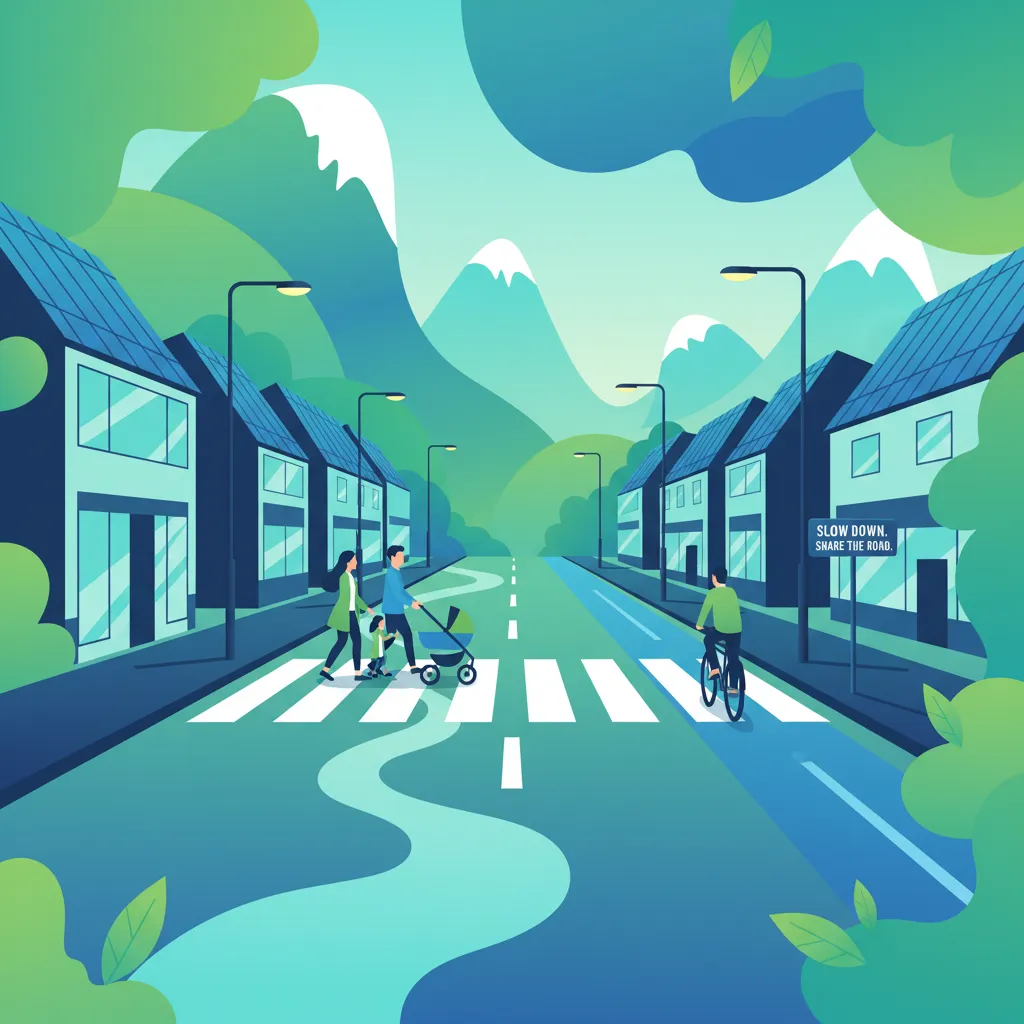
Navigate Iceland's urban environments with confidence by mastering the rules for interacting with pedestrians, cyclists, and other vulnerable road users. This unit covers crucial regulations for shared spaces like zebra crossings and cycle lanes, ensuring you understand your responsibilities and can drive safely and legally in busy city settings.
Browse all lessons that make up Urban Driving, Pedestrians, Cyclists & Vulnerable Road Users. Each lesson focuses on specific topics, learning objectives, and core concepts, helping you build essential knowledge and follow a clear, structured progression toward your study goals in Iceland.
This lesson outlines the regulations governing pedestrian crossings, including zebra crossings, pedestrian traffic lights, and the driver’s obligations to yield. Learners will study how to identify crosswalk markings, interpret pedestrian signal phases, and understand the enhanced caution required in school zones and areas with high foot traffic. The content also emphasizes the need for drivers to anticipate vulnerable pedestrians and provide additional yielding in low-visibility conditions.
This lesson focuses on the interaction between motor vehicles and cyclists or e-scooter users on Icelandic roads, exploring the dedicated cyclist lane system and safe overtaking regulations. The content covers the required minimum passing distance, the legal status of e-scooters, and the importance of awareness when sharing narrow urban streets. Recommended signaling practices are also discussed to alert vulnerable users of your intentions, especially during nighttime riding.
This lesson examines the broader dynamics of urban traffic flow, focusing on interactions with public transport, pedestrian islands, and traffic calming measures. Content includes the rules for navigating bus priority lanes, yielding to trams, and handling congested intersections safely. Learners also study speed restrictions in school zones and the use of pedestrian islands to manage cross-traffic, emphasizing the importance of anticipation in complex urban settings.
Explore high-intent keywords and long-tail search topics learners use when researching Urban Driving, Pedestrians, Cyclists & Vulnerable Road Users. These terms reflect how people search for reliable study materials, structured explanations, and unit-level theory preparation support in Iceland.
Find clear answers to the most common questions learners ask about Urban Driving, Pedestrians, Cyclists & Vulnerable Road Users. Understand how the unit is organized, what learning goals it supports, and how it contributes to your study progression with structured explanations and practical guidance tailored for learners in Iceland.
As a driver in Iceland, your primary responsibility when approaching a pedestrian crossing, especially a zebra crossing (gangbraut), is to be prepared to stop. You must always yield to pedestrians who are on or are about to enter the crossing. Always scan ahead for pedestrians and be prepared to slow down or stop well in advance.
When a cyclist is using a dedicated cycle lane, you must respect their space and not enter the lane unless absolutely necessary for a manoeuvre, such as turning right and only when safe. Always ensure you do not impede their progress and give them sufficient room. Remember that cyclists have priority within their designated lanes.
Yes, school zones in Iceland often have reduced speed limits, typically 30 km/h, and are marked with specific signs. Drivers must exercise extreme caution in these areas, be vigilant for children who may suddenly enter the roadway, and be prepared to stop at any moment. Always be observant of children, parents, and crossing guards.
Vulnerable road users (VRUs) are individuals on the road who are not protected by a vehicle structure. This includes pedestrians, cyclists, motorcyclists, children, the elderly, and users of e-scooters or other personal mobility devices. Drivers have a heightened duty of care towards VRUs due to their increased susceptibility to serious injury in collisions.
You should always signal your intentions well in advance of any turn or lane change, especially when pedestrians or cyclists are nearby. This proactive signalling gives them crucial information about your intended movement, allowing them to anticipate your actions and adjust their position safely, thereby preventing potential conflicts.
Yes, in many situations, buses and other public transport vehicles have priority. For example, when a bus is leaving a designated bus stop and signals to re-enter the traffic lane, drivers should yield to allow it to do so safely, provided it does not cause a significant disruption or hazard. Always be observant of public transport movements.
All included lessons
Lessons in Urban Driving, Pedestrians, Cyclists & Vulnerable Road Users
See who benefits most from studying Urban Driving, Pedestrians, Cyclists & Vulnerable Road Users. This overview explains how the unit supports different learning needs, what level of knowledge is helpful before starting, and how it fits into the overall study path in Iceland.
This unit is essential for all Category B learners preparing for the Icelandic driving theory exam, especially those who will be driving in urban areas. It is particularly beneficial for new drivers who may not yet be familiar with the specific interactions and heightened awareness required when sharing Icelandic city roads with pedestrians, cyclists, and e-scooter riders.

Begin preparing for your Icelandic driving licence exam today by exploring our full range of organised courses. Select a curriculum path that suits your learning style and start mastering traffic rules, road signs, and essential driving safety with confidence and expert guidance.
Explore Driving Theory CoursesExplore all units and lessons included in this driving theory course.
Begin preparing for your Icelandic driving licence exam today by exploring our full range of organised courses. Select a curriculum path that suits your learning style and start mastering traffic rules, road signs, and essential driving safety with confidence and expert guidance.
Explore Driving Theory Courses