
Prepare for Iceland's challenging F-roads by understanding why only 4x4 vehicles are permitted and the critical dangers posed by unbridged river crossings. This guide clarifies the legal requirements for vehicle registration and highlights how insurance policies often exclude river crossing damage, leaving drivers responsible for all repair costs. Essential knowledge for safe and legal highland travel in Iceland.
Article content overview
Iceland's dramatic landscapes offer unparalleled driving experiences, but venturing into the highlands requires specific knowledge and preparation. The "F" roads, designated for mountain travel, are not ordinary routes; they are often rough, unpaved tracks that demand more than a standard passenger car can handle. Understanding the regulations surrounding these roads, particularly the mandatory use of 4x4 vehicles and the significant risks of river crossings, is paramount for any driver seeking to explore Iceland's interior. This article delves into the critical aspects of F-road driving, ensuring you are well-prepared to navigate these challenging routes safely and legally, avoiding potentially severe financial penalties and ensuring your Icelandic adventure remains unforgettable for all the right reasons.
The designation "F" on Icelandic roads signifies that these are mountain roads, exclusively intended for vehicles equipped with four-wheel drive (4x4) capabilities and suitable for off-asphalt terrain. This restriction is not arbitrary; the conditions on F-roads can range from gravel and sand to rocky tracks, often featuring steep inclines and demanding terrain that would easily ground or damage a standard two-wheel-drive vehicle. While your standard driving license, typically a Class B license in Iceland, is sufficient to operate these vehicles, the crucial factor lies in the vehicle's registration and inherent capabilities. It is not enough to simply have a 4x4 vehicle; its registration must explicitly permit off-asphalt use, which is a key requirement for legal travel on F-roads.
The Icelandic Transport Authority (Samgöngustofa) mandates these regulations to ensure both driver safety and the preservation of Iceland's fragile natural environment. Driving on these routes with an unsuitable vehicle is not only dangerous, risking severe mechanical failure and stranding you in remote areas, but it also carries substantial fines and can invalidate your insurance, leaving you liable for all recovery and repair costs. Therefore, selecting the correct vehicle and understanding its legal standing for F-road use is the foundational step before embarking on any highland journey.
Remember, a valid Class B driving license permits you to drive most passenger vehicles, including many 4x4s. However, the vehicle itself must be registered for off-road use to legally travel on F-roads. Always check your rental agreement or vehicle registration documents to confirm this capability.
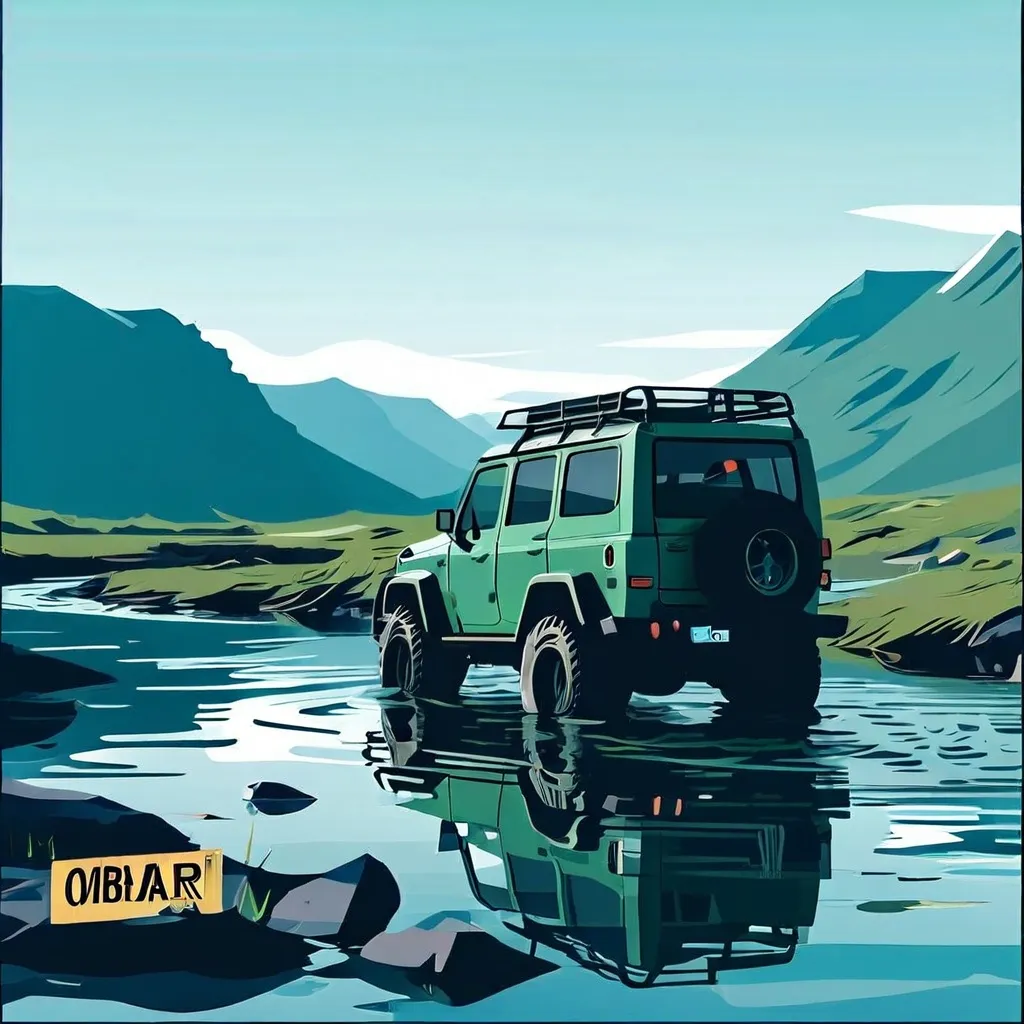
One of the most significant dangers encountered on Icelandic F-roads is the prevalence of unbridged rivers. Unlike paved roads in more developed areas, many F-roads require drivers to ford rivers, a task that carries immense risk. The depth and current of these rivers can change rapidly due to weather conditions, snowmelt, or upstream activity, making them unpredictable and hazardous. Even experienced drivers can misjudge a river's strength or depth, leading to catastrophic consequences.
The Icelandic Transport Authority and various safety organizations strongly advise extreme caution. If you are unsure about the safety of a river crossing, the paramount rule is do not attempt it. Instead, turn back or wait for assistance from other travelers, if possible. Attempting to cross a river against its current is particularly dangerous, as it increases the risk of water entering the engine and getting stuck. Always plan your route beforehand, identify the safest crossing points if possible, and proceed slowly in the lowest gear. The potential for severe damage to your vehicle's engine, transmission, and electrical systems is very high if water ingress occurs.
A critical piece of information for anyone planning to drive on Icelandic F-roads is the typical exclusion of river crossing damage from insurance policies. This is a significant point of confusion and a common pitfall for tourists. Standard vehicle insurance, including comprehensive coverage and Collision Damage Waiver (CDW) agreements commonly offered by rental companies, almost universally excludes any damage incurred as a result of driving through or submerging a vehicle in water, especially rivers.
This means that if your vehicle's engine is damaged by water during a river crossing – a relatively common occurrence if misjudged – you will be held personally liable for the entire cost of repairs. These costs can easily run into tens of thousands of euros or dollars, depending on the extent of the damage. This financial responsibility extends to the rental company if you are driving a rented vehicle. It is imperative to understand that "full coverage" or "CDW" does not typically cover this specific type of peril. Therefore, drivers must be acutely aware that the risk of such damage and its financial implications rest solely with them.
Never assume that your insurance policy covers damage sustained from river crossings. Always read the fine print of your rental agreement and any insurance documentation thoroughly. If unsure, contact your insurance provider and the rental company directly for explicit clarification on what is and is not covered, especially concerning water damage and F-road driving.
Navigating F-roads requires a keen understanding of specific Icelandic road signs that are crucial for safety and legal compliance. Beyond the general traffic signs, there are specific indicators that pertain directly to the unique challenges of highland driving.
One such critical sign is "Óbrúaðar ár", which translates to "unbridged rivers." This sign directly warns of the impending river crossings discussed previously and serves as a final opportunity to reassess your decision to proceed. Another vital sign is "LOKAÐ" (CLOSED). When displayed on an F-road, this sign is not a suggestion; it is a legally binding order.
F-roads are typically closed during winter due to snow, ice, and general impassability. The opening dates for these roads are dependent on weather conditions and snowmelt, usually occurring from late May or June into September or October. Driving on a road marked "LOKAÐ" carries severe consequences, including significant fines imposed by the authorities and the immediate voiding of your vehicle's insurance policy, leaving you fully exposed to repair and recovery costs. Furthermore, driving on a closed road may result in legal action. Always consult official road condition websites like road.is and safetravel.is for the most up-to-date information on F-road status before and during your journey.
It is fundamentally important to distinguish between driving on F-roads and illegal off-road driving in Iceland. While F-roads are designated routes for specific vehicles, driving off these marked paths onto untouched terrain is strictly forbidden. Iceland's delicate flora is extremely sensitive to damage, and any deviation from designated roads can cause irreparable harm to the landscape. This prohibition applies even to seemingly barren areas like sand or wasteland; leaving any trace on unspoiled land is considered off-road driving and is illegal.
Driving on F-roads or designated gravel roads is not considered off-road driving. However, the moment you veer off these established routes, you are engaging in illegal off-road activity.
The Icelandic Transport Authority and environmental agencies enforce this rule rigorously. Violators face substantial fines, and the environmental damage can have long-lasting ecological consequences. Respecting the boundaries of marked roads and F-roads is crucial for preserving Iceland's unique natural beauty for future generations. When in doubt, always stay on the clearly defined routes.
Embarking on an F-road adventure in Iceland requires thorough preparation beyond just ensuring you have a 4x4 vehicle. Understanding the inherent risks and planning accordingly can significantly enhance your safety and the success of your trip. Before setting out, always check the latest road conditions on www.road.is and consult safetravel.is for safety advisories. These resources provide real-time updates on F-road openings, closures, and potential hazards.
It is highly recommended to inform someone of your travel plans, including your intended route and expected return time, especially if you are venturing into remote areas. Consider carrying a satellite communication device if you anticipate being in areas with no mobile phone signal. Always carry sufficient food, water, and warm clothing, as conditions can change rapidly, and assistance may be far away. Familiarize yourself with the local emergency number, which is 112 in Iceland.
When driving, maintain a safe speed appropriate for the road conditions, which are often significantly slower than paved roads. Be aware of blind crests where visibility is limited and be prepared to slow down and move as far to the right as safely possible. If you encounter a challenging situation, such as a river crossing that looks risky or a road that appears impassable, do not hesitate to turn back. Your safety and the preservation of the vehicle are far more important than reaching your destination immediately.
The Icelandic Transport Authority (Samgöngustofa) oversees all regulations related to driving and road safety, including those pertaining to F-roads. Familiarizing yourself with their official guidelines is a crucial part of your preparation.
Icelandic F-roads are mountain routes requiring 4x4 vehicles with registration that explicitly permits off-asphalt driving—a standard passenger car registration is insufficient despite a valid Class B license. Unbridged river crossings present extreme and rapidly changing hazards, and standard vehicle insurance including CDW almost never covers water damage, leaving drivers personally liable for potentially tens of thousands in repair costs. The LOKAÐ (CLOSED) sign marks legally impassable roads where entry voids insurance coverage and triggers fines, while off-road driving remains strictly prohibited across all Icelandic terrain to protect fragile ecosystems.
A short set of high-value points that capture the most important ideas from this article.
F-roads strictly require 4x4 vehicles whose registration explicitly permits off-asphalt use, not just any 4x4 will do
Standard Class B driving license covers driving F-road vehicles, but the vehicle's legal status matters more than the driver's license
River crossings are highly unpredictable due to rapidly changing depth and current from weather and snowmelt
Insurance policies—including CDW and comprehensive coverage—almost universally exclude water damage from river crossings
The LOKAÐ (CLOSED) sign is a legally binding prohibition with real penalties, not an optional advisory
Always verify your vehicle's registration documents confirm off-asphalt capability before entering any F-road
Check road.is and safetravel.is for real-time F-road status and closures before and during your journey
River crossing damage is specifically excluded from most rental insurance policies despite seeming like 'full coverage'
Driving on a LOKAÐ road will void your insurance and expose you to full repair costs plus potential fines
Off-road driving is illegal in Iceland even on seemingly barren sand or wasteland areas
Assuming any 4x4 vehicle qualifies for F-roads without checking if its registration explicitly permits off-asphalt use
Believing that CDW or comprehensive rental insurance covers engine damage from water crossing—it categorically does not
Proceeding with a river crossing when uncertain about depth or current because you have already driven partway
Attempting to bypass a LOKAÐ closure when conditions seem passable, not realizing this voids insurance and risks fines
Treating off-road driving restrictions as applying only to wet grass or marked tracks, when even sand plains are protected
Article content overview
A short set of high-value points that capture the most important ideas from this article.
F-roads strictly require 4x4 vehicles whose registration explicitly permits off-asphalt use, not just any 4x4 will do
Standard Class B driving license covers driving F-road vehicles, but the vehicle's legal status matters more than the driver's license
River crossings are highly unpredictable due to rapidly changing depth and current from weather and snowmelt
Insurance policies—including CDW and comprehensive coverage—almost universally exclude water damage from river crossings
The LOKAÐ (CLOSED) sign is a legally binding prohibition with real penalties, not an optional advisory
Always verify your vehicle's registration documents confirm off-asphalt capability before entering any F-road
Check road.is and safetravel.is for real-time F-road status and closures before and during your journey
River crossing damage is specifically excluded from most rental insurance policies despite seeming like 'full coverage'
Driving on a LOKAÐ road will void your insurance and expose you to full repair costs plus potential fines
Off-road driving is illegal in Iceland even on seemingly barren sand or wasteland areas
Assuming any 4x4 vehicle qualifies for F-roads without checking if its registration explicitly permits off-asphalt use
Believing that CDW or comprehensive rental insurance covers engine damage from water crossing—it categorically does not
Proceeding with a river crossing when uncertain about depth or current because you have already driven partway
Attempting to bypass a LOKAÐ closure when conditions seem passable, not realizing this voids insurance and risks fines
Treating off-road driving restrictions as applying only to wet grass or marked tracks, when even sand plains are protected
Explore related topics, search based questions, and concepts that learners often look up when studying Iceland F-Road Rules & Insurance. These themes reflect real search intent and help you understand how this topic connects to wider driving theory knowledge in Iceland.
Find clear and practical answers to common questions learners often have about Iceland F-Road Rules & Insurance. This section helps explain difficult points, remove confusion, and reinforce the key driving theory concepts that matter for learners in Iceland.
Icelandic F-roads legally require 4x4 vehicles. Standard two-wheel-drive cars are banned and driving them on F-roads can lead to significant fines and voided insurance.
No, standard Icelandic car insurance policies, including full CDW (Collision Damage Waiver), typically do not cover any damage sustained while crossing rivers. Drivers are personally liable for all repair costs if their vehicle is damaged by water.
The 'Óbrúaðar ár' sign in Iceland indicates 'unbridged rivers' ahead. This means you will encounter rivers that are not crossed by bridges and require careful assessment before attempting to cross, if at all.
A 'LOKAÐ' sign means 'CLOSED' and is legally binding. Driving on an F-road marked as closed is illegal, carries substantial fines, and will invalidate your insurance.
No, off-road driving is strictly forbidden in Iceland to protect its fragile ecosystem. Driving on F-roads is permitted for specifically designated vehicles, but leaving these roads is considered off-road driving and is illegal.
Refine your driving theory knowledge by exploring more focused articles. Use our comprehensive search to find additional detailed explanations on any Icelandic road rule, traffic situation, or driving procedure to ensure complete readiness for your exam.