Prepare for your Icelandic driving theory exam by thoroughly understanding traffic light signals. This guide clarifies the distinct Red, Red-Yellow, and Green sequences used in Iceland, the critical meaning of amber lights, and the strict rules against turning right on red. Learn about the severe penalties, including significant ISK fines and license points, for disregarding traffic signals, ensuring you drive safely and legally.
Article content overview
Driving in Iceland, whether navigating the vibrant streets of Reykjavík or the open roads of the countryside, requires a thorough understanding of its traffic regulations. Among the most critical elements of road safety are traffic signals, specifically the sequences and rules governing intersections. This article delves into the Icelandic traffic light system, explaining the standard light sequences, the precise meaning of amber lights, and the stringent penalties associated with disregarding red lights. Mastering these rules is essential for anyone preparing for the Icelandic driving theory exam and for ensuring safe, lawful driving practices across the nation.
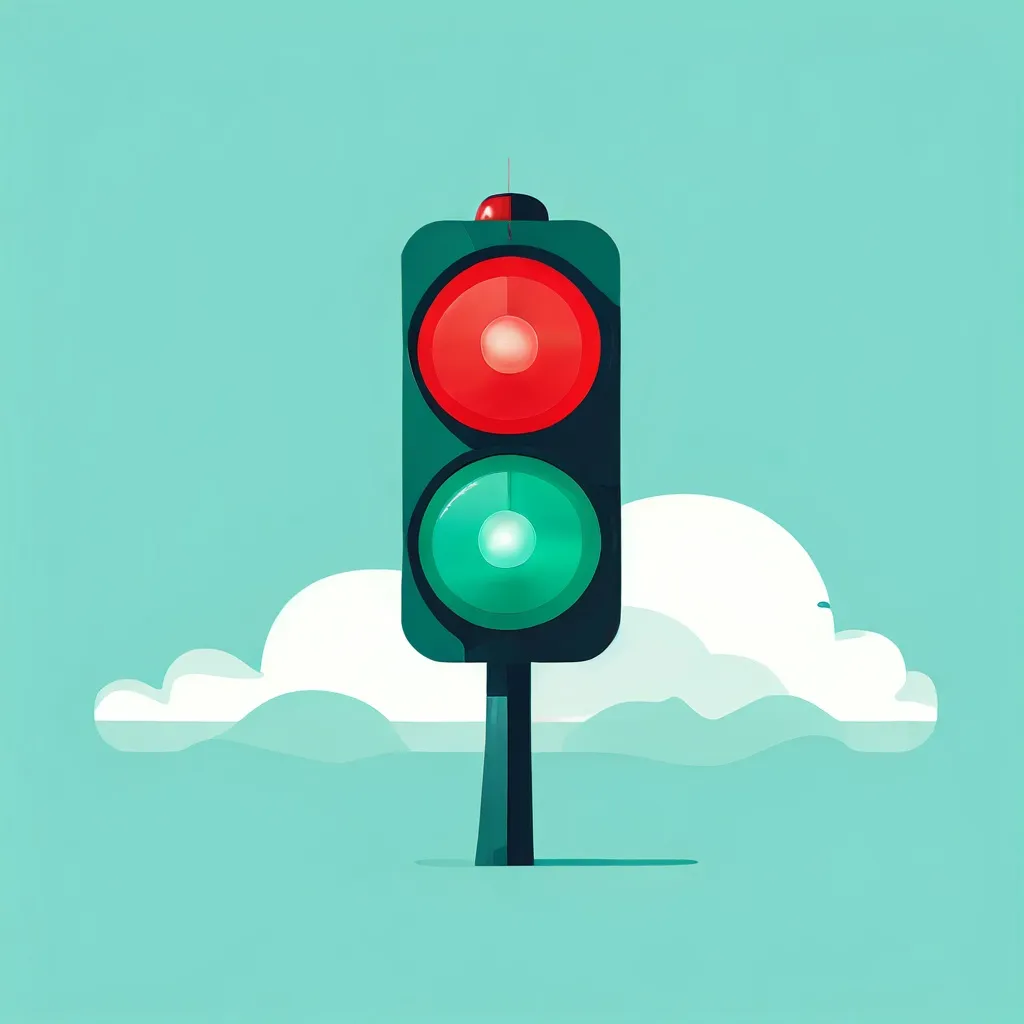
Icelandic traffic lights adhere to a standard European sequence designed to provide clear and predictable signals to drivers. This system is based on a cyclical progression of colours that inform drivers when to stop, prepare to stop, and proceed. The fundamental cycle ensures that all road users have adequate warning before a change in signal occurs, minimizing the risk of confusion and accidents at busy junctions.
The sequence begins with the universal symbol of a stop: the red light. When a solid red light is illuminated, all traffic facing it must come to a complete halt before the designated stop line or, if none is present, before entering the intersection itself. This red phase is crucial for clearing cross-traffic and pedestrian crossings, ensuring a safe passage for all.
Following the red light, a combined red and yellow light appears. This transitional signal is not an indication to proceed but rather a warning that the light is about to turn green. Drivers should use this moment to prepare to move, ensuring they are in the correct lane and ready to accelerate when the green light is displayed. It’s a brief but vital preparatory phase.
Finally, the green light permits traffic to proceed through the intersection. However, even when the light is green, drivers must always exercise caution. They must ensure that the intersection is clear of any obstructions or vehicles that may have entered it during the previous phase and that all pedestrians have cleared the crossing. Proceeding on a green light does not grant an unconditional right of way; safety and awareness remain paramount.
The amber or yellow light in Iceland serves a critical, often misunderstood, purpose. It is a definitive warning that the light is about to turn red. Drivers facing an amber light must stop before the stop line or intersection unless they are so close to it that stopping safely would be impossible or would create a hazard for following traffic. This is a key point tested in the driving theory exam; the amber light is not an invitation to accelerate to beat the red.
It is important to understand that a flashing green light or a steady amber light indicates the end of the green phase. Attempting to speed through an intersection when the light turns amber is a dangerous practice and a direct violation of traffic laws. Icelandic traffic authorities emphasize that the amber phase is a final opportunity to stop safely, not a challenge to rush through.
Disregarding a red traffic signal is considered a serious traffic offense in Iceland, with significant consequences aimed at deterring such behaviour and enhancing road safety. The Icelandic Transport Authority (Samgöngustofa) enforces strict penalties for this infraction, reflecting the danger it poses to all road users.
The penalties for running a red light in Iceland are substantial. Fines can be as high as 125,000 Icelandic Króna (ISK) or even more, depending on the specific circumstances and any aggravating factors. In addition to monetary penalties, drivers will also incur penalty points on their driving license. Accumulating too many penalty points can lead to the suspension or revocation of a driver's license, impacting their ability to drive for extended periods.
Running a red light is a significant safety hazard. It directly endangers other vehicles, cyclists, and pedestrians who have the right of way. Always be prepared to stop when approaching an intersection, especially when you see the light change to amber.
A common point of confusion for drivers from different jurisdictions is the rule regarding right turns on a red light. In Iceland, unlike in some other countries, it is strictly prohibited to turn right on a red light unless there is a specific green arrow signal explicitly permitting this action.
This rule is in place to manage the flow of traffic and ensure the safety of pedestrians and cyclists who may be crossing at the same time. Drivers must wait for a green light or a specific green arrow signal before proceeding with a right turn at an intersection controlled by traffic lights. Any attempt to turn right on a solid red light will be treated as running a red light and will be subject to the same penalties.
Furthermore, drivers should be aware that traffic lights are not the only form of intersection control. In Iceland, unmarked intersections and roundabouts also have their own specific priority rules, which are crucial for safe navigation. Always be vigilant for other traffic signs and signals that may be present.
While not directly related to traffic light sequences, it is critical to remember that visibility is paramount, especially during Iceland's long, dark winters or in adverse weather conditions. Icelandic law mandates that headlights and taillights must be turned on at all times when a vehicle is in use on public roads, year-round.
Some modern vehicles have automatic daytime running lights that may not illuminate the rear lights. Therefore, drivers must be diligent and manually ensure their headlights and taillights are activated at the start of every journey. This ensures other road users can see your vehicle clearly, significantly reducing the risk of collisions. The use of reflectors, especially for pedestrians and cyclists at night, is also strongly encouraged through campaigns like "See you," promoting responsible behaviour in traffic.
Always check that your vehicle's lights are functioning correctly and are illuminated as required by Icelandic law. This includes headlights, taillights, and brake lights. Proper use of lights is a fundamental aspect of road safety and a common topic in driving theory.
The Icelandic driving theory exam, administered by the Icelandic Transport Authority, covers a wide range of traffic rules and regulations designed to ensure all drivers are competent and safety-conscious. Understanding traffic light sequences, the meaning of each light, and the consequences of violations like running a red light is a cornerstone of the exam syllabus.
Questions on the theory test often present scenarios where you must identify the correct action to take at an intersection based on the traffic signals displayed. Pay close attention to details such as the colour of the light, whether it is solid or flashing, and any accompanying signs or signals. The prohibition of right turns on red without a specific arrow is a frequently tested concept.
A financial penalty imposed by Icelandic authorities for a driver failing to stop at a red traffic light. These fines can be substantial, reaching up to 125,000 ISK or more, and are often accompanied by penalty points on the driver's license.
A system used in Iceland where specific traffic violations result in points being added to a driver's license. Accumulating a certain number of penalty points can lead to license suspension or revocation.
By thoroughly understanding these rules and their implications, you will be well-prepared to answer questions on traffic signals confidently and, more importantly, to drive safely and responsibly on Icelandic roads.
Icelandic traffic lights operate on a Red -> Red-Yellow -> Green sequence, with the amber light serving as a mandatory stop signal unless it is unsafe to do so. Unlike many countries, Iceland prohibits right turns on red unless a specific green arrow is present. Running a red light carries substantial consequences including fines up to 125,000 ISK and penalty points. Additionally, Icelandic law requires headlights and taillights to be illuminated at all times while driving, year-round. Understanding these rules is essential for both passing the theory exam and driving safely on Icelandic roads.
A short set of high-value points that capture the most important ideas from this article.
Icelandic traffic lights follow the European sequence: Red, then Red-Yellow, then Green
The amber light is a warning to stop, not a signal to accelerate through the intersection
Right turns on red are strictly prohibited in Iceland unless a green arrow explicitly permits it
Running a red light can result in fines up to 125,000 ISK plus penalty points on your license
Headlights and taillights must be on at all times while driving in Iceland, regardless of season
Red-Yellow is a preparatory phase before green, not a signal to proceed
Stop at an amber light unless you are too close to stop safely without causing a hazard
A green light does not guarantee right of way; always ensure the intersection is clear
The Icelandic Transport Authority (Samgöngustofa) administers penalties for traffic violations
Penalty points accumulation can lead to license suspension or revocation
Treating the amber light as permission to hurry through the intersection
Assuming right turns on red are permitted like in some other countries
Believing a green light automatically grants right of way without checking the intersection
Forgetting that pedestrians have priority at marked crossings even when you have a green light
Not checking whether a green arrow or solid green is displayed for turning maneuvers
Article content overview
A short set of high-value points that capture the most important ideas from this article.
Icelandic traffic lights follow the European sequence: Red, then Red-Yellow, then Green
The amber light is a warning to stop, not a signal to accelerate through the intersection
Right turns on red are strictly prohibited in Iceland unless a green arrow explicitly permits it
Running a red light can result in fines up to 125,000 ISK plus penalty points on your license
Headlights and taillights must be on at all times while driving in Iceland, regardless of season
Red-Yellow is a preparatory phase before green, not a signal to proceed
Stop at an amber light unless you are too close to stop safely without causing a hazard
A green light does not guarantee right of way; always ensure the intersection is clear
The Icelandic Transport Authority (Samgöngustofa) administers penalties for traffic violations
Penalty points accumulation can lead to license suspension or revocation
Treating the amber light as permission to hurry through the intersection
Assuming right turns on red are permitted like in some other countries
Believing a green light automatically grants right of way without checking the intersection
Forgetting that pedestrians have priority at marked crossings even when you have a green light
Not checking whether a green arrow or solid green is displayed for turning maneuvers
Explore related topics, search based questions, and concepts that learners often look up when studying Icelandic Traffic Lights & Fines. These themes reflect real search intent and help you understand how this topic connects to wider driving theory knowledge in Iceland.
Find clear and practical answers to common questions learners often have about Icelandic Traffic Lights & Fines. This section helps explain difficult points, remove confusion, and reinforce the key driving theory concepts that matter for learners in Iceland.
In Iceland, traffic lights follow the sequence: Red light, then Red and Yellow lights together (indicating to prepare to go), followed by Green. A flashing green or solid yellow light signals that the light is about to turn red.
Running a red light in Iceland is a serious offense and typically results in a substantial fine, often 125,000 ISK or more, along with penalty points on your driving license.
No, unlike in some other countries, turning right on a red light is strictly prohibited in Iceland unless there is a specific green arrow signal permitting the turn.
A yellow or amber traffic light in Iceland means the light is about to change to red. You must stop unless you are already so close to the intersection that stopping safely would be dangerous.
Refine your driving theory knowledge by exploring more focused articles. Use our comprehensive search to find additional detailed explanations on any Icelandic road rule, traffic situation, or driving procedure to ensure complete readiness for your exam.