
The Direction-of-Effect Plate, often seen as sign 810.3, is a supplementary sign used in Iceland to provide crucial context to the main traffic sign directly above it. It's not a standalone sign; it always works in conjunction with another, defining its precise scope. This could involve specifying a distance, a time of day, a particular vehicle class, or other conditions that alter how you should interpret the primary sign's instruction. Ignoring this plate can lead to misinterpreting the rule, a common trap in both driving and the theory exam.
The Direction-of-Effect Plate (810.3) is vital for clarifying how a main road sign applies, often specifying distance, time, or vehicle class. Correctly understanding its traffic sign explanation is crucial for passing your Icelandic driving theory test and safely navigating Icelandic roads, ensuring you apply traffic rules accurately.
Direction-of-Effect Plate is used beneath another sign to narrow or explain the exact effect of the main rule. It can define distance, time, vehicle class, written conditions, or another limit that changes how the main sign should be interpreted on the road. In theory questions and real traffic alike, the mistake is often to remember the main sign but forget the plate that changes its scope. The correct reading always comes from combining both elements into one complete instruction.
This supplementary plate explains more precisely how the main sign applies by adding detail about the exact scope of a main sign. It must always be read together with the main sign above it.
Get clear, practical answers to the most common questions about the 810.3 - Direction-of-Effect Plate road sign. Learn how the sign works, what rules it represents, and how it affects real driving situations. This FAQ strengthens your understanding and supports accurate decision making for the Icelandic driving theory exam in Iceland.
The Direction-of-Effect Plate (810.3) is a supplementary sign used beneath a primary traffic sign. Its purpose is to clarify or narrow the exact effect of the main sign, by providing additional information about its scope, such as distance, time, vehicle type, or specific conditions.
No, the 810.3 Direction-of-Effect Plate is never used on its own. It only has meaning when it is placed directly below another traffic sign, and you must always read both signs together as a single, complete instruction.
A very common mistake, both in traffic and during the theory exam, is to remember or react to the main sign above the 810.3 plate but forget to consider the plate's modification. This can lead to applying the rule incorrectly, for example, continuing to follow a speed limit past the specified distance.
You should always interpret the combined instruction. For example, if a 'No Parking' sign is above an 810.3 plate stating '200m', you should understand that parking is prohibited for the next 200 metres. Always check if the plate refers to distance, time, vehicle class, or other conditions relevant to you.
'Direction-of-Effect' refers to how the supplementary plate modifies or directs the application of the main sign. It tells you precisely where, when, or for whom the main sign's rule applies, essentially defining the 'effect zone' or conditions of the primary sign.
A clear reference image of the 810.3 - Direction-of-Effect Plate road sign used in Iceland.
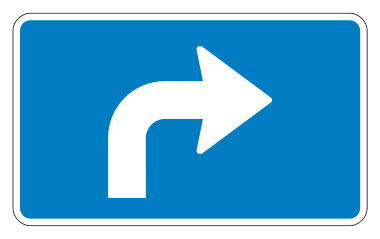
The 810.3 - Direction-of-Effect Plate road sign may also be known by these alternative names or terms.
The 810.3 - Direction-of-Effect Plate road sign is part of the Supplementary Plates category, which groups together signs with similar rules and functions.
Mastering Icelandic road signs means understanding subtle differences. Comparing similar traffic signs helps cement recognition and avoid common mistakes during your theory test revision. Reviewing these related signs aids in accurate interpretation and builds confidence for your Icelandic driving licence theory exam.
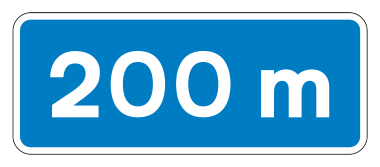
The 802.2 Distance Plate clarifies when and where the main sign's rule applies.
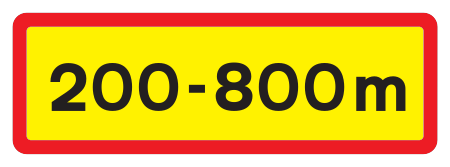
Understand the Length of Validity Plate (804.1) to correctly interpret traffic signs.
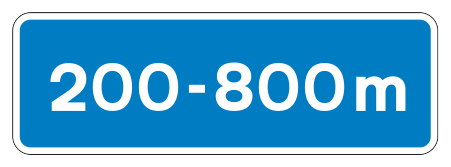
Understand the Length of Effect Plate (804.2) and its impact on main road signs.
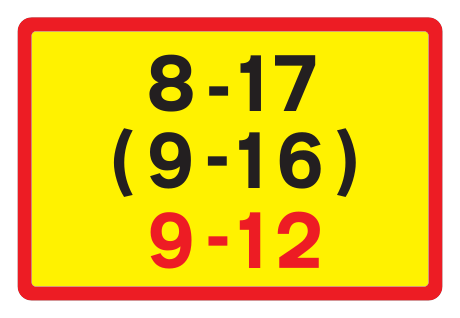
The Time Period Plate (806.1) Always Works With Another Sign Above It
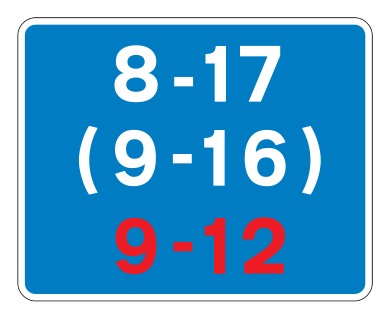
The Time Period Plate (806.2) Modifies Main Signs to Show When They Apply

This supplementary plate clarifies that the main sign applies specifically to passenger cars under 3.5 tonnes.

Understand the 'Truck' Vehicle Class Plate and How it Modifies Main Signs

This Supplementary Plate Clarifies Delivery Rules for the Sign Above.
Explore curated theory modules and safety procedures that clarify how specific road signs dictate right-of-way and vehicle conduct on Icelandic roads. Apply this knowledge to your driving theory test preparation by linking visual signage to real-world traffic laws.
Understand Your Rights and Responsibilities During Roadside Checks in Iceland.
Master the Icelandic Rules for Towing and Trailer Safety with a Category B License
Learn about the financial penalties for traffic violations in Iceland for 2026, covering common offenses such as speeding and red light violations. A key takeaway is the 25% discount offered for prompt payment of most fines, a crucial detail for responsible driving and passing your Icelandic theory test. We also explore serious violations like off-road driving ('Utanvegaakstur') which are not eligible for this discount.
Learn about the essential legal requirements for seatbelts and the mandatory warning triangle in Iceland. This knowledge is vital for your driving theory exam, ensuring you understand your responsibilities as a driver to protect all passengers and be prepared for emergencies on Icelandic roads.
Policy As A Primary Label Applies is used beneath another sign to narrow or explain the exact effect of the main rule. It can define distance, time, vehicle class, written conditions, or another limit that changes how the main sign should be interpreted on the road. In theory questions and real traffic alike, the mistake is often to remember the main sign but forget the plate that changes its scope. The correct reading always comes from combining both elements into one complete instruction.
Policy As A Primary Label Applies is used beneath another sign to narrow or explain the exact effect of the main rule. It can define distance, time, vehicle class, written conditions, or another limit that changes how the main sign should be interpreted on the road. In theory questions and real traffic alike, the mistake is often to remember the main sign but forget the plate that changes its scope. The correct reading always comes from combining both elements into one complete instruction.
After reviewing the full list of Icelandic road signs, reinforce your learning with targeted practice. Explore our sign group categories or take a specific quiz to test your recognition and recall. Ensure you're fully prepared to identify and interpret all traffic signs for your upcoming driving theory exam.
View All Icelandic Road Signs