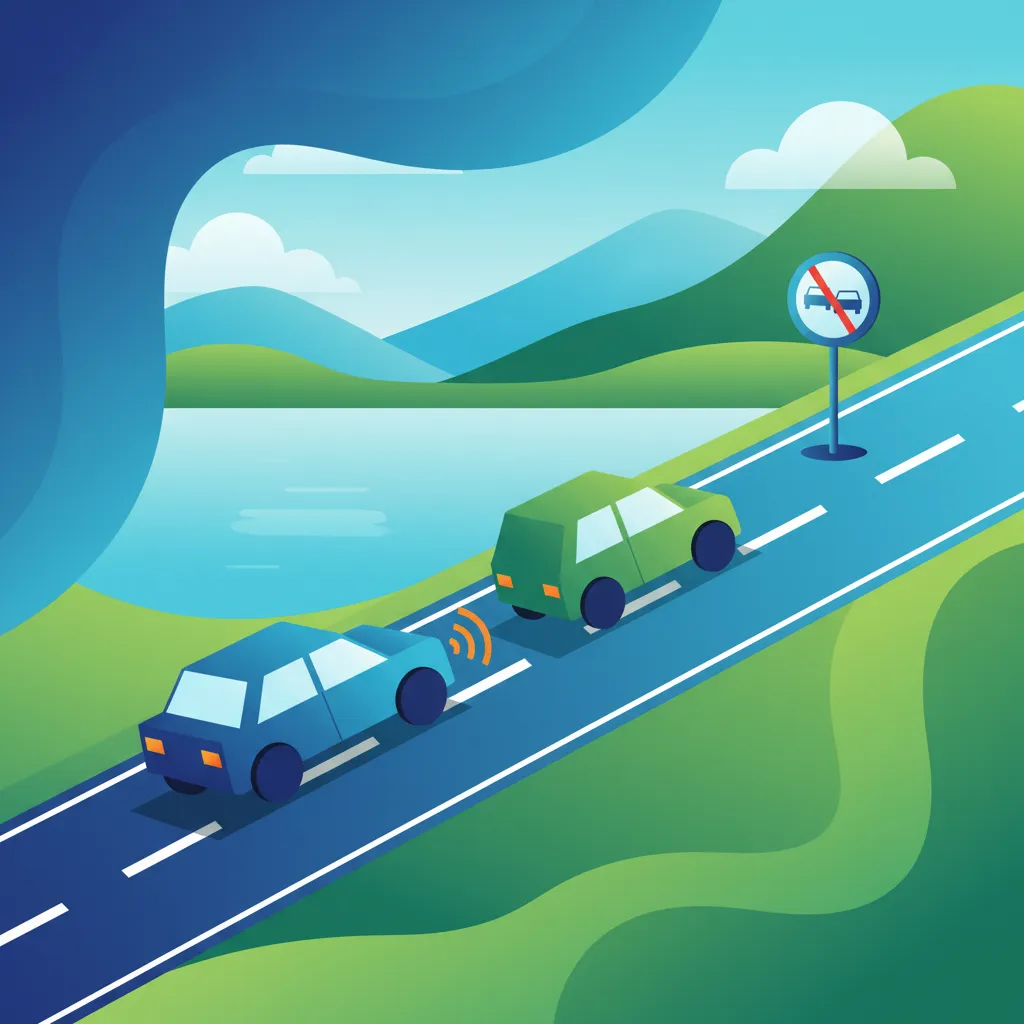
Overtaking is a high-risk maneuver that requires precise judgment and adherence to specific traffic rules. In Iceland, drivers must carefully assess road conditions, visibility, and traffic ahead before attempting to pass. This section explains the legal requirements and best practices for safe overtaking, highlighting situations where it is strictly prohibited.
Theory topic content overview
Read the full theory topic guide for Overtaking Rules with structured, easy-to-scan content built for learners in Iceland. This detailed section explains the exact rule, meaning, traffic context, comparison points, and exam logic behind this Icelandic driving theory topic so you can study faster, understand the concept more clearly, and avoid common interpretation mistakes on the theory test.
Overtaking, also known as passing, is the manoeuvre of moving past a slower-moving vehicle travelling in the same direction. It requires you to temporarily deviate from your current lane, often into an adjacent lane or even the opposing traffic lane on single-carriageway roads, before returning to your original position. Due to the inherent risks involved, especially on Iceland's varied and sometimes challenging road network, overtaking demands exceptional judgment, precision, and strict adherence to traffic rules.
Mastering safe overtaking is not just about passing your driving theory exam; it's fundamental for road safety and crucial for preventing serious collisions on Icelandic roads.
blind beygjur), and rapidly changing weather (fog, heavy rain, snow, strong winds) dramatically reduce visibility and traction, making precise judgment even more vital.Samgöngustofa (the Icelandic Transport Authority), frequently assesses your understanding of legal restrictions, safe procedures, and risk assessment in various overtaking scenarios.Before you even consider overtaking, apply the "Think Twice" rule: If there's any doubt about safety or legality, do not overtake. If you proceed, follow these steps meticulously:
Assess the Situation (Observe & Plan):
gatnamót), hills (hólar), or sharp bends (beygjur) that might limit visibility.heildarlína) or double solid white lines (tvöföld heildarlína) which prohibit crossing. Look for 'No Overtaking' signs (Bannmerki um framúrakstur).svartís), heavy rain, or strong winds which can affect grip and vehicle stability during the manoeuvre.Signal Your Intention: Use your right indicator clearly and well in advance to show you intend to move out to overtake.
Move Out and Accelerate: Smoothly move into the overtaking lane. Accelerate decisively but not excessively, ensuring you gain speed efficiently to complete the manoeuvre as quickly and safely as possible. Maintain a safe lateral distance from the vehicle you are passing.
Return to Your Lane: Once you can see the entire front of the overtaken vehicle in your rearview mirror, you have sufficient space to return safely. Signal left, check your mirrors again, and smoothly steer back into your original lane. Cancel your indicator. Do not cut off the vehicle you have passed.
Icelandic traffic law, regulated by Samgöngustofa, outlines specific situations where overtaking is strictly forbidden or highly dangerous:
Heildarlína): You must not cross or straddle a solid white line if it's on your side of the centre line.Tvöföld Heildarlína): Absolutely no crossing for traffic in either direction.Bannmerki um framúrakstur): These circular signs with a red border and two cars, one red, one black, explicitly prohibit overtaking. Sometimes they have supplemental plates indicating the length of the restriction.blind beygjur): Overtaking is strictly prohibited on bends where visibility ahead is restricted.blindur hóll): Never overtake when approaching the top of a hill where you cannot see what is beyond.Gatnamót): Generally prohibited immediately before or within intersections, especially where gangbraut (pedestrian crossings) or hjólagötur (cycle paths) are present.Gangbrautir): Never overtake immediately before or on a pedestrian crossing. This could conceal a pedestrian from your view or the view of the vehicle you are passing.Einbreiðar brýr): Overtaking on or immediately approaching Iceland's many single-lane bridges is extremely dangerous and often impossible. Priority rules for these bridges must be strictly followed.hjólreiðamenn), motorcyclists (mótorhjólamenn), or pedestrians, allowing ample space. It is particularly dangerous to overtake a cyclist on a bend in the same lane.While often used interchangeably, it's helpful to distinguish:
overtaking almost always implies a change of lane that requires careful assessment.Consider these common situations that test your overtaking judgment:
heildarlína). Despite a clear view, the solid line prohibits overtaking. You must wait for a broken line (strikalína) or a designated overtaking zone.akbraut) while considering overtaking. Even if there are no explicit markings, the potential for a vehicle turning in or out of the side road makes overtaking risky. It's safer to wait.Learners frequently make these errors during overtaking, which can lead to failure in the practical exam and dangerous situations:
öryggisathugun) for vehicles hidden in your blind spot.Samgöngustofa's emphasis on cautious driving and risk assessment is particularly relevant to overtaking in Iceland. The country's unique geography and weather mean that a "safe" manoeuvre in one country might be extremely dangerous here. Always remember:
When considering overtaking in Iceland, adopt the "Principle of Certainty." You must be certain it is safe, certain it is legal, and certain you can complete it without disturbing any other road user. If there is any doubt in any of these areas, do not overtake. Prioritize the safety of yourself and others above all else.
Overtaking in Iceland is a high-risk manoeuvre that demands careful assessment of road conditions, visibility, traffic, and legal restrictions before proceeding. The safe overtaking procedure follows five steps: assess the situation, signal your intention, move out and accelerate decisively, and return to your lane only once the overtaken vehicle is fully visible in your rearview mirror. Overtaking is strictly prohibited where solid white lines exist, on blind bends, hill crests, near pedestrian crossings, and in reduced visibility conditions such as fog or heavy rain. The Principle of Certainty should guide every decision: if there is any doubt about safety or legality, do not overtake. Patience and strict adherence to Samgöngustofa regulations are essential for both exam success and road safety.
A short set of high-value points that capture the most important ideas from this theory explanation.
Overtaking is a high-risk lane-change manoeuvre requiring exceptional judgment, precision, and strict adherence to traffic rules, especially on Iceland's single-carriageway roads.
Before overtaking, you must assess road conditions, visibility, oncoming traffic, check mirrors, and verify there are no prohibitive road markings or signs.
Iceland's frequent blind bends, hill crests, and rapidly changing weather (fog, heavy rain, snow, strong winds) make overtaking particularly hazardous and require heightened caution.
Solid white lines (heildarlína) and double solid white lines (tvöföld heildarlína) are absolute prohibitions that must never be crossed.
Apply the Principle of Certainty: only overtake when you are certain it is safe, certain it is legal, and certain you will not disturb any other road user.
In Icelandic traffic, always keep to the right; a solid white line (heildarlína) on your side of the centre means no crossing.
Never overtake on blind bends (blind beygjur), hill crests (blindur hóll), or immediately before/within intersections (gatnamót).
Pedestrian crossings (gangbrautir) are strictly out of bounds for overtaking; you must never overtake immediately before or on one.
If you have any doubt about the safety or legality of an overtaking manoeuvre, do not overtake. Prioritise patience.
Road signs and markings are absolute legal prohibitions in Iceland; always obey them regardless of apparent visibility.
Misjudging oncoming traffic speed or distance, underestimating the space required to safely complete the overtake.
Relying only on mirrors and failing to perform a head-check (`öryggisathugun`) for vehicles hidden in the blind spot.
Overtaking where prohibited by solid lines, 'No Overtaking' signs, or limited-visibility locations like bends and hill crests.
Returning to the lane too soon after overtaking, cutting off the passed vehicle before there is sufficient space.
Not adapting the overtaking plan to deteriorating conditions such as black ice, gravel surfaces, heavy rain, or strong winds.
Start with a short, direct summary of Overtaking Rules before reading the full explanation below.
Overtaking involves passing a slower vehicle safely, requiring drivers to first assess road conditions, visibility, and oncoming traffic. In Iceland, it's crucial to ensure sufficient space, signal clearly, and return to your lane without disturbing other road users. Always check for road markings and signs that prohibit overtaking, as these are common near curves, hills, and intersections across Icelandic roads.
Review the most important terms, rule signals, and traffic concepts linked to Overtaking Rules.
Explore related theory topic pages connected to Overtaking Rules and continue with the next useful rule explanation.
See the common search queries learners use when trying to understand Overtaking Rules in Iceland.

Ready to master Icelandic driving theory? Explore our comprehensive sections. Review road rules, traffic signs, and critical concepts. Build essential knowledge for confident and safe driving in Iceland. Start studying today.
Explore Icelandic Driving TheoryTheory topic content overview
A short set of high-value points that capture the most important ideas from this theory explanation.
Overtaking is a high-risk lane-change manoeuvre requiring exceptional judgment, precision, and strict adherence to traffic rules, especially on Iceland's single-carriageway roads.
Before overtaking, you must assess road conditions, visibility, oncoming traffic, check mirrors, and verify there are no prohibitive road markings or signs.
Iceland's frequent blind bends, hill crests, and rapidly changing weather (fog, heavy rain, snow, strong winds) make overtaking particularly hazardous and require heightened caution.
Solid white lines (heildarlína) and double solid white lines (tvöföld heildarlína) are absolute prohibitions that must never be crossed.
Apply the Principle of Certainty: only overtake when you are certain it is safe, certain it is legal, and certain you will not disturb any other road user.
In Icelandic traffic, always keep to the right; a solid white line (heildarlína) on your side of the centre means no crossing.
Never overtake on blind bends (blind beygjur), hill crests (blindur hóll), or immediately before/within intersections (gatnamót).
Pedestrian crossings (gangbrautir) are strictly out of bounds for overtaking; you must never overtake immediately before or on one.
If you have any doubt about the safety or legality of an overtaking manoeuvre, do not overtake. Prioritise patience.
Road signs and markings are absolute legal prohibitions in Iceland; always obey them regardless of apparent visibility.
Misjudging oncoming traffic speed or distance, underestimating the space required to safely complete the overtake.
Relying only on mirrors and failing to perform a head-check (`öryggisathugun`) for vehicles hidden in the blind spot.
Overtaking where prohibited by solid lines, 'No Overtaking' signs, or limited-visibility locations like bends and hill crests.
Returning to the lane too soon after overtaking, cutting off the passed vehicle before there is sufficient space.
Not adapting the overtaking plan to deteriorating conditions such as black ice, gravel surfaces, heavy rain, or strong winds.
Start with a short, direct summary of Overtaking Rules before reading the full explanation below.
Overtaking involves passing a slower vehicle safely, requiring drivers to first assess road conditions, visibility, and oncoming traffic. In Iceland, it's crucial to ensure sufficient space, signal clearly, and return to your lane without disturbing other road users. Always check for road markings and signs that prohibit overtaking, as these are common near curves, hills, and intersections across Icelandic roads.
Review the most important terms, rule signals, and traffic concepts linked to Overtaking Rules.
Explore related theory topic pages connected to Overtaking Rules and continue with the next useful rule explanation.
See the common search queries learners use when trying to understand Overtaking Rules in Iceland.
Ready to master Icelandic driving theory? Explore our comprehensive sections. Review road rules, traffic signs, and critical concepts. Build essential knowledge for confident and safe driving in Iceland. Start studying today.
Explore Icelandic Driving TheoryUse this exam-focused revision tip to understand how Overtaking Rules is likely to appear in theory questions for learners in Iceland. This section helps you identify the most testable part of the rule, avoid common traps, and remember the concept more effectively during Icelandic driving theory exam preparation.
Many exam questions test your judgment in specific overtaking scenarios. Pay close attention to road signs, markings, and visibility conditions presented in the question. Remember, if there's any doubt about safety or legality, the correct answer is usually to NOT overtake.
Read direct answers to the most common learner questions about Overtaking Rules in Iceland. This FAQ focuses on rule confusion, practical meaning, comparison with similar concepts, and the exact uncertainties that appear most often in Icelandic driving theory revision and exam preparation.
The main rule is to only overtake when it is safe, legal, and will not force other vehicles to slow down or change direction. You must have a clear view of the road ahead and ensure ample space to complete the maneuver.
Overtaking is typically prohibited on curves with limited visibility, hills, intersections, pedestrian crossings, and where specific road markings (like solid lines) indicate no passing. Always respect these restrictions.
First, observe traffic and check mirrors/blind spots. Signal your intention, move into the passing lane, accelerate to pass quickly and safely, then signal again and return to your lane once you can see the overtaken vehicle in your rearview mirror.
A blind spot is an area around your vehicle not visible in your mirrors. Always perform a head-check to scan your blind spot before changing lanes or initiating an overtake to ensure no other vehicle is present.
No, crossing a solid white line to overtake is illegal and highly dangerous in Iceland, as it indicates an area where overtaking is not permitted due to safety reasons or limited visibility.
Visibility is crucial. You must have an unobstructed view of the road ahead for a sufficient distance to complete the overtake safely before encountering oncoming traffic or other hazards. Poor visibility, such as in fog or heavy rain, makes overtaking extremely risky.
Generally, overtaking is prohibited immediately before and within intersections due to the increased risk of collisions with turning or crossing traffic. Exercise extra caution in these areas.
Utilize our advanced practice set search to pinpoint the exact Icelandic driving theory topics you need to review. Filter by subject, difficulty, or question type to create a highly effective study plan and ensure you are fully prepared for your official driving licence test in Iceland.