
This lesson details the correct sequence and meaning of automated traffic light signals and specialized cycling indicators at Irish intersections. By mastering these rules, you will better anticipate stop-and-go traffic and improve your safety at complex junctions. This is a critical component of your Category A, A1, and A2 motorcycle theory preparation.
Lesson content overview
Navigating intersections safely is one of the most critical skills required for any motorcyclist in Ireland. Intersections are high-risk zones where different road users—including cars, heavy goods vehicles, cyclists, and pedestrians—converge from multiple directions.
This lesson provides an in-depth exploration of the automated traffic light system, specialized cycling signals, and pedestrian crossings in Ireland. Written specifically for candidates preparing for their Category A, A1, and A2 theory exams, this chapter covers the legal mandates under the Irish Road Traffic Regulations, safe riding practices, and the defensive riding skills needed to maintain vehicle control when approaching controlled intersections.
In Ireland, traffic lights are legally binding signals regulated under the Road Traffic Acts. Every driver, rider, and cyclist must understand the exact meaning of each light phase. Failing to comply not only risks a severe collision but also constitutes a serious road traffic offence.
A solid red light is an absolute instruction to stop. Under Section 28 of the Road Traffic Act 1961, all road users approaching a solid red signal must bring their vehicle to a complete stop before the stop line marked on the road surface. If there is no marked stop line, you must stop before entering the intersection or passing the signal post itself.
The solid amber light indicates that the signal is about to change to red. When you see a solid amber light, you must stop before the stop line unless you are already so close to the line that stopping safely is impossible or would cause a rear-end collision with a vehicle behind you.
A green light permits you to proceed straight ahead or turn, provided the intersection is clear. A green signal does not grant an absolute right-of-way; it is a permission to proceed only if it is safe to do so.
The flashing amber light is unique and must not be confused with a solid amber light. In Ireland, its meaning depends on where it is encountered, but it always serves as a warning to exercise extreme caution.
When a flashing amber light is displayed at an intersection, it indicates that the automated traffic light control is temporarily degraded, suspended, or designed to operate as a yield junction.
At a Pelican crossing (a pedestrian crossing controlled by traffic lights), a flashing amber light appears after the red phase.
Always perform a lifesaver look (a quick over-the-shoulder check) before proceeding through a flashing amber light at a pedestrian crossing, as pedestrians or children may step onto the crossing unexpectedly from your blind spots.
A green filter arrow provides a dedicated, protected movement phase for vehicles travelling in the direction indicated by the arrow.
When a green filter arrow is illuminated, you may proceed in the direction of the arrow even if the main traffic light is solid red.
For cyclists and motorcyclists navigating complex lanes, specialized cycle filter arrows may be present.
In urban areas across Ireland, infrastructure is increasingly designed to segregate and protect vulnerable road users. Motorcyclists must understand these specialized signals to anticipate the movements of cyclists and avoid illegal encroachment into their designated zones.
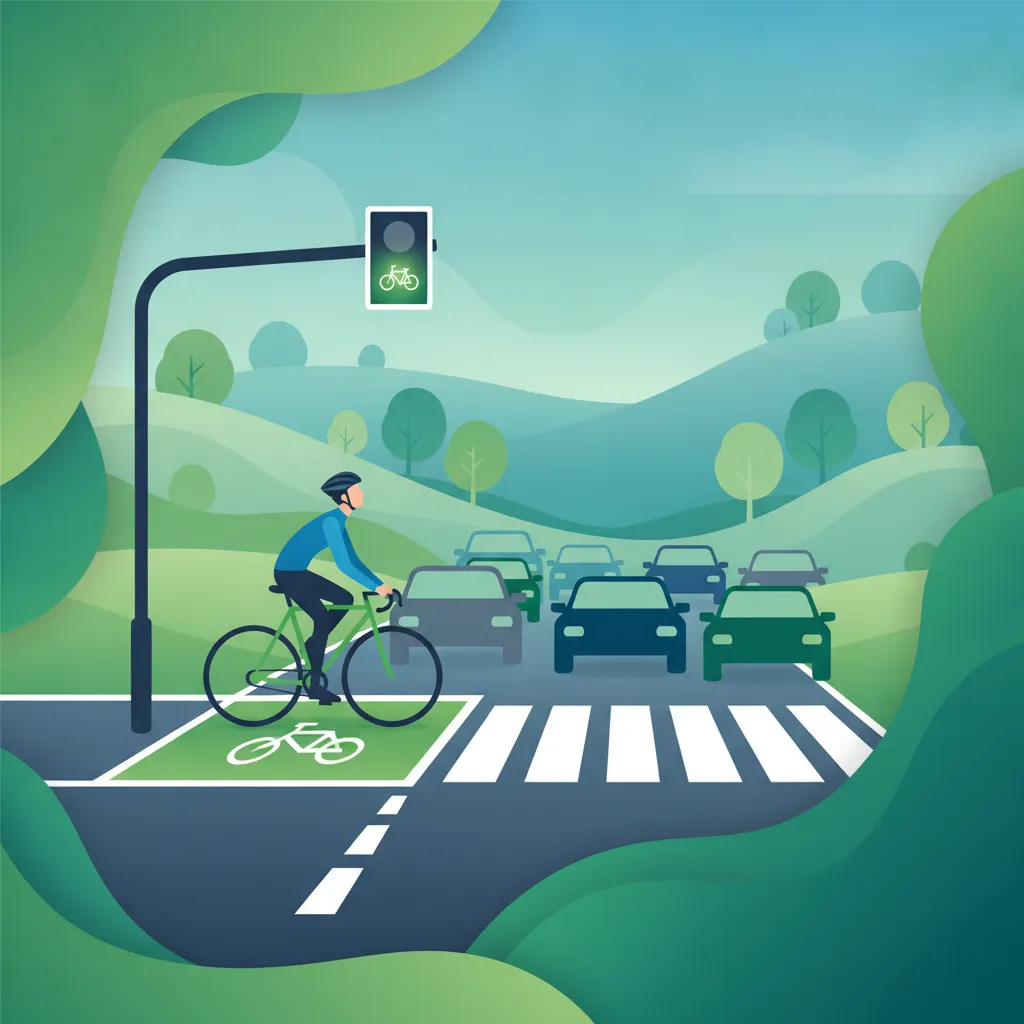
Some intersections feature smaller traffic lights displaying a bicycle symbol. These signals regulate cyclists independently of the main vehicular flow.
Pedestrian safety is a cornerstone of Irish road traffic legislation. Under the Road Traffic Act 1961, drivers must yield to pedestrians at all designated crossings.
Approaching an intersection requires advanced planning and physical vehicle management. Motorcyclists have a much smaller contact patch with the road than cars, making them highly susceptible to loss of traction during sudden braking or acceleration at junctions.
When traffic lights change unexpectedly, a rider who is travelling too fast may be forced to perform an emergency stop. This is highly dangerous at intersections due to several environmental factors:
To manage your speed and preserve traction when approaching controlled intersections, apply the following step-by-step procedure:
Scan Ahead: Look well beyond the car immediately in front of you. Identify the state of the traffic lights early. If a light has been green for a long time, treat it as a "stale green" and expect it to turn amber.
Roll Off the Throttle: Reduce your speed gradually by easing off the throttle. This engine braking alerts drivers behind you that you are slowing down without requiring abrupt brake input.
Position Safely: Avoid riding in the center of the lane where oil deposits accumulate. Position yourself in the left or right wheel track of the vehicle ahead, where the tarmac is cleaner and offers better grip.
Apply Progressive Braking: Gently apply both brakes together to settle the motorcycle's chassis and transfer weight smoothly to the front tyre. Once the tyre is loaded, gradually increase braking pressure.
Check Your Mirrors: Constantly monitor your mirrors to ensure the vehicles behind you are also slowing down. Be prepared to move into an escape path if a vehicle behind fails to stop.
Failing to adhere to traffic signals in Ireland carries severe legal penalties under the Road Traffic (Traffic Light) Regulations 2008 and the Road Traffic Acts.
A safe rider adapts their response to traffic lights based on changing environmental factors.
| Condition | Hazard | Rider Adaptation |
|---|---|---|
| Wet Weather / Rain | Significantly increased stopping distances; slick road markings and oil residue. | Double your following distance; begin braking twice as early; avoid braking on painted stop lines. |
| Fog or Low Visibility | Reduced sight distance of signal heads and other stopped vehicles. | Reduce speed; use dipped headlights; look for the glow of traffic lights reflected on wet roads or surroundings. |
| Night Riding | Difficulty assessing the speed of oncoming vehicles turning across your path. | Assume oncoming vehicles cannot see you; maximize your road presence; use lane positioning to remain visible. |
| Worn Tyres / Poor Brakes | Reduced mechanical grip and braking efficiency. | Increase stopping margins; perform pre-ride safety checks on tyre tread depth and brake pad thickness. |
This lesson covers the legal requirements and practical application of Irish traffic light signals for motorcyclists, including the mandatory stop requirement for solid red lights, the conditional stop requirement for solid amber, and the yield-without-stopping rule for flashing amber at both junctions and pedestrian crossings. It details green filter arrow mechanics, the priority hierarchy that places pedestrian signals above vehicular signals, and the specific rules governing cyclist-only signals. For safety, the lesson emphasises speed management when approaching intersections, avoiding the polished and oil-slicked centre of lanes, and adapting braking distance for wet or slippery conditions. These concepts align directly with the Road Traffic (Traffic Light) Regulations 2008 and are essential for passing the Category A, A1, and A2 theory examinations.
A short set of high-value points that capture the most important learning from this lesson.
A solid red light is an absolute legal stop requirement; proceeding past the stop line constitutes a traffic offence under Section 28 of the Road Traffic Act 1961.
Green filter arrows grant protected movement in the arrow direction even when the main light is red, but you must still yield to pedestrians.
Flashing amber lights require caution and yielding—not a stop unless necessary—contrary to how solid amber functions.
Cycling-specific traffic lights are for cyclists only; motorcyclists must wait for the standard vehicular signal.
Pedestrian green 'Cross now' signals override vehicular green signals, including filter arrows, requiring complete stops.
Explore all units and lessons included in this driving theory course.
Ireland has no red-and-amber phase; the sequence transitions directly from red to green.
At Pelican crossings, yield to pedestrians during the flashing amber phase only if pedestrians are actively on the crossing.
Position your motorcycle in wheel tracks rather than the lane centre when approaching lights to avoid oil deposits.
The 'dilemma zone' is the critical area where you must decide to stop or proceed on amber; factors include road surface, speed, and following traffic.
Advanced Stop Lines (ASLs) marked with bicycle symbols are exclusively for cyclists; motorcycles must stop behind the first stop line.
Assuming flashing amber functions identically to solid amber and stopping unconditionally at junctions where it is safe to proceed.
Encroaching on Advanced Stop Lines (ASLs) or stopping within the cyclist box at junctions.
Believing a green light grants absolute right-of-way; you must still yield to pedestrians and traffic clearing the intersection.
Proceeding straight when only a right-turn filter arrow is active, violating the directional restriction.
Failing to adjust speed for wet conditions, leading to emergency braking on polished tarmac or painted road markings.
Lesson content overview
A short set of high-value points that capture the most important learning from this lesson.
A solid red light is an absolute legal stop requirement; proceeding past the stop line constitutes a traffic offence under Section 28 of the Road Traffic Act 1961.
Green filter arrows grant protected movement in the arrow direction even when the main light is red, but you must still yield to pedestrians.
Flashing amber lights require caution and yielding—not a stop unless necessary—contrary to how solid amber functions.
Cycling-specific traffic lights are for cyclists only; motorcyclists must wait for the standard vehicular signal.
Pedestrian green 'Cross now' signals override vehicular green signals, including filter arrows, requiring complete stops.
Explore all units and lessons included in this driving theory course.
Ireland has no red-and-amber phase; the sequence transitions directly from red to green.
At Pelican crossings, yield to pedestrians during the flashing amber phase only if pedestrians are actively on the crossing.
Position your motorcycle in wheel tracks rather than the lane centre when approaching lights to avoid oil deposits.
The 'dilemma zone' is the critical area where you must decide to stop or proceed on amber; factors include road surface, speed, and following traffic.
Advanced Stop Lines (ASLs) marked with bicycle symbols are exclusively for cyclists; motorcycles must stop behind the first stop line.
Assuming flashing amber functions identically to solid amber and stopping unconditionally at junctions where it is safe to proceed.
Encroaching on Advanced Stop Lines (ASLs) or stopping within the cyclist box at junctions.
Believing a green light grants absolute right-of-way; you must still yield to pedestrians and traffic clearing the intersection.
Proceeding straight when only a right-turn filter arrow is active, violating the directional restriction.
Failing to adjust speed for wet conditions, leading to emergency braking on polished tarmac or painted road markings.
Explore search topics learners often look for when studying Traffic Lights and Cycling Signals. These topics reflect common questions about road rules, driving situations, safety guidance, and lesson level theory preparation for learners in Ireland.
Browse additional driving theory lessons that cover connected traffic rules, road signs, and common driving situations related to this topic. Improve your understanding of how different rules interact across everyday traffic scenarios.
Understand the advanced rules for managing complex Irish junctions and roundabouts. This guide explains how to approach crossings safely, identify right-of-way, and coordinate with other road users at busy urban intersections to maintain control and safety.

Navigating multi-lane roundabouts requires precise lane selection, continuous scanning, and timely signaling. This lesson teaches you the 'clock rule' for determining which lane to enter, how to yield to traffic already on the roundabout from your right, and when to activate your left indicator to exit. Mastering these procedures minimizes lane-drift accidents and ensures a seamless flow of traffic on busy roundabouts.

This lesson details the sequential steps required to approach and exit junctions safely under the Irish driving rules. It teaches riders how to select the correct lane, utilize mirrors, apply early signals, and reduce speed appropriately. Effective observation strategies are highlighted to help riders identify crossing pedestrians or approaching side traffic.

This lesson focuses on the safe approach and execution of turns at T-junctions, staggered intersections, and blind crossroads. It explains the critical mirror-signal-manoeuvre routine and how to select the best position for maximum visibility to cross-traffic. Motorcyclists will learn to identify potential hazards like vehicles pulling out suddenly or turning across their direct path.
School zones and pedestrian crossings require high driver alertness and strict compliance with local speed limits in Ireland. This lesson details the legal rules of zebra and pelican crossings, explaining driver requirements when amber warning beacons are flashing. Drivers will study safety procedures for dropping off or picking up children, preventing common blind-spot accidents near schools.

Uncontrolled junctions represent a high-risk scenario because they lack physical signs, lines, or lights to dictate priority. This lesson covers the crucial 'priority to the right' principle, where you must yield to any traffic approaching from your right-hand side. You will learn the importance of reducing your speed, preparing to stop, and verifying the intentions of other drivers at these equal-status crossings.
This lesson covers the absolute rules of priority that regulate junctions, roundabouts, and pedestrian crossings in Ireland. It teaches riders when they must yield, who has right-of-way, and how to read Stop and Yield signs correctly. Understanding these priority hierarchies prevents collisions and maintains orderly, predictable movement at busy junctions.

Pedestrian crossings are dedicated refuge zones on public roads that require drivers to perform distinct actions depending on the crossing type. This lesson explores uncontrolled zebra crossings where pedestrians have immediate priority, and light-controlled pelican, toucan, and puffin crossings. You will learn how to handle the flashing amber light phase, avoid parking near crossings, and never overtake another vehicle in these zones.
Right-of-way rules establish a clear order of precedence when the paths of two or more vehicles cross. This lesson explains how traffic on a major road has priority over traffic emerging from a minor road, and the general rule of yielding to oncoming vehicles when turning right. You will develop a solid understanding of how to approach intersections defensively, assessing speed and distance to make safe decisions.
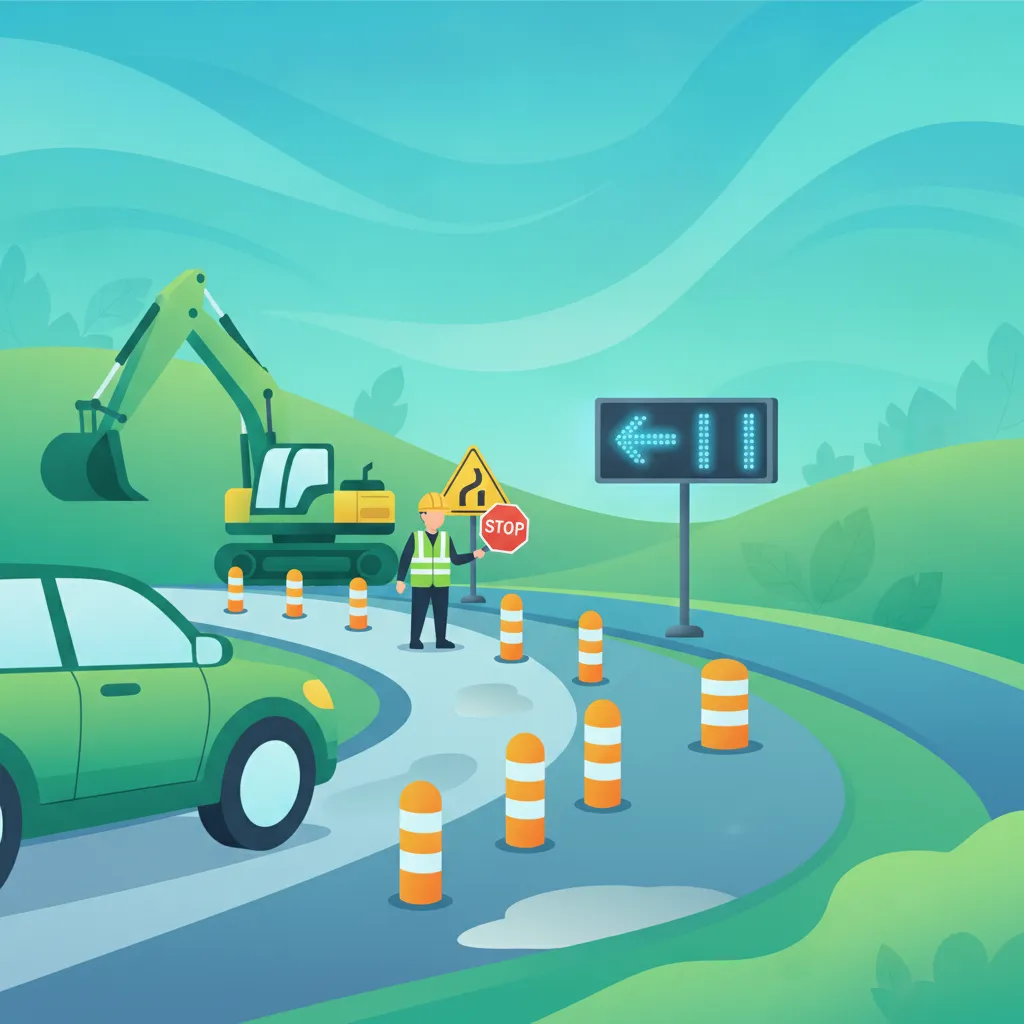
Road construction zones feature dynamic hazards, including changed lane configurations, temporary barriers, and workers near live traffic. This lesson details how to follow temporary signage, navigate narrow chicanes, and obey 'Stop-Go' flag systems or temporary traffic lights. You will understand the legal requirement to obey temporary speed limits, which are strictly enforced to protect both motorists and road crews.
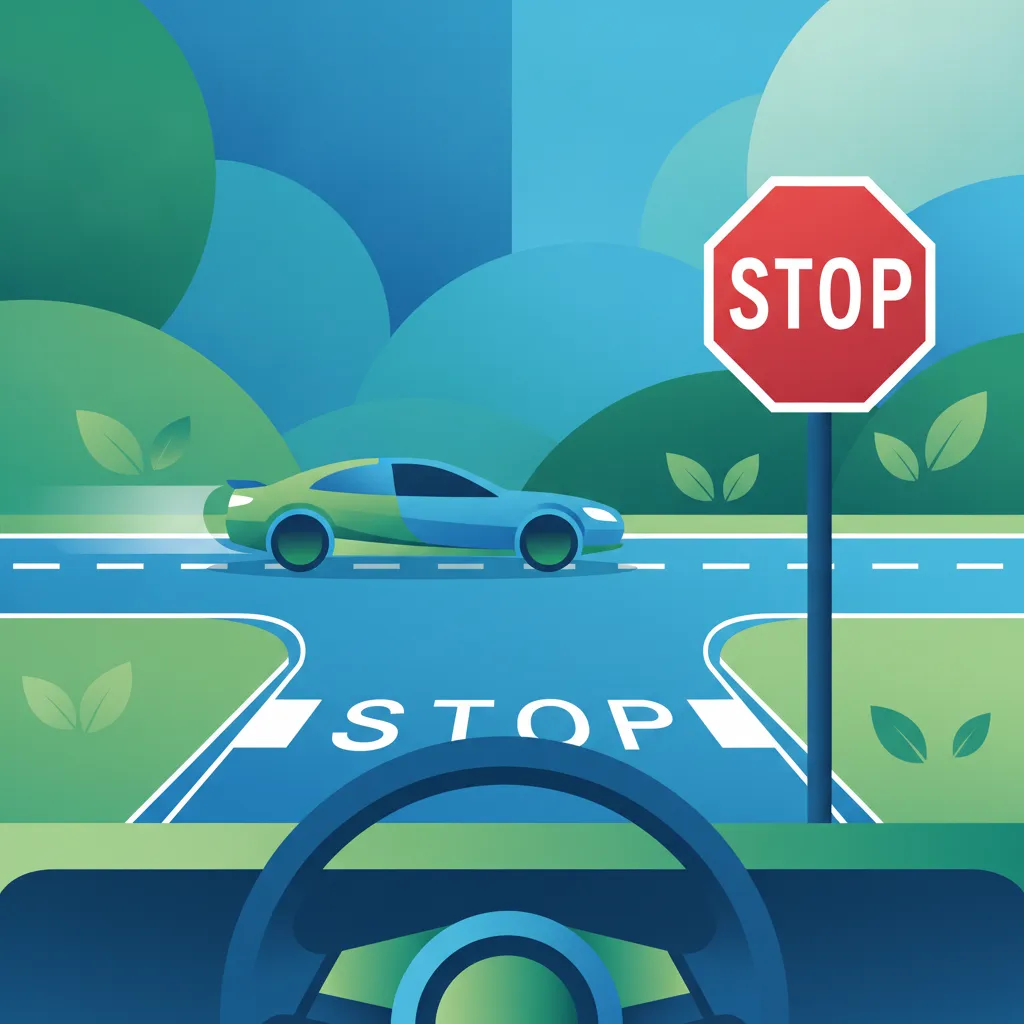
Stop and yield signs require drivers to surrender right-of-way to crossing traffic, but they command different physical actions. This lesson explains that a stop sign mandates a complete, absolute halt behind the line, whereas a yield sign requires you to slow down and stop only if other traffic is approaching. You will learn how to manage restricted visibility at junctions and how to creep forward safely when clear.
Learn how to anticipate hazards and manage traction when approaching traffic signals. This lesson covers essential defensive riding techniques for Irish motorcyclists, including safe positioning, braking on slippery road surfaces, and identifying common risks at controlled intersections to prevent collisions.

This lesson analyzes traffic flow characteristics in dense municipal areas and teaches safe riding methods for congested gridlock situations. It covers the maintenance of adequate safety cushions, scanning for opening car doors, and monitoring pedestrians stepping from between parked cars. Riders will learn to manage frequent stopping, constant clutch wear, and the stress of urban commuting.

This lesson teaches how to cultivate a proactive defensive riding mindset, focusing on situational awareness and constant hazard scanning. It describes the system of motorcycle control, encouraging riders to anticipate potential mistakes from other drivers, pedestrians, and cyclists. Motorcyclists will learn to position themselves defensively, leaving clear escape routes in all driving environments.

This lesson teaches riders how to actively identify and eliminate blind spots through proper mirror adjustment and physical shoulder checks. It explains the concept of a safety cushion, which represents the defensive space maintained around the moped at all times. Managing these zones ensures adequate reaction time and mitigates the impact of sudden braking.

This lesson highlights the importance of smooth throttle adjustments for maintaining traction and stability on a moped. It teaches riders how to anticipate potential road hazards early, reducing the need for sudden emergency braking. Developing strong observation habits allows riders to adjust their speed smoothly and respond safely to traffic changes.
Find clear answers to common questions learners have about Traffic Lights and Cycling Signals. Learn how the lesson is structured, which driving theory objectives it supports, and how it fits into the overall learning path of units and curriculum progression in Ireland. These explanations help you understand key concepts, lesson flow, and exam focused study goals.
You must stop if it is safe to do so. If you are already so close to the stop line that stopping would cause a collision or require an emergency stop, you may continue, but always be prepared for others who might jump the light.
Yes. If there are dedicated cycle signals at an intersection, they often dictate the flow for all road users in that lane or area. Always observe these signals to ensure you do not cross into the path of cyclists or other traffic.
A green filter arrow means you may proceed in the direction of the arrow, even if the main traffic light is red. However, you must still yield to any traffic or pedestrians that might already be in the junction.
Motorcycles have less contact patch with the road than cars. Sudden braking on wet, painted road markings or manhole covers near traffic lights can easily cause your wheels to lock or slide, leading to a loss of control.
Use the practice question search tool to pinpoint specific topics, road signs, or rules you need to master for your official Driver Theory Test. Refine your study strategy and ensure comprehensive preparation for all aspects of the Irish driving exam. Start your focused revision now and build confidence for your learner permit test.