
This lesson explains how to identify and react to temporary traffic management systems, including roadworks, lane diversions, and construction signage. Understanding these dynamic environments is essential for your Category B theory exam and real-world safety on Irish roads. You will learn to respect legal speed restrictions and interpret signals provided by traffic controllers.
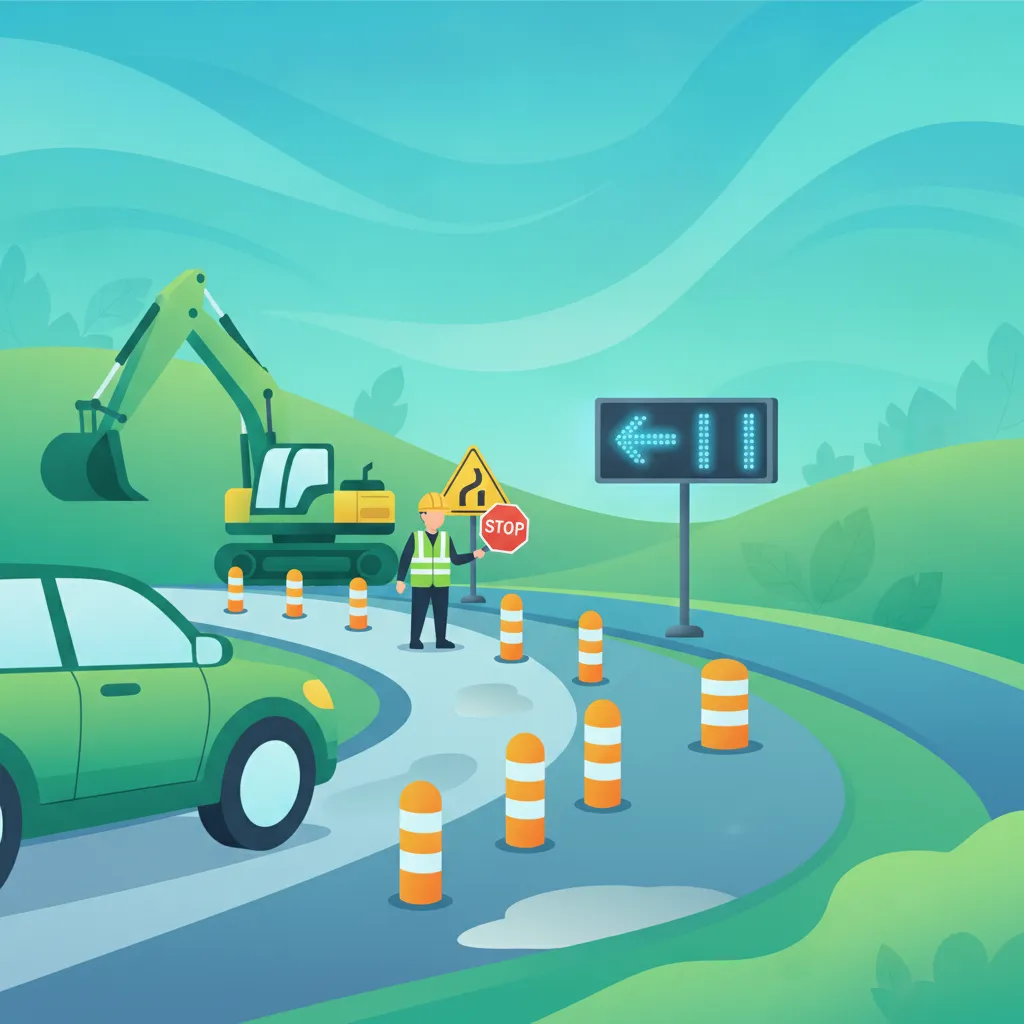
Lesson content overview
Roadworks zones are dynamic, high-risk environments where temporary traffic controls carry full legal authority under Irish Road Traffic Acts. You must obey orange and yellow temporary signs, which are mandatory not advisory, and comply with Stop-Go flag systems or portable traffic lights that override standard right-of-way rules. The lesson covers essential procedures including zip merging to reduce congestion, navigating chicanes by braking before turns, and adapting to hazards such as loose chippings during surface dressing, which require four-second following distances and 20-40 km/h limits. Understanding these rules is critical for both the Category B theory test and real-world safety of road workers and other users.
A short set of high-value points that capture the most important learning from this lesson.
Temporary traffic controls in roadworks zones carry the same legal authority as permanent road traffic laws and are enforced with penalty points and fines.
When approaching Stop-Go controls, you must come to a complete stop before the designated line and wait for the worker to clearly signal Go before proceeding.
Zip merging requires drivers to use both lanes fully up to the merge point and then take turns entering the single lane in a zipper pattern.
You must begin decelerating before reaching the temporary speed limit sign, not after passing it, and maintain the reduced limit until explicitly told otherwise.
Cones act as a solid barrier — you must never drive between or cross a line of cones as they may protect wet concrete, excavations, or active machinery.
Explore all units and lessons included in this driving theory course.
Temporary signs use orange or yellow backgrounds to distinguish them from permanent signs — they signal mandatory legal requirements, not advisories.
The Stop-Go controller's hand signals take legal precedence over standard priority rules or nearby junction green lights.
At 80 km/h stopping distance is approximately 53 metres; at 50 km/h it drops to around 28 metres — lower speeds give more reaction time in dynamic work zones.
During surface dressing, maintain a four-second following distance and adhere to 20-40 km/h limits to prevent windscreen damage and traction loss.
Never attempt to overtake within a roadworks zone due to narrow lanes, temporary markings, and unpredictable construction vehicle movements.
Assuming temporary speed limits are advisory rather than legally enforceable, leading to speeding fines and penalty points from GoSafe vans.
Pre-empting the Stop-Go controller by moving forward before receiving the clear Go signal, which creates dangerous situations in single-lane sections.
Early merging when encountering lane closures, causing unnecessary congestion instead of using the zip merge technique up to the merge point.
Driving between cones, treating them as optional guides rather than solid barriers protecting hazardous areas like wet concrete or excavations.
Relying solely on sat-nav to navigate road closures, which may direct drivers down unsuitable rural lanes or weight-restricted routes instead of official detours.
Lesson content overview
A short set of high-value points that capture the most important learning from this lesson.
Temporary traffic controls in roadworks zones carry the same legal authority as permanent road traffic laws and are enforced with penalty points and fines.
When approaching Stop-Go controls, you must come to a complete stop before the designated line and wait for the worker to clearly signal Go before proceeding.
Zip merging requires drivers to use both lanes fully up to the merge point and then take turns entering the single lane in a zipper pattern.
You must begin decelerating before reaching the temporary speed limit sign, not after passing it, and maintain the reduced limit until explicitly told otherwise.
Cones act as a solid barrier — you must never drive between or cross a line of cones as they may protect wet concrete, excavations, or active machinery.
Explore all units and lessons included in this driving theory course.
Temporary signs use orange or yellow backgrounds to distinguish them from permanent signs — they signal mandatory legal requirements, not advisories.
The Stop-Go controller's hand signals take legal precedence over standard priority rules or nearby junction green lights.
At 80 km/h stopping distance is approximately 53 metres; at 50 km/h it drops to around 28 metres — lower speeds give more reaction time in dynamic work zones.
During surface dressing, maintain a four-second following distance and adhere to 20-40 km/h limits to prevent windscreen damage and traction loss.
Never attempt to overtake within a roadworks zone due to narrow lanes, temporary markings, and unpredictable construction vehicle movements.
Assuming temporary speed limits are advisory rather than legally enforceable, leading to speeding fines and penalty points from GoSafe vans.
Pre-empting the Stop-Go controller by moving forward before receiving the clear Go signal, which creates dangerous situations in single-lane sections.
Early merging when encountering lane closures, causing unnecessary congestion instead of using the zip merge technique up to the merge point.
Driving between cones, treating them as optional guides rather than solid barriers protecting hazardous areas like wet concrete or excavations.
Relying solely on sat-nav to navigate road closures, which may direct drivers down unsuitable rural lanes or weight-restricted routes instead of official detours.
Explore search topics learners often look for when studying Navigating Roadworks, Detours and Temporary Traffic Controls. These topics reflect common questions about road rules, driving situations, safety guidance, and lesson level theory preparation for learners in Ireland.
Browse additional driving theory lessons that cover connected traffic rules, road signs, and common driving situations related to this topic. Improve your understanding of how different rules interact across everyday traffic scenarios.
Understand the legal right-of-way protocols at intersections, uncontrolled junctions, and multi-lane roundabouts. This guide explains how to apply priority rules correctly in various traffic scenarios to maintain safe flow and prevent collisions while navigating Irish roads.

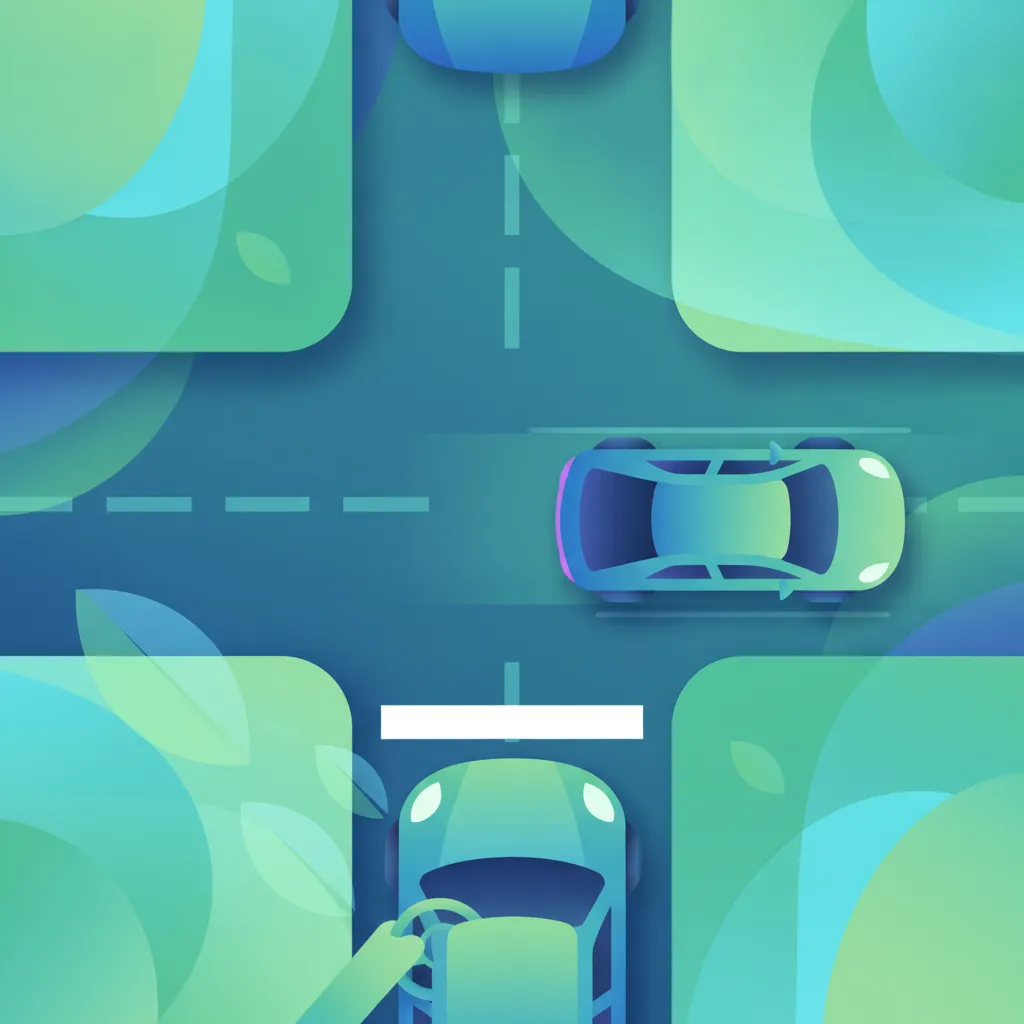
Uncontrolled junctions represent a high-risk scenario because they lack physical signs, lines, or lights to dictate priority. This lesson covers the crucial 'priority to the right' principle, where you must yield to any traffic approaching from your right-hand side. You will learn the importance of reducing your speed, preparing to stop, and verifying the intentions of other drivers at these equal-status crossings.
Right-of-way rules establish a clear order of precedence when the paths of two or more vehicles cross. This lesson explains how traffic on a major road has priority over traffic emerging from a minor road, and the general rule of yielding to oncoming vehicles when turning right. You will develop a solid understanding of how to approach intersections defensively, assessing speed and distance to make safe decisions.
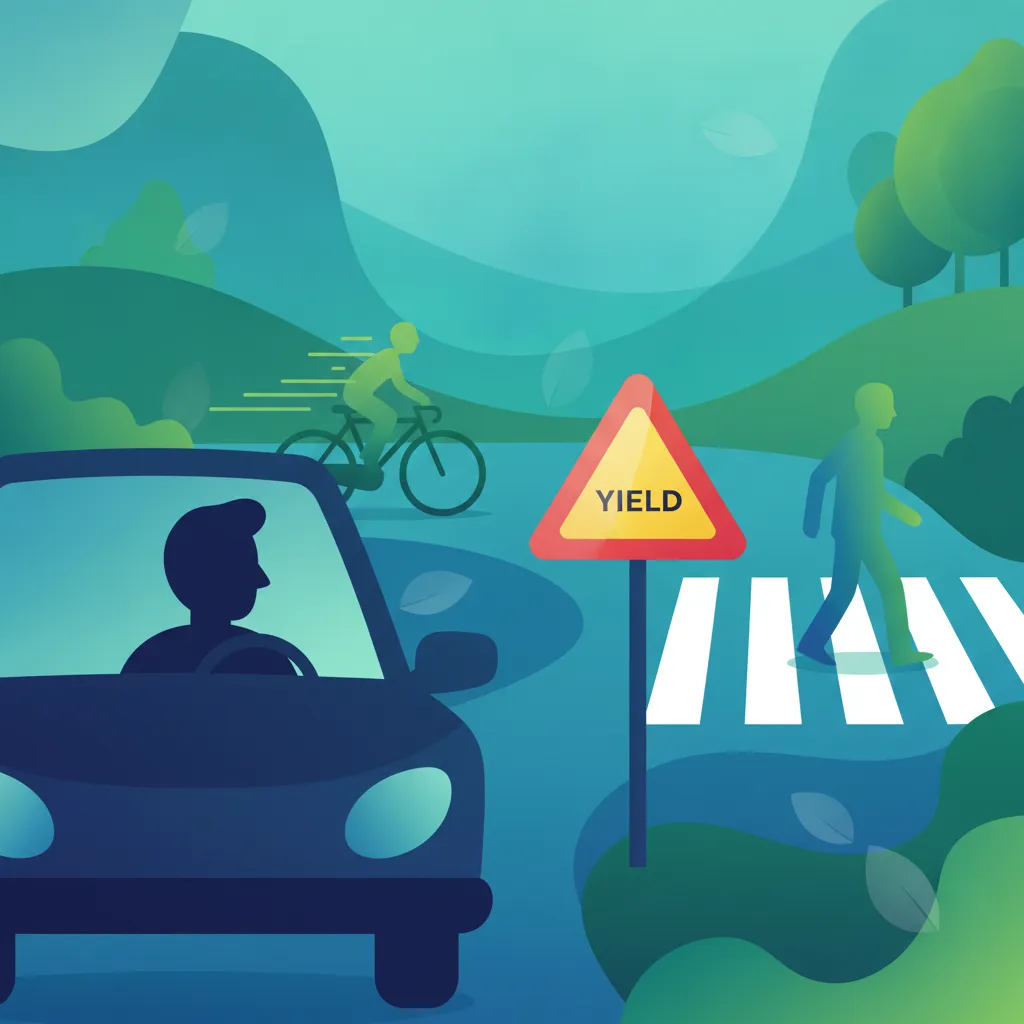
This lesson covers the absolute rules of priority that regulate junctions, roundabouts, and pedestrian crossings in Ireland. It teaches riders when they must yield, who has right-of-way, and how to read Stop and Yield signs correctly. Understanding these priority hierarchies prevents collisions and maintains orderly, predictable movement at busy junctions.
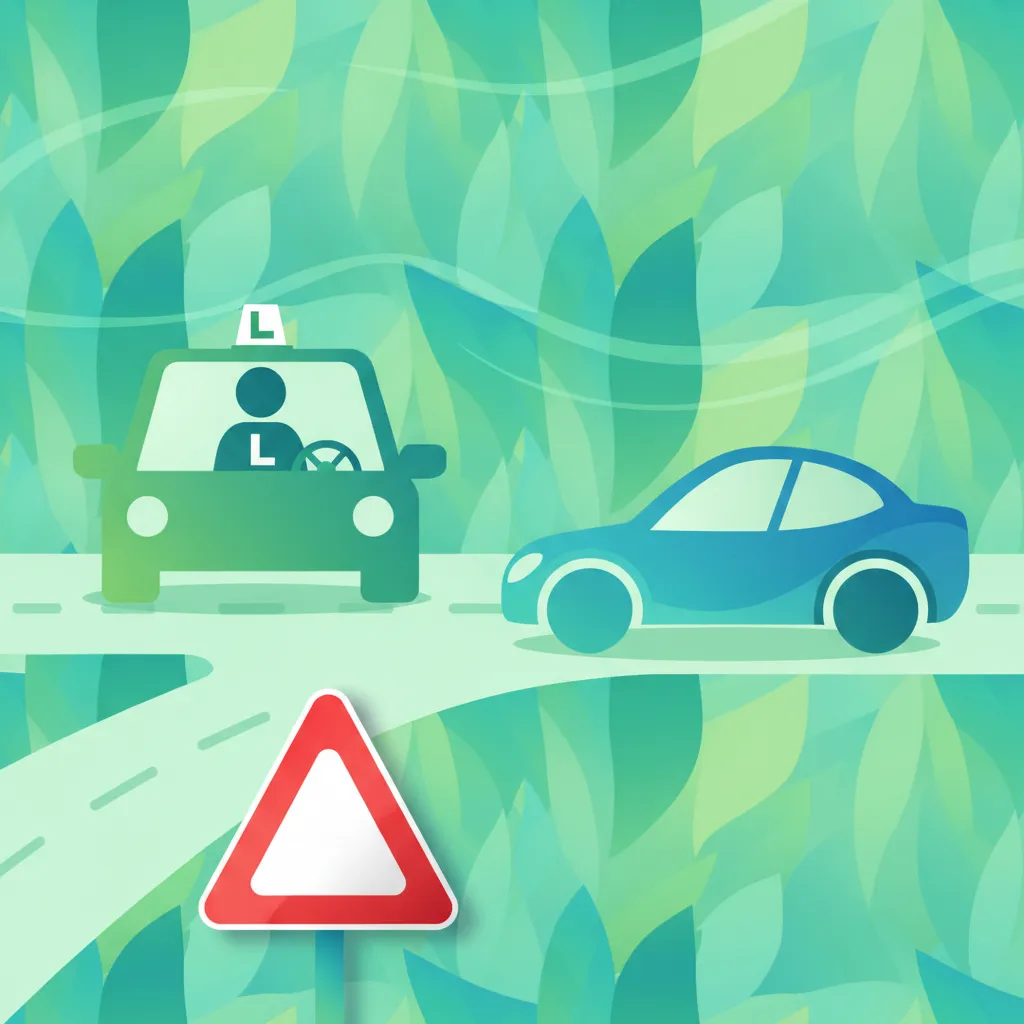
This lesson teaches the fundamental principles of priority and right-of-way at controlled and uncontrolled intersections across Ireland. It explains the legal obligations at yield signs, stop lines, and when meeting oncoming traffic turning across your lane. Motorcyclists will learn to carefully verify other drivers' intentions rather than assuming they will yield the correct right-of-way.

Navigating multi-lane roundabouts requires precise lane selection, continuous scanning, and timely signaling. This lesson teaches you the 'clock rule' for determining which lane to enter, how to yield to traffic already on the roundabout from your right, and when to activate your left indicator to exit. Mastering these procedures minimizes lane-drift accidents and ensures a seamless flow of traffic on busy roundabouts.

Stop and yield signs require drivers to surrender right-of-way to crossing traffic, but they command different physical actions. This lesson explains that a stop sign mandates a complete, absolute halt behind the line, whereas a yield sign requires you to slow down and stop only if other traffic is approaching. You will learn how to manage restricted visibility at junctions and how to creep forward safely when clear.

This lesson focuses on the safe approach and execution of turns at T-junctions, staggered intersections, and blind crossroads. It explains the critical mirror-signal-manoeuvre routine and how to select the best position for maximum visibility to cross-traffic. Motorcyclists will learn to identify potential hazards like vehicles pulling out suddenly or turning across their direct path.

This lesson details the sequential steps required to approach and exit junctions safely under the Irish driving rules. It teaches riders how to select the correct lane, utilize mirrors, apply early signals, and reduce speed appropriately. Effective observation strategies are highlighted to help riders identify crossing pedestrians or approaching side traffic.

Pedestrians are the most common vulnerable road users, and drivers must maintain constant vigilance to protect them. This lesson covers pedestrian priority, especially when you are turning into side roads or navigating busy urban centres. You will learn why you must yield to pedestrians already crossing, how to scan blind spots for hidden walkers, and the safety dangers of blocking footpaths or pedestrian zones with your car.

This lesson provides a comprehensive guide to navigating single and multi-lane roundabouts safely in accordance with the Irish Rules of the Road. It covers correct lane selection on approach, signaling rules for exiting, and maintaining a steady path through traffic. Riders will learn to anticipate lane-changing mistakes made by other drivers and manage the unique banking angles of roundabouts.
Learn to anticipate and react to dynamic hazards including adverse weather, rural road risks, and sudden traffic changes. This theory module focuses on improving observation skills and maintaining safe following distances to navigate complex road environments safely and responsibly.

Irish rural roads are often narrow, winding, and bordered by high hedges, presenting unique hazards compared to urban streets. This lesson focuses on scanning for hidden hazards such as slow-moving farm machinery, mud on the road surface, and loose livestock. You will learn how to adjust your speed before entering blind bends, sound your horn at blind crests, and safely share the road with local agricultural traffic.

Irish rural routes are often narrow, lacking central markings, and bordered by tall hedges that restrict forward visibility on sharp bends. This lesson teaches drivers how to negotiate blind curves, anticipate slow-moving agricultural machinery, and respond to wandering farm animals. Drivers will learn to regulate vehicle speed proactively, maintaining a safe stopping margin in rural areas.
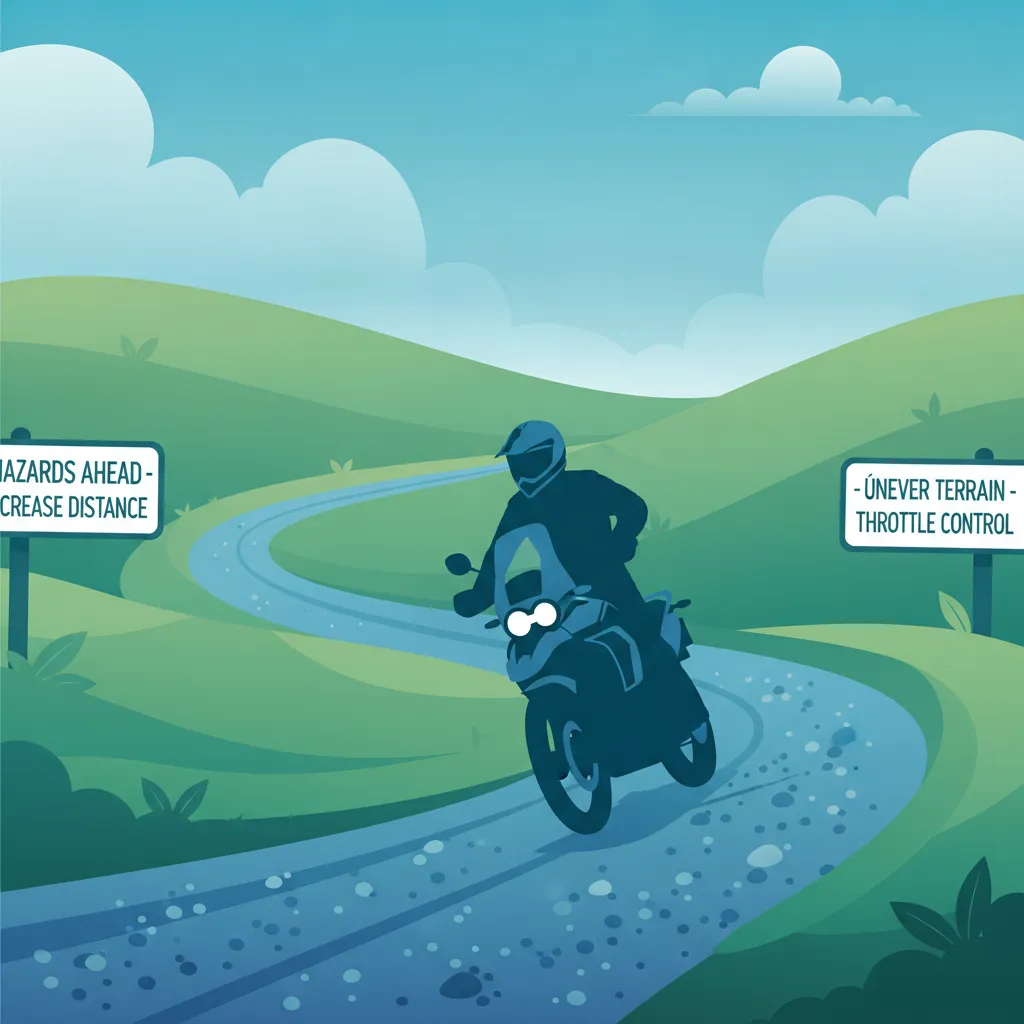
This lesson focuses on riding techniques suited for gravel, loose surfaces, and rural roads. Learners will understand how to maintain stability, adjust braking and cornering approaches, and anticipate hazards such as potholes and farm vehicles, following RSA guidance for safe riding in the Irish countryside.

Proactive hazard perception involves constantly scanning the road ahead to identify potential dangers before they turn into actual emergencies. This lesson covers active scanning techniques, helping you look far ahead, check mirrors regularly, and identify subtle risk clues such as exhaust smoke from parked cars or children playing near kerbs. Anticipating these developments gives you the time to adjust speed and position safely.

This lesson teaches how to cultivate a proactive defensive riding mindset, focusing on situational awareness and constant hazard scanning. It describes the system of motorcycle control, encouraging riders to anticipate potential mistakes from other drivers, pedestrians, and cyclists. Motorcyclists will learn to position themselves defensively, leaving clear escape routes in all driving environments.

This lesson analyzes traffic flow characteristics in dense municipal areas and teaches safe riding methods for congested gridlock situations. It covers the maintenance of adequate safety cushions, scanning for opening car doors, and monitoring pedestrians stepping from between parked cars. Riders will learn to manage frequent stopping, constant clutch wear, and the stress of urban commuting.
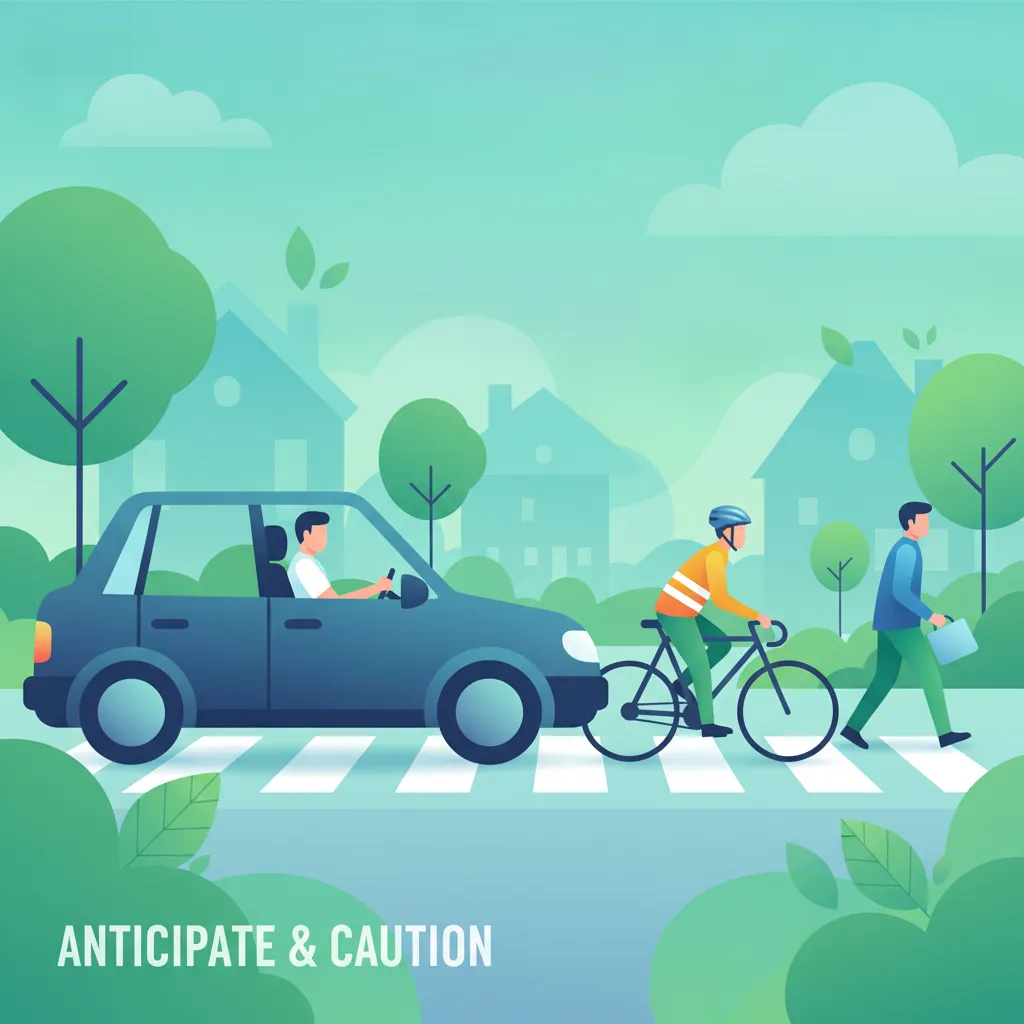
Safeguarding vulnerable road users requires more than simple obedience to traffic signs; it demands a defensive driving mindset. This lesson summarizes safe practices, including scanning far ahead in urban areas, keeping massive safety margins in wet weather, and executing thorough blind spot checks before reversing. By anticipating the unpredictable movements of others, you can prevent accidents and support a safe road culture.

Warning signs in Ireland are typically diamond-shaped with yellow backgrounds and black symbols, indicating potential dangers on the road ahead. This lesson details signs for upcoming sharp bends, narrow roads, steep hills, pedestrian activity, and animal hazards. Learning to spot these warning indicators early allows you to reduce speed safely and adjust your vehicle positioning before encountering the hazard itself.

Heavy vehicles require continuous visual scanning to identify small or slow-moving road users who may enter the path of travel. This lesson explores the typical behaviors of young children, elderly pedestrians, and visually impaired road users. Drivers will build strong hazard perception skills to anticipate sudden movements, ensuring they can brake safely and avoid serious accidents.

Defensive driving prepares you to react safely when facing unexpected mechanical failures or immediate road hazards. This lesson explains how to execute an emergency stop using Anti-lock Braking Systems (ABS) and how to recover from front and rear-wheel skids on slippery roads. You will learn the importance of remaining calm, avoiding panic-steering, and applying controlled evasive actions to prevent collisions.
Find clear answers to common questions learners have about Navigating Roadworks, Detours and Temporary Traffic Controls. Learn how the lesson is structured, which driving theory objectives it supports, and how it fits into the overall learning path of units and curriculum progression in Ireland. These explanations help you understand key concepts, lesson flow, and exam focused study goals.
Yes. A temporary speed limit displayed at a roadwork site is legally enforceable regardless of whether construction workers are currently visible. You must adhere to the posted limit until you see a sign indicating that the restriction has ended.
You must treat a Stop-Go sign with the same legal authority as a permanent traffic light. When the sign shows 'Stop', you must come to a complete halt and wait behind the line until the operator turns the board to 'Go'.
Yes, temporary traffic lights operate under the same legal principles as permanent sets. You must follow the signals (Red, Amber, Green) strictly, as failure to do so is a common cause of accidents and will result in penalty points.
If you encounter an unclear diversion, slow down immediately to allow more reaction time. Look for secondary clues like traffic cones, high-visibility clothing on workers, or the flow of vehicles ahead of you, and always prioritise safety over maintaining speed.
Use the practice question search tool to pinpoint specific topics, road signs, or rules you need to master for your official Driver Theory Test. Refine your study strategy and ensure comprehensive preparation for all aspects of the Irish driving exam. Start your focused revision now and build confidence for your learner permit test.