
This lesson details the regulatory meanings of road surface markings essential for all Irish motorcycle riders. By mastering these markings, you will understand how to correctly navigate intersections, overtaking zones, and lane restrictions, ensuring you are fully prepared for your Category A, A1, or A2 theory exam.

Lesson content overview
Road markings are some of the most critical visual cues you will encounter on Irish asphalt. Regulated by the Road Safety Authority (RSA) and standardising authorities, these painted lines, symbols, and words convey immediate legal obligations and safety warnings. For motorcyclists preparing for their Category A, A1, or A2 theory exams, understanding road markings goes beyond legal compliance—it is also a fundamental aspect of maintaining physical control of your motorcycle.
Unlike four-wheeled vehicles, motorcycles rely on a very small tyre contact patch. Painted lines, especially when wet, present severe traction hazards. This lesson breaks down every category of Irish road marking, explaining their legal significance, practical application, and physical implications for riders.
The design and placement of road markings on Irish roads are strictly governed by the Road Traffic (Traffic Signs) Regulations 2003. This legislation ensures nationwide standardisation, meaning a line in County Donegal carries the exact same legal weight and meaning as one in Dublin City Centre.
Consistent markings foster predictability. When every road user knows exactly what a continuous white line or a yellow box means, the potential for conflicting movements is dramatically reduced. To ensure this system works safely, road markings rely on four core pillars:
Longitudinal markings run parallel to the direction of travel. They dictate whether you are permitted to change lanes, overtake slower traffic, or cross into the opposite side of the road.
Continuous double white lines consist of two parallel, unbroken white lines painted down the centre of the road.
Two unbroken parallel white lines positioned along the centre of a road, indicating a strict legal prohibition on crossing or straddling the lines for overtaking or lane changes.
A single continuous white line runs along the centre of the road, typically on approaches to hazards, junctions, or areas with restricted forward visibility.
Broken white lines are composed of segments of white paint separated by regular gaps. They serve as lane dividers or centre lines where overtaking is permitted under specific conditions.
Motorcycle Grip Hazard: Road paint, particularly the thick thermoplastic paint used for continuous lines, has a significantly lower coefficient of friction than raw asphalt. Avoid leaning your motorcycle or accelerating hard while tyre contact is made with these lines, especially in wet weather.
Transverse markings run across the road surface. They dictate where you must stop, yield priority, or prepare for pedestrian interactions.
At intersections controlled by stop signs, yield signs, or traffic signals, you will encounter transverse markings indicating where your vehicle must physically stop.
Zigzag markings are white, wavy lines painted on the approach to and exit from pedestrian crossings (such as Zebra crossings or signal-controlled crossings).
Scan the road ahead for the white zigzag lines and reduce your speed early.
Check your mirrors to assess the proximity of following traffic.
Look for pedestrians approaching the crossing from either sidewalk.
Position your motorcycle centrally in your lane, avoiding the slick white paint of the crossing stripes.
If pedestrians are waiting or crossing, stop smoothly behind the stop line, keeping your feet planted and the bike stable.
Managing traffic flow at complex intersections relies heavily on specialised surface markings that prevent gridlock and guide vehicles into appropriate lanes.
A yellow box junction consists of a box painted with criss-crossed yellow diagonal lines. It is designed to keep intersections clear so that traffic is not blocked.
In urban areas and multi-lane roundabouts, white arrows are painted on the road surface to indicate the compulsory direction of travel for each lane.
Road edge lines help drivers and riders identify the boundaries of the drivable surface, especially in poor visibility or at night.
Irish road planning increasingly incorporates dedicated lanes to protect vulnerable road users and prioritise public transport. Motorcyclists must understand the regulations surrounding these lanes.
For a motorcyclist, the physical composition of road markings is just as important as their legal meaning.
In Ireland, road markings are typically applied using a hot-melt thermoplastic material or high-durability paint. These materials seal the textured surface of the asphalt, creating a smooth, non-porous layer.
[ Dry Asphalt: High Friction ] ---> [ Wet Asphalt: Reduced Friction ]
[ Dry Paint: Moderate Friction ] ---> [ Wet Paint/Thermoplastic: Extreme Hazard (Slick) ]
When rain falls, water cannot drain into the painted surface. It pools on top, creating a lubricating layer between your tyre and the road. This can lead to a sudden loss of traction, resulting in low-side crashes or slides.
Understanding the consequences of how you interact with road markings is key to passing your theory test and riding defensively.
| Action | Immediate Legal & Safety Effect |
|---|---|
| Respecting continuous double white lines | Prevents head-on collisions; maintains safe separation of opposing traffic flows. |
| Stopping fully before the Stop Line | Ensures adequate time to scan the junction; prevents T-bone collisions. |
| Stopping inside a Yellow Box (Exit blocked) | Causes gridlock; blocks emergency vehicles; risks a fine and penalty points. |
| Leaning the motorcycle on wet road paint | Can cause an instantaneous front or rear-wheel slide due to zero tyre traction. |
| Parking on pedestrian crossing zigzags | Obstructs the view of pedestrians, directly endangering lives. |
This lesson covers the regulatory framework of Irish road markings under the Road Traffic (Traffic Signs) Regulations 2003, focusing on how longitudinal markings (continuous double white lines, single continuous lines, and broken white lines) govern overtaking permissions, and how transverse markings (stop lines, yield lines, and zigzag zones) control intersection behaviour and pedestrian safety. Yellow box junctions operate on a strict clear-exit rule, with a limited exception only for right-turning vehicles blocked by oncoming traffic. For motorcyclists, the physical properties of thermoplastic paint create critical safety considerations: these markings offer significantly reduced friction when wet, making it dangerous to brake hard or lean aggressively over painted surfaces. Dedicated lanes for cycles and buses carry mandatory compliance—motorcycles are prohibited from mandatory cycle lanes and generally excluded from bus lanes without explicit signage.
A short set of high-value points that capture the most important learning from this lesson.
Continuous double white lines strictly prohibit any crossing or straddling for overtaking; only exceptions are property access, avoiding obstructions, or Garda direction.
Yellow box junctions require your exit to be completely clear before entering; the only legal exception is waiting inside while turning right when blocked by oncoming traffic.
Zigzag markings near pedestrian crossings ban stopping, parking, and overtaking within the marked zone to maintain visibility for pedestrians.
Thermoplastic road markings create severe traction hazards for motorcycles when wet because water pools on the smooth, non-porous surface.
Mandatory cycle lanes (solid white lines) are completely off-limits to motorcyclists; non-mandatory cycle lanes (broken white lines) should only be entered when unavoidable.
Explore all units and lessons included in this driving theory course.
Broken white lines with short segments and long gaps indicate normal overtaking zones; longer segments with short gaps signal a hazard warning line where restrictions are approaching.
Stop lines require a complete halt before crossing; yield lines allow rolling forward if the road is clear but demand readiness to stop.
Single continuous white lines prohibit overtaking unless you can cross without any part of your vehicle touching the line.
Lane arrows on road surfaces are mandatory—changing lanes at the last moment because you are in the wrong lane is a primary cause of urban collisions.
Brake upright before reaching painted areas like stop lines or arrows, as wet paint eliminates the grip needed for effective braking or cornering.
Assuming that slow-moving or queuing traffic justifies crossing continuous double white lines to overtake; the restriction applies regardless of vehicle speed.
Entering a yellow box when straight-ahead traffic is queuing on the far side, leaving you stranded and blocking cross-traffic.
Believing that pedestrians will always be visible at crossings; zigzag zones exist because stopped vehicles in these areas hide waiting pedestrians, especially children.
Leaning the motorcycle aggressively through painted lane-change arrows on roundabouts, particularly in wet conditions where traction is already reduced.
Attempting to use bus lanes assuming motorcycles might be permitted, when they are generally prohibited unless specific local signs explicitly allow them.
Lesson content overview
A short set of high-value points that capture the most important learning from this lesson.
Continuous double white lines strictly prohibit any crossing or straddling for overtaking; only exceptions are property access, avoiding obstructions, or Garda direction.
Yellow box junctions require your exit to be completely clear before entering; the only legal exception is waiting inside while turning right when blocked by oncoming traffic.
Zigzag markings near pedestrian crossings ban stopping, parking, and overtaking within the marked zone to maintain visibility for pedestrians.
Thermoplastic road markings create severe traction hazards for motorcycles when wet because water pools on the smooth, non-porous surface.
Mandatory cycle lanes (solid white lines) are completely off-limits to motorcyclists; non-mandatory cycle lanes (broken white lines) should only be entered when unavoidable.
Explore all units and lessons included in this driving theory course.
Broken white lines with short segments and long gaps indicate normal overtaking zones; longer segments with short gaps signal a hazard warning line where restrictions are approaching.
Stop lines require a complete halt before crossing; yield lines allow rolling forward if the road is clear but demand readiness to stop.
Single continuous white lines prohibit overtaking unless you can cross without any part of your vehicle touching the line.
Lane arrows on road surfaces are mandatory—changing lanes at the last moment because you are in the wrong lane is a primary cause of urban collisions.
Brake upright before reaching painted areas like stop lines or arrows, as wet paint eliminates the grip needed for effective braking or cornering.
Assuming that slow-moving or queuing traffic justifies crossing continuous double white lines to overtake; the restriction applies regardless of vehicle speed.
Entering a yellow box when straight-ahead traffic is queuing on the far side, leaving you stranded and blocking cross-traffic.
Believing that pedestrians will always be visible at crossings; zigzag zones exist because stopped vehicles in these areas hide waiting pedestrians, especially children.
Leaning the motorcycle aggressively through painted lane-change arrows on roundabouts, particularly in wet conditions where traction is already reduced.
Attempting to use bus lanes assuming motorcycles might be permitted, when they are generally prohibited unless specific local signs explicitly allow them.
Explore search topics learners often look for when studying Road Markings and Their Significance. These topics reflect common questions about road rules, driving situations, safety guidance, and lesson level theory preparation for learners in Ireland.
Browse additional driving theory lessons that cover connected traffic rules, road signs, and common driving situations related to this topic. Improve your understanding of how different rules interact across everyday traffic scenarios.
Learn the official rules of the road for determining right-of-way at junctions, roundabouts, and crossroads in Ireland. This explanation details how to identify priority signage and markings to navigate complex urban intersections safely while maintaining correct road positioning and avoiding common traffic conflicts.

Uncontrolled junctions represent a high-risk scenario because they lack physical signs, lines, or lights to dictate priority. This lesson covers the crucial 'priority to the right' principle, where you must yield to any traffic approaching from your right-hand side. You will learn the importance of reducing your speed, preparing to stop, and verifying the intentions of other drivers at these equal-status crossings.
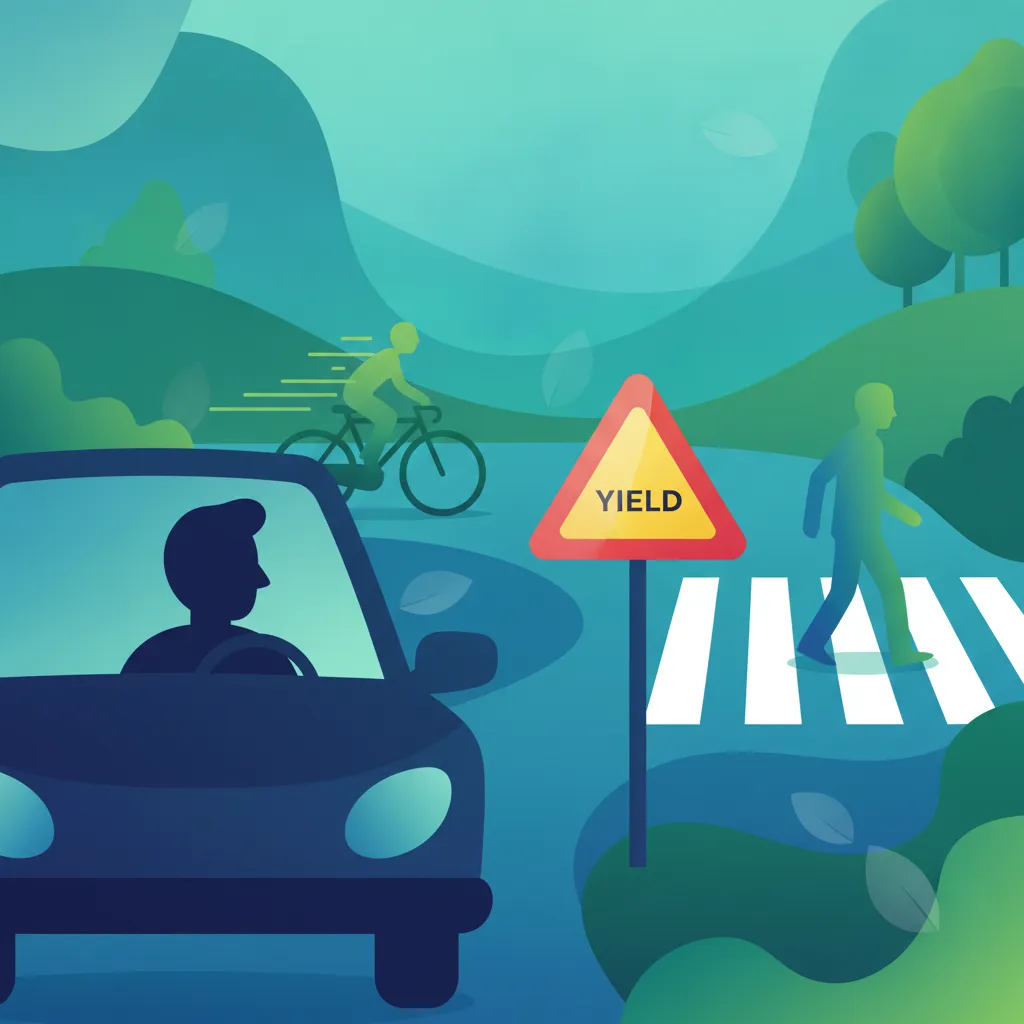
This lesson covers the absolute rules of priority that regulate junctions, roundabouts, and pedestrian crossings in Ireland. It teaches riders when they must yield, who has right-of-way, and how to read Stop and Yield signs correctly. Understanding these priority hierarchies prevents collisions and maintains orderly, predictable movement at busy junctions.
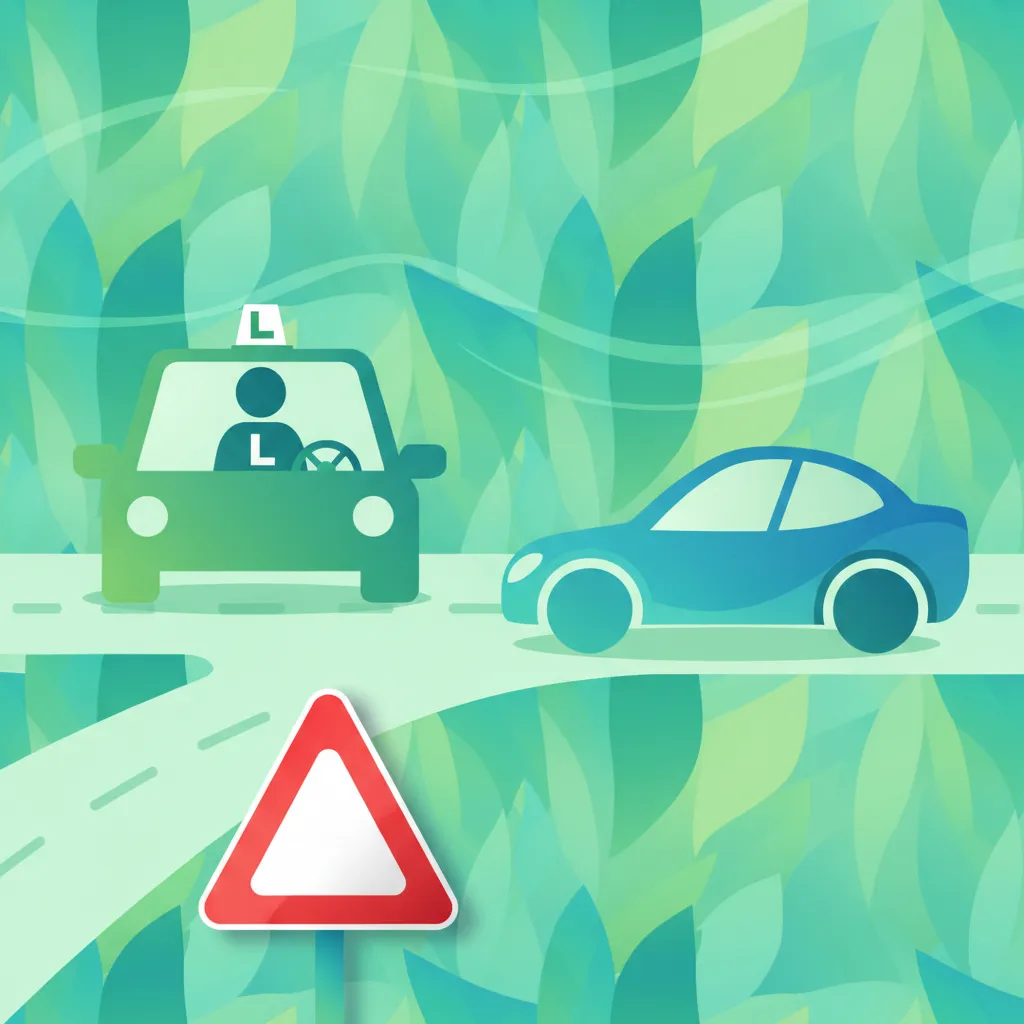
This lesson teaches the fundamental principles of priority and right-of-way at controlled and uncontrolled intersections across Ireland. It explains the legal obligations at yield signs, stop lines, and when meeting oncoming traffic turning across your lane. Motorcyclists will learn to carefully verify other drivers' intentions rather than assuming they will yield the correct right-of-way.
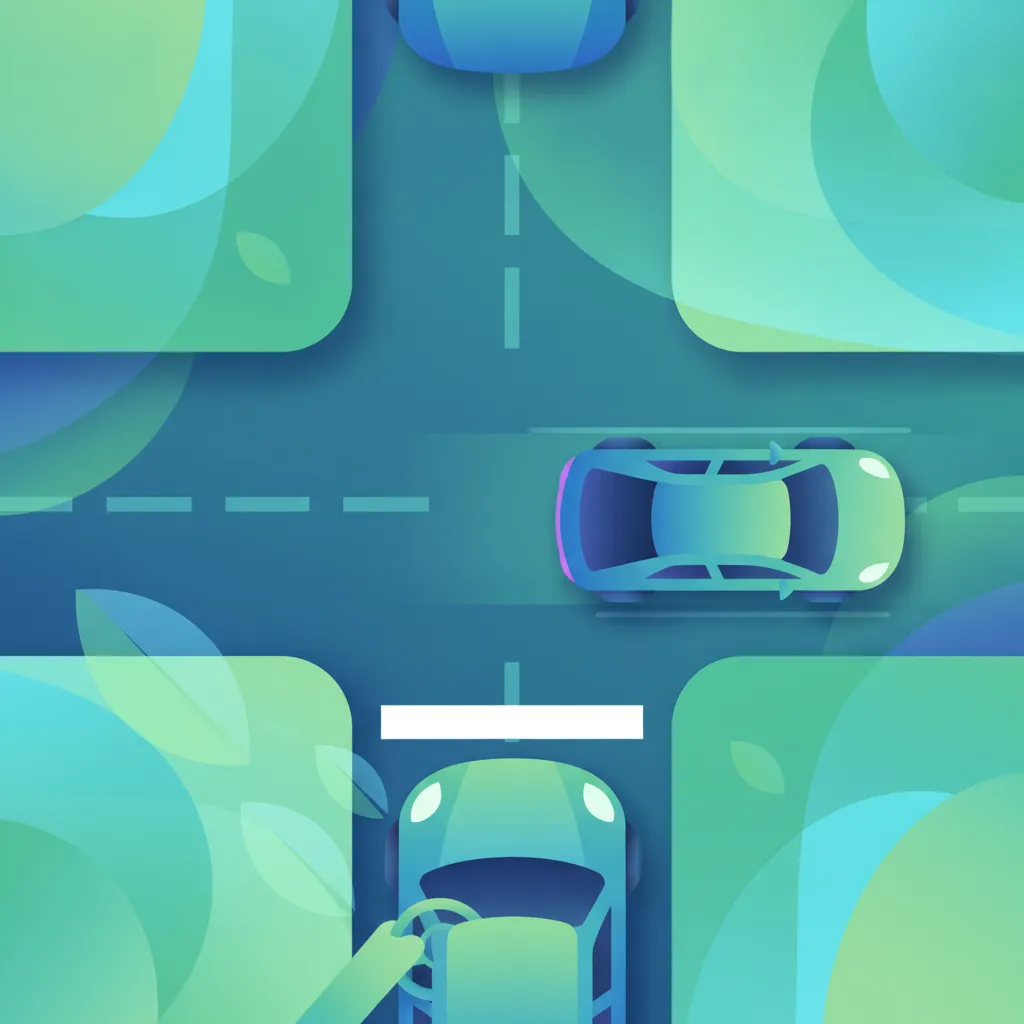
Right-of-way rules establish a clear order of precedence when the paths of two or more vehicles cross. This lesson explains how traffic on a major road has priority over traffic emerging from a minor road, and the general rule of yielding to oncoming vehicles when turning right. You will develop a solid understanding of how to approach intersections defensively, assessing speed and distance to make safe decisions.
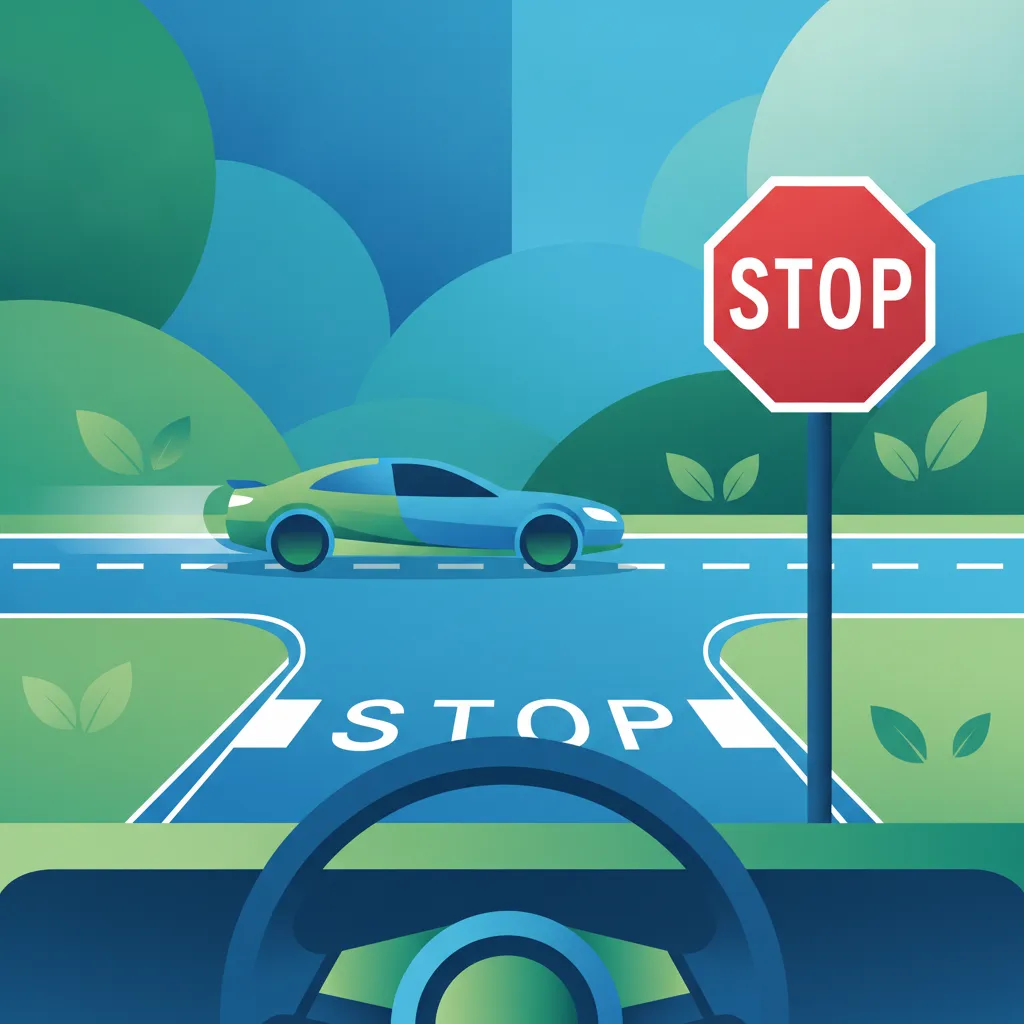
Stop and yield signs require drivers to surrender right-of-way to crossing traffic, but they command different physical actions. This lesson explains that a stop sign mandates a complete, absolute halt behind the line, whereas a yield sign requires you to slow down and stop only if other traffic is approaching. You will learn how to manage restricted visibility at junctions and how to creep forward safely when clear.
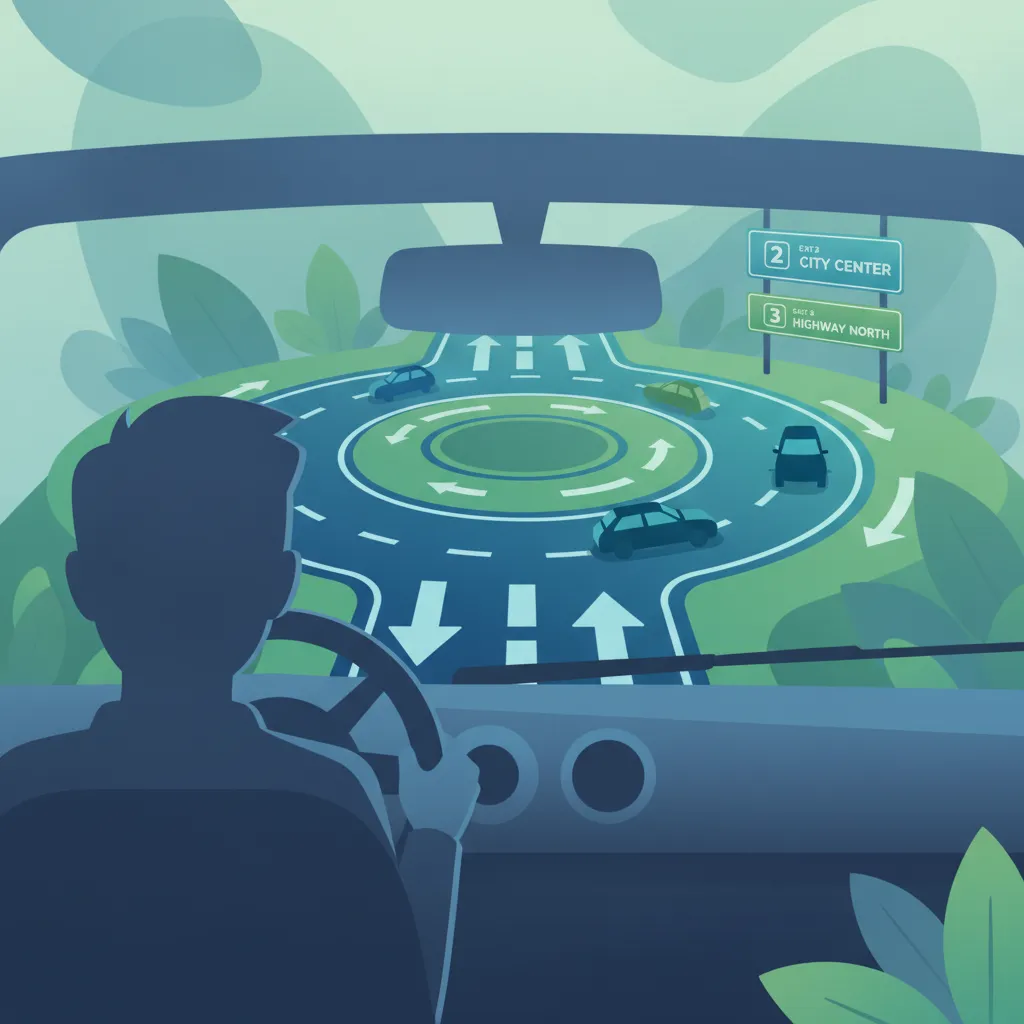
Navigating multi-lane roundabouts requires precise lane selection, continuous scanning, and timely signaling. This lesson teaches you the 'clock rule' for determining which lane to enter, how to yield to traffic already on the roundabout from your right, and when to activate your left indicator to exit. Mastering these procedures minimizes lane-drift accidents and ensures a seamless flow of traffic on busy roundabouts.
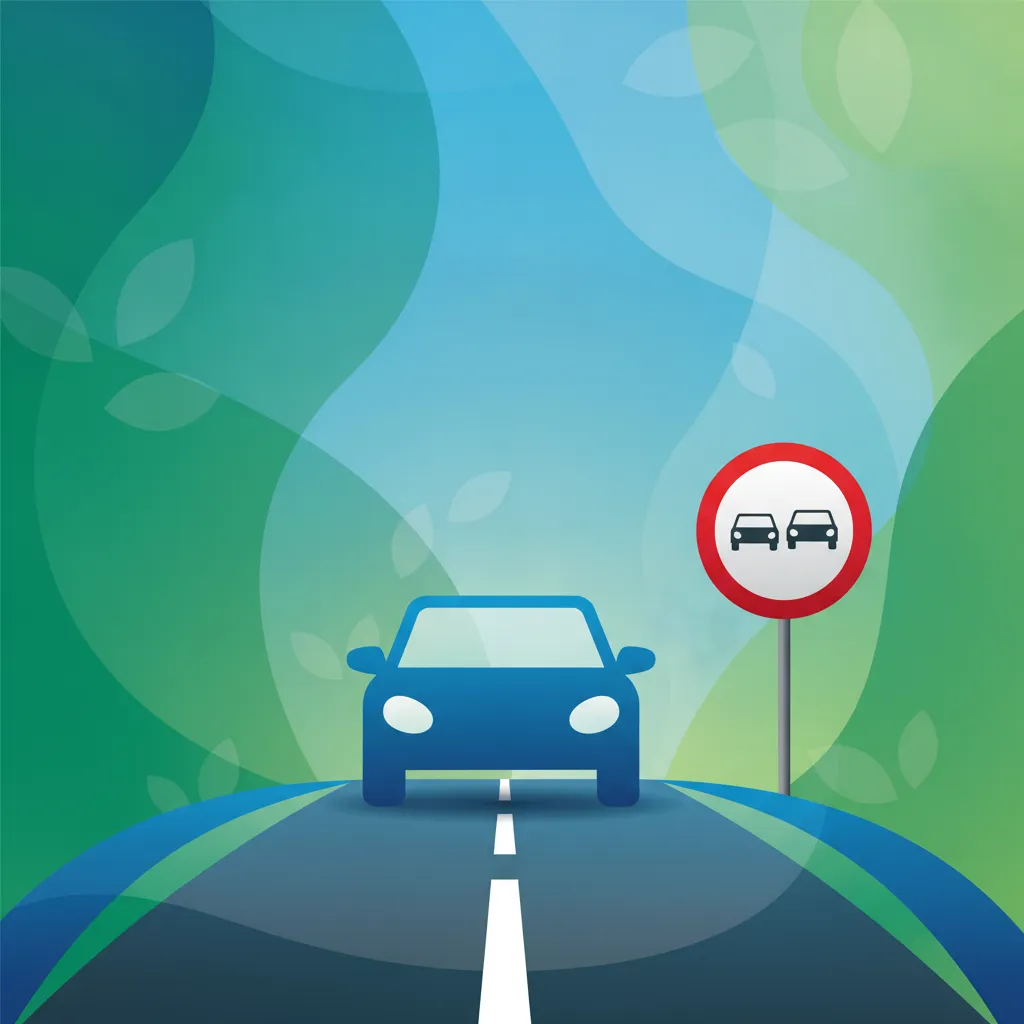
No-overtaking zones are marked in areas with restricted visibility, such as approaching bends, humps, or narrow bridges. This lesson details how continuous solid white lines legally prohibit passing, along with the very narrow exceptions allowed under Irish law. You will learn to identify these high-risk areas from visual markings, ensuring you never initiate a passing manoeuvre that puts oncoming traffic in immediate danger.
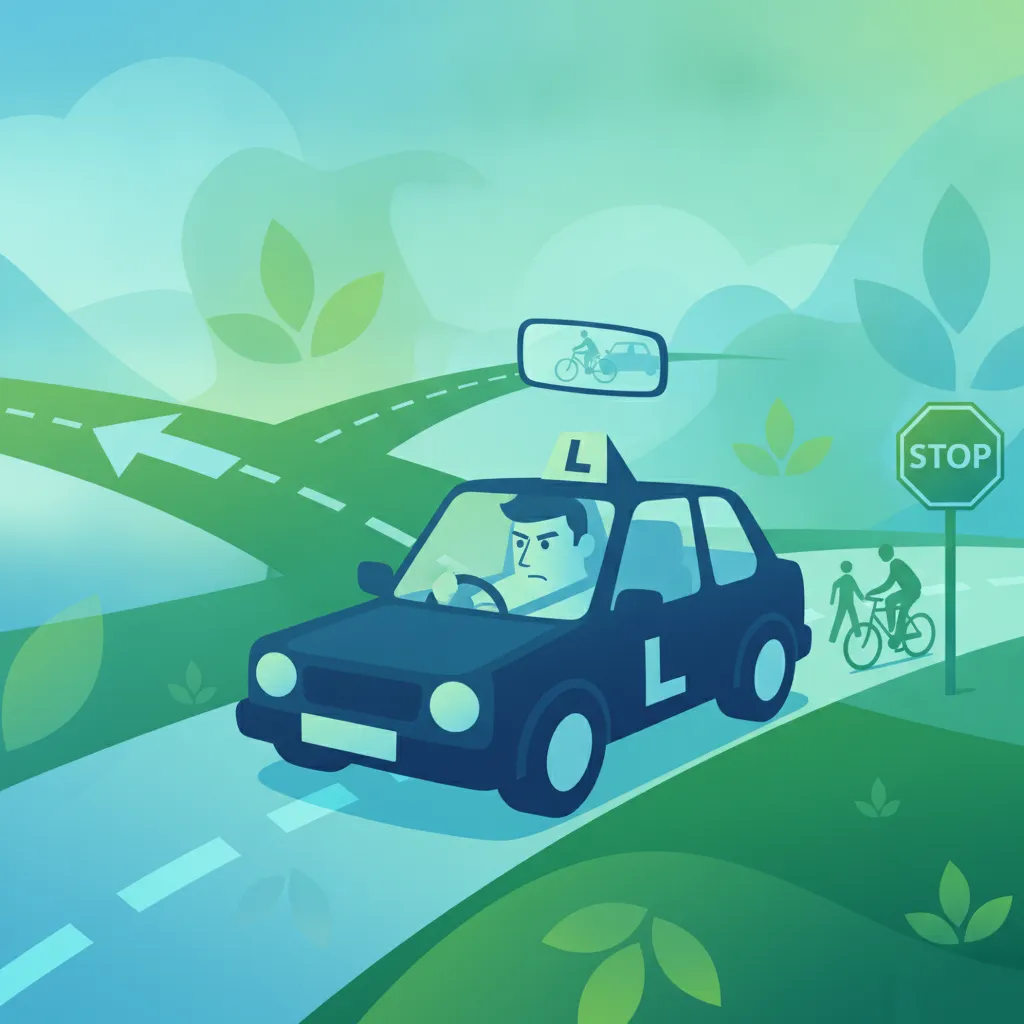
This lesson focuses on the safe approach and execution of turns at T-junctions, staggered intersections, and blind crossroads. It explains the critical mirror-signal-manoeuvre routine and how to select the best position for maximum visibility to cross-traffic. Motorcyclists will learn to identify potential hazards like vehicles pulling out suddenly or turning across their direct path.
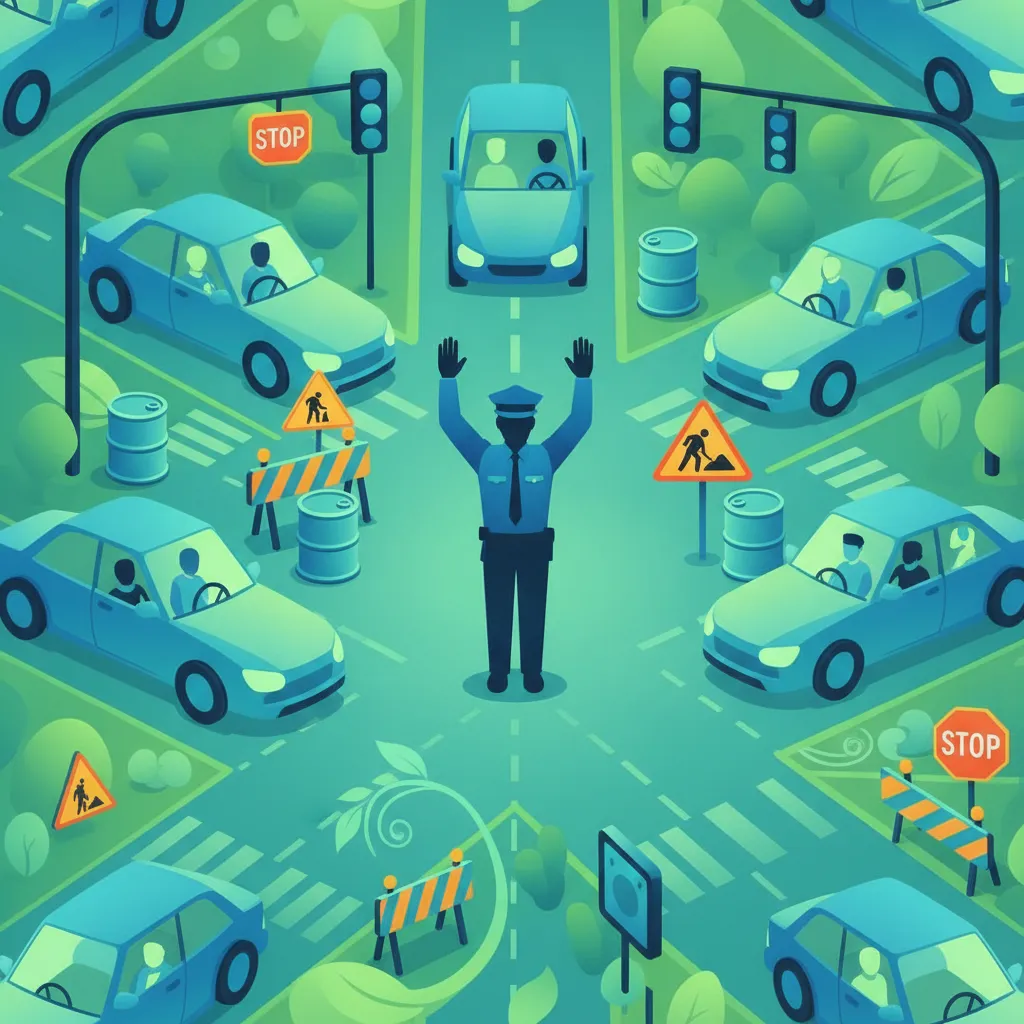
When traffic control is actively performed by a Garda, a school warden, or authorized marshals, their hand signals override all standard traffic lights and road signs. This lesson illustrates the common hand gestures used by officers to stop, release, or slow down traffic. You will learn your strict legal obligation to obey these manual commands, ensuring public safety during emergencies, events, or school crossings.
This lesson details the sequential steps required to approach and exit junctions safely under the Irish driving rules. It teaches riders how to select the correct lane, utilize mirrors, apply early signals, and reduce speed appropriately. Effective observation strategies are highlighted to help riders identify crossing pedestrians or approaching side traffic.
Understand the regulatory requirements for navigating congested urban environments including bus lanes, cycle paths, and complex lane markings. This theory guide covers the legal implications of road surface markings and the importance of lane discipline to ensure safe progress when riding in busy Irish cities.
Driving large vehicles through dense city traffic requires outstanding lane discipline, spatial awareness, and consistent patience. This lesson teaches drivers how to utilize public bus corridors, manage tight yellow box intersections, and handle narrow city streets. It focuses on predicting traffic pattern shifts to maintain service timetables while minimizing fuel waste and driver stress.

This lesson analyzes traffic flow characteristics in dense municipal areas and teaches safe riding methods for congested gridlock situations. It covers the maintenance of adequate safety cushions, scanning for opening car doors, and monitoring pedestrians stepping from between parked cars. Riders will learn to manage frequent stopping, constant clutch wear, and the stress of urban commuting.
Bus lanes and cycle tracks are designed to encourage public transport and safe active travel in congested urban areas. This lesson explores the differences between with-flow and contra-flow bus lanes, detailing the restricted operating hours during which other vehicles are banned. You will understand when taxi drivers or emergency vehicles can use these lanes, and how to avoid costly traffic violations and safety risks.
Shared public spaces rely heavily on road user cooperation, low speeds, and active visual communication rather than traditional traffic signals. This lesson teaches drivers how to navigate these open zones safely, yielding priority to pedestrians and integrated cyclists. Drivers will study how traffic calming designs alter vehicle trajectories, allowing safe, stress-free transit through modern city centers.

Bus stops often intersect with designated bicycle lanes and busy walking pathways, creating high-risk conflict areas for drivers. This lesson trains drivers to check blind spots for oncoming cyclists before pulling into or exiting public stop bays. It emphasizes yielding right-of-way to passengers crossing the road, preventing collision risks in active urban transport hubs.

Driving a coach through narrow urban streets or historic Irish town centers demands precise spatial judgment and low speed control. This lesson covers turning radii, rear tail-swing physics, and managing overhangs when navigating around tight, permanent obstacles. Drivers will learn to assess clearance gaps accurately, reducing damage risks to the vehicle exterior and public infrastructure.
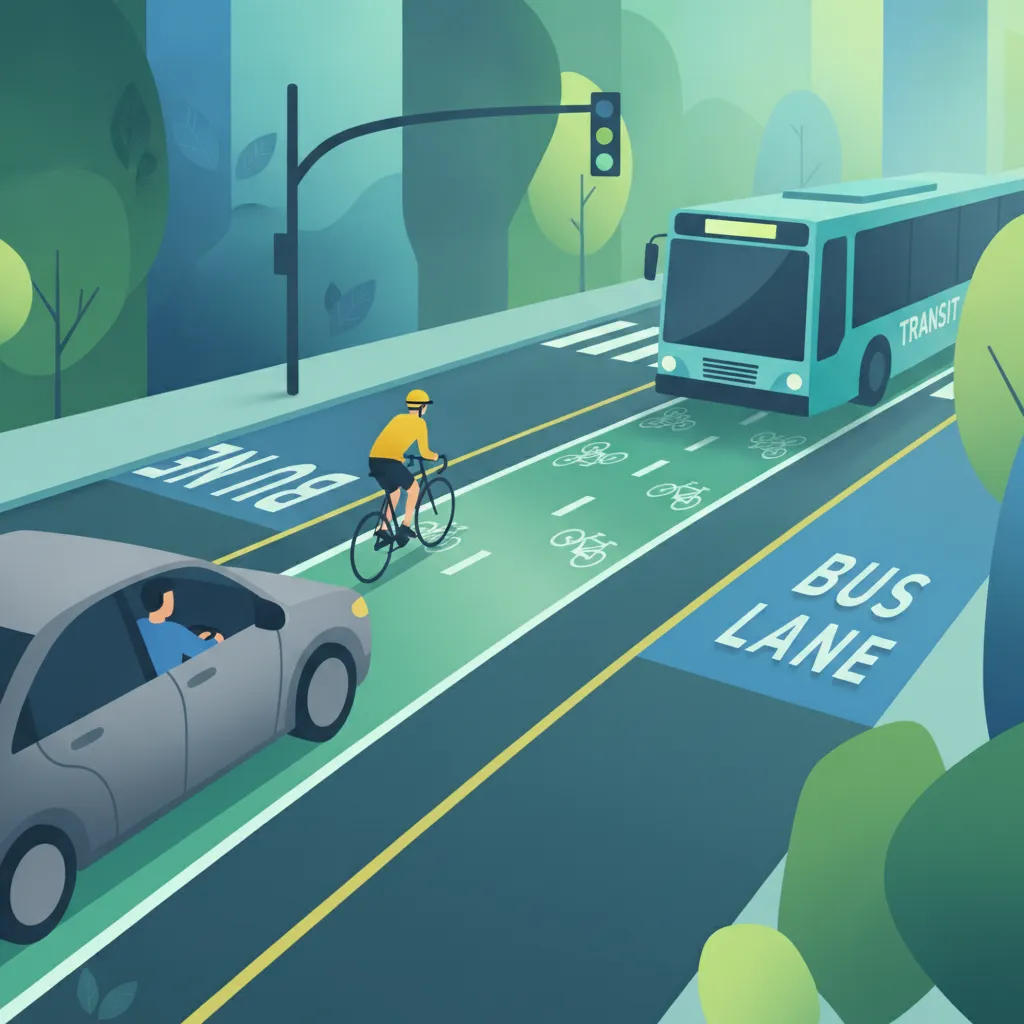
This lesson investigates the specific laws regulating bus and cycle lanes on Irish municipal streets. It clarifies the operational hours of restricted lanes and explains whether Category AM vehicles are allowed access. Understanding these boundaries ensures riders avoid severe penalty fines and share space safely with public transport and cyclists.

Motorcycles and bicycles are often hidden from view in the large blind spots of passenger buses and coaches during turns. This lesson covers safe lateral clearances when overtaking cyclists, recognizing advanced stop lines, and sharing narrow lanes. Drivers will understand how to signal clearly, giving riders enough room to navigate safely near busy public transit corridors.
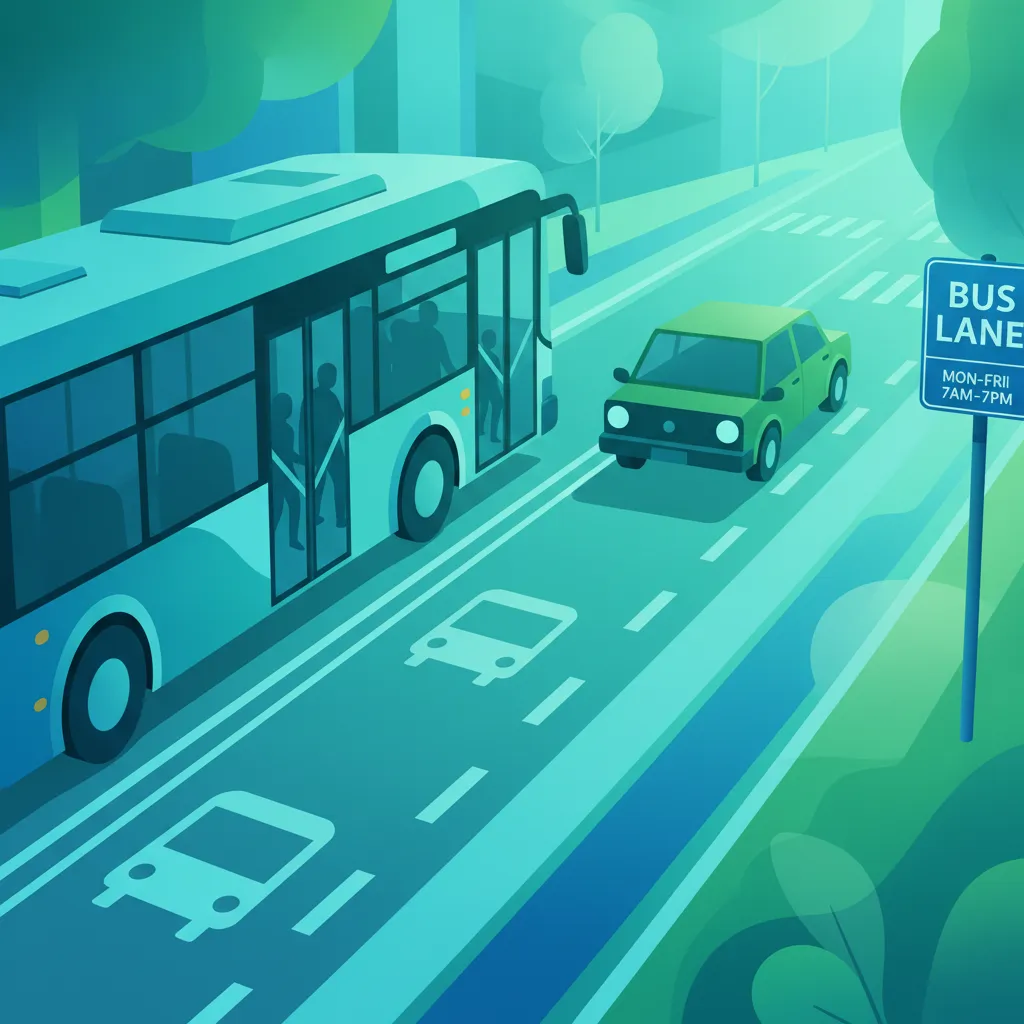
This lesson details the legal operations allowed within Irish bus lanes, including active hours, non-permitted traffic types, and exceptions. Drivers will learn safe approach trajectories for public transport stops, maintaining legal clearance, and navigating curbside hazards safely. The material highlights compliance with local bylaws to guarantee steady, uninterrupted traffic flow and passenger convenience.
Large passenger vehicles must maintain consistent lane positioning to prevent side-swipe incidents and sustain smooth urban traffic patterns. This lesson covers standard lane selection rules, safe overtaking procedures, and how to use designated public transit corridors correctly. Drivers will learn the importance of checking mirrors continuously and planning lane changes well in advance.
Find clear answers to common questions learners have about Road Markings and Their Significance. Learn how the lesson is structured, which driving theory objectives it supports, and how it fits into the overall learning path of units and curriculum progression in Ireland. These explanations help you understand key concepts, lesson flow, and exam focused study goals.
You must not cross or straddle a single continuous white line unless it is necessary to avoid an obstruction or to enter premises or a side road. This is a common topic in the Irish theory test, so remember to look for dashed lines which indicate when overtaking is permitted.
You must not enter a yellow box junction unless your exit is clear. The only exception is if you are waiting to turn right, and you are prevented from doing so only by oncoming traffic or other vehicles waiting to turn right.
Yes, paint used for road markings can be extremely slippery, especially when wet. Motorcyclists should try to avoid harsh braking or sudden leaning while their tyres are in contact with painted lines to prevent loss of traction.
This is a hazard warning line. It indicates that you should not overtake unless you can see that the road ahead is clear for a sufficient distance, as there is an upcoming hazard such as a bend or junction.
Use the practice question search tool to pinpoint specific topics, road signs, or rules you need to master for your official Driver Theory Test. Refine your study strategy and ensure comprehensive preparation for all aspects of the Irish driving exam. Start your focused revision now and build confidence for your learner permit test.