
This lesson teaches you how to interpret Variable Message Signs, digital overhead gantries, and roadwork warnings common on Irish roads. You will learn to recognize temporary speed limits and lane closures to ensure safety for yourself and road crews while preparing for your Category B theory exam.
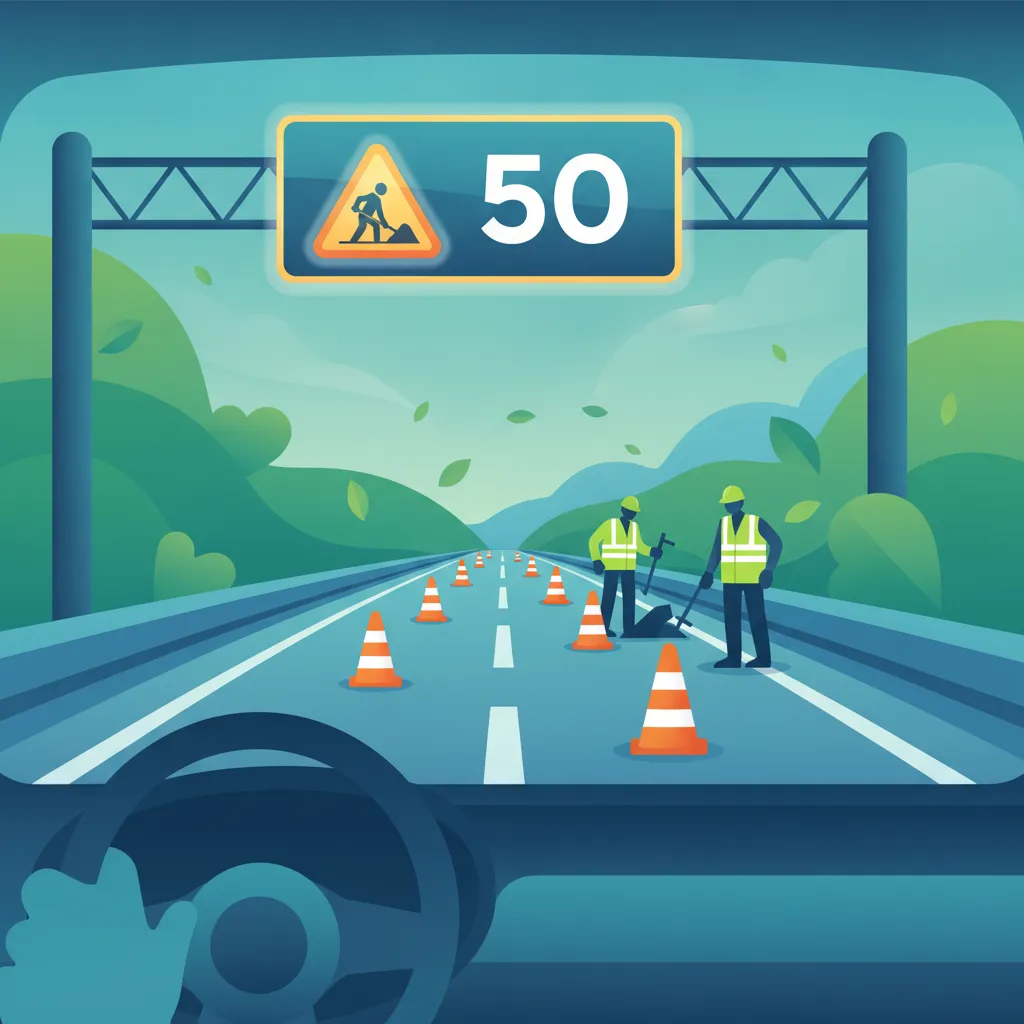
Lesson content overview
Dynamic traffic management is a cornerstone of modern road safety, particularly on Ireland's expanding motorway and national road networks. As a candidate preparing for the Official Irish Driver Theory Test (Category B), mastering the visual cues, digital signals, and temporary layouts used during roadworks is essential.
These dynamic systems—such as Variable Message Signs (VMS), overhead lane control gantries, and temporary traffic management devices—override standard road configurations to protect both motorists and vulnerable road crews. Understanding how to interpret and legally comply with these real-time instructions is a critical competency tested in the Category B exam.
Variable Message Signs (VMS) are electronic, high-visibility signs situated along major national routes, dual carriageways, and motorways (such as the M50, M1, and M7/M8 corridors). Operated by Transport Infrastructure Ireland (TII) and local authorities, these signs display real-time, dynamic information tailored to immediate road conditions.
Standard road signs are static; they convey permanent rules, such as default speed limits or fixed curves. In contrast, VMS is dynamic. It responds to live traffic data, meteorological sensors, and emergency incidents.
A common misconception among learner drivers is that electronic signs display suggestions rather than mandatory laws. Under the Irish Road Traffic Regulations, instructions displayed on a VMS—such as a reduced speed limit or a lane closure arrow—have the same legal authority as permanent regulatory signs. Ignoring them constitutes a traffic violation and can lead to penalty points, substantial fines, or a court summons for dangerous driving.
On highly congested routes like the M50 around Dublin, traffic is managed using digital overhead gantries. These structures span across all lanes of the motorway, with dedicated electronic displays positioned directly above each individual lane.
Gantry signals allow operators to manage traffic lane-by-lane. You must understand the precise meaning of the symbols displayed above your lane:
Scan Ahead: Constantly monitor the overhead gantries in the distance. Do not focus solely on the vehicle directly in front of you.
Identify the Closure: Note which lanes display a red 'X' or a flashing diagonal amber arrow.
Assess Traffic: Check your rearview and wing mirrors immediately to evaluate the speed and position of vehicles in the adjacent open lane.
Signal Early: Apply your indicator early to communicate your intention to merge to other drivers.
Merge Smoothly: Adjust your speed to match the flow of the open lane and merge safely, avoiding abrupt braking or steering inputs.
Roadworks represent a highly volatile environment. Standard lane configurations are frequently altered, lanes are narrowed, and heavy machinery operates in close proximity to live traffic. To manage this safely, authorities employ a strict Temporary Traffic Management (TTM) hierarchy.
In Ireland, standard permanent warning signs are diamond-shaped with a yellow-amber background and black borders. However, temporary roadworks warning signs feature an orange background. This distinct color instantly alerts drivers that they are entering a temporary work zone where normal road rules are modified.
When passing through a managed roadworks site, you will navigate through a series of distinct safety zones designed to transition traffic safely around the worksite:
The Danger of the Buffer Zone: Never drift or steer into the buffer zone defined by traffic cones. It is not an extra lane or a hard shoulder; it is a life-saving space designed to protect vulnerable road crews working feet away from moving traffic.
One of the most critical aspects of roadworks safety is the implementation of Temporary Speed Limits (TSLs). These are legally binding speed limits set specifically for the duration of the construction works.
The physical properties of a work zone demand significantly reduced speeds due to several safety-critical factors:
From a physics perspective, reducing your speed from 100 km/h to 60 km/h more than halves your vehicle’s kinetic energy. This reduction drastically cuts your stopping distance and minimizes the impact force should an emergency stop or collision occur.
When a road must be closed entirely for major resurfacing, bridge maintenance, or accident reconstruction, a detour (or diversion) is established.
Diversions are clearly marked using highly visible temporary signs, often incorporating specific symbols (such as circles, squares, or triangles) or text instructions on an orange background.
Understanding the rules theoretically is one step; applying them in real-world driving conditions requires recognizing common cognitive traps and hazardous behaviors.
Drivers frequently fail to slow down when passing through a roadworks zone if they do not see active machinery or workers.
Some drivers remain in a closing lane until the very last meter before the cones, attempting to bypass queued traffic.
If a VMS displays a reduced speed limit of 80 km/h due to heavy rain or high winds on a motorway, some drivers maintain the default 120 km/h limit because the road is visually clear.
Your response to Variable Message Signs and roadworks must adapt based on environmental variables:
| Environmental Variable | Impact on Roadworks & VMS | Required Driver Response |
|---|---|---|
| Heavy Rain / Spray | Water accumulates quickly in grooved, freshly milled, or unpaved roadwork surfaces. | Double your following distance to at least 4 seconds; reduce speed below the posted temporary limit if visibility is poor. |
| Nighttime Conditions | Temporary hazard markers and cones can blend into the background; glare from work site floodlights can temporarily blind you. | Keep your eyes scanning the road edges; use dipped headlights to avoid blinding oncoming traffic or workers; expect sudden lane shifts. |
| Vulnerable Road Users | Pedestrians or cyclists may be redirected onto temporary walkways or shared lanes in urban roadwork zones. | Scan continuously for pedestrians stepping off temporary kerbs; give cyclists at least 1.5 metres of clearance when overtaking. |
| Heavy Vehicles (HGVs) | Large lorries require more space to negotiate tight, temporary lane bends and have longer braking distances. | Avoid driving directly alongside heavy vehicles within narrow roadwork lanes; maintain a wide gap to allow them to maneuver. |
Variable Message Signs and overhead gantries display real-time instructions that carry full legal weight, including mandatory lane closures (Red X), merge warnings (Flashing Amber Arrow), and dynamic speed limits. Temporary Traffic Management uses an orange-coloured signage system to establish distinct safety zones—including the critical buffer zone that separates live traffic from workers—each with specific driver responsibilities. Temporary speed limits through work zones are legally enforceable at all times and are justified by narrowed lanes, contaminated road surfaces, sudden construction vehicle maneuvers, and direct worker proximity. Drivers must monitor gantries ahead, react early to lane closures, maintain reduced speeds, and adapt their response based on environmental factors such as rain, darkness, and vulnerable road users.
A short set of high-value points that capture the most important learning from this lesson.
Variable Message Signs (VMS) carry the same legal authority as permanent road signs; ignoring them constitutes a traffic violation under Irish Road Traffic Regulations
A Red X on an overhead gantry means the lane is closed—you must not enter or continue in that lane under any circumstances
Temporary speed limits in work zones apply 24/7, regardless of whether workers are visible or machinery is active
The buffer zone between traffic and the work area is a life-saving safety space, not an extra lane or hard shoulder
Dynamic speed limits displayed on VMS are calculated based on real-time conditions and must be obeyed even when the road appears visually clear
Explore all units and lessons included in this driving theory course.
Roadworks warning signs use an orange background to distinguish them from permanent diamond-shaped yellow-amber warning signs
The five TTM zones are: Advance Warning Area, Transition/Taper Zone, Buffer Zone, Work Activity Area, and Termination Zone
Green Arrow means lane open and safe; Flashing Amber Arrow means your lane closes ahead—begin merging into the indicated lane
Reducing speed from 100 km/h to 60 km/h more than halves kinetic energy, drastically cutting stopping distance
Detour routes use specific geometric symbols on orange signs; follow the same symbol consistently to navigate around closures
Assuming speed reduction is unnecessary when no workers are visible—temporary speed limits remain active 24/7 during the works duration
Late lane merging by staying in a closing lane until the last moment, causing abrupt braking and creating dangerous situations
Ignoring dynamically reduced speed limits on VMS during adverse weather because the road 'looks fine'—these limits are calculated for current conditions
Treating the buffer zone as an additional travel lane; it is a safety margin protecting road crews
Following too closely to heavy vehicles within narrow temporary lanes, reducing their already limited space to maneuver
Lesson content overview
A short set of high-value points that capture the most important learning from this lesson.
Variable Message Signs (VMS) carry the same legal authority as permanent road signs; ignoring them constitutes a traffic violation under Irish Road Traffic Regulations
A Red X on an overhead gantry means the lane is closed—you must not enter or continue in that lane under any circumstances
Temporary speed limits in work zones apply 24/7, regardless of whether workers are visible or machinery is active
The buffer zone between traffic and the work area is a life-saving safety space, not an extra lane or hard shoulder
Dynamic speed limits displayed on VMS are calculated based on real-time conditions and must be obeyed even when the road appears visually clear
Explore all units and lessons included in this driving theory course.
Roadworks warning signs use an orange background to distinguish them from permanent diamond-shaped yellow-amber warning signs
The five TTM zones are: Advance Warning Area, Transition/Taper Zone, Buffer Zone, Work Activity Area, and Termination Zone
Green Arrow means lane open and safe; Flashing Amber Arrow means your lane closes ahead—begin merging into the indicated lane
Reducing speed from 100 km/h to 60 km/h more than halves kinetic energy, drastically cutting stopping distance
Detour routes use specific geometric symbols on orange signs; follow the same symbol consistently to navigate around closures
Assuming speed reduction is unnecessary when no workers are visible—temporary speed limits remain active 24/7 during the works duration
Late lane merging by staying in a closing lane until the last moment, causing abrupt braking and creating dangerous situations
Ignoring dynamically reduced speed limits on VMS during adverse weather because the road 'looks fine'—these limits are calculated for current conditions
Treating the buffer zone as an additional travel lane; it is a safety margin protecting road crews
Following too closely to heavy vehicles within narrow temporary lanes, reducing their already limited space to maneuver
Explore search topics learners often look for when studying Variable Message Signs and Roadworks. These topics reflect common questions about road rules, driving situations, safety guidance, and lesson level theory preparation for learners in Ireland.
Browse additional driving theory lessons that cover connected traffic rules, road signs, and common driving situations related to this topic. Improve your understanding of how different rules interact across everyday traffic scenarios.
Learn the essential rules for driving on Irish motorways including lane discipline, joining and leaving, and service area usage. This guide explains how to navigate motorway infrastructure safely and legally in accordance with the official Rules of the Road and national driving theory standards.
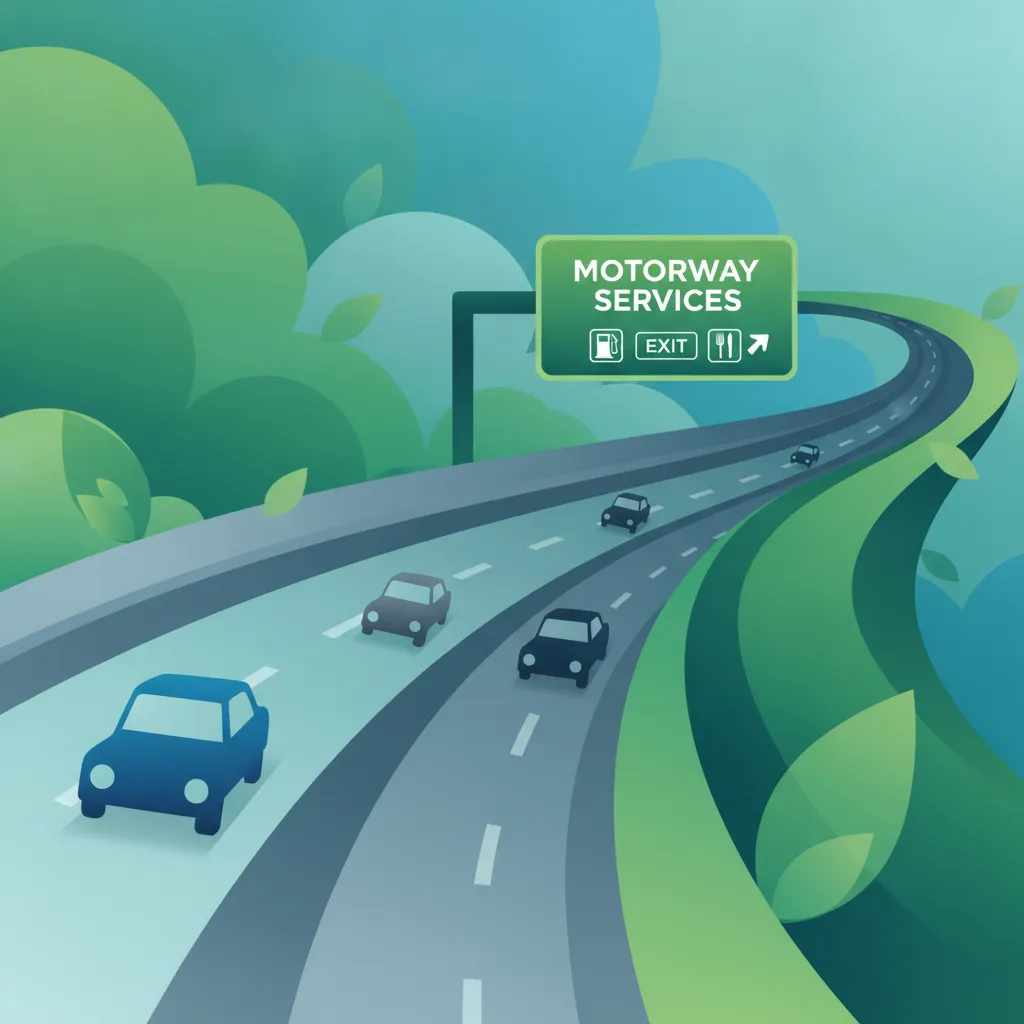
Motorways are designed for safe, high-speed travel, but require strict adherence to lane discipline and specific regulations. This lesson explains that the left lane is for normal driving, while middle and right lanes are strictly for overtaking slower traffic. You will learn how to identify motorway exits, use the hard shoulder during absolute emergencies, and understand the legal restrictions placed on learner permit holders.

Irish driving theory demands that drivers keep to the left-hand side of the road unless overtaking or turning right. This lesson explains how to maintain consistent lane discipline on multi-lane roads, how to perform safe lane changes, and the dangers of drifting. You will learn the safety sequence of checking mirrors, checking blind spots, signalling, and smoothly executing a lane change without disrupting trailing traffic.

Large passenger vehicles must maintain consistent lane positioning to prevent side-swipe incidents and sustain smooth urban traffic patterns. This lesson covers standard lane selection rules, safe overtaking procedures, and how to use designated public transit corridors correctly. Drivers will learn the importance of checking mirrors continuously and planning lane changes well in advance.

This lesson explains the critical meanings of solid, broken, and continuous lines painted on Irish road surfaces. It defines the legal rules surrounding bus lanes, bicycle lanes, and yellow box junctions in urban settings. Riders will learn correct lane discipline to ensure their safety and maintain proper separation from surrounding traffic.

This lesson outlines the legal and safety requirements for maintaining proper lane discipline on multi-lane roads, roundabouts, and motorways in Ireland. It teaches drivers how to account for lane width, manage trailer off-tracking, and position the cab to prevent encroachment on neighboring lanes. Drivers will master safe lane-changing strategies, signaling protocols, and traffic merging techniques.

This lesson clarifies the legal regulations surrounding bus lanes and cycle lanes in Ireland, highlighting when motorcycles are permitted to enter them. It outlines how to cross these lanes safely when turning left, and how to scan for cyclists approaching from behind. Riders will learn to respect lane markings, observe signposted operational hours, and avoid blocking designated public transit lanes.
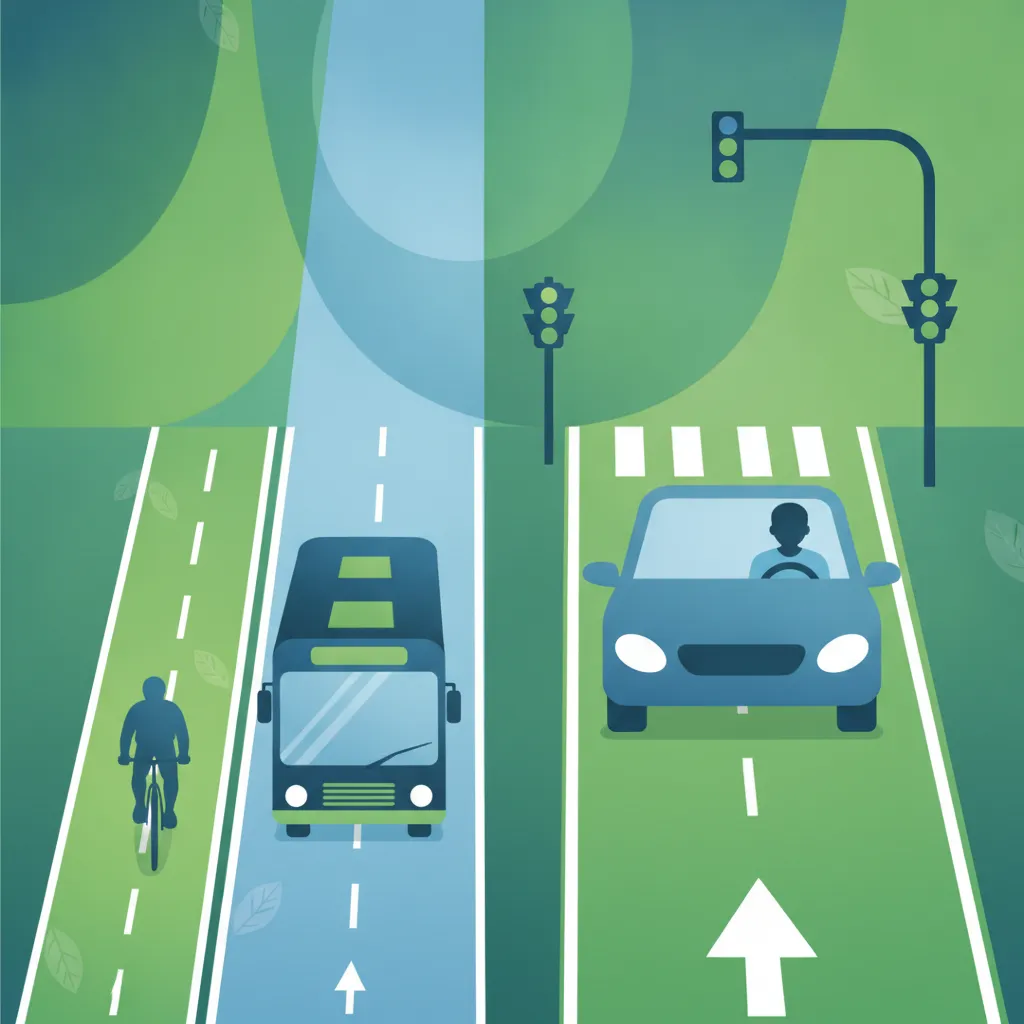
Bus lanes and cycle tracks are designed to encourage public transport and safe active travel in congested urban areas. This lesson explores the differences between with-flow and contra-flow bus lanes, detailing the restricted operating hours during which other vehicles are banned. You will understand when taxi drivers or emergency vehicles can use these lanes, and how to avoid costly traffic violations and safety risks.

This lesson outlines the rules and procedures for riding safely on dual carriageways and motorways in Ireland. It covers merging from slip roads, maintaining lane discipline, and executing high-speed overtaking manoeuvres in accordance with RSA standards. Motorcyclists will learn to anticipate turbulence from large commercial trucks and recognize the safety signs used on high-speed routes.
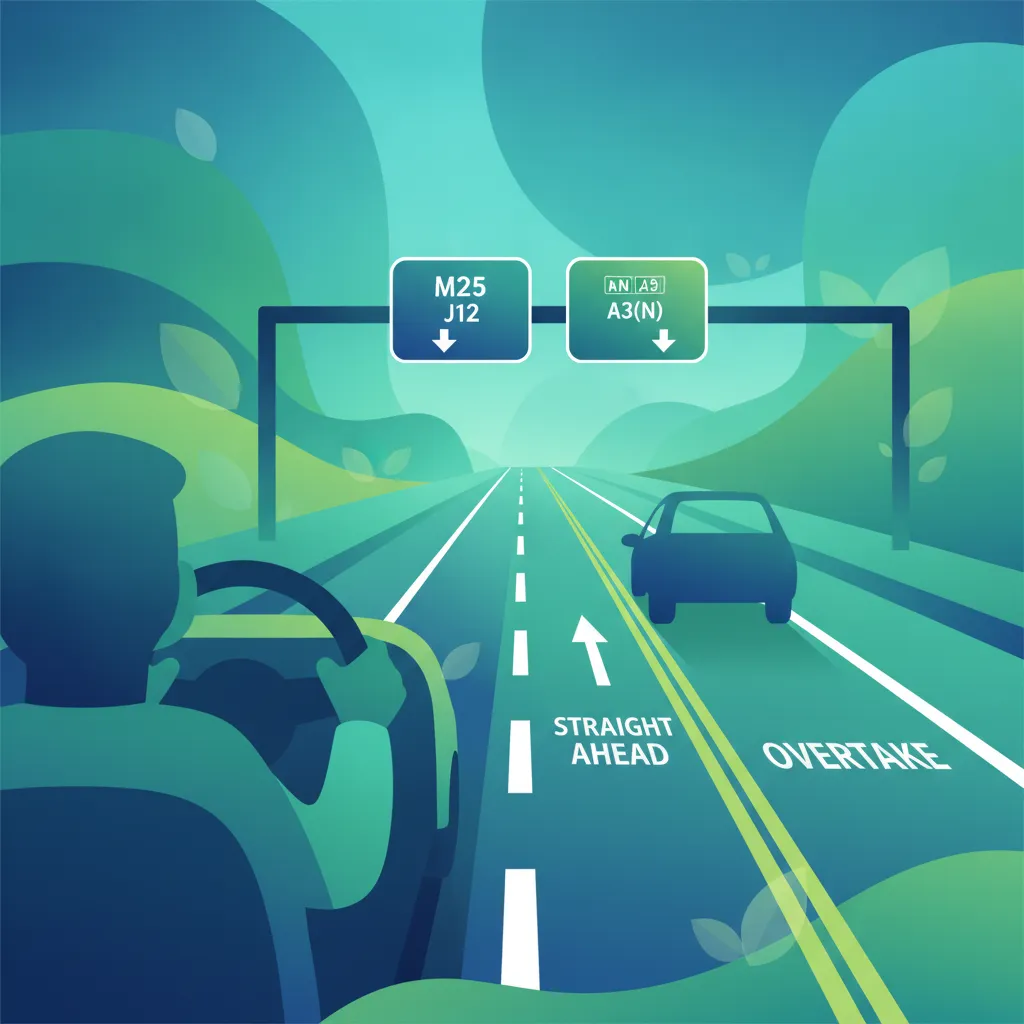
This lesson describes the legal regulations and driving conventions for operating heavy commercial vehicles on motorways and high-speed dual carriageways. It explains specific Irish motorway rules, including bans on heavy goods vehicles occupying the outer overtaking lanes. Drivers will learn to manage high-speed slip-road merging, maintain safe spacing buffers, and anticipate long-range changes in overall traffic flow.
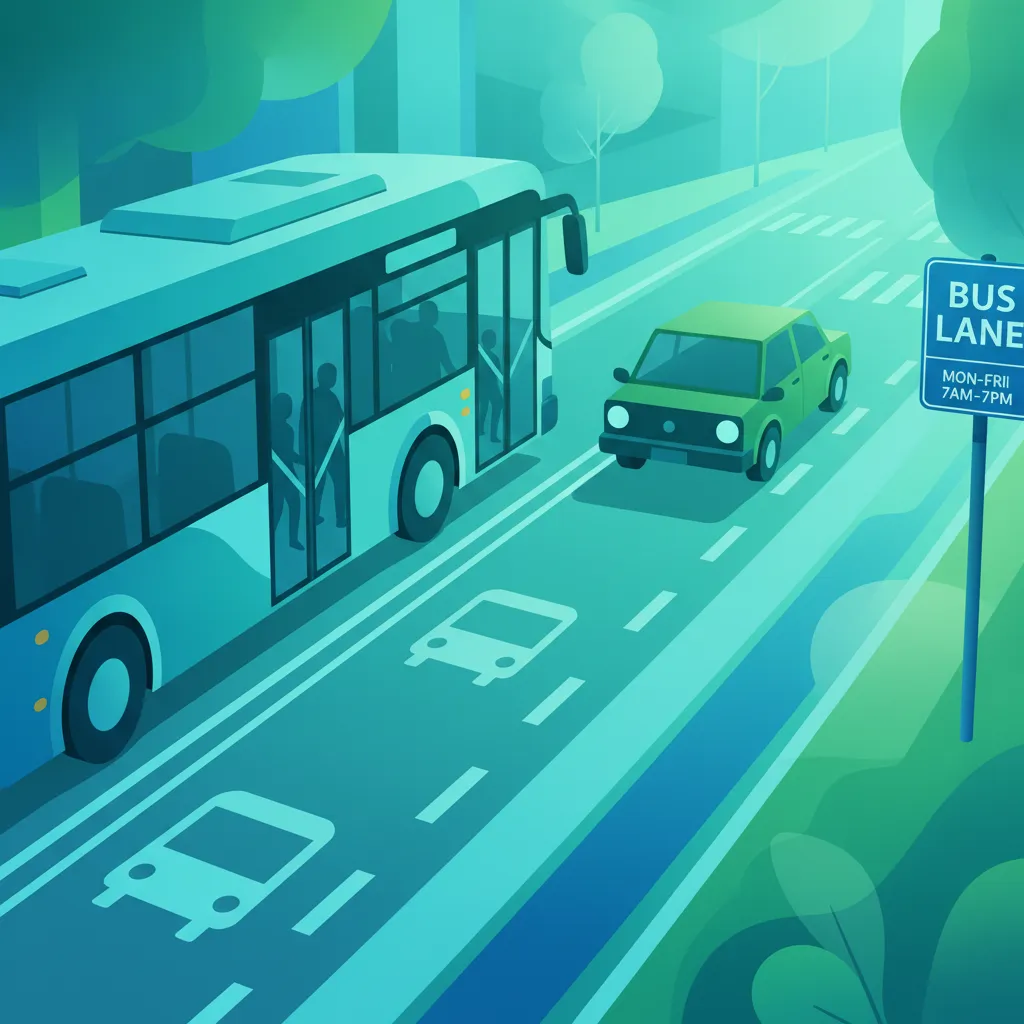
This lesson details the legal operations allowed within Irish bus lanes, including active hours, non-permitted traffic types, and exceptions. Drivers will learn safe approach trajectories for public transport stops, maintaining legal clearance, and navigating curbside hazards safely. The material highlights compliance with local bylaws to guarantee steady, uninterrupted traffic flow and passenger convenience.
Develop skills to identify and respond to potential dangers on the road such as vulnerable road users, adverse weather, or changing traffic conditions. Understand the mechanics of reaction times and stopping distances to improve safety awareness during your Irish driving theory preparation.

Proactive hazard perception involves constantly scanning the road ahead to identify potential dangers before they turn into actual emergencies. This lesson covers active scanning techniques, helping you look far ahead, check mirrors regularly, and identify subtle risk clues such as exhaust smoke from parked cars or children playing near kerbs. Anticipating these developments gives you the time to adjust speed and position safely.

Irish rural roads are often narrow, winding, and bordered by high hedges, presenting unique hazards compared to urban streets. This lesson focuses on scanning for hidden hazards such as slow-moving farm machinery, mud on the road surface, and loose livestock. You will learn how to adjust your speed before entering blind bends, sound your horn at blind crests, and safely share the road with local agricultural traffic.

This lesson covers the strategic aspects of journey management, emphasizing the safety benefits of proactive route planning and weather checks. It teaches riders how to select safer roads, avoid high-congestion zones during rush hour, and schedule regular rest intervals. Motorcyclists will learn to pack essential tools, emergency contacts, and spare safety gear to remain prepared for any roadside situation.

This lesson outlines how motorcyclists should respond when permanent road signs are dirty, damaged, or hidden by overgrown trees and hedges. It introduces the temporary signage, warning cones, and detour markers commonly deployed at active roadwork zones in Ireland. Riders will learn to read the road ahead defensively, reducing speed when visual information is incomplete or compromised.

Heavy vehicles require continuous visual scanning to identify small or slow-moving road users who may enter the path of travel. This lesson explores the typical behaviors of young children, elderly pedestrians, and visually impaired road users. Drivers will build strong hazard perception skills to anticipate sudden movements, ensuring they can brake safely and avoid serious accidents.

Warning signs in Ireland are typically diamond-shaped with yellow backgrounds and black symbols, indicating potential dangers on the road ahead. This lesson details signs for upcoming sharp bends, narrow roads, steep hills, pedestrian activity, and animal hazards. Learning to spot these warning indicators early allows you to reduce speed safely and adjust your vehicle positioning before encountering the hazard itself.

This lesson teaches how to cultivate a proactive defensive riding mindset, focusing on situational awareness and constant hazard scanning. It describes the system of motorcycle control, encouraging riders to anticipate potential mistakes from other drivers, pedestrians, and cyclists. Motorcyclists will learn to position themselves defensively, leaving clear escape routes in all driving environments.

This lesson explores common surface hazards encountered on municipal and rural Irish roads, including loose gravel and wet leaves. It explains how these surface conditions rapidly reduce tyre traction and affect overall handling and braking control. Riders will learn visual scanning techniques to identify these hazards early and execute safe evasion maneuvers.
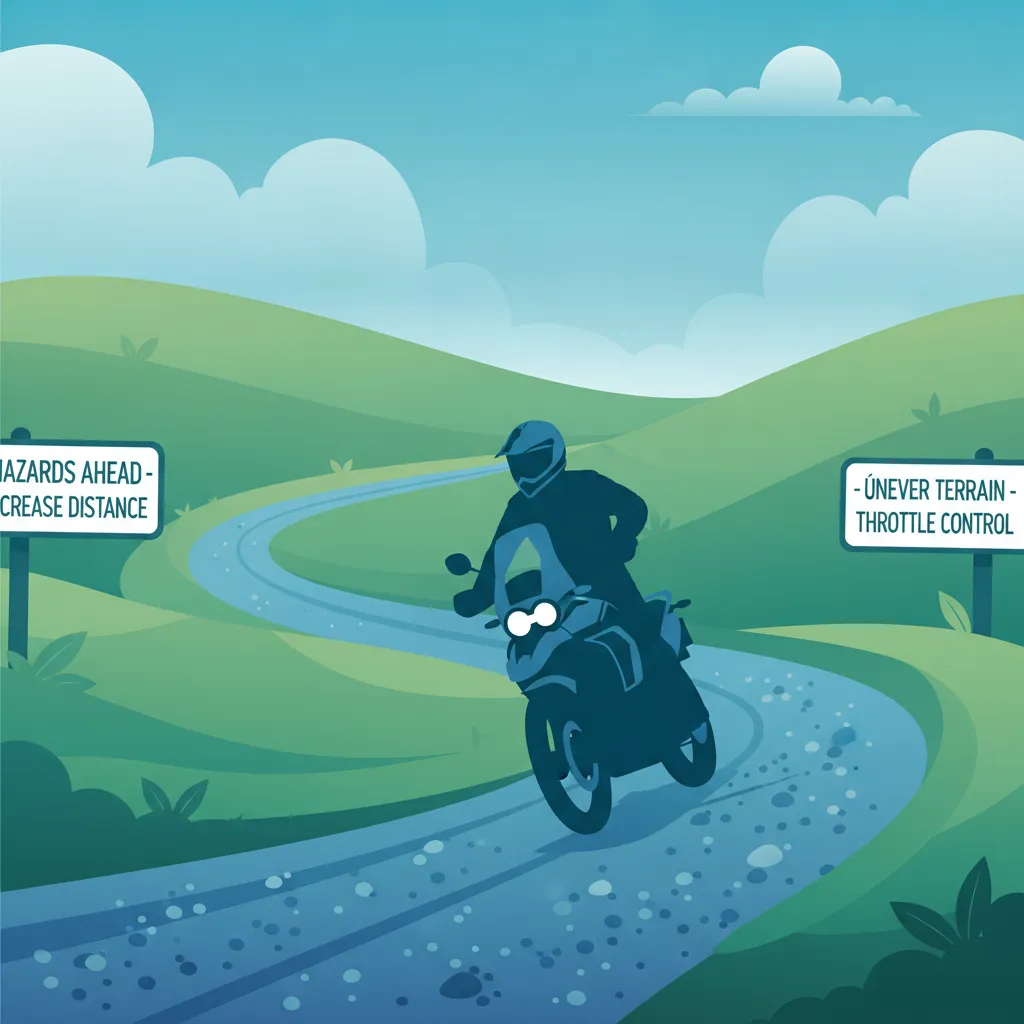
This lesson focuses on riding techniques suited for gravel, loose surfaces, and rural roads. Learners will understand how to maintain stability, adjust braking and cornering approaches, and anticipate hazards such as potholes and farm vehicles, following RSA guidance for safe riding in the Irish countryside.

This lesson outlines the immediate steps to take during a mechanical breakdown or a traffic collision on public roads. It covers how to secure the scene to prevent secondary accidents, apply basic first aid, and contact emergency services using 112 or 999. Riders will also study the legal obligations for reporting accidents to the Gardaí.
Find clear answers to common questions learners have about Variable Message Signs and Roadworks. Learn how the lesson is structured, which driving theory objectives it supports, and how it fits into the overall learning path of units and curriculum progression in Ireland. These explanations help you understand key concepts, lesson flow, and exam focused study goals.
Yes, any speed limit displayed on an electronic gantry or variable message sign is mandatory and carries the same legal weight as a permanent speed limit sign.
A red X indicates that the lane is closed. You must move out of that lane safely as soon as it is possible and legal to do so, as there may be an obstruction or emergency vehicle ahead.
Yes, roadwork zones often have temporary, reduced speed limits designed to protect workers and road users. You must follow the temporary limit even if it is lower than the standard limit for that road type.
In Ireland, temporary roadwork signs are typically yellow or orange with black symbols, distinguishing them from permanent warning signs which are white with red borders.
Use the practice question search tool to pinpoint specific topics, road signs, or rules you need to master for your official Driver Theory Test. Refine your study strategy and ensure comprehensive preparation for all aspects of the Irish driving exam. Start your focused revision now and build confidence for your learner permit test.