
This lesson guides you through the critical safety procedures for reversing a Category B vehicle on Irish roads. You will learn the mandatory check-and-move sequence required to identify hazards, avoid blind-spot collisions, and use your vehicle's technology as a supporting tool rather than a replacement for physical observation.

Lesson content overview
Reversing is one of the most demanding manoeuvres you will perform as a motorist. In the Irish Driver Theory Test and practical driving exam, demonstrating safe reversing is a core competency. Because vehicles are structurally designed to protect occupants, their frame pillars create significant blind spots. These blind spots restrict your direct line of sight to the rear and sides of the vehicle, turning a simple rearward movement into a high-risk operation.
To reverse safely, you must blend physical observation, spatial awareness, precise vehicle control, and an understanding of modern technological aids. This lesson covers the essential techniques, legal regulations, and safety habits required to execute this manoeuvre without risking injury to vulnerable road users or damaging property.
When a vehicle moves forward, the driver has a wide, unobstructed arc of vision. When reversing, however, the field of vision is severely compromised.
The structural pillars of a passenger car (specifically the B-pillars on the sides and the C-pillars flanking the rear window) obstruct direct sightlines. Additionally, the physical bodywork of the boot or rear hatch blocks anything on the ground immediately behind the vehicle. This means small children, low obstacles, animals, and posts can easily disappear entirely from view.
As a driver, you must recognize that your mirrors only capture a narrow slice of the environment behind you. Relying on them alone leaves large, unmonitored zones where collisions can easily occur. Understanding these physical limitations is the first step toward adopting a safety-first reversing routine.
Before you select reverse gear or release your handbrake, you must perform a comprehensive, physical check of your surroundings. In driving instruction and testing, this is known as the safety lookabout.
A safety lookabout is a complete visual scan that goes far beyond a quick glance in the rearview mirror. It requires physically turning your head and body to observe the areas that mirrors cannot reach.
Secure the vehicle: Ensure the handbrake is engaged and the vehicle is stationary before beginning your visual sweep.
Start from the right shoulder: Look over your right shoulder (the driver's blind spot) through the side window to check for passing cyclists, pedestrians, or emerging vehicles.
Sweep the mirrors: Look at your driver-side wing mirror, internal rearview mirror, and passenger-side wing mirror to construct a mental map of any distant hazards.
Turn your head and body to the rear: Pivot your torso to the left and look directly through the rear window. This physical turn is the most critical element of the lookabout.
Check the left blind spot: Look over your left shoulder through the rear side windows.
Re-verify the front: Briefly check ahead to ensure the front of your car will not swing out into oncoming traffic or obstacles as you turn.
Only when you are completely certain that the path is clear should you select reverse gear, release the handbrake, and begin to move. If you are delayed by even a few seconds after your check (for example, waiting for a passing car), you must perform the entire 360-degree lookabout again before moving.
Mirrors are vital supplementary aids during a reversing manoeuvre, but they are never a substitute for looking directly out of the windows. Once you have completed your pre-manoeuvre lookabout and the vehicle is slowly moving, you must continuously monitor your mirrors to track changes in your environment.
Always ensure your mirrors are clean and correctly adjusted before you start any journey. If your mirrors are set incorrectly for forward driving, their blind spots will be even more severe when you attempt to reverse.
Many modern Category B passenger cars are equipped with reversing sensors (ultrasonic parking aids) and rear-view cameras. While these technologies are outstanding safety developments, they come with operational limitations.
Ultrasonic devices integrated into a vehicle's bumper that measure the distance to nearby objects. They emit audible beeps that increase in frequency (becoming a solid tone) as the vehicle approaches an obstacle.
Reversing sensors emit ultrasonic waves in a specific, cone-shaped pattern. This pattern has inherent limitations:
For these reasons, the Road Safety Authority (RSA) and driving examiners emphasize that electronic aids must only supplement physical observation. During a driving test, relying solely on your reversing camera or sensor beeps without turning your head to look through the rear window will result in an immediate fault.
Safe reversing requires keeping the vehicle at a slow, controlled crawl—often described as a "walking pace." This gives you maximum time to observe your surroundings and stop instantly if a hazard emerges.
In a manual transmission vehicle, this slow speed control is achieved through clutch control, specifically balancing the clutch at the biting point.
Using the clutch to regulate your speed prevents the vehicle from lurching backward. Never release the clutch pedal fully when performing tight, low-speed reversing manoeuvres, as this will make the vehicle travel too fast and increase the risk of losing control.
Under Irish traffic law, reversing is a manoeuvre that must be executed with extreme caution. The burden of safety lies almost entirely on the reversing driver.
Safe reversing habits must adapt to the environmental context, weather, and the presence of vulnerable road users.
Residential streets and housing estates present the highest risk of reversing accidents, particularly involving young children and elderly pedestrians. Children are small enough to be completely hidden in the blind spot directly behind your boot lid.
At night, your depth perception is significantly reduced. While your vehicle’s white reversing lights provide some illumination, they do not offer the same visibility as headlights.
Water droplets on your wing mirrors and rear windscreen distort reflections and make it incredibly difficult to judge distances. Furthermore, heavy rain or snow can coat reversing sensors, causing false readings or sensor failure.
If your car is heavily loaded with luggage or passengers, the rear suspension will sit lower, which changes the angle of your mirrors and sensors. If you are towing a trailer, reversing physics change entirely.
Even experienced drivers can fall into bad habits that lead to collisions or test failures. Recognizing these common errors will keep you safe on the road.
Reversing safely is a discipline that requires patience, precise mechanical control, and constant alertness. By committing to a full 360-degree physical lookabout, mastering the half-clutch technique to keep your speed at a crawl, and treating reversing sensors as helpful additions rather than absolute guarantees, you will navigate tight parking spots and residential streets safely.
Always remember: if you are ever unsure of what is behind your vehicle, stop, apply the handbrake, get out of the vehicle, and check for yourself.
Reversing safely requires combining physical observation with precise clutch control, as the structural design of a passenger car creates significant blind spots that mirrors alone cannot cover. Before moving, perform a complete 360-degree safety lookabout involving physical head and body turns, not just mirror glances. Reversing sensors and rear-view cameras are helpful supplements but cannot replace direct observation due to their blind zones and potential failure in adverse weather. Under Irish road traffic rules, you must always yield priority to other road users when reversing, and reversing on motorways is strictly prohibited. Master the half-clutch biting point technique to maintain slow, controlled movement, and if ever uncertain about what lies behind you, stop and check on foot.
A short set of high-value points that capture the most important learning from this lesson.
Reversing creates large blind spots because B-pillars, C-pillars, and boot bodywork block direct sightlines to the rear and sides.
A full 360-degree physical lookabout—turning your head and body—is mandatory before selecting reverse gear, not just a mirror check.
Reversing sensors and cameras are supplementary aids only; they have blind zones and can fail in adverse weather, so physical observation remains essential.
Maintain vehicle speed at a walking pace using half-clutch control to give maximum reaction time for emerging hazards.
Under Irish traffic law, reversing vehicles must yield priority to all other road users, including pedestrians and cyclists.
Explore all units and lessons included in this driving theory course.
The safety lookabout sequence: right shoulder check, mirrors, rear window look (pivoting your torso), left shoulder check, then front verification.
Reversing sensors may fail to detect low objects (kerbs, poles), narrow objects (fences), and can malfunction when wet, muddy, or icy.
Never reverse on any part of a motorway, including slip roads or hard shoulders—it is strictly illegal.
When reversing with a trailer, steering input causes the trailer to turn opposite to the steering direction; use a guide if your view is blocked.
If unsure what is behind your vehicle, stop, apply the handbrake, and physically get out to check.
Sensor complacency: assuming the path is clear simply because the sensors are not beeping, ignoring their inherent blind zones.
Glance and go: checking only mirrors and immediately reversing without performing the full physical head-turn lookabout.
Reversing too fast by fully releasing the clutch, leaving no time to react if a child or cyclist emerges behind the vehicle.
Swaying front end: forgetting that steering left while reversing causes the front-right corner to swing outward, risking collision with adjacent objects.
Failing to stop for pedestrians: continuing to reverse slowly past a pedestrian rather than bringing the vehicle to a complete halt until they clear.
Lesson content overview
A short set of high-value points that capture the most important learning from this lesson.
Reversing creates large blind spots because B-pillars, C-pillars, and boot bodywork block direct sightlines to the rear and sides.
A full 360-degree physical lookabout—turning your head and body—is mandatory before selecting reverse gear, not just a mirror check.
Reversing sensors and cameras are supplementary aids only; they have blind zones and can fail in adverse weather, so physical observation remains essential.
Maintain vehicle speed at a walking pace using half-clutch control to give maximum reaction time for emerging hazards.
Under Irish traffic law, reversing vehicles must yield priority to all other road users, including pedestrians and cyclists.
Explore all units and lessons included in this driving theory course.
The safety lookabout sequence: right shoulder check, mirrors, rear window look (pivoting your torso), left shoulder check, then front verification.
Reversing sensors may fail to detect low objects (kerbs, poles), narrow objects (fences), and can malfunction when wet, muddy, or icy.
Never reverse on any part of a motorway, including slip roads or hard shoulders—it is strictly illegal.
When reversing with a trailer, steering input causes the trailer to turn opposite to the steering direction; use a guide if your view is blocked.
If unsure what is behind your vehicle, stop, apply the handbrake, and physically get out to check.
Sensor complacency: assuming the path is clear simply because the sensors are not beeping, ignoring their inherent blind zones.
Glance and go: checking only mirrors and immediately reversing without performing the full physical head-turn lookabout.
Reversing too fast by fully releasing the clutch, leaving no time to react if a child or cyclist emerges behind the vehicle.
Swaying front end: forgetting that steering left while reversing causes the front-right corner to swing outward, risking collision with adjacent objects.
Failing to stop for pedestrians: continuing to reverse slowly past a pedestrian rather than bringing the vehicle to a complete halt until they clear.
Explore search topics learners often look for when studying Reversing Safely and Use of Mirrors and Sensors. These topics reflect common questions about road rules, driving situations, safety guidance, and lesson level theory preparation for learners in Ireland.
Browse additional driving theory lessons that cover connected traffic rules, road signs, and common driving situations related to this topic. Improve your understanding of how different rules interact across everyday traffic scenarios.
Understand the legal requirements and correct procedures for executing common vehicle manoeuvres. This guide explains how to perform parallel parking, bay parking, and safe turning techniques while maintaining full situational awareness and following the Rules of the Road in Ireland for all Category B drivers.
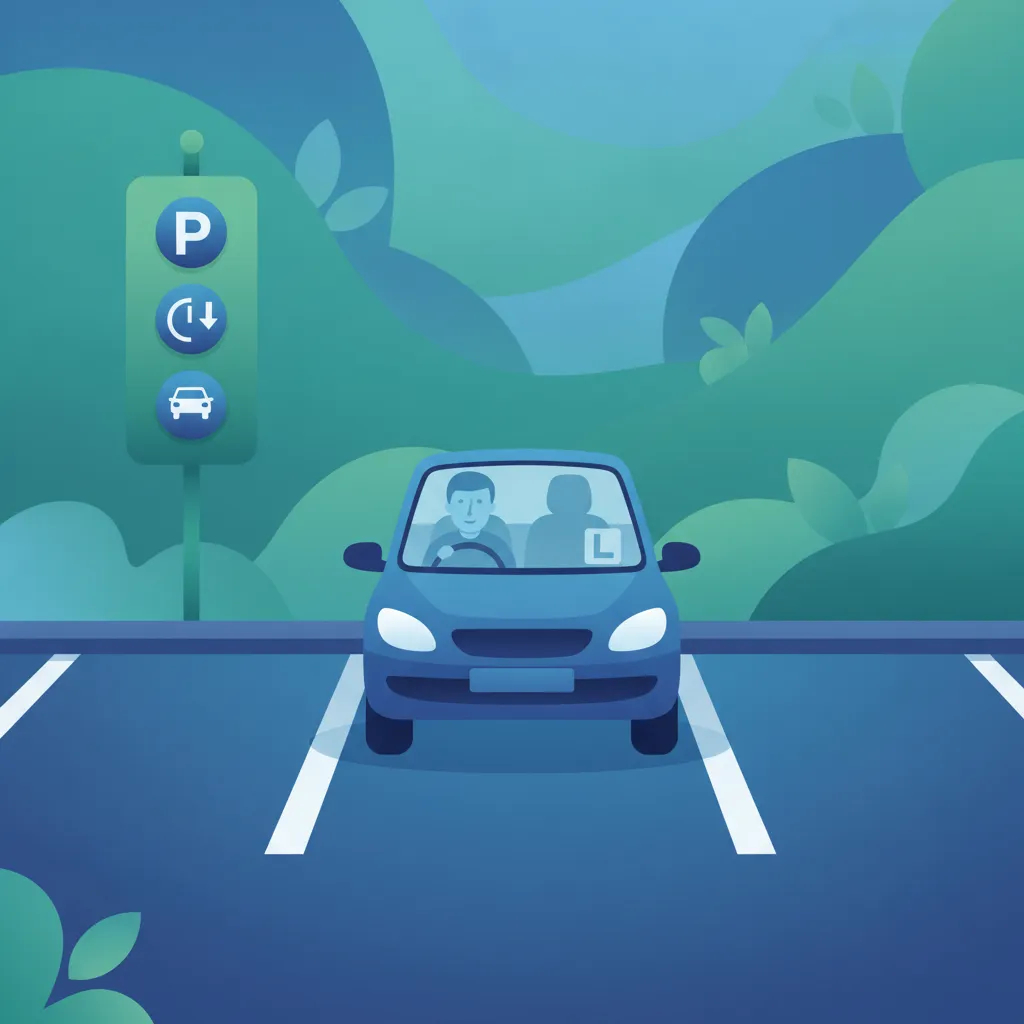
Parking safely and legally requires solid spatial awareness, steady vehicle control, and a clear understanding of traffic laws. This lesson details the physical techniques for parallel curbside parking and reversing into perpendicular parking bays. You will also learn about Irish parking regulations, including the strict rules for double yellow lines, clearways, disabled spaces, loading bays, and standard parking signs.

This lesson addresses the mechanical dynamics of turning long-wheelbase and articulated commercial vehicles at intersections, junctions, and roundabouts. It covers the necessity of deep cornering lines, early mirror checks, and correct signaling to warn vulnerable road users of wide turn maneuvers. Drivers will learn how to minimize rear cut-in and ensure the entire vehicle clears urban obstacles safely.
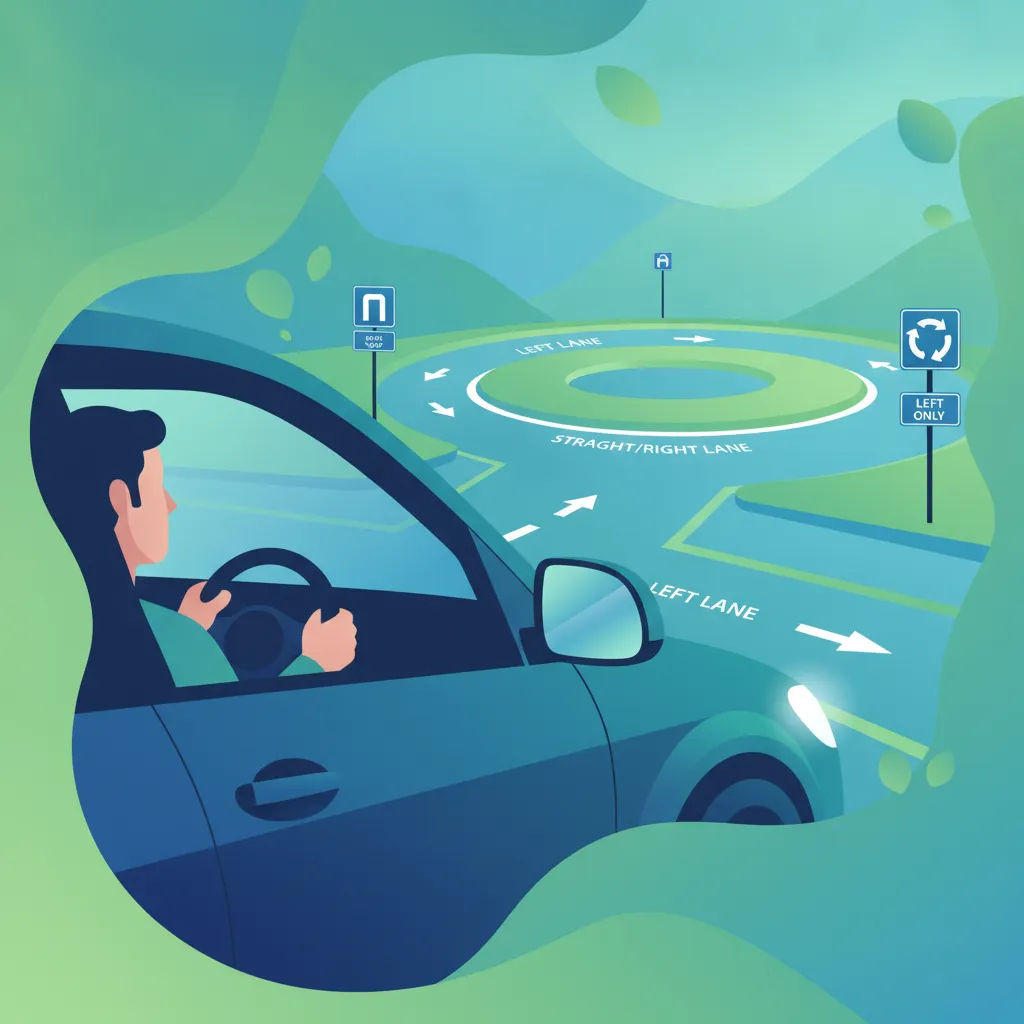
Executing safe turns requires early preparation, correct road positioning, and clear communication with other road users. This lesson focuses on the mandatory Mirror-Signal-Manoeuvre (MSM) routine used across Ireland for turning at cross junctions and navigating roundabouts. You will learn how to choose the correct lane early, adjust your speed, and complete your turn smoothly without cutting corners or blocking trailing vehicles.

The length of a commercial passenger vehicle creates a wide rear-wheel track offset, requiring drivers to swing wide during tight turns. This lesson teaches cornering mechanics, mirror adjustment guidelines, and how to check blind spots for cyclists on the inside lane. Drivers will master intersection control, preventing collisions with stationary street furniture or curbs.

Driving a coach through narrow urban streets or historic Irish town centers demands precise spatial judgment and low speed control. This lesson covers turning radii, rear tail-swing physics, and managing overhangs when navigating around tight, permanent obstacles. Drivers will learn to assess clearance gaps accurately, reducing damage risks to the vehicle exterior and public infrastructure.

This lesson focuses on the physical mechanics of long-wheelbase and articulated vehicles when executing turns in restricted spaces. It explains concepts like swept path, rear overhang, and turning circles, which must be accounted for to prevent side-swiping collisions. Drivers will discover strategic route-planning techniques to avoid congested urban layouts and unsuitable rural corridors.

This lesson provides a comprehensive guide to reversing large vehicles and backing trailer setups safely into loading docks and industrial bays. It analyzes the mechanical physics of trailer articulation, steering inputs, and how to utilize modern backup cameras, mirrors, and assistants. Drivers will examine critical safety protocols, including visual checks and slow-speed controls, to avoid collisions with fixed objects.
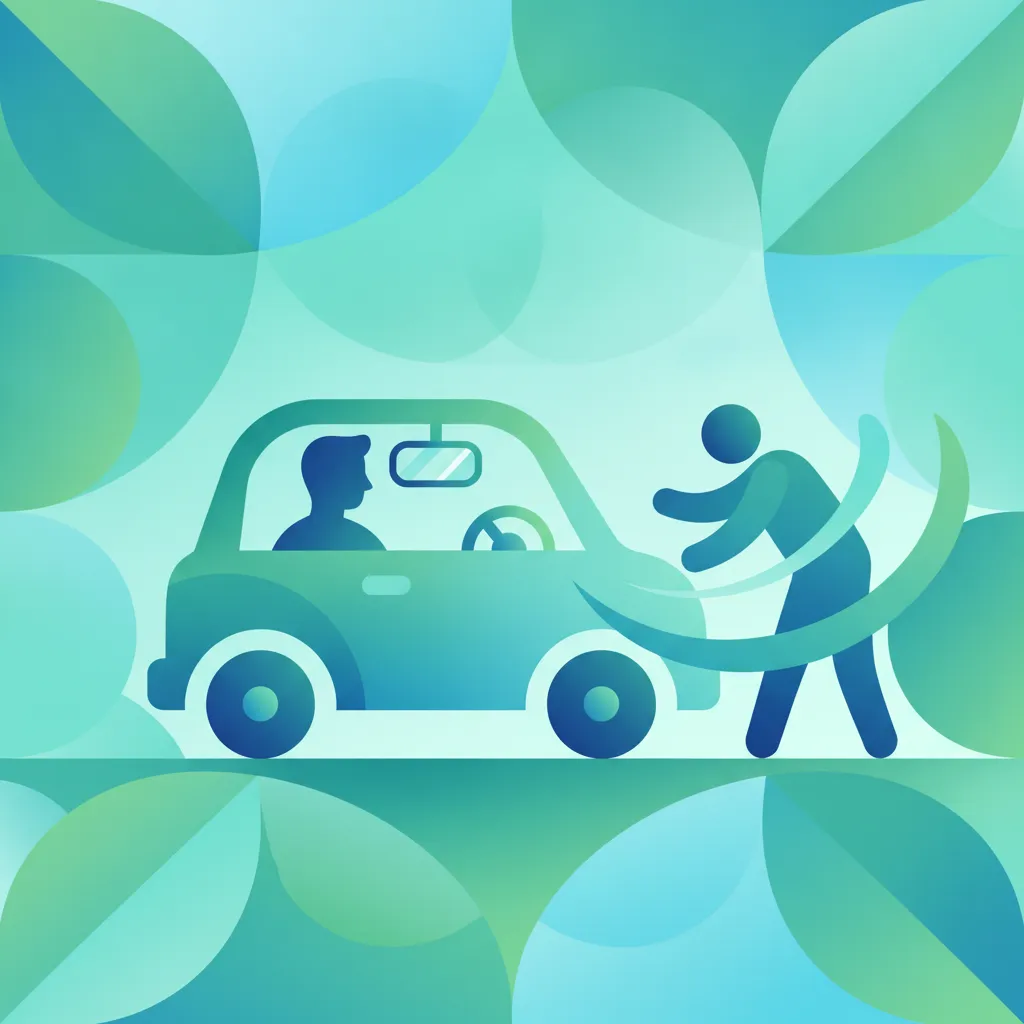
Reversing a large passenger vehicle is a high-risk maneuver that must be avoided whenever possible or performed with extreme caution. This lesson teaches correct mirror alignment, the use of rear cameras, and establishing clear hand signals with an external spotter. Drivers will study safety protocols for backing into passenger bays, ensuring all blind zones remain completely clear.
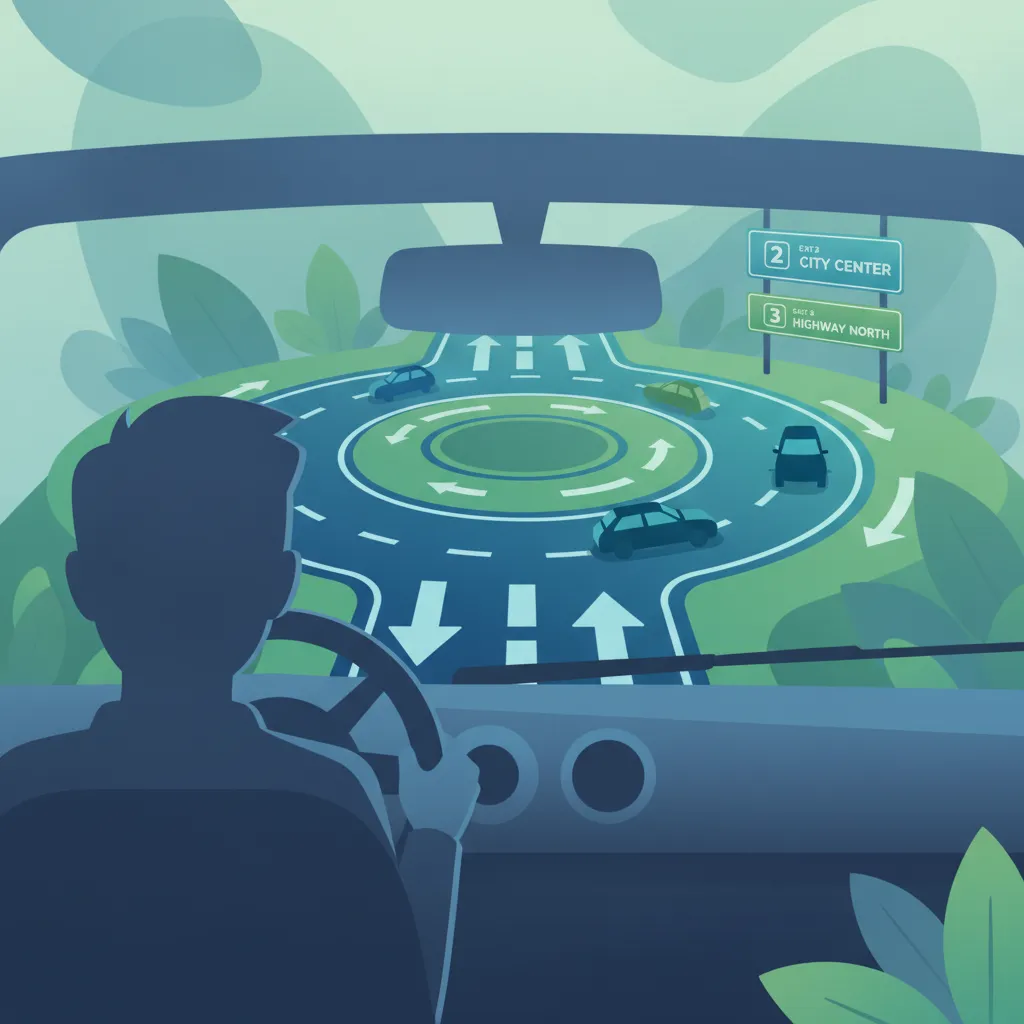
Navigating multi-lane roundabouts requires precise lane selection, continuous scanning, and timely signaling. This lesson teaches you the 'clock rule' for determining which lane to enter, how to yield to traffic already on the roundabout from your right, and when to activate your left indicator to exit. Mastering these procedures minimizes lane-drift accidents and ensures a seamless flow of traffic on busy roundabouts.
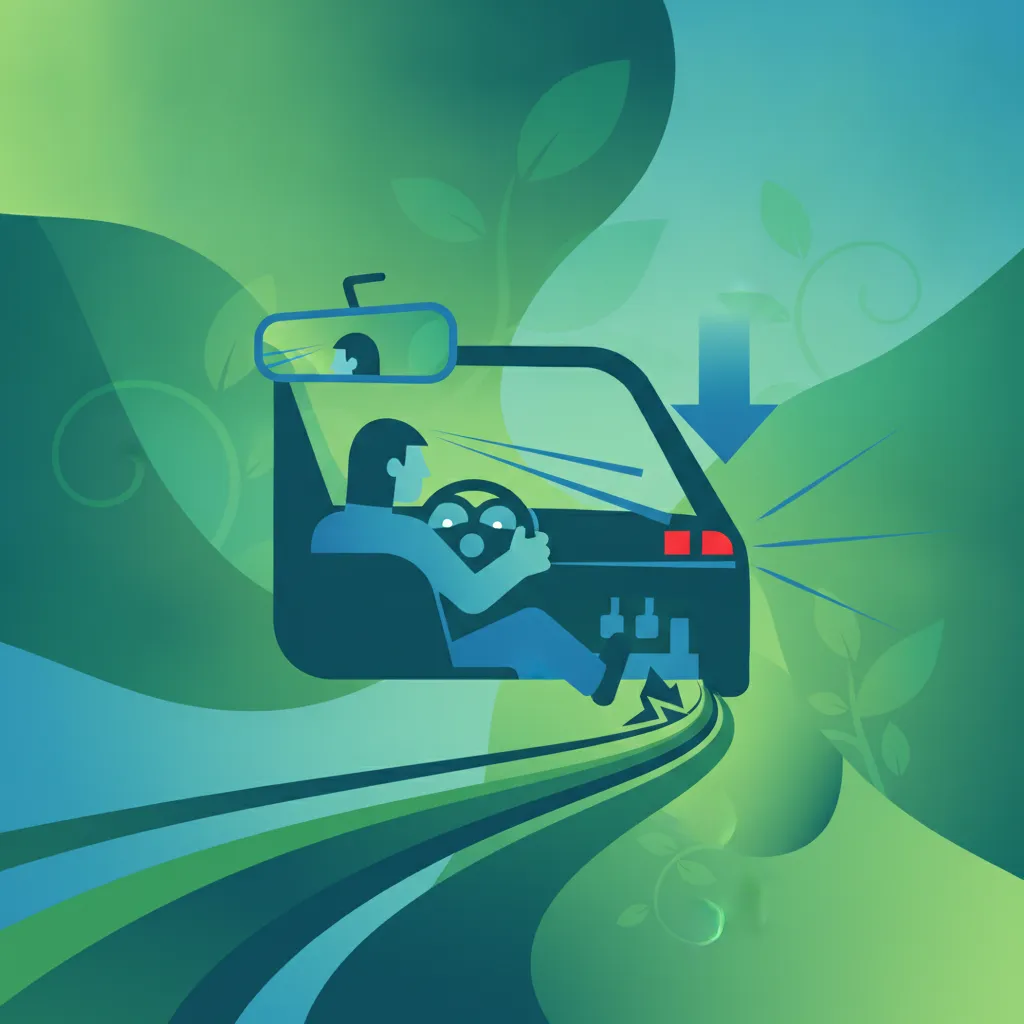
Defensive driving prepares you to react safely when facing unexpected mechanical failures or immediate road hazards. This lesson explains how to execute an emergency stop using Anti-lock Braking Systems (ABS) and how to recover from front and rear-wheel skids on slippery roads. You will learn the importance of remaining calm, avoiding panic-steering, and applying controlled evasive actions to prevent collisions.
Learn how to effectively scan for hazards and identify risks posed by vulnerable road users such as pedestrians and cyclists. This theory lesson covers defensive driving techniques and observation skills essential for navigating residential areas and busy urban environments safely according to official Irish driving regulations.
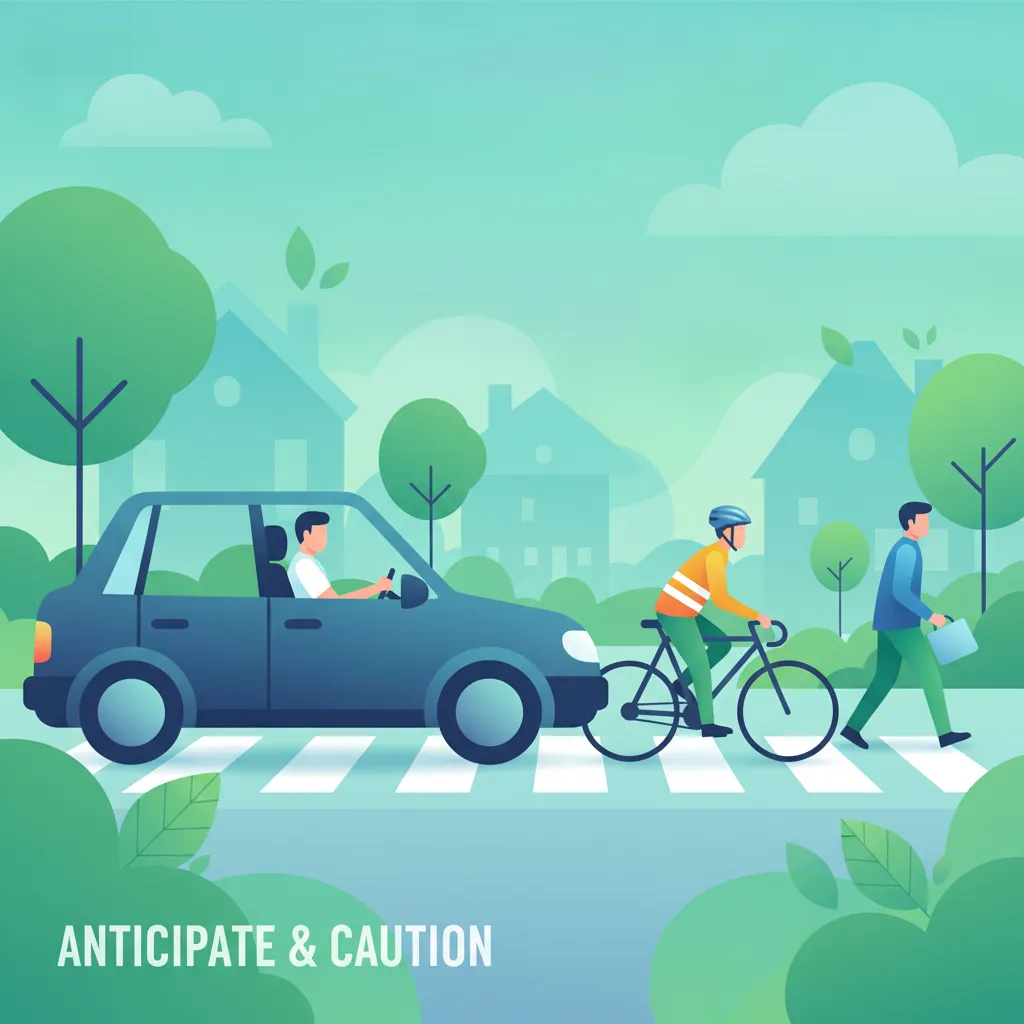
Safeguarding vulnerable road users requires more than simple obedience to traffic signs; it demands a defensive driving mindset. This lesson summarizes safe practices, including scanning far ahead in urban areas, keeping massive safety margins in wet weather, and executing thorough blind spot checks before reversing. By anticipating the unpredictable movements of others, you can prevent accidents and support a safe road culture.

Heavy vehicles require continuous visual scanning to identify small or slow-moving road users who may enter the path of travel. This lesson explores the typical behaviors of young children, elderly pedestrians, and visually impaired road users. Drivers will build strong hazard perception skills to anticipate sudden movements, ensuring they can brake safely and avoid serious accidents.
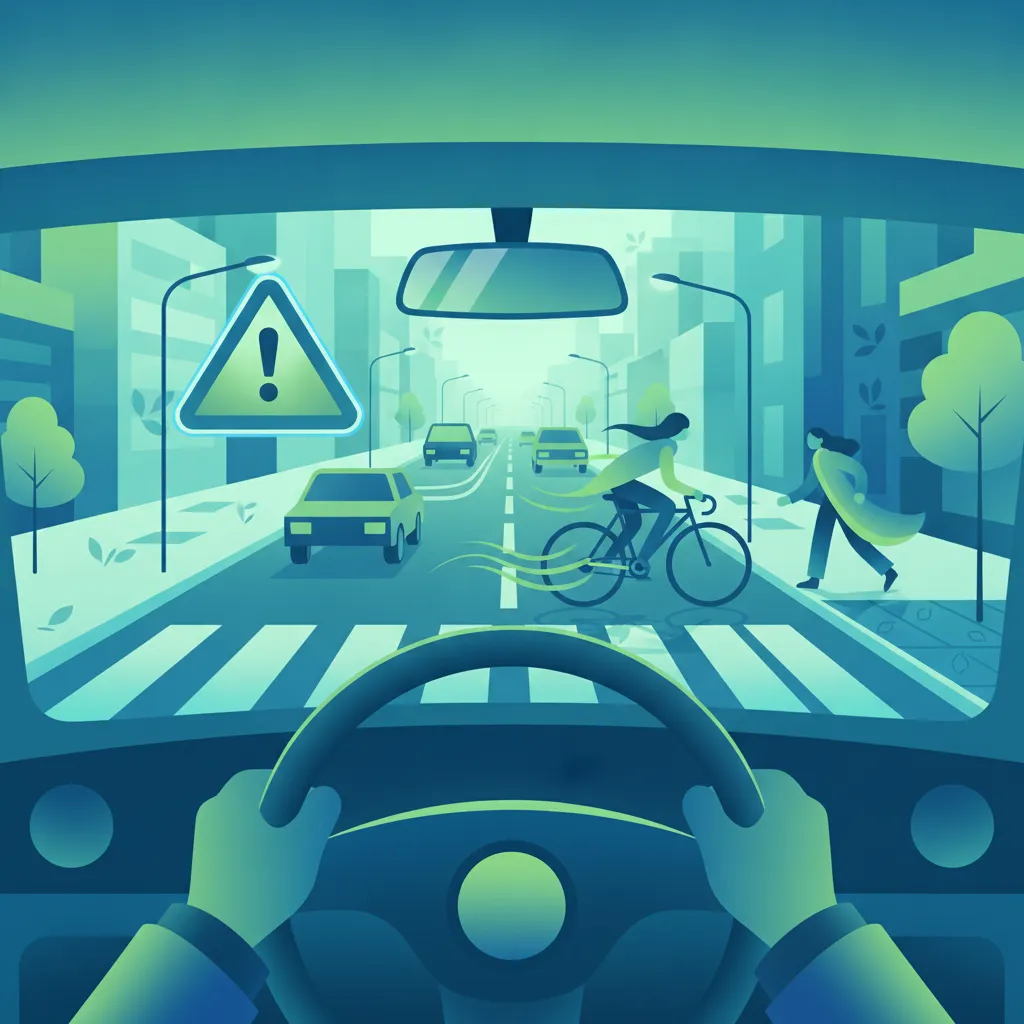
Proactive hazard perception involves constantly scanning the road ahead to identify potential dangers before they turn into actual emergencies. This lesson covers active scanning techniques, helping you look far ahead, check mirrors regularly, and identify subtle risk clues such as exhaust smoke from parked cars or children playing near kerbs. Anticipating these developments gives you the time to adjust speed and position safely.
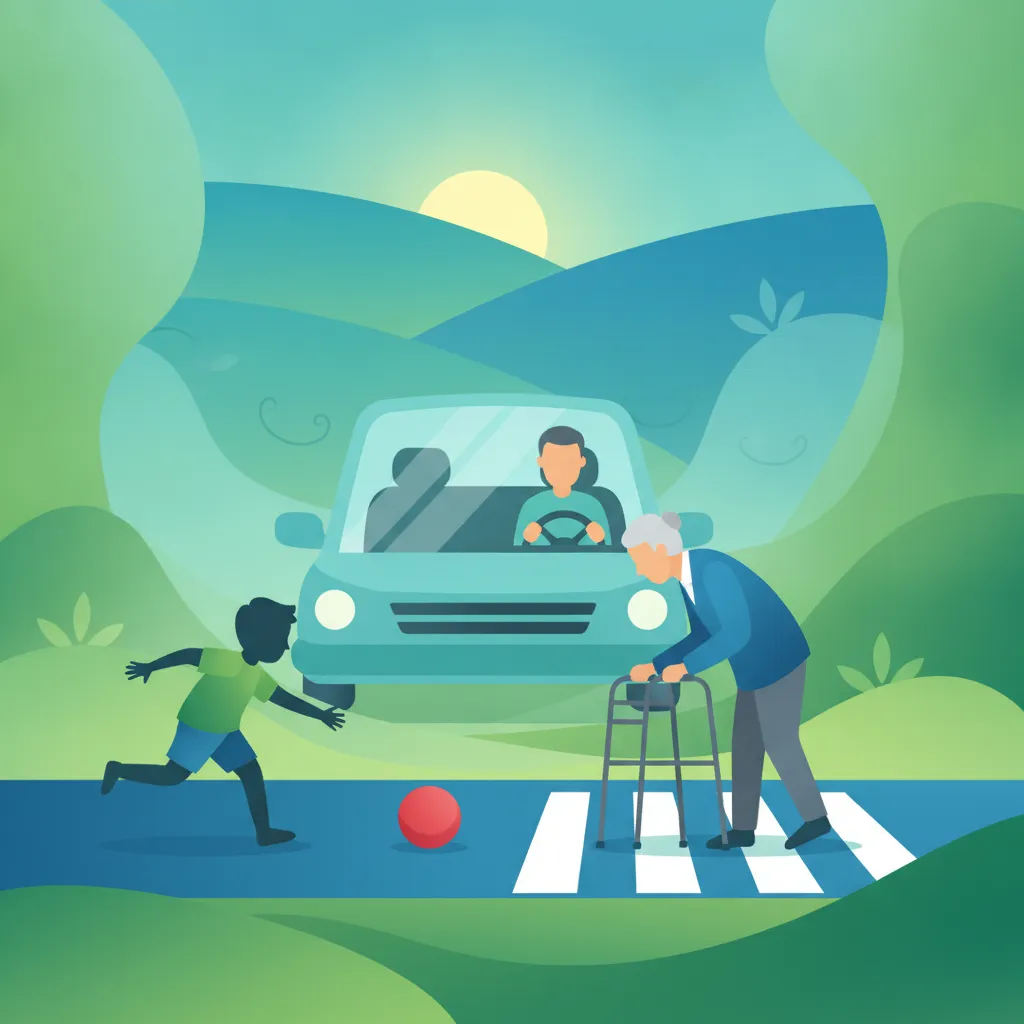
Children often struggle to judge heavy vehicle speeds accurately, while elderly pedestrians may possess limited mobility or hearing impairments. This lesson addresses these unique risks, explaining how to adjust driving patterns in residential neighborhoods and near shopping districts. Drivers will learn to maintain a high safety margin, ensuring they can yield quickly to vulnerable road users.
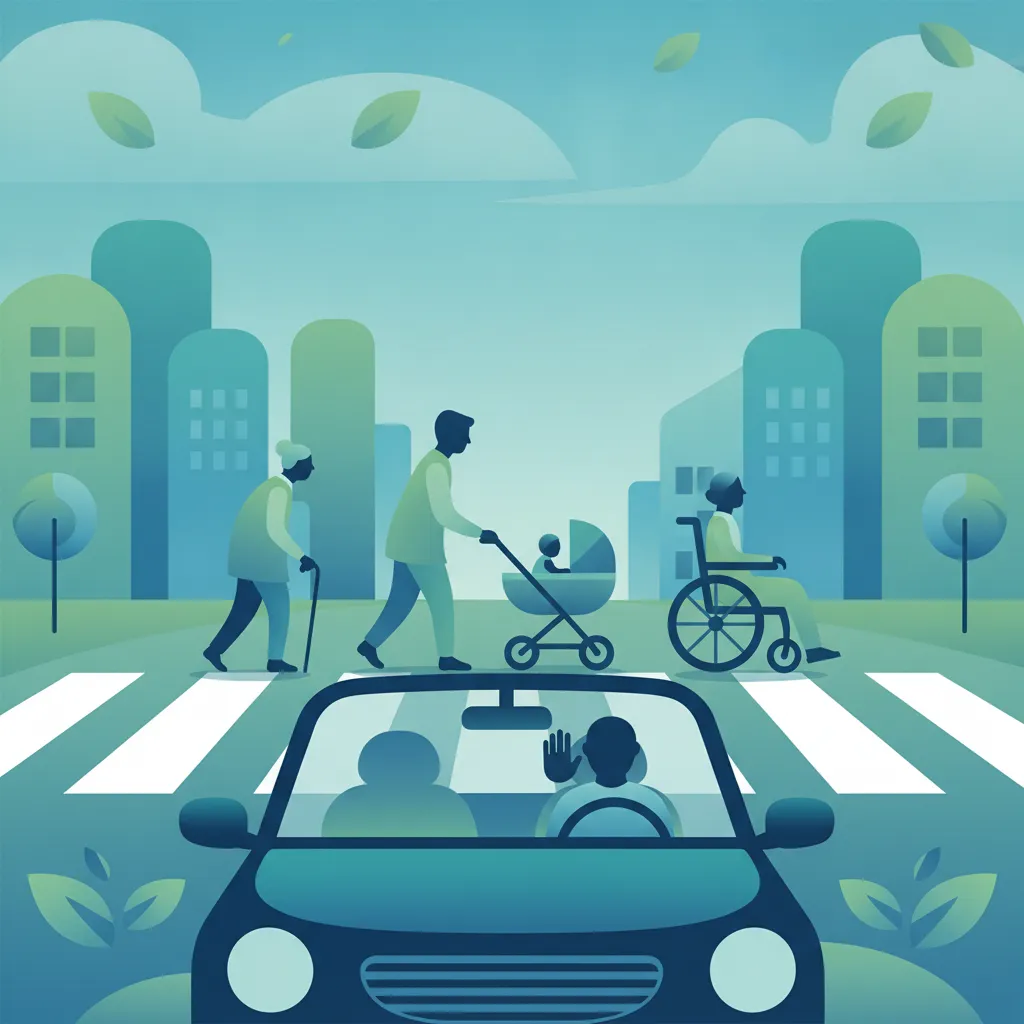
Children, the elderly, and disabled individuals often require extra time and understanding when navigating road networks. This lesson outlines special safety hazards, such as children unexpectedly running into school zones, or senior citizens needing longer times to cross wide junctions. You will learn how to recognise visually impaired pedestrians by their white canes or guide dogs, and the absolute requirement to drive slowly and patiently.
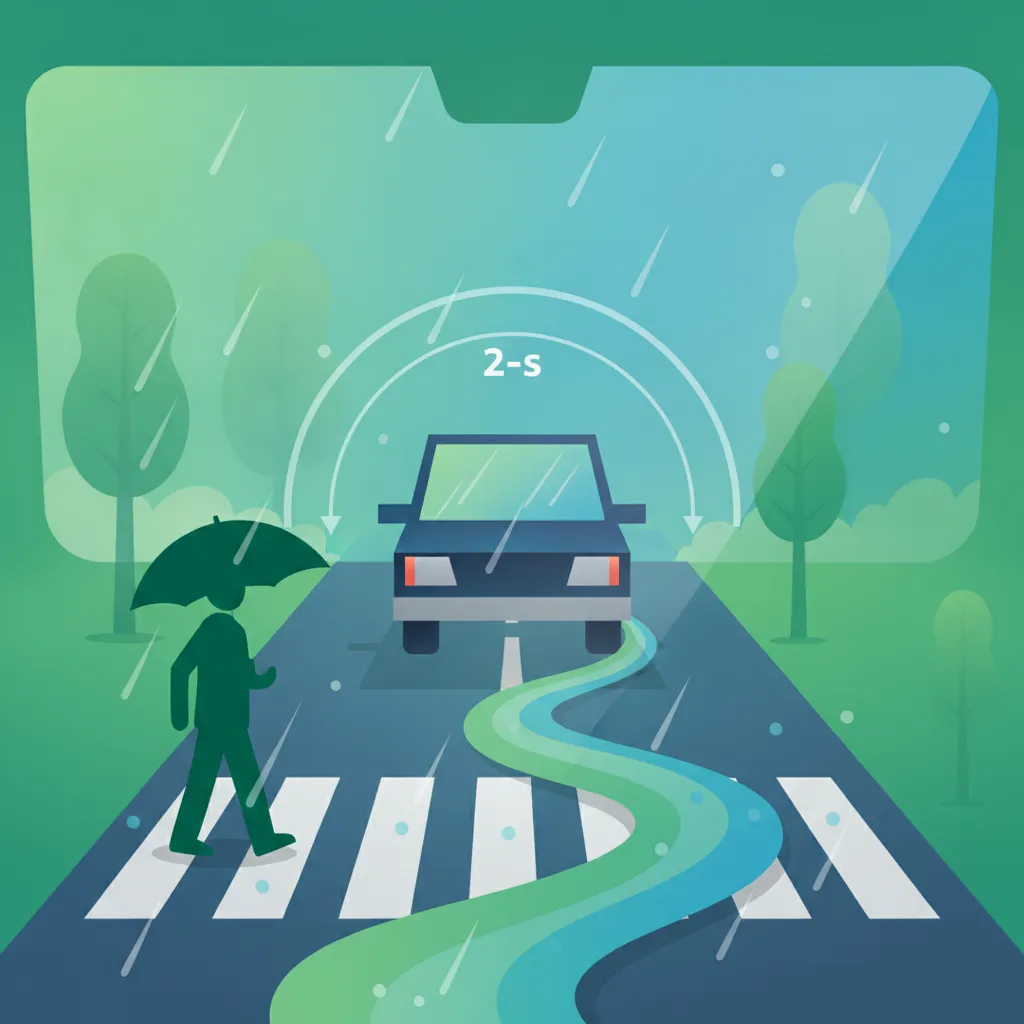
Maintaining an extensive buffer zone ahead of a large passenger vehicle is critical to ensuring enough space for emergency maneuvers. This lesson teaches the time-gap method, detailing how following distances must double on wet roads or increase with full passenger loads. It builds hazard anticipation skills, teaching drivers to read distant traffic cues and react early to hazards.

Bus stops often intersect with designated bicycle lanes and busy walking pathways, creating high-risk conflict areas for drivers. This lesson trains drivers to check blind spots for oncoming cyclists before pulling into or exiting public stop bays. It emphasizes yielding right-of-way to passengers crossing the road, preventing collision risks in active urban transport hubs.

This lesson focuses on managing the interactions between commercial goods vehicles and non-motorized or lightweight commuters. It outlines defensive driving techniques to utilize when overtaking cyclists, navigating pedestrian crossings, or negotiating shared junctions in Irish cities. Drivers will examine common cyclist behaviors at roundabouts and understand how to maintain massive safety margins to protect lives.
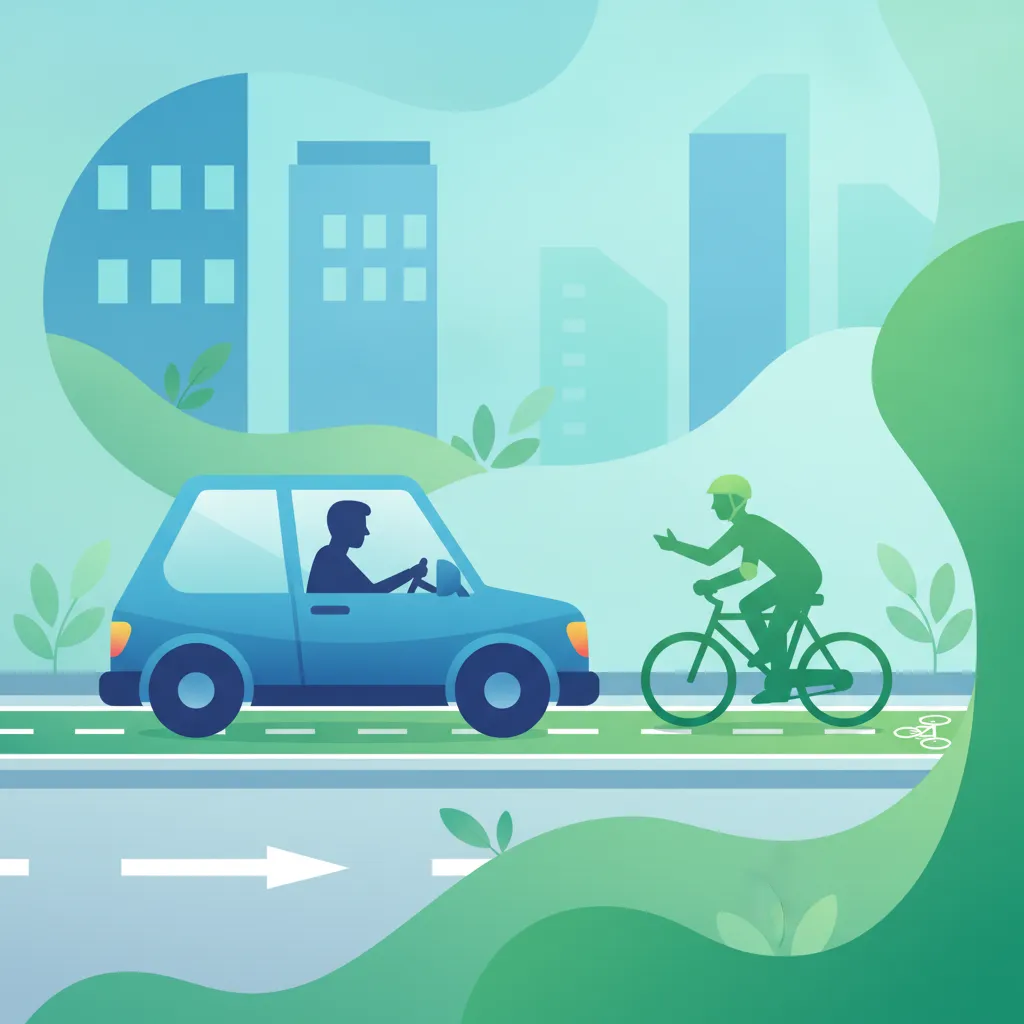
Cyclists share public roads under unique safety constraints, requiring drivers to keep wide clearances and anticipate sudden steering changes. This lesson covers the minimum safe passing distance of 1 to 1.5 metres, rules for driving near cycle tracks, and the danger of the 'dooring' hazard when parking. You will also learn to check your left-side blind spot before turning, preventing dangerous side-swipe collisions.
This lesson highlights the importance of smooth throttle adjustments for maintaining traction and stability on a moped. It teaches riders how to anticipate potential road hazards early, reducing the need for sudden emergency braking. Developing strong observation habits allows riders to adjust their speed smoothly and respond safely to traffic changes.
Find clear answers to common questions learners have about Reversing Safely and Use of Mirrors and Sensors. Learn how the lesson is structured, which driving theory objectives it supports, and how it fits into the overall learning path of units and curriculum progression in Ireland. These explanations help you understand key concepts, lesson flow, and exam focused study goals.
No. In the Irish driving test, sensors and cameras are considered secondary aids. You are required to perform proper, systematic visual checks of all blind spots before and during the manoeuvre.
The most important check is a thorough lookabout, including checking your mirrors and glancing over both shoulders to ensure no pedestrians, cyclists, or other vehicles have entered your path.
Hitting a kerb often indicates poor vehicle control or failure to monitor your positioning. It is treated as a lack of observation or control, which are core competencies tested for Category B.
Yes, you should avoid reversing in high-traffic areas, near junctions, or anywhere visibility is restricted. You must always prioritize road safety over convenience.
Use the practice question search tool to pinpoint specific topics, road signs, or rules you need to master for your official Driver Theory Test. Refine your study strategy and ensure comprehensive preparation for all aspects of the Irish driving exam. Start your focused revision now and build confidence for your learner permit test.