
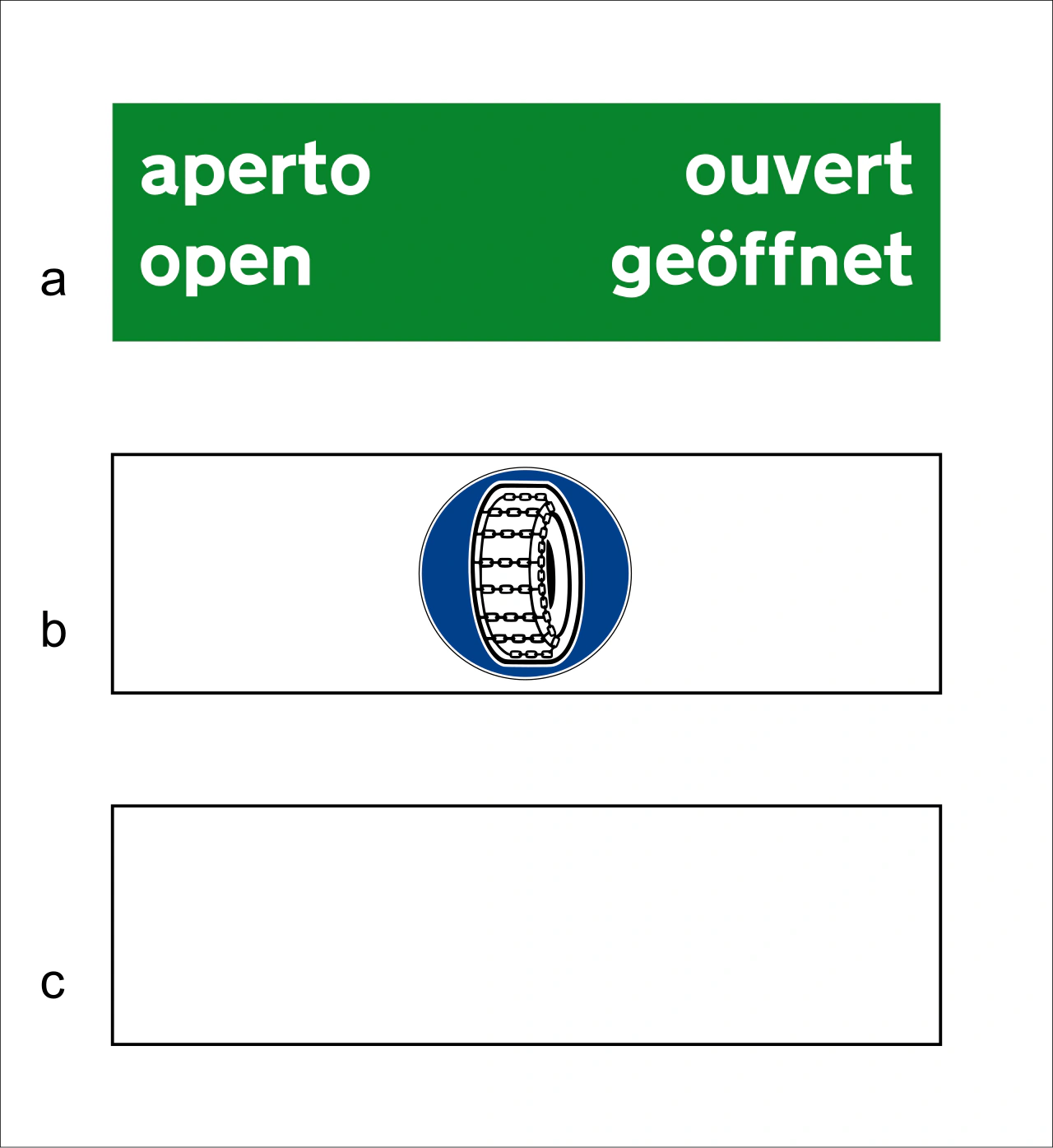
This sign, "Information about road condition of passes: road open and mandatory snow chains" (II.332), is an Italian indication sign. It informs you that although the road ahead, typically a mountain pass, is open, you are legally required to fit snow chains to your vehicle, or use winter tyres that meet specific standards. This sign is crucial for ensuring safety and maintaining traffic flow in winter conditions, and you must comply with its directive to proceed.
This crucial indication sign, code II.332, clarifies if a mountain pass is open and snow chains are required, a key element for safe theory test revision. Understanding its specific meaning is vital for navigating challenging winter road conditions and ensuring compliance with Italian traffic legislation.
This indication sign provides official information for navigation, facilities, services, road type, parking, zones, tunnels, bridges, exits, or lane use. It helps drivers plan early, but it does not override separate speed limits, prohibitions, priority rules, traffic lights, or road markings. For learning, explain both what the sign identifies and what driving choice it helps prepare. Official catalogue code: II.332.
The "Information about road condition of passes: road open and mandatory snow chains" sign provides official road information about information about road condition of passes: road open and mandatory snow chains or the facility shown. Use it for orientation without ignoring separate regulatory signs. Catalogue code II.332.
Get clear, practical answers to the most common questions about the II.332 - Information about road condition of passes: road open and mandatory snow chains road sign. Learn how the sign works, what rules it represents, and how it affects real driving situations. This FAQ strengthens your understanding and supports accurate decision making for the Italian driving theory exam in Italy.
The II.332 sign indicates that a road, usually a mountain pass, is open for traffic, but it is mandatory to use snow chains or approved winter tyres. This means you must have them fitted or ready to fit before proceeding, even if the road appears clear of snow at the moment you see the sign.
You'll typically encounter the II.332 sign on roads leading to or through mountain passes during the winter season, or when weather conditions are unpredictable and could lead to snow or ice accumulation. It's a warning to prepare for potentially hazardous driving conditions.
Not necessarily immediately, but you must ensure your vehicle is equipped with snow chains (or winter tyres) before continuing along the road indicated by the sign. If the sign is placed at the start of a stretch where chains are required, you should fit them before proceeding. If there are designated areas for fitting, use those.
Ignoring the II.332 sign and driving without mandatory snow chains or approved winter tyres can lead to fines and penalties. More importantly, it poses a significant safety risk, as your vehicle's traction and braking ability will be severely compromised on snow or ice, increasing the risk of accidents.
The primary exception is if your vehicle is already equipped with certified winter tyres (usually marked with M+S or the snowflake symbol) that meet the specific requirements for such conditions. However, always check local regulations, as some areas may still mandate chains even with winter tyres during extreme weather.
A clear reference image of the II.332 - Information about road condition of passes: road open and mandatory snow chains road sign used in Italy.
The II.332 - Information about road condition of passes: road open and mandatory snow chains road sign may also be known by these alternative names or terms.
The II.332 - Information about road condition of passes: road open and mandatory snow chains road sign is part of the Italian Indication Signs category, which groups together signs with similar rules and functions.
Understanding subtle differences between similar road signs is crucial for accurate recognition and fewer errors during your Italian driving theory test. Comparing these indications helps solidify your knowledge of traffic rules and road markings for effective exam preparation.
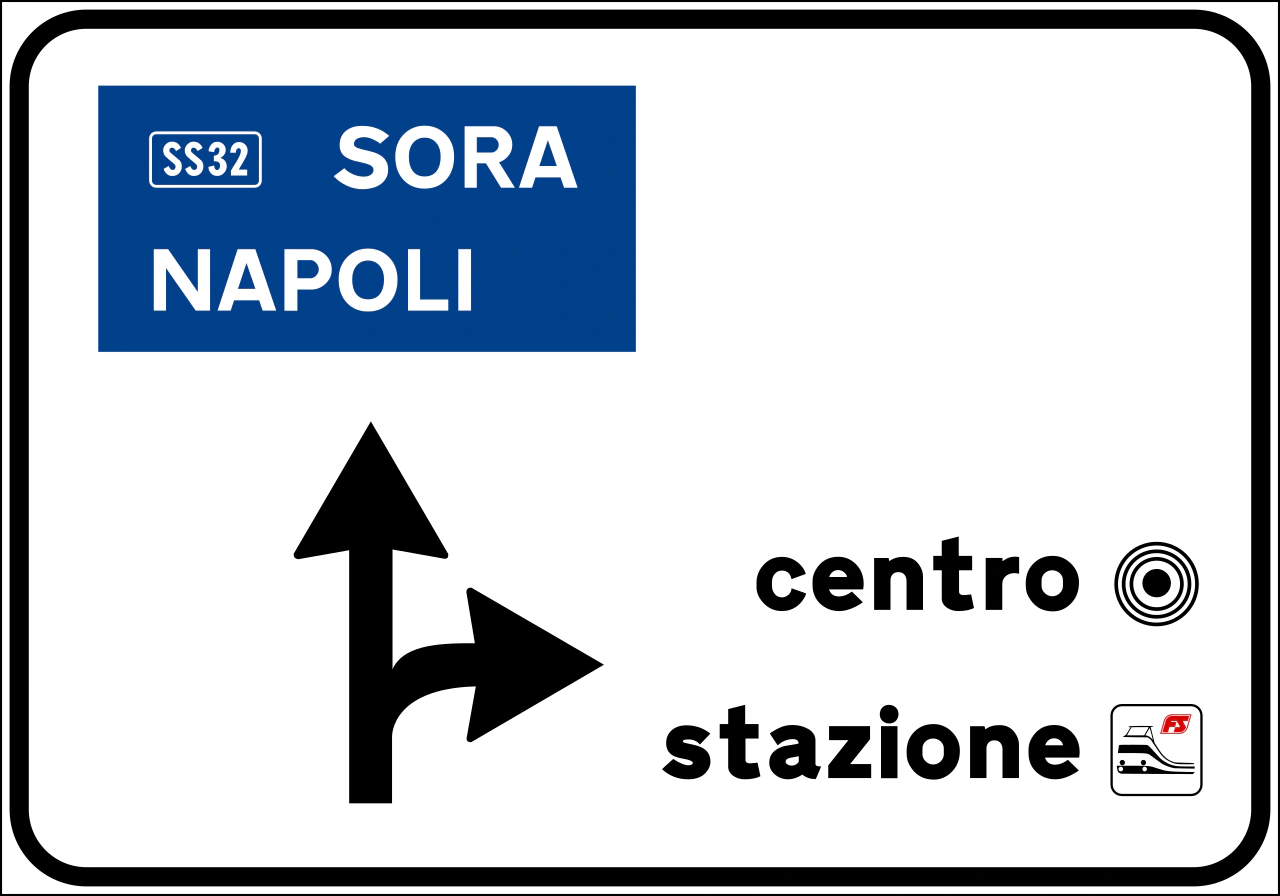
Navigate city streets with the 'Directions in Urban Areas' sign (II.233).
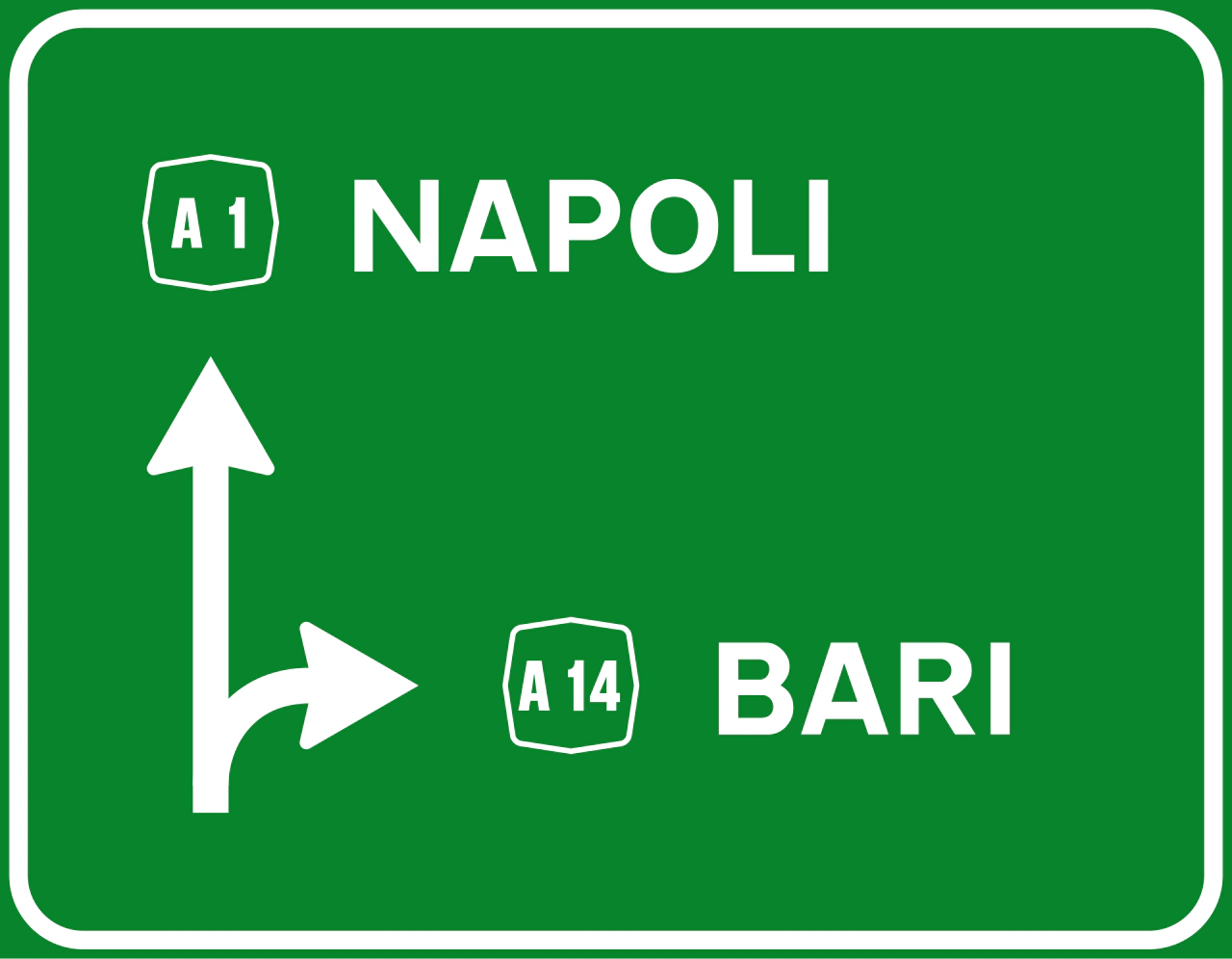
Navigate with Confidence: The 'Directions on a Motorway' Sign (II.235)
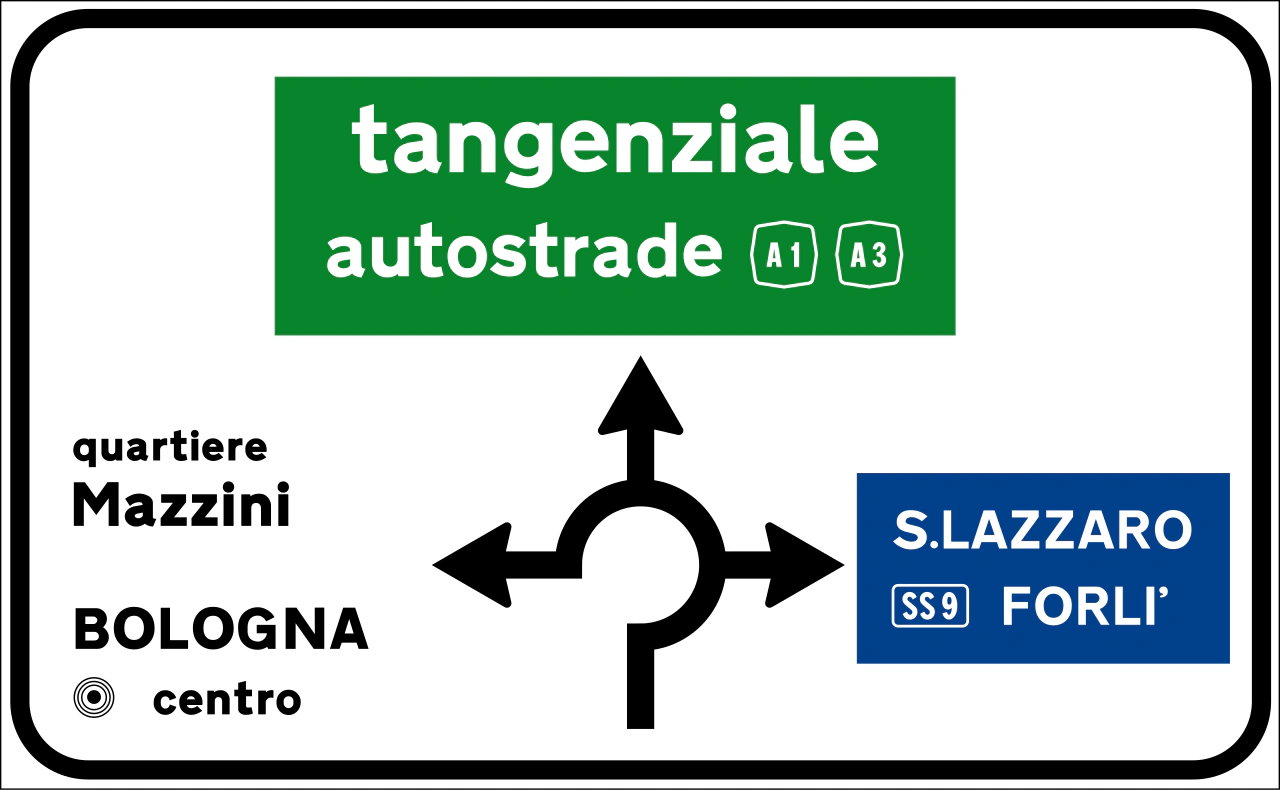
Understand Urban Roundabout Directions, including Motorway Routes with Sign II.238
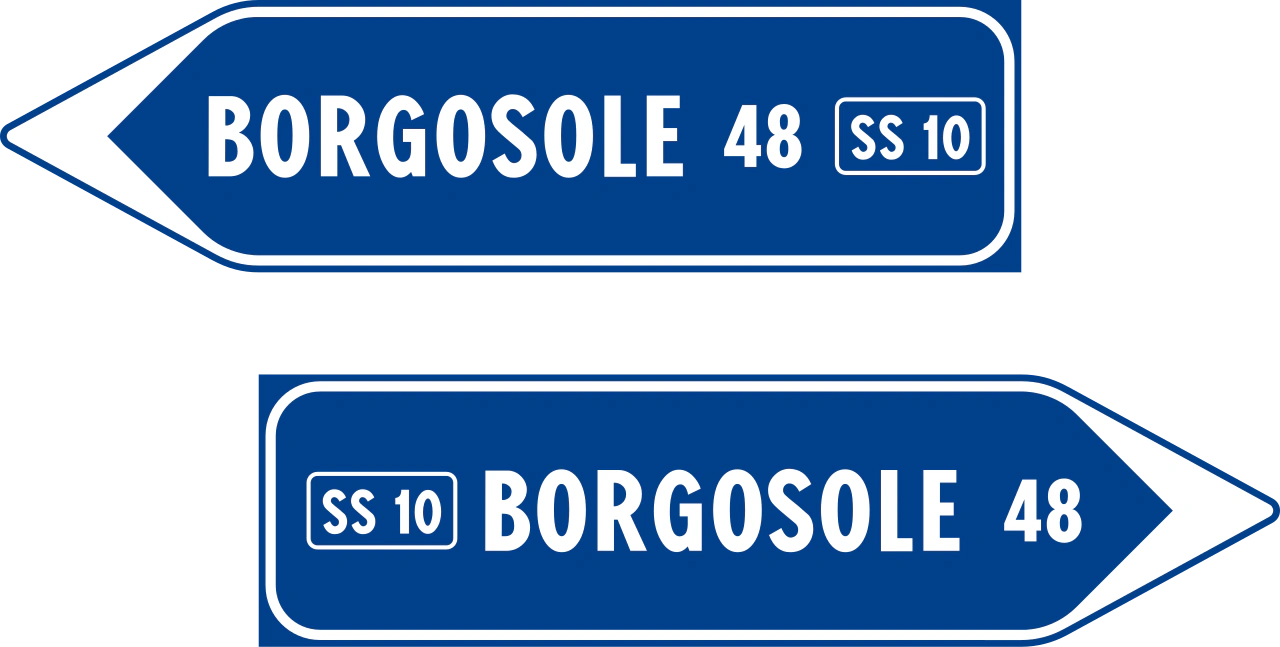
Understand Italy's Primary or Secondary Road Direction Sign (II.249) for smart navigation.
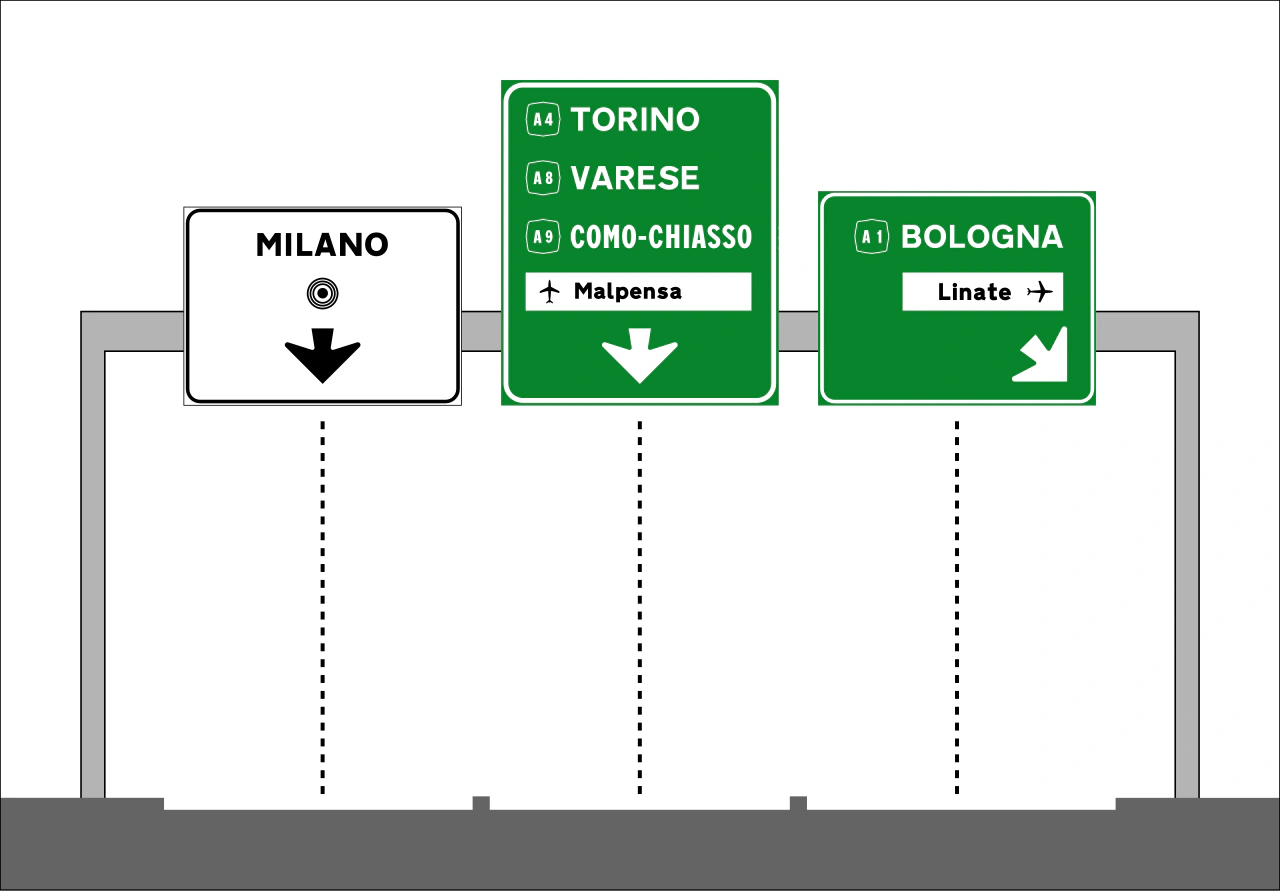
Understand the II.250 Overhead Directional Sign for Route Guidance
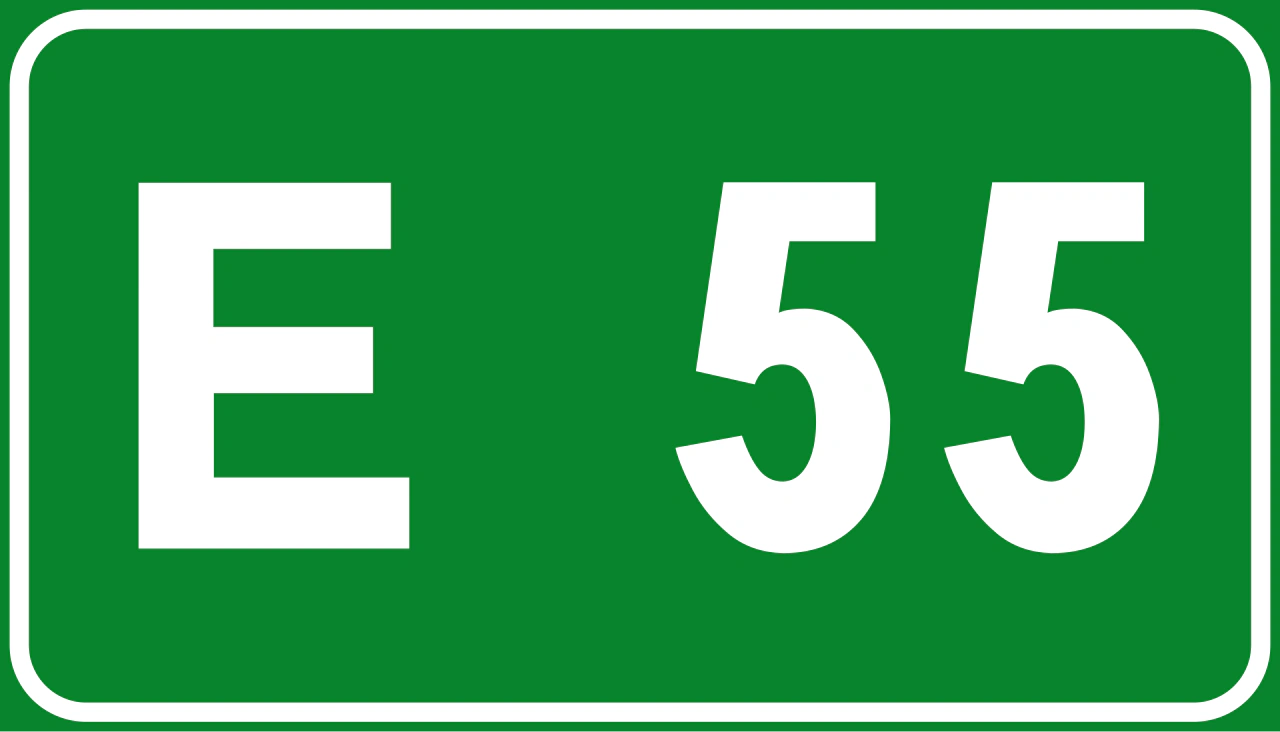
Understand the II.256 European Road Number Sign for Navigation and Route Planning
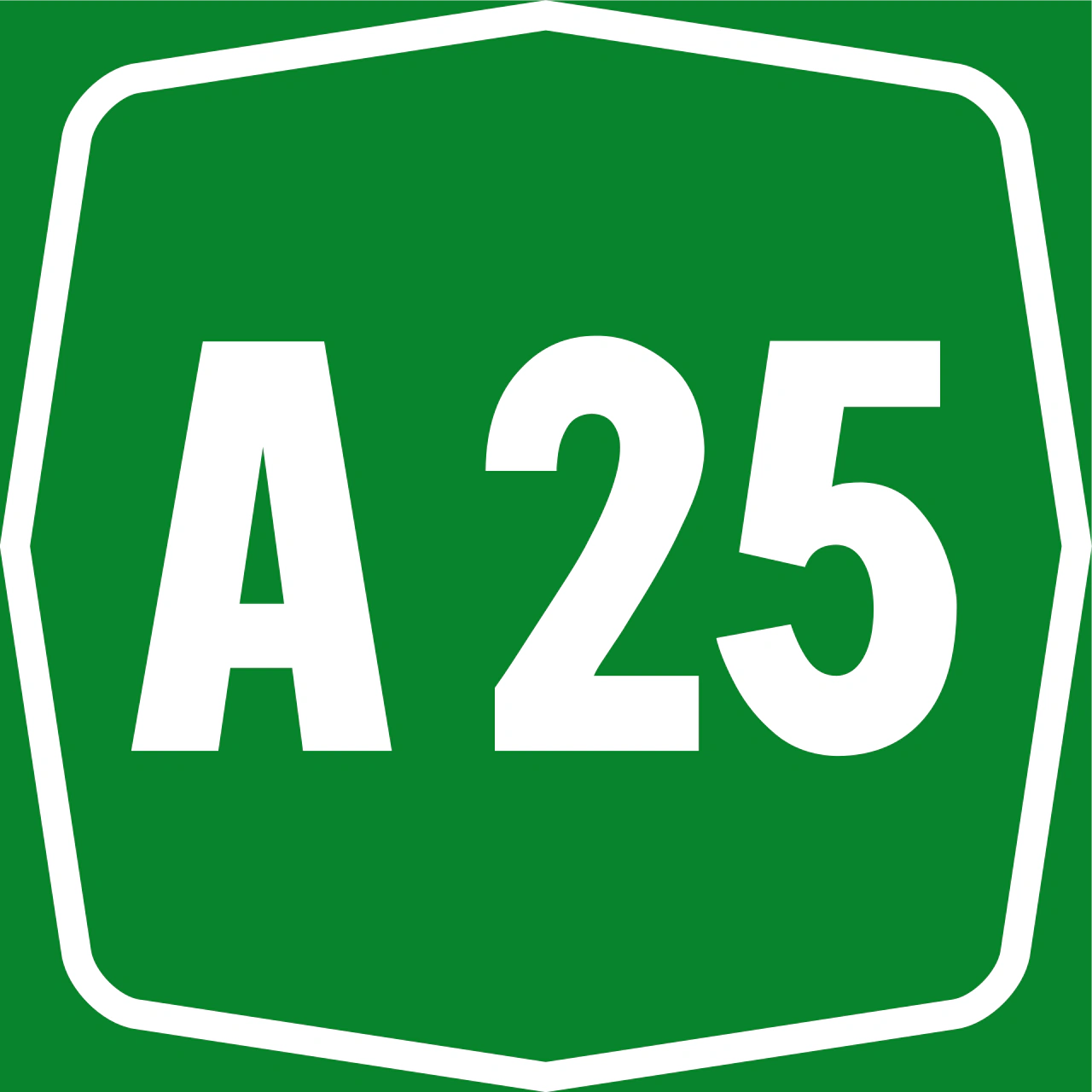
Use the II.257 Motorway Number Sign to Guide Your Journey on Italian Roads
The II.258 State Highway Number Sign: Your Guide to Route Information
Connect visual recognition to the official Italian traffic regulations to improve your performance on the theory test. These targeted resources clarify how specific road signs dictate right-of-way and safety requirements across diverse Italian driving environments.
Master the rules on tyre maintenance and avoid costly penalties on Italian roads.
Navigating Italy's roads requires a thorough understanding of vehicle dimension and weight restrictions, especially for larger vehicles or exceptional loads. This article breaks down the legal limits for height, width, length, and mass, crucial information for the Italian driving theory exam. Learn about the 'trasporto eccezionale' permit system, the roles of ANAS and MIT, and how to interpret tunnel height signs to avoid costly fines and ensure road safety.
Avoid fines and confidently navigate Italian traffic by mastering all stopping and parking prohibitions.
The 2024 reform of the Italian Highway Code, initiated by Law 177/2024, introduces major adjustments to road safety regulations that every driver must know. This overview helps you navigate the new legal landscape, from enhanced administrative sanctions for distraction to updated requirements for micromobility vehicles. Mastering these rules is vital for accurately answering questions in your upcoming theoretical assessment.
This indication sign provides official information for navigation, facilities, services, road type, parking, zones, tunnels, bridges, exits, or lane use. It helps drivers plan early, but it does not override separate speed limits, prohibitions, priority rules, traffic lights, or road markings. For learning, explain both what the sign identifies and what driving choice it helps prepare. Official catalogue code: II.333.
This indication sign provides official information for navigation, facilities, services, road type, parking, zones, tunnels, bridges, exits, or lane use. It helps drivers plan early, but it does not override separate speed limits, prohibitions, priority rules, traffic lights, or road markings. For learning, explain both what the sign identifies and what driving choice it helps prepare. Official catalogue code: II.335.
After reviewing the complete sign list, explore signs by specific categories such as warning, regulatory, or information signs. Understanding signs in context will enhance your recognition and interpretation skills, crucial for the Italian driving theory exam.
All Italian Road Signs List