
Prohibition signs are a fundamental category of traffic signs in Italy, designed to clearly indicate actions that drivers are expressly forbidden to perform. Recognizing and obeying these signs is vital for road safety, efficient traffic management, and avoiding fines. They are easily identifiable by their distinctive visual characteristics, typically a red circle, setting them apart from other sign types.
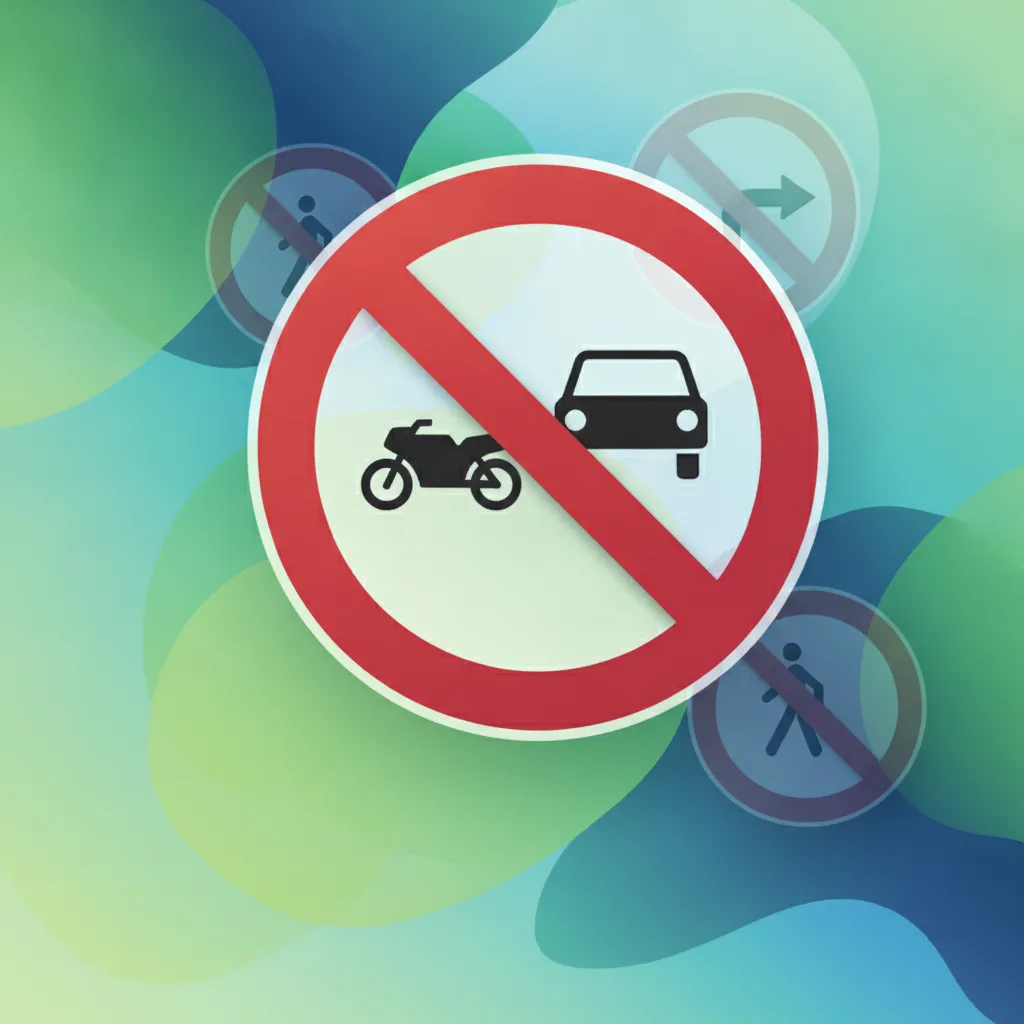
Theory topic content overview
Read the full theory topic guide for Prohibition Signs with structured, easy-to-scan content built for learners in Italy. This detailed section explains the exact rule, meaning, traffic context, comparison points, and exam logic behind this Italian driving theory topic so you can study faster, understand the concept more clearly, and avoid common interpretation mistakes on the theory test.
In Italian driving theory, prohibition signs, known as segnali di divieto, are a critical category of road signs that communicate actions drivers are explicitly forbidden to perform. These signs are a direct command to not do something, ensuring orderly traffic flow and, most importantly, road safety across Italy's diverse road network, from bustling city streets to the autostrade.
They are instantly recognizable by their distinct visual characteristics: typically a red circular border, often with a black symbol on a white background, indicating the specific restriction. This design helps drivers quickly understand that a limitation or ban is in effect.
A thorough understanding of segnali di divieto is non-negotiable for anyone driving in Italy or preparing for the Italian driving theory exam. Here's why:
Prohibition signs dictate specific restrictions that drivers must observe from the point of the sign onwards, or for a specified duration/distance. Their effect typically lasts until revoked by another sign, such as an "End of Prohibition" sign (Fine divieto), or the end of a specific zone (e.g., Fine Zona a Traffico Limitato).
Common categories of prohibition signs in Italy include:
The application of an Italian prohibition sign can be influenced by several factors:
One of the biggest challenges for patente candidates is distinguishing between different sign types and understanding subtle differences in prohibition signs.
Prohibition vs. Mandatory Signs (Segnali di Divieto vs. Segnali di Obbligo):
Prohibition vs. Warning Signs (Segnali di Divieto vs. Segnali di Pericolo):
Divieto di Sosta (No Parking) vs. Divieto di Fermata (No Stopping): This is a crucial distinction in Italy and a frequent exam question:
Divieto di accesso (No Entry) vs. Senso vietato (Do Not Enter):
Correction: The 'No Entry' sign in Italy, the red circle with a white horizontal bar, is officially called SENSO VIETATO (Forbidden Direction/No Entry). It prohibits entry for all vehicles from the direction it is facing. Divieto di Accesso (Prohibition of Access) is a more general concept that can be conveyed by various signs or a combination. For exam purposes, the red circle with white bar is Senso Vietato.
X means X out everything (no stopping, no parking). A single diagonal line means Prohibited Parking (but stopping is allowed).Always treat Italian prohibition signs (segnali di divieto) as absolute commands. Their distinctive red circular shape is a universal warning: "Do Not Do This!" Pay close attention to any accompanying pannelli integrativi for crucial details, and make sure you understand the subtle but vital differences between seemingly similar prohibitions, especially Divieto di sosta and Divieto di fermata. Your vigilance ensures both your safety and your success on the patente exam.
Italian prohibition signs (*segnali di divieto*) are distinguished by their red circular border and communicate actions drivers are expressly forbidden to perform. The critical distinction between *Divieto di Sosta* (No Parking, single diagonal line) and *Divieto di Fermata* (No Stopping, X symbol) is a frequent exam topic, where only the latter prohibits all stopping. These signs typically remain in effect until an *end of prohibition* (*Fine divieto*) sign or the sign's specified zone ends. Supplementary panels (*pannelli integrativi*) often modify the prohibition's scope by specifying time windows, applicable vehicle types, or exceptions such as resident access. Understanding the difference between prohibition signs, mandatory signs (blue circles), and warning signs (red triangles) is essential for both safe driving in Italy and passing the Italian *patente* theory exam.
A short set of high-value points that capture the most important ideas from this theory explanation.
Prohibition signs (*segnali di divieto*) in Italy are identified by their red circular border with a black symbol on white, commanding drivers not to perform specific actions
These signs apply from the point of installation until revoked by a *Fine divieto* sign, another regulatory sign, or the end of the restricted zone
Pannelli integrativi (supplementary panels) below the main sign are critical for understanding exceptions, time restrictions, and vehicle-specific limitations
The effect of prohibition signs extends beyond the sign itself into areas where the restriction naturally applies (such as overtaking bans near bends)
Ignoring prohibition signs in Italy can result in fines (*multe*), penalty points (*decurtazione punti patente*), or vehicle removal under the Codice della Strada
Red circle = prohibition (what you MUST NOT do), Blue circle = mandatory (what you MUST do), Red triangle = warning (be cautious)
*Divieto di Sosta* (diagonal line) allows stopping briefly to drop off passengers but prohibits leaving the vehicle unattended
*Divieto di Fermata* (X symbol) prohibits both stopping and parking entirely, even momentarily
*Senso Vietato* (red circle with white horizontal bar) is the official name for No Entry, prohibiting entry from that direction for all vehicles
Temporary prohibition signs during roadworks have yellow or orange backgrounds and override permanent signs
Confusing *Divieto di Sosta* (single diagonal line) with *Divieto di Fermata* (X), leading to incorrect assumptions about whether brief stops are permitted
Focusing only on the main sign and ignoring *pannelli integrativi* that specify exceptions such as *escluso residenti* or time-limited restrictions
Assuming all red-bordered signs are prohibition signs without distinguishing mandatory blue circles or warning triangles
Misinterpreting vehicle-specific prohibition symbols, failing to recognize that signs may only apply to lorries, motorcycles, or bicycles
Not recognizing *Fine divieto* (end of prohibition) signs, which typically show the original prohibition symbol with a diagonal black line through it
Start with a short, direct summary of Prohibition Signs before reading the full explanation below.
Prohibition signs in Italy are traffic signs that indicate specific actions drivers are not allowed to perform, such as 'No Entry' or 'No Overtaking'. They typically feature a red circular border and a black symbol on a white background, clearly communicating restrictions to maintain safety and traffic order. Understanding these signs is essential for all drivers, especially when preparing for the Italian driving theory test.
Review the most important terms, rule signals, and traffic concepts linked to Prohibition Signs.
Explore related theory topic pages connected to Prohibition Signs and continue with the next useful rule explanation.
See the common search queries learners use when trying to understand Prohibition Signs in Italy.

Ready to deepen your knowledge? Explore specific Italian driving theory topics in detail, review challenging concepts, or test your understanding with practice questions. Build confidence for your official Italian driving licence exam by continuously learning and applying these essential road rules.
Explore Italian Driving TheoryTheory topic content overview
A short set of high-value points that capture the most important ideas from this theory explanation.
Prohibition signs (*segnali di divieto*) in Italy are identified by their red circular border with a black symbol on white, commanding drivers not to perform specific actions
These signs apply from the point of installation until revoked by a *Fine divieto* sign, another regulatory sign, or the end of the restricted zone
Pannelli integrativi (supplementary panels) below the main sign are critical for understanding exceptions, time restrictions, and vehicle-specific limitations
The effect of prohibition signs extends beyond the sign itself into areas where the restriction naturally applies (such as overtaking bans near bends)
Ignoring prohibition signs in Italy can result in fines (*multe*), penalty points (*decurtazione punti patente*), or vehicle removal under the Codice della Strada
Red circle = prohibition (what you MUST NOT do), Blue circle = mandatory (what you MUST do), Red triangle = warning (be cautious)
*Divieto di Sosta* (diagonal line) allows stopping briefly to drop off passengers but prohibits leaving the vehicle unattended
*Divieto di Fermata* (X symbol) prohibits both stopping and parking entirely, even momentarily
*Senso Vietato* (red circle with white horizontal bar) is the official name for No Entry, prohibiting entry from that direction for all vehicles
Temporary prohibition signs during roadworks have yellow or orange backgrounds and override permanent signs
Confusing *Divieto di Sosta* (single diagonal line) with *Divieto di Fermata* (X), leading to incorrect assumptions about whether brief stops are permitted
Focusing only on the main sign and ignoring *pannelli integrativi* that specify exceptions such as *escluso residenti* or time-limited restrictions
Assuming all red-bordered signs are prohibition signs without distinguishing mandatory blue circles or warning triangles
Misinterpreting vehicle-specific prohibition symbols, failing to recognize that signs may only apply to lorries, motorcycles, or bicycles
Not recognizing *Fine divieto* (end of prohibition) signs, which typically show the original prohibition symbol with a diagonal black line through it
Start with a short, direct summary of Prohibition Signs before reading the full explanation below.
Prohibition signs in Italy are traffic signs that indicate specific actions drivers are not allowed to perform, such as 'No Entry' or 'No Overtaking'. They typically feature a red circular border and a black symbol on a white background, clearly communicating restrictions to maintain safety and traffic order. Understanding these signs is essential for all drivers, especially when preparing for the Italian driving theory test.
Review the most important terms, rule signals, and traffic concepts linked to Prohibition Signs.
Explore related theory topic pages connected to Prohibition Signs and continue with the next useful rule explanation.
See the common search queries learners use when trying to understand Prohibition Signs in Italy.
Ready to deepen your knowledge? Explore specific Italian driving theory topics in detail, review challenging concepts, or test your understanding with practice questions. Build confidence for your official Italian driving licence exam by continuously learning and applying these essential road rules.
Explore Italian Driving TheoryUse this exam-focused revision tip to understand how Prohibition Signs is likely to appear in theory questions for learners in Italy. This section helps you identify the most testable part of the rule, avoid common traps, and remember the concept more effectively during Italian driving theory exam preparation.
For the Italian driving theory exam, pay close attention to the specific symbol within a prohibition sign. Many signs have similar red circular borders, but the internal graphic dictates the exact forbidden action (e.g., 'No Overtaking' versus 'No Entry'). Do not confuse them with warning signs, which are triangular, or mandatory signs, which are blue circles.
Read direct answers to the most common learner questions about Prohibition Signs in Italy. This FAQ focuses on rule confusion, practical meaning, comparison with similar concepts, and the exact uncertainties that appear most often in Italian driving theory revision and exam preparation.
The main purpose of prohibition signs in Italy is to inform drivers about actions they are legally forbidden to perform, ensuring road safety, preventing congestion, and maintaining orderly traffic flow.
Most Italian prohibition signs are circular with a red border and a black symbol on a white or blue background. The red border signifies a restriction or prohibition, making them easily distinguishable.
In Italy, 'Senso Vietato' (No Entry) is a prohibition sign that indicates vehicles are not allowed to enter a road or area from the direction the sign is facing. It's often a red circle with a white horizontal bar.
Not always. While many prohibition signs are continuously active, some may be time-restricted (e.g., 'No Parking' during specific hours) or apply only to certain vehicle types. Any exceptions or specific conditions are usually indicated by supplementary panels below the main sign.
Prohibition signs forbid an action (e.g., 'No Overtaking') and are typically red-bordered circles. Mandatory signs (segnali di obbligo), on the other hand, require a specific action or direction (e.g., 'Turn Right Ahead') and are usually blue circles.
Prohibition signs are a key part of the Italian driving theory exam because they represent fundamental rules of the road. Test questions frequently require you to identify these signs and understand the specific restriction they impose, assessing your knowledge of traffic regulations and hazard perception.
Generally, yes, all vehicle types must obey prohibition signs unless a supplementary panel specifies an exemption for certain categories (e.g., 'Except Bicycles' or 'Except Public Transport'). Always read any additional panels carefully.
Start searching now to pinpoint exactly which Italian driving theory topics, road signs, or traffic rules you need to master. Use our advanced filters to build a custom practice session and ensure you're fully prepared for every aspect of your official driving licence exam.