
In Italy, warning signs, known as 'segnali di pericolo', are triangular signs designed to alert drivers to potential dangers or changes in road conditions ahead. Unlike regulatory signs that impose obligations or prohibitions, warning signs serve to prepare you, allowing sufficient time to react appropriately. Understanding these signs is fundamental for safe driving and a key part of the Italian driving theory curriculum.
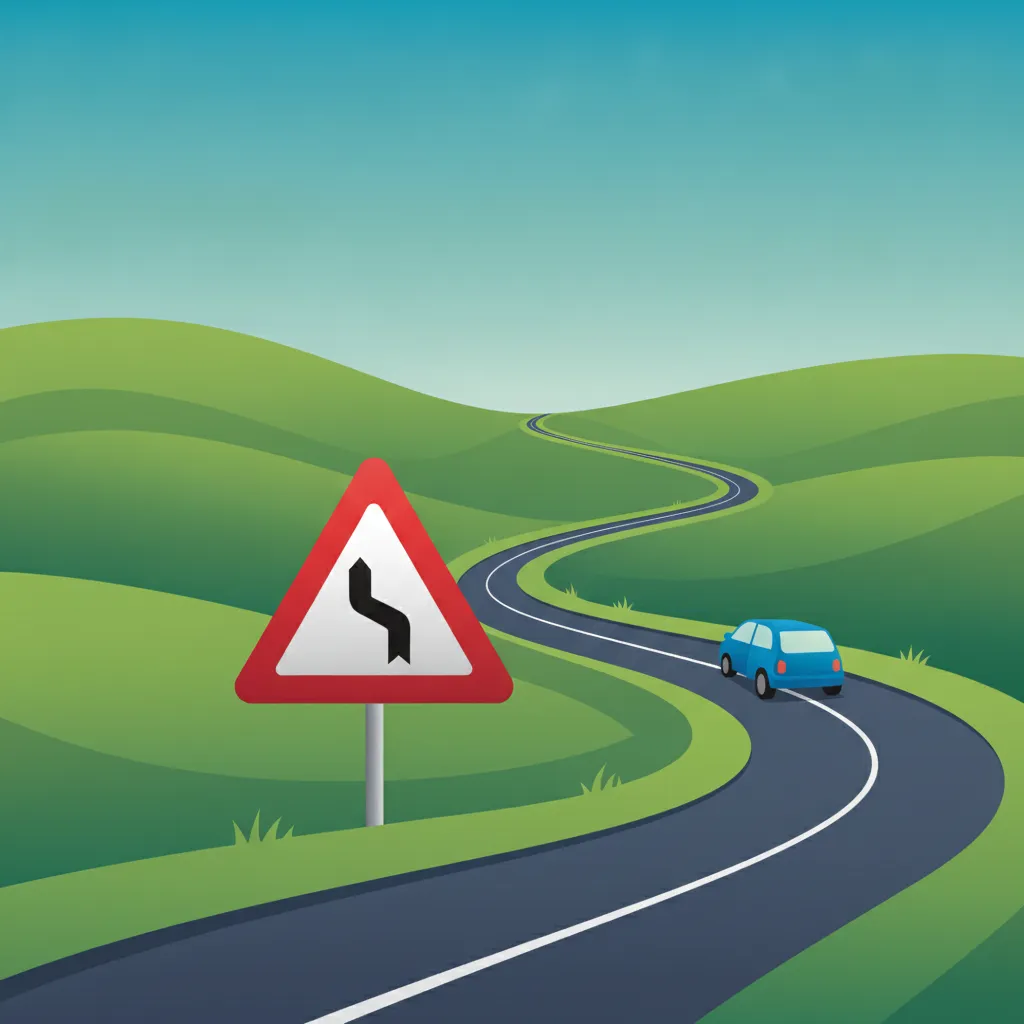
Theory topic content overview
Read the full theory topic guide for Warning Signs with structured, easy-to-scan content built for learners in Italy. This detailed section explains the exact rule, meaning, traffic context, comparison points, and exam logic behind this Italian driving theory topic so you can study faster, understand the concept more clearly, and avoid common interpretation mistakes on the theory test.
In Italy, warning signs, officially known as segnali di pericolo, are a fundamental component of the national road sign system. Their primary purpose is to pre-announce (preannunciare) potential dangers, obstacles, or changes in road conditions ahead. These signs are crucial for enabling drivers to anticipate hazards, adjust their driving behavior proactively, and maintain road safety, which is essential for both daily driving and the Italian driving theory exam.
Characteristically, Italian warning signs are triangular in shape, featuring a distinctive red border, a white background, and a black symbol depicting the specific hazard. This uniform design ensures they are instantly recognizable as alerts, demanding immediate attention from drivers.
Mastering segnali di pericolo is not merely about memorizing symbols; it's about developing the critical skill of hazard anticipation. Italian roads, from bustling urban centers to winding mountain passes (strade di montagna) and high-speed autostrade, present a diverse range of conditions. Without adequate warning, drivers might encounter unexpected situations—like a sharp curve (curva pericolosa), a slippery surface (strada sdrucciolevole), or an unmarked pedestrian crossing—with insufficient time to react safely.
For the Italian driving theory test, understanding warning signs is paramount. Questions frequently assess your ability to:
Proper interpretation ensures you drive defensively, contributing to the safety of all road users, especially vulnerable ones like pedestrians and cyclists, who are common on Italian streets.
The effectiveness of segnali di pericolo lies in their strategic placement and clear messaging:
Italian warning signs cover a broad spectrum of potential road hazards. Here are some common categories and specific examples often encountered:
It's vital for Italian learners to differentiate segnali di pericolo from other sign types:
Learners frequently make these errors regarding segnali di pericolo during their Italian driving practice:
The core message of Italian warning signs (segnali di pericolo) is simple but powerful: anticipate, evaluate, and adapt. These triangular symbols are your early warning system, giving you vital seconds to process information and adjust your driving. For the Italian driving theory exam, remember that these signs preannunciano un pericolo (announce a danger in advance), demanding a thoughtful and proactive response, not just a last-minute reaction. Always interpret the symbol, assess the prevailing road and weather conditions, and prepare to modify your speed, road position, and overall driving approach well before you reach the warned hazard.
Italian warning signs (segnali di pericolo) are triangular, red-bordered signs with black symbols on white backgrounds that pre-announce hazards ahead, giving drivers time to adjust speed and behavior. They are strategically placed at specific distances before dangers—typically 150 meters outside urban areas and 50-25 meters inside—and require three key responses: reduce speed, increase attention, and prepare to react. The signs cover diverse hazard categories including road geometry (dangerous curves, humps, dips), road conditions (slippery surfaces, loose gravel), intersections with priority situations, and vulnerable road users. Unlike regulatory signs that impose legal obligations, warning signs advise caution and prompt driver choice, making them essential for defensive driving and critical for passing the Italian theory exam.
A short set of high-value points that capture the most important ideas from this theory explanation.
Warning signs pre-announce dangers, giving drivers advance notice to anticipate hazards rather than react at the last moment
Italian warning signs are triangular with a red border, white background, and black symbol depicting the specific hazard
Sign placement varies by location: approximately 150 meters outside urban areas, 50-25 meters inside urban areas, and multiple signs on autostrade
Warning signs advise caution but differ from regulatory signs, which impose legal obligations; they prompt driver choice rather than mandate specific behavior
Different categories cover road geometry (curve, dosso, cunetta), road conditions (slippery, loose gravel), intersections, and vulnerable road users
The Italian term preannunciare captures the core purpose: warning signs announce danger in advance, requiring proactive anticipation not last-minute reaction
Outside urban areas: ~150m placement; Inside urban areas: 50-25m placement; On autostrade: multiple signs with distance panels
Yellow background indicates temporary warning signs during roadworks (cantieri stradali); the hazard meaning remains the same
Three required responses to any warning sign: reduce speed, increase attention, and prepare to react appropriately
Temporary signs (fondo giallo) require heightened vigilance due to the changeable nature of roadwork hazards
Waiting until directly at the hazard to react instead of using the advance warning to prepare; the Italian exam heavily tests the concept of anticipazione
Confusing warning signs with regulatory obligations; a dangerous curve sign advises caution but doesn't impose a specific speed limit like a regulatory sign does
Failing to adjust driving for amplified conditions; a slippery road sign requires even greater caution in wet or icy conditions than in dry weather
Not identifying the specific hazard precisely; exam questions require differentiating between similar signs like dosso (hump) and cunetta (dip)
Over-relying on signs alone without using observation skills; drivers must also identify unsigned hazards through visual scanning and common sense
Start with a short, direct summary of Warning Signs before reading the full explanation below.
Warning signs are road signs, typically triangular with a red border and black symbol on a white background, that alert drivers to hazards or changes in road conditions ahead. Their purpose in Italian traffic is to give you advance notice, enabling you to reduce speed, increase attention, or adjust your driving behavior before encountering the danger, which is crucial for safety and exam success.
Review the most important terms, rule signals, and traffic concepts linked to Warning Signs.
Explore related theory topic pages connected to Warning Signs and continue with the next useful rule explanation.
See the common search queries learners use when trying to understand Warning Signs in Italy.

Ready to deepen your knowledge? Explore specific Italian driving theory topics in detail, review challenging concepts, or test your understanding with practice questions. Build confidence for your official Italian driving licence exam by continuously learning and applying these essential road rules.
Explore Italian Driving TheoryTheory topic content overview
A short set of high-value points that capture the most important ideas from this theory explanation.
Warning signs pre-announce dangers, giving drivers advance notice to anticipate hazards rather than react at the last moment
Italian warning signs are triangular with a red border, white background, and black symbol depicting the specific hazard
Sign placement varies by location: approximately 150 meters outside urban areas, 50-25 meters inside urban areas, and multiple signs on autostrade
Warning signs advise caution but differ from regulatory signs, which impose legal obligations; they prompt driver choice rather than mandate specific behavior
Different categories cover road geometry (curve, dosso, cunetta), road conditions (slippery, loose gravel), intersections, and vulnerable road users
The Italian term preannunciare captures the core purpose: warning signs announce danger in advance, requiring proactive anticipation not last-minute reaction
Outside urban areas: ~150m placement; Inside urban areas: 50-25m placement; On autostrade: multiple signs with distance panels
Yellow background indicates temporary warning signs during roadworks (cantieri stradali); the hazard meaning remains the same
Three required responses to any warning sign: reduce speed, increase attention, and prepare to react appropriately
Temporary signs (fondo giallo) require heightened vigilance due to the changeable nature of roadwork hazards
Waiting until directly at the hazard to react instead of using the advance warning to prepare; the Italian exam heavily tests the concept of anticipazione
Confusing warning signs with regulatory obligations; a dangerous curve sign advises caution but doesn't impose a specific speed limit like a regulatory sign does
Failing to adjust driving for amplified conditions; a slippery road sign requires even greater caution in wet or icy conditions than in dry weather
Not identifying the specific hazard precisely; exam questions require differentiating between similar signs like dosso (hump) and cunetta (dip)
Over-relying on signs alone without using observation skills; drivers must also identify unsigned hazards through visual scanning and common sense
Start with a short, direct summary of Warning Signs before reading the full explanation below.
Warning signs are road signs, typically triangular with a red border and black symbol on a white background, that alert drivers to hazards or changes in road conditions ahead. Their purpose in Italian traffic is to give you advance notice, enabling you to reduce speed, increase attention, or adjust your driving behavior before encountering the danger, which is crucial for safety and exam success.
Review the most important terms, rule signals, and traffic concepts linked to Warning Signs.
Explore related theory topic pages connected to Warning Signs and continue with the next useful rule explanation.
See the common search queries learners use when trying to understand Warning Signs in Italy.
Ready to deepen your knowledge? Explore specific Italian driving theory topics in detail, review challenging concepts, or test your understanding with practice questions. Build confidence for your official Italian driving licence exam by continuously learning and applying these essential road rules.
Explore Italian Driving TheoryUse this exam-focused revision tip to understand how Warning Signs is likely to appear in theory questions for learners in Italy. This section helps you identify the most testable part of the rule, avoid common traps, and remember the concept more effectively during Italian driving theory exam preparation.
When studying warning signs for the Italian driving theory exam, pay close attention to the specific symbol on each triangular sign. Many exam questions test your ability to correctly identify the hazard depicted (e.g., 'strada sdrucciolevole' vs. 'presenza di pietrisco'). Remember that a warning sign *preannuncia* (announces in advance) a danger, requiring you to anticipate and adjust, not just react at the last moment.
Read direct answers to the most common learner questions about Warning Signs in Italy. This FAQ focuses on rule confusion, practical meaning, comparison with similar concepts, and the exact uncertainties that appear most often in Italian driving theory revision and exam preparation.
The main purpose of warning signs (segnali di pericolo) in Italy is to alert drivers in advance about potential hazards, obstacles, or specific road conditions ahead. This allows drivers sufficient time to adjust their speed, attention, or driving behavior safely.
Italian warning signs are typically triangular in shape, with a red border, a white or yellow background (white for permanent, yellow for temporary), and a black symbol depicting the specific hazard.
Warning signs are generally placed at a sufficient distance before the actual hazard to give drivers time to react. In Italy, this distance is typically around 150 meters on extra-urban roads, but it can vary based on road type and specific conditions.
Common hazards include sharp curves ('curva pericolosa'), dangerous intersections ('intersezione con diritto di precedenza'), pedestrian crossings ('attraversamento pedonale'), steep descents ('discesa pericolosa'), narrow roads ('strettoia'), or slippery surfaces ('strada sdrucciolevole').
No, warning signs themselves do not impose prohibitions or obligations. Their role is purely informative. However, they indicate a need for caution and often imply that drivers should reduce speed or be prepared to stop, which might be further enforced by other signs or road markings.
Warning signs are very important for the Italian driving theory exam because the test often includes scenarios where you must identify the sign, understand the hazard it represents, and know the correct driving behavior required in response to it. Misinterpreting them can lead to incorrect answers.
Start searching now to pinpoint exactly which Italian driving theory topics, road signs, or traffic rules you need to master. Use our advanced filters to build a custom practice session and ensure you're fully prepared for every aspect of your official driving licence exam.