
Navigate the unique challenges of driving agricultural vehicles in Poland by mastering hazard perception and adapting to diverse environmental conditions. This unit delves into defensive driving strategies, seasonal risks like reduced visibility and harvest traffic, and the critical importance of adjusting your speed and following distance. Learn how to correctly use vehicle lighting and maintain situational awareness to ensure safety on rural roads and beyond.
Browse all lessons that make up Safety, Hazard Perception, and Environmental Conditions. Each lesson focuses on specific topics, learning objectives, and core concepts, helping you build essential knowledge and follow a clear, structured progression toward your study goals in Poland.
This lesson introduces defensive driving principles for rural settings, teaching learners how to continually scan the environment and anticipate potential hazards. It discusses the unique challenges posed by slow-moving agricultural traffic, field entrances, and unpredictable farm equipment maneuvers. The lesson emphasizes proactive decision-making and early brake application to avoid collisions in mixed traffic.
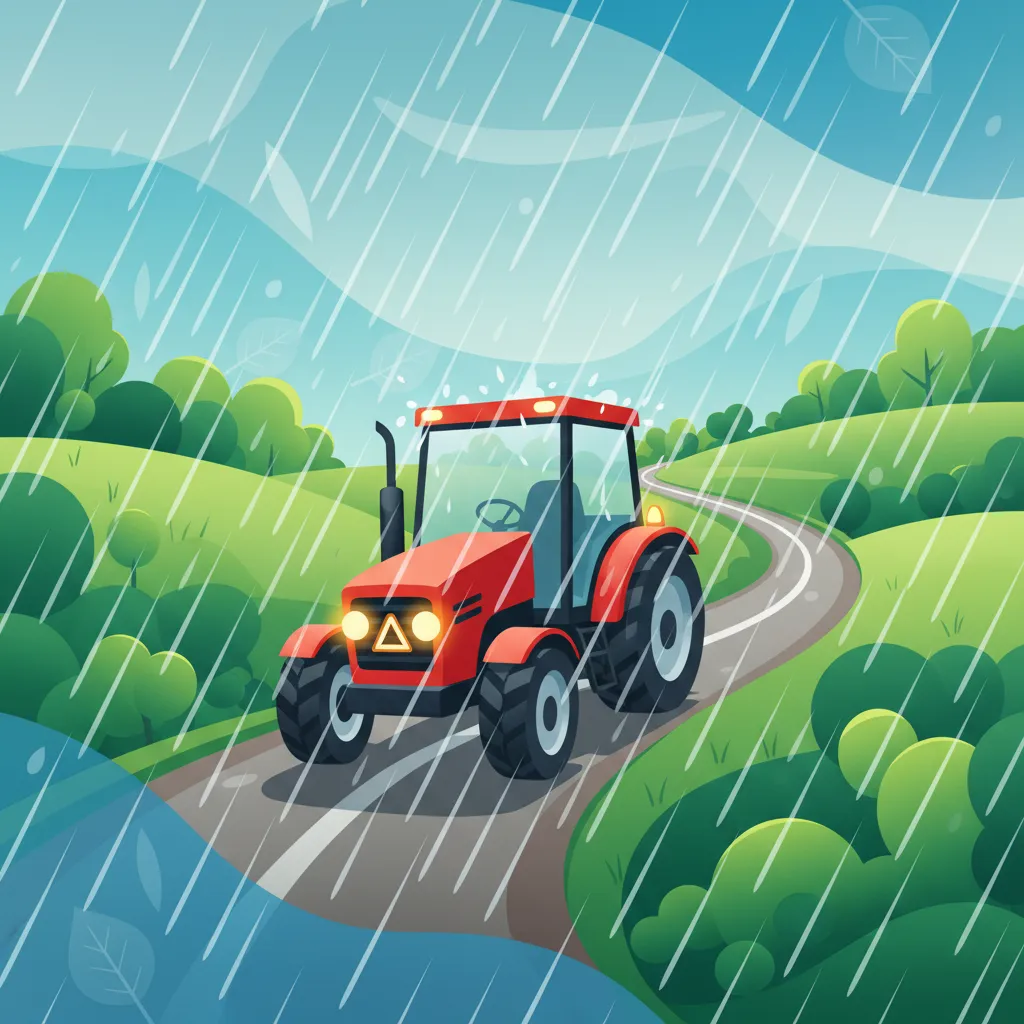
This lesson focuses on the specific hazards introduced by seasonal weather, such as mud, snow, ice, fog, and heavy rain. It explains how these conditions affect traction, braking, and driver visibility, and provides guidance on adjusting speed and using appropriate tires. The lesson also covers the proper use of lights and reflectors to improve visibility in low-light conditions.
This lesson outlines the emergency procedures a tractor driver must follow in case of a breakdown, trailer detachment, or accident. It covers immediate actions such as pulling over safely, deploying warning triangles, and using hazard lights to alert other road users. The lesson details the steps for reporting the incident, providing first aid, and securing the scene to prevent further hazards.
Explore high-intent keywords and long-tail search topics learners use when researching Safety, Hazard Perception, and Environmental Conditions. These terms reflect how people search for reliable study materials, structured explanations, and unit-level theory preparation support in Poland.
Find clear answers to the most common questions learners ask about Safety, Hazard Perception, and Environmental Conditions. Understand how the unit is organized, what learning goals it supports, and how it contributes to your study progression with structured explanations and practical guidance tailored for learners in Poland.
Key seasonal hazards include increased mud and debris on roads during wet periods, reduced visibility due to fog or heavy snow in winter, slippery surfaces from ice or frost, and the presence of slow-moving harvest traffic during autumn. You must adjust your speed, increase following distances, and ensure your lighting is adequate for these conditions.
Adverse weather conditions, such as rain, snow, or ice, significantly reduce tyre grip on the road surface. This dramatically increases your braking distance. It is crucial to anticipate hazards much earlier and apply brakes gently and progressively, while maintaining a much larger safety gap to the vehicle in front.
Agricultural vehicles are often slow-moving, large, and may operate in environments with unpredictable elements like farm entrances, uneven surfaces, and other non-standard road users. Effective hazard perception allows you to anticipate potential dangers, such as other vehicles overtaking unsafely or unexpected obstacles, and react defensively to prevent accidents.
Defensive driving means anticipating potential hazards and making safe decisions to avoid them, rather than just reacting to situations. For tractors, this includes maintaining a safe speed, keeping ample space around your vehicle, being visible to other road users, scanning for potential risks, and planning escape routes if necessary.
Harvest traffic, including combines and tractors carrying produce, can be slow and may leave debris on the road. Be patient, maintain a safe distance, be prepared for sudden stops or swerves, and ensure you have clear visibility before attempting to overtake. Also, be aware of increased traffic congestion around agricultural areas.
You must use your lights to see and be seen. During the day, use dipped headlights or daytime running lights as required. In poor visibility (fog, heavy rain, snow) or at night, use dipped headlights and rear lights. Ensure all lights are clean and functioning correctly, especially when dealing with dust or mud.
All included lessons
Lessons in Safety, Hazard Perception, and Environmental Conditions
See who benefits most from studying Safety, Hazard Perception, and Environmental Conditions. This overview explains how the unit supports different learning needs, what level of knowledge is helpful before starting, and how it fits into the overall study path in Poland.
This unit is essential for all drivers preparing for the Polish Category T driving licence theory exam, particularly those who will operate agricultural vehicles in rural settings. It is especially beneficial for learners who may lack experience with adverse weather conditions or the specific hazards associated with farming activities and seasonal changes on public roads.

Dive into our curated curriculum designed for Polish driving license aspirants. Select a course, follow its guided modules, and master every aspect of traffic rules and road signs necessary to pass your theory exam with confidence.
Polish Theory CurriculumExplore all units and lessons included in this driving theory course.
Dive into our curated curriculum designed for Polish driving license aspirants. Select a course, follow its guided modules, and master every aspect of traffic rules and road signs necessary to pass your theory exam with confidence.
Polish Theory Curriculum