
Understanding the correct use of child restraint systems is a critical component of driving safety and a frequently tested topic in the Portuguese driving theory exam. This guide explains the legal obligations for drivers regarding passengers under 12 years of age and shorter than 135 cm. Learn about the requirements for proper seating, how to avoid common exam traps related to driver responsibility, and why safety compliance is essential for both your test and everyday driving.
Article content overview
Ensuring the safety of passengers is one of the most critical responsibilities a driver takes on when getting behind the wheel. In Portugal, the Código da Estrada sets strict legal requirements for the transportation of children, designed specifically to minimize injury in the event of a collision. For learners preparing for the IMT driving theory exam, understanding these regulations is not just a requirement for passing the test; it is a fundamental aspect of becoming a safe and responsible driver.
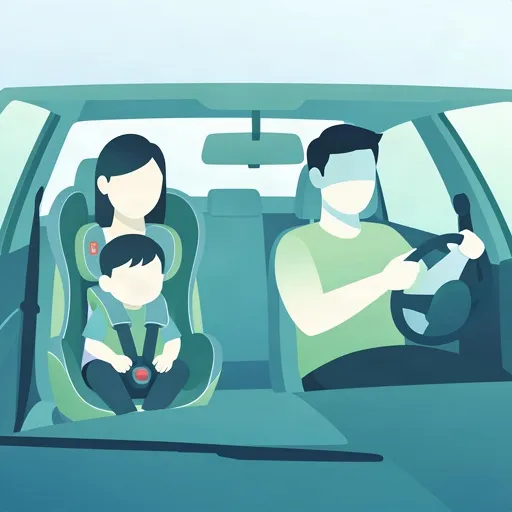
The Portuguese traffic law specifies that children under 12 years of age who are shorter than 135 cm must be transported using an approved child restraint system (often referred to as a car seat or booster seat) that is specifically adapted to their weight and height. These systems are essential because standard seatbelts are designed for adult frames; in an accident, a belt that does not fit a child correctly can cause severe harm rather than preventing it.
The law is very clear on these thresholds. If a child meets both criteria—being under 12 years old AND under 135 cm—the use of a homologated child restraint system is mandatory. Failure to comply with these rules is classified as a grave offence, reflecting the serious risks involved in neglecting passenger safety.
In general, children should always be transported in the rear seats of the vehicle. This is the safest position, as it offers better protection against frontal impacts. However, the Código da Estrada outlines specific exceptions where a child might be permitted to travel in the front passenger seat.
One primary exception involves the use of rear-facing systems for children under 3 years of age. If you are using a rear-facing child seat in the front seat, you must ensure that the vehicle's front passenger airbag is deactivated. Driving with an active airbag while a rear-facing seat is present poses a lethal risk to the child, as the airbag deployment occurs at high velocity and can strike the back of the seat with devastating force.
| Situation | Seating Location Rule |
|---|---|
| Children under 12 & <135 cm | Mandatory rear seat (with exceptions) |
| Children <3 years (rear-facing) | Front seat allowed only if airbag is OFF |
| Children >= 3 years (if no rear belts) | Front seat allowed if no rear bench exists |
| Public Transport (Taxis/TVDE) | Specific exemptions may apply (refer to law) |
A common mistake made during the theory exam involves misinterpreting who is responsible for the safety of children in the vehicle. As the driver, you are legally responsible for ensuring that all passengers are properly restrained, regardless of whether you are the parent or the guardian. If a child is transported without the mandatory restraint system, the driver—not the child or their parents—is the one who faces the administrative penalties and fines.
Many exam questions test this by presenting scenarios where a driver allows a child to sit without a seatbelt or a proper booster. Remember, the "rule of thumb" for the exam is that safety compliance is a non-negotiable duty of the operator of the vehicle. If you encounter a question asking about the age at which a child can sit in the front seat without a restraint, always verify if they have reached the required height and age milestones mandated by the law.
Understanding these rules goes beyond just avoiding a fine or passing your IMT test. The physics of a collision are unforgiving; a child held on a lap is not protected by the adult's seatbelt. Instead, in an impact, the child becomes a projectile, likely striking the interior of the vehicle or being ejected. Using an approved restraint system ensures that the forces of a crash are absorbed by the chair and the vehicle's safety features, rather than the child's body.
Always check that your restraint system is installed according to the manufacturer's instructions. ISOFIX anchorages, when available, provide a more rigid and secure connection than relying solely on the vehicle's seatbelt. Taking the time to properly secure your younger passengers is a hallmark of a mature, conscientious, and defensive driver.
Portugal's Código da Estrada requires that children under 12 years of age AND shorter than 135 cm must be transported in an approved child restraint system homologated for their weight and height. The rear seats are the safest position, with front seat use only permitted under specific conditions such as using a rear-facing system with the airbag deactivated for children under 3. As the driver, you bear full legal responsibility for passenger safety regardless of who else is in the vehicle. Failing to comply with these rules is classified as a grave offence, reflecting the serious injury risks when standard seatbelts are used on undersized passengers.
A short set of high-value points that capture the most important ideas from this article.
Children under 12 years AND shorter than 135 cm must always use an approved, homologated child restraint system
Rear seats are the safest and preferred location for transporting children under these thresholds
Rear-facing seats for children under 3 may only be used in the front if the passenger airbag is deactivated
The driver bears full legal responsibility for ensuring all passengers are properly restrained
Standard seatbelts are designed for adult bodies and can cause injury to children if used without proper restraint
Both conditions must be met: under 12 years of age AND under 135 cm in height for mandatory restraint use
Children under 3 years cannot be transported in any vehicle without safety belts
An active front airbag with a rear-facing seat is a lethal combination that is strictly prohibited
Rear-facing child seats in the front seat require airbag deactivation, not just moving the seat back
The legal liability for child passenger safety rests entirely with the driver, not parents or guardians
Confusing the rule and thinking either age OR height alone triggers the requirement, when both must be met
Assuming children can always sit in the front seat once they reach a certain age without checking height compliance
Forgetting that rear-facing seats require airbag deactivation, not just positional adjustment
Believing the driver is not responsible if a parent or guardian allows a child to travel unrestrained
Assuming approved restraint systems can be any car seat rather than specifically homologated ones meeting EU safety standards
Article content overview
A short set of high-value points that capture the most important ideas from this article.
Children under 12 years AND shorter than 135 cm must always use an approved, homologated child restraint system
Rear seats are the safest and preferred location for transporting children under these thresholds
Rear-facing seats for children under 3 may only be used in the front if the passenger airbag is deactivated
The driver bears full legal responsibility for ensuring all passengers are properly restrained
Standard seatbelts are designed for adult bodies and can cause injury to children if used without proper restraint
Both conditions must be met: under 12 years of age AND under 135 cm in height for mandatory restraint use
Children under 3 years cannot be transported in any vehicle without safety belts
An active front airbag with a rear-facing seat is a lethal combination that is strictly prohibited
Rear-facing child seats in the front seat require airbag deactivation, not just moving the seat back
The legal liability for child passenger safety rests entirely with the driver, not parents or guardians
Confusing the rule and thinking either age OR height alone triggers the requirement, when both must be met
Assuming children can always sit in the front seat once they reach a certain age without checking height compliance
Forgetting that rear-facing seats require airbag deactivation, not just positional adjustment
Believing the driver is not responsible if a parent or guardian allows a child to travel unrestrained
Assuming approved restraint systems can be any car seat rather than specifically homologated ones meeting EU safety standards
Explore related topics, search based questions, and concepts that learners often look up when studying Child Restraint Laws in Portugal. These themes reflect real search intent and help you understand how this topic connects to wider driving theory knowledge in Portugal.
Find clear and practical answers to common questions learners often have about Child Restraint Laws in Portugal. This section helps explain difficult points, remove confusion, and reinforce the key driving theory concepts that matter for learners in Portugal.
Children under 12 years old and shorter than 135 cm must be secured by an approved, homologated child restraint system adapted to their height and weight.
Generally, children under 12 must travel in the back seat. Exceptions exist if the vehicle has no rear seat or no seatbelts, or if using a rear-facing restraint for a child under 3, provided the front airbag is deactivated.
The driver is legally responsible for ensuring that all passengers, including children, are properly restrained according to the law. Fines and penalties are applied to the driver.
No, it is strictly prohibited and extremely dangerous. A child must always be secured in an appropriate restraint system as per the Código da Estrada.
If you haven't found what you're looking for, use our powerful article search to explore related topics, refine your understanding of Portuguese road rules, or discover new insights for your IMT driving exam preparation. Continue building your knowledge effectively.