
Ensuring the safety of children is a fundamental responsibility of every driver under Portuguese law. This guide breaks down the specific requirements of the Código da Estrada, covering the necessity of approved restraint systems for children under 12 years and 135 cm tall, and provides critical safety warnings regarding airbag use and the physical dangers of improper restraint.
Article content overview
Ensuring the safety of our youngest passengers is a fundamental responsibility for every driver on Portuguese roads. According to the Código da Estrada, the legal framework governing road safety in Portugal, transporting children is strictly regulated to minimize the risk of serious injury during a collision. Whether you are a parent or a driver providing transport for minors, understanding the requirements for approved restraint systems and passenger positioning is vital, both for daily road safety and for success in your IMT theory exam.
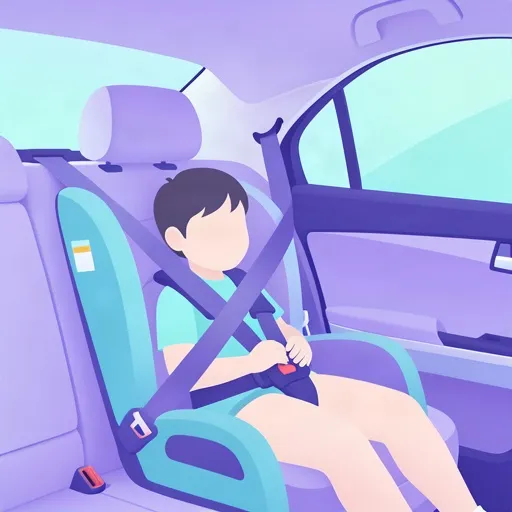
In Portugal, the law is explicit regarding how children must be secured in a vehicle. Any child under 12 years of age who is less than 135 cm in height must be secured by a homologated restraint system adapted to their specific size and weight. This is not merely a suggestion; it is a legal requirement designed to ensure that seatbelts, which are designed for adult physiology, provide effective protection rather than causing harm in the event of an accident.
Failure to secure a child properly is considered a serious traffic offense. It is important to remember that as the driver, you are legally responsible for ensuring that all passengers under the age of 18 are correctly restrained. This applies to your own children as well as any other minors traveling in your vehicle.
Never hold a child on your lap while in a moving vehicle. Even at low speeds, the forces generated in a collision make it physically impossible to hold onto a child. In an accident, the child can be crushed between your body and the interior of the car or thrown from the vehicle.
The general rule within the Código da Estrada is that children should always be transported in the rear seats of the vehicle. This is the safest area of the car, providing a buffer zone in the event of a frontal collision. However, there are specific, limited circumstances where transport in the front seat is legally permitted, provided the child is restrained by an appropriate system.
One of the most critical aspects of child safety that frequently appears in IMT theory exams concerns the interaction between child restraint systems and vehicle airbags. If you are using a rear-facing child seat in the front passenger position, you must ensure that the frontal passenger airbag is deactivated.
If the airbag is active, it can inflate with tremendous force during a crash, striking the rear-facing seat and causing catastrophic injuries to the child. Modern vehicles often provide a manual switch or a digital menu setting to deactivate this airbag; always verify the status before starting your journey if you must transport a child in the front.
To help you prepare for your theory test, the following table summarizes the core regulations for child transport in Portugal:
| Situation | Requirement |
|---|---|
| Child < 12 years and < 135 cm | Mandatory homologated restraint system. |
| Rear-facing seat (front seat) | Airbag must be deactivated. |
| Standard location | Always use rear seats whenever possible. |
| Vehicles without seatbelts | Prohibition of children under 3 years. |
Portuguese law requires all children under 12 years of age and under 135 cm in height to be secured in a homologated restraint system appropriate to their size and weight, with the driver bearing full legal responsibility for compliance. Children should be transported in rear seats as the safest option, with front seat transport permitted only under specific limited conditions such as absent rear seats or when other restrained children already occupy them. A critical safety rule mandates deactivating the frontal passenger airbag whenever a rear-facing child seat is used in the front position, as an inflating airbag can cause catastrophic injuries. These rules are regularly tested in the IMT theory examination and non-compliance constitutes a serious traffic offense carrying significant penalties.
A short set of high-value points that capture the most important ideas from this article.
Children under 12 years AND under 135 cm must always use a homologated child restraint system adapted to their size and weight.
The driver bears full legal responsibility for ensuring all passengers under 18 are correctly restrained in the vehicle.
Rear seats are the preferred and safest location for transporting children whenever possible.
Rear-facing child seats placed in the front passenger seat require the frontal airbag to be deactivated before travel.
Never hold a child on your lap in a moving vehicle; collision forces make it physically impossible to retain them safely.
The dual threshold rule: both age under 12 AND height under 135 cm must be met for mandatory child seat requirement.
Front seat exceptions: permitted only when vehicle lacks rear seats, rear seats lack seatbelts, or when transporting children aged 3+ alongside other restrained children.
Airbag deactivation is mandatory whenever a rear-facing child seat is installed in the front passenger position.
Only children aged 3 and above may occupy the front seat under the permitted exceptions.
Unrestrained children become dangerous projectiles in a collision, posing fatal risks to themselves and others.
Assuming only age or only height matters; both criteria must be satisfied for the child seat requirement to apply.
Forgetting to check and deactivate the passenger airbag before placing a rear-facing seat in the front.
Believing a child can be held on an adult's lap for short journeys or at low speeds, which is extremely dangerous.
Assuming rear seats are always prohibited for children without verifying if exceptions apply.
Not realizing the driver is legally responsible even for other people's children in the vehicle.
Article content overview
A short set of high-value points that capture the most important ideas from this article.
Children under 12 years AND under 135 cm must always use a homologated child restraint system adapted to their size and weight.
The driver bears full legal responsibility for ensuring all passengers under 18 are correctly restrained in the vehicle.
Rear seats are the preferred and safest location for transporting children whenever possible.
Rear-facing child seats placed in the front passenger seat require the frontal airbag to be deactivated before travel.
Never hold a child on your lap in a moving vehicle; collision forces make it physically impossible to retain them safely.
The dual threshold rule: both age under 12 AND height under 135 cm must be met for mandatory child seat requirement.
Front seat exceptions: permitted only when vehicle lacks rear seats, rear seats lack seatbelts, or when transporting children aged 3+ alongside other restrained children.
Airbag deactivation is mandatory whenever a rear-facing child seat is installed in the front passenger position.
Only children aged 3 and above may occupy the front seat under the permitted exceptions.
Unrestrained children become dangerous projectiles in a collision, posing fatal risks to themselves and others.
Assuming only age or only height matters; both criteria must be satisfied for the child seat requirement to apply.
Forgetting to check and deactivate the passenger airbag before placing a rear-facing seat in the front.
Believing a child can be held on an adult's lap for short journeys or at low speeds, which is extremely dangerous.
Assuming rear seats are always prohibited for children without verifying if exceptions apply.
Not realizing the driver is legally responsible even for other people's children in the vehicle.
Explore related topics, search based questions, and concepts that learners often look up when studying Child Restraint Rules in Portugal. These themes reflect real search intent and help you understand how this topic connects to wider driving theory knowledge in Portugal.
Find clear and practical answers to common questions learners often have about Child Restraint Rules in Portugal. This section helps explain difficult points, remove confusion, and reinforce the key driving theory concepts that matter for learners in Portugal.
Children under 12 years of age who are less than 135 cm tall must be secured by an approved child restraint system adapted to their size and weight.
Generally, children under 12 must travel in the rear seats. Exceptions exist for children under 3 in rear-facing seats (provided the airbag is deactivated) or if the vehicle lacks rear seatbelts or rear seats entirely.
Yes, it is extremely dangerous and illegal. In the event of a collision, a child held on a lap can become a projectile or be crushed, regardless of the adult's strength or protective instincts.
Transporting children without the mandatory, approved restraint system is considered a serious traffic offense in Portugal, leading to fines and potential point deductions for the driver.
If you haven't found what you're looking for, use our powerful article search to explore related topics, refine your understanding of Portuguese road rules, or discover new insights for your IMT driving exam preparation. Continue building your knowledge effectively.