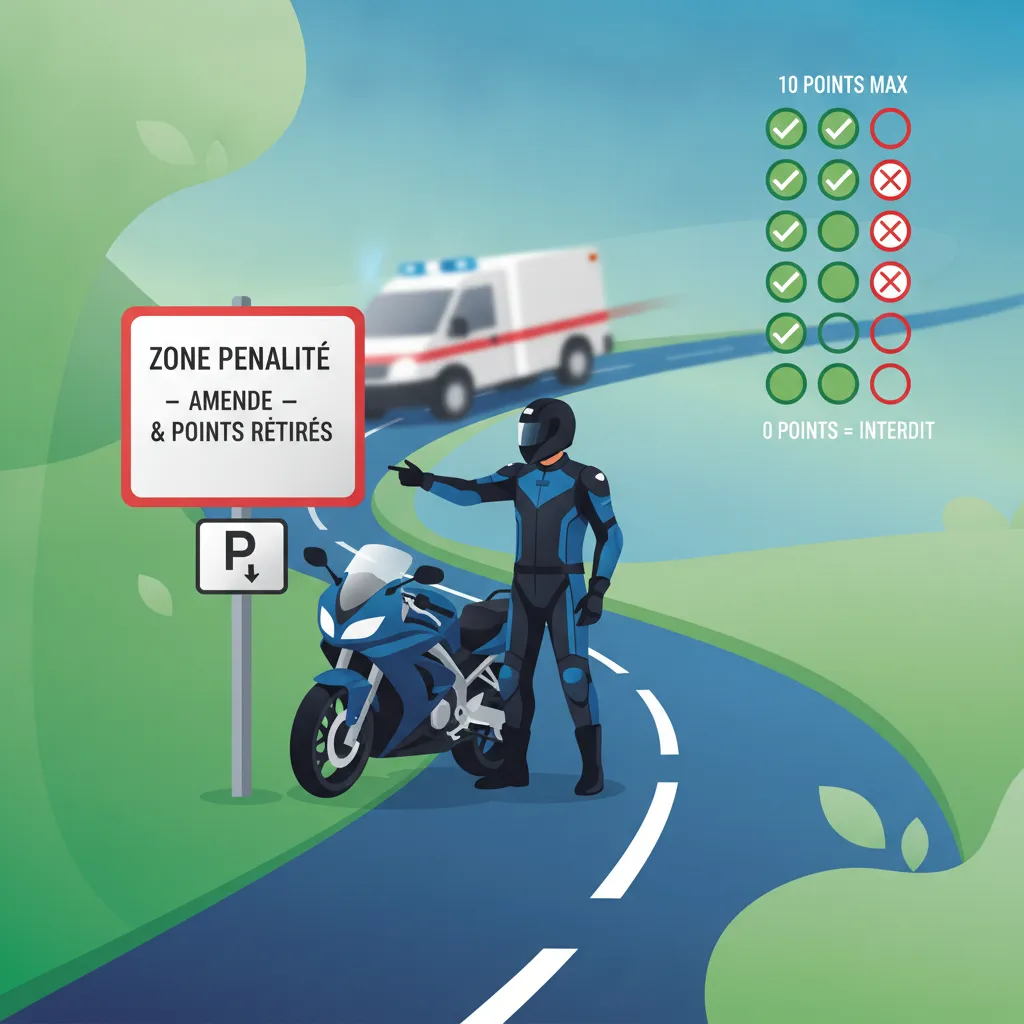
This final unit provides critical knowledge on human factors, legal consequences, and emergency management required for all motorcycle riders in France. You will learn to navigate the complexities of road safety, accident response, and the French points-based penalty system to ensure you are fully prepared for the road and your theory exam.
Browse all lessons that make up Risk Behaviour, Emergencies, Penalties and Defensive Riding. Each lesson focuses on specific topics, learning objectives, and core concepts, helping you build essential knowledge and follow a clear, structured progression toward your study goals in France.
This lesson details the physiological impacts of alcohol and narcotics on key riding skills, including visual tracking and motor coordination. You will study the exact blood alcohol concentration (BAC) limits allowed in France, noting the stricter limits applied to novice riders. Finally, the lesson outlines the severe legal consequences of driving under the influence, ranging from heavy administrative fines to direct license revocation.
This lesson addresses the critical psychological elements that often lead to hazardous riding decisions, especially among newer motorcyclists. You will examine the dangers of overestimating your personal control limits and downplaying common road risks during group rides. The lesson provides practical strategies to resist peer pressure, maintain your own safe pace, and prioritize professional defensive habits over showing off.
This lesson provides a clear, step-by-step procedure to follow if you witness or are involved in a traffic accident in France. You will learn how to secure the scene using your mandatory hazard triangle and yellow vest to prevent secondary collisions. Crucially, it explains how to contact emergency services via 112 and covers basic first-aid rules, including the absolute ban on removing an injured rider's helmet unless necessary.
This lesson details the structure of the French points-based licensing system, explaining how points are deducted for specific traffic violations. You will learn about the special probation rules for novice licenses and the process of recovering lost points through safety courses. It also covers the fine structures, warning that ignoring basic safety laws like speed limits can lead to immediate vehicle impoundment and license suspension.
This final lesson integrates all course concepts into a single, cohesive approach to defensive riding and continuous risk assessment. You will study how to maintain a high-mileage visual lead, continuously scanning the road ahead for warning signs of conflict. By learning to assume that other motorists may not see you, you will build the proactive slowing habits and situational awareness needed to remain safe throughout your riding life.
Explore high-intent keywords and long-tail search topics learners use when researching Risk Behaviour, Emergencies, Penalties and Defensive Riding. These terms reflect how people search for reliable study materials, structured explanations, and unit-level theory preparation support in France.
Find clear answers to the most common questions learners ask about Risk Behaviour, Emergencies, Penalties and Defensive Riding. Understand how the unit is organized, what learning goals it supports, and how it contributes to your study progression with structured explanations and practical guidance tailored for learners in France.
Newly licensed riders in France start with a probationary licence containing 6 points. Points are deducted for various traffic violations; if you lose them, you must attend a mandatory road safety training course to recover them.
Your priority is to ensure the safety of yourself and others by securing the scene and alerting emergency services. Use the 112 emergency number, provide clear location details, and never move an injured person unless there is immediate danger of fire or secondary collision.
Defensive riding is crucial because motorcycles lack a protective shell, making riders highly vulnerable. By anticipating the mistakes of others and maintaining a safety buffer, you significantly reduce the risk of accidents caused by visibility issues or rapid traffic changes.
French law has a zero-tolerance approach for novice riders and strict limits for all others. Alcohol and drugs severely impair cognitive processing, reaction times, and physical coordination, which are essential for safe balance and emergency braking.
All included lessons
Lessons in Risk Behaviour, Emergencies, Penalties and Defensive Riding
See who benefits most from studying Risk Behaviour, Emergencies, Penalties and Defensive Riding. This overview explains how the unit supports different learning needs, what level of knowledge is helpful before starting, and how it fits into the overall study path in France.
This unit is designed for all candidates preparing for the A, A1, or A2 motorcycle theory exam in France. It is equally beneficial for experienced riders looking to refresh their knowledge of current road safety regulations and legal responsibilities.

Begin your structured journey towards passing the French ETG exam by exploring our comprehensive driving theory curriculum. Each course is designed to guide you through the Code de la route, ensuring you gain the knowledge and confidence for exam success. Find your ideal study path now.
Explore Theory CurriculumExplore all units and lessons included in this driving theory course.
Begin your structured journey towards passing the French ETG exam by exploring our comprehensive driving theory curriculum. Each course is designed to guide you through the Code de la route, ensuring you gain the knowledge and confidence for exam success. Find your ideal study path now.
Explore Theory Curriculum