
This lesson provides a critical guide to handling traffic accidents in France, ensuring you are prepared to react calmly and safely. You will learn the correct protocols for securing the scene, contacting emergency services, and providing essential assistance while following official Code de la route guidelines.
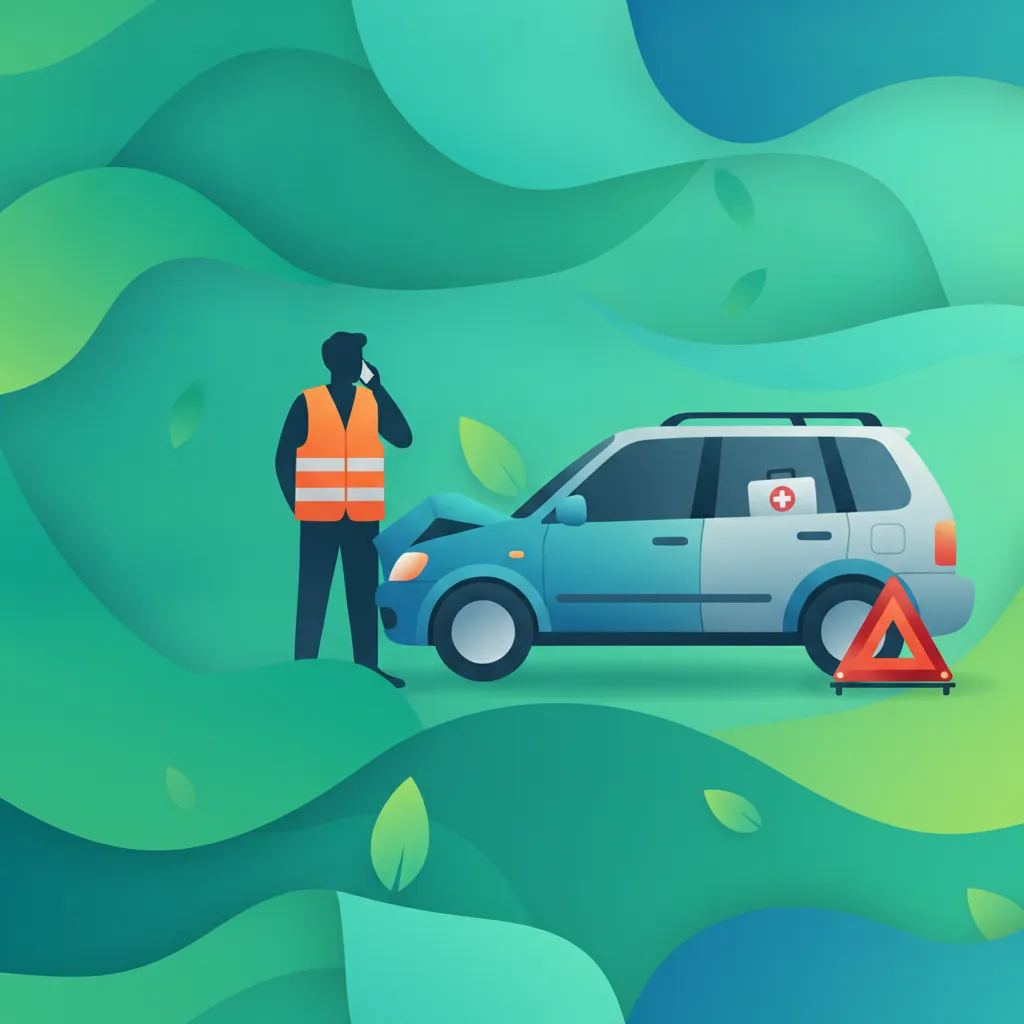
Lesson content overview
French traffic law places a heavy emphasis on civic responsibility, safety, and rapid response. Under the Code de la route, if you witness or are involved in a road traffic accident, you are legally and morally obligated to act. Doing so correctly can mean the difference between life and death—especially for highly vulnerable road users like motorcyclists.
This lesson covers the exact, step-by-step procedures required by French law and first-aid protocols to secure an accident scene, contact the emergency services, and administer life-saving care while preventing secondary collisions.
In France, first-aid training and road safety regulations structure emergency response around a strict three-step sequence known as the PAS Protocol. This acronym stands for:
This sequence is chronological and non-negotiable. You must never skip step 1 to perform step 3. Attempting to rescue a victim on an unsecured road puts your own life at risk and can trigger a massive secondary collision, worsening the emergency.
Protégez (Protect): Establish a safety perimeter to ensure no further collisions occur. Put on your high-visibility gear, use warning signals, and position yourself and others in a safe zone.
Alerter (Alert): Contact the appropriate French or European emergency services, providing precise details about the location, vehicle types, and number of casualties.
Secourir (Rescue): Administer basic first-aid measures to the victims within your level of competence, focusing on airway security and severe bleeding control.
Securing the accident site is your absolute priority. Roadways are highly dynamic and dangerous environments; a stopped vehicle or a fallen rider can easily be struck by oncoming traffic, particularly at night, in poor weather, or on high-speed roads.
Under French law, motorcycle riders (Categories A, A1, and A2) must have access to specific safety gear.
Safety First on Motorways (Autoroutes): On French motorways, never walk along the carriageway to place a warning triangle. The speed of traffic makes this extremely lethal. Instead, prioritize immediate evacuation behind the safety barrier (glissière de sécurité) and run hazard warning lights on any involved vehicles.
When an accident occurs, take the following steps immediately:
Once the scene is secured and there is no immediate danger of a secondary crash, you must immediately contact the emergency services. Knowing who to call and what information to provide determines how quickly professional medical assistance arrives.
In France, you can reach help through several toll-free, 24/7 numbers. You can dial these numbers from any functional mobile phone, even if it is locked, lacks a SIM card, or has no active credit.
| Emergency Number | Primary Agency | Best Used For |
|---|---|---|
| 112 | European Emergency | Any road accident, foreign language speakers, cross-border areas |
| 15 | SAMU | Severe medical emergencies, unconscious victims, severe bleeding |
| 18 | Sapeurs-Pompiers | Traffic accidents, fires, trapped victims, general rescue |
| 17 | Police / Gendarmerie | Traffic flow management, securing road hazards, hit-and-runs |
Do not panic when calling. Speak clearly, listen to the operator's questions, and never hang up until they explicitly instruct you to do so. You should be prepared to provide:
Once you have secured the scene and called the emergency services, you should tend to the victims. The main goal of bystander first aid is to keep the victim alive and prevent their condition from worsening; it is not to treat them.
Before touching a victim, perform a quick sensory check:
The Rule of Non-Movement: Never move an injured person unless there is an immediate, uncontrollable threat to their life (such as an active fire, threat of explosion, or a collapsing structure). Moving a victim with spinal damage can cause permanent, irreversible paralysis.
For motorcycle theory candidates, the rules surrounding helmet removal are among the most critical safety concepts on the theoretical exam.
It is strictly prohibited for an untrained bystander or fellow motorist to remove an injured rider's helmet after an accident, unless the rider's airway is completely obstructed and they are unable to breathe.
When a motorcyclist crashes, the cervical spine (the neck portion of the spine) absorbs a massive amount of kinetic energy. The helmet acts as a rigid stabilizer for the skull.
If you attempt to pull a helmet off a victim's head:
A helmet should only be removed by:
Operating a motor vehicle in France carries significant legal responsibilities when things go wrong. Ignorance of these laws can result in severe criminal penalties.
Under Article 223-6 of the French Penal Code, failing to assist someone facing a clear, immediate danger is a criminal offense. If you witness a road accident and simply drive past without securing the scene, calling emergency services, or offering help (provided doing so does not put your own life at risk), you can be prosecuted.
If you are involved in an accident (whether you caused it or not) and you fail to stop, attempting to escape civil or criminal liability, you commit a délit de fuite (Article L231-1 of the French Highway Code).
For accidents involving only material damage, drivers must complete a joint accident report (constat amiable). This document records the facts, vehicle positions, and driver details for insurance purposes.
This lesson teaches the mandatory three-step PAS Protocol for responding to traffic accidents in France: first protect the scene using hazard lights and a high-visibility vest, then alert emergency services with precise location details, and finally provide basic first aid within your competence level. Critically, motorcyclists must never have their helmets removed by untrained bystanders due to the severe risk of cervical spine injury; only professional rescuers using specialized techniques may do so. French law requires witnesses and participants to assist under penalty of criminal prosecution, with fines up to €75,000 and prison sentences for non-assistance or hit-and-run offenses. The 112 European emergency number works across the EU and can dispatch appropriate services regardless of language barriers.
A short set of high-value points that capture the most important learning from this lesson.
The PAS Protocol (Protéger-Alerter-Secourir) must be followed in strict chronological order; never skip securing the scene to provide first aid.
Motorcyclists must carry and wear a CE-certified high-visibility vest before dismounting during emergencies; hazard triangles must be placed at least 30 metres behind the accident.
Use 112 for any road accident or if unsure; 15 (SAMU) for severe medical emergencies; 18 (Sapeurs-Pompiers) for accidents, fires, and trapped victims; 17 (Police) for traffic management and hit-and-runs.
Never remove an injured motorcyclist's helmet unless they have a completely blocked airway and you must perform CPR; cervical spine injuries make improper removal potentially fatal.
Under Article 223-6 of the French Penal Code, failing to assist someone in immediate danger carries up to 5 years imprisonment and a €75,000 fine.
Explore all units and lessons included in this driving theory course.
Triangle placement: minimum 30 metres behind the obstacle on the roadway side; place it before a blind bend or hill crest to warn drivers before they lose visibility.
On French autoroutes, never walk on the carriageway to place a triangle; evacuate behind the safety barrier (glissière de sécurité) immediately.
Never give food or drink to an injured victim; surgery with a full stomach carries severe anesthesia risks.
If a victim is unconscious but breathing normally and is a motorcyclist, keep them still and monitor breathing; do not move them or remove their helmet.
Never hang up on emergency services until the operator explicitly tells you to do so; provide precise location using road numbers, direction, and kilometer markers.
Placing the warning triangle too close to the vehicle (e.g., 5 metres instead of the required 30 metres), giving oncoming drivers insufficient reaction time.
Walking along the motorway shoulder to position a triangle, exposing yourself to lethal high-speed traffic instead of staying behind safety barriers.
Dialing 17 (Police) for a victim in cardiac arrest instead of 112 or 15, which delays medical dispatch and reduces survival chances.
Giving water or food to injured victims, which can cause life-threatening complications if emergency surgery becomes necessary.
Providing vague location information like 'somewhere on a country road' instead of using road signs, kilometer markers, or GPS coordinates, delaying rescue teams.
Lesson content overview
A short set of high-value points that capture the most important learning from this lesson.
The PAS Protocol (Protéger-Alerter-Secourir) must be followed in strict chronological order; never skip securing the scene to provide first aid.
Motorcyclists must carry and wear a CE-certified high-visibility vest before dismounting during emergencies; hazard triangles must be placed at least 30 metres behind the accident.
Use 112 for any road accident or if unsure; 15 (SAMU) for severe medical emergencies; 18 (Sapeurs-Pompiers) for accidents, fires, and trapped victims; 17 (Police) for traffic management and hit-and-runs.
Never remove an injured motorcyclist's helmet unless they have a completely blocked airway and you must perform CPR; cervical spine injuries make improper removal potentially fatal.
Under Article 223-6 of the French Penal Code, failing to assist someone in immediate danger carries up to 5 years imprisonment and a €75,000 fine.
Explore all units and lessons included in this driving theory course.
Triangle placement: minimum 30 metres behind the obstacle on the roadway side; place it before a blind bend or hill crest to warn drivers before they lose visibility.
On French autoroutes, never walk on the carriageway to place a triangle; evacuate behind the safety barrier (glissière de sécurité) immediately.
Never give food or drink to an injured victim; surgery with a full stomach carries severe anesthesia risks.
If a victim is unconscious but breathing normally and is a motorcyclist, keep them still and monitor breathing; do not move them or remove their helmet.
Never hang up on emergency services until the operator explicitly tells you to do so; provide precise location using road numbers, direction, and kilometer markers.
Placing the warning triangle too close to the vehicle (e.g., 5 metres instead of the required 30 metres), giving oncoming drivers insufficient reaction time.
Walking along the motorway shoulder to position a triangle, exposing yourself to lethal high-speed traffic instead of staying behind safety barriers.
Dialing 17 (Police) for a victim in cardiac arrest instead of 112 or 15, which delays medical dispatch and reduces survival chances.
Giving water or food to injured victims, which can cause life-threatening complications if emergency surgery becomes necessary.
Providing vague location information like 'somewhere on a country road' instead of using road signs, kilometer markers, or GPS coordinates, delaying rescue teams.
Explore search topics learners often look for when studying Accident Response: First Aid, Emergency Numbers, and Reporting. These topics reflect common questions about road rules, driving situations, safety guidance, and lesson level theory preparation for learners in France.
Browse additional driving theory lessons that cover connected traffic rules, road signs, and common driving situations related to this topic. Improve your understanding of how different rules interact across everyday traffic scenarios.
Understand the criminal and civil implications of road accidents under French law. This lesson clarifies the legal definitions of hit and run, failure to assist a person in danger, and the mandatory requirements for official accident reporting to ensure you remain compliant with the Code de la route.

In this lesson, drivers will learn the essential steps to take following an accident involving a goods vehicle. The content covers contacting emergency services via 112, providing first aid, and safely positioning the vehicle to protect other road users. Learners will be instructed on documenting the incident, notifying insurance providers, and fulfilling legal obligations for accident reporting, including gathering witness statements.
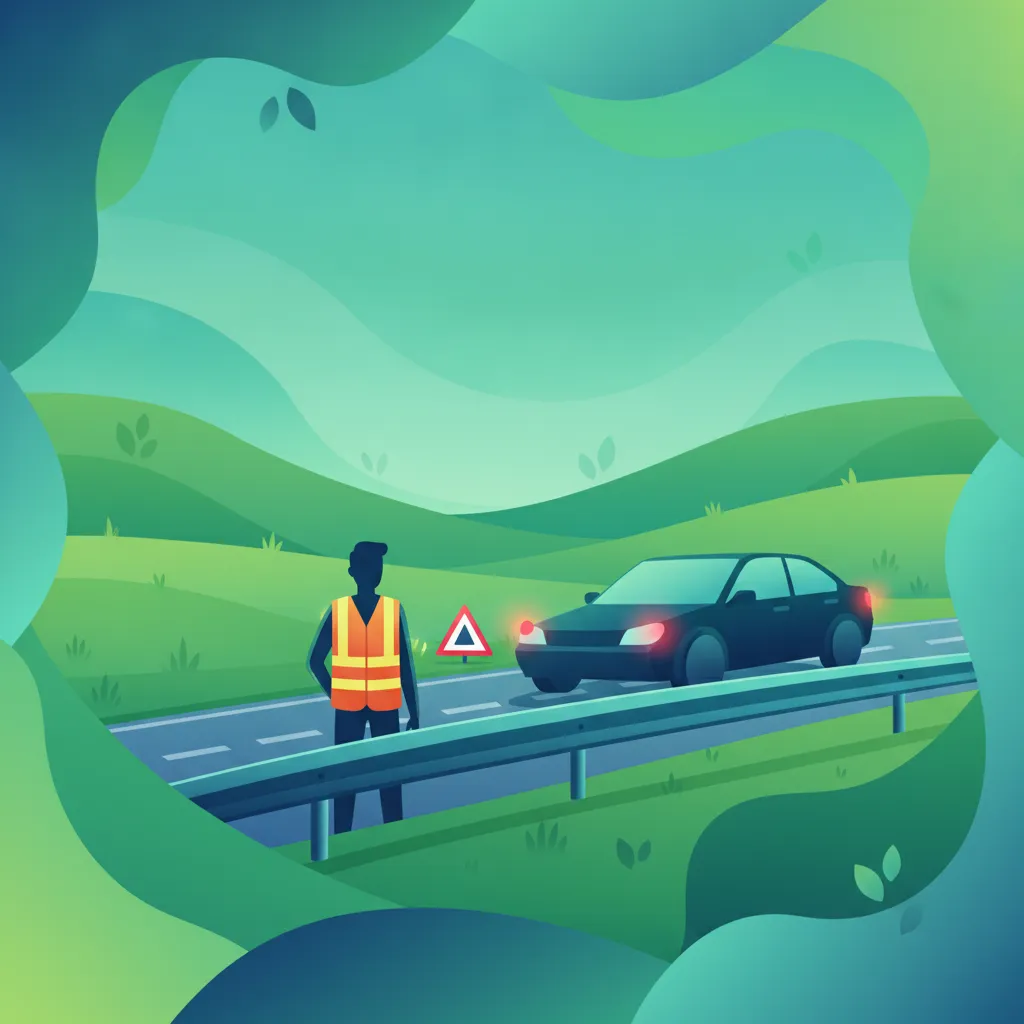
Learners will learn the immediate steps to take following an accident or vehicle breakdown, including contacting emergency services (112), providing first aid, and securing the accident scene. The lesson also covers the necessary administrative actions such as completing the official French 'constat amiable' and reporting the incident to insurance providers. Knowing these procedures ensures that riders respond effectively in emergencies.

Operating a passenger vehicle in France requires strict compliance with dynamic safety laws and maintenance rules. This lesson explains your duty of care toward other road users, mandatory child restraint and seatbelt laws, and strict prohibitions on phone use while driving. You will also learn about the required periodic technical vehicle inspections (controle technique) and third-party insurance mandates.
This lesson delves into the dual aspects of civil and criminal liability that professional goods vehicle drivers face in the event of traffic violations or accidents. Learners will explore the range of penalties, including fines, licence suspension, vehicle seizure, and potential imprisonment for severe offenses under French law. The discussion also covers the impact of negligence on insurance coverage, the accrual of penalty points, and the broader consequences for both the driver and their employer.

Learners explore the specific responsibilities that accompany operating a small, exposed vehicle, emphasizing the need for heightened defensive driving techniques under French law. The lesson stresses the importance of maintaining visibility and predictability, adhering strictly to the Code de la route, and understanding the dynamics of sharing the road safely. By internalizing these responsibilities, riders can significantly reduce risks and contribute to a safer traffic environment for all users.
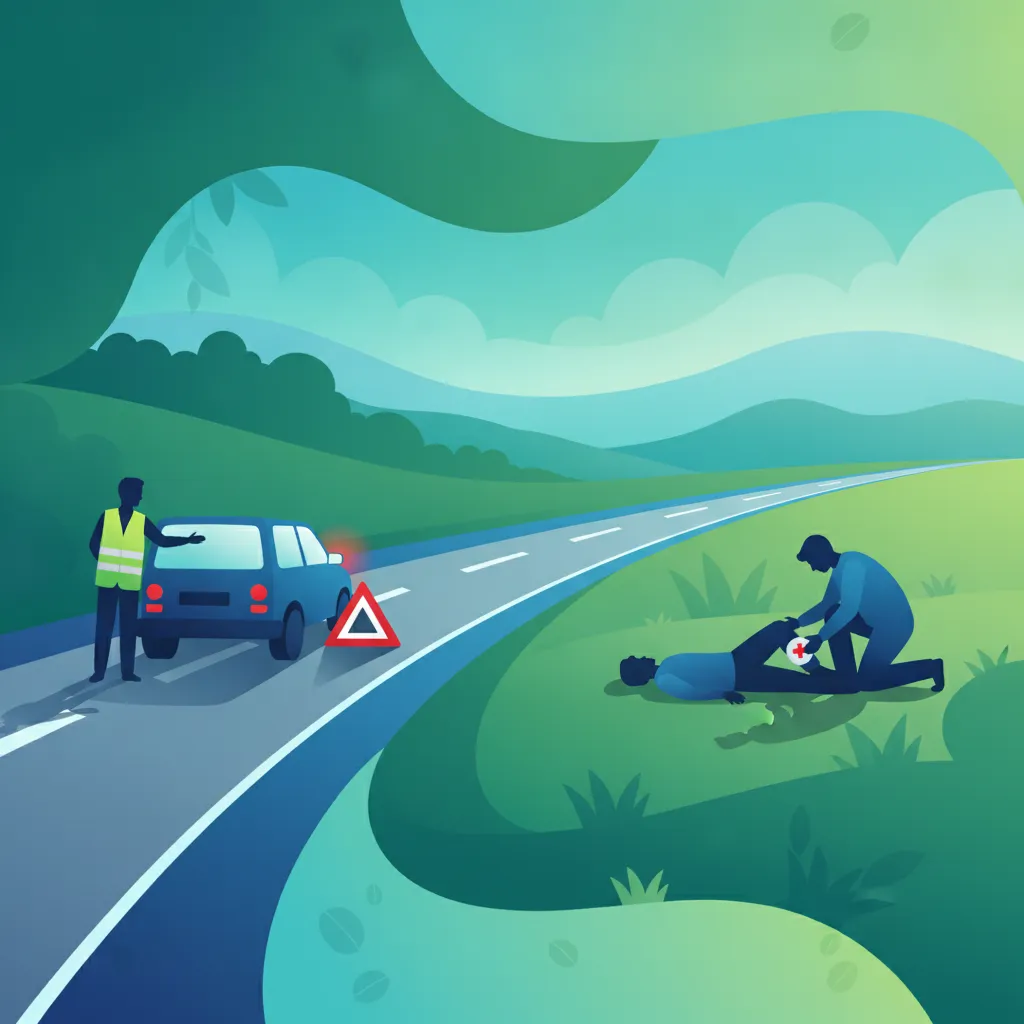
When encountering or participating in a road accident, following a strict safety protocol protects lives and prevents secondary crashes. This lesson covers the essential 'Protect, Alert, Rescue' (PAS) protocol, which involves wearing a yellow high-visibility vest, placing a warning triangle, and calling 112. You will also learn basic first-aid practices, how to secure victims, and the correct way to fill out an accident report.

This lesson examines the legal consequences, heavy monetary fines, and driver's licence point deductions resulting from traffic and transport safety violations. Learners will study specific infractions such as driving over legal hours, vehicle overloading, and ignoring passenger seatbelt laws. Understanding the strict enforcement systems in France ensures drivers actively avoid risky habits that could end their careers.
Learn how to apply defensive riding techniques to proactively identify and mitigate hazards on the road. This lesson provides a theoretical framework for continuous risk management, helping you develop the situational awareness needed to anticipate dangerous traffic scenarios before they escalate into emergency situations on the road.

This final lesson integrates all course concepts into a single, cohesive approach to defensive riding and continuous risk assessment. You will study how to maintain a high-mileage visual lead, continuously scanning the road ahead for warning signs of conflict. By learning to assume that other motorists may not see you, you will build the proactive slowing habits and situational awareness needed to remain safe throughout your riding life.

This lesson teaches you how to establish and preserve a dynamic cushion of safety on all sides of your motorcycle. You will study how to apply the 'two-second rule' to keep a safe following distance, extending it to three or more seconds in adverse weather. Additionally, you will discover how to manage tailgating motorists safely without resorting to dangerous speed increases, ensuring you always maintain a clear escape route.

This lesson addresses the critical psychological elements that often lead to hazardous riding decisions, especially among newer motorcyclists. You will examine the dangers of overestimating your personal control limits and downplaying common road risks during group rides. The lesson provides practical strategies to resist peer pressure, maintain your own safe pace, and prioritize professional defensive habits over showing off.

Learners will develop the ability to anticipate potential hazards on the road, enhancing reaction times and defensive riding strategies. The lesson emphasizes constant scanning, early identification of threats such as sudden stops, pedestrian crossings, or unexpected lane changes, and appropriate response measures. By cultivating proactive risk assessment, AM riders can significantly reduce accident likelihood.

This lesson teaches riders how to approach and cross both controlled and uncontrolled intersections in urban settings. You will practice the 'scanning cycle' technique to identify cross-traffic hazards and manage your defensive line of sight around physical obstructions. The lesson also highlights the critical importance of early signaling and positioning to ensure that turning passenger cars do not violate your safety zone.

This lesson teaches critical emergency response maneuvers to help you avoid sudden, unexpected obstacles on the roadway. You will learn the exact step-by-step process of executing a rapid, controlled swerve, keeping braking forces separate from steering inputs to prevent a slide. Additionally, the lesson addresses the psychological challenge of 'target fixation' and provides techniques to keep your eyes focused on your clear escape route.
Find clear answers to common questions learners have about Accident Response: First Aid, Emergency Numbers, and Reporting. Learn how the lesson is structured, which driving theory objectives it supports, and how it fits into the overall learning path of units and curriculum progression in France. These explanations help you understand key concepts, lesson flow, and exam focused study goals.
Removing a helmet can cause permanent spinal cord injury if the rider has suffered neck trauma. In the French theory exam, you must always choose the option that keeps the helmet on unless there is an immediate danger like fire or cardiac arrest.
You must use your high-visibility vest immediately for your own safety. If safe to do so, place your hazard warning triangle at a sufficient distance to warn approaching traffic, and switch on your hazard lights.
112 is the European emergency number, accessible free of charge from any mobile phone even without a network or SIM card. It connects you to emergency services who will coordinate the police, fire, or medical response.
Yes, under the Code de la route, you have a legal obligation to assist if you can do so without endangering yourself. This is known as the duty to assist a person in danger.
Ready to focus your study? Use the practice search to find exactly the French driving theory questions you need for the Code de la route and permis de conduire ETG. Refine your knowledge on specific topics or challenging rules to boost your confidence and exam readiness.