This unit focuses on the critical physics and legal requirements for operating heavy goods vehicles. You will learn to manage speed effectively, calculate stopping distances based on load and gradients, and understand the vital role of safety systems like ABS and ESP.
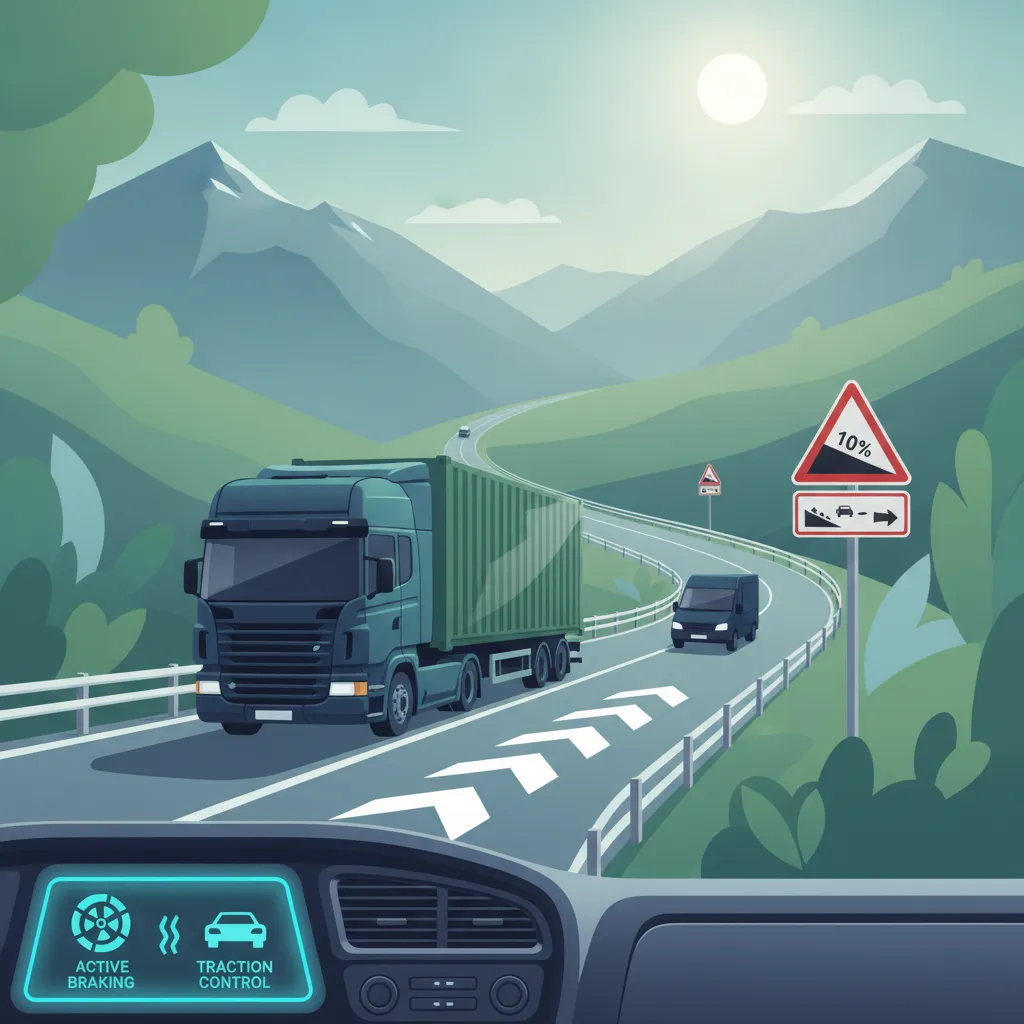
Browse all lessons that make up Speed, Braking, Following Distance, Gradients and Heavy Vehicle Control. Each lesson focuses on specific topics, learning objectives, and core concepts, helping you build essential knowledge and follow a clear, structured progression toward your study goals in France.
In this lesson, drivers will learn the specific speed limits that apply to goods vehicles across different road types in France, including urban areas, rural roads, and motorways. The content covers the differences between speed limit signs for heavy vehicles and standard passenger cars, the legal basis for these limits, and the importance of speed adaptation based on vehicle category and load. Learners will also be introduced to speed enforcement methods used in France, such as radar and speed cameras.
This lesson focuses on the various braking systems used in goods vehicles, including air brakes, hydraulic brakes, and advanced safety systems such as ABS and ESP. Learners will understand how these systems function, their impact on braking performance, and the importance of regular brake inspection and maintenance. The content also addresses brake wear, brake fade, and how these factors affect stopping distances, especially under heavy load conditions.
In this lesson, drivers will learn how to calculate safe following distances based on vehicle speed, load, road conditions, and traffic density. The content explains the components of total stopping distance, including reaction time and braking distance, and how these are affected by factors such as wet road surfaces and heavy loads. Learners will also be introduced to French road safety guidelines for maintaining appropriate gaps to ensure sufficient time to react.
This lesson covers techniques for managing gradients while driving goods vehicles, focusing on downhill control, engine braking, and appropriate gear selection. Learners will understand how load distribution and vehicle dynamics affect descending performance and the importance of avoiding brake overheating. The content includes practical advice on using hill start assistance systems and maintaining safe speeds on steep slopes.
In this lesson, learners will explore the functions and benefits of ABS and ESP systems in goods vehicles, including how they enhance braking stability and prevent skids. The content explains the technology behind these systems, their activation conditions, and their role in emergency braking scenarios. Learners will also be introduced to the maintenance requirements and limitations of ABS and ESP in heavy vehicle operation.
Explore high-intent keywords and long-tail search topics learners use when researching Speed, Braking, Following Distance, Gradients and Heavy Vehicle Control. These terms reflect how people search for reliable study materials, structured explanations, and unit-level theory preparation support in France.
Find clear answers to the most common questions learners ask about Speed, Braking, Following Distance, Gradients and Heavy Vehicle Control. Understand how the unit is organized, what learning goals it supports, and how it contributes to your study progression with structured explanations and practical guidance tailored for learners in France.
Heavy goods vehicles have significantly greater mass and momentum, which drastically increases the physical distance required to come to a complete stop. You must maintain extra space to account for this inertia and the potential for a delayed reaction from the braking system.
On downhill gradients, gravity works with the vehicle's momentum, increasing the workload on the braking system and risking brake fade due to heat buildup. You must use engine braking and maintain a lower gear to assist the friction brakes safely.
No, these electronic systems are supplementary safety aids designed to assist in emergency control, not to replace safe driving practices. You must still adjust your speed and distance according to road conditions, load, and visibility at all times.
Yes, heavy goods vehicles are subject to specific speed restrictions based on their Total Authorized Loaded Weight (PTAC) and the type of road. It is essential to memorize these limits as they are a frequent topic in the professional theory exam.
All included lessons
Lessons in Speed, Braking, Following Distance, Gradients and Heavy Vehicle Control
See who benefits most from studying Speed, Braking, Following Distance, Gradients and Heavy Vehicle Control. This overview explains how the unit supports different learning needs, what level of knowledge is helpful before starting, and how it fits into the overall study path in France.
This unit is designed for candidates pursuing their C1, C, C1E, or CE licence in France who need to master the technical aspects of HGV operation. It is perfect for both first-time learners and experienced drivers refreshing their knowledge on safety physics for the professional exam.

Begin your structured journey towards passing the French ETG exam by exploring our comprehensive driving theory curriculum. Each course is designed to guide you through the Code de la route, ensuring you gain the knowledge and confidence for exam success. Find your ideal study path now.
Explore Theory CurriculumExplore all units and lessons included in this driving theory course.
Begin your structured journey towards passing the French ETG exam by exploring our comprehensive driving theory curriculum. Each course is designed to guide you through the Code de la route, ensuring you gain the knowledge and confidence for exam success. Find your ideal study path now.
Explore Theory Curriculum