
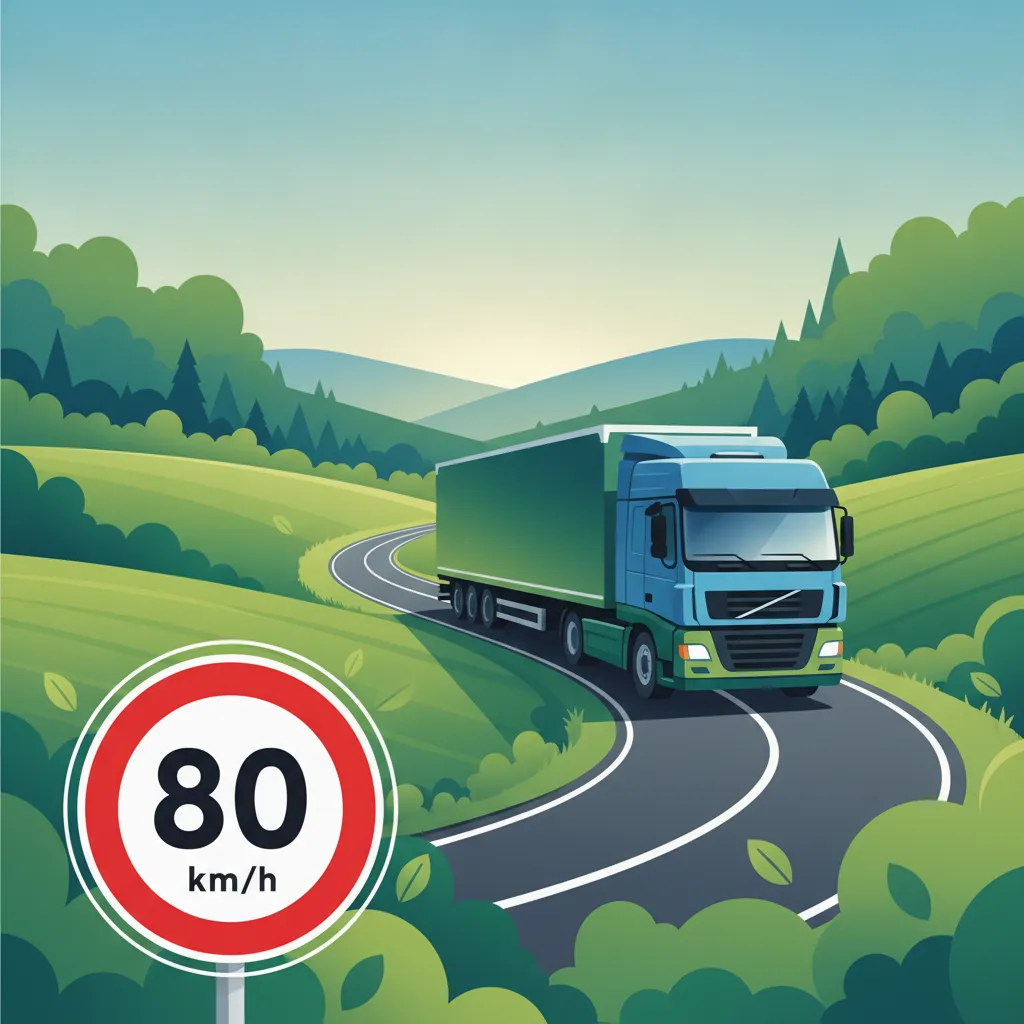
This lesson details the specific speed limits for goods vehicles in France, which are distinct from passenger vehicle regulations. You will learn to adapt your driving to varying road types while maintaining strict adherence to the French Code de la route.
Lesson content overview
Operating a heavy goods vehicle (HGV) in France requires not only specialized driving skills but also a thorough understanding of the strict regulatory framework governing road speeds. Under the French Code de la route, speed limits for commercial transport and goods vehicles are significantly lower than those for passenger cars. These differences are designed to account for the massive kinetic energy, longer stopping distances, and unique handling dynamics of heavy vehicles.
As an aspiring professional driver completing your French Goods Vehicle Licence Theory Course (Category C & CE), mastering these speed limits is essential. It ensures legal compliance, prevents severe penalties, optimizes fuel consumption, and, most importantly, protects all road users. This lesson details the speed limits applicable to goods vehicles across different road types, the visual signage you must recognize, the physics behind speed regulation, and how French law enforces these rules.
To determine the correct speed limit for any goods vehicle, you must first know its classification and maximum authorized mass (MAM)—referred to in French as Masse Maximale Autorisée (MMA) or historically as Poids Total Autorisé en Charge (PTAC).
French traffic law divides heavy goods vehicles into four primary categories for licensing and speed regulation:
The maximum legal weight of a vehicle, including its structure, fuel, driver, passengers, and cargo, as specified by the manufacturer and recorded on the registration certificate (carte grise).
The boundary between lighter goods vehicles (C1 and C1E) and heavier configurations (C and CE) is the primary factor used to establish speed differentials outside built-up areas.
Speed limits for goods vehicles in France are determined by a combination of the road environment and the vehicle's weight category. While passenger cars are permitted to drive up to 80 or 90 km/h on rural roads and 130 km/h on motorways, goods vehicles must adhere to much lower thresholds.
Within municipal boundaries, marked by white entry signs with a red border indicating the town name, speed limits are uniform to protect vulnerable road users like pedestrians and cyclists.
This limit applies to all vehicles exceeding 3.5 tonnes, regardless of whether they are solo rigid trucks or fully loaded articulated road trains.
Local authorities in France may lower speed limits in specific municipal zones (e.g., 30 km/h zones or pedestrian-heavy districts). These local restrictions apply equally to heavy goods vehicles and are often reinforced by specific vehicle dimension or weight bans.
When traveling outside built-up areas on standard single-carriageway roads (often designated as routes départementales or nationales without physical central barriers), the speed limit depends directly on the vehicle category:
This 10 km/h differential is a critical safety margin. Heavier trucks require significantly more distance to stop on two-lane undivided roads where oncoming traffic is not physically separated.
On high-speed, divided dual-carriageways with physical central barriers and controlled access (autoroutes), vehicles are permitted to travel faster, but remain strictly capped to prevent high-speed heavy vehicle collisions:
These thresholds are designed to keep heavy vehicle traffic flowing smoothly while minimizing the risk of catastrophic multi-vehicle accidents on high-speed corridors.
| Road Type | C1 & C1E Categories (Light HGV / Combinations ≤12t) | C & CE Categories (Heavy Rigid / Articulated >7.5t) |
|---|---|---|
| Urban Roads | 50 km/h | 50 km/h |
| Rural Roads | 80 km/h | 70 km/h |
| Motorways | 90 km/h | 80 km/h |
Drivers of heavy goods vehicles must constantly monitor roadside signage for category-specific speed limits. Often, a general speed limit sign is paired with a supplementary panel (panonceau) that restricts speeds further for specific vehicle classes.
When a standard circular speed limit sign (Sign B14) is accompanied by a rectangular white supplementary sign showing the black silhouette of a lorry (panonceau M4f), the speed limit displayed on the primary sign applies exclusively to vehicles designed for the transport of goods exceeding 3.5 tonnes.
As a professional driver, you must understand how to read these signs in sequence:
The French Code de la route mandates that drivers must adjust their speed in response to weather, visibility, and road surface conditions. When operating heavy vehicles, this responsibility is magnified due to the heightened risk of aquaplaning, trailer instability, and brake fade.
Under wet or low-visibility conditions, standard speed limits are reduced automatically across French roads. For goods vehicles, these reductions are designed to offset the severe drop in tire traction:
When visibility is limited to 50 meters or less, the hazard is not just stopping distance, but also reaction time. At 50 km/h, a vehicle travels approximately 13.9 meters per second, leaving only a narrow window to react to stationary traffic or accidents ahead.
Many major French motorways and transit corridors are equipped with electronic overhead gantry signs displaying Variable Speed Limits. These digital signs dynamically lower speed limits in response to high traffic volume, accidents, road construction, or poor air quality (pollution peaks).
Scan the Gantries: Monitor electronic overhead signs continuously as you drive along motorways and major expressways.
Compare and Apply the Lowest Value: If a variable speed sign displays a limit lower than your standard statutory limit (e.g., a display of 70 km/h during heavy rain on an 80 km/h motorway stretch), you must immediately slow down to comply with the lower displayed limit.
Watch for Supplementary Electronic Text: Some gantries display alternating text or supplementary symbols indicating that the reduction applies specifically to heavy vehicles or vehicles carrying hazardous cargo (matières dangereuses).
The legal speed limits for goods vehicles are not arbitrary; they are based on fundamental physical laws. Operating a vehicle with a mass of 12, 26, or 44 tonnes involves immense kinetic forces that behave very differently from those of a 1.5-tonne passenger car.
Kinetic energy () is the energy an object possesses due to its motion. The formula for kinetic energy is:
Where:
Because speed is squared in this equation, any increase in speed has a quadratic impact on kinetic energy, while mass has a linear impact.
For example, comparing a 1.5-tonne passenger car traveling at 80 km/h to a 40-tonne articulated CE vehicle traveling at the same speed:
If the speed of that 40-tonne HGV increases from 80 km/h to 90 km/h (a mere 12.5% increase in speed), its kinetic energy increases by over 26%. In a collision, this massive energy must be dissipated, explaining why crashes involving speeding heavy goods vehicles are so destructive.
Stopping distance consists of two distinct components: Reaction Distance and Braking Distance.
If a road is wet or slick, the coefficient of friction drops, and the braking distance can easily double. An overloaded vehicle, or one with poorly maintained air brakes, will experience dramatic brake fade (loss of stopping power due to excessive heat buildup) during high-speed braking or on long downhill descents.
France utilizes a highly automated and dense speed enforcement network to monitor compliance on all public roads. Professional drivers face severe consequences for speed violations, as their driving record directly affects their livelihood.
For professional drivers, speeding violations carry penalties that extend far beyond monetary fines:
To help you apply these rules successfully on the road, let us analyze several real-world driving scenarios where mistakes frequently occur.
A driver operating a fully loaded CE articulated lorry (MAM > 7.5t) is traveling on a French motorway. The overhead electronic variable message sign indicates a general limit of 110 km/h due to light rain.
A Category C vehicle enters a construction zone on a rural road. The roadworks sign shows a temporary limit of 50 km/h. There are no supplementary signs showing a lorry silhouette.
A driver in a C1E vehicle (light tractor unit with a heavy trailer, combined mass of 11.5 tonnes) is operating on a departmental road (rural).
To ensure success in your theory examination and safety on the road, keep these core principles in mind:
This lesson covers the specific speed limits for French goods vehicles across four categories (C1, C, C1E, CE) and three road environments (urban, rural, motorway), with the critical distinction that heavier C/CE vehicles travel 10 km/h slower than lighter C1/C1E vehicles outside urban areas. It explains how to interpret supplementary lorry signage (panonceau M4f) which only restricts further, never raises limits, and emphasizes that statutory category limits override variable message signs when they display higher values. The physics section demonstrates why these limits exist by comparing kinetic energy and stopping distances between passenger cars and 40-tonne articulated vehicles. Finally, it covers French speed enforcement methods including fixed cameras, average speed checks, and digital tachograph analysis that professional drivers must respect to avoid severe penalties and license loss.
A short set of high-value points that capture the most important learning from this lesson.
Speed limits for goods vehicles are determined by both vehicle category (C1/C1E vs C/CE) and road type (urban, rural, motorway).
Inside built-up areas, all goods vehicles are limited to 50 km/h regardless of category.
On rural roads and motorways, C/CE vehicles travel 10 km/h slower than C1/C1E vehicles (70 vs 80 km/h on rural roads; 80 vs 90 km/h on motorways).
Supplementary lorry signs (panonceau M4f) can only reduce speed limits further—they never raise them above your statutory category limit.
In dense fog or visibility below 50 meters, all vehicles including HGVs must not exceed 50 km/h on any road.
Explore all units and lessons included in this driving theory course.
MAM (Masse Maximale Autorisée) is the maximum legal weight of a vehicle including its structure, fuel, driver, passengers, and cargo as recorded on the carte grise.
C1E combinations (up to 12 tonnes combined) follow C1 speed limits, not the stricter C/CE limits.
Variable speed limit signs display the maximum allowed; your statutory category limit always applies if it is lower.
Fixed and average speed cameras can automatically distinguish HGVs from cars and apply the correct threshold.
Wet weather requires voluntary speed reduction even if no variable sign has updated yet.
Assuming a variable speed limit sign displaying a higher value (e.g., 110 km/h) applies to HGVs when their statutory limit is lower.
Confusing C1E category rules with C/CE rules—C1E follows C1 limits because the combined mass stays under 12 tonnes.
Believing that a supplementary lorry sign can raise the speed limit above the vehicle's statutory maximum.
Failing to reduce speed in wet conditions because no electronic sign has yet changed from the dry-weather limit.
Misinterpreting road signs at roadworks zones where temporary limits apply to all vehicles equally unless a supplementary plate specifies otherwise.
Lesson content overview
A short set of high-value points that capture the most important learning from this lesson.
Speed limits for goods vehicles are determined by both vehicle category (C1/C1E vs C/CE) and road type (urban, rural, motorway).
Inside built-up areas, all goods vehicles are limited to 50 km/h regardless of category.
On rural roads and motorways, C/CE vehicles travel 10 km/h slower than C1/C1E vehicles (70 vs 80 km/h on rural roads; 80 vs 90 km/h on motorways).
Supplementary lorry signs (panonceau M4f) can only reduce speed limits further—they never raise them above your statutory category limit.
In dense fog or visibility below 50 meters, all vehicles including HGVs must not exceed 50 km/h on any road.
Explore all units and lessons included in this driving theory course.
MAM (Masse Maximale Autorisée) is the maximum legal weight of a vehicle including its structure, fuel, driver, passengers, and cargo as recorded on the carte grise.
C1E combinations (up to 12 tonnes combined) follow C1 speed limits, not the stricter C/CE limits.
Variable speed limit signs display the maximum allowed; your statutory category limit always applies if it is lower.
Fixed and average speed cameras can automatically distinguish HGVs from cars and apply the correct threshold.
Wet weather requires voluntary speed reduction even if no variable sign has updated yet.
Assuming a variable speed limit sign displaying a higher value (e.g., 110 km/h) applies to HGVs when their statutory limit is lower.
Confusing C1E category rules with C/CE rules—C1E follows C1 limits because the combined mass stays under 12 tonnes.
Believing that a supplementary lorry sign can raise the speed limit above the vehicle's statutory maximum.
Failing to reduce speed in wet conditions because no electronic sign has yet changed from the dry-weather limit.
Misinterpreting road signs at roadworks zones where temporary limits apply to all vehicles equally unless a supplementary plate specifies otherwise.
Explore search topics learners often look for when studying Speed Limits for Goods Vehicles. These topics reflect common questions about road rules, driving situations, safety guidance, and lesson level theory preparation for learners in France.
Browse additional driving theory lessons that cover connected traffic rules, road signs, and common driving situations related to this topic. Improve your understanding of how different rules interact across everyday traffic scenarios.
Understand how vehicle mass and speed influence stopping distances for heavy trucks. Learn the relationship between kinetic energy, air braking systems, and road safety protocols on French motorways and rural roads to manage potential risks in various traffic conditions.

In this lesson, drivers will learn how to calculate safe following distances based on vehicle speed, load, road conditions, and traffic density. The content explains the components of total stopping distance, including reaction time and braking distance, and how these are affected by factors such as wet road surfaces and heavy loads. Learners will also be introduced to French road safety guidelines for maintaining appropriate gaps to ensure sufficient time to react.

This lesson focuses on the various braking systems used in goods vehicles, including air brakes, hydraulic brakes, and advanced safety systems such as ABS and ESP. Learners will understand how these systems function, their impact on braking performance, and the importance of regular brake inspection and maintenance. The content also addresses brake wear, brake fade, and how these factors affect stopping distances, especially under heavy load conditions.
In this lesson, learners will explore the functions and benefits of ABS and ESP systems in goods vehicles, including how they enhance braking stability and prevent skids. The content explains the technology behind these systems, their activation conditions, and their role in emergency braking scenarios. Learners will also be introduced to the maintenance requirements and limitations of ABS and ESP in heavy vehicle operation.
Examine the specific challenges of maneuvering large vehicles in built-up municipal areas. This guide covers safe interaction with pedestrians and cyclists, strict adherence to urban speed limits, and handling complex delivery site constraints within the French Code de la route.
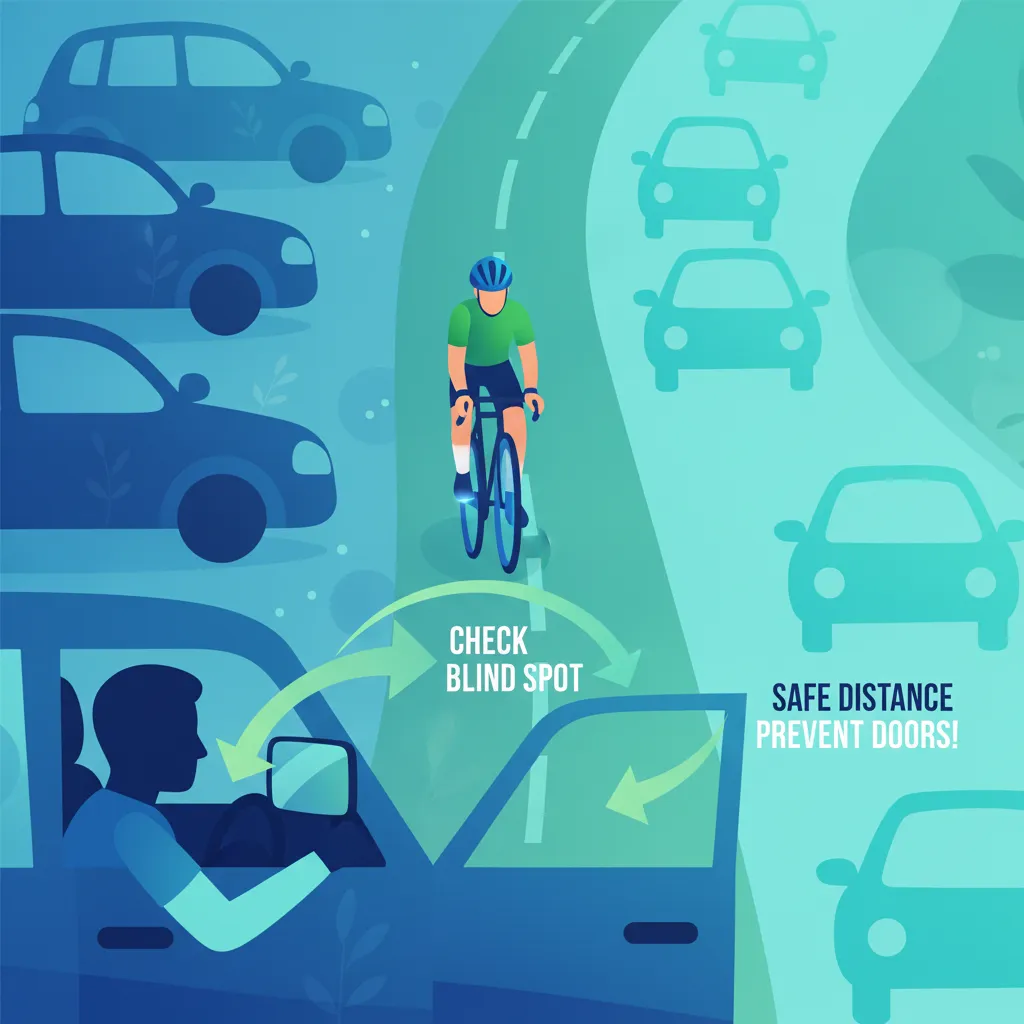
This lesson explains how to share the road safely with cyclists in both urban and rural environments. Drivers will study the legal minimum passing distances when overtaking cyclists, which is one meter in cities and one and a half meters outside urban areas. It also covers recognizing specialized cycling infrastructure, bike boxes at intersections, and preventing blind-spot collisions during right turns.

Certain groups of road users require heightened defensive attention from drivers due to physical limitations or unpredictable behaviors. This lesson covers how to recognize signs of visual impairment (white canes), mobility challenges, and the unpredictability of young children. You will learn to reduce your speed, extend yielding patience, and proactively secure extra space to protect these vulnerable users.

This lesson focuses on the unique challenges of performing deliveries in dense urban areas. Learners will explore best practices for loading and unloading safely, navigating traffic congestion, and minimizing risks to pedestrians and cyclists. The content also covers compliance with city regulations for delivery zones, scheduling considerations, and the importance of careful maneuvering to avoid accidents.
In this lesson, drivers will learn how to navigate urban delivery zones, understanding the rules surrounding loading bays, time windows, and restricted access areas. The content includes the process for obtaining delivery permits, strategies for safe maneuvering in congested city streets, and best practices for minimizing impact on pedestrian traffic. Learners will also be introduced to French city-specific regulations that govern goods vehicle deliveries.
This lesson focuses on the legal requirement to yield to pedestrians on or about to step onto zebra crossings, a major focus of French road safety. You will learn how to approach school zones and pedestrian islands with heightened vigilance and reduced speed. Additionally, the lesson explores shared urban spaces, explaining how to maintain safe lateral distances when overtaking cyclists or personal electric scooters.

In this lesson, drivers will learn how to safely share the road with motorcycles and scooters, focusing on the specific blind spots and speed differentials that create risk. The content highlights proper lane positioning, caution when overtaking, and strategies for predicting motorcycle trajectories. Learners will also be introduced to the importance of being aware of scooter movements, especially in narrow streets.
Find clear answers to common questions learners have about Speed Limits for Goods Vehicles. Learn how the lesson is structured, which driving theory objectives it supports, and how it fits into the overall learning path of units and curriculum progression in France. These explanations help you understand key concepts, lesson flow, and exam focused study goals.
No. Goods vehicles are subject to lower speed limits on all road types in France compared to passenger cars. These limits vary depending on the vehicle's total weight and the specific type of road, such as autoroutes or national roads.
Yes. Speed limits are strictly defined by the vehicle category and its Gross Vehicle Weight Rating. It is essential to know the specific limit for your vehicle classification to ensure compliance with the French Code de la route.
Modern speed enforcement systems in France are capable of distinguishing between vehicle types through automated recognition and sensors. Professional drivers are subject to the same strict radar enforcement as other road users, often with more severe consequences for non-compliance.
Exceeding the speed limit as a professional driver can lead to heavy fines, points deduction on your licence, or even suspension of your professional driving rights. Always rely on the specific signage and legal limits for your vehicle weight class.
Ready to focus your study? Use the practice search to find exactly the French driving theory questions you need for the Code de la route and permis de conduire ETG. Refine your knowledge on specific topics or challenging rules to boost your confidence and exam readiness.