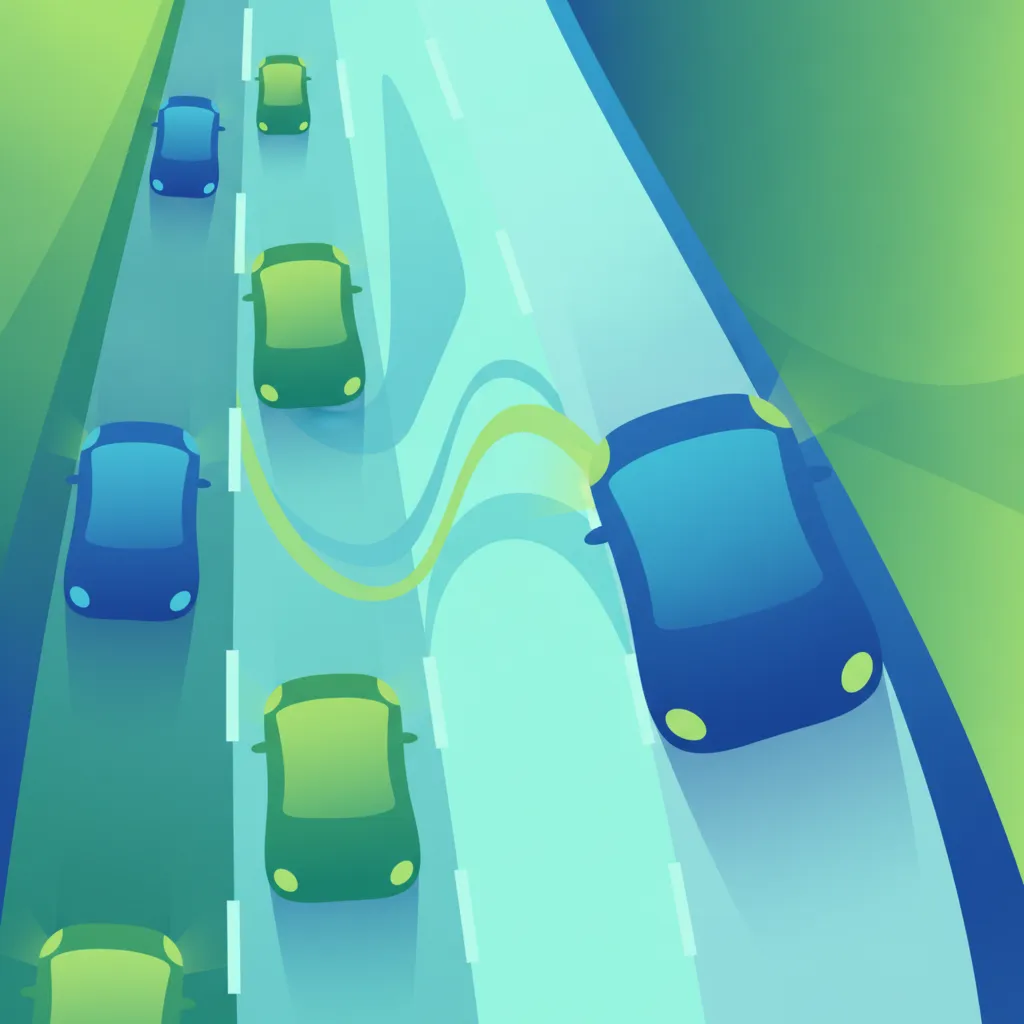
Merging traffic occurs when two separate lanes or roads combine into one, requiring drivers to integrate smoothly into a single stream. In France, these situations demand careful observation, precise speed adjustment, and active cooperation from all drivers to maintain safety and efficiency on the road.
Theory topic content overview
Read the full theory topic guide for Merging Traffic with structured, easy-to-scan content built for learners in France. This detailed section explains the exact rule, meaning, traffic context, comparison points, and exam logic behind this French driving theory topic so you can study faster, understand the concept more clearly, and avoid common interpretation mistakes on the theory test.
Merging traffic refers to situations where two separate traffic lanes or roads converge into a single lane or stream. This common occurrence on French roads, particularly when entering an autoroute (motorway) or when lanes are reduced, demands a high degree of observation, precise speed adjustment, and cooperative driving. Mastering merging techniques is not just about avoiding collisions; it's fundamental for maintaining fluid traffic flow across France.
For candidates preparing for the French permis de conduire (driving license) and the ETG (theory exam), understanding merging rules is critical for several reasons:
autoroutes.Code de la route Compliance: French traffic law (Code de la route) has specific principles governing priority and conduct during merging, which are frequently tested.A safe merge is a sequence of actions that ensures you integrate smoothly into the existing traffic flow without disrupting it.
Observe Early and Continuously:
Signal Your Intentions:
Adjust Your Speed:
voie d'insertion (acceleration lane), you must accelerate to match the speed of vehicles already in the main lane. Do not merge too slowly, as this forces others to brake.Select a Safe Gap:
Merge Smoothly:
Code de la route and CooperationWhile the primary responsibility for safe merging lies with the driver entering the main traffic stream, cooperation from drivers already on the main road is key to overall fluidity and safety.
autoroute or joining a main lane from an voie d'insertion.autoroutes, if the right lane is full, drivers in the middle or left lanes may shift over to allow merging, although this is not always possible or required.It's important for permis de conduire candidates to distinguish between merging and changing lanes:
autoroute). In this scenario, the driver changing lanes must yield to traffic already in the target lane and ensure the maneuver is safe and clear.The core difference lies in the road layout and the priority rules: merging involves joining a new stream, while lane changing involves moving within an existing multi-lane stream. Both require observation, signaling, and safe execution.
Autoroute) Entry: This is the most common and challenging merging scenario. You will use a voie d'insertion (acceleration lane) to build up speed and match the fast-moving autoroute traffic. Failing to accelerate sufficiently or misjudging gaps can be very dangerous.Réduction de voie): Often marked by temporary signs (travaux), a lane will end, requiring traffic to merge. Here, cooperative "zipper merging" is particularly effective in slow-moving traffic.voies d'insertion is failing to accelerate to the speed of autoroute traffic, making it almost impossible to find a gap and forcing main-lane drivers to react.Code de la route states otherwise: the merging driver yields.Voies d'Insertion and PriorityIn France, the term voie d'insertion specifically refers to an acceleration lane designed to help vehicles match the speed of traffic on a main road, typically an autoroute. The presence of a Cédez le passage (Give Way) sign at the end of a voie d'insertion explicitly reinforces the rule that you must give way to traffic already on the autoroute.
This rule is a cornerstone of safe driving in France and is heavily emphasized in the permis de conduire theory exam. It means that while you should strive to match speed and merge smoothly, you do not have the right of way over vehicles already traveling on the main road.
Successfully merging traffic in France boils down to three core principles: anticipation, cooperation, and correct speed adjustment. Anticipate traffic flow by observing far ahead and using all your mirrors. Cooperate by signaling clearly and being prepared for others to cooperate in return (especially in slower "zipper merge" scenarios). Most importantly, adjust your speed to match the main traffic flow to integrate seamlessly and safely. Remember, smooth driving is safe driving, and this is especially true when merging.
Start with a short, direct summary of Merging Traffic before reading the full explanation below.
Merging traffic safely in France involves careful observation of the main traffic flow, adjusting your speed to match it, and signaling your intentions clearly. Drivers entering a main road or reduced lane must find a safe gap and accelerate to match the speed of existing traffic without forcing others to brake. Cooperation from drivers already in the main lane by maintaining speed and space also facilitates a smooth merge.
Review the most important terms, rule signals, and traffic concepts linked to Merging Traffic.
Explore related theory topic pages connected to Merging Traffic and continue with the next useful rule explanation.
See the common search queries learners use when trying to understand Merging Traffic in France.

Continue your journey by exploring specific French driving theory topics, from road signs and priority rules to vehicle safety and administrative procedures. Deepen your understanding of the Code de la route and prepare effectively for your permis de conduire ETG exam to ensure success and safe driving practices.
French Driving Theory Topics & RulesTheory topic content overview
Start with a short, direct summary of Merging Traffic before reading the full explanation below.
Merging traffic safely in France involves careful observation of the main traffic flow, adjusting your speed to match it, and signaling your intentions clearly. Drivers entering a main road or reduced lane must find a safe gap and accelerate to match the speed of existing traffic without forcing others to brake. Cooperation from drivers already in the main lane by maintaining speed and space also facilitates a smooth merge.
Review the most important terms, rule signals, and traffic concepts linked to Merging Traffic.
Explore related theory topic pages connected to Merging Traffic and continue with the next useful rule explanation.
See the common search queries learners use when trying to understand Merging Traffic in France.
Continue your journey by exploring specific French driving theory topics, from road signs and priority rules to vehicle safety and administrative procedures. Deepen your understanding of the Code de la route and prepare effectively for your permis de conduire ETG exam to ensure success and safe driving practices.
French Driving Theory Topics & RulesUse this exam-focused revision tip to understand how Merging Traffic is likely to appear in theory questions for learners in France. This section helps you identify the most testable part of the rule, avoid common traps, and remember the concept more effectively during French driving theory exam preparation.
In the French driving theory exam, pay close attention to scenarios involving motorway entry or lane reductions. Remember that the merging driver *always* yields to traffic already present. Practice identifying safe gaps and understanding the role of acceleration lanes ('voies d'insertion') to demonstrate proper merging technique and cooperation.
Read direct answers to the most common learner questions about Merging Traffic in France. This FAQ focuses on rule confusion, practical meaning, comparison with similar concepts, and the exact uncertainties that appear most often in French driving theory revision and exam preparation.
The primary rule is to observe the main traffic flow, adjust your speed to match it, and find a safe gap to enter without disturbing other vehicles. Drivers on the main road should facilitate the merge where possible.
No, drivers merging onto an autoroute or main road in France do not have priority. You must yield to traffic already on the main roadway and merge only when it is safe to do so without forcing other drivers to react.
Zipper merging is a technique where vehicles from two lanes take turns merging into a single lane, like the teeth of a zipper. While not always explicitly enforced by law, it is considered good practice for maintaining traffic flow in congested merging situations in France.
You should accelerate to match the speed of the traffic you intend to merge with. Merging at a significantly lower speed can be dangerous and disrupt the flow, leading to potential collisions.
A 'voie d'insertion' is the French term for an acceleration lane or merging lane, typically found at motorway entrances or when a road joins a faster traffic stream. It provides space for drivers to gain speed before merging.
Common mistakes include failing to check blind spots, not signaling early enough, braking instead of accelerating on the merging lane, or forcing entry into traffic without a safe gap. Lack of cooperation with other drivers is also penalized.
Drivers on the main road should be aware of merging traffic, maintain a steady speed, and, if safe and practical, adjust their position slightly or create space to allow merging vehicles to enter smoothly.
Ready to focus your study? Use the practice search to find exactly the French driving theory questions you need for the Code de la route and permis de conduire ETG. Refine your knowledge on specific topics or challenging rules to boost your confidence and exam readiness.