Warning signs are a fundamental part of the French Code de la route, designed to alert drivers to potential dangers or changes in road conditions ahead. Unlike prohibitory or imperative signs, they do not impose direct restrictions but instead prepare you to adjust your speed, position, or attention. Recognizing and interpreting these signs quickly is vital for safe driving and passing your theory exam.
Theory topic content overview
Read the full theory topic guide for Warning Signs with structured, easy-to-scan content built for learners in France. This detailed section explains the exact rule, meaning, traffic context, comparison points, and exam logic behind this French driving theory topic so you can study faster, understand the concept more clearly, and avoid common interpretation mistakes on the theory test.
Warning signs, known as panneaux de danger in the French Code de la route, are a cornerstone of proactive and safe driving. Unlike signs that prohibit actions or impose obligations, warning signs serve to alert you to potential hazards or changes in road conditions well in advance. Their primary purpose is to give you sufficient time to anticipate risks and adapt your driving behavior before you encounter the danger.
Understanding these critical indicators is not just essential for your safety on French roads, but also a fundamental requirement for successfully passing your French driving theory test (ETG).
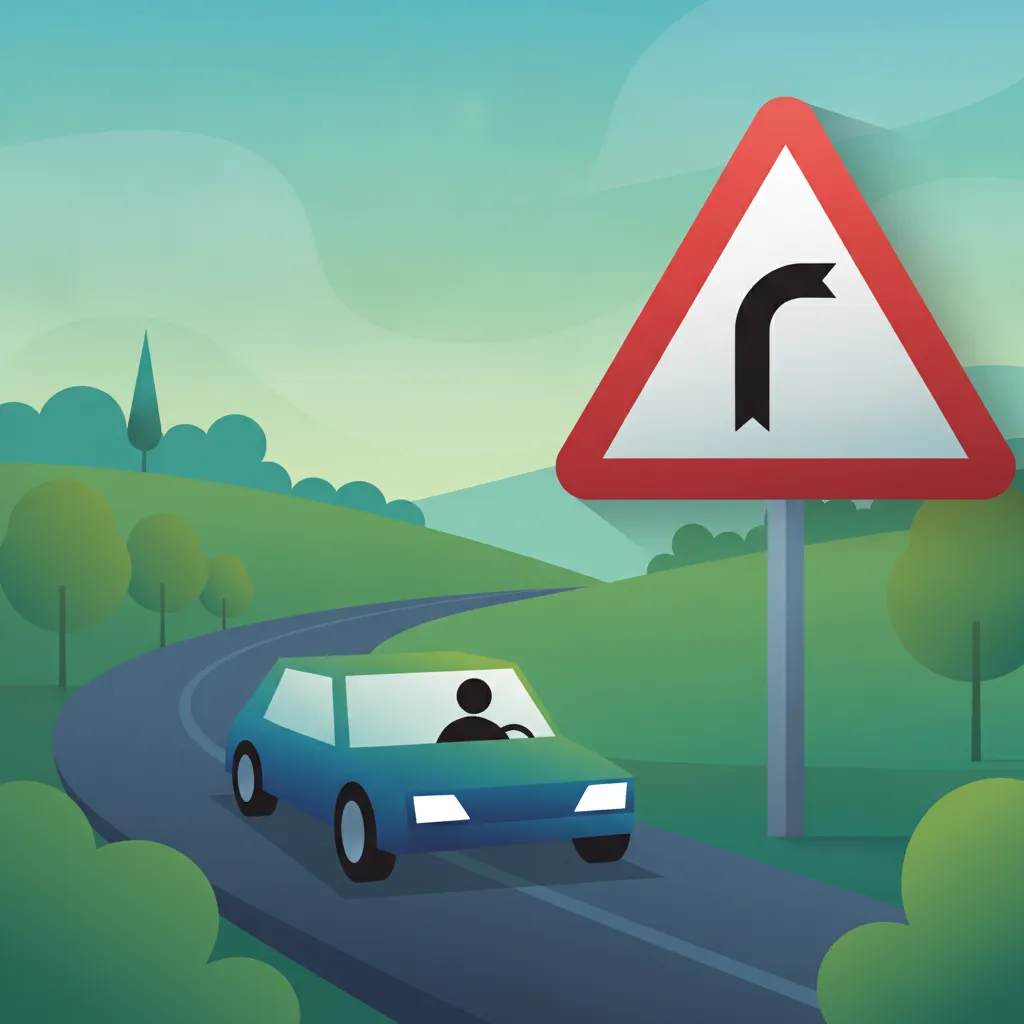
In France, warning signs are instantly recognizable. They are almost always equilateral triangles with a red border, a white background, and a black symbol depicting the specific hazard. This distinctive design ensures they stand out and can be identified quickly, even before the specific symbol is fully clear.
Their placement is strategic: they are erected at a distance before the actual hazard. This "advance warning" principle is crucial, allowing drivers ample time to process the information and make necessary adjustments to their speed, position, or vigilance. They don't demand an immediate action like a "STOP" sign, but rather prompt a shift in mental and physical readiness.
The significance of warning signs extends beyond mere compliance with the Code de la route. They are vital for:
Effective use of warning signs involves a continuous cycle of Observe, Anticipate, Adapt, and Act:
For example, seeing a virage dangereux (dangerous bend) sign on a route départementale requires you to begin braking and potentially downshift before entering the curve, rather than reacting sharply mid-turn.
Several factors dictate how you should respond to a warning sign:
It's vital for your permis de conduire to differentiate warning signs from other categories of signalisation routière:
Let's look at how warning signs guide decision-making on French roads:
Despite their clear purpose, learners often make specific errors:
For your French driving license, warning signs are more than just symbols; they are essential cues that empower you to be an anticipatory, responsible driver. They form a critical part of the proactive driving approach emphasized by the Code de la route.
Always prioritize scanning ahead for panneaux de danger. By understanding what each specific warning sign means and adapting your driving before the hazard arises, you not only ensure your safety and that of others but also demonstrate the sharp observation and judgment required to successfully navigate France's roads and pass your permis de conduire examination.
Start with a short, direct summary of Warning Signs before reading the full explanation below.
Warning signs on French roads alert drivers to upcoming hazards or changes in road conditions. Typically triangular with a red border, these signs give you advance notice to anticipate risks such as sharp curves, intersections, or pedestrian crossings. They require you to adapt your driving behavior, reduce speed, and increase vigilance to ensure safety.
Review the most important terms, rule signals, and traffic concepts linked to Warning Signs.
Explore related theory topic pages connected to Warning Signs and continue with the next useful rule explanation.
See the common search queries learners use when trying to understand Warning Signs in France.

Continue your journey by exploring specific French driving theory topics, from road signs and priority rules to vehicle safety and administrative procedures. Deepen your understanding of the Code de la route and prepare effectively for your permis de conduire ETG exam to ensure success and safe driving practices.
French Driving Theory Topics & RulesTheory topic content overview
Start with a short, direct summary of Warning Signs before reading the full explanation below.
Warning signs on French roads alert drivers to upcoming hazards or changes in road conditions. Typically triangular with a red border, these signs give you advance notice to anticipate risks such as sharp curves, intersections, or pedestrian crossings. They require you to adapt your driving behavior, reduce speed, and increase vigilance to ensure safety.
Review the most important terms, rule signals, and traffic concepts linked to Warning Signs.
Explore related theory topic pages connected to Warning Signs and continue with the next useful rule explanation.
See the common search queries learners use when trying to understand Warning Signs in France.
Continue your journey by exploring specific French driving theory topics, from road signs and priority rules to vehicle safety and administrative procedures. Deepen your understanding of the Code de la route and prepare effectively for your permis de conduire ETG exam to ensure success and safe driving practices.
French Driving Theory Topics & RulesUse this exam-focused revision tip to understand how Warning Signs is likely to appear in theory questions for learners in France. This section helps you identify the most testable part of the rule, avoid common traps, and remember the concept more effectively during French driving theory exam preparation.
For the French driving theory test (ETG), it's crucial not only to recognize warning signs but also to understand the specific hazard they represent and the correct driving behavior required. Pay close attention to signs indicating intersections, curves, pedestrian zones, and railway crossings, as these are common test topics. Remember, warning signs demand anticipation and adaptation, not just recognition.
Read direct answers to the most common learner questions about Warning Signs in France. This FAQ focuses on rule confusion, practical meaning, comparison with similar concepts, and the exact uncertainties that appear most often in French driving theory revision and exam preparation.
The main purpose of a warning sign is to alert drivers to a potential hazard or a change in road conditions ahead, allowing them to anticipate and react safely.
In France, permanent warning signs are generally triangular with a red border and a white background, containing a black symbol depicting the specific hazard. Temporary warning signs often have a yellow background.
Warning signs are typically placed a sufficient distance before the hazard to give drivers enough time to react. This distance can vary based on road type and speed limits, often around 150-200 meters on open roads and 50-100 meters in urban areas.
Upon seeing a warning sign, you should evaluate the potential hazard, adjust your speed, and prepare to take appropriate action such as braking, steering, or increasing your attention. Always be ready to react to the condition indicated.
Warning signs indicate a potential danger or condition requiring caution, while prohibitory signs indicate actions that are forbidden, such as 'No Entry' or 'No Overtaking.' Warning signs alert, prohibitory signs restrict.
Warning signs do not directly impose a specific speed limit. However, they indicate conditions that often require you to reduce your speed to maintain safety, even if a new speed limit sign is not present.
Ready to focus your study? Use the practice search to find exactly the French driving theory questions you need for the Code de la route and permis de conduire ETG. Refine your knowledge on specific topics or challenging rules to boost your confidence and exam readiness.