
This lesson focuses on the critical safety skills of managing blind spots and maintaining a protective space cushion around your moped. It builds on previous road positioning lessons to ensure you can identify hazards early and react appropriately in complex traffic. Mastering these defensive riding techniques is vital for both your theory exam performance and real-world road safety.

Lesson content overview
Navigating Irish roads on a Category AM vehicle—which includes mopeds, light quadricycles, and small three-wheeled vehicles—requires an exceptional level of situational awareness. Due to their compact profile, these vehicles can easily disappear from the view of other motorists. At the same time, moped riders themselves face significant physical limitations in what they can see directly through their mirrors.
To ride safely and pass the Irish Driving Theory Test, you must master two fundamental defensive riding concepts: eliminating blind spots through active physical observation and maintaining a protective space cushion around your vehicle at all times. This lesson details the science, rules, and practical techniques required to manage these safety zones effectively under the Irish Rules of the Road.
A blind spot is any area around your vehicle that cannot be seen directly in your normal field of vision or through properly adjusted rear-view mirrors. Because a moped rider sits in an open cockpit, it is a common misconception that they have "natural" 360-degree vision. In reality, helmet design, physical posture, and mirror limitations create substantial blind spots that can easily hide overtaking cars, cyclists, or pedestrians.
To manage blind spots, you must first understand where they exist relative to your moped:
As a Category AM rider, you must also understand the blind spots of other vehicles. Large vehicles—such as Dublin Bus double-deckers, heavy goods vehicles (HGVs), and large agricultural tractors common on Irish rural roads—have massive blind spots known as "No-Zones."
The Golden Rule of Sharing the Road with HGVs: If you cannot see the driver's face in their side mirrors, they cannot see you. Never linger alongside a large vehicle, and always assume they are unaware of your presence until you have safely cleared their blind spot shadow.
Relying solely on your mirrors before making a lateral move on the road is a dangerous mistake. Mirrors provide a compressed, flat, or slightly distorted view of the world behind you. To completely eliminate blind spots, you must combine correct mirror setup with the physical "lifesaver" shoulder check.
Before you start your engine, you must adjust your mirrors to suit your riding posture. This is a mandatory safety step under Irish road regulations.
Sit on the moped in your normal active riding position. Do not stand or lean unnaturally.
Adjust the right-side mirror so that it shows a small sliver of your own right shoulder in the inner edge of the glass. The remaining outer portion of the mirror should give a clear view of the road behind and to your right.
Adjust the left-side mirror in the same manner, showing a sliver of your left shoulder and a clear view of the road behind and to your left.
Ensure the horizon line sits roughly in the middle of both mirrors. This ensures you can see both close-following traffic and vehicles approaching at speed from further back.
The physical shoulder check—commonly referred to in rider training as the "lifesaver look"—is a quick, deliberate turn of your head to the left or right to inspect your blind spots directly.
A rapid, focused head rotation over either shoulder to visually confirm that the blind spot area is completely clear of traffic, cyclists, or pedestrians immediately before initiating a turn, lane change, or merge.
This check is not a casual glance. It requires you to rotate your chin toward your shoulder while keeping your handlebars steady. Failing to perform a shoulder check is one of the most common causes of collisions involving mopeds, particularly in urban areas where cyclists or electric scooters may be filtering through traffic.
A space cushion is a defensive buffer zone of empty space that you actively maintain all the way around your moped. This cushion acts as a life-saving safety margin, providing you with critical reaction time if the vehicle ahead brakes suddenly, or if another road user makes an unexpected maneuver.
The front space cushion is your primary defense against rear-end collisions. Under normal, dry Irish road conditions, you must maintain a minimum following distance of at least 2 seconds behind the vehicle ahead.
To measure this gap:
While you have direct control over your front cushion, managing your side and rear cushions requires proactive positioning and speed adjustment:
Ireland's maritime climate presents unique challenges for Category AM riders. Damp roads, sudden rain showers, falling autumn leaves, and low winter sun all dictate that you must dynamically expand your space cushions.
Water acts as a lubricant between your moped’s small tires and the asphalt, severely reducing grip. In wet weather, your braking distance can easily double.
Wet Weather Protocol: In rain, damp conditions, or on greasy roads, you must double your following distance. Increase your front space cushion from a 2-second gap to a minimum of 4 seconds.
Additionally, surface runoff can hide deep potholes or drain covers, which are exceptionally slippery when wet. A larger space cushion gives you the time to spot these road surface hazards and safely steer around them.
At night, during twilight, or in heavy mist and fog, your peripheral vision is drastically reduced.
The type of Irish road you are navigating determines the nature of your space cushion:
| Road Type | Primary Speed | Space Cushion Challenge | Recommended Strategy |
|---|---|---|---|
| Urban / City Centres (e.g., Dublin, Cork) | 30 km/h - 50 km/h | Frequent lane changes, pedestrians, filtering cyclists, tight spaces. | Keep a tight front cushion (2 seconds) but expand your side cushions to avoid doors and turning traffic. |
| Dual Carriageways / N-Roads | Up to 80 km/h (depending on vehicle capability/legal limits) | High-speed differentials, heavy wind buffet from passing trucks, longer stopping distances. | Expand your front cushion to 3–4 seconds even in dry conditions. Move to the center of your lane to prevent high-speed vehicles from squeezing past you in the same lane. |
Understanding the legal and safety obligations associated with space management is a core part of passing your Category AM theory test.
Under Irish road traffic regulations, all road users must drive with "due care and attention" to others.
To ensure your safety and avoid penalty points or fines, avoid these common violations:
Let's examine how these principles apply to real-world scenarios you will encounter on Irish roads.
Mastering moped safety relies on proactive observation and physical space management:
Explore all units and lessons included in this driving theory course.
Lesson content overview
Explore all units and lessons included in this driving theory course.
Explore search topics learners often look for when studying Managing Blind Spots and Space Cushions. These topics reflect common questions about road rules, driving situations, safety guidance, and lesson level theory preparation for learners in Ireland.
Browse additional driving theory lessons that cover connected traffic rules, road signs, and common driving situations related to this topic. Improve your understanding of how different rules interact across everyday traffic scenarios.
Learn how to position your vehicle effectively to maintain safety around larger traffic. This guide explains how to manage blind spots and visibility when sharing the road with heavy vehicles and agricultural machinery according to Irish Rules of the Road.

This lesson explains the extensive blind spots of heavy goods vehicles, buses, and other large trucks on Irish roads. It teaches Category AM riders how to maintain safe following distances and position themselves where truck drivers can see them. Proper space cushion management is emphasized to protect riders from the wind turbulence of passing trucks.

This lesson explains how to choose the safest riding position within a traffic lane, considering the standard left-side driving rule in Ireland. It details the concept of dominant positioning to prevent other vehicles from crowding your space, while remaining visible to oncoming traffic. Riders will learn to adjust their track constantly to avoid road surface hazards, oil deposits, and wind currents.

This lesson investigates the relationship between heavy goods vehicle dimensions and the physical constraints of Irish road networks. It highlights how vehicle length and weight contribute to pavement wear and stress on aging bridges and tunnels. Drivers will analyze specific high-risk zones, such as narrow lanes and gauntlet points, where extreme spatial awareness is mandatory.
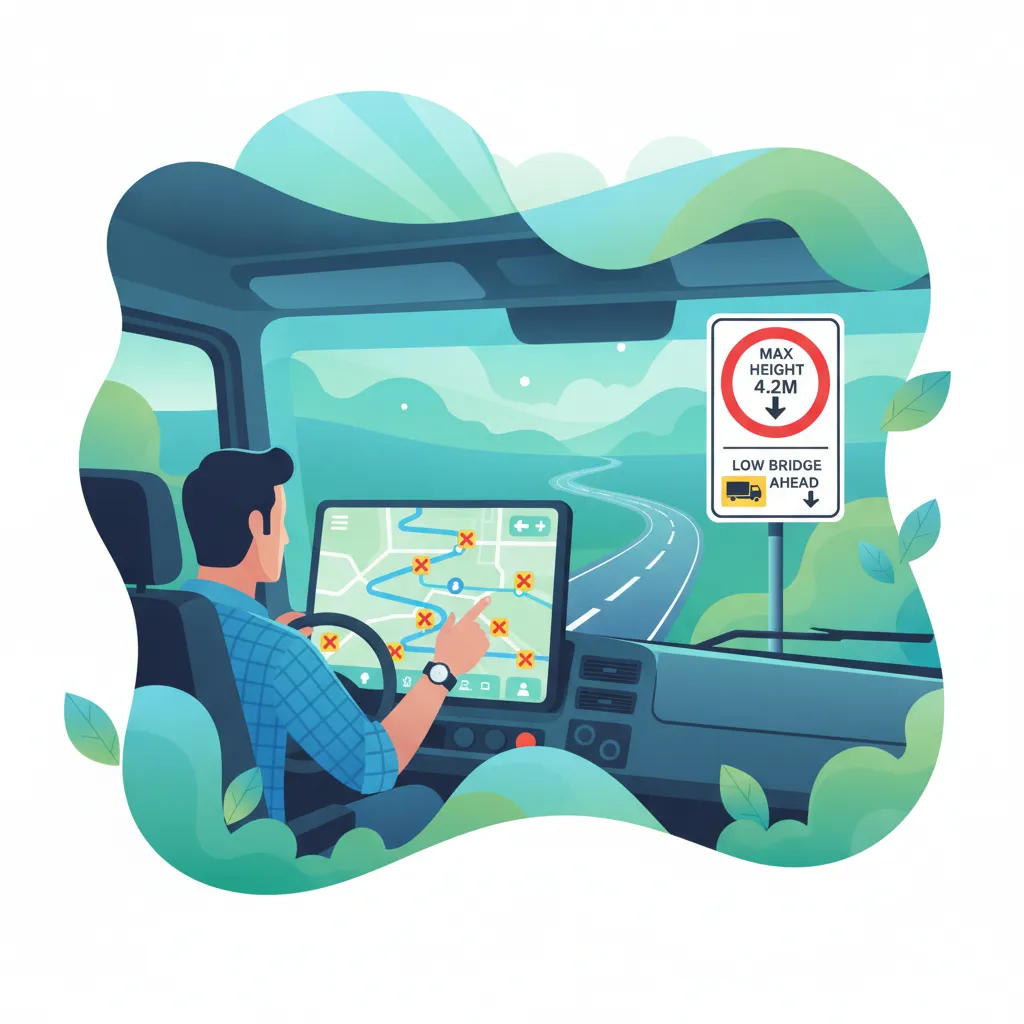
This lesson teaches professional drivers how to systematically map out travel routes that are compatible with heavy vehicle dimensions. It covers the limitations of consumer-grade GPS systems and emphasizes the use of specialized truck navigation systems that account for low bridges and load restrictions. Drivers will also learn to plan for congestion, access timing regulations, and proper entrance paths into commercial zones.

Irish driving theory demands that drivers keep to the left-hand side of the road unless overtaking or turning right. This lesson explains how to maintain consistent lane discipline on multi-lane roads, how to perform safe lane changes, and the dangers of drifting. You will learn the safety sequence of checking mirrors, checking blind spots, signalling, and smoothly executing a lane change without disrupting trailing traffic.

This lesson provides actionable strategies for Category AM riders to remain visible, focusing on lane positioning and eye contact. It teaches how to avoid riding in the blind spots of larger vehicles and how to signal early and clearly. Cultivating a proactive attitude toward road visibility helps prevent collisions and builds mutual respect on Irish roads.
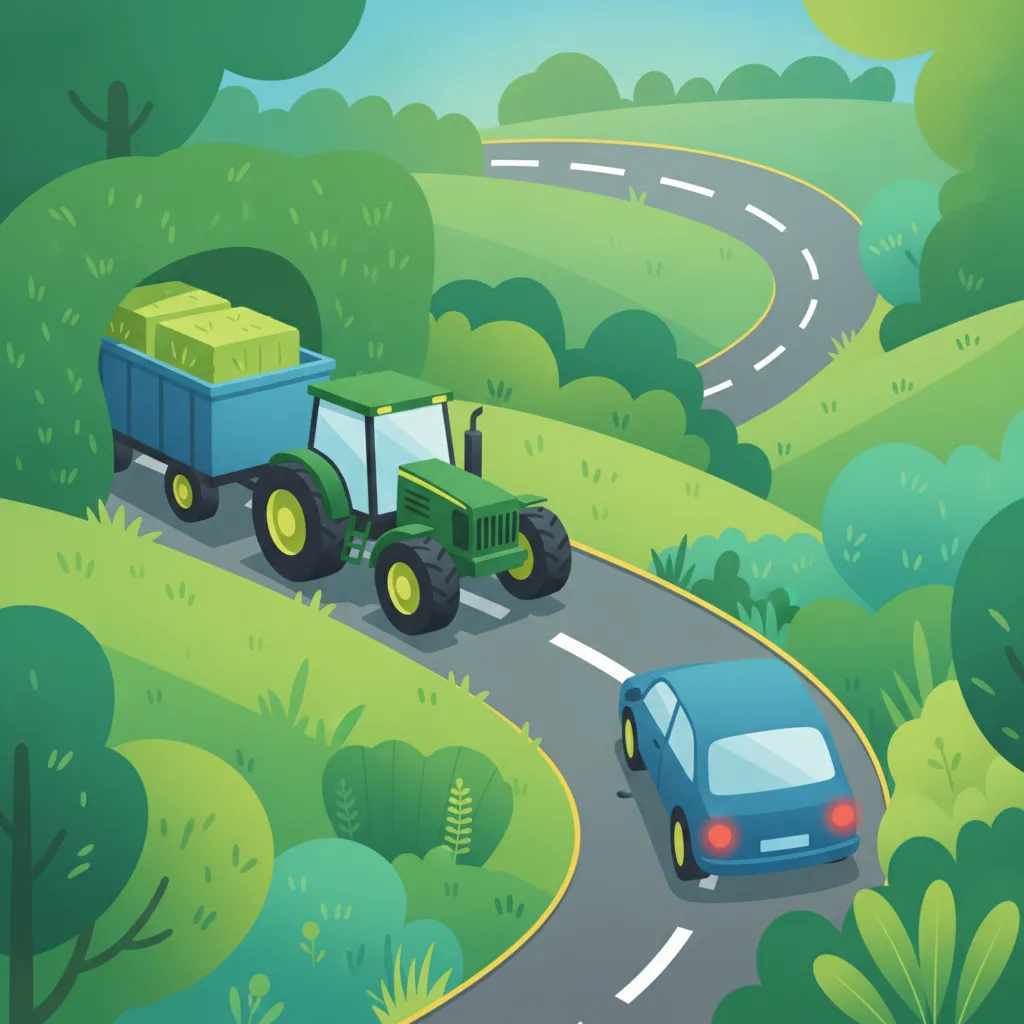
Irish rural roads are often narrow, winding, and bordered by high hedges, presenting unique hazards compared to urban streets. This lesson focuses on scanning for hidden hazards such as slow-moving farm machinery, mud on the road surface, and loose livestock. You will learn how to adjust your speed before entering blind bends, sound your horn at blind crests, and safely share the road with local agricultural traffic.
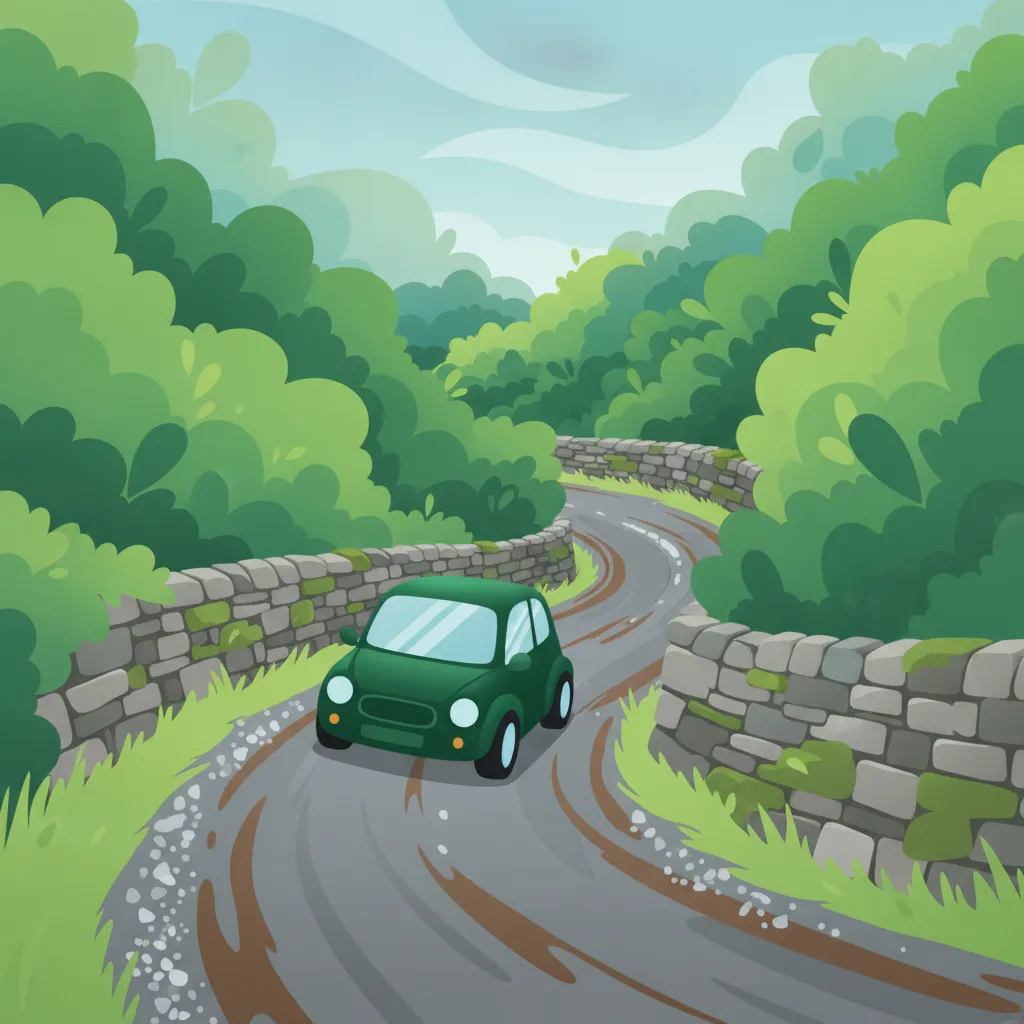
Irish rural routes are often narrow, lacking central markings, and bordered by tall hedges that restrict forward visibility on sharp bends. This lesson teaches drivers how to negotiate blind curves, anticipate slow-moving agricultural machinery, and respond to wandering farm animals. Drivers will learn to regulate vehicle speed proactively, maintaining a safe stopping margin in rural areas.
Discover methods for identifying potential risks in busy city centers. This lesson covers situational awareness techniques and defensive behavior for navigating urban traffic, managing cyclist interactions, and anticipating movements of other road users on Irish streets.
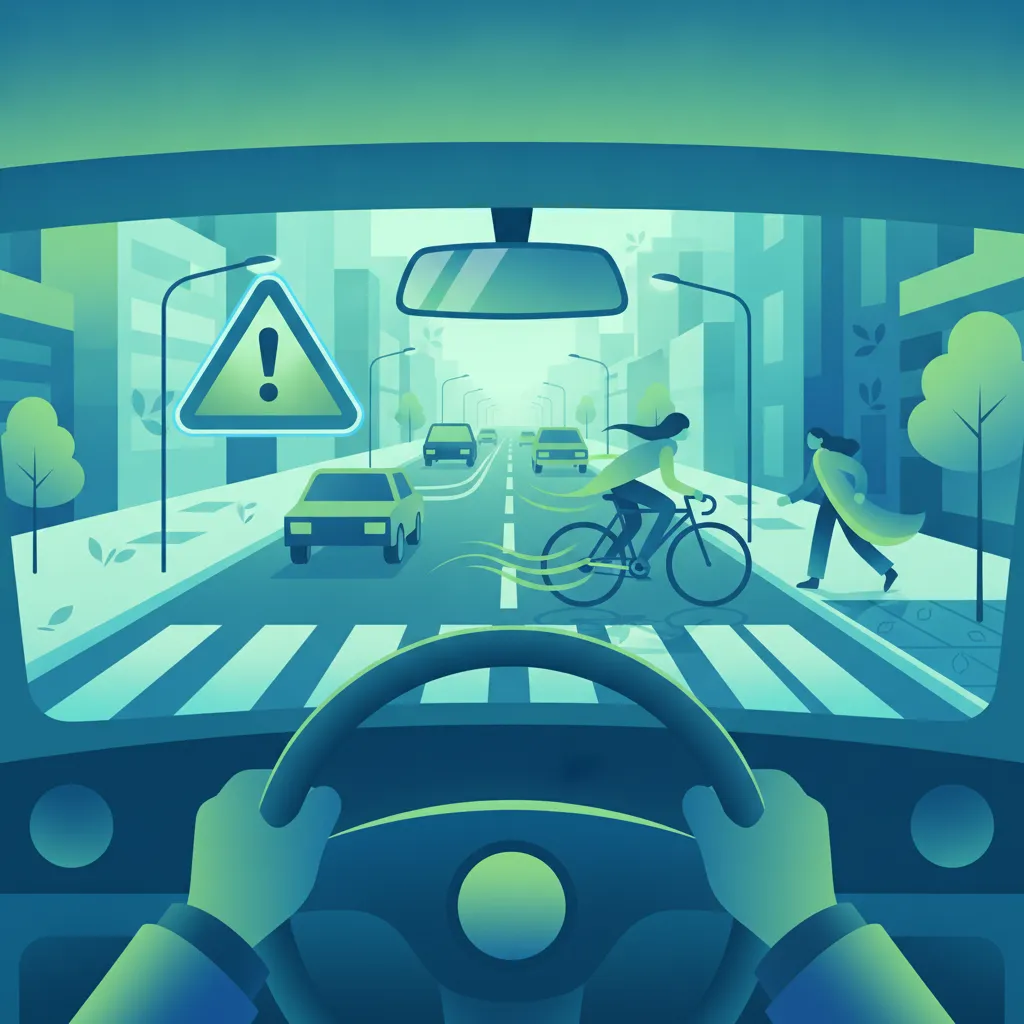
Proactive hazard perception involves constantly scanning the road ahead to identify potential dangers before they turn into actual emergencies. This lesson covers active scanning techniques, helping you look far ahead, check mirrors regularly, and identify subtle risk clues such as exhaust smoke from parked cars or children playing near kerbs. Anticipating these developments gives you the time to adjust speed and position safely.

Heavy vehicles require continuous visual scanning to identify small or slow-moving road users who may enter the path of travel. This lesson explores the typical behaviors of young children, elderly pedestrians, and visually impaired road users. Drivers will build strong hazard perception skills to anticipate sudden movements, ensuring they can brake safely and avoid serious accidents.

This lesson analyzes traffic flow characteristics in dense municipal areas and teaches safe riding methods for congested gridlock situations. It covers the maintenance of adequate safety cushions, scanning for opening car doors, and monitoring pedestrians stepping from between parked cars. Riders will learn to manage frequent stopping, constant clutch wear, and the stress of urban commuting.
Irish rural roads are often narrow, winding, and bordered by high hedges, presenting unique hazards compared to urban streets. This lesson focuses on scanning for hidden hazards such as slow-moving farm machinery, mud on the road surface, and loose livestock. You will learn how to adjust your speed before entering blind bends, sound your horn at blind crests, and safely share the road with local agricultural traffic.
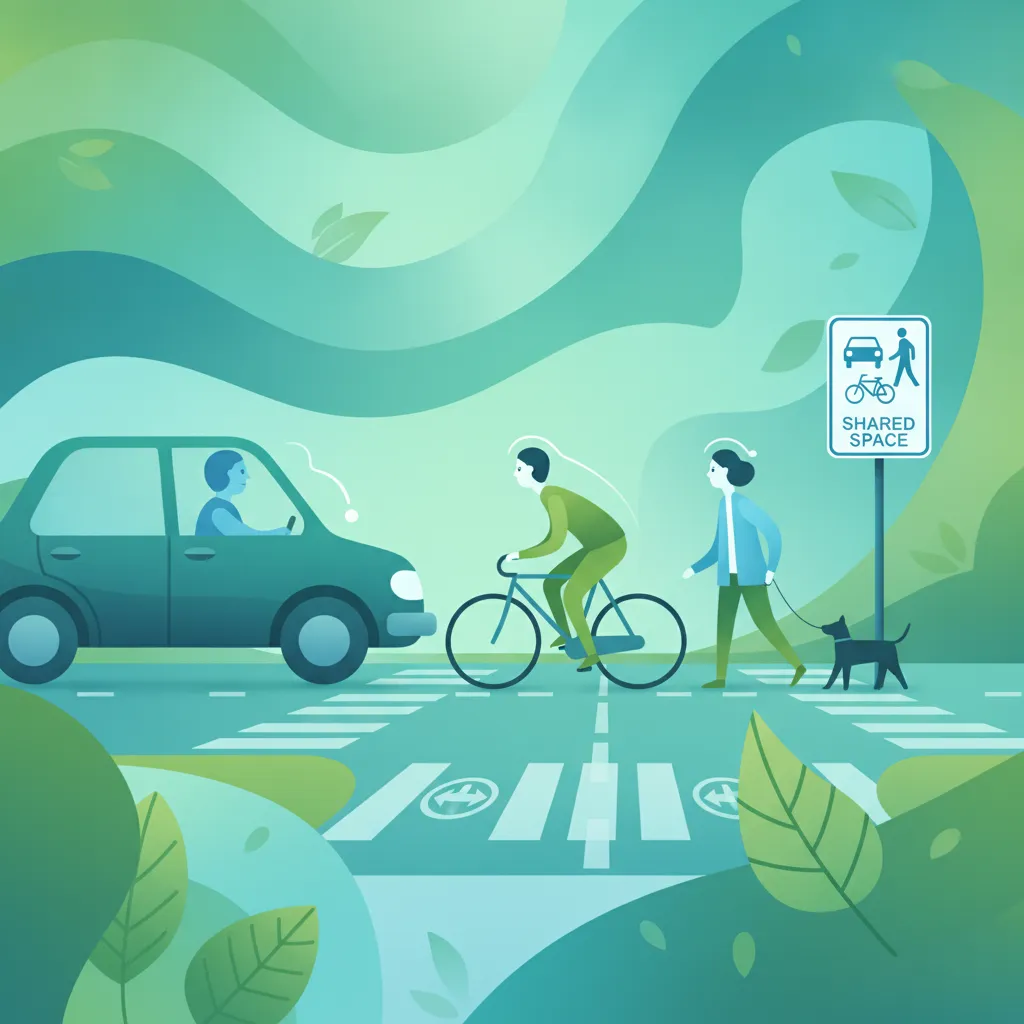
Shared public spaces rely heavily on road user cooperation, low speeds, and active visual communication rather than traditional traffic signals. This lesson teaches drivers how to navigate these open zones safely, yielding priority to pedestrians and integrated cyclists. Drivers will study how traffic calming designs alter vehicle trajectories, allowing safe, stress-free transit through modern city centers.
This lesson covers the strategic aspects of journey management, emphasizing the safety benefits of proactive route planning and weather checks. It teaches riders how to select safer roads, avoid high-congestion zones during rush hour, and schedule regular rest intervals. Motorcyclists will learn to pack essential tools, emergency contacts, and spare safety gear to remain prepared for any roadside situation.

Maintaining an extensive buffer zone ahead of a large passenger vehicle is critical to ensuring enough space for emergency maneuvers. This lesson teaches the time-gap method, detailing how following distances must double on wet roads or increase with full passenger loads. It builds hazard anticipation skills, teaching drivers to read distant traffic cues and react early to hazards.
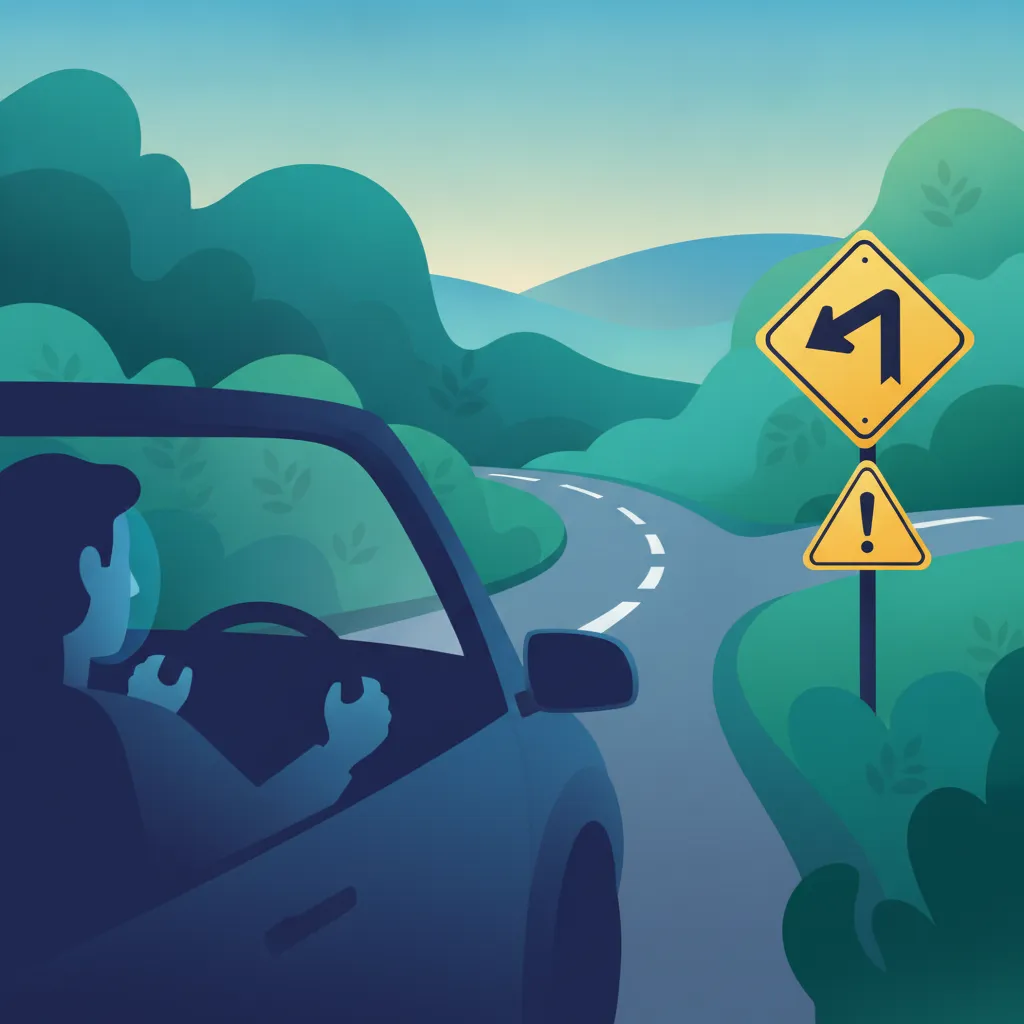
Warning signs in Ireland are typically diamond-shaped with yellow backgrounds and black symbols, indicating potential dangers on the road ahead. This lesson details signs for upcoming sharp bends, narrow roads, steep hills, pedestrian activity, and animal hazards. Learning to spot these warning indicators early allows you to reduce speed safely and adjust your vehicle positioning before encountering the hazard itself.

Children often struggle to judge heavy vehicle speeds accurately, while elderly pedestrians may possess limited mobility or hearing impairments. This lesson addresses these unique risks, explaining how to adjust driving patterns in residential neighborhoods and near shopping districts. Drivers will learn to maintain a high safety margin, ensuring they can yield quickly to vulnerable road users.
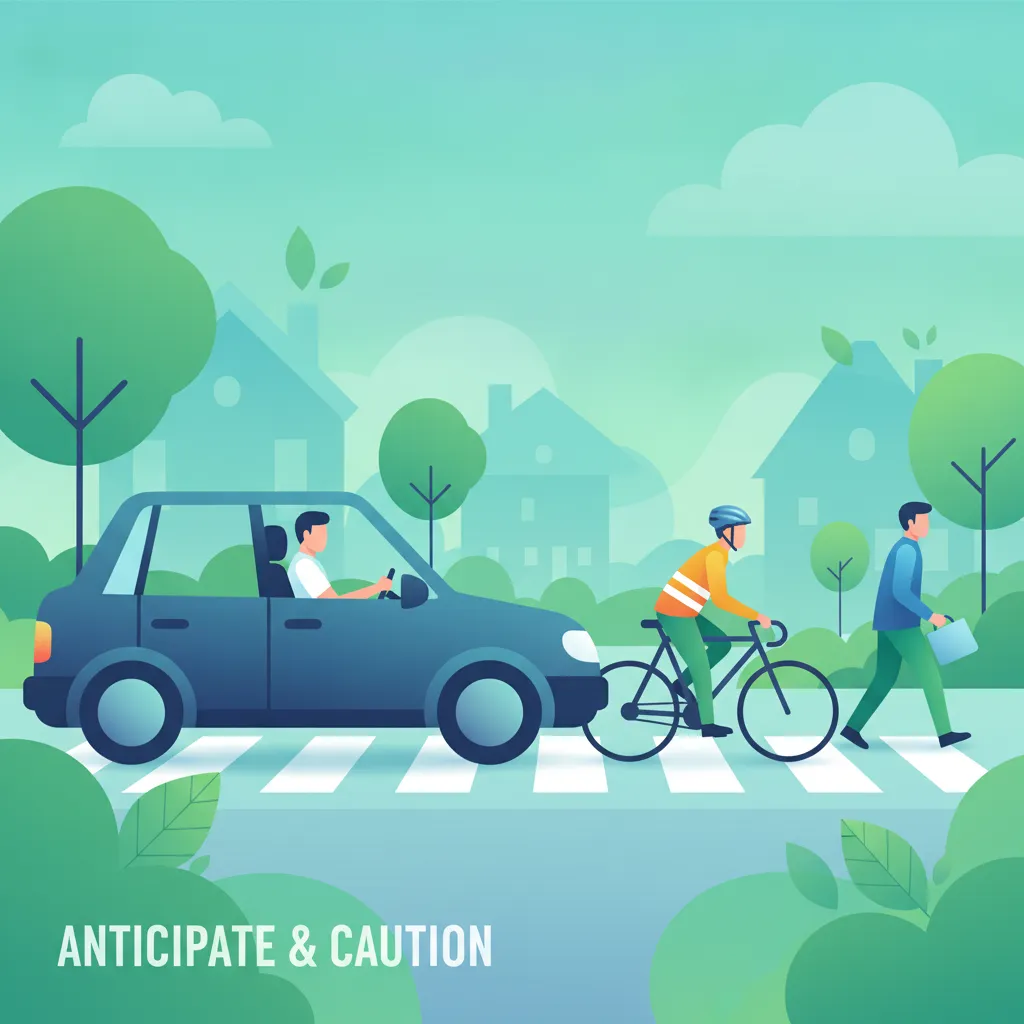
Safeguarding vulnerable road users requires more than simple obedience to traffic signs; it demands a defensive driving mindset. This lesson summarizes safe practices, including scanning far ahead in urban areas, keeping massive safety margins in wet weather, and executing thorough blind spot checks before reversing. By anticipating the unpredictable movements of others, you can prevent accidents and support a safe road culture.
Find clear answers to common questions learners have about Managing Blind Spots and Space Cushions. Learn how the lesson is structured, which driving theory objectives it supports, and how it fits into the overall learning path of units and curriculum progression in Ireland. These explanations help you understand key concepts, lesson flow, and exam focused study goals.
Mirrors have inherent blind spots that cannot be fully eliminated by adjustment alone. A quick physical shoulder check allows you to confirm that the lane is clear before changing direction or pulling out, which is a key safety requirement for all road users.
You should maintain a minimum two-second gap in dry conditions, increasing this significantly in wet or slippery weather. A larger cushion provides you with the essential time and distance required to brake safely without losing stability.
Yes, filtering increases your risk because other drivers may not expect you to be in their blind spot. You must constantly scan and position yourself so that you are not hidden by larger vehicles at junctions or in slow-moving queues.
Yes, the theory test frequently includes questions about hazard awareness and safe following distances. Understanding these concepts helps you choose the correct defensive riding answers in the test.
Use the practice question search tool to pinpoint specific topics, road signs, or rules you need to master for your official Driver Theory Test. Refine your study strategy and ensure comprehensive preparation for all aspects of the Irish driving exam. Start your focused revision now and build confidence for your learner permit test.