
This lesson details the critical vehicle maintenance checks required for road safety and passing the Irish Driver Theory Test. You will learn the legal standards for tyre tread depth, pressure, and general vehicle condition to ensure your car is always roadworthy. These skills are essential for both your theory exam and your practical responsibilities as a learner driver.
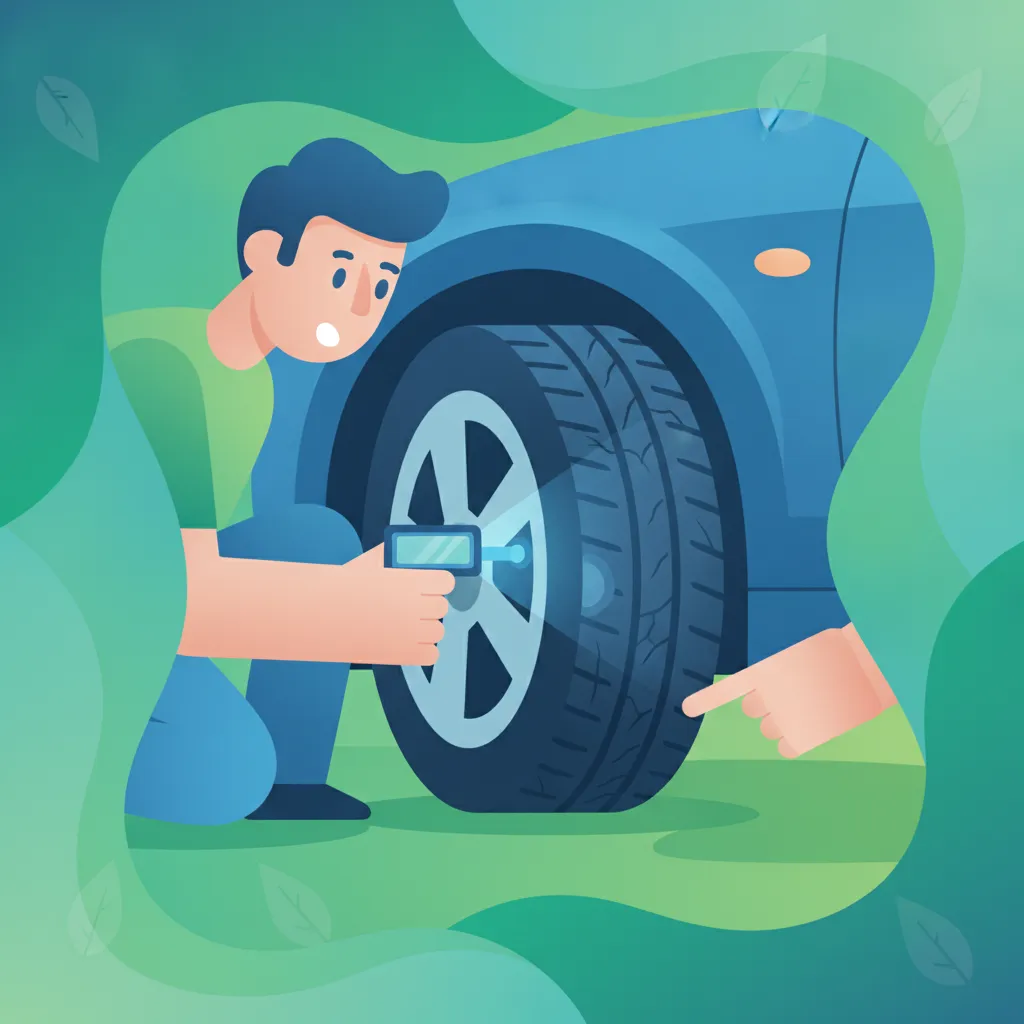
Lesson content overview
Your tyres are the most critical safety feature of your vehicle. They represent the only direct contact points between your car and the road surface. For a standard passenger car (Category B), the total contact area of all four tyres combined is roughly equivalent to the size of a single sheet of A4 paper. This small contact patch is responsible for all steering, braking, and acceleration forces, meaning any compromise in tyre quality directly threatens your control of the vehicle.
Ensuring your tyres are roadworthy is not only a matter of basic physics; it is a strict legal requirement under Irish road traffic laws. This guide covers how to inspect tread depth, maintain correct cold inflation pressure, spot structural damage, interpret irregular wear patterns, and prepare your vehicle to pass the National Car Test (NCT).
To understand why tyre maintenance is so vital, it helps to understand the physical relationship between a tyre and the road. A tyre is engineered to flex, absorb road shocks, and maintain friction against the pavement. This friction—known as grip—is highly dependent on the tyre’s inflation pressure and the depth of its tread grooves.
When a tyre is correctly maintained, it distributes the weight of the vehicle evenly across its contact patch. If the tyre is worn or improperly inflated, this distribution is disrupted, leading to a drastic reduction in braking efficiency and cornering stability. Under wet conditions, the tyre's role shifts from simply maintaining friction to actively clearing water from the road surface to prevent a dangerous loss of control.
The tread is the patterned rubber on the outer circumference of the tyre. Its primary function is to channel water away from the contact patch when driving on wet roads, allowing the rubber to remain in direct contact with the pavement.
Under Irish road traffic regulations, the minimum legal tread depth for passenger cars is 1.6 millimetres. This minimum depth must exist across the central three-quarters of the tread width and around the entire outer circumference of the tyre.
While 1.6 mm is the absolute legal threshold to avoid fines and penalty points, safety experts and the Road Safety Authority (RSA) strongly recommend replacing tyres when the tread depth reaches 3.0 millimetres.
When driving on wet roads, a thin film of water builds up between the tyre and the road surface. As your speed increases, the tyre must displace this water. If the tread depth is insufficient, the tyre cannot channel the water away quickly enough.
This causes the tyre to ride up on a cushion of water, completely losing contact with the road. This dangerous phenomenon is known as aquaplaning (or hydroplaning).
When aquaplaning occurs:
By replacing your tyres at the recommended 3.0 mm mark rather than waiting for the legal 1.6 mm minimum, you preserve the tyre’s capacity to displace water, significantly lowering your risk of aquaplaning and keeping your stopping distances short.
Safety Warning: At 80 km/h in wet conditions, a car with tyres at the legal minimum tread depth of 1.6 mm can take up to 40% longer to stop than an identical car fitted with new tyres.
To verify that your tyres are safe and legal, you should measure them at least once a month using reliable methods:
Use a Tyre Tread Depth Gauge: This is the most accurate method. Insert the probe of the gauge into the main tread grooves at various points across the centre and around the circumference of the tyre. Read the measurement in millimetres.
Locate the Tread Wear Indicators (TWIs): Tyres feature small, raised rubber bars inside the main longitudinal grooves. These bars are exactly 1.6 mm high. If the outer tread rubber has worn down to be level with these indicators, your tyres have reached the legal limit and must be replaced immediately.
Perform the Coin Test: Insert a standard 1-euro coin into the main grooves of your tyre. If the gold-coloured outer border of the coin is visible when placed in the groove, your tyre tread is likely below 3 mm and should be inspected by a professional.
Maintaining the correct tyre pressure is essential for even tyre wear, vehicle stability, and fuel economy. Tyre pressure is measured in either pounds per square inch (psi) or kilopascals (kPa).
Tyre pressure must always be checked and adjusted when the tyres are cold. This is a fundamental rule of tyre maintenance.
Tyre pressure measured before any significant driving has occurred. To be considered "cold," the vehicle must have been stationary for at least three hours, or driven for less than 2 kilometres at a moderate speed.
As you drive, the friction between the tyre and the road, combined with the flexing of the tyre sidewalls, generates heat. This heat is transferred to the air inside the tyre, causing it to expand. This thermal expansion increases the internal pressure of the tyre.
If you check your tyre pressure immediately after a long journey or high-speed drive, you will get a falsely high reading. If you release air to match the manufacturer's recommended level based on a "hot" reading, the tyre will be dangerously underinflated once it cools down.
The correct pressure is determined by your vehicle's manufacturer, not by the markings on the tyre itself. The pressure rating stamped onto the side of a tyre is the maximum pressure the tyre can safely hold, not the recommended operating pressure for your specific car.
You can find your car's recommended tyre pressure in the following locations:
Running your tyres with incorrect pressure compromises safety and accelerates tyre wear:
While tread depth and pressure are quantitative measurements, a visual inspection of the tyre's sidewall is a critical qualitative check. The sidewall is the vertical section of the tyre that connects the tread to the metal wheel rim. It contains structural steel cords and fabric plies that keep the tyre's shape under extreme loads and cornering forces.
During your weekly walk-around inspection, look closely for these key signs of structural failure:
Your tyres can act as a diagnostic tool for your car’s suspension and steering systems. When a vehicle's wheels are correctly aligned and the suspension is functioning properly, the tyre tread wears down evenly across its width. If you spot uneven wear, it points to an underlying mechanical problem.
| Wear Pattern | Visual Appearance | Primary Cause | Corrective Action |
|---|---|---|---|
| Edge Wear (Both Shoulders) | Tread is heavily worn on both the inner and outer edges, while the centre remains thick. | Persistent under-inflation. | Inflate tyres to the manufacturer's recommended level. |
| Centre Wear | Tread is worn flat down the middle of the tyre, while the edges have plenty of depth. | Persistent over-inflation. | Reduce pressure to the recommended levels when tyres are cold. |
| Camber Wear (One-Sided Wear) | Tread is worn down on only one side (either the inside or the outside edge). | Incorrect wheel alignment (camber angle) or worn suspension components. | Have a professional technician align the wheels and inspect steering joints. |
| Feathering | The tread blocks feel smooth when rubbed in one direction but rough or sharp when rubbed in the opposite direction. | Incorrect wheel alignment (toe-in or toe-out settings). | Professional wheel tracking/alignment is required. |
| Cupping (or Scalloping) | Distinct cups, dips, or bald patches worn into the tread around the circumference of the tyre. | Worn or damaged shock absorbers, struts, or unbalanced wheels. | Replace worn suspension components and balance the wheels. |
The National Car Test (NCT) is a compulsory roadworthiness inspection for passenger cars in Ireland. Tyre defects are among the most common reasons for a vehicle to fail the NCT.
To ensure your vehicle passes the tyre inspection portion of the test, confirm the following standards are met:
The safety margins of your tyres must be adjusted depending on weather, vehicle load, and speed:
During periods of heavy rain, a deeper tread is critical. While 1.6 mm is legal, anything less than 3 mm significantly increases stopping distances in wet conditions. Furthermore, in winter, air temperature drops. For every 10°C drop in temperature, your tyre pressure will drop by approximately 1 to 2 psi. You must check and adjust your pressures more frequently during winter months.
If you are carrying a full load of passengers, heavy luggage, or towing a trailer, the rear axle of your car bears significantly more weight. Under these conditions, you must increase your tyre pressures to the "fully loaded" specifications provided on your vehicle's tyre placard.
Failing to increase pressure when carrying heavy loads causes the tyre sidewalls to flex excessively, generating intense heat that can damage the tyre structure and lead to a blowout at high speeds.
Driving on motorways at high speeds subjects tyres to constant centrifugal forces and rapid heat buildup. Correct cold inflation pressure and structural integrity are absolutely critical under these conditions. A minor tyre defect that goes unnoticed in slow city traffic can quickly escalate into a catastrophic blowout at 120 km/h.
In Ireland, driving on defective, worn, or bald tyres is a serious offence. The law holds the driver, not necessarily the owner of the vehicle, responsible for the vehicle's roadworthiness.
When you press the brake pedal, your brakes stop the wheels from turning. However, it is the friction between the tyre tread and the road surface that actually stops the vehicle.
If your tyres are worn or underinflated, the friction coefficient is drastically reduced. Under wet conditions, a tyre with 1.6 mm of tread will suffer from a reduced contact area because it cannot clear the water film. This forces you to travel a much greater distance before coming to a complete stop, turning what would have been a near-miss into a severe collision. Regular, objective inspections are the only way to ensure your tyres are ready to protect you in an emergency.
Explore all units and lessons included in this driving theory course.
Lesson content overview
Explore all units and lessons included in this driving theory course.
Explore search topics learners often look for when studying Vehicle Inspection, Tyre Condition and Inflation. These topics reflect common questions about road rules, driving situations, safety guidance, and lesson level theory preparation for learners in Ireland.
Browse additional driving theory lessons that cover connected traffic rules, road signs, and common driving situations related to this topic. Improve your understanding of how different rules interact across everyday traffic scenarios.
Learn how lights, brakes, steering, and suspension systems function to maintain vehicle control. This guide explains how to identify common faults in these systems and their impact on roadworthiness and safety standards required for the Irish driving theory test and general vehicle maintenance.

Your vehicle's lighting system is crucial for illuminating your path and making your presence and intentions clear to other road users. This lesson explains the legal requirements for using dipped headlights, full beams, fog lights, and hazard signals in Ireland. You will learn when to switch from full to dipped beams to avoid blinding oncoming drivers, and how to perform simple checks to ensure all bulbs are working.

Driving at night presents severe challenges due to reduced visibility, driver fatigue, and headlight glare from oncoming vehicles. This lesson teaches you how to manage your headlights, use road edge markers to steer through dark curves, and look away from oncoming bright lights. You will learn to drive within the range of your headlights and remain highly alert for pedestrians or cyclists not wearing reflective gear.

Drivers bear the legal responsibility of ensuring that all passengers under seventeen years of age are properly secured in the vehicle. This lesson covers Ireland's strict seatbelt laws and the requirement to use an EU-approved child restraint system appropriate for the child's height and weight. You will learn how to locate ISOFIX anchorage points, fit child seats correctly, and deactivate passenger airbags when using rear-facing seats.

As passenger numbers change throughout a service shift, a heavy vehicle suspension, center of gravity, and steering responsiveness adapt dynamically. This lesson covers load balancing, the physical risks of overloading, and how uneven weight distribution compromises stability during turns. Drivers will learn to perform regular axle weight assessments to comply with Irish transport safety rules.

Irish rural roads are often narrow, winding, and bordered by high hedges, presenting unique hazards compared to urban streets. This lesson focuses on scanning for hidden hazards such as slow-moving farm machinery, mud on the road surface, and loose livestock. You will learn how to adjust your speed before entering blind bends, sound your horn at blind crests, and safely share the road with local agricultural traffic.

Carrying heavy loads or towing trailers significantly alters a car's handling, acceleration, and braking characteristics. This lesson outlines the physics of load distribution, explaining why you must secure cargo to prevent shifting and keep the vehicle's centre of gravity low. You will learn about legal roof rack weight limits, safe trailer coupling practices, and how to adjust your driving style when towing.
This lesson emphasizes the critical importance of being highly visible to other road users under various lighting conditions. It reviews the legal requirements for front and rear lights on Category AM vehicles and the active use of reflective materials. Proper maintenance of lighting systems is discussed to ensure continuous operation during adverse weather.

Securing passengers and luggage properly is essential to prevent injury during emergency braking, sudden steering inputs, or traffic collisions. This lesson provides instructions on passenger restraint systems, seatbelt laws in Ireland, and wheelchair ramp deployment processes. Drivers will study weight distribution guidelines for luggage compartments to protect the physical stability of the passenger vehicle.
Adverse weather severely compromises tyre traction and forward visibility, demanding immediate speed reductions and extra space. This lesson focuses on the physics of aquaplaning in heavy rain, driving safely on black ice, and navigating thick fog using designated fog lamps. You will learn how to manage your windshield defoggers, adjust wipers, and handle high crosswinds that can destabilise your vehicle.

This lesson details the use of daytime running lights to raise a rider's profile during daylight hours on Irish roads. It discusses the installation guidelines, legal restrictions, and safety benefits of auxiliary lighting systems on mopeds. Special care must be taken to prevent dazzling oncoming traffic while ensuring the vehicle remains highly recognizable.
Explore the physical relationship between tyre contact patches and road conditions during rain or winter weather. Understand the mechanics of aquaplaning and how adjusting your driving style and awareness is critical for maintaining traction and safe stopping distances on Irish roads.
Adverse weather severely compromises tyre traction and forward visibility, demanding immediate speed reductions and extra space. This lesson focuses on the physics of aquaplaning in heavy rain, driving safely on black ice, and navigating thick fog using designated fog lamps. You will learn how to manage your windshield defoggers, adjust wipers, and handle high crosswinds that can destabilise your vehicle.
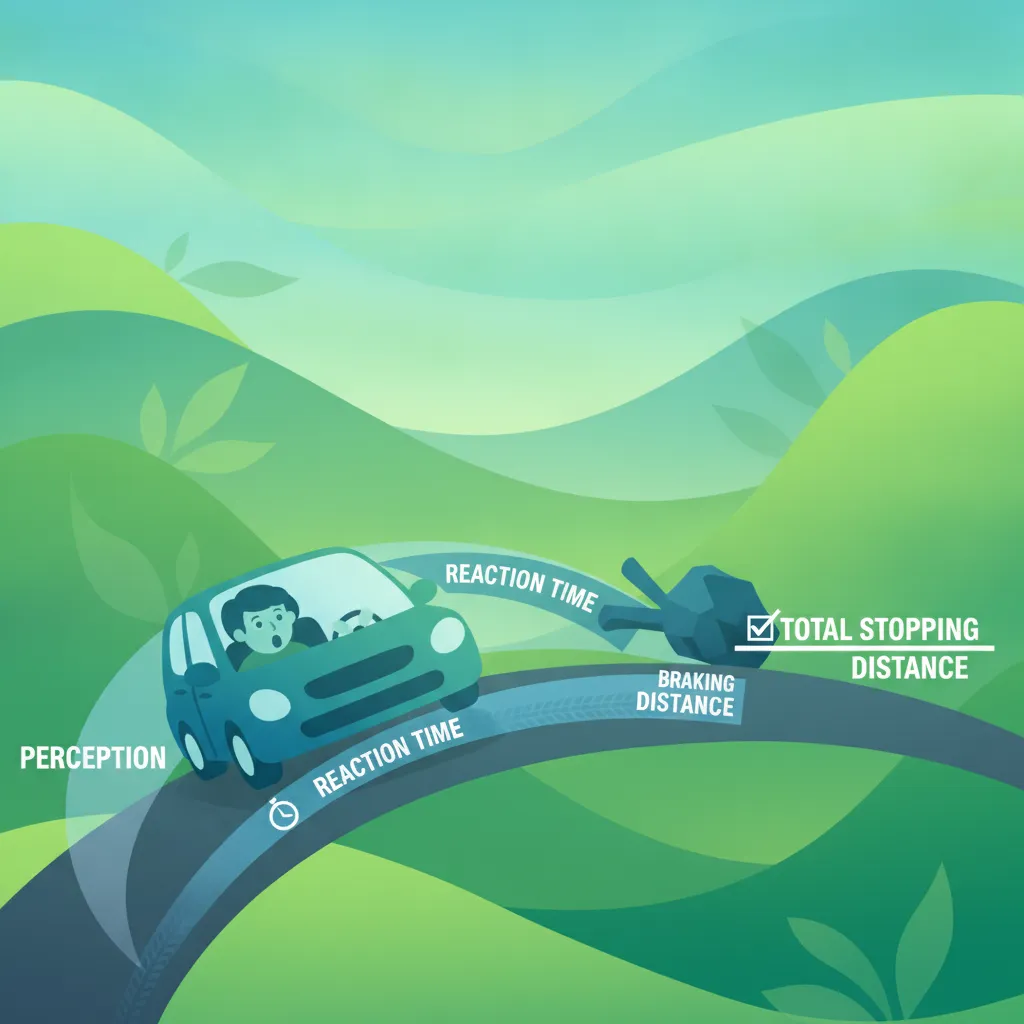
A vehicle's total stopping distance is the sum of your thinking (reaction) distance and the mechanical braking distance. This lesson explains how reaction times are slowed by fatigue, distraction, or health, and how braking distance scales exponentially with your vehicle's speed. You will understand how factors like worn tyres, bad brakes, or slippery asphalt can dramatically increase your overall stopping distance.
This lesson analyzes how tyre contact patches generate grip and how different road surfaces affect stability. It explains the dangers of diesel spills, loose gravel, fallen leaves, and cold tyres, which drastically reduce traction limits. Motorcyclists will learn to identify these surface hazards early and modify their throttle, braking, and lean inputs to prevent loss of control.

This lesson explains how to modify riding techniques when navigating wet tarmac, focusing on the heightened risk of hydroplaning and reduced tire grip. It details the necessity of increasing following distances, avoiding painted road markings, and executing smoother control inputs. Riders will understand how surface water accumulates in ruts, presenting severe hazards during heavy rainstorms.
Adhering to legal speed limits is not always sufficient; you must continuously adapt your speed to match real-world hazards. This lesson teaches you how to reduce speed when encountering rain, fog, heavy traffic, or narrow winding rural roads with restricted visibility. You will learn the importance of matching your speed to your range of clear vision, ensuring you can stop safely within the distance you can see ahead.

This lesson explores the safe operation of heavy transport vehicles during severe meteorological hazards typical of the Irish climate. It teaches techniques for adjusting speed and doubling following distances to prevent loss of steering traction and control on waterlogged or icy roadways. Drivers will understand how to manage lateral aerodynamic forces from crosswinds on high-sided goods vehicles.
The physical scale of a coach or bus generates significant momentum that demands extensive space to bring the vehicle to a safe stop. This lesson explains vehicle weight mechanics, the physics of kinetic energy, and how center of gravity affects chassis stability during stops. Drivers will learn to assess braking capacity, accounting for wet road conditions and high passenger counts.
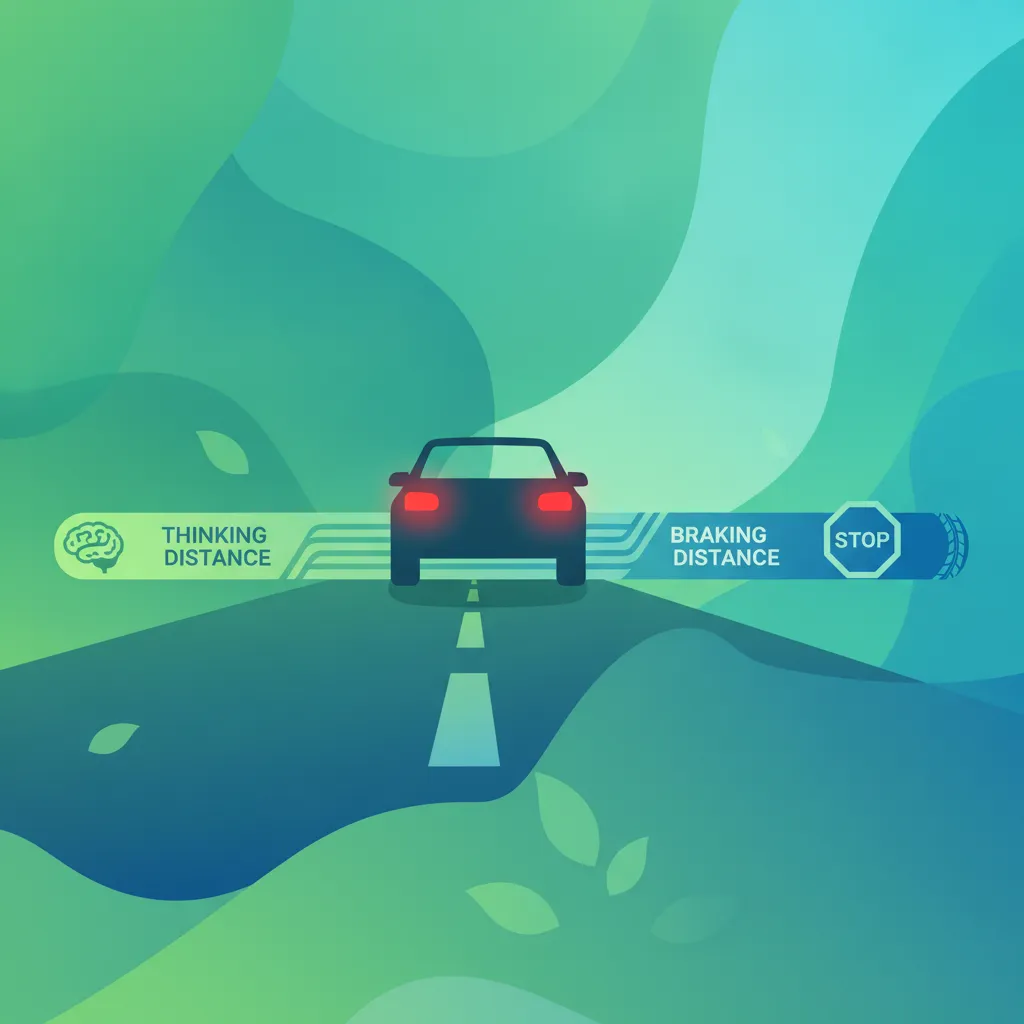
This lesson instructs riders on the correct application of the front and rear brakes to achieve smooth, controlled stopping. It explains how factors such as speed, reaction time, and tyre traction combine to determine total stopping distance. Learners will also study methods to prevent dangerous wheel lock-ups and skidding, especially in wet conditions.
Wet roads, heavy winter fog, and strong lateral winds present major safety challenges for high-sided passenger vehicles in Ireland. This lesson explains how to prevent aquaplaning, double following distances on wet surfaces, and use fog lights correctly to maintain visibility. Drivers will learn handling adjustments to counteract sudden wind gusts when crossing exposed bridges or motorways.
Find clear answers to common questions learners have about Vehicle Inspection, Tyre Condition and Inflation. Learn how the lesson is structured, which driving theory objectives it supports, and how it fits into the overall learning path of units and curriculum progression in Ireland. These explanations help you understand key concepts, lesson flow, and exam focused study goals.
For a Category B passenger car, the minimum tread depth is 1.6 millimetres across the central three-quarters of the breadth of the tyre and around the entire circumference.
Tyre pressure increases as the tyre heats up while driving. Checking them when 'cold' ensures you get an accurate reading according to the manufacturer's recommended specifications, which is vital for safe handling.
Uneven wear is often a sign of mechanical issues like poor wheel alignment, worn suspension, or incorrect inflation. If you notice one side of the tyre wearing faster than the other, you should have the vehicle inspected by a professional immediately.
Yes, a bulge or lump in the sidewall usually indicates internal structural damage to the tyre's casing. This is a critical failure point and means the tyre could burst at any time; it must be replaced immediately to ensure safety.
Use the practice question search tool to pinpoint specific topics, road signs, or rules you need to master for your official Driver Theory Test. Refine your study strategy and ensure comprehensive preparation for all aspects of the Irish driving exam. Start your focused revision now and build confidence for your learner permit test.