
This lesson guides you through the technical process of merging onto high-speed dual carriageways and motorways in Ireland. By understanding how to match your speed to the flow of traffic and judge safe gaps, you will gain the knowledge needed for both your theory exam and real-world motorway driving.
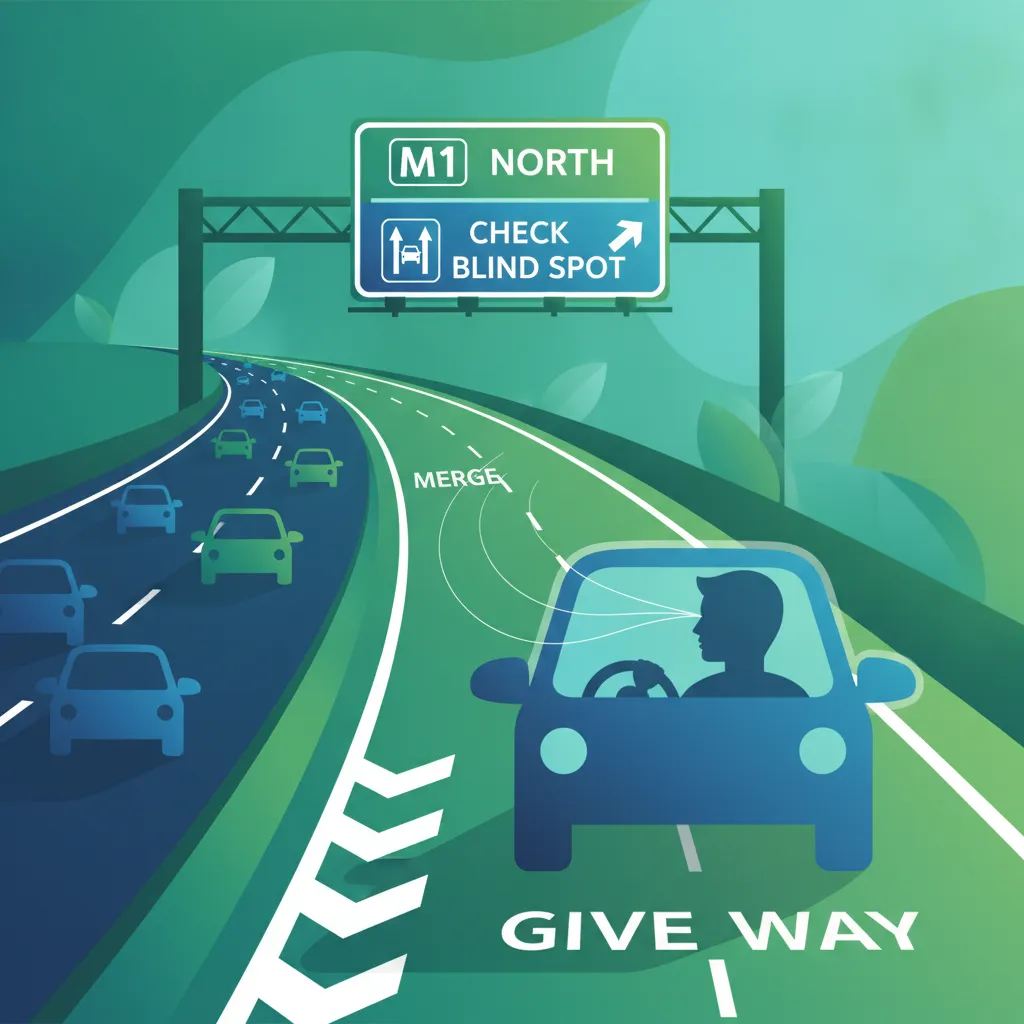
Lesson content overview
Mastering the transition from a lower-speed local road onto a high-speed dual carriageway or motorway is one of the most critical skills required to pass the Official Irish Driver Theory Test Preparation (Category B). This manoeuvre requires precise coordination of speed, timing, spatial awareness, and vehicle control.
When you join a high-speed road, you are transitioning from a slower, often stop-start environment into a fast, fluid stream of traffic traveling at speeds up to 100 km/h on dual carriageways or 120 km/h on motorways. A safe merge integrates your vehicle seamlessly into this flow without forcing existing road users to alter their speed or direction.
The entry point to a dual carriageway or motorway is called an acceleration lane or slip road. This specialized lane is engineered to give you the physical space necessary to prepare your vehicle for the merge.
Rather than serving as a standard junction where you stop and wait, the slip road is a "runway." It is divided into three distinct zones:
To execute a safe merge, you must understand and apply five core driving principles in quick succession.
The primary safety hazard during a merge is the speed differential between your vehicle and the vehicles already on the main road. If you attempt to merge into a 120 km/h motorway lane at 60 km/h, you create a high-risk situation. Vehicles behind you will be forced to brake hard, which can trigger a chain-reaction collision (often called "shockwave braking").
Your objective is to use the acceleration lane to match the speed of the traffic in the leftmost lane (Lane 1) of the main carriageway. Ideally, you should be within ±10 km/h of the traffic flow when you reach the merge point.
A critical rule of the Road Safety Authority (RSA) guidelines is that traffic already on the main carriageway has absolute priority.
You do not have a automatic right to merge. It is your legal responsibility to find, target, and safely negotiate a gap in the traffic. Existing traffic is not legally obligated to move over to let you in, though polite drivers may do so if it is safe. You must never count on other drivers changing lanes or slowing down to accommodate your vehicle.
Crucial Law: You must never force your way into traffic. If you cause another vehicle on the main road to brake, decelerate, or swerve, you have committed a right-of-way violation, which is a common cause of failure on the Irish driving test.
Signalling early alerts both the traffic behind you on the slip road and the vehicles traveling on the main carriageway of your intent to merge.
Under Irish road standards, you should activate your right-turn indicator as soon as you are parallel to the main road and can clearly see the traffic flow—typically at least 150 to 200 metres before the actual merge point. This gives drivers on the main road ample time to adjust their positions or prepare for your arrival.
Because traffic on high-speed roads moves rapidly, your mirrors only tell part of the story. You must use a systematic observation pattern:
The right-side blind spot is large enough to completely hide a motorcycle, a small passenger car, or even a large van traveling alongside your rear quarter panels. Skipping this check before steering into the main road is a highly dangerous driving error.
A safe gap in high-speed traffic is measured in time, not just distance. In dry conditions, you should target a gap of at least four to six seconds between vehicles on the main road. This ensures that when you slot into the lane, you will preserve a safe two-second following distance both in front of and behind your vehicle.
Check and Prepare: As you enter the slip road, observe the flow of traffic on the main road to your right. Assess their speed and the density of the traffic.
Accelerate Progressively: Shift into the appropriate gear (usually 3rd or 4th gear in a manual car depending on the vehicle) to allow for rapid, responsive acceleration. Press the accelerator firmly to match the speed of the traffic in Lane 1.
Signal Early: Apply your right-turn indicator to signal your intention to merge. Keep the signal active throughout the acceleration phase.
Observe and Select a Gap: Check your interior mirror, right wing mirror, and perform a quick right-shoulder blind spot check to locate a suitable gap in the traffic.
Adjust Speed to the Gap: If the gap you targeted is moving faster than you, accelerate further. If a vehicle is blocking your path, ease off the accelerator slightly to position yourself behind them, maintaining momentum.
Merge Smoothly: Once a safe gap is secured and verified with a final mirror check, steer smoothly across the broken white lines into Lane 1. Do not make sudden or sharp steering movements.
Cancel Signal and Adjust: Cancel your indicator immediately after completing the merge. Check your mirrors again and adjust your speed to maintain a safe following distance (using the '2-second rule') from the vehicle ahead.
One of the most dangerous actions a driver can take is bringing their vehicle to a complete stop on an acceleration lane or slip road.
When is stopping permitted? The only time you should stop on a slip road is if the traffic on the main dual carriageway or motorway is at a complete standstill (e.g., due to a major collision, severe roadworks, or gridlock).
Stopping on an open slip road creates two immediate hazards:
If you find yourself running out of slip road because of heavy traffic, maintain your speed, keep your signal active, and continue looking for an opening. Drivers on the main road will usually notice your situation and make space if you maintain a predictable speed.
As a Category B driver, you must be prepared to modify your merging technique based on environmental conditions, vehicle limits, and road layouts.
In Ireland, rain, road spray, and fog are common hazards. When merging in wet conditions, you must account for:
To prepare for your theory and practical driving tests, study these common mistakes to avoid committing them on the road:
This lesson covers the complete procedure for merging onto Irish dual carriageways and motorways, emphasising that existing traffic always has priority. The three-zone slip road design (joiner, acceleration, merge zones) serves as a runway to build speed before joining traffic flowing at up to 120 km/h. Key safety steps include matching speed within ±10 km/h, signalling early, checking mirrors and the right blind spot via a physical head turn, and selecting a gap of at least 4–6 seconds in dry conditions. Learners must understand that stopping on a slip road is dangerous and that heavy vehicles, motorcyclists, and wet weather each require modified gap selection and observation techniques. The content directly supports RSA Category B theory test preparation and real-world motorway driving competence.
A short set of high-value points that capture the most important learning from this lesson.
Traffic already on the main carriageway has absolute priority and you must yield to them—never force your way into a gap
Speed matching is essential: aim to reach within ±10 km/h of main road traffic before attempting to merge
The slip road is a three-zone 'runway' consisting of the joiner/deceleration zone, acceleration zone, and merge zone
Activate your right-turn indicator as soon as you are parallel to the main road, typically 150–200 metres before the merge point
A quick physical head turn over your right shoulder is mandatory to check the blind spot that mirrors cannot show
Explore all units and lessons included in this driving theory course.
Never stop on an acceleration lane unless the main road traffic is completely stationary—you cannot safely merge from a complete stop
Safe gap in dry conditions: 4–6 seconds; in wet conditions: 8–10 seconds to account for doubled braking distances
Main road traffic is not obligated to move over or slow down for you—plan your merge assuming they will maintain speed
The three slip road zones: joiner/deceleration, acceleration, and merge zones help you structure your approach
After merging, cancel your indicator immediately and use the 2-second rule to maintain safe following distance
Merging at too low a speed (50–60 km/h) when traffic flows at 100–120 km/h, forcing vehicles behind to brake hard
Skipping the right-side blind spot check and relying solely on mirrors, risking a collision with motorcycles or vehicles in your blind spot
Stopping on the slip road when a gap doesn't appear immediately, creating rear-end collision risk and making merging impossible
Attempting to force a gap too small, causing vehicles on the main road to brake or swerve to avoid collision
Selecting a gap too late—waiting until the end of the slip road before observing main traffic leads to panic stops or forced merges
Lesson content overview
A short set of high-value points that capture the most important learning from this lesson.
Traffic already on the main carriageway has absolute priority and you must yield to them—never force your way into a gap
Speed matching is essential: aim to reach within ±10 km/h of main road traffic before attempting to merge
The slip road is a three-zone 'runway' consisting of the joiner/deceleration zone, acceleration zone, and merge zone
Activate your right-turn indicator as soon as you are parallel to the main road, typically 150–200 metres before the merge point
A quick physical head turn over your right shoulder is mandatory to check the blind spot that mirrors cannot show
Explore all units and lessons included in this driving theory course.
Never stop on an acceleration lane unless the main road traffic is completely stationary—you cannot safely merge from a complete stop
Safe gap in dry conditions: 4–6 seconds; in wet conditions: 8–10 seconds to account for doubled braking distances
Main road traffic is not obligated to move over or slow down for you—plan your merge assuming they will maintain speed
The three slip road zones: joiner/deceleration, acceleration, and merge zones help you structure your approach
After merging, cancel your indicator immediately and use the 2-second rule to maintain safe following distance
Merging at too low a speed (50–60 km/h) when traffic flows at 100–120 km/h, forcing vehicles behind to brake hard
Skipping the right-side blind spot check and relying solely on mirrors, risking a collision with motorcycles or vehicles in your blind spot
Stopping on the slip road when a gap doesn't appear immediately, creating rear-end collision risk and making merging impossible
Attempting to force a gap too small, causing vehicles on the main road to brake or swerve to avoid collision
Selecting a gap too late—waiting until the end of the slip road before observing main traffic leads to panic stops or forced merges
Explore search topics learners often look for when studying Merging onto Dual Carriageways and Motorways. These topics reflect common questions about road rules, driving situations, safety guidance, and lesson level theory preparation for learners in Ireland.
Browse additional driving theory lessons that cover connected traffic rules, road signs, and common driving situations related to this topic. Improve your understanding of how different rules interact across everyday traffic scenarios.
Learn the essential legal requirements for driving on Irish motorways, including correct lane usage, overtaking procedures, and the specific rules for service areas. This guide explains how to maintain traffic flow and follow safety regulations on high-speed roads for your Irish driver theory knowledge.
Motorways are designed for safe, high-speed travel, but require strict adherence to lane discipline and specific regulations. This lesson explains that the left lane is for normal driving, while middle and right lanes are strictly for overtaking slower traffic. You will learn how to identify motorway exits, use the hard shoulder during absolute emergencies, and understand the legal restrictions placed on learner permit holders.

Irish driving theory demands that drivers keep to the left-hand side of the road unless overtaking or turning right. This lesson explains how to maintain consistent lane discipline on multi-lane roads, how to perform safe lane changes, and the dangers of drifting. You will learn the safety sequence of checking mirrors, checking blind spots, signalling, and smoothly executing a lane change without disrupting trailing traffic.

Overtaking requires rapid judgment, clear visibility, and precise execution to avoid catastrophic head-on collisions. This lesson guides you through checking oncoming traffic, verifying legal passing zones via road markings, and checking mirrors and blind spots before accelerating. You will learn how to signal your intentions, maintain a safe gap, and return to your driving lane smoothly without cutting up the passed vehicle.
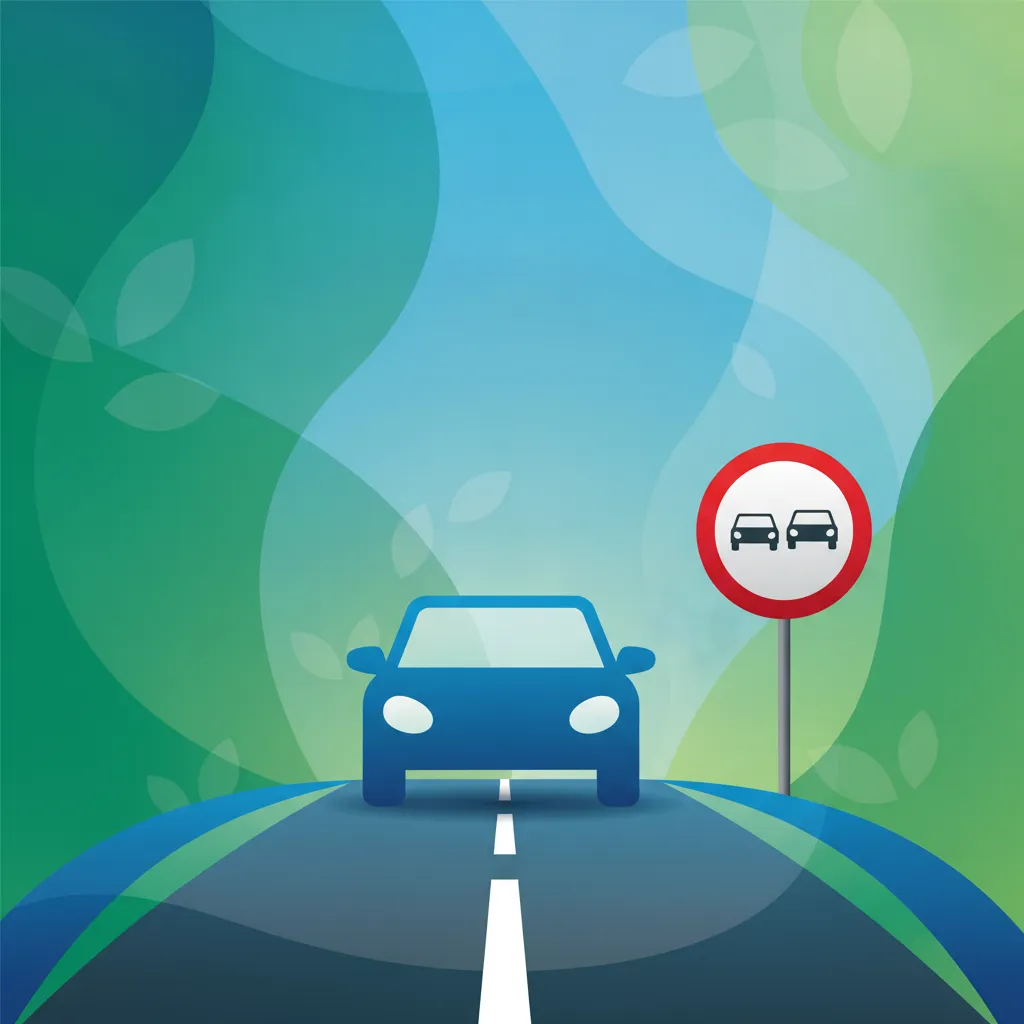
No-overtaking zones are marked in areas with restricted visibility, such as approaching bends, humps, or narrow bridges. This lesson details how continuous solid white lines legally prohibit passing, along with the very narrow exceptions allowed under Irish law. You will learn to identify these high-risk areas from visual markings, ensuring you never initiate a passing manoeuvre that puts oncoming traffic in immediate danger.

This lesson outlines the rules and procedures for riding safely on dual carriageways and motorways in Ireland. It covers merging from slip roads, maintaining lane discipline, and executing high-speed overtaking manoeuvres in accordance with RSA standards. Motorcyclists will learn to anticipate turbulence from large commercial trucks and recognize the safety signs used on high-speed routes.

This lesson explains the sequential steps for executing safe overtaking manoeuvres on single and dual-carriageway roads in Ireland. It focuses on assessing speed differentials, establishing clear lines of sight, and evaluating oncoming traffic before committing. Riders will learn the correct signaling routine, safe abort procedures, and how to return smoothly to their lane without cutting in.

Large passenger vehicles must maintain consistent lane positioning to prevent side-swipe incidents and sustain smooth urban traffic patterns. This lesson covers standard lane selection rules, safe overtaking procedures, and how to use designated public transit corridors correctly. Drivers will learn the importance of checking mirrors continuously and planning lane changes well in advance.
This lesson describes the legal regulations and driving conventions for operating heavy commercial vehicles on motorways and high-speed dual carriageways. It explains specific Irish motorway rules, including bans on heavy goods vehicles occupying the outer overtaking lanes. Drivers will learn to manage high-speed slip-road merging, maintain safe spacing buffers, and anticipate long-range changes in overall traffic flow.
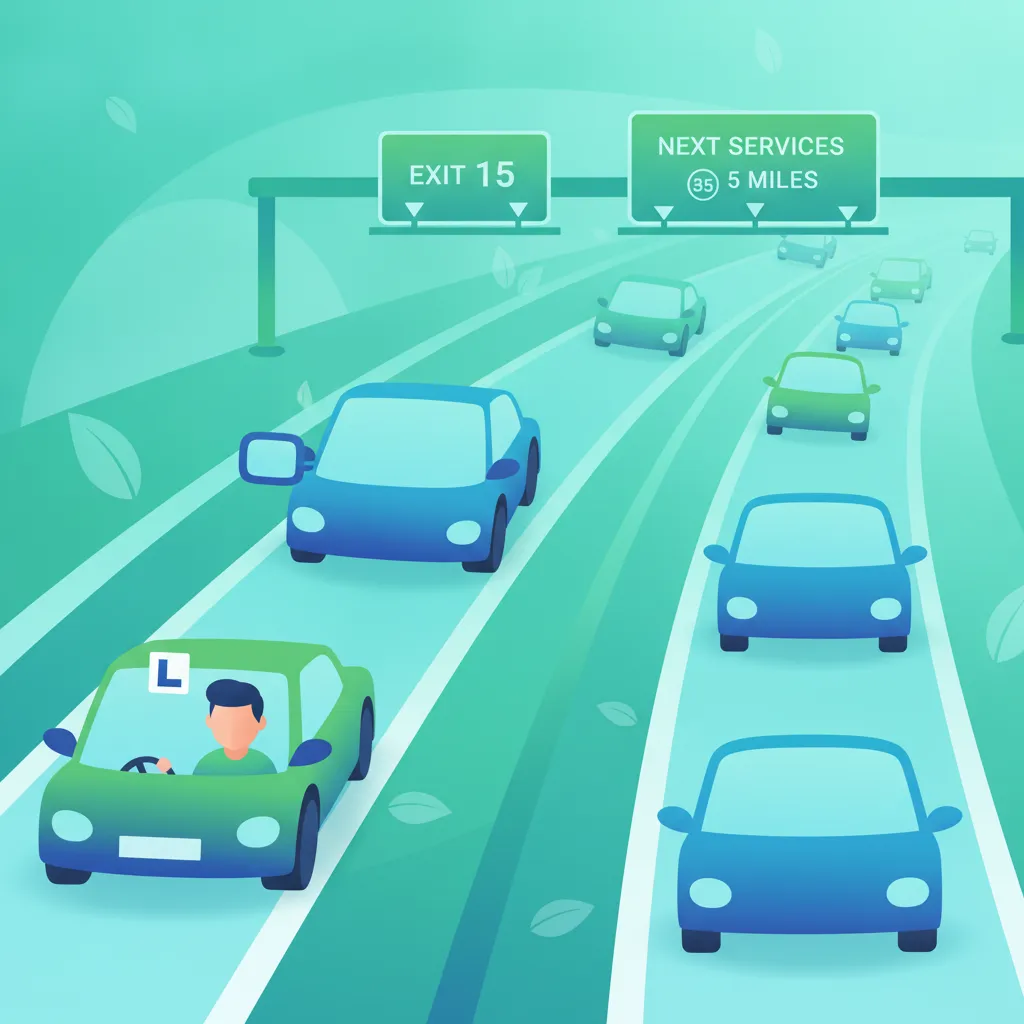
Motorway transport requires consistent forward planning, strict speed restriction compliance, and clear mirror checks before exiting lanes. This lesson details the rules of joining and leaving motorways, navigating toll plazas safely, and managing breakdowns on the hard shoulder. Drivers will learn to balance high-speed travel with passenger stability, ensuring a comfortable, secure ride.

Navigating multi-lane roundabouts requires precise lane selection, continuous scanning, and timely signaling. This lesson teaches you the 'clock rule' for determining which lane to enter, how to yield to traffic already on the roundabout from your right, and when to activate your left indicator to exit. Mastering these procedures minimizes lane-drift accidents and ensures a seamless flow of traffic on busy roundabouts.
Understand how to identify and react to potential risks when driving at high speeds on Irish dual carriageways. This lesson focuses on scanning techniques, anticipating movements from other vehicles, and adjusting your driving strategy for safe interactions with heavy goods vehicles and changing road conditions.

Proactive hazard perception involves constantly scanning the road ahead to identify potential dangers before they turn into actual emergencies. This lesson covers active scanning techniques, helping you look far ahead, check mirrors regularly, and identify subtle risk clues such as exhaust smoke from parked cars or children playing near kerbs. Anticipating these developments gives you the time to adjust speed and position safely.

Irish rural roads are often narrow, winding, and bordered by high hedges, presenting unique hazards compared to urban streets. This lesson focuses on scanning for hidden hazards such as slow-moving farm machinery, mud on the road surface, and loose livestock. You will learn how to adjust your speed before entering blind bends, sound your horn at blind crests, and safely share the road with local agricultural traffic.

This lesson highlights the importance of smooth throttle adjustments for maintaining traction and stability on a moped. It teaches riders how to anticipate potential road hazards early, reducing the need for sudden emergency braking. Developing strong observation habits allows riders to adjust their speed smoothly and respond safely to traffic changes.

Warning signs in Ireland are typically diamond-shaped with yellow backgrounds and black symbols, indicating potential dangers on the road ahead. This lesson details signs for upcoming sharp bends, narrow roads, steep hills, pedestrian activity, and animal hazards. Learning to spot these warning indicators early allows you to reduce speed safely and adjust your vehicle positioning before encountering the hazard itself.

Heavy vehicles require continuous visual scanning to identify small or slow-moving road users who may enter the path of travel. This lesson explores the typical behaviors of young children, elderly pedestrians, and visually impaired road users. Drivers will build strong hazard perception skills to anticipate sudden movements, ensuring they can brake safely and avoid serious accidents.
Adhering to legal speed limits is not always sufficient; you must continuously adapt your speed to match real-world hazards. This lesson teaches you how to reduce speed when encountering rain, fog, heavy traffic, or narrow winding rural roads with restricted visibility. You will learn the importance of matching your speed to your range of clear vision, ensuring you can stop safely within the distance you can see ahead.

Maintaining an extensive buffer zone ahead of a large passenger vehicle is critical to ensuring enough space for emergency maneuvers. This lesson teaches the time-gap method, detailing how following distances must double on wet roads or increase with full passenger loads. It builds hazard anticipation skills, teaching drivers to read distant traffic cues and react early to hazards.

Irish rural routes are often narrow, lacking central markings, and bordered by tall hedges that restrict forward visibility on sharp bends. This lesson teaches drivers how to negotiate blind curves, anticipate slow-moving agricultural machinery, and respond to wandering farm animals. Drivers will learn to regulate vehicle speed proactively, maintaining a safe stopping margin in rural areas.

This lesson teaches how to cultivate a proactive defensive riding mindset, focusing on situational awareness and constant hazard scanning. It describes the system of motorcycle control, encouraging riders to anticipate potential mistakes from other drivers, pedestrians, and cyclists. Motorcyclists will learn to position themselves defensively, leaving clear escape routes in all driving environments.
This lesson covers the strategic aspects of journey management, emphasizing the safety benefits of proactive route planning and weather checks. It teaches riders how to select safer roads, avoid high-congestion zones during rush hour, and schedule regular rest intervals. Motorcyclists will learn to pack essential tools, emergency contacts, and spare safety gear to remain prepared for any roadside situation.
Find clear answers to common questions learners have about Merging onto Dual Carriageways and Motorways. Learn how the lesson is structured, which driving theory objectives it supports, and how it fits into the overall learning path of units and curriculum progression in Ireland. These explanations help you understand key concepts, lesson flow, and exam focused study goals.
You should avoid stopping on the slip road unless it is absolutely necessary, such as when there is a total block in traffic flow. Ideally, you should maintain speed and find a suitable gap to merge seamlessly without forcing existing traffic to brake.
No, traffic already on the main carriageway has priority. It is your legal responsibility as the driver joining the motorway to ensure it is safe to enter and to yield to vehicles already present.
The exam often uses multiple-choice questions or hazard perception scenarios to test your understanding of proper observation, speed matching, and the rule that you must yield to existing traffic on the main road.
The slip road is designed to allow you to build up speed so that you can join the main carriageway at a speed similar to the traffic already on it. Proper use ensures smooth traffic flow and safety for all road users.
Use the practice question search tool to pinpoint specific topics, road signs, or rules you need to master for your official Driver Theory Test. Refine your study strategy and ensure comprehensive preparation for all aspects of the Irish driving exam. Start your focused revision now and build confidence for your learner permit test.